
A practical Ranthambore guide for wildlife photographers. Learn how to manage seasonal light, select the best safari zones, and capture tigers in their habitat.
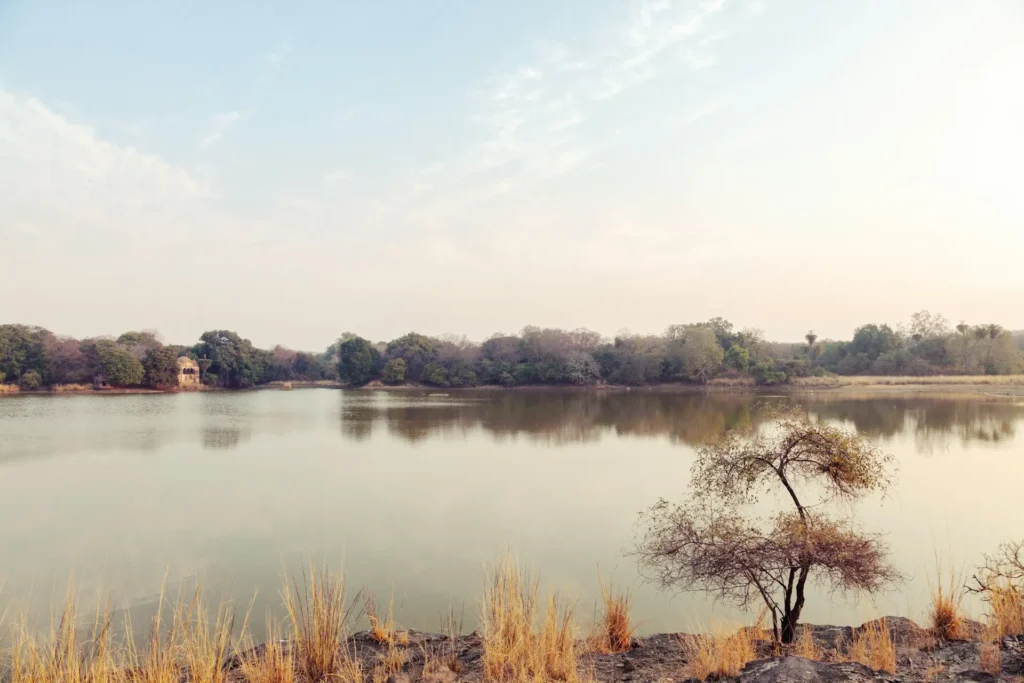
Introduction & Planning Overview
Ranthambore National Park is one of the most reliable locations in Asia for photographing Bengal tigers in a dramatic, historical setting. However, capturing high-quality images here requires more than just booking a generic permit. Photographers must navigate distinct seasonal shifts, varying forest zones, and strict daily schedules managed by the National Tiger Conservation Authority (NTCA).
Success in the field relies on understanding how Ranthambore’s dry deciduous habitat changes throughout the year and how those changes affect both animal behavior and photographic light.
Planning Your Ranthambore Photography Safari
The Photographer’s Trade-off: Light vs. Visibility
The primary decision when planning a photography trip to Ranthambore is balancing the quality of light against the predictability of wildlife encounters. The reserve presents two clear photographic windows, each requiring different technical adjustments.
- The Dry Summer Months (March to June): This period offers the highest predictability for tiger encounters. As vegetation thins and smaller waterholes dry up, apex predators spend more time near remaining waterbodies like Padam Talao and Rajbagh Lake. However, the light becomes harsh quickly after sunrise, creating deep shadows and blown-out highlights that challenge camera sensors.
- The Cooler Winter Months (November to February): This season provides excellent ambient light, softer golden hours, and misty morning conditions ideal for atmospheric landscapes. The trade-off is that tigers are less tied to specific water sources, meaning encounters require more tracking and field patience.
Field Note: Do not plan a trip around a single safari slot. Booking multiple consecutive drives over several days is the only reliable way to account for varying weather conditions, changing zone allocations, and unpredictable animal movements.
Ranthambore’s Landscape and Wildlife Diversity
While Ranthambore is famous for its tigers, the reserve’s ecological profile supports a broad range of photographic subjects. According to the NTCA, the park features a distinct dry deciduous forest landscape interspersed with open grasslands, steep cliffs, and historic ruins like Jogi Mahal and the Ranthambore Fort. This variety allows photographers to place animals within an environmental context rather than just shooting tight portraits.
The reserve supports 38 mammal species, 11 reptile species, and 315 bird species. This diversity means that even when key predators are inactive, photographers have consistent opportunities to shoot marsh crocodiles, sambar deer wading through lakes, chital in open pastures, and a wide variety of resident and migratory waterfowl. Understanding how to pivot between large mammal tracking and bird or landscape composition is essential for building a complete photographic narrative of the park.
Seasonal Light Strategies & Safari Timings
Best Seasons and Months for Wildlife Photography
Choosing when to visit Ranthambore dictates what kind of images you will capture. The park’s climate creates distinct seasonal phases, each offering completely different lighting conditions, foliage density, and animal behaviors.
Seasonal Photography Matrix
| Season | Light Quality | Tiger Visibility | Bird Activity | Vegetation Density |
| Winter (Nov–Feb) | Soft, diffused; prolonged golden hours. | Moderate; cats are dispersed and hard to track. | High; excellent for migratory species. | High; dense post-monsoon foliage. |
| Summer (Mar–Jun) | Harsh; high contrast soon after sunrise. | High; concentrated around water sources. | Low to Moderate; resident species only. | Low; dry, open sightlines. |
| Monsoon (Jul–Sep) | Overcast; dramatic storm clouds. | Low; core zones closed to tourism. | Moderate; good for breeding residents. | Very High; lush and overgrown. |
November to February: Soft Light and Migratory Birds
Winter provides the most favorable lighting conditions for photography. The lower angle of the sun extends the golden hour, giving you more time to shoot before the light becomes unmanageable. Early mornings often feature mist rolling off the lakes, creating atmospheric, moody landscapes.
Because temperatures are cool, tigers can be active throughout the day, but they are not restricted to specific water sources. This makes predicting their movements more difficult, requiring patience and good tracking skills. However, this is the prime season for bird photographers. The park’s water bodies host numerous migratory species, including various storks, geese, and ducks, providing constant shooting opportunities while waiting for large mammals.
March to June: Peak Tiger Visibility and Harsh Highlights
As temperatures rise and the forest dries out, visibility increases dramatically. The dense undergrowth dies back, opening up sightlines into the forest. More importantly, the heat forces tigers, leopards, and prey species to congregate around the few remaining water sources. If your primary goal is to photograph a tiger, April to June offers the highest probability.
The main challenge during summer is managing exposure. The sun rises quickly, and the transition from soft morning light to harsh, high-contrast daylight happens within an hour. Photographers must work quickly during the early morning and late evening and be prepared to manage deep shadows and blown-out highlights during the middle of a safari.
Expert Tip: During summer, practice exposing for the highlights. It is easier to recover shadow detail in post-processing than it is to fix a blown-out highlight on a tiger’s white facial markings.
The Monsoon Season
The core tourism zones of Ranthambore close from July to September. However, certain buffer zones remain open. While this is not the traditional season for tiger photography, the landscape transforms into a vibrant green. This period is suited for photographers focused on lush environmental portraits, macro photography, and resident birdlife.
Safari Timings and Managing Golden Hour Light
Ranthambore operates on a strict schedule managed by the forest department, generally offering two daily safari slots: morning and evening. These official timings change slightly throughout the year to align with sunrise and sunset. Maximizing your time in these slots is essential for capturing the best light.
Safari Slot Comparison
| Safari Slot | Light Characteristics | Animal Behavior | Photographic Strategy |
| Morning | Starts in low ambient light, moves to soft rim light, ends in harsh daylight. | Active predators returning from night hunts; fresh tracks. | Push ISO high early on; focus on action and movement. |
| Evening | Starts in harsh light, transitions to warm golden light, ends at sunset. | Predators waking up from afternoon rest; moving to water. | Wait by waterholes; prepare for backlight and silhouettes. |
Morning Safaris: Capitalizing on the Early Rim Light
Morning drives require you to be ready to shoot in very low light. When you first enter the park, ambient light will be minimal, requiring high ISO settings and fast lenses. This is the time to look for fresh tracks and listen for alarm calls indicating a predator moving through the forest.
As the sun breaches the horizon, you get a brief window of beautiful rim light. Position your vehicle to place the rising sun behind your subject to capture illuminated breath in the winter cold or the glowing edges of a tiger’s coat.
Evening Safaris: Shifting Shadows and Silhouettes
Evening safaris begin in the heat of the day when light is flat and unappealing. Use the first hour to scout locations and position your vehicle near waterholes or known rest areas. As the afternoon cools, activity increases.
The last hour of the evening safari offers warm, directional light. This is an excellent time for wide-angle landscape shots incorporating ruins or lakes. Because you must exit the park by a strict time, the final 30 minutes are often spent driving toward the gate. Use this time to look for subjects against the setting sun to capture dramatic silhouettes.
Safari Zone Breakdown & Target Subjects
Ranthambore Safari Zones for Photographers
Ranthambore is divided into multiple safari zones to regulate vehicle traffic according to National Tiger Conservation Authority (NTCA) guidelines. Core tourism zones and buffer areas are managed separately, which significantly impacts where you can go and what landscapes you will encounter.
Because zones must be booked in advance and vehicles are strictly assigned to their designated routes, understanding the photographic potential of each area is essential for trip planning. While tigers traverse the entire park, the terrain and background elements vary greatly by zone.
Zone Value Guide
| Zone Category | Landscape Features | Key Waterbodies | Photography Value |
| Zones 1 to 3 | Historic ruins, ancient banyan trees, dramatic fort backdrops. | Padam Talao, Rajbagh Lake. | Extremely high; excellent for environmental portraits and waterhole congregations. |
| Zones 4 & 5 | Dense dry deciduous forest, rocky outcrops, valleys. | Scattered smaller waterholes. | High; strong for close encounters and tracking behavior. |
| Zones 6 to 10 (Buffer/Peripheral) | Open grasslands, hills, dry ravines. | Seasonal streams. | Moderate; good for birdlife, chital, and solitary cats avoiding core territories. |
Zones 1 to 3: Lakes, Ruins, and High Activity
Zones 1, 2, and 3 are historically the most sought-after by photographers. This is not necessarily because they hold more tigers, but because they offer the most iconic Ranthambore backdrops.
These core zones feature the park’s largest waterbodies, including Padam Talao and Rajbagh Lake. The presence of permanent water draws a high concentration of wildlife, making it easier to predict animal movements, especially during the dry summer months. Furthermore, these zones are situated beneath the imposing Ranthambore Fort and include ruins like Jogi Mahal.
When shooting here, the goal is often environmental storytelling rather than just tight portraits. A tiger walking past ancient stone ruins or a leopard resting on a temple pavilion provides a sense of place that cannot be replicated in other Indian reserves.
Photography Tip: Do not just pack telephoto lenses. Keep a medium zoom (like a 24-70mm or 70-200mm) accessible when driving through Zones 1 to 3. The wide-angle compositions of wildlife against the fort walls or across the lakes are often the strongest images of the trip.
Open-Area and Waterbody Compositions
Beyond the headline species, the open grasslands and dry deciduous forest edges provide excellent opportunities for composition and light play. The park’s vegetation allows for clean backgrounds, which is a significant advantage over denser jungles where autofocus systems often struggle with intervening branches.
Waterbodies should be a primary focus for any photographer in Ranthambore. They serve as natural congregation points for multiple species. While waiting for large cats, use these areas to photograph marsh crocodiles basking on the banks or sambar deer wading into the water to feed on aquatic plants.
These lakes are also the best locations for bird photography. In the winter, the waterbodies host numerous migratory birds, storks, geese, rollers, and ducks. Positioning your vehicle low by the water’s edge allows for eye-level shots of waterfowl and striking reflections in the calm morning water.
Gear, Fieldcraft, Common Mistakes, and FAQs
Camera Gear, Lenses, and Settings Checklist
Photographing in Ranthambore requires gear that can handle both low-light conditions at dawn and the physical constraints of an open safari vehicle. Whether you are shooting in a six-seater gypsy or a larger canter, your ability to move is restricted, making flexibility more valuable than sheer reach.
Settings and Gear Cheat Sheet
| Subject Type | Recommended Lens | Shutter Speed | ISO Strategy | Aperture |
| Tiger (Action/Walking) | 100-400mm or 200-600mm. | 1/1000s or faster. | Auto ISO to handle shifting canopy light. | Wide open (e.g., f/4 or f/5.6) for subject isolation. |
| Bird (In Flight/Small) | 500mm or 600mm prime/zoom. | 1/2000s or faster. | Moderate to High. | f/5.6 to f/8 for depth of field. |
| Landscape/Ruins | 24-70mm or 70-200mm. | 1/250s to 1/500s. | Base ISO (100-400). | f/8 to f/11 for edge-to-edge sharpness. |
Focal Lengths for Safari Vehicles
A versatile zoom lens, such as a 100-400mm or 200-600mm, is the best primary lens for Ranthambore. Tigers often cross tracks close to vehicles, rendering massive fixed focal length lenses (like a 600mm prime) unusable for close encounters. Keep a second camera body equipped with a 70-200mm or 24-70mm lens to capture wider environmental scenes and the dramatic Ranthambore Fort backdrops without needing to change lenses in dusty conditions.
Exposure Settings for Shifting Canopy Light
Light in a dry deciduous forest changes rapidly as animals move between dense cover and open clearings. Relying strictly on manual exposure can result in missed shots. Utilizing Auto ISO with a minimum shutter speed ensures you freeze motion—essential when a tiger suddenly breaks from a walk into a chase—while letting the camera adapt to the ambient light.
Fieldcraft, Vehicle Etiquette, and Ethics
Successful wildlife photography is heavily dependent on how you conduct yourself in the vehicle.
- Vehicle Stability: Gypsies bounce, and other passengers move. Communicate with your guide and driver to turn off the engine when setting up a shot to eliminate vibrations. Use beanbags rather than tripods, which are impractical and often prohibited due to space constraints.
- Subject Anticipation: Do not just point your camera at where the tiger is; aim where it is going. Work with your naturalist to predict the animal’s path and position the vehicle ahead of it, allowing the subject to walk into your natural frame.
- Multi-Day Planning: Planning a trip around a single safari is a major gamble. Booking multiple days of safaris allows you to offset bad weather, poor zone allocations, or quiet wildlife days, greatly improving the odds of a usable frame.
Responsible Tourism Tip: Never ask your driver to block an animal’s path or crowd another vehicle for a better angle. Strive for behavioral photography—capturing natural actions without influencing the animal’s movement.
Common Photography Mistakes to Avoid
- Assuming summer is bad for photography: While the light is undeniably harsher in May and June, summer is often the best season for tiger visibility because predators must visit waterholes.
- Believing winter guarantees better photos: Winter offers softer light and excellent birding, but tiger encounters may be less predictable as animals are not forced to congregate at water.
- Only focusing on tight tiger portraits: Ranthambore’s unique value lies in its habitat. Ignoring the landscape context, ruins, and supporting wildlife means missing the park’s strongest visual story.
- Ignoring the vehicle type: A six-seater gypsy is generally preferred by photographers for lower angles and better maneuverability compared to the larger, higher-seating canters.
Frequently Asked Questions
What is the best time of year for wildlife photography in Ranthambore? April to June is best for tiger visibility and action around water, while November to February provides the softest light and opportunities for migratory bird photography.
Which safari is better for photography, morning or evening? Both offer distinct advantages. Mornings start dark but provide beautiful rim light as the sun rises. Evenings start harsh but finish with warm golden hour light and opportunities for silhouettes near waterbodies.
Do zones 1–3 really give better chances for tigers? They do not necessarily have more tigers, but they feature the park’s largest permanent lakes and iconic fort ruins, making them the most photogenic zones for environmental portraits.
How many days are ideal for a photography-focused trip? Serious photographers should plan for a minimum of 3 to 4 days (6 to 8 safaris) to account for varying weather, different zone access, and the unpredictable nature of wildlife.
Conclusion
Ranthambore National Park rewards photographers who look beyond the simple pursuit of a tiger snapshot. By understanding the seasonal shifts, planning around the daily light cycle, and using the historic landscape to frame your subjects, you can capture images that tell a comprehensive story of this dry deciduous ecosystem. Focus on fieldcraft, respect the animal’s space, and ensure you book enough safaris to let the forest reveal itself naturally.
Author Note & Update Log: Written by the WildlifeSafaris.in Editorial Team. Last Updated: August 2026.
Ranthambore National Park : Topics Cluster
- Ranthambore Complete Safari Guide
- Best Zones in Ranthambore
- Ranthambore Safari Zones Explained
- Ranthambore Safari Booking Step by Step Guide
- Ranthambore Safari Timings
- Ranthambore : Summer vs Winter
- Ranthambore Safari Costs
- Delhi to Rathambore
- Weekend Itinerary
- Ranthambore Naturalist Guide
- Ranthambore Photography
- How many days are enough?
- Ranthambore Luxury Wildlife Lodges
- Luxury Safari Stays in Ranthambore
- Ranthambore Best Hotels
- Wildlife in Rajasthan
- Ranthambore Common Safari Mistakes
- Ranthambore Foreign Visitors Guide (upcoming)
- Complete Ranthambore Luxury Safari Guide (upcoming)