
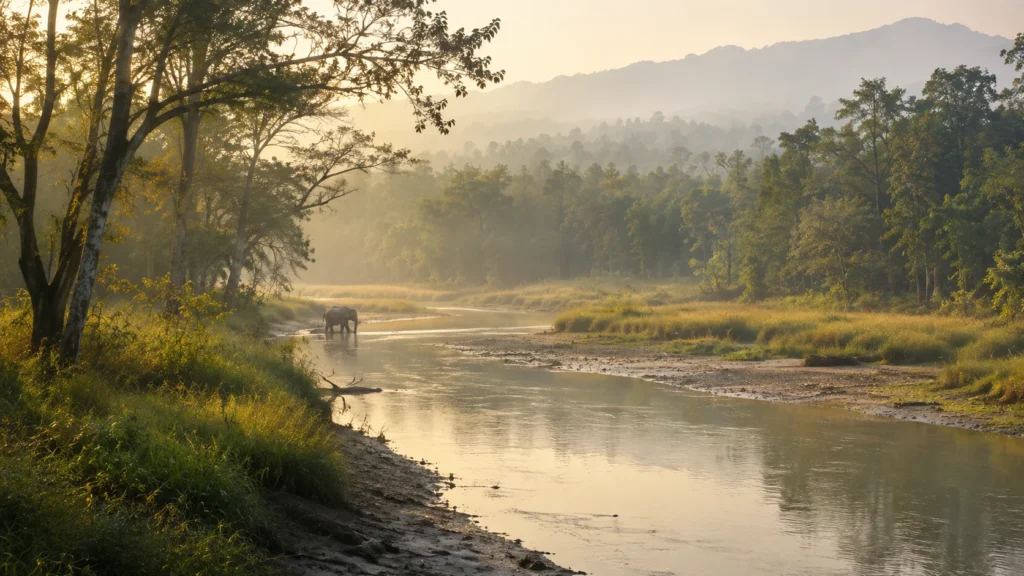
Bihar, situated primarily within the fertile Gangetic plains of eastern India, presents a unique ecological profile defined by vast riverine networks, extensive wetlands, and the sub-Himalayan foothills. The state is bisected by the Ganges, which, along with major tributaries such as the Gandak, Kosi, and Son, creates a dynamic landscape of floodplains and oxbow lakes. Although intensive agriculture and historical land-use patterns have restricted the state’s forest cover to under eight per cent, Bihar harbours critically important, highly specialised habitats. The natural vegetation transitions from the moist deciduous Terai-Bhabar forests in the northwestern district of West Champaran to the dry deciduous woodlands of the Kaimur plateau and the Jamui hills in the south.
The state’s wildlife conservation is anchored by the Valmiki Tiger Reserve, which forms a contiguous transboundary ecosystem with Nepal’s Chitwan National Park. This pristine Terai landscape supports thriving populations of the Bengal tiger, Indian leopard, sloth bear, and the state animal, the gaur. Equally significant is Bihar’s aquatic biodiversity, championed by the Vikramshila Gangetic Dolphin Sanctuary—India’s only protected area dedicated to the endangered South Asian river dolphin. The state’s extensive wetlands are ornithological havens; the Ramsar-designated Kabartal Wetland, recognised as Asia’s largest freshwater oxbow lake, and the recently designated Nagi and Nakti Bird Sanctuaries attract thousands of wintering waterfowl from the Central Asian Flyway.
Furthermore, the floodplains of Bhagalpur host a globally significant breeding population of the endangered greater adjutant stork. Conservation in Bihar presents distinct challenges, primarily balancing rapid agricultural and infrastructural demands with habitat preservation. State initiatives currently focus on wetland restoration, combating illegal sand mining, and strengthening anti-poaching frameworks. Wildlife tourism remains nascent but holds immense potential, particularly for specialised riverine and avian ecological tours, offering an untamed glimpse into the natural heritage of the Gangetic basin.
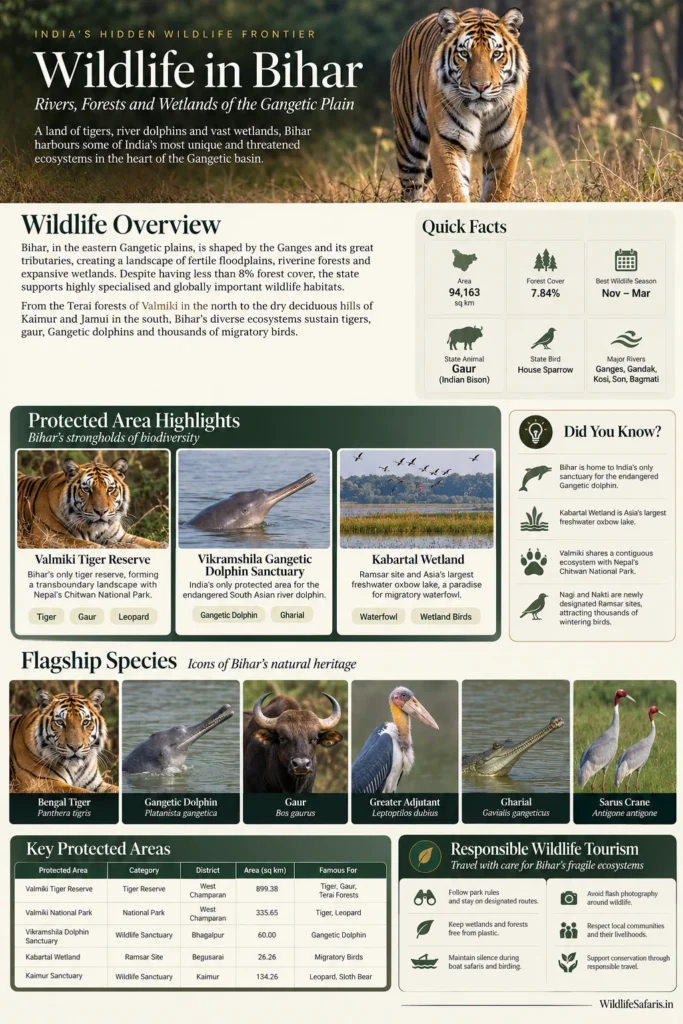
Quick Facts Table
| Category | Details |
| State / Union Territory | Bihar |
| Capital | Patna |
| Area | 94,163 sq km |
| Population | 104,099,452 (2011 Census) |
| Forest Cover | 7.84% |
| Official Language(s) | Hindi |
| Time Zone | UTC+05:30 (IST) |
| Best Wildlife Season | November to March |
State Wildlife Master Table
| Attribute | Details |
| State / Union Territory | Bihar |
| Capital | Patna |
| Geographic Region | Gangetic Plains and Shivalik Foothills |
| Total Area | 94,163 sq km |
| Forest Cover | 7.84% |
| State Animal | Gaur / Indian Bison (Bos gaurus) |
| State Bird | House Sparrow (Passer domesticus) |
| State Tree | Peepal (Ficus religiosa) |
| State Flower | Marigold (Tagetes erecta) |
| Highest Peak | Someshwar Fort (880 m) |
| Major Rivers | Ganges, Gandak, Kosi, Son, Bagmati |
| Major Forest Types | Tropical Moist Deciduous, Dry Deciduous, Terai Swamp |
| Biodiversity Hotspot | Not officially specified |
| UNESCO Natural Sites | None |
| Biosphere Reserves | None |
| Tiger Reserves | Valmiki Tiger Reserve |
| Elephant Reserves | Not officially specified |
| National Parks | Valmiki National Park |
| Wildlife Sanctuaries | 12 Sanctuaries (including Kaimur, Bhimbandh, Vikramshila Gangetic Dolphin, Gautam Buddha, Kanwar Jheel, Pant (Rajgir)) |
| Conservation Reserves | Gogabeel |
| Community Reserves | Not officially specified |
| Ramsar Sites | Kabartal Wetland, Nagi Bird Sanctuary, Nakti Bird Sanctuary |
| Important Bird Areas (IBAs) | Kabartal, Vikramshila, Kurseala Riverine Tract, Nagi Dam, Nakti Dam |
| Major Wildlife Corridors | Valmiki-Chitwan (Transboundary), Kaimur-Sanjay Dubri (Inter-state) |
| Flagship Mammals | Bengal Tiger, Gangetic Dolphin, Gaur, Sloth Bear, Indian Leopard |
| Flagship Birds | Greater Adjutant Stork, Bar-headed Goose, Sarus Crane, Indian Skimmer |
| Endemic Wildlife | Not officially specified (Fauna generally shared with wider Indo-Gangetic plains) |
| Best Wildlife Destinations | Valmiki TR, Vikramshila Sanctuary, Kabartal Wetland |
| Best Time for Wildlife Tourism | November to March |
| Nearest International Airports | Jay Prakash Narayan Airport (Patna), Gaya Airport |
| Official Forest Department Website | forest.bihar.gov.in |
Protected Areas Summary Table
| Protected Area | Category | District | Area (sq km) | Year Established | Famous For |
| Valmiki National Park | National Park | West Champaran | 335.65 | 1989 | Bengal Tiger, Gaur, Terai Landscape |
| Valmiki Tiger Reserve | Tiger Reserve | West Champaran | 899.38 | 1990 | Bengal Tiger, Indian Flying Fox, Bhabar Tracts |
| Kaimur Wildlife Sanctuary | Wildlife Sanctuary | Kaimur, Rohtas | 1,342.00 | 1979 | Indian Leopard, Sloth Bear, Blackbuck |
| Vikramshila Gangetic Dolphin Sanctuary | Wildlife Sanctuary | Bhagalpur | 50.00 (river stretch) | 1991 | Ganges River Dolphin, Gharial, Smooth-coated Otter |
| Bhimbandh Wildlife Sanctuary | Wildlife Sanctuary | Munger | 681.99 | 1976 | Hot Springs, Wild Boar, Indian Peafowl |
| Gautam Buddha Wildlife Sanctuary | Wildlife Sanctuary | Gaya (and Koderma, JH) | 259.46 | 1976 | Sloth Bear, Indian Leopard, Dry Deciduous Forests |
| Kanwar Jheel (Kabartal) Wildlife Sanctuary | Wildlife Sanctuary | Begusarai | 63.11 | 1989 | Wintering Waterfowl, Asia’s Largest Oxbow Lake |
| Pant (Rajgir) Wildlife Sanctuary | Wildlife Sanctuary | Nalanda | 35.84 | 1978 | Historical Topography, Rhesus Macaque, Barking Deer |
| Nagi Dam Bird Sanctuary | Wildlife Sanctuary | Jamui | 1.91 | 1984 | Bar-headed Goose, Migratory Birds |
| Nakti Dam Bird Sanctuary | Wildlife Sanctuary | Jamui | 3.32 | 1984 | Red-crested Pochard, Migratory Avifauna |
| Gogabeel Conservation Reserve | Conservation Reserve | Katihar | 0.88 | 2019 | Greater Adjutant Stork, Black Ibis |
Wildlife Highlights
- Top Mammals: Bengal Tiger, Ganges River Dolphin, Gaur (Indian Bison), Sloth Bear, Indian Leopard, Smooth-coated Otter, Striped Hyena.
- Top Birds: Greater Adjutant Stork, Bar-headed Goose, Sarus Crane, Indian Skimmer, Black-necked Stork, Spot-billed Pelican.
- Reptiles & Amphibians: Gharial, Mugger Crocodile, Indian Softshell Turtle, Russell’s Viper, Indian Rock Python.
- Flagship Flora: Sal (Shorea robusta), Khair (Senegalia catechu), Sissoo (Dalbergia sissoo), Bamboo, Lotus (in wetland ecosystems).
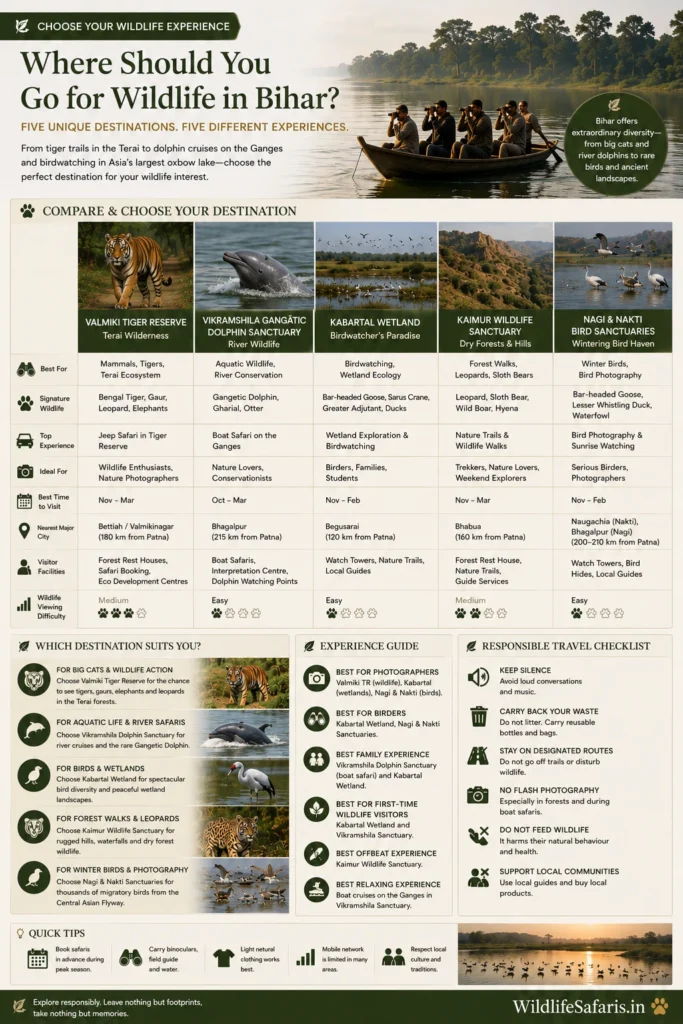
- Best Wildlife Experiences: River boat safari for dolphins in Vikramshila, Jeep safari in the Terai forests of Valmiki, Birdwatching at Kabartal Wetland, Nature walks around the Rajgir hills.
Conservation Challenges
- Sand Mining: Unregulated and illegal sand mining along the banks of the Ganges and its tributaries destroys critical nesting habitats for Gharials and Indian Skimmers.
- River Pollution: Agricultural runoff and industrial effluent discharge into the Ganges severely threaten aquatic ecosystems and the highly sensitive Ganges River Dolphin.
- Wetland Encroachment: The drainage and conversion of crucial wetlands, including portions of Kabartal, for agriculture significantly diminish habitats for migratory waterfowl.
- Human-Wildlife Conflict: Instances of crop raiding by wild herbivores and occasional encounters with leopards or tigers near the fringes of Valmiki and Kaimur.
- Habitat Fragmentation: Linear infrastructure projects and the expansion of rural settlements restrict the historical movement corridors of large mammals along the state borders.
- Poaching and Snaring: Localised incidents of trapping birds in wetland regions and poaching of smaller mammals for bushmeat.
Responsible Wildlife Tourism
- Regulated Boat Safaris: When observing Gangetic dolphins, use non-motorised boats or ensure motorised vessels maintain a slow, steady speed without pursuing or encircling the animals.
- Silence at Wetlands: Maintain strict silence at bird sanctuaries like Kabartal, Nagi, and Nakti to avoid flushing flocks of wintering waterfowl.
- No River Pollution: Never dispose of plastics, religious offerings, or any waste into the rivers or wetlands during aquatic safaris.
- Respect Safari Tracks: In Valmiki Tiger Reserve, strictly remain on designated forest department routes and follow the instructions of local guides.
- Support Eco-Development Committees (EDCs): Utilise services provided by local EDCs to ensure that tourism revenue aids local communities and incentivises conservation.
- Avoid Flash Photography: Do not use camera flashes, particularly when photographing nocturnal wildlife or nesting bird colonies.
Did You Know?
- The Vikramshila Gangetic Dolphin Sanctuary spans a 50-kilometre stretch of the Ganges and is the only protected area in India exclusively designated for the national aquatic animal.
- Kabartal (Kanwar Jheel) in Begusarai is formed by the meandering of the Gandak River and is recognised as the largest freshwater oxbow lake in Asia.
- The Kadwa Diara floodplains in Bhagalpur act as one of the very few natural breeding grounds in the world for the globally endangered Greater Adjutant Stork.
- Valmiki Tiger Reserve is Bihar’s sole tiger reserve and forms a critical transboundary wildlife corridor with Nepal’s Chitwan National Park.
- Bihar recently added two new Ramsar sites in 2024—Nagi and Nakti Bird Sanctuaries in the Jamui district, known for hosting massive flocks of wintering Bar-headed Geese.
- Kaimur Wildlife Sanctuary is the largest sanctuary in Bihar by area, spanning over 1,300 square kilometres, and is currently being developed to become the state’s second tiger reserve.
Safari Planning : Topics Cluster
- How to book a wildlife safari in India?
- Park by Park Online Safari Booking Guide
- Tiger Safari India Planning Workbook
- Park by Park Safari Permits Guide
- National Parks Permit Guide – Park by Park Guide
- Tatkal Safari Booking Guide – Last Minute Safari Permits Booking
- Tiger Safari in India Cost
- Indian Wildlife Safari Budget Planner
- Jeep vs Canter Safari
- Best time for Tiger Sightings in India
- How far advanced should you book safari permits?
- Can foreigners book Indian Wildlife Safari online?
- Special Permits Guide for Foreigners and Domestic Visitors
- How to book a Safari Permit online in India? 2026 step by step guide
- Senior Citizens Friendly Safari Planning
- Multi Generation Family Safari Planning
- 50 things to know before your first safari in India