
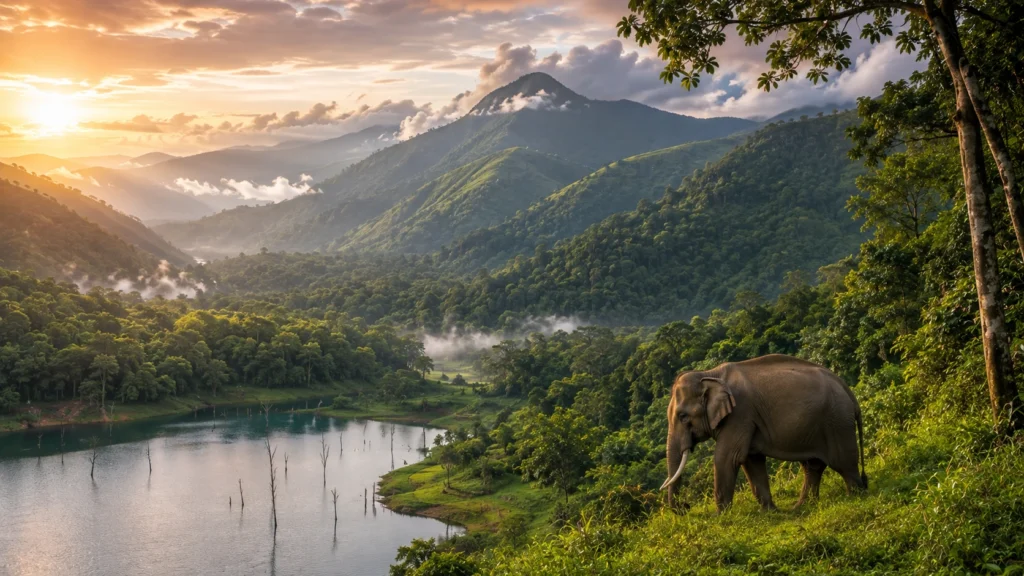
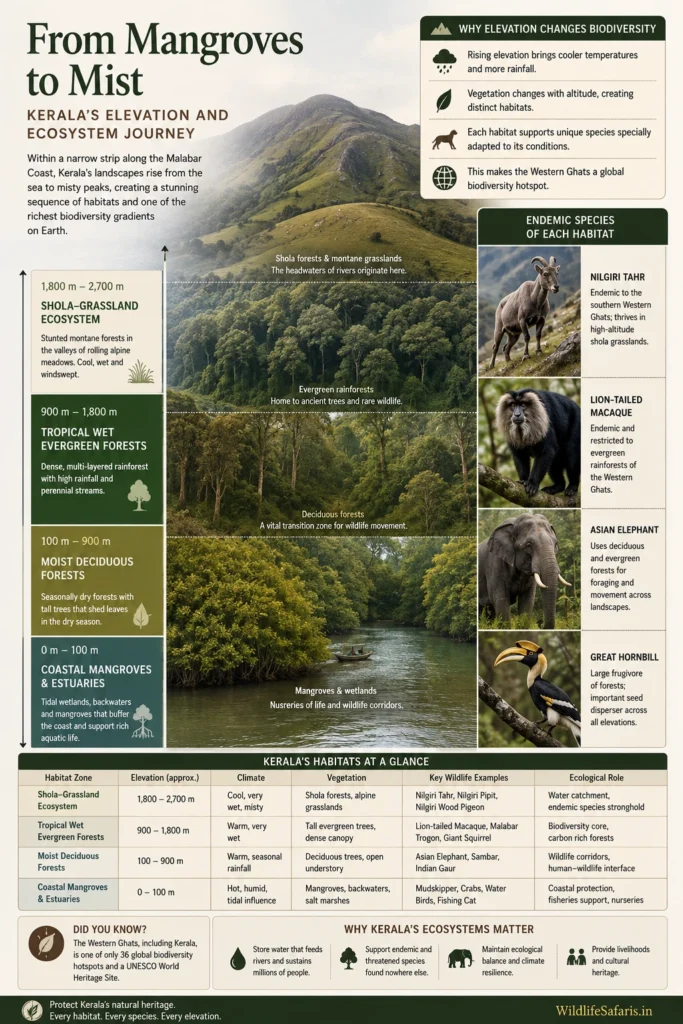
Kerala, famously branded as “God’s Own Country,” owes its ecological opulence to its strategic geographical alignment along the Malabar Coast, shielded by the soaring escarpments of the Western Ghats. This narrow, fertile strip of land experiences an intense tropical monsoon climate, receiving voluminous rainfall that nurtures one of the most biodiverse regions on the planet. The state boasts an impressive forest cover encompassing nearly fifty-five per cent of its geographical area. The vegetation gradient is highly distinct, transitioning from coastal mangrove estuaries and midland moist deciduous forests to the dense, primeval tropical wet evergreen canopies of the Western Ghats. At the highest elevations, this transitions into the unique shola-grassland ecosystem—stunted tropical montane forests nestled in the valleys of rolling alpine meadows.
The state’s wildlife is inextricably linked to the Nilgiri and Agasthyamalai Biosphere Reserves, which serve as critical evolutionary crucibles. Kerala harbours robust populations of the Asian elephant, its revered state animal, and the Bengal tiger, strictly protected within the globally acclaimed Periyar and Parambikulam Tiger Reserves. The high-altitude terrain of Eravikulam National Park operates as the global stronghold for the endangered Nilgiri tahr, a mountain ungulate endemic to the southern Western Ghats. Further north, the impenetrable rainforests of Silent Valley National Park protect the largest remaining wild populations of the highly endangered lion-tailed macaque.
Kerala is also a premier ornithological destination, with specialized habitats like the Thattekad Bird Sanctuary providing sanctuary to endemic species such as the Malabar grey hornbill, the Sri Lanka frogmouth, and the state bird, the magnificent great hornbill. The region’s intricate network of backwaters, including the Ramsar-designated Vembanad-Kol and Ashtamudi wetlands, sustains vital aquatic ecosystems and migratory flyways. Pioneering community-based eco-tourism initiatives, Kerala sets a benchmark for balancing intensive conservation mandates with sustainable, highly regulated wildlife tourism.
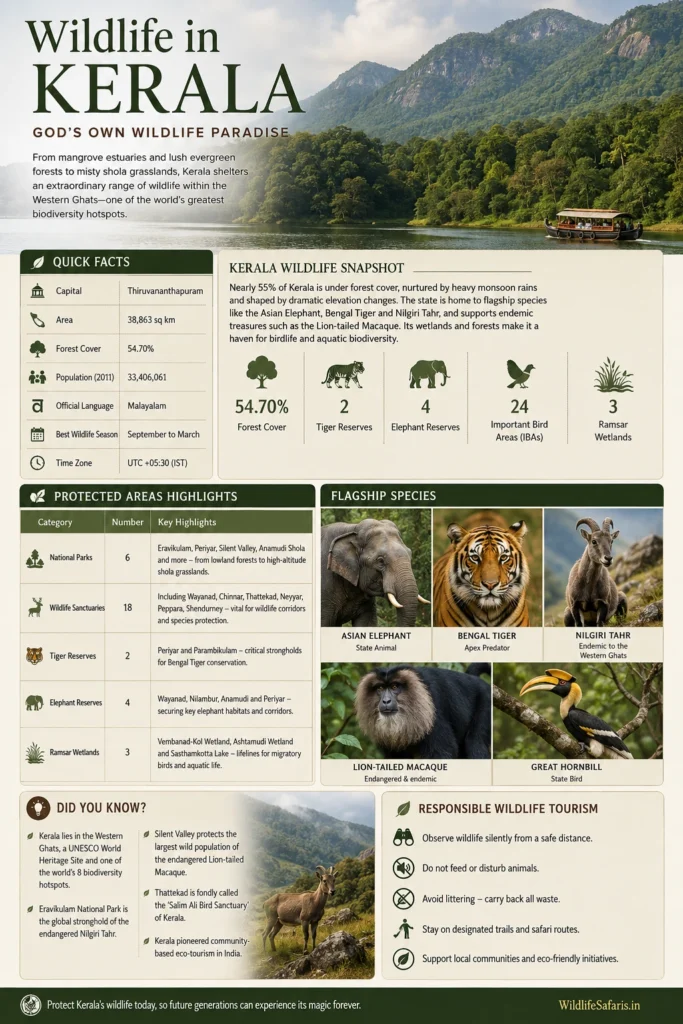
Quick Facts Table
| Category | Details |
| State / Union Territory | Kerala |
| Capital | Thiruvananthapuram |
| Area | 38,863 sq km |
| Population | 33,406,061 (2011 Census) |
| Forest Cover | 54.70% |
| Official Language(s) | Malayalam |
| Time Zone | UTC+05:30 (IST) |
| Best Wildlife Season | September to March |
State Wildlife Master Table
| Attribute | Details |
| State / Union Territory | Kerala |
| Capital | Thiruvananthapuram |
| Geographic Region | Malabar Coast and Western Ghats |
| Total Area | 38,863 sq km |
| Forest Cover | 54.70% |
| State Animal | Asian Elephant (Elephas maximus) |
| State Bird | Great Hornbill (Buceros bicornis) |
| State Tree | Coconut (Cocos nucifera) |
| State Flower | Golden Shower Tree / Kanikonna (Cassia fistula) |
| Highest Peak | Anamudi (2,695 m) |
| Major Rivers | Periyar, Bharathappuzha, Pamba, Chaliyar, Kabini |
| Major Forest Types | Tropical Wet Evergreen, Moist Deciduous, Shola Grasslands, Mangrove |
| Biodiversity Hotspot | Western Ghats |
| UNESCO Natural Sites | Western Ghats (Serial Nomination – multiple clusters) |
| Biosphere Reserves | Nilgiri Biosphere Reserve, Agasthyamalai Biosphere Reserve |
| Tiger Reserves | Periyar, Parambikulam |
| Elephant Reserves | Wayanad, Nilambur, Anamudi, Periyar |
| National Parks | Anamudi Shola, Eravikulam, Mathikettan Shola, Pampadum Shola, Periyar, Silent Valley |
| Wildlife Sanctuaries | 18 Sanctuaries (including Wayanad, Chinnar, Neyyar, Peppara, Shendurney, Thattekad) |
| Conservation Reserves | Kadalundi-Vallikkunnu |
| Community Reserves | Kadalundi |
| Ramsar Sites | Vembanad-Kol Wetland, Ashtamudi Wetland, Sasthamkotta Lake |
| Important Bird Areas (IBAs) | 24 IBAs including Thattekad, Silent Valley, Periyar, Vembanad |
| Major Wildlife Corridors | Wayanad-Bandipur-Mudumalai, Periyar-Agasthyamalai |
| Flagship Mammals | Asian Elephant, Bengal Tiger, Nilgiri Tahr, Lion-tailed Macaque |
| Flagship Birds | Great Hornbill, Sri Lanka Frogmouth, Malabar Trogon |
| Endemic Wildlife | Nilgiri Tahr, Lion-tailed Macaque, Purple Frog, Nilgiri Marten |
| Best Wildlife Destinations | Periyar TR, Eravikulam NP, Silent Valley NP, Wayanad WLS |
| Best Time for Wildlife Tourism | September to March |
| Nearest International Airports | Cochin (Kochi), Trivandrum (Thiruvananthapuram), Calicut (Kozhikode), Kannur |
| Official Forest Department Website | forest.kerala.gov.in |
Protected Areas Summary Table
| Protected Area | Category | District | Area (sq km) | Year Established | Famous For |
| Anamudi Shola National Park | National Park | Idukki | 7.50 | 2003 | Pristine Shola Forests, Endemic Flora |
| Eravikulam National Park | National Park | Idukki | 97.00 | 1978 | Nilgiri Tahr, Neelakurinji Flowers, Anamudi Peak |
| Mathikettan Shola National Park | National Park | Idukki | 12.82 | 2003 | Elephant Corridors, Shola Ecosystem |
| Pampadum Shola National Park | National Park | Idukki | 1.32 | 2003 | Nilgiri Marten, Leopards, Endemic Birds |
| Periyar National Park / Tiger Reserve | Tiger Reserve | Idukki, Pathanamthitta | 925.00 | 1982 (NP) / 1978 (TR) | Asian Elephant, Tiger, Boat Safaris, Lake |
| Silent Valley National Park | National Park | Palakkad | 89.52 | 1984 | Lion-tailed Macaque, Untouched Rainforests |
| Parambikulam Tiger Reserve | Tiger Reserve | Palakkad | 391.00 | 2009 (TR status) | Kannimara Teak, Gaur, Bengal Tiger |
| Chinnar Wildlife Sanctuary | Wildlife Sanctuary | Idukki | 90.44 | 1984 | Grizzled Giant Squirrel, Star Tortoise, Dry Scrub |
| Neyyar Wildlife Sanctuary | Wildlife Sanctuary | Thiruvananthapuram | 128.00 | 1958 | Agasthyamalai Landscape, Elephants, Crocodiles |
| Shendurney Wildlife Sanctuary | Wildlife Sanctuary | Kollam | 171.00 | 1984 | Gluta travancorica (endemic tree), Lion-tailed Macaque |
| Thattekad Bird Sanctuary | Wildlife Sanctuary | Ernakulam | 25.16 | 1983 | Sri Lanka Frogmouth, Dense Avifauna |
| Wayanad Wildlife Sanctuary | Wildlife Sanctuary | Wayanad | 344.44 | 1973 | Asian Elephant Herds, Tigers, Vultures |
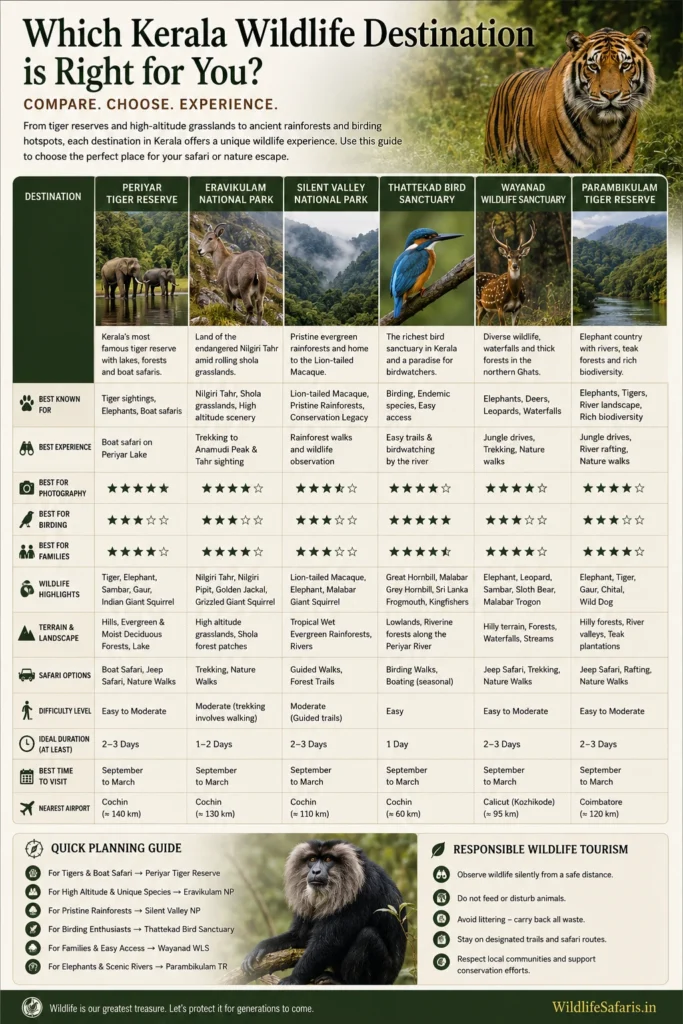
Wildlife Highlights
- Top Mammals: Asian Elephant, Bengal Tiger, Nilgiri Tahr, Lion-tailed Macaque, Indian Leopard, Gaur, Nilgiri Langur, Malabar Giant Squirrel, Nilgiri Marten.
- Top Birds: Great Hornbill, Sri Lanka Frogmouth, Malabar Trogon, Wynaad Laughingthrush, Indian Pitta, Black Baza, Nilgiri Wood Pigeon.
- Reptiles & Amphibians: King Cobra, Malabar Pit Viper, Purple Frog (Mahabali Frog), Indian Star Tortoise (Chinnar only), Mugger Crocodile.
- Flagship Flora: Neelakurinji (Strobilanthes kunthiana), Rosewood, Sandalwood, Teak, Ebony, extensive Bamboo, and highly endemic Shola-grassland mosaics.
- Best Wildlife Experiences: Boat safaris on Periyar Lake, high-altitude trekking to spot Nilgiri Tahr in Eravikulam, guided bamboo rafting in Parambikulam, and specialized birding walks in Thattekad.
Conservation Challenges
- Human-Wildlife Conflict: High human population density abutting forest fringes, particularly in Wayanad and Idukki, leads to frequent and severe conflicts with elephants, wild boars, and occasionally leopards over crop depredation and livestock loss.
- Habitat Fragmentation: Extensive commercial plantations (tea, rubber, cardamom, and coffee) have historically fractured vital wildlife corridors connecting the Anamalai and Nilgiri landscapes, restricting elephant migrations.
- Invasive Species: The aggressive spread of invasive weeds such as Senna spectabilis and Lantana camara, particularly in the Wayanad Wildlife Sanctuary, suppresses the growth of native fodder grasses, diminishing the carrying capacity for wild herbivores.
- Climate Change and Landslides: Altering monsoon patterns and changing land-use in the fragile Western Ghats lead to devastating landslides and flash floods, destroying habitats and washing away riparian ecosystems.
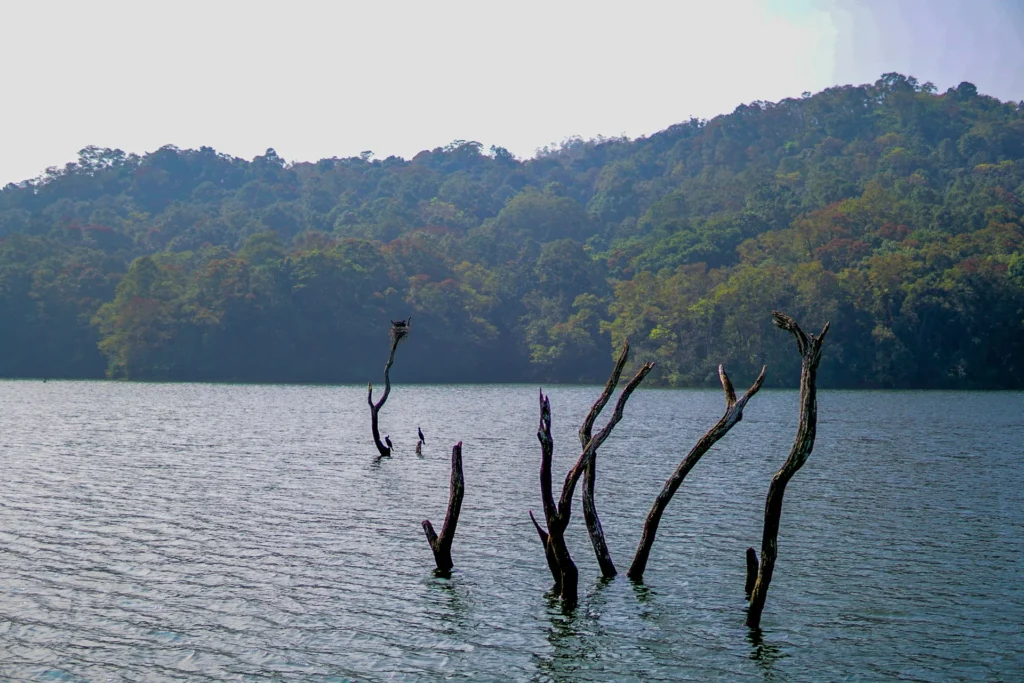
- Wetland Degradation: Ramsar sites like Vembanad Lake face severe stress from agricultural runoff, untreated sewage, unregulated houseboat tourism, and illegal land reclamation.
- Poaching: Although strictly monitored, occasional incidents of poaching for elephant ivory, sandalwood smuggling, and the illegal pet trade of endemic reptiles persist.
Responsible Wildlife Tourism
- Support Eco-Development Committees (EDCs): Opt for tourism packages run by local EDCs (highly successful in Periyar and Parambikulam). These initiatives ensure that former poachers and indigenous tribes are employed as expert naturalists.
- Maintain Silence on Boats: During boat safaris on Periyar Lake, remain seated, minimize movement, and maintain absolute silence to encourage elephants and tigers to approach the water’s edge.
- Respect High-Altitude Ecology: When visiting Eravikulam, stay strictly on the paved paths. The shola grasslands are incredibly fragile, and trampling destroys endemic flora and ground-nesting bird habitats.
- No Plastics in Forests: Kerala forest checkpoints strictly enforce plastic bans. Ensure all single-use plastics are left behind or handed over at the entry gates.
- Trek Responsibly: When undertaking the rigorous treks in Silent Valley or Agasthyakoodam, strictly follow the forest guard’s instructions and never venture off-trail.
- Avoid Flash Photography: Particularly crucial in dense canopy environments like Thattekad, where camera flashes easily disorient nocturnal species like the Sri Lanka Frogmouth.
Did You Know?
- Eravikulam National Park holds the largest surviving wild population of the endangered Nilgiri Tahr, an ungulate related to sheep and goats.
- The famous Neelakurinji flower, found in the high-altitude hills of Eravikulam and Munnar, blooms en masse only once every 12 years, turning the mountainside a vibrant purplish-blue.
- Silent Valley National Park is named not for a lack of sound, but historically due to the perceived absence of noisy cicadas, acting as one of the last undisturbed tracts of tropical moist evergreen forest in India.
- Unlike the rest of Kerala, the Chinnar Wildlife Sanctuary lies in the rain shadow region of the Western Ghats, featuring a dry, thorny scrub forest and serving as the only habitat in the state for the Indian Star Tortoise.
- The Kannimara Teak, located in the Parambikulam Tiger Reserve, is reputed to be one of the world’s oldest and largest living teak trees, with an estimated age of over 450 years.
- Thattekad Bird Sanctuary was described by the legendary ornithologist Dr. Salim Ali as the richest bird habitat in peninsular India.
Safari Planning : Topics Cluster
- How to book a wildlife safari in India?
- Park by Park Online Safari Booking Guide
- Tiger Safari India Planning Workbook
- Park by Park Safari Permits Guide
- National Parks Permit Guide – Park by Park Guide
- Tatkal Safari Booking Guide – Last Minute Safari Permits Booking
- Tiger Safari in India Cost
- Indian Wildlife Safari Budget Planner
- Jeep vs Canter Safari
- Best time for Tiger Sightings in India
- How far advanced should you book safari permits?
- Can foreigners book Indian Wildlife Safari online?
- Special Permits Guide for Foreigners and Domestic Visitors
- How to book a Safari Permit online in India? 2026 step by step guide
- Senior Citizens Friendly Safari Planning
- Multi Generation Family Safari Planning
- 50 things to know before your first safari in India
Luxury Safari in India : Topics Cluster
- Luxury Safari in India – Expert Planning Guide
- Luxury Wildlife Safari India Budget Guide
- Top 100 Wildlife Resorts in India
- Eco-friendly Wildlife Resorts
- Best 50 Jungle Camps in India
- Best Wildlife Resorts in India : 16 Safari Lodges
- Best Wildlife Tour Operators in India
Periyar National Park : Topics Cluster
- Periyar National Park Safari Guide
- Periyar Detailed Guide
- Best Resorts near Periyar National Park
- Periyar Wildlife Landscape
- Thattekad Bird Sanctuary
- Western Ghats Biodiversity
- Indian Elephant Guide
- Elephant Landscapes of India
- Wildlife in Kerala
- Wildlife Tourism in Kerala
- Mathikettan Shola National Park
- Nilgiri Biosphere Reserve Guide