
Discover essential facts about the Asiatic lion, its dry forest habitat in Gujarat, key differences from African lions, and critical conservation updates.
Introduction
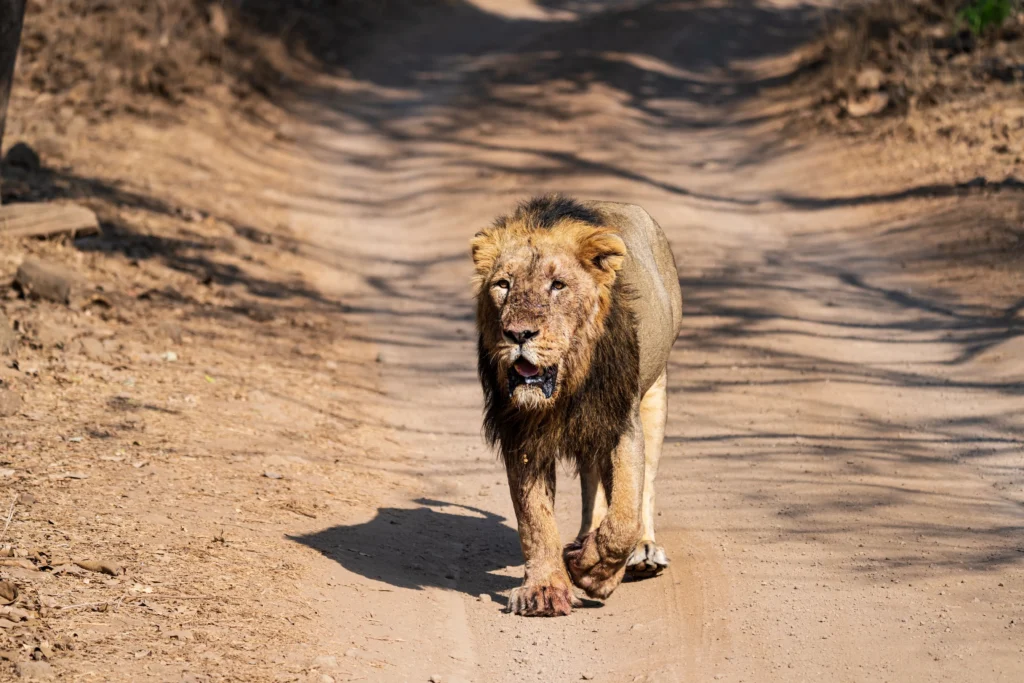
Understanding the status, behavior, and distribution of the Asiatic lion is essential for anyone interested in big cat conservation or planning a wildlife safari in India. Once widely distributed across Southwest Asia, this distinct population now survives within a highly specific geographical footprint.
For travelers and researchers alike, the story of the Asiatic lion is not just about observing a large predator in the wild. It represents a complex ecological narrative involving intensive habitat management, taxonomic reclassifications, and ongoing coexistence challenges within multi-use human landscapes. This guide provides a factual overview of the species’ current biological standing and conservation reality.
Asiatic Lion Species Profile: Classification and Features
Scientific Name and Taxonomic Context
When researching the Asiatic lion, you will encounter shifting terminology regarding its scientific classification. Historically, the Asiatic lion has been widely cataloged under the scientific name Panthera leo persica in numerous conservation and regional reference systems.
However, taxonomic understandings evolve based on newer genetic and morphological evaluations. Current scientific treatments and updates from authorities such as Britannica note that the traditional subspecies classification is subject to debate. In newer taxonomic arrangements, the Asiatic lion is increasingly grouped under the broader nomenclature of Panthera leo leo. Recognizing this dual classification is useful when cross-referencing older field guides with modern academic literature.
Size, Weight, and Physical Characteristics
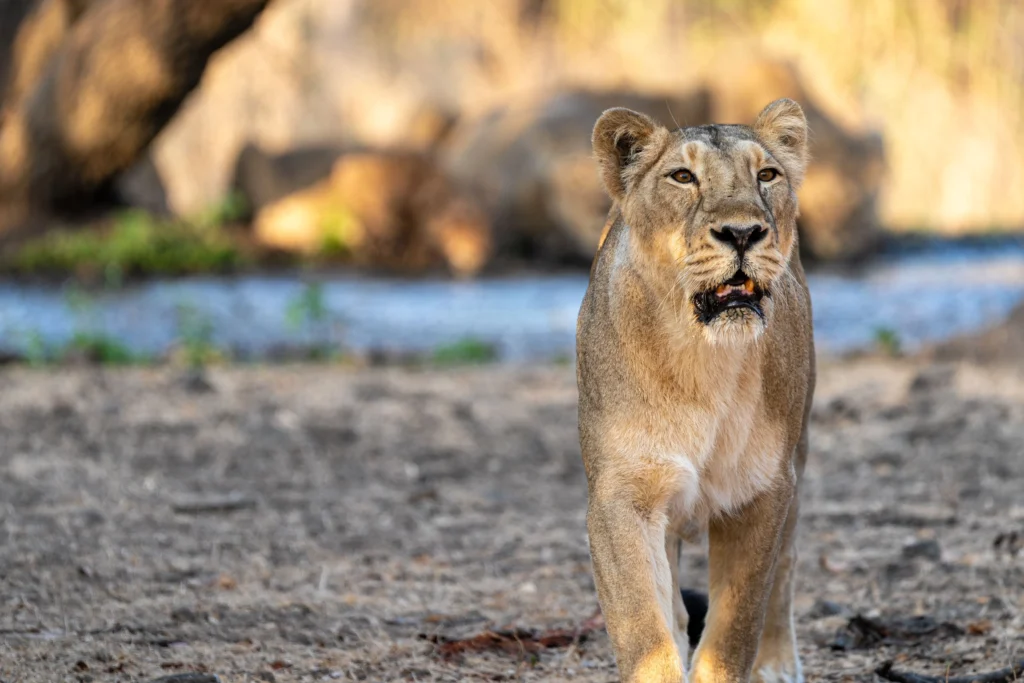
Image: An Asiatic Lioness. Females are considerably smaller in size and lack the distinctive mane.
For safari visitors attempting to identify these cats in the field, several distinct morphological markers set the Asiatic lion apart from its African counterparts.
Adult Asiatic lions are slightly smaller than African lions. Their body mass and dimensions follow a predictable sexual dimorphism:
- Adult Males: Typically weigh between 160 and 190 kg.
- Adult Females: Generally weigh between 110 and 120 kg.
The most reliable diagnostic feature to look for in the wild is a longitudinal fold of skin that runs along the entirety of the lion’s belly. This structural belly fold is highly distinctive and is rarely seen in African lion populations, making it the primary visual identifier for field naturalists.
Field Note: Observing the Belly Fold
When tracking lions during a morning drive, look at the lower flank and abdomen as the animal walks parallel to your vehicle. The longitudinal skin fold hangs loosely along the underside, providing a clear visual confirmation of the Asiatic subspecies even when the mane or facial features are obscured by scrub vegetation.
Asiatic Lion Quick Facts Profile
The table below outlines the foundational biological and conservation parameters established by primary wildlife authorities:
| Parameter | Factual Baseline | Source Reference |
| Scientific Name | Panthera leo persica / Panthera leo leo | WWF India / Britannica |
| IUCN Red List Status | Vulnerable | WWF India |
| Wild Population Estimate | 523 to 700 individuals | WWF India / Britannica |
| Male Mass Range | 160–190 kg | WWF India |
| Female Mass Range | 110–120 kg | WWF India |
| Primary Physical Marker | Longitudinal belly fold | WWF India / Britannica |
| Legal Protection Status | Schedule I (India Wildlife Act) | WWF India |
Habitat and Range: Where Do Asiatic Lions Live?
Wild Asiatic lions live primarily in the Gir National Park and Wildlife Sanctuary and the surrounding habitats in the Saurashtra region of Gujarat. This geographic concentration means that Gujarat is the only state in India—and the only place in the world—where this specific population is found in the wild.
The Gir Protected Area Matrix
Rather than being confined to a strictly enclosed reserve, Asiatic lions inhabit a complex protected area network. They exist within a multiple-use matrix that includes core forest zones alongside human-dominated spaces. Because the lions navigate these shared spaces, community coexistence is a central management topic for their continued survival.
The strategic importance of wildlife corridors is critical in this region. These corridors allow lions to move between habitat patches, which is vital for maintaining the population as they expand beyond the core national park boundaries.
This ecosystem supports a robust food web that sustains lion ecology. The primary prey base includes chital, sambar, wild boar, nilgai, blackbuck antelope, and water buffalo. The wider landscape also supports various scavengers and other predators, including crocodiles in the adjacent wetland systems.
Dry Forest and Scrub Environments
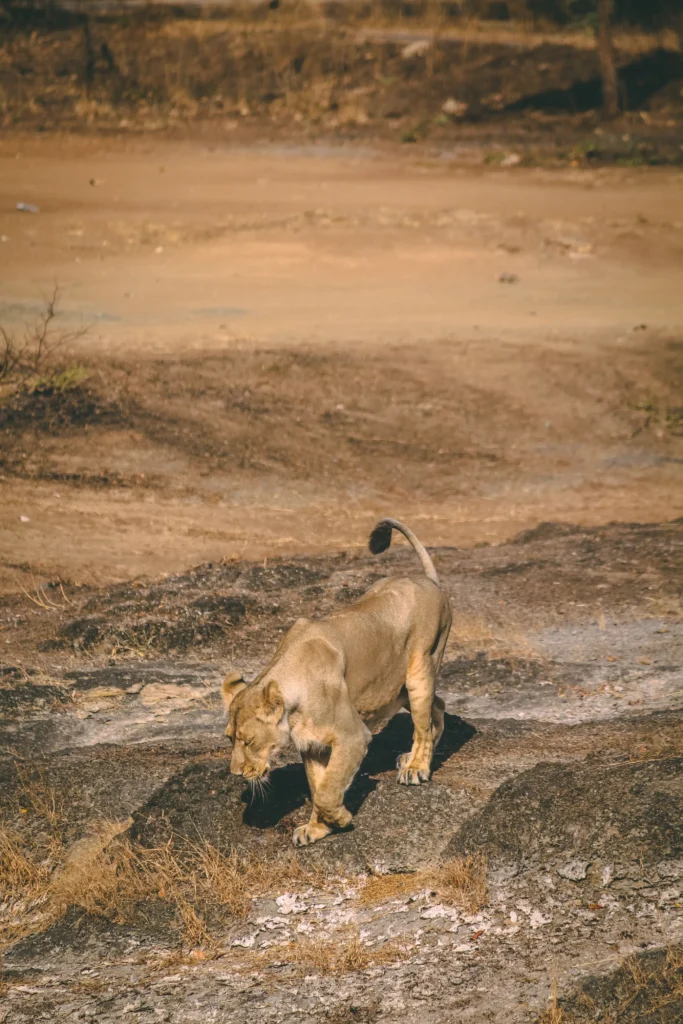
The specific vegetation of the Saurashtra region dictates much of the lion’s movement and behavior. Asiatic lions prefer to inhabit dry deciduous forests and open grassy scrublands. This dense, thorny vegetation provides necessary cover for both stalking prey and resting during the heat of the day.
Responsible Tourism Tip: Managing tourism pressure is a recognized conservation concern in the Gir landscape. Because lions frequently move through multi-use areas rather than an isolated wilderness, visitors must prioritize responsible safari operators who adhere to park regulations and respect the delicate balance of community coexistence.
Conservation Status and Population Dynamics
Current Wild Population Estimates
When evaluating the stability of the Asiatic lion, it is necessary to analyze numbers from distinct authoritative sources. WWF India lists the wild population at 523 individuals. Meanwhile, broader reference authorities such as Britannica state that the wild population ranges roughly between 500 and 700 lions.
When tracking these metrics, conservation researchers emphasize the importance of separating wild population health from captive numbers. While a significant captive population exists globally, these individuals do not contribute to the ecological dynamics or immediate survival resilience of the wild population interacting within the Gujarat ecosystem.
Official Protection Status
The Asiatic lion is shielded by rigorous national and international legal frameworks. Within India, the species is listed under Schedule I of the Wildlife (Protection) Act, which provides the highest level of legal protection and penalties against hunting or harassment. Internationally, it is classified under CITES Appendix I, which strictly prohibits commercial international trade of the species or its parts.
Regarding its global threat category, there is nuance to maintain. While older references frequently utilized the term “endangered,” current assessments by WWF India list the lion as Vulnerable on the IUCN Red List. Britannica similarly notes that the broader lion species carries a vulnerable status. Labeling the animal as vulnerable rather than endangered reflects modern taxonomic and conservation listings, though the threats it faces remain acute.
The Single-Population Vulnerability Risk
A common misconception in wildlife tourism is that a growing population signifies a fully resolved conservation challenge. While the upward trajectory of lion numbers in Gujarat is a management success, the entire wild population remains concentrated within a single geographic region: the Saurashtra peninsula.
This extreme geographic concentration presents a severe systemic risk. Because the lions are not distributed across independent regional pockets, the entire wild population is vulnerable to catastrophic events. A single localized disaster, such as a severe epidemic or a highly transmissible disease outbreak, could potentially decimate the entire wild population due to the lack of geographic isolation.
Primary Threats Impacting Lion Survival
+—————————————————————————-+
| KEY CONSERVATION THREATS |
+————————————+—————————————+
| Linear Infrastructure | Roads & railways dissecting corridors |
+————————————+—————————————+
| Localized Physical Hazards | Open, unguarded agricultural wells |
+————————————+—————————————+
| Genetic Bottleneck | Low diversity from single population |
+————————————+—————————————+
| Anthropogenic Pressures | Temple pilgrim traffic & tourism |
+————————————+—————————————+
Linear Infrastructure and Habitat Fragmentation
As the lion population expands beyond the core boundaries of Gir National Park, individuals increasingly navigate multi-use human landscapes. The expansion of linear infrastructure presents a direct challenge to this movement. Roads and railways cutting through the Gir landscape cause severe habitat fragmentation, interrupting established wildlife corridors and increasing the frequency of accidental wildlife mortalities from vehicular and train collisions.
Open Wells and Anthropogenic Pressures
The multi-use matrix surrounding the protected forest consists of extensive agricultural lands. Within these areas, thousands of open, unguarded irrigation wells dug by farmers pose a constant physical hazard. Lions moving through these fields at night regularly fall into these structures, leading to preventable drownings.
Furthermore, human presence within the protected area network generates distinct management pressures. Temple traffic—caused by large volumes of pilgrims visiting historical shrines located inside the sanctuary boundaries—creates chronic disturbance, noise, and vehicular movement within sensitive wildlife habitats. Poaching also remains a persistent management concern, necessitating constant vigilance, intelligence networks, and anti-poaching patrols.
Genetic Bottlenecks and Disease Risks
Because the entire wild population recovered from a severely depleted number of individuals in the past, the modern population exhibits low genetic diversity. This historic bottleneck makes the lions prone to genetic inbreeding.
From a researcher’s perspective, the combination of a genetic bottleneck and a single-population concentration multiplies the risk of disease. With limited genetic variation, the population’s collective immune response is uniform, meaning an introduced pathogen could clear through the population far more destructively than it would in a genetically diverse, widespread species. This reality underpins ongoing scientific discussions regarding the long-term necessity of establishing a second wild population outside the state.
Expert Tip: Understanding Population Risks When reading conservation updates, look closely at the distribution of the species rather than just the total census number. A species with 600 individuals confined to one landscape faces a much higher threat of sudden extinction than a species with the same number of individuals spread across three distinct, unconnected habitats.
Asiatic Lion vs. African Lion: Key Differences
It is common for travelers and students to assume all lions are identical, but the Asiatic lion is distinct from its African relatives in appearance, range, and conservation context.
Physical and Behavioral Variance
The most reliable field marker distinguishing the two is the longitudinal fold of skin running along the belly of the Asiatic lion. This physical trait is prominent in Asiatic lions but generally absent in African lions. Additionally, Asiatic lions are slightly smaller; an adult Asiatic male tops out around 160–190 kg, whereas African males frequently exceed 200 kg.
Range and Conservation Comparisons
While African lions are distributed across multiple sub-Saharan countries in diverse habitats, the Asiatic lion is restricted entirely to the dry deciduous forests and open grassy scrublands of Saurashtra, Gujarat. Because African lions exist in numerous fragmented populations across a massive continent, their conservation challenges differ significantly from the single-population vulnerability facing the Asiatic lion.
Asiatic vs. African Lion Comparison Matrix
| Feature | Asiatic Lion | African Lion |
| Primary Visual Identifier | Prominent longitudinal belly fold | Belly fold generally absent |
| Male Weight Range | 160–190 kg | 150–225+ kg |
| Wild Range | Exclusively Gujarat, India (Gir landscape) | Sub-Saharan Africa |
| Habitat Preference | Dry deciduous forest, grassy scrublands | Savanna, grasslands, open woodlands |
| Population Distribution | Single contiguous population | Multiple populations across countries |
| IUCN Status | Vulnerable | Vulnerable |
Common Misconceptions About Asiatic Lions
Even among experienced wildlife enthusiasts, several misunderstandings persist regarding the status of Indian big cats:
- “Asiatic lions live across India.” This is incorrect. The entire wild population is concentrated exclusively in Gujarat’s Gir landscape and its immediate surroundings.
- “Vulnerable means safe.” The IUCN Vulnerable status simply reflects modern taxonomic classification; the species still faces severe risks from habitat fragmentation and disease.
- “Only poaching threatens lions.” While poaching is a management concern, open agricultural wells, roads, railways, and genetic inbreeding pose much larger systemic threats to the species’ long-term survival.
- “Captive lions reduce the need for wild habitat conservation.” A large captive population exists globally, but captive breeding does not replicate wild ecosystem dynamics or solve the spatial challenges of the Gir landscape.
- “A growing population means conservation is solved.” An increasing number of lions confined to a single geographic area actually increases the urgency for landscape connectivity and disease management.
Frequently Asked Questions
What is the scientific name of the Asiatic lion? Historically, conservation reference systems have classified the Asiatic lion as Panthera leo persica. However, modern taxonomic discussions increasingly group it under the broader classification of Panthera leo leo.
How many Asiatic lions are left in the wild? According to WWF India, the estimated wild population is 523 individuals. Other reference authorities, such as Britannica, place the estimate roughly between 500 and 700 wild lions.
Is the Asiatic lion endangered or vulnerable? Currently, WWF India and the IUCN Red List classify the Asiatic lion as Vulnerable. The term “endangered” applies only to older assessments of the species.
Why are Asiatic lions only found in Gujarat? While they once roamed across Southwest Asia, habitat loss and historic hunting decimated the population. The Gir forest served as their last remaining refuge, making it the only place on Earth where they survive in the wild today.
How do you distinguish an Asiatic lion from an African lion? Look for the distinct longitudinal fold of skin along the belly, which is the defining physical characteristic of the Asiatic lion. They are also slightly smaller in overall body mass.
What do wild Asiatic lions eat? Their primary prey base includes chital, sambar, wild boar, nilgai, antelope, and water buffalo.
What is the primary threat to their long-term survival? The greatest systemic threat is the vulnerability of having only a single geographic population, which makes them highly susceptible to genetic inbreeding and localized disease outbreaks. Immediate physical threats include habitat fragmentation from linear infrastructure and open, unguarded wells.
Conclusion: The Future of the Asiatic Lion
The recovery of the Asiatic lion within the Gir Protected Area is a significant achievement in Indian wildlife management. Moving from a severely depleted genetic bottleneck to a population of 500 to 700 individuals required decades of rigorous anti-poaching efforts, habitat protection, and community engagement.
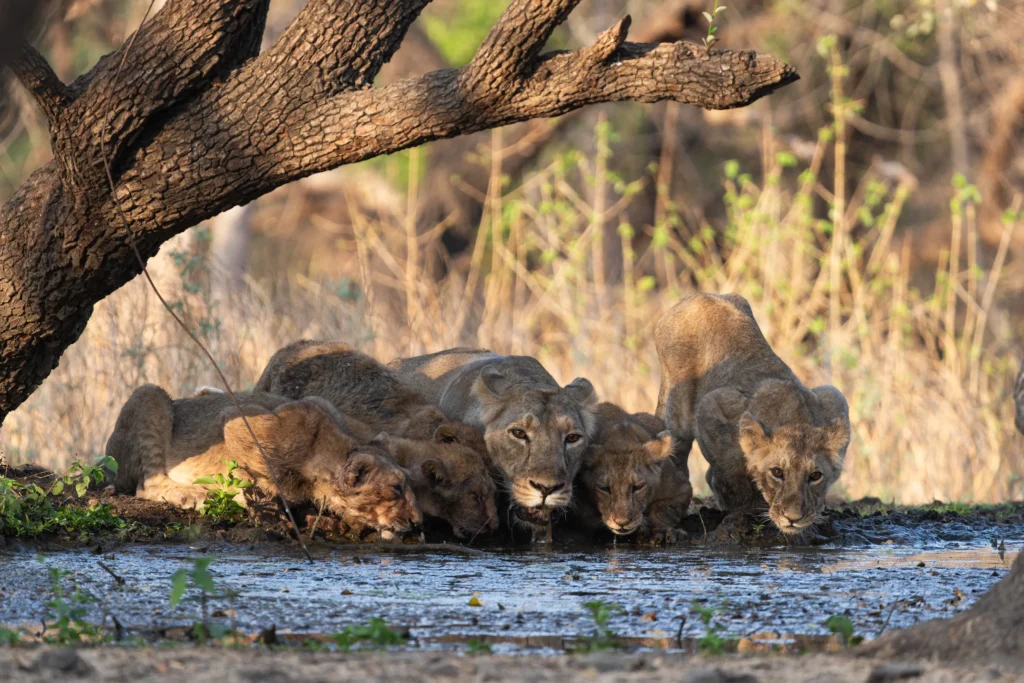
However, the conservation narrative is shifting. The priority is no longer just increasing the raw census number of lions within a single park. The future survival of the species relies on managing multiple-use landscapes, securing wildlife corridors, mitigating human-wildlife conflict, and addressing the serious risks associated with a single, isolated population.
For travelers, visiting the Gir landscape carries a responsibility. By choosing registered, ethical safari operators and respecting park guidelines, you support an ecosystem where lions and local communities must continually navigate coexistence. Staying informed about the species’ actual threats—beyond tourism marketing—is the first step in supporting meaningful conservation.
Last Updated: August 2026
Gir National Park : Topics Cluster
- Gir Detailed Guide
- Gir National Park Quick Guide
- Ahmedabad to Gir Travel Guide
- Best Resorts near Gir National Park
- Asiatic lion
- Wildlife in Gujarat
- Biodiversity in Western India
- Wildlife tourism in Gujarat
- Scrub land ecosystem (upcoming)
- Can foreigners book Indian Safari online?
- Park by Park Online Safari Booking Guide
- Best National Parks for Beginners
Safari Planning : Topics Cluster
- How to book a wildlife safari in India?
- Park by Park Online Safari Booking Guide
- Tiger Safari India Planning Workbook
- Park by Park Safari Permits Guide
- National Parks Permit Guide – Park by Park Guide
- Tatkal Safari Booking Guide – Last Minute Safari Permits Booking
- Tiger Safari in India Cost
- Indian Wildlife Safari Budget Planner
- Jeep vs Canter Safari
- Best time for Tiger Sightings in India
- How far advanced should you book safari permits?
- Can foreigners book Indian Wildlife Safari online?
- Special Permits Guide for Foreigners and Domestic Visitors
- How to book a Safari Permit online in India? 2026 step by step guide
- Senior Citizens Friendly Safari Planning
- Multi Generation Family Safari Planning
- 50 things to know before your first safari in India