
Explore the definitive guide to the 8 wildlife regions and 18 Biosphere Reserves of India. Discover zoning, biodiversity, UNESCO MAB status, and landscape connectivity.
The Indian subcontinent is a biogeographical marvel, sitting at the convergence of the Indomalayan and Palearctic realms.This unique positioning, combined with dramatic altitudinal gradients and climatic extremes, makes India one of the 17 megadiverse countries globally, sheltering four of the world’s 36 recognized biodiversity hotspots. To truly understand India’s wilderness, one must look beyond political state borders and explore the country through its distinct ecological landscapes. This definitive hub page breaks down the subcontinent into 8 major wildlife regions. It serves as your central gateway to exploring the species, habitats, and massive conservation landscapes—specifically the Biosphere Reserve network—that keep these ecosystems thriving.
The 8 Wildlife Regions of India
Explore the distinct ecological zones that define India’s natural heritage. Each region below connects directly to our in-depth guides covering their respective habitats, flagship species, and critical Biosphere Reserves.
1. Himalayan Region
Stretching across India’s northern frontier, this globally significant mountain range features steep altitudinal gradients transitioning from subtropical forests to alpine tundra and permanent glaciers. It is a critical watershed and a sanctuary for highly adapted montane species.
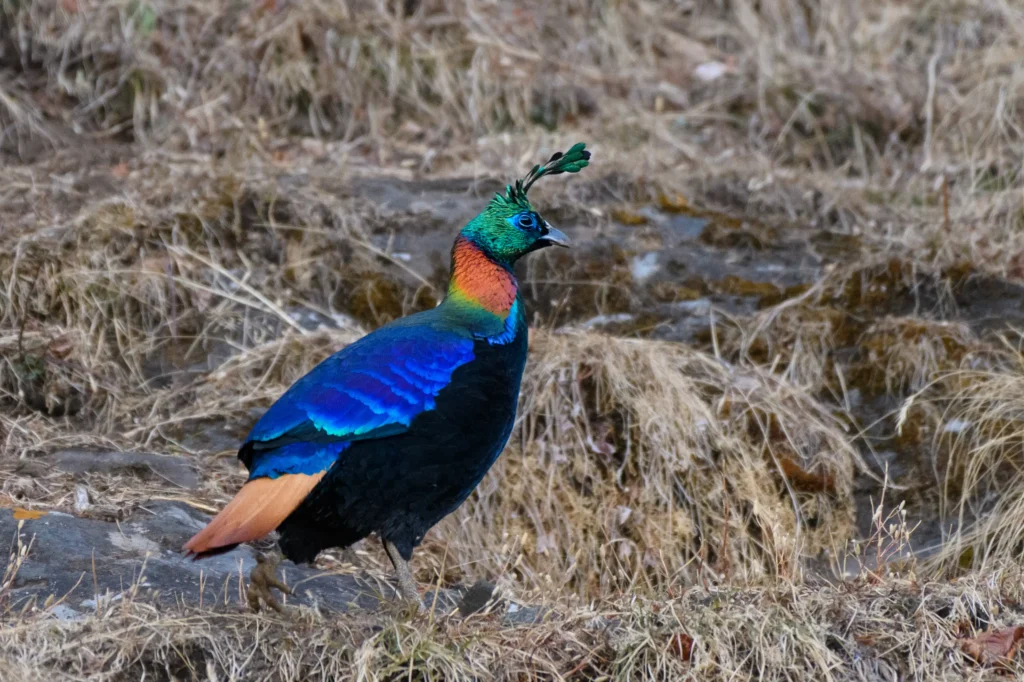
- Flagship Species: Snow Leopard, Red Panda, Himalayan Musk Deer, Himalayan Monal.
- Iconic Destinations: Nanda Devi National Park, Valley of Flowers, Great Himalayan National Park.
- Conservation Hubs: Discover the Nanda Devi and Khangchendzonga Biosphere Reserves.
2. Trans-Himalayan Region
Lying in the rain shadow of the Greater Himalayas, this high-altitude cold desert features vast, barren plateaus, scree slopes, and ancient glacial valleys. It represents a fragile, hyper-arid ecosystem essential for Palearctic lineages.
- Flagship Species:Snow Leopard, Siberian Ibex, Tibetan Wolf, Black-necked Crane.
- Iconic Destinations: Hemis National Park, Pin Valley National Park, Changthang Wildlife Sanctuary.
- Conservation Hubs: Discover the Cold Desert Biosphere Reserve.
3. Indo-Gangetic & Central Highlands
The ecological heartland of India, acting as a massive transitional zone between the fertile northern plains and the ancient peninsular plateaus. Known for its sprawling tropical deciduous forests, this region is globally vital for the conservation of apex predators.
- Flagship Species:Bengal Tiger, Indian Leopard, Gaur, Hard-ground Barasingha, Sloth Bear.
- Iconic Destinations: Kanha, Bandhavgarh, Pench, and Panna Tiger Reserves.
- Conservation Hubs: Discover the Achanakmar–Amarkantak, Pachmarhi, and Panna Biosphere Reserves.
4. Eastern Highlands & Eastern Ghats
A geologically ancient, fractured landscape of undulating hills and plateaus stretching along India’s eastern seaboard. It is defined by deep river valleys and massive tracts of Sal and highly endemic Red Sanders forests.
- Flagship Species: Asian Elephant, Melanistic Bengal Tiger, Slender Loris, Yellow-throated Bulbul.
- Iconic Destinations: Similipal National Park, Sri Venkateswara National Park, Satkosia Tiger Reserve.
- Conservation Hubs: Discover the Similipal and Seshachalam Hills Biosphere Reserves.
5. Western Ghats
A monumental escarpment running parallel to the western coast, older than the Himalayas, and recognized as a global biodiversity hotspot. It arrests the monsoon winds, creating incredibly complex wet evergreen forests, shola-grasslands, and unparalleled amphibian endemism.
- Flagship Species:Lion-tailed Macaque, Nilgiri Tahr, Asian Elephant, Great Hornbill, Purple Frog.
- Iconic Destinations: Bandipur, Nagarhole, Periyar, and Silent Valley National Parks.
- Conservation Hubs: Discover the Nilgiri and Agasthyamalai Biosphere Reserves.
6. North-East India
A staggeringly complex biogeographical junction where the Indo-Malayan, Palearctic, and Sino-Himalayan realms meet. Defined by the Brahmaputra floodplains, dense tropical rainforests, and rolling hills, it boasts some of the highest rainfall and biodiversity densities on Earth.
- Flagship Species:Greater One-horned Rhinoceros, Hoolock Gibbon, Clouded Leopard, Pygmy Hog.
- Iconic Destinations: Kaziranga, Manas, Namdapha, and Nokrek National Parks.
- Conservation Hubs: Discover the Manas, Dibru-Saikhowa, Dihang-Dibang, and Nokrek Biosphere Reserves.
7. Desert & Semi-Arid Region
Encompassing the Thar Desert and the dynamic salt flats of the Rann of Kachchh, this sun-scorched landscape requires extreme halophytic and xerophytic adaptations. It transforms seasonally, hosting massive migratory bird populations.
- Flagship Species:Indian Wild Ass, Great Indian Bustard, Desert Fox, Greater Flamingo.
- Iconic Destinations: Desert National Park, Wild Ass Sanctuary, Velavadar Blackbuck National Park.
- Conservation Hubs: Discover the Kachchh Biosphere Reserve.
8. Coastal & Island Ecosystems
Stretching across a 7,500 km mainland coastline and encompassing the remote Andaman, Nicobar, and Lakshadweep archipelagos. This region features the world’s largest contiguous mangroves, ancient coral atolls, and pristine equatorial rainforests.
- Flagship Species: Dugong, Estuarine Crocodile, Leatherback Sea Turtle, Nicobar Megapode.
- Iconic Destinations: Sundarbans National Park, Gulf of Mannar Marine National Park, Campbell Bay.
- Conservation Hubs: Discover the Sundarbans, Gulf of Mannar, and Great Nicobar Biosphere Reserves.
India’s Biosphere Reserve Network: A Landscape-Level Approach to Conservation
For decades, traditional wildlife conservation in India focused heavily on the exclusionary “fortress conservation” model—creating strict National Parks dedicated primarily to protecting charismatic megafauna like tigers, rhinos, and elephants. However, wildlife does not adhere to political boundaries. To protect the vast, interconnected ecosystems required to sustain long-term genetic viability, a broader, integrated approach was necessary.
Initiated globally by the United Nations Educational, Scientific and Cultural Organization (UNESCO) in 1971 under the Man and the Biosphere (MAB) Programme, the biosphere reserve concept represents a paradigm shift. Rather than viewing human presence as inherently antagonistic to nature, this framework recognizes that indigenous communities are integral components of the ecological landscape. India adopted this framework in 1986. Today, the network has expanded to 18 designated reserves, chosen to represent the nation’s distinct biogeographic zones.
The Zonation System: How Biosphere Reserves Work
Every biosphere reserve is demarcated into three distinct, interdependent zones:
- The Core Zone (Strict Protection): A strictly protected ecosystem, typically a National Park or Wildlife Sanctuary, where human activity is limited to non-destructive research and monitoring.
- The Buffer Zone (Cooperative Conservation): Surrounding the core, this area acts as a protective shock-absorber. Activities here include eco-tourism, environmental education, and sustainable extraction of non-timber forest produce.
- The Transition Zone (Sustainable Development): The outermost ring featuring agricultural lands and human settlements. The goal here is to foster sustainable economic development that harmonizes with the natural environment.
Government of India Notification vs. UNESCO MAB Recognition
The designation of a Biosphere Reserve begins at the national level. The Ministry of Environment, Forest and Climate Change (MoEFCC) notifies a landscape based on ecological assessments. India currently has 18 officially notified Biosphere Reserves.
Once established domestically, the Government of India nominates eligible sites to UNESCO for inclusion in the World Network of Biosphere Reserves (WNBR). Currently, 12 of India’s 18 Biosphere Reserves are internationally recognized by UNESCO.
The 12 UNESCO MAB Reserves in India:
- Nilgiri (2000), Gulf of Mannar (2001), Sundarbans (2001), Nanda Devi (2004), Nokrek (2009), Pachmarhi (2009), Similipal (2009), Achanakmar-Amarkantak (2012), Great Nicobar (2013), Agasthyamalai (2016), Khangchendzonga (2018), Panna (2020).
(The remaining 6 reserves pending or not currently under UNESCO MAB are Manas, Dibru-Saikhowa, Dihang-Dibang, Cold Desert, Kachchh, and Seshachalam Hills).
National Master Reference Table: Biosphere Reserves of India
| Biosphere Reserve | Region | State(s) | GoI Notification Year | UNESCO MAB Year | Total Area (sq km) | Major Ecosystems | Flagship Species | Major Protected Areas Included |
| Nanda Devi | Himalayan | Uttarakhand | 1988 | 2004 | 5,860.69 | Alpine meadows, glaciers, temperate forest | Snow Leopard, Himalayan Tahr | Nanda Devi NP, Valley of Flowers NP |
| Khangchendzonga | Himalayan | Sikkim | 2000 | 2018 | 2,931.12 | Alpine tundra, rhododendron scrub | Red Panda, Snow Leopard | Khangchendzonga NP |
| Cold Desert | Trans-Himalayan | Himachal Pradesh | 2009 | Not specified | 7,770.00 | High-altitude cold desert, dry alpine scrub | Snow Leopard, Siberian Ibex | Pin Valley NP, Kibber WLS, Chandratal |
| Achanakmar–Amarkantak | Central Highlands | MP, Chhattisgarh | 2005 | 2012 | 3,835.51 | Moist deciduous, Sal forests | Bengal Tiger, Gaur | Achanakmar TR |
| Pachmarhi | Central Highlands | Madhya Pradesh | 1999 | 2009 | 4,981.72 | Dry & moist deciduous forests | Bengal Tiger, Indian Giant Squirrel | Satpura TR, Bori WLS, Pachmarhi WLS |
| Panna | Central Highlands | Madhya Pradesh | 2011 | 2020 | 2,998.98 | Dry deciduous, arid savannah | Bengal Tiger, Gharial, Vultures | Panna TR, Ken Gharial WLS |
| Similipal | Eastern Highlands | Odisha | 1994 | 2009 | 5,569.00 | Moist deciduous, semi-evergreen | Asian Elephant, Melanistic Tiger | Similipal TR, Hadgarh WLS, Kuldiha WLS |
| Seshachalam Hills | Eastern Ghats | Andhra Pradesh | 2010 | Not specified | 4,755.99 | Dry deciduous, scrublands | Slender Loris, Yellow-throated Bulbul | Sri Venkateswara NP & WLS |
| Nilgiri | Western Ghats | TN, Kerala, Karnataka | 1986 | 2000 | 5,520.00 | Wet evergreen, montane shola | Asian Elephant, Lion-tailed Macaque | Bandipur, Nagarhole, Mudumalai TRs; Silent Valley NP |
| Agasthyamalai | Western Ghats | Kerala, Tamil Nadu | 2001 | 2016 | 3,500.36 | Wet evergreen, montane shola | Lion-tailed Macaque, Great Hornbill | Kalakkad Mundanthurai TR, Neyyar WLS |
| Manas | North-East | Assam | 1989 | 2001 | 2,837.00 | Semi-evergreen, alluvial grasslands | Rhino, Pygmy Hog, Tiger | Manas TR / NP |
| Dibru-Saikhowa | North-East | Assam | 1997 | Not specified | 765.00 | Salix swamp, alluvial grasslands | Feral Horses, Gangetic Dolphin | Dibru-Saikhowa NP |
| Dihang-Dibang | North-East | Arunachal Pradesh | 1998 | Not specified | 5,111.50 | Alpine meadows, temperate coniferous | Mishmi Takin, Snow Leopard | Mouling NP, Dibang WLS |
| Nokrek | North-East | Meghalaya | 1988 | 2009 | 820.00 | Tropical evergreen | Hoolock Gibbon, Clouded Leopard | Nokrek NP |
| Kachchh | Desert & Semi-Arid | Gujarat | 2008 | Not specified | 12,454.00 | Salt marshes, arid grasslands | Indian Wild Ass, Greater Flamingo | Wild Ass WLS, Kutch Desert WLS |
| Sundarbans | Coastal & Island | West Bengal | 1989 | 2001 | 9,630.00 | Mangroves, tidal rivers, mudflats | Bengal Tiger, Estuarine Crocodile | Sundarbans TR, Sajnekhali WLS |
| Gulf of Mannar | Coastal & Island | Tamil Nadu | 1989 | 2001 | 10,500.00 | Coral reefs, seagrass, mangroves | Dugong, Green Sea Turtle | Gulf of Mannar Marine NP |
| Great Nicobar | Coastal & Island | Andaman & Nicobar | 1989 | 2013 | 850.00 | Tropical rainforest, coral reefs | Leatherback Turtle, Saltwater Crocodile | Campbell Bay NP, Galathea NP |
Key Conservation Challenges and Future Priorities
Despite their massive scale, India’s wildlife landscapes face intense, multifaceted threats that require immediate policy intervention.
- Linear Infrastructure Expansion: The fragmentation of buffer and transition zones by highways and railways is the single greatest threat to landscape connectivity, causing severe megafauna mortality and genetic isolation.
- Hydro-electric and River-Interlinking Projects: Mega-infrastructure projects threaten hydrological dynamics. For instance, the proposed Ken-Betwa river interlinking project threatens critical core tiger habitat in the Panna Biosphere Reserve.
- Climate Change and Habitat Alteration: Glacial retreat severely threatens high-altitude watersheds in the Himalayas, while rising sea levels and ocean acidification pose existential threats to the Sundarbans mangroves and the coral reefs of the Gulf of Mannar.
- Invasive Alien Species: Exotic flora, notably Lantana camara in the Western Ghats and Prosopis juliflora in the Kachchh desert, rapidly outcompete native vegetation, destroying the grazing grounds required by wild herbivores.
Future Strategic Priorities involve formalizing ecological corridors into legally protected entities, empowering indigenous community-led conservation models in transition zones, and integrating climate-resilient planning across the entire network.