Discover the best zone in Jim Corbett National Park for tiger sightings, compare Dhikala, Bijrani, Jhirna and Dhela, and choose the right safari zone.
Best Zone in Jim Corbett National Park for Tiger Sighting: Dhikala vs Bijrani vs Jhirna vs Dhela
Last updated: August 2026. Safari zones, opening dates, permit availability, and tourism rules can change. Always verify current information with the official Corbett Tiger Reserve website before booking.
Introduction
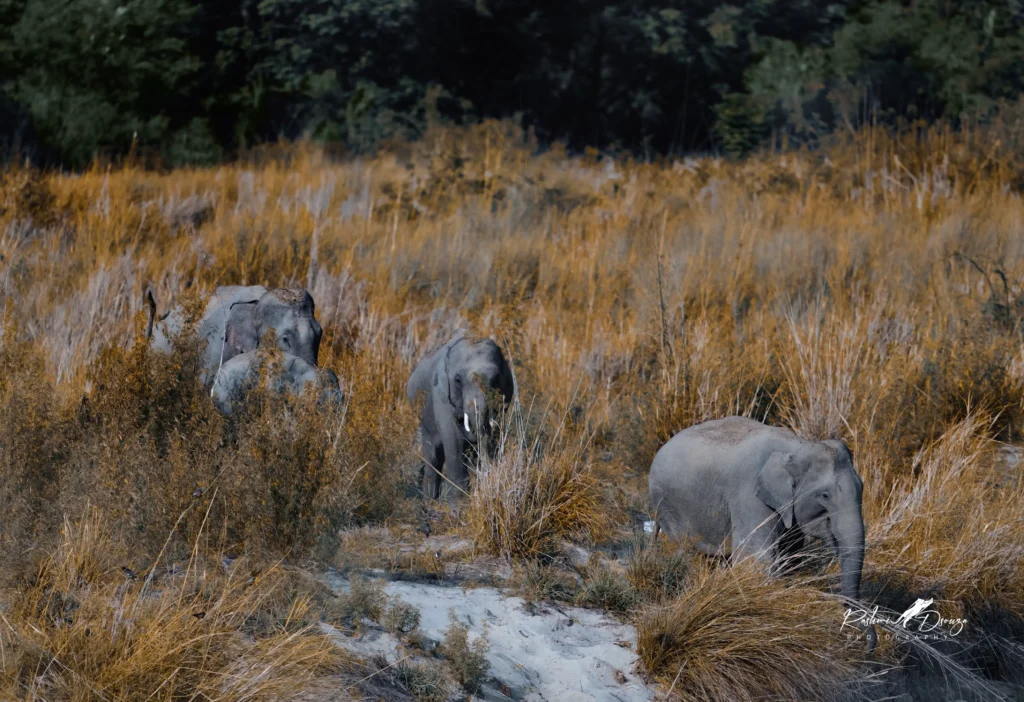
Elephants in Corbett Tiger Reserve | Original Photograph by Rashmi Dsouza | Shared with WildlifeSafaris.in
If your main goal is to see a tiger in Jim Corbett National Park, Dhikala is generally regarded as the best safari zone. Its extensive grasslands, riverine habitats, and reputation for regular tiger activity have made it the reserve’s most sought-after destination for decades.
However, choosing Dhikala simply because it is the most famous is not always the best decision.
Tiger sightings in Corbett depend on many factors, including the season, weather, recent animal movement, and a degree of luck. Even in Dhikala, no safari can guarantee a tiger encounter. Likewise, visitors in Bijrani, Jhirna, or Dhela regularly report rewarding safaris with tigers, elephants, deer, crocodiles, and a wide variety of birds.
The best zone therefore depends on what matters most to you:
- maximizing your chances of seeing a tiger
- visiting during a particular season
- travelling with family
- photography
- planning a short weekend trip
- finding permits when the most popular zones are already full
Understanding these differences helps you make a practical booking decision instead of simply chasing the most popular name.
This guide explains how Corbett’s safari zones work, compares the major tourism zones, discusses their strengths and limitations, and helps you choose the option that best matches your travel plans.
How Jim Corbett Safari Zones Work
Many first-time visitors assume that Corbett is one large safari area where every vehicle follows the same routes. In reality, the reserve is divided into separate tourism zones, each with its own entry gate, safari routes, landscapes, seasonal opening periods, and visitor quotas.
This system serves two important purposes:
- it distributes tourism across different parts of the reserve
- it helps protect wildlife by limiting visitor pressure in any one area
Because each zone contains different habitats, wildlife behaviour and viewing opportunities naturally vary.
Why safari zone choice matters
Booking the right zone influences several aspects of your trip:
- the type of forest and scenery you’ll explore
- the wildlife you are most likely to encounter
- the safari vehicle available
- whether overnight stays are possible
- how easy it is to obtain permits
- how far you’ll travel from Ramnagar
Rather than asking, “Which zone guarantees a tiger?”, a better question is:
“Which zone best matches my travel dates and priorities?”
That approach usually leads to a more satisfying safari experience.
Overview of Jim Corbett Tourism Zones
Corbett Tiger Reserve currently operates multiple tourism zones for visitors, including:
- Dhikala
- Bijrani
- Jhirna
- Dhela
- Garjiya
- Durgadevi
- Sonanadi
- Pakhro
Each offers a different combination of forests, grasslands, riverbeds, and wildlife habitats. Some remain open throughout the year, while others close during the monsoon season.
Quick Comparison of Major Safari Zones
| Zone | General Tiger Reputation | Opening Pattern | Best For |
| Dhikala | Excellent | Seasonal | Long safaris, iconic Corbett landscapes, experienced wildlife travellers |
| Bijrani | Very good | Seasonal | First-time visitors, tiger tracking, mixed wildlife |
| Jhirna | Good | Open year-round | Flexible travel dates, regular wildlife sightings |
| Dhela | Good | Open year-round | Families, beginners, year-round access |
| Garjiya | Emerging alternative | Open year-round | Backup option when prime zones are unavailable |
| Durgadevi | Moderate | Seasonal | Birdwatching, quieter forest experience |
| Sonanadi | Moderate | Seasonal | Less-crowded safari experience |
| Pakhro | Emerging tourism zone | Seasonal | Visitors seeking newer safari options |
Rather than thinking of these as “good” and “bad” zones, it is more useful to see them as areas suited to different travel goals.
Which Zone is Best for Tiger Sighting?
Dhikala Zone
If you ask experienced Corbett visitors to name the reserve’s flagship safari zone, most will point to Dhikala.
It has earned this reputation through a combination of extensive grasslands (known locally as chaurs), river systems, Sal forests, and varied habitats that support healthy populations of herbivores and predators. These diverse landscapes also create excellent opportunities to observe elephants, crocodiles, deer, raptors, and numerous bird species during the same safari.
Dhikala is also unique because it offers one of the most immersive safari experiences in Corbett. Visitors staying inside the forest can spend more time exploring the area than those making only a day visit.
However, Dhikala also comes with some practical considerations:
- permits are among the hardest to secure
- the zone operates only during its seasonal opening period
- day visitors access the zone by canter rather than jeep
- overnight accommodation inside the forest is in high demand
For travellers planning well in advance, Dhikala remains one of the strongest choices for a classic Corbett safari.
Field Note: Dhikala should be viewed as offering an excellent opportunity—not a guarantee. Tigers are wild animals whose movements change daily with weather, prey availability, and countless natural factors.
Bijrani Zone
Bijrani is often the first alternative recommended when Dhikala permits are unavailable, and many experienced visitors deliberately choose it even when both zones are open.
The zone combines dense Sal forests with open clearings, creating favourable conditions for tracking wildlife while also providing varied scenery throughout the safari. It has built a long-standing reputation as one of Corbett’s most reliable areas for tiger sightings and consistently features among the reserve’s premier safari destinations.
Compared with Dhikala, Bijrani is often easier to access for visitors staying around Ramnagar and is particularly attractive to travellers booking jeep safaris.
Its combination of accessibility, strong wildlife reputation, and classic Corbett forest landscapes makes it one of the best overall choices for many first-time visitors.
Which Zone is Best for Tiger Sightings? (Continued)
Jhirna Zone
Jhirna has become one of Corbett’s most dependable options for visitors who cannot travel during the traditional safari season. Unlike Dhikala and Bijrani, Jhirna remains open throughout the year, making it particularly attractive for monsoon-edge travel and last-minute trips.
Although it does not carry the same iconic reputation as Dhikala, Jhirna has consistently earned a reputation for productive wildlife safaris. The zone supports healthy populations of herbivores, which in turn attract predators including tigers and leopards. Regular sightings of elephants, deer, wild boar, reptiles, and numerous bird species further add to its appeal.
One of Jhirna’s biggest strengths is reliability. Because it remains accessible for much of the year, travellers are less constrained by seasonal opening dates and can often secure permits even when the more famous zones are fully booked.
Jhirna is a good choice if you:
- are travelling outside the peak safari season
- are planning a short trip from Ramnagar
- want a year-round safari option
- are looking for a practical alternative when Dhikala or Bijrani are unavailable
While its tiger-sighting reputation may not overshadow Dhikala, dismissing Jhirna simply because it is not the flagship zone would be a mistake. Under favourable conditions, it can deliver rewarding wildlife sightings.
Dhela Zone
Like Jhirna, Dhela is open throughout the year, making it one of the most practical safari zones in Corbett for flexible travel planning.
Dhela features a mix of forest patches, open grassland, and varied terrain that supports diverse wildlife. It is frequently recommended as a balanced option for visitors who want a comfortable safari experience without focusing exclusively on tiger tracking.
Because permits are generally easier to obtain than those for Dhikala, Dhela is often chosen by:
- families
- first-time safari visitors
- weekend travellers
- photographers interested in a variety of wildlife rather than only tigers
Tiger sightings certainly occur here, but Dhela’s strength lies in offering a well-rounded safari where visitors have opportunities to observe elephants, deer, birds, reptiles, and other wildlife throughout the drive.
Why many experienced travellers recommend Dhela
Instead of waiting months for a difficult-to-secure permit, some repeat visitors deliberately choose Dhela because:
- year-round access provides greater flexibility
- booking is often simpler
- safari crowds may be more manageable than in premier zones
- wildlife viewing remains consistently rewarding
For many travellers, an enjoyable safari with good wildlife activity is preferable to postponing an entire trip while waiting for Dhikala permits.
Quick Recommendation
If your only objective is maximizing the likelihood of encountering a tiger during the main tourism season, the general recommendation is:
- Dhikala
- Bijrani
- Jhirna
- Dhela
However, this should not be interpreted as a fixed ranking under every circumstance.
For example:
- Visiting during the period when Dhikala is closed immediately changes the equation.
- Travelling at short notice may make Jhirna or Dhela the most realistic choices.
- Families may prioritise easier logistics over the reserve’s most sought-after permits.
- Photographers may choose a zone based on habitat, light, or landscape rather than reputation alone.
The best safari is often the one you can realistically book during the right season.
Comparing the Remaining Safari Zones
Although Dhikala, Bijrani, Jhirna, and Dhela receive most of the attention, Corbett includes several additional tourism zones that can be worthwhile depending on your travel goals.
Understanding their strengths helps avoid the common mistake of assuming that every worthwhile safari must take place in one of the flagship zones.
Garjiya Zone
Garjiya is one of Corbett’s newer tourism zones and has become increasingly popular as an alternative when the traditional high-demand zones are fully booked. It is open throughout the year, making it especially useful for flexible travel plans.
Recent travel guides increasingly highlight Garjiya as a practical backup rather than a second-rate choice. While it does not yet have Dhikala’s long-established reputation, it offers visitors another opportunity to experience Corbett’s forests and wildlife without delaying their trip.
Garjiya is particularly suitable for:
- last-minute bookings
- repeat visitors exploring different parts of Corbett
- travellers visiting during periods of high permit demand
Durgadevi Zone
Located in the northeastern part of the reserve, Durgadevi offers a noticeably different safari experience from the grassland-dominated landscapes associated with Dhikala.
Its terrain includes forested hills, river channels, and quieter safari routes that appeal to visitors interested in scenery and birdlife as much as large mammals.
Although tiger sightings do occur, Durgadevi is generally considered a better choice for travellers seeking:
- birdwatching
- varied landscapes
- a less crowded safari
- a slower-paced wildlife experience
Sonanadi Zone
Sonanadi lies within the wider Corbett Tiger Reserve landscape and provides another seasonal safari option.
Compared with the flagship zones, Sonanadi typically receives fewer visitors, making it attractive for those who prefer quieter forest drives. Wildlife observations can include elephants, deer, birds, and other species associated with Corbett’s forests, although expectations should remain realistic regarding tiger sightings.
Pakhro Zone
Pakhro is among Corbett’s newer tourism zones and forms part of the reserve’s expanding visitor management strategy.
As tourism pressure on the best-known zones has increased, areas such as Pakhro provide additional opportunities for visitors while helping distribute safari traffic more evenly across the reserve.
Because it is comparatively new, many visitors know little about Pakhro. It is best viewed as another useful option rather than attempting to compare it directly with long-established destinations like Dhikala or Bijrani.
Sitabani: An Important Clarification
Many travellers researching Corbett encounter references to Sitabani and assume it is one of the official tourism zones.
In reality, Sitabani lies outside the core tourism zones of Corbett Tiger Reserve. It is a forest area where wildlife, including tigers and elephants, may occasionally be seen, but it operates under different management and should not be confused with the reserve’s official safari zones.
Visitors specifically looking for an official Corbett safari should understand this distinction before booking.
Comparison Table: Dhikala vs Bijrani vs Jhirna vs Dhela
| Feature | Dhikala | Bijrani | Jhirna | Dhela |
| Tiger reputation | Excellent | Very Good | Good | Good |
| Open year-round | No | No | Yes | Yes |
| Safari type | Canter (day visitors), Jeep (overnight guests) | Jeep | Jeep | Jeep |
| Landscape | Grasslands, riverbeds, Sal forest | Sal forest and clearings | Mixed forest | Mixed woodland and grassland |
| Permit demand | Very High | High | Moderate | Moderate |
| Best suited for | Wildlife enthusiasts, longer stays | First-time visitors | Flexible travel, year-round visits | Families, beginners, short trips |
Year-round vs Seasonal Zones
| Open Throughout the Year | Seasonal Opening |
| Jhirna | Dhikala |
| Dhela | Bijrani |
| Garjiya | Durgadevi |
| Sonanadi | |
| Pakhro |
Understanding this distinction is especially important if you are planning a trip outside the traditional winter safari season. Many disappointed visitors assume every Corbett zone remains open throughout the year, only to discover that their preferred permit is unavailable because of seasonal closures. Planning around opening periods often has a greater impact on your safari than simply chasing the highest-rated zone.
Best Zone by Traveller Type
Choosing the “best” safari zone depends as much on your travel priorities as it does on tiger movement. A wildlife photographer, a family on a weekend holiday, and a serious tiger enthusiast may all be better served by different zones.
Instead of focusing solely on which zone has the strongest tiger reputation, match your choice to your travel style.
Best for Tiger Sightings
Recommended: Dhikala
Dhikala remains Corbett’s flagship safari zone because of its varied habitats, expansive grasslands, healthy prey base, and long-standing reputation for tiger sightings. It consistently ranks among the reserve’s most sought-after destinations.
However, remember that:
- no safari route guarantees a tiger
- wildlife movements change daily
- weather, prey distribution, and luck all influence sightings
Treat Dhikala as offering one of the strongest opportunities—not certainty.
Best for First-Time Visitors
Recommended: Bijrani
For many first-time visitors, Bijrani offers the best balance between accessibility, wildlife viewing, and safari experience.
Compared with Dhikala, it is generally easier to include within a standard Corbett itinerary while still offering excellent opportunities to observe the reserve’s wildlife.
It is especially suitable for visitors who:
- have only one or two safaris planned
- are staying near Ramnagar
- want a classic jeep safari
- are visiting during the main tourism season
Best for Photography
Recommended: Dhikala
Photography is about much more than tiger sightings.
Open grasslands, river channels, changing light, and uncluttered backgrounds often create stronger wildlife images than dense forest alone.
Dhikala’s diverse landscapes make it particularly attractive for photographers interested in:
- environmental wildlife portraits
- elephant photography
- bird photography
- dramatic landscape compositions
- mammals using open grasslands
Bijrani is another excellent choice, particularly for photographers who enjoy forest settings and classic Sal woodland scenes.
Photography Tip: Carry both a telephoto lens for wildlife and a wider lens for landscapes. Some of Corbett’s most memorable photographs are not of tigers but of elephants crossing riverbeds, mist over the Ramganga, or herds of chital grazing in the morning light.
Best for Families
Recommended: Dhela
Families often benefit more from a relaxed and enjoyable safari than from chasing the reserve’s most difficult permit.
Dhela is a sensible choice because it offers:
- year-round access
- relatively straightforward booking
- varied wildlife
- comfortable jeep safaris
- flexibility for short holidays
Children generally appreciate seeing a variety of animals rather than waiting exclusively for a tiger encounter.
Best for Birdwatchers
Recommended: Durgadevi
Although this article focuses on tiger sightings, Corbett is equally famous for its birdlife.
Visitors primarily interested in birds may find Durgadevi especially rewarding because of its quieter forests, varied habitats, and river systems.
Even on safaris where large predators remain elusive, birdwatchers can enjoy productive outings throughout the zone.
Best for Year-Round Travel
Recommended:
- Jhirna
- Dhela
- Garjiya
These zones remain open throughout the year according to the official tourism schedule, making them valuable choices for visitors travelling outside the traditional safari season.
Rather than postponing your holiday because Dhikala or Bijrani are closed, these zones allow you to experience Corbett in different seasons.
Best for Short Weekend Trips
If you only have one or two days available, convenience becomes an important factor.
Good options include:
- Bijrani
- Jhirna
- Dhela
These zones generally work well for visitors staying around Ramnagar and planning a couple of jeep safaris without requiring overnight stays inside the reserve.
Decision Guide
| Your Priority | Recommended Zone |
| Highest tiger reputation | Dhikala |
| Best all-round first safari | Bijrani |
| Travel any time of year | Jhirna or Dhela |
| Family holiday | Dhela |
| Photography | Dhikala |
| Birdwatching | Durgadevi |
| Last-minute booking | Garjiya, Jhirna or Dhela |
| Weekend trip | Bijrani or Dhela |
Dhikala vs Bijrani vs Jhirna vs Dhela
These four zones dominate most discussions about Corbett safaris, but each excels for different reasons.
Dhikala
Strengths
- Flagship Corbett safari experience
- Excellent tiger reputation
- Large grasslands and diverse habitats
- Outstanding landscape photography
- Opportunity for overnight forest stays
Limitations
- Seasonal access
- Highest permit demand
- Day visitors use canter safari rather than jeep
- Requires advance planning
Bijrani
Strengths
- Excellent wildlife reputation
- Jeep safari
- Suitable for first-time visitors
- Easier to include in short itineraries
Limitations
- Seasonal opening
- High permit demand during peak months
Jhirna
Strengths
- Open all year
- Reliable wildlife viewing
- Good backup when premier zones are unavailable
- Flexible travel planning
Limitations
- Does not have Dhikala’s iconic reputation
- Habitat differs from the extensive grasslands found elsewhere
Dhela
Strengths
- Year-round access
- Good family-friendly choice
- Easier permit availability
- Balanced wildlife experience
Limitations
- Less famous among tiger enthusiasts
- Often overlooked despite being a practical option
Canter Safari vs Jeep Safari
Many visitors assume that jeep safaris are always superior. In Corbett, the answer is more nuanced.
One important distinction is that day visitors entering Dhikala use a canter safari, while jeep access is generally associated with visitors staying inside the forest.
Comparison
| Feature | Canter Safari | Jeep Safari |
| Vehicle size | Larger shared vehicle | Smaller vehicle |
| Group size | More passengers | Fewer passengers |
| Flexibility | Limited | Greater flexibility on designated routes |
| Photography | Less flexible | Better shooting angles |
| Comfort | Shared experience | More personal experience |
| Dhikala access | Standard option for day visitors | Available primarily with forest accommodation |
For photographers and serious wildlife enthusiasts, jeep safaris generally provide greater flexibility. However, visitors should not dismiss Dhikala simply because it involves a canter for day trips. The quality of the habitat remains one of its greatest strengths.
Field Note: A skilled driver, experienced guide, and favourable wildlife activity often have a greater influence on your safari than the vehicle itself.
Booking Strategy
One of the biggest mistakes visitors make is focusing exclusively on a single zone.
A more practical strategy is to identify your preferred choice and at least one backup before permits open.
Book Early for Dhikala
Because Dhikala is Corbett’s most sought-after tourism zone, permits are often in high demand.
If visiting Dhikala is your priority:
- finalise your travel dates early
- monitor permit availability
- book as soon as reservations open
Waiting until the last minute significantly reduces your chances of obtaining a permit.
Have a Backup Plan
If Dhikala is unavailable, consider:
- Bijrani
- Jhirna
- Dhela
- Garjiya
This approach allows you to keep your travel dates while still enjoying a rewarding safari experience.
Many experienced Corbett visitors plan around multiple zones rather than becoming attached to just one.
Consider More Than One Safari
Wildlife sightings vary from drive to drive.
Rather than investing all expectations in a single safari, many experienced travellers choose multiple safaris across different sessions or, where possible, different zones.
This provides:
- more time in the forest
- exposure to different habitats
- improved overall wildlife viewing opportunities
It also reduces disappointment if one safari is quieter than expected.
Expert Tips
Expert Tip
If your schedule allows, prioritise multiple safaris over spending your entire budget on one premium permit. Additional time in the forest usually improves your overall wildlife experience more than relying on a single drive.
Photography Tip
Early morning safaris often provide softer light and more comfortable temperatures for photography. Regardless of the zone, keep your camera ready throughout the drive—many memorable sightings occur while travelling between well-known locations rather than at famous hotspots.
Family Travel Tip
Children generally enjoy safaris more when expectations are realistic. Encourage them to look for elephants, deer, crocodiles, birds, butterflies, and animal tracks instead of focusing only on tigers.
Responsible Tourism Tip
Maintain silence during sightings, avoid asking drivers to pressure wildlife for closer views, and follow all park regulations. Respectful behaviour helps minimise disturbance and contributes to a better experience for both wildlife and other visitors.
Before completing this final section, the article has been reviewed to ensure that:
- The primary search intent (“Which is the best zone in Jim Corbett National Park for tiger sightings?”) has been answered clearly.
- Official information has been distinguished from practical recommendations and expert opinion.
- No safari zone has been presented as guaranteeing tiger sightings.
- Year-round and seasonal zones have been explained accurately.
- Practical booking advice and fallback strategies have been included.
- Repetition has been removed where possible.
- The article flows naturally from planning to decision-making.
Common Mistakes Visitors Make
Even experienced wildlife travellers can make planning mistakes that reduce the quality of their Corbett safari. Avoiding the following misconceptions will help you set realistic expectations and make better booking decisions.
1. Believing Dhikala Guarantees Tiger Sightings
Dhikala has earned its reputation for good reasons, but no safari zone in Corbett guarantees a tiger sighting.
Tigers are free-ranging wild animals whose movements depend on prey availability, weather, breeding behaviour, territorial activity, and countless other natural factors.
Choose Dhikala because it offers a strong opportunity—not certainty.
2. Ignoring Other Excellent Zones
Many visitors become so focused on Dhikala that they overlook Bijrani, Jhirna, and Dhela.
In reality:
- Bijrani has a long-standing reputation for rewarding wildlife safaris.
- Jhirna remains a dependable year-round option.
- Dhela provides excellent flexibility for families and short trips.
- Garjiya offers another useful alternative when permits elsewhere are unavailable.
A successful safari is not determined solely by the name of the zone.
3. Waiting Too Long to Book
Premier safari zones often have limited permit availability.
If your travel dates are fixed:
- plan early
- identify backup zones
- avoid relying on last-minute availability
Flexibility usually produces a smoother trip than waiting for a single permit.
4. Focusing Only on Tigers
Many first-time visitors judge a safari solely by whether they see a tiger.
Corbett is home to a wide variety of wildlife, including:
- Asian elephants
- leopards
- crocodiles
- sambar deer
- chital
- wild boar
- jackals
- numerous resident and migratory birds
Some of the reserve’s most memorable moments involve these species rather than tigers alone.
5. Assuming the Closest Zone Is the Best
Visitors staying near Ramnagar sometimes choose whichever zone is most convenient.
While convenience is important, factors such as:
- season
- habitat
- safari objective
- permit availability
usually have a greater influence on your overall experience than simple driving distance.
6. Confusing Opportunity with Probability
Articles on the internet sometimes describe certain zones as having “the highest tiger density” or “guaranteed sightings.”
These claims should be interpreted carefully.
A zone may have an excellent reputation for tiger sightings without guaranteeing success on any particular safari. Wildlife tourism is built around probability, not certainty.
Practical Safari Planning Checklist
Use this checklist before booking your Corbett trip.
Before You Book
- □ Decide your preferred travel dates.
- □ Check which safari zones are open during your visit.
- □ Select both a primary and a backup zone.
- □ Book permits as early as possible for high-demand zones.
- □ Choose between jeep and canter safari based on your itinerary.
- □ Reserve accommodation close to your chosen entry gate where practical.
Before Your Safari
- □ Carry valid identification.
- □ Wear muted, earth-toned clothing.
- □ Bring binoculars.
- □ Carry a telephoto lens if photographing wildlife.
- □ Pack drinking water and sun protection.
- □ Arrive at the gate well before reporting time.
During the Safari
- □ Follow your guide’s instructions.
- □ Keep noise to a minimum.
- □ Avoid standing or leaning outside the vehicle.
- □ Never attempt to attract wildlife.
- □ Enjoy the entire forest—not only tiger sightings.
Frequently Asked Questions
Which is the best zone in Jim Corbett National Park for tiger sightings?
Dhikala is generally regarded as Corbett’s premier tiger safari zone because of its extensive habitats and long-standing reputation. However, tiger sightings are never guaranteed, and Bijrani, Jhirna, and Dhela can also provide rewarding wildlife experiences depending on conditions.
Is Dhikala always the best choice?
Not necessarily.
If Dhikala is closed, fully booked, or does not suit your itinerary, Bijrani, Jhirna, or Dhela may be more practical choices.
Which zone is best for first-time visitors?
Bijrani is often recommended because it combines good wildlife viewing, jeep safaris, and convenient access during its operating season.
Which Corbett zones remain open throughout the year?
According to the official tourism schedule, Jhirna, Dhela, and Garjiya remain open throughout the year, while several other zones operate seasonally.
Which zone is best during summer?
The best choice depends on which zones are open and current wildlife conditions.
Rather than assuming one zone is always superior, check seasonal opening schedules and permit availability before booking.
Which zone is best during winter?
Dhikala and Bijrani are among the most popular winter choices when open, although Jhirna and Dhela continue to attract visitors throughout the year.
Can I choose my safari zone?
Yes. Visitors generally select a specific tourism zone when booking, subject to permit availability and seasonal opening schedules.
Is a canter safari better than a jeep safari?
Each has advantages.
Jeeps provide a smaller-group experience and greater flexibility within designated routes, while canters are the standard day-visitor option for Dhikala.
The quality of wildlife sightings depends more on natural conditions than on the vehicle itself.
What should I do if Dhikala is fully booked?
Consider:
- Bijrani
- Jhirna
- Dhela
- Garjiya
Planning backup options increases your chances of securing permits while keeping your travel dates unchanged.
Which zone is best for photography?
Dhikala is widely regarded as the strongest choice because of its open grasslands, varied habitats, and landscape diversity. Bijrani is another excellent option for forest photography.
Are newer zones worth visiting?
Yes.
Garjiya and Pakhro are increasingly recognised as useful alternatives that help distribute tourism across the reserve. While they may not have the same historical reputation as Dhikala, they can still provide rewarding safari experiences.
Is there a guaranteed tiger zone in Corbett?
No.
No safari zone in Jim Corbett National Park—or in any tiger reserve—can guarantee a tiger sighting. Success depends on wildlife movement, season, weather, habitat conditions, and luck.
Conclusion
If you are searching for the single best zone in Jim Corbett National Park for tiger sightings, Dhikala remains the benchmark. Its combination of grasslands, forests, river systems, and wildlife diversity has earned it a well-deserved reputation as Corbett’s flagship safari destination.
However, the smartest way to plan a Corbett safari is not to become fixated on one zone.
For many travellers:
- Bijrani offers an outstanding all-round safari.
- Jhirna provides dependable year-round access.
- Dhela is ideal for flexible itineraries and families.
- Garjiya can be an excellent backup when premier permits are unavailable.
- Durgadevi, Sonanadi, and Pakhro add further variety for repeat visitors and those with specific interests.
Ultimately, the best safari zone is the one that matches your travel dates, priorities, and permit availability while allowing enough time in the forest.
Approach Corbett with realistic expectations, respect for wildlife, and an appreciation for the reserve as a whole rather than a single species. If a tiger appears, it will be one of the highlights of your trip. If it doesn’t, the forests, elephants, birds, river landscapes, and countless smaller wildlife encounters can still make your safari memorable.
With careful planning and a flexible approach, you’ll give yourself the best possible opportunity to enjoy everything that India’s oldest national park has to offer.
Jim Corbett National Park : Topics Cluster
- Complete Safari Guide (2026)
- Safari Booking Guide: Complete Step-by-step Guide (2026)
- Best Zones in Corbett National Park
- Best time to Visit
- Safari Cost breakdown
- Safari Costs Explained 2026
- Dhikala vs Bijrani vs Jhirna Zones
- Corbett with Family
- Corbett vs Ranthambore
- Delhi to Corbett Travel Guide
- Weekend Trip to Corbett from Delhi 2N/3D
- Best Hotels and Resorts near Corbett
- Luxury Resort near Corbett
- Corbett Birdwatching Guide
- Corbett Photography Guide
- Wildlife in Uttarakhand