
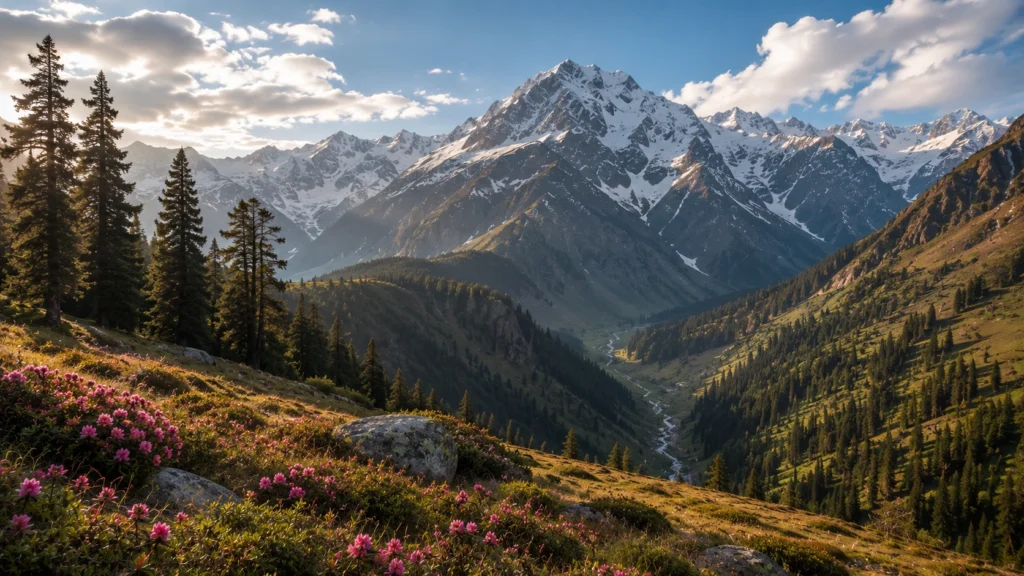
Himachal Pradesh, cradled in the lap of the western Himalayas, is a state defined by extreme altitudinal variations, ranging from the sub-tropical Shivalik foothills to the perpetually snow-covered Trans-Himalayan peaks of Spiti. This dramatic topography, intersected by major river systems such as the Sutlej, Beas, and Chenab, fosters a spectacular diversity of ecosystems. The state boasts an impressive forest cover of nearly twenty-eight per cent, transitioning seamlessly from lowland scrub and broadleaved forests to towering stands of deodar, oak, blue pine, and eventually giving way to alpine meadows and cold desert environments. This ecological stratification acts as a vital carbon sink and a sanctuary for high-altitude, evolutionary-distinct flora and fauna.
The wildlife of Himachal Pradesh is synonymous with the elusive snow leopard, the state animal, which reigns as the apex predator in the rugged, high-altitude terrain of the Pin Valley and the Spiti cold desert. Lower down, the dense temperate forests of the Great Himalayan National Park—a UNESCO World Heritage Site—harbour the Himalayan brown bear, Himalayan tahr, and the state bird, the brilliantly plumaged western tragopan. The state’s robust protected area network comprises five National Parks, over twenty-five Wildlife Sanctuaries, and the sprawling Cold Desert Biosphere Reserve. Furthermore, the Ramsar-designated wetlands of Pong Dam Lake, Renuka Lake, and the high-altitude Chandertal Lake act as crucial stopovers for thousands of migratory waterfowl along the Central Asian Flyway.
Conservation in this mountainous state focuses heavily on mitigating the impacts of climate change, managing sustainable eco-tourism, and resolving human-wildlife conflict, particularly involving crop depredation by rhesus macaques and wild boars. Himachal Pradesh is a premier destination for responsible wildlife tourism, offering unparalleled high-altitude trekking, specialized snow leopard expeditions, and pristine birdwatching trails that delve deep into the untamed grandeur of the Himalayas.
Quick Facts Table
| Category | Details |
| State / Union Territory | Himachal Pradesh |
| Capital | Shimla (Summer), Dharamshala (Winter) |
| Area | 55,673 sq km |
| Population | 6,864,602 (2011 Census) |
| Forest Cover | 27.73% |
| Official Language(s) | Hindi, Pahari |
| Time Zone | UTC+05:30 (IST) |
| Best Wildlife Season | March to June (Mid-altitude) / November to March (Snow Leopard tracking) |
State Wildlife Master Table
| Attribute | Details |
| State / Union Territory | Himachal Pradesh |
| Capital | Shimla (Summer), Dharamshala (Winter) |
| Geographic Region | Western Himalayas and Trans-Himalayas |
| Total Area | 55,673 sq km |
| Forest Cover | 27.73% |
| State Animal | Snow Leopard (Panthera uncia) |
| State Bird | Western Tragopan (Tragopan melanocephalus) |
| State Tree | Deodar Cedar (Cedrus deodara) |
| State Flower | Pink Rhododendron (Rhododendron campanulatum) |
| Highest Peak | Reo Purgyil (6,816 m) |
| Major Rivers | Sutlej, Beas, Ravi, Chenab, Yamuna |
| Major Forest Types | Sub-tropical Pine, Himalayan Moist Temperate, Sub-alpine, Alpine Scrub |
| Biodiversity Hotspot | Himalayas |
| UNESCO Natural Sites | Great Himalayan National Park Conservation Area |
| Biosphere Reserves | Cold Desert Biosphere Reserve |
| Tiger Reserves | None |
| Elephant Reserves | None |
| National Parks | Great Himalayan, Pin Valley, Inderkilla, Khirganga, Simbalbara |
| Wildlife Sanctuaries | 26 Sanctuaries (including Kalatop-Khajjiar, Pong Dam Lake, Kibber, Churdhar, Daranghati) |
| Conservation Reserves | Shilli, Shri Naina Devi, Darlaghat |
| Community Reserves | Not officially specified |
| Ramsar Sites | Pong Dam Lake, Renuka Lake, Chandertal |
| Important Bird Areas (IBAs) | Pong Dam, Great Himalayan NP, Pin Valley, Kibber, Kalatop-Khajjiar |
| Major Wildlife Corridors | GHNP-Pin Valley Corridor, Kalesar-Simbalbara Corridor |
| Flagship Mammals | Snow Leopard, Himalayan Brown Bear, Himalayan Tahr, Blue Sheep (Bharal) |
| Flagship Birds | Western Tragopan, Himalayan Monal, Koklass Pheasant, Bar-headed Goose |
| Endemic Wildlife | Western Tragopan (regional endemic to Western Himalayas) |
| Best Wildlife Destinations | Great Himalayan NP, Kibber WLS, Pin Valley NP, Pong Dam Lake |
| Best Time for Wildlife Tourism | Variable (Winter for Spiti; Spring/Summer for GHNP) |
| Nearest International Airports | Shaheed Bhagat Singh International Airport (Chandigarh), Sri Guru Ram Dass Jee International Airport (Amritsar) |
| Official Forest Department Website | hpforest.nic.in |
Protected Areas Summary Table
| Protected Area | Category | District | Area (sq km) | Year Established | Famous For |
| Great Himalayan National Park | National Park | Kullu | 1,171.00 | 1984 | Western Tragopan, Brown Bear, Alpine Pastures |
| Pin Valley National Park | National Park | Lahaul & Spiti | 675.00 | 1987 | Snow Leopard, Siberian Ibex, Cold Desert Ecology |
| Inderkilla National Park | National Park | Kullu | 94.00 | 2010 | Himalayan Flora, Temperate Forest Avifauna |
| Khirganga National Park | National Park | Kullu | 705.00 | 2010 | Hot Springs, Himalayan Black Bear, Treks |
| Simbalbara National Park | National Park | Sirmaur | 27.88 | 2010 | Sal Forests, Goral, Sambar, Leopard |
| Chandertal Wildlife Sanctuary | Wildlife Sanctuary | Lahaul & Spiti | 38.56 | 2007 | High-altitude Ramsar Wetland, Snow Leopard |
| Churdhar Wildlife Sanctuary | Wildlife Sanctuary | Sirmaur, Shimla | 55.52 | 1985 | Himalayan Monal, Musk Deer, High-altitude Treks |
| Kalatop-Khajjiar Wildlife Sanctuary | Wildlife Sanctuary | Chamba | 17.17 | 1958 | Deodar Forests, Himalayan Black Bear, Pheasants |
| Kibber Wildlife Sanctuary | Wildlife Sanctuary | Lahaul & Spiti | 2,220.12 | 1992 | Snow Leopard, Blue Sheep, Tibetan Wolf |
| Pong Dam Lake Wildlife Sanctuary | Wildlife Sanctuary | Kangra | 307.29 | 1983 | Wintering Bar-headed Geese, Ramsar Site |
| Renuka Wildlife Sanctuary | Wildlife Sanctuary | Sirmaur | 4.02 | 1964 | Ramsar Wetland, Leopard, Barking Deer |
| Rupi Bhaba Wildlife Sanctuary | Wildlife Sanctuary | Kinnaur | 503.00 | 1982 | Snow Leopard, Himalayan Tahr, Glaciers |
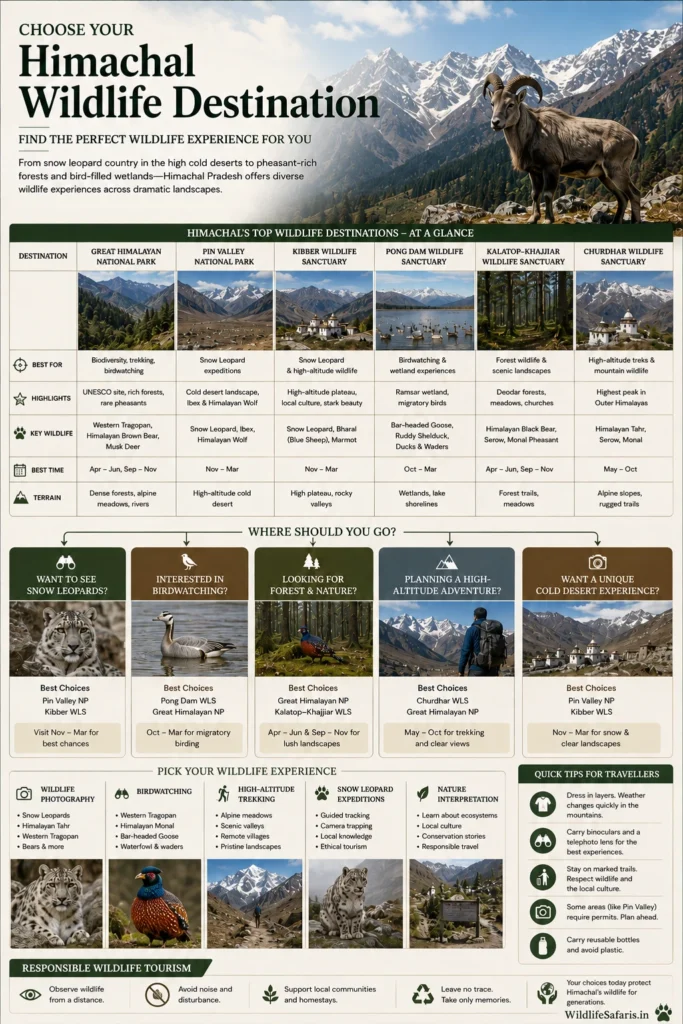
Wildlife Highlights
- Top Mammals: Snow Leopard, Himalayan Brown Bear, Himalayan Black Bear, Blue Sheep (Bharal), Siberian Ibex, Himalayan Tahr, Musk Deer, Tibetan Wolf, Red Fox.
- Top Birds: Western Tragopan, Himalayan Monal, Koklass Pheasant, Cheer Pheasant, Himalayan Snowcock, Golden Eagle, Lammergeier (Bearded Vulture), Bar-headed Goose.
- Reptiles & Amphibians: Himalayan Pit Viper, Kashmir Rock Agama, Himalayan Toad.
- Flagship Flora: Deodar Cedar, Blue Pine (Pinus wallichiana), Himalayan Oak, Pink Rhododendron, Juniper, Birch (Bhojpatra), Alpine medicinal herbs (e.g., Kuth, Kutki).
- Best Wildlife Experiences: Multi-day wildlife trekking in Great Himalayan National Park, Snow Leopard winter tracking expeditions in Kibber and Spiti Valley, birdwatching boat rides at Pong Dam, and exploring the dense cedar forests of Kalatop.
Conservation Challenges
- Climate Change: Rising temperatures and altering precipitation patterns are causing receding glaciers and shifting the tree line upward. This shrinks the already limited alpine meadow habitats crucial for the snow leopard and its prey.
- Unregulated Tourism: High tourist footfall in sensitive areas, particularly off-roading in the Spiti Valley and overcrowding around Chandertal Lake, degrades fragile high-altitude ecosystems.
- Human-Wildlife Conflict: The overpopulation of Rhesus macaques and wild boars causes severe agricultural damage in the lower and middle hills. Occasional predation of livestock by leopards and snow leopards also prompts retaliatory hostility from pastoral communities.
- Linear Infrastructure Development: The rapid construction of mega-hydroelectric projects and four-lane highway expansions (such as the Kiratpur-Manali highway) causes severe slope destabilisation, deforestation, and fragmentation of wildlife corridors.
- Overgrazing: Intensive grazing by large flocks of nomadic sheep and goats (Gaddis and Gujjars) in alpine pastures during the summer months competes directly with wild ungulates like the Blue Sheep and Ibex.
- Forest Fires: The highly resinous Chir Pine forests in the lower altitudes are highly susceptible to severe summer forest fires, which destroy ground vegetation and nesting habitats.
Responsible Wildlife Tourism
- Trek with Registered Guides: Always hire local, registered guides when exploring the Great Himalayan National Park. The terrain is highly deceptive, and guides ensure you stay on designated, low-impact trails.
- Snow Leopard Tracking Ethics: When visiting Spiti in winter, maintain absolute silence and distance. Never force guides to approach the animal; use spotting scopes and high-zoom lenses instead.
- No Off-Roading: The cold desert ecology of Lahaul and Spiti is incredibly fragile. Tyre tracks on the delicate topsoil can take decades to recover; always stick to the main tarmac or designated dirt roads.
- Pack Out Your Trash: High-altitude environments lack waste management infrastructure and cold temperatures prevent natural decomposition. Carry all plastics and non-biodegradable waste back to major cities like Shimla or Chandigarh.
- Respect Alpine Pastures: Do not pick wild flora, particularly rare medicinal herbs or rhododendron flowers, and do not light campfires outside of strictly designated camping zones.
- Support Homestays: Opt for local homestays (especially in Kibber and Spiti) to ensure tourism revenue directly supports the communities actively engaged in snow leopard conservation.
Did You Know?
- The Great Himalayan National Park (GHNP) was inscribed as a UNESCO World Heritage Site in 2014 in recognition of its outstanding significance for biodiversity conservation, harbouring numerous endemic and threatened Himalayan species.
- Himachal Pradesh’s state bird, the Western Tragopan, is one of the rarest of all living pheasants, highly restricted to a narrow altitudinal band in the western Himalayas.
- Kibber Wildlife Sanctuary in the Spiti Valley holds the distinction of being India’s only cold desert wildlife sanctuary and is a globally renowned hotspot for snow leopard sightings.
- The high-altitude Chandertal Lake (Lake of the Moon) is not just a Ramsar wetland but also sits at a staggering altitude of 4,250 metres, surrounded entirely by the stark scree slopes of the cold desert.
- Despite having no resident tiger population, Simbalbara National Park, bordering Haryana, recently recorded camera-trap evidence of a Bengal tiger, indicating its importance as an emerging trans-boundary corridor.
- Pong Dam Lake in the Kangra Valley is one of the most critical wintering grounds for the Bar-headed Goose, with the wetland hosting up to 40,000 of these high-altitude flyers every year.
Safari Planning : Topics Cluster
- How to book a wildlife safari in India?
- Park by Park Online Safari Booking Guide
- Tiger Safari India Planning Workbook
- Park by Park Safari Permits Guide
- National Parks Permit Guide – Park by Park Guide
- Tatkal Safari Booking Guide – Last Minute Safari Permits Booking
- Tiger Safari in India Cost
- Indian Wildlife Safari Budget Planner
- Jeep vs Canter Safari
- Best time for Tiger Sightings in India
- How far advanced should you book safari permits?
- Can foreigners book Indian Wildlife Safari online?
- Special Permits Guide for Foreigners and Domestic Visitors
- How to book a Safari Permit online in India? 2026 step by step guide
- Senior Citizens Friendly Safari Planning
- Multi Generation Family Safari Planning
- 50 things to know before your first safari in India
Himalayas : Topics Cluster
- Himalayan Wildlife Comprehensive Guide
- Wildlife in Ladakh
- Himalayan Pheasants
- Raptors of Himalayas
- Wildlife in Sikkim
- Wildlife in Arunachal Pradesh
- Wildlife in Uttarakhand
- Wildlife in Himachal Pradesh
- Wildlife in Jammu and Kashmir
- Himalayan Black Bear
- Snow Leopard
- Kibber Wildlife Sanctuary Guide
- Great Himalayan National Park
- Khangchendzonga National Park
- Eastern Himalayas