
Planning a tiger safari in India? Avoid the most critical tourist mistakes—from booking blunders to the latest Supreme Court rules—to maximize your sightings.
Sitting in an open safari vehicle in the dim light before dawn is one of travel’s distinct pleasures. The air is cool, the forest is waking up, and the potential for an encounter with a Bengal tiger is entirely real. India’s conservation efforts have yielded undeniable success; the country’s tiger population reached 3682 ( latest count in 2026), nearly doubling over a twenty-year period. Interest in wildlife travel is growing quickly, with Kaziranga National Park alone drawing 443,636 visitors during its October 2024 to May 2025 season.
Yet, many travelers leave these reserves feeling deeply disappointed. This frustration rarely stems from a lack of wildlife; instead, it is almost always the result of avoidable planning mistakes, unrealistic assumptions, or behavioral missteps in the field. To get the most out of your time in the Indian wilderness, you need to understand how these habitats function and how to navigate the complex logistics of tracking apex predators.
Mistake #1: Treating Tiger Reserves Like Open-Air Zoos
The most common error travelers make is assuming that a tiger reserve operates on a schedule. Tigers are solitary, highly camouflaged predators that move according to terrain, weather, and the positioning of their prey. They do not appear on cue.
Data shows that only about one-third of your actual time inside a national park will typically feature direct wildlife encounters. The remaining hours are spent reading the environment—looking for fresh tracks, analyzing behavioral changes in prey species, and listening for alarm calls.
When you approach a safari as an exclusive hunt for a single animal, you set yourself up for disappointment. If your vehicle spends four hours driving past herds of deer, primates, and rare birds while focused entirely on finding a tiger, you miss the core value of the jungle.
Field Note
Shift your perspective from tracking a single species to observing the forest as an interconnected system. The moment you start paying attention to the relationship between a langur monkey’s warning cry and the tense stance of a Sambar deer, the safari becomes an active tracking experience rather than a passive wait.
Mistake #2: The One-and-Done Drive Gamble
Wildlife tracking relies heavily on the law of large numbers. Booking a single safari drive and expecting a definitive apex predator encounter is a significant gamble. Sighting probabilities fluctuate wildly from morning to evening based on temperature changes, water access, and simple chance.
To build a reliable picture of a park’s resident wildlife, you should plan for a minimum of 3 to 4 separate safari drives. Multiple drives allow you to explore different tracks, see how animal behavior changes between dawn and late afternoon, and account for the natural unpredictability of the wilderness.
Expert Tip
While multiple drives are critical, avoid stacking back-to-back morning and afternoon safaris for five consecutive days. Safari travel in open vehicles over rough paths requires real physical stamina. Rest days or slower afternoons are necessary to maintain your focus and energy for the long hours spent in the field.
Mistake #3: Choosing a Park Based on Name Recognition Alone
Not all Indian national parks offer identical habitats or wildlife profiles. A frequent mistake is picking a destination based purely on a vague internet search rather than aligning the park’s specific terrain with your travel priorities.
For instance, if your primary goal is maximizing your mathematical probability of seeing a wild tiger, Bandhavgarh National Park consistently records the highest sighting frequencies due to its specific predator density and terrain. Ranthambore and Tadoba-Andhari also offer clear advantages for big cat tracking.
However, if you are drawn to varied landscapes, Kanha offers expansive meadows, and Pench features distinctive teak forests. If your interests lean toward watching Asian elephants or navigating the distinct ecosystems of the Western Ghats, Nagarhole is a better fit. For viewers targeting the one-horned rhinoceros, Kaziranga is the definitive choice.
Tiger Sighting Probability & Habitat Guide
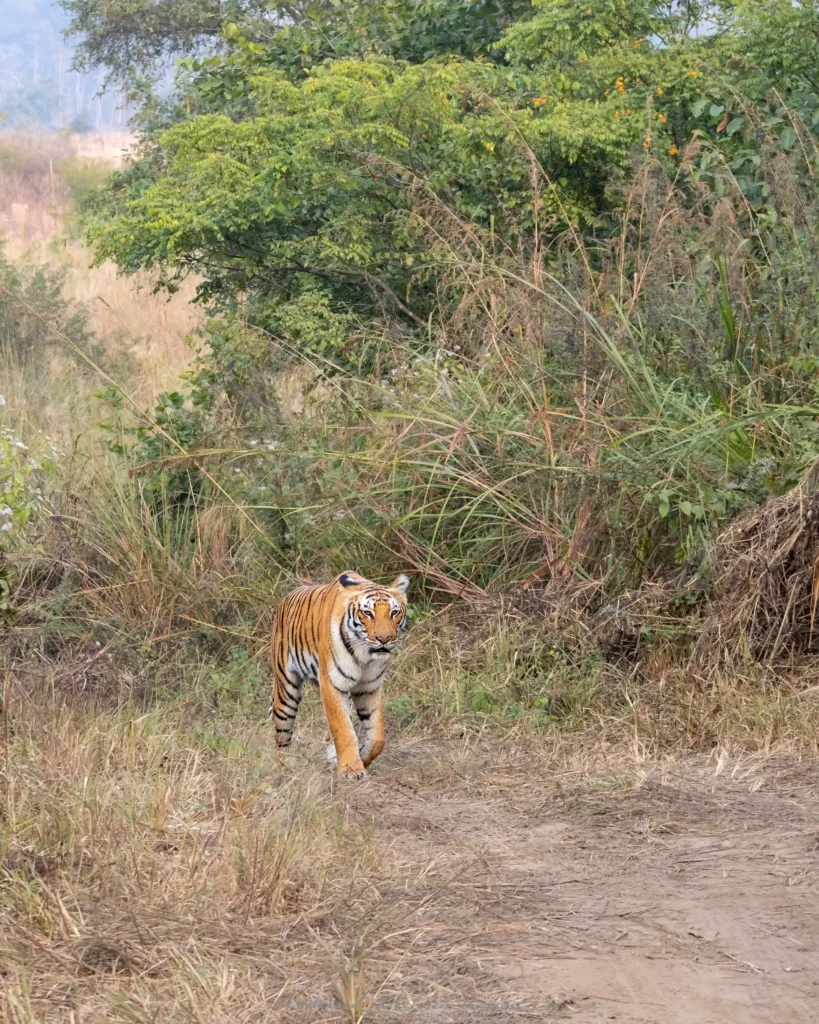
The table below breaks down the reality of India’s prominent wildlife parks to help you make an informed decision based on data rather than marketing claims.
| National Park | Tiger Sighting Probability | Primary Habitat & Landscape | Notable Species Beyond Tigers | Sourced Seasonal Visitor Volume |
| Bandhavgarh (Madhya Pradesh) | Highest (60–70%) | Rocky hills, sal forests, and open meadows | Leopard, Sloth Bear, Sambar Deer | Data not available |
| Ranthambore (Rajasthan) | High (50–60%) | Dry deciduous forests and historic ruins | Leopard, Striped Hyena, Marsh Crocodile | Data not available |
| Tadoba-Andhari (Maharashtra) | High (50–60%) | Dry deciduous forest and bamboo thickets | Sloth Bear, Dhole (Wild Dog), Leopard | Data not available |
| Kanha (Madhya Pradesh) | Moderate (40–50%) | Large plateau meadows and sal forests | Barasingha (Swamp Deer), Indian Bison (Gaur) | Data not available |
| Pench (Madhya Pradesh) | Moderate (35–45%) | Open canopy teak forests and river paths | Indian Wolf, Malabar Giant Squirrel, Birds | Data not available |
| Corbett (Uttarakhand) | Moderate (35–45%) | Himalayan foothills, riverine belts, and grasslands | Asian Elephant, Gharial, King Cobra | Data not available |
| Kaziranga (Assam) | Low for Tigers / High for Rhinos | Tall elephant grass, marshlands, and broadleaf forests | One-horned Rhino, Wild Water Buffalo, Swamp Deer | 443,636 visitors (Oct 2024–May 2025) |
Mistake #4: Misjudging the Indian Seasons
Many visitors choose their safari dates based on school holidays or convenient travel windows rather than wildlife behavior. The Indian jungle changes drastically throughout the year, and assuming the experience remains static is a fundamental error.
- Summer (March–May): This is the optimal time for tracking tigers. The temperatures regularly exceed 40°C, causing smaller streams and ponds to dry up. This scarcity forces wildlife to congregate around the remaining permanent waterholes, making their movements highly predictable. Furthermore, the intense heat causes the dense undergrowth to die back, offering excellent visibility deep into the forest.
- Winter (October–February): This window offers comfortable daytime temperatures ranging from 10°C to 25°C. However, the forest is lush, green, and incredibly dense after the monsoon, which provides ample cover for predators and makes spotting large mammals more difficult. Water is abundant throughout the park, so animals do not need to concentrate in specific areas. Despite this, winter is the premier season for birdwatching, as migratory species arrive in large numbers.
- Monsoon (July–September): This period brings heavy rains. Most core zones of the national parks are entirely closed during these months for safety reasons, to protect the roads, and to allow the ecosystem time to breed and regenerate without human interference.
Seasonal Dynamics: Summer vs. Winter Safari
| Factor | Summer (March–May) | Winter (Oct–Feb) |
| Tiger Sightings | Best | Moderate |
| Vegetation | Sparse and dry | Lush and dense |
| Water Sources | Limited (concentrates wildlife) | Abundant (disperses wildlife) |
| Temperature | Hot (often 40°C+) | Comfortable (10–25°C) |
| Birdwatching | Moderate | Best |
Mistake #5: The Last-Minute Permit Scramble
In India, a national park permit is tied to a specific vehicle, a specific date, and a specific zone within the forest. To prevent overcrowding, these permits are strictly limited by the government.
Most parks open their online booking windows 60 to 90 days prior to the safari date. Prime zones in highly sought-after parks vanish fast—often within hours of the window opening. If you wait until a few weeks before your trip to book, you will likely find all slots completely sold out.
Even if you do secure a last-minute permit, you will likely be forced into peripheral zones with historically lower sighting probabilities. For example, booking Ranthambore late often means settling for Zone 10, causing you to miss the superior sightings routinely recorded in prime territories like Zone 4. To secure the best access, you must firm up your plans 5 to 6 months ahead of time and be ready to book exactly when the permits go live.
The Safari Booking Window Timeline and Risk Matrix
| Time Before Visit | Necessary Action | Risk if Delayed |
| 90–60 days | Secure permits as booking windows open. | You miss out on prime zones. |
| 30–45 days | Finalize bookings for popular parks. | Limited zone options remain available. |
| 14–21 days | Absolute minimum advance booking window. | High risk of securing zero permits. |
| Under 7 days | Last-minute attempts. | Near certainty of no availability. |
The Administrative Traps: ID Mismatches and Unofficial Agents
The logistical side of Indian safaris is heavily regulated. As a rule implemented for 2025, mandatory online permits are required for all safari and trekking activities.
One of the most devastating—and easily avoided—mistakes is an ID mismatch. The name and identification number on your permit must match your physical ID exactly. A simple spelling error during booking, or bringing a different passport to the gate than the one used to secure the permit, will result in immediate denial of entry. Forest officials are strict, and there are no exceptions.
Furthermore, travelers often fall victim to third-party agent scams. Trusting unofficial agents can lead to double charges, fake bookings, or sudden cancellations. Always verify your operators. Look for organizations with TOFTigers certification and PUG Mark accreditation. This guarantees the operator adheres to sustainable practices, supports local communities, and uses legitimate booking channels. Whenever possible, arrange for a private safari guide or naturalist to accompany you, as their tracking expertise far exceeds that of a standard park-assigned guide.
Mistake #6: Wardrobe and Fragrance Missteps
The jungle requires you to blend in, not stand out. Wearing bright or flashy colors is a guaranteed way to alert wildlife to your presence long before you see them. Tigers, in particular, are highly sensitive to sudden movements and visual anomalies; bright fabrics will immediately put them on alert. Always opt for neutral tones like olive green, beige, or brown.
Because early mornings are freezing and afternoons can be blistering, dressing in lightweight, breathable layers is essential. Long sleeves and proper footwear offer necessary protection against the brush and insects.
Furthermore, strictly avoid perfumes, colognes, or strongly scented personal products. Animals possess exceptionally keen senses of smell. Unnatural fragrances will either attract unwanted insects or cause sensitive wildlife to retreat deep into the forest to avoid the disturbance.
Mistake #7: The Sound of Silence (And Missing Forest Alarms)
A safari is an exercise in listening. If you are talking loudly in the back of the jeep, you are actively sabotaging your own experience. Loud noises cause animals to flee and ruin the sighting for every other vehicle in the vicinity.
The forest communicates constantly. Naturalists locate predators primarily by listening for the alarm calls of Sambar deer, the warning cries of birds, or the sudden rustling of leaves. To maximize your chances of a sighting, maintain absolute silence, speak only in soft whispers when necessary, and avoid sudden, jerky movements that startle wildlife. Bringing Bluetooth speakers or playing music is highly discouraged and deeply disruptive to the ecosystem.
Mistake #8: Tiger-Only Tunnel Vision
If you measure the success of your safari solely by tiger sightings, you will miss the intricate reality of the Indian wilderness. Many tourists demand their drivers race past fascinating ecology just to join a crowded wait at a known tiger spot. This tiger-only focus causes people to ignore the rich avian life, insects, and dramatic landscapes around them.
The forest is alive with species like the Indian Giant Squirrel, various owls, kingfishers, and vital prey animals like Sambar and Spotted Deer that play crucial ecosystem roles. Instead of driving around merely looking for a striped coat, take the time to understand the habitat and the tracks on the ground. Appreciating the entire ecosystem makes every single drive immensely rewarding, rather than a pass/fail hunt for one animal.
Mistake #9: Bringing the Wrong Gear (Or Using Forbidden Features)
You cannot photograph a tiger at 50 meters with a standard smartphone. Relying on wide-angle lenses or phone cameras usually results in blurry, disappointing images and leads to tourists pressuring drivers to get illegally close to the animals.
The essential gear for a safari includes a telephoto lens, extra batteries, and most importantly, a quality pair of binoculars. Binoculars allow you to observe natural behavior without encroaching on the animal’s safe space.
Crucially, flash photography is strictly forbidden across all reserves. The sudden burst of light startles animals, causing immense stress and potentially triggering aggressive behavior. Adjust your camera settings for low light instead. Additionally, flying drones over protected areas is completely prohibited. Never ask your driver to reduce the gap between the vehicle and the wildlife for a better shot, and ensure your vehicle never comes between a parent animal and its offspring.
Mistake #10: Underestimating the Early Dawn Start
The jungle does not sleep in, and neither should you. Many first-time visitors underestimate just how early a safari day begins, often struggling with the necessary 4:30 AM wake-up calls.
Morning safaris commence right at sunrise, which is non-negotiable. Dawn is the absolute most active period in the forest: predators are on the move after the night’s hunt, birds are calling loudly, and the soft, golden light creates ideal photography conditions.
The typical safari timetable consists of an early morning game drive, a midday siesta to avoid the intense heat, and a late afternoon drive. If you choose to sleep through the early alarm, you will entirely miss the most dynamic wildlife activity of the day.
The Legal Shift: New Supreme Court Rules and Safety Protocols
The November 2025 Legal Overhaul: No Phones, No Night Safaris
A sweeping ruling by the Supreme Court of India on November 17, 2025, fundamentally altered tiger reserve tourism across the country. Aimed at minimizing human interference, preventing mass tourism, and reducing wildlife stress, these updated regulations are heavily enforced at park entry gates.
- The Mobile Phone Ban: Mobile phones are no longer permitted to be used within the core tourism zones of tiger reserves. Depending on the specific park, you will either be required to surrender your device at the entrance gate or hand it to your guide to be kept silent and completely out of reach for the duration of the drive. This rule is designed to eliminate the distractions of phone calls, sudden ringtones, and tourist selfies, which disturb natural animal behaviors. Reserves like Tadoba and Umred have already executed this policy, with Rajaji and Corbett strictly following suit. Violations result in immediate fines and the revocation of safari permits.
- Prohibition of Night Safaris: Night tourism within tiger reserves is now completely prohibited. While some parks previously allowed nocturnal drives for predator viewing, the Supreme Court has banned the practice to ensure wildlife can hunt and move without the disruption of artificial vehicle lights and noise.
- Core Habitat and Fringe Restrictions: Safari vehicle movements are now strictly restricted to pre-approved, non-forest lands within the core areas. Furthermore, commercial development around the immediate fringes of these reserves faces strict limits to preserve critical wildlife corridors.
Critical Safety Mistakes That Endanger Lives and Permits
A safari vehicle offers a safe vantage point, but it is not an armored shield. The wildlife inside Indian reserves is completely wild, and ignoring safety protocols can quickly turn a routine drive into an emergency.
- Stepping Out of the Vehicle: You must never step out of the safari vehicle under any circumstances, unless your guide explicitly permits it at a designated, protected forest checkpoint. Animals generally view a safari jeep as a single, large, non-threatening object. The moment you step onto the ground, that illusion breaks, and predators may instantly perceive you as either an active threat or easy prey.
- Leaning Out and Standing: Avoid leaning far out of the vehicle sides or waving your arms to get an animal’s attention. Sudden shifts in silhouette can startle nearby wildlife, causing them to bolt or charge.
- Speed Violations and Off-Roading: All vehicles must adhere to a maximum speed limit of 20 km/h. Fast driving is entirely illegal and dangerous to small mammals and reptiles crossing the tracks. Never encourage or bribe a driver to go off-road or follow a predator into the brush. Driving off marked trails destroys fragile micro-habitats and carries heavy penalties, including an immediate ban for the vehicle and driver.
- Distance Boundaries: Vehicles must maintain a respectful distance of approximately 20 meters from all wildlife. Drivers are strictly forbidden from crowding animals, blocking their paths, or approaching breeding sites. Most importantly, a vehicle must never position itself between a parent animal and its offspring.
Environmental Breaches: Littering and Fire Risks in Plastic-Free Zones
Maintaining the ecological integrity of India’s national parks requires strict adherence to waste and fire prevention rules. The wilderness is not a trash bin, and items left behind have direct, negative impacts on resident species.
- Strict Plastic Bans: All national parks in India are strictly enforced plastic-free and polythene-free zones. You are forbidden from bringing disposable plastic bags or non-reusable wrapping into the core areas. Travelers should carry reusable water bottles and keep all personal waste—such as snack wrappers or tissues—inside a small, secure bag within the vehicle to be disposed of properly outside the park boundaries. Littering results in heavy financial penalties.
- Fire Prevention and Contraband: Smoking is completely prohibited inside all protected forest areas due to the extreme risk of devastating bushfires, particularly during the dry summer months. At the entry gates, officials inspect vehicles for contraband; carrying tobacco, alcohol, lighters, matchboxes, arms, or explosives is strictly illegal.
- Preserving Forest Artifacts: It is illegal to pick up or remove any forest produce, plants, stones, feathers, or animal articles from inside a protected area. Leave the environment exactly as you found it.
How to Maximize Your Wildlife Safari Experience
To elevate your safari from a simple tourist drive to an authentic wildlife tracking experience, your focus should be on the quality of your guides and the ethics of your chosen operators.
Hire an Experienced Naturalist or Tracker
The standard park-assigned guides are helpful, but an experienced private naturalist reads the forest differently. They track pug marks on the road, know the recent territorial movements of specific tigers, and understand animal psychology. When booking your accommodation, ask how many in-house naturalists they employ. A property with 20 rooms and only one naturalist is inadequate. A dedicated professional will teach you about the environment and significantly add to the trip’s overall value. Go local whenever possible by picking conservation and community-driven properties.
Choose TOFTigers Certified Operators
The Indian safari industry is flooded with unverified agents. To ensure your money supports conservation rather than exploitation, look for the TOFTigers PUG Mark accreditation when booking your accommodation or tour operator. You should also verify operator quality by checking TripAdvisor; avoid any company with a score below 80%. Choosing accredited operators guarantees that the property follows sustainable policies regarding water usage, supports the local community, and understands wildlife ethics.
Maintain an Open Mind
Animal sightings are always a matter of chance, not a guaranteed right. Treat the safari slowly, taking time to look at all facets of the wilderness—from understanding the local habitat to acknowledging the vital role that local communities play around the reserves. Remember to tip the local guides, drivers, and staff who put in the hard effort to make your safari possible.
Summary Table: Common Mistakes and Immediate Consequences
If you are pressed for time, use this table as a rapid diagnostic tool to ensure you are not actively sabotaging your own safari.
| Mistake | Immediate Consequence | Long-Term Ecosystem Impact |
| Wearing bright clothes | Wildlife is visually alerted and scared away. | Reduces overall sighting chances for all visitors. |
| Talking loudly | Animals flee the immediate area. | Disturbs other tourists and natural forest rhythms. |
| Using flash photography | Triggers animal stress and aggressive behavior. | Alters natural animal behavior over time. |
| Feeding animals | Creates severe health risks for the wildlife. | Creates dangerous animal dependency on human food. |
| Littering | Incurs heavy financial fines. | Harms animals and deeply disrupts the micro-ecosystem. |
| Off-road driving | Illegal action resulting in revoked permits. | Destroys fragile habitats and undergrowth. |
| Mobile phone use | Fines and immediate permit revocation. | Distraction and risk of illegal flash/noise disruption. |
Quick Reference: Safari Do’s and Don’ts Checklist
DO’s ✓
- Wear neutral colors, specifically olive, beige, or brown.
- Book a minimum of 3 to 4 safari drives to ensure a good experience.
- Book permits 2 to 4 weeks in advance, or 60 to 90 days ahead for prime zones.
- Hire an experienced tracker or naturalist.
- Bring a telephoto lens, extra batteries, and binoculars.
- Maintain a safe distance of approximately 20 meters from all wildlife.
- Stay seated inside the vehicle at all times.
- Keep silence and speak only softly.
- Choose operators that hold TOFTigers certification.
- Take back all of your waste, as the parks are strict plastic-free zones.
DON’Ts ✗
- Expect or demand guaranteed tiger sightings.
- Wear bright or flashy clothing.
- Step out of the safari vehicle under any circumstances.
- Use flash photography.
- Feed or touch the animals.
- Litter anywhere inside the park.
- Speak loudly or play music.
- Use mobile phones in core tourism zones.
- Encourage drivers to go off-road or exceed the 20 km/h speed limit.
- Demand that guides find specific animal sightings.
Frequently Asked Questions
1. Will I definitely see a tiger on my safari?
No, tiger sightings are never guaranteed. Wildlife moves dynamically according to changing habitat conditions, prey availability, and weather. You should approach a safari as an overall wilderness experience rather than a hunt for one specific animal.
2. How many safari drives should I book for a good experience?
You should plan to book 3 to 4 drives during your stay. Relying on a single safari is rarely enough to guarantee meaningful sightings, as animal activity fluctuates dramatically throughout the day.
3. Can I use my mobile phone if it is set to silent or airplane mode?
No. Following the November 2025 Supreme Court ruling, mobile phones are strictly banned within the tourism zones of core tiger habitats. You must surrender your device at the entry gates or hand it over to your guide, depending on the park’s specific enforcement protocol.
4. What happens if a tourist violates the park rules or the phone ban?
Rule violations are taken very seriously and will result in heavy fines, immediate permit revocation, and potential legal consequences. The vehicle driver and guide can also face suspension or lose their license if they permit tourists to break regulations.
5. Is it ever permissible to step out of the vehicle during a drive?
Never. Stepping out of a safari vehicle is extremely dangerous, as predators may instantly perceive a human on foot as either a threat or prey. You may only disembark at specific, legally designated forest checkpoints when explicitly told to do so by your guide.
6. What colors are best to wear during a safari?
You should only wear neutral tones such as olive green, beige, and brown. Bright colors disturb the wildlife and attract unnecessary attention from sensitive predators.
7. Are night safaris available in Indian tiger reserves?
No, night safaris are now completely prohibited in all tiger reserves. This rule was established to minimize human interference in sensitive areas, meaning the early morning dawn drives remain your best opportunity for viewing active predators.
Conclusion
A successful wildlife safari in India relies entirely on preparation, ethical behavior, and managing your expectations. By choosing the right park for your interests, booking your permits exactly when the windows open, and respecting the strict 2025 legal boundaries, you protect both your investment and the ecosystem. Leave the brightly colored clothes and the mobile phones behind, listen to the natural alarms of the forest, and allow the Indian wilderness to reveal itself on its own timeline.
Tiger Safari in India : Topics Cluster
- Tiger Safari Planning Workbook
- Tiger Safari Booking Guide
- Best time for tiger sightings in India
- How to increase chances of tiger sighting?
- Tiger Safari Naturalist Guide
- Tiger Safari India Cost
- How to book a Tiger Safari in India?
- Best Wildlife Tour Operators in India
- Best Destination Cities for Tiger Safaris in India
- Tiger Safari under ₹25000
- Top 10 Budget Tiger Safaris 2026
- Tiger Photography Tips
- Best Tiger Reserves
- Top 10 Tiger Reserves by sighting chances
9