Plan your 2026 trip to Dudhwa National Park. Discover expert advice on safari booking, the best time to visit, and exploring the unique Terai ecosystem.
Introduction & Overview
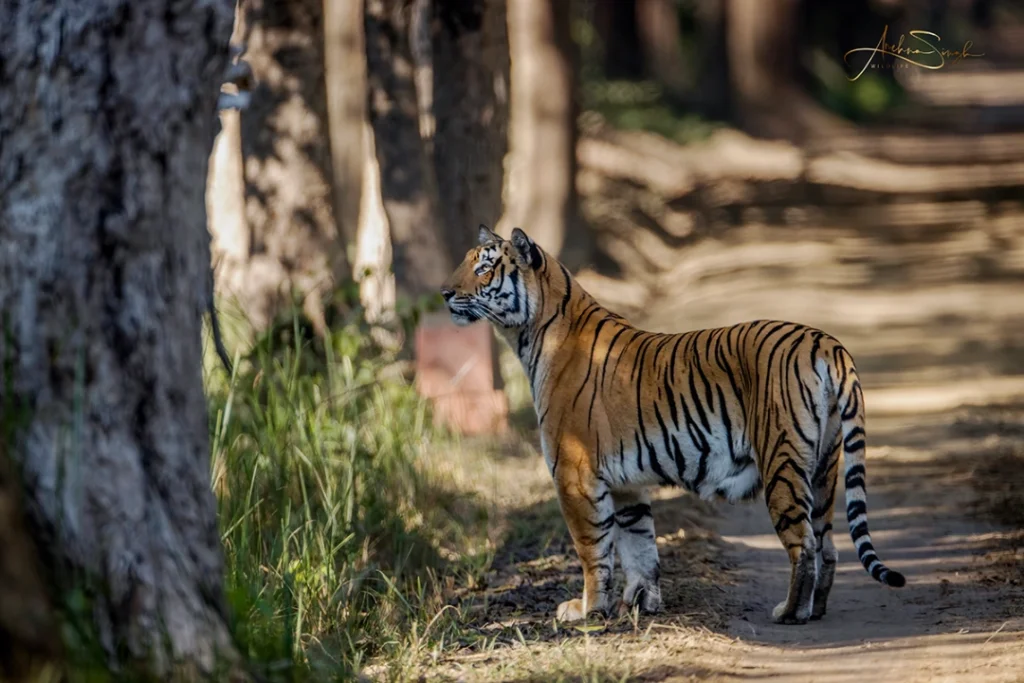
Image Credits : Original Photograph © Archna Singh | All Rights Reserved | Shared with WildlifeSafaris.in
Dudhwa National Park is one of North India’s most significant wildlife landscapes, yet it remains one of the least commercialized. Unlike the heavily trafficked parks of the central belt, Dudhwa offers a window into the Terai ecosystem—a transition zone between the plains and the Himalayas characterized by vast grasslands, marshes, and dense Sal forests.
For the traveler, Dudhwa is not merely a “tiger park.” It is a conservation success story, home to a viable population of the northern swamp deer and the site of a landmark rhino reintroduction program that began in 1984. If you are looking for a wildlife destination that prioritizes biodiversity and ecological health over high-volume tourism, Dudhwa is a primary choice in 2026.
Quick Facts: Dudhwa National Park
| Feature | Detail |
| Location | Lakhimpur Kheri, Uttar Pradesh |
| Total Area | ~49,029 hectares (National Park core) |
| Primary Ecosystem | Terai (Grasslands, Wetlands, Sal Forest) |
| Flagship Species | Tiger, One-horned Rhinoceros, Northern Swamp Deer |
| Tourist Season | 15 November to 15 June (Subject to weather) |
Why Dudhwa is Famous
The reserve’s significance lies in its role as a representative of the Terai landscape. It is the only reserve in India hosting a viable population of the nominate subspecies of the northern swamp deer. Furthermore, Dudhwa is unique in Northern India for its reintroduction of the great Indian one-horned rhinoceros.
Beyond the flagship megafauna, the park is an excellent location for birdwatchers. Species such as the Bengal florican and various migratory waterbirds frequent the wetlands, while the diverse habitat—ranging from riverine forests to open grasslands—supports a wide array of mammals, including the Asian elephant, leopard, fishing cat, and hispid hare.
The Dudhwa Tiger Reserve Complex
A common source of confusion for first-time visitors is the difference between “Dudhwa National Park” and “Dudhwa Tiger Reserve.”
The Dudhwa Tiger Reserve is the larger administrative unit. It is composed of three distinct protected areas that are connected, though they offer different visitor experiences:
- Dudhwa National Park: The core area, known for its extensive grasslands and rhino sightings. It is the most accessible for general tourism.
- Kishanpur Wildlife Sanctuary: Known for its diverse ungulate populations and distinct forest patches. It acts as an important wildlife corridor.
- Katerniaghat Wildlife Sanctuary: Famed for its riverine landscape, which is critical habitat for gharials, muggers, and other aquatic fauna.
For those planning a trip, it is important to decide which of these areas you wish to focus on, as they are not all accessed from the same entry points.
Best Time to Visit
The tourist season in Dudhwa typically runs from 15 November to 15 June. However, your experience will vary significantly depending on the month you choose.
- Winter (November to February): This is the peak season. The weather is cool, and the tall elephant grass begins to dry out, making wildlife viewing easier. This is the best time for birdwatching as migratory species arrive in the wetlands.
- Summer (March to June): As the temperature rises, wildlife, particularly tigers and rhinos, are more frequently spotted near waterholes and river banks to beat the heat. This is the preferred time for serious photographers and those focused on mammal sightings.
How to Reach
Dudhwa is located in the Lakhimpur Kheri district near the Indo-Nepal border.
- By Air: The nearest major airport is Lucknow (Chaudhary Charan Singh International Airport). From Lucknow, the drive to the park takes approximately 5–6 hours.
- By Rail: Dudhwa is connected via rail, but travelers often prefer arriving at Lucknow or Shahjahanpur stations and taking a private vehicle for the final leg of the journey to ensure reliable transport.
Expert Tip: Because Dudhwa is located in a remote area, public transport options can be inconsistent once you leave major hubs. It is highly recommended to arrange your transfers through your accommodation or a registered tour operator in advance.
Official Booking & Practical Planning
Planning a trip to the Dudhwa Tiger Reserve requires a clear understanding of the administrative landscape. Because the reserve complex consists of three distinct protected areas, safari rules and logistics vary between them.
Official Safari Booking and Procedures
The primary source for booking safaris and accommodation is the UP Ecotourism portal. Travelers are advised to rely strictly on official channels for permit bookings to avoid complications with entry at the gates.
- Advance Planning: Wildlife permits are limited and subject to daily quotas. For trips planned between December and February, booking at least 30–45 days in advance is highly recommended to secure preferred safari slots.
- Dynamic Pricing: Note that entry fees and safari rates have seen adjustments recently, with increases noted in late 2025. Always verify current fee structures on the official portal immediately before confirming your travel dates.
- Entry Requirements: You must carry original government-issued photo identification for all members of your party. These will be verified at the park gate against your online permit.
- Documentation: Permits are non-transferable. Ensure that the names on your booking match the identification documents exactly.
Expert Tip: While third-party tour packages are available, verify whether they include the official forest department safari permits. A “package” is not a substitute for a park entry permit. Always ask for the official booking receipt.
Safari Modes and Regulations
The standard method for exploring the reserve is by four-wheel-drive vehicle (Jeep).
- Zones: Safaris operate within specific zones. In Dudhwa National Park, entry is typically through the main gates near the core areas where the rhino reintroduction project is concentrated.
- Timings: Safaris are generally conducted in morning and evening shifts. During the peak summer months, these timings may be adjusted by forest authorities to manage heat and animal behavior.
- Ethics: Staying inside the vehicle is mandatory. Do not encourage drivers to go off-track, as the Terai grasslands are fragile environments, and off-roading disturbs the habitat.
Dudhwa Complex: Choosing Your Destination
| Feature | Dudhwa National Park | Kishanpur Wildlife Sanctuary | Katerniaghat Wildlife Sanctuary |
| Primary Landscape | Grasslands, Sal forests, Wetlands | Forest patches, Corridors | Riverine, Terai forest |
| Star Attraction | One-horned Rhinoceros, Swamp Deer | Tiger, Leopard, Deer species | Gharial, Mugger, Gangetic Dolphin |
| Best For | Rhino tracking, General mammal viewing | Serious wildlife enthusiasts | Aquatic life, River cruises |
| Accessibility | Well-connected | Requires local transport | More remote |
- Dudhwa National Park is the most accessible for first-time visitors and offers the highest probability of viewing the reintroduced rhinos.
- Kishanpur is a smaller, more intimate sanctuary that is effectively a vital corridor for tiger movement, often offering a quieter experience away from crowds.
- Katerniaghat is distinct for its river-edge ecosystem. It is the best choice for those interested in riparian ecology, including reptiles and waterbirds.
What to Verify Before Travel
In 2026, planning requires a proactive check of current operational status. The tourist season officially runs from 15 November to 15 June, but internal park roads can occasionally close due to early monsoon rains or management decisions.
- Gate Closures: Check the official UP Ecotourism portal for any seasonal or emergency gate closures.
- Permit Validity: Ensure your permit is for the correct entry gate; some zones have multiple points of entry.
- Transport: If you are booking a private vehicle from Lucknow, ensure the driver is familiar with the specific gate you have booked for, as the distances between gates in the Dudhwa complex can be significant.
Field Note: The park authorities have recently focused on earlier season openings to manage visitor flow. This means early November is increasingly a viable planning option, though the density of the tall elephant grass in early season can make initial sightings more challenging than in the dry peak of March and April.
Wildlife and the Terai Ecosystem
The Dudhwa Tiger Reserve is a distinct ecological landscape. While many visitors arrive with the primary goal of spotting a tiger, the reserve’s true value lies in its status as one of the last remaining examples of the Terai ecosystem. This region is defined by a unique mosaic of tall grasslands, dense Sal forests, and extensive marshlands, creating a habitat that supports a diverse range of species not found in other parts of India.
Flagship Species: Rhinos, Swamp Deer, and Tigers
The wildlife viewing experience here is defined by three primary conservation success stories.
- One-Horned Rhinoceros: Dudhwa is the only reserve in Northern India home to the great Indian one-horned rhinoceros. It is important to note that these are not native to this specific patch in the same way they are in Assam; the population was reintroduced in 1984 to secure the species against extinction risks. Sightings are typically concentrated in the rhino rehabilitation area.
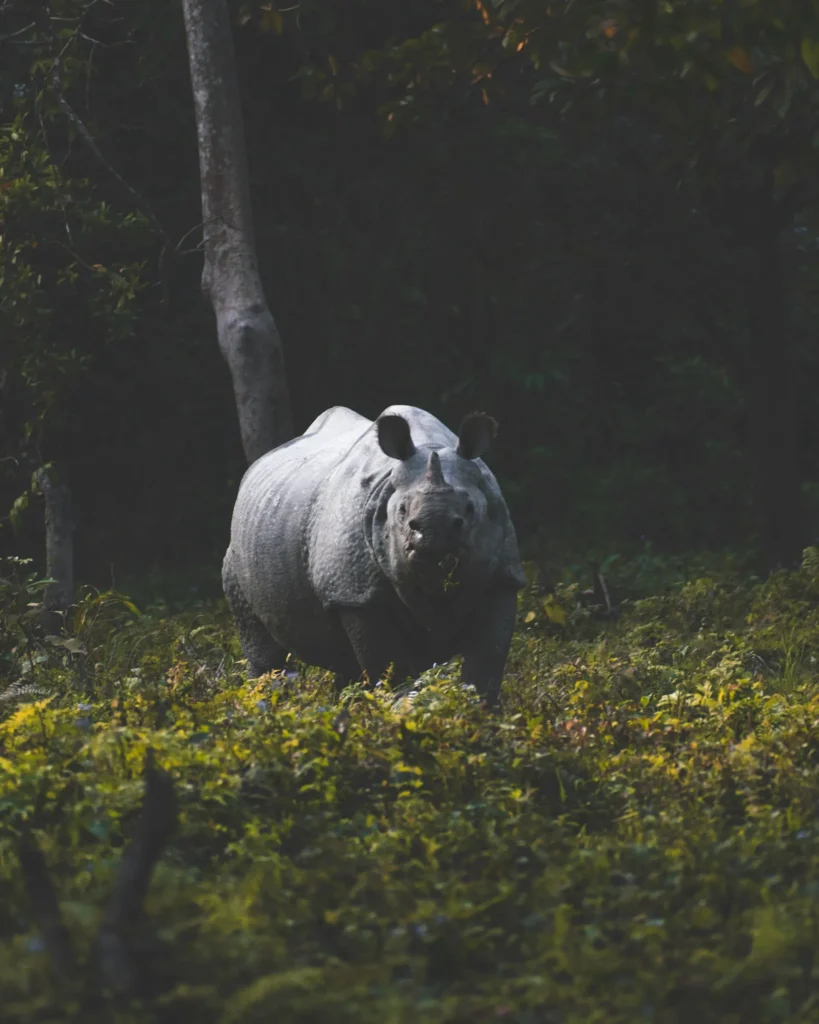
Image: Greater one-horned rhinoceros.
- Northern Swamp Deer (Barasingha): The reserve holds a significant, potentially viable population of the nominate subspecies of the northern swamp deer. You will often see them in the open grasslands, particularly in the morning when they are most active. Dudhwa is globally significant for the preservation of this specific deer.
- Tigers and Elephants: The reserve supports sizeable populations of both tigers and Asian elephants. Unlike the dry, hilly terrain of parks like Corbett, tracking tigers in the Terai often involves scanning the tall grass and the edges of waterholes. Because the cover is so dense, sightings require patience and a guide familiar with local movement patterns.
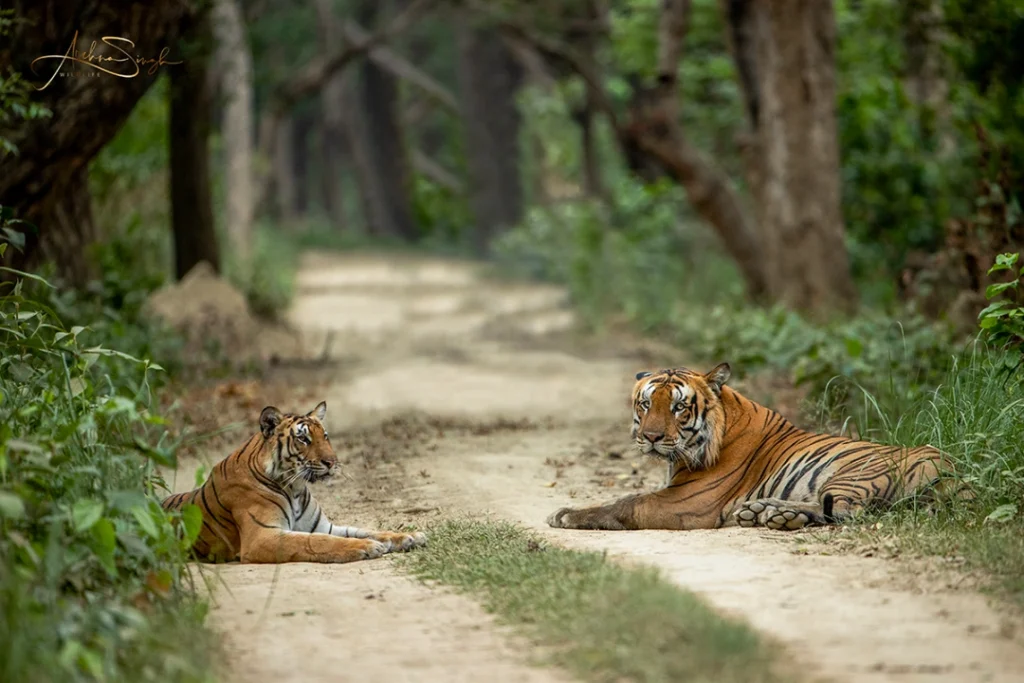
Image Credits : Original Photograph © Archna Singh | All Rights Reserved | Shared with WildlifeSafaris.in
Field Note: Wildlife diversity is high here. The reserve is home to five of the seven deer species found in India, including the hog deer and sambar. Keep your binoculars ready for these smaller species, as they are often overlooked while scanning for tigers.
Birdwatching and Wetland Habitats
Dudhwa is an excellent destination for birdwatchers, particularly during the winter months (November to February) when migratory waterbirds arrive. The wetlands and the riverine borders provide habitat for species that are increasingly rare elsewhere.
- Endangered Species: The park is a critical habitat for the critically endangered Bengal florican and the hispid hare. These are difficult to spot and often require a dedicated, slow-paced safari focused on grassland edges.
- Avian Diversity: Beyond the rarities, the park hosts a wide variety of hornbills, serpent eagles, ospreys, and the Indian pitta. The dense forest canopy and the marshy grasslands create a layered habitat that supports different avian guilds simultaneously.
River-Edge Fauna: Reptiles and Aquatic Life
While the grasslands capture most of the attention, the river systems—particularly in Katerniaghat—are vital to the ecosystem.
- Reptiles: The rivers are home to both gharial and mugger crocodiles. These are best viewed during the warmer months when they emerge from the water to bask on the banks.
- Aquatic Mammals: Keep a lookout for otters along the riverbanks. The waterways also support a variety of turtles and monitor lizards, which are frequently seen near the marshy fringes.
Photography Tip: Wildlife in the Terai is often surrounded by tall, golden grass. For better results, adjust your camera’s exposure settings to prioritize the subject rather than the bright, sunlit grass, which can trick your light meter into underexposing the animal.
Accommodation, Itineraries & FAQs
Where to Stay
Accommodation options around Dudhwa Tiger Reserve generally fall into two categories: government-operated Forest Rest Houses (FRHs) and private resorts.
- Forest Rest Houses (FRHs): Managed by the Forest Department, these are located within or very close to the core area. They are often the best choice for enthusiasts who want to minimize travel time to the safari gates and prefer a quiet, nature-focused atmosphere. Booking these requires checking availability on the official ecotourism portals well in advance.
- Private Resorts: These are situated on the periphery of the park, primarily around Palia or the road connecting the entry points. These offer more amenities such as restaurants, guided nature walks, and transfer services from nearby transport hubs.
Expert Tip: If you plan to visit Katerniaghat or Kishanpur, research accommodation specific to those areas. They are distinct from the Dudhwa National Park core, and staying near the wrong entrance will result in significant daily travel times.
Suggested Itineraries
A balanced trip to the Terai landscape requires at least two full days to account for the time spent traveling and the slower pace of wildlife viewing compared to high-density parks.
2-Day Itinerary
- Day 1: Arrival via Palia/Lucknow. Afternoon safari in the core zone to settle in and spot swamp deer and rhinos.
- Day 2: Morning safari for birdwatching and tiger tracking. Departure in the afternoon.
3-Day Itinerary
- Day 1: Arrival and check-in. Evening river-edge or grassland safari.
- Day 2: Morning safari in the core zone. Afternoon focused on birdwatching or visiting a peripheral wetland area.
- Day 3: Early morning short nature walk or final drive. Departure.
Common Mistakes to Avoid
To ensure a smooth trip, avoid these frequent planning errors reported by travelers:
- Confusing the Reserve Units: Assuming Dudhwa National Park, Kishanpur, and Katerniaghat are the same destination. They are separate entities within the Dudhwa Tiger Reserve complex, requiring different logistics.
- Expecting Guaranteed Sightings: Do not treat tigers as the only objective. Dudhwa is an ecosystem destination; focusing only on predators will lead to frustration.
- Late Booking: Leaving safari permits for the last minute. In peak season (November–February), quotas fill quickly.
- Assuming Year-Round Access: The park closes during the monsoon. Always check the official season dates for 2026 before booking flights.
Frequently Asked Questions
- Is Dudhwa suitable for families? Yes, it offers a quieter experience than larger commercial parks, which can be ideal for families interested in nature rather than just “tiger chasing”.
- Can you see one-horned rhinos in Dudhwa? Yes, they were reintroduced in 1984 and are a highlight of the reserve.
- How do I book official safaris? Always use the UP Ecotourism portal. Avoid third-party sites that do not explicitly link to the government booking engine.
- Is birdwatching good in Dudhwa? It is excellent. The mix of wetlands and grasslands supports diverse species, including the Bengal florican and migratory waterbirds.
- How many days are enough for Dudhwa? A 2 to 3-day itinerary is ideal to cover the main zones and enjoy the landscape without rushing.
Conclusion
Dudhwa National Park offers a rare glimpse into the Terai ecosystem—a landscape of tall grasslands and vital wetlands that remains distinct from the more commercialized wildlife circuits in India. Whether your focus is on the rhino reintroduction program, the unique swamp deer, or the rich birdlife, planning your trip with a focus on the specific zones of the Dudhwa Tiger Reserve will ensure a rewarding experience.
By using the official booking resources and keeping your expectations aligned with the nature of the Terai—where patience is as important as the wildlife itself—you can enjoy a meaningful visit to one of North India’s most ecologically significant reserves.
Image Use Disclaimer : Photographs where contributed courtesy of wildlife photographer Archna Singh, their inclusion on this website does not constitute or imply any endorsement, partnership, safari affiliation or commercial association with WildlifeSafaris.In. Archna Singh does not conduct or book safaris through this company.
Safari Planning : Topics Cluster
- How to book a wildlife safari in India?
- Park by Park Online Safari Booking Guide
- Tiger Safari India Planning Workbook
- Park by Park Safari Permits Guide
- National Parks Permit Guide – Park by Park Guide
- Tatkal Safari Booking Guide – Last Minute Safari Permits Booking
- Tiger Safari in India Cost
- Indian Wildlife Safari Budget Planner
- Jeep vs Canter Safari
- Best time for Tiger Sightings in India
- How far advanced should you book safari permits?
- Can foreigners book Indian Wildlife Safari online?
- Special Permits Guide for Foreigners and Domestic Visitors
- How to book a Safari Permit online in India? 2026 step by step guide
- Senior Citizens Friendly Safari Planning
- Multi Generation Family Safari Planning
- 50 things to know before your first safari in India