
Plan your 2026 Ranthambore safari with official booking insights, zone analysis, travel routes from Delhi or Jaipur, and realistic wildlife tracking advice.
Ranthambore at a Glance
Why Ranthambore is Famous
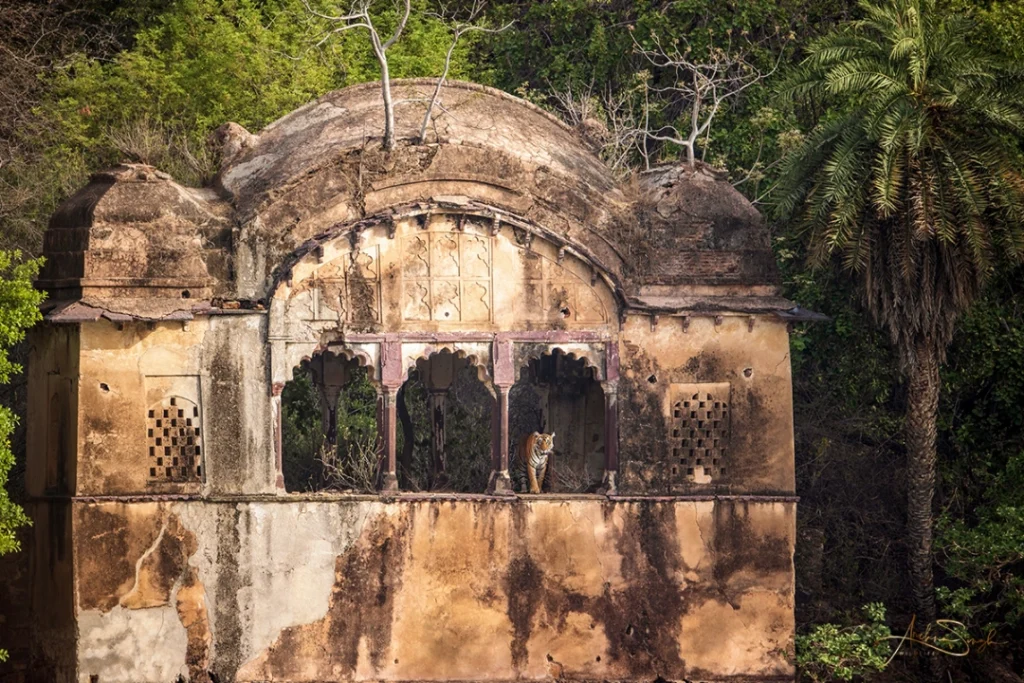
Image Credits : Original Photograph © Archna Singh | All Rights Reserved | Shared with WildlifeSafaris.in
Ranthambore stands as one of India’s foundational wild spaces, widely recognized for its accessible Bengal tiger populations and its distinctive historic landscape. Unlike the dense, evergreen forests of India’s southern or northeastern reserves, Ranthambore offers a dry-deciduous setting where wildlife tracking relies heavily on open visibility, shared water holes, and the unique terrain of eastern Rajasthan.
For travelers planning a visit in 2026, navigating this park requires distinct operational knowledge. Safari rules, booking mechanisms, and zone management change frequently, meaning successful trips depend on early planning and a clear understanding of the official layout.
The park is recognized by Rajasthan Tourism as one of the country’s major wildlife attractions. Its international reputation centers on the relative visibility of its apex predator, the Bengal tiger, alongside a diverse community of mammals, birds, and reptiles. Geographically, the park occupies a critical ecological position at the junction of the Aravalli and Vindhya mountain ranges, creating a terrain characterized by sharp cliffs, flat-topped hills, ravines, and highly scenic valley lakes.
What sets the park apart visually is the overlay of human history onto the natural environment. The ancient Ranthambore Fort stands atop a central plateau overlooking the forest, while old arches, pavilions, and crumbling stone walls are seamlessly integrated into the tracking zones, providing an editorial and photographic backdrop found in few other reserves.
Quick Facts for First-Time Visitors
- Location: Sawai Madhopur district, Eastern Rajasthan, India.
- Core Park Area: 392 square kilometers (comprising a 274 sq km core and a 118 sq km buffer). The broader Ranthambore Tiger Reserve extends across a much larger administrative footprint.
- Operational Season: The park is strictly open from October to June, closing its core zones entirely during the annual monsoon.
- Primary Terrain: Dry deciduous forest dominated by Dhok (Anogeissus pendula) trees, open meadows, rocky outcrops, and three main central lakes (Padam Talab, Rajbagh Talab, and Malik Talab).
- Flagship Wildlife: Bengal tiger, leopard, sloth bear, striped hyena, sambar deer, chital (spotted deer), nilgai, and mugger crocodiles.
Where Ranthambore is Located & How to Reach
Ranthambore is situated roughly 14 kilometers from the town of Sawai Madhopur. Because of its proximity to the Golden Triangle tourist circuit (Delhi-Agra-Jaipur), it is one of the most accessible wilderness areas in northern India for both domestic and international travelers.
Nearest Rail Access via Sawai Madhopur
Taking the train is the most efficient and reliable way to reach the park. The Sawai Madhopur Railway Station sits directly on the main Delhi-Mumbai rail route.
- Convenience: The station is located just 10 to 14 kilometers from the park gates and most surrounding safari lodges.
- Connectivity: Multiple superfast and express trains connect Sawai Madhopur directly to major Indian transits every day, making it an easy option for travelers wanting to avoid long road journeys. Taxis and local transports are readily available at the station for hotel transfers.
How to Reach from Jaipur
Jaipur serves as the closest airport hub for air travelers heading to Ranthambore.
- By Road: The distance between Jaipur and Ranthambore is approximately 160 to 180 kilometers depending on the route chosen. A direct road drive typically takes 3 to 4 hours.
- By Rail: Several daily trains run between Jaipur Junction and Sawai Madhopur, with travel times ranging from 2 to 2.5 hours, making rail a highly competitive alternative to driving.
How to Reach from Delhi
For those coming from the national capital, travel options are highly standardized across rail and road networks.
- By Rail: Premium trains like the Kota Janshatabdi or various Mumbai-bound expresses depart from New Delhi or Hazrat Nizamuddin stations, reaching Sawai Madhopur in roughly 4 to 5 hours.
- By Road: Driving from Delhi typically spans 360 to 400 kilometers. Depending on traffic and the choice of highway (including segments of the Delhi-Mumbai Expressway), road travel times hover between 6 to 8 hours.
Approach Route Comparison
| Departure Point | Mode of Transport | Approximate Distance | Average Travel Time | Best Suited For |
| Jaipur | Road (Taxi/Drive) | ~160–180 km | 3–4 hours | Travelers combining safaris with Rajasthan cultural itineraries. |
| Jaipur | Rail (Train) | — | 2–2.5 hours | Quick, cost-effective weekend transits. |
| Delhi | Rail (Express Train) | — | 4–5 hours | Maximizing comfort and avoiding highway congestion. |
| Delhi | Road (Expressway/Highway) | ~360–400 km | 6–8 hours | Road trippers or multi-destination private tours. |
Field Note
When arranging your arrivals, aim to reach your resort or hotel at least three hours before your scheduled afternoon safari. The forest department enforces strict entry cut-off times at the gates. Arriving late at the station or driving in close to the safari time can lead to missing your tracking window entirely, as vehicles cannot wait for delayed passengers.
Best Time to Visit Ranthambore
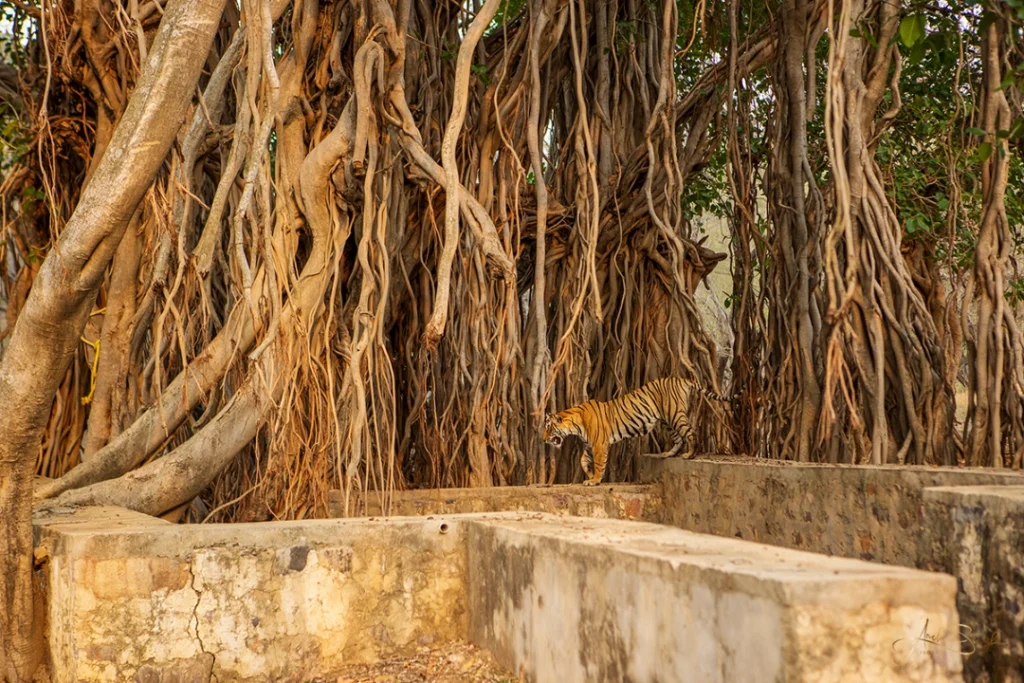
Image Credits : Original Photograph © Archna Singh | All Rights Reserved | Shared with WildlifeSafaris.in
When planning a safari, your choice of season should depend entirely on what you want to prioritize: comfortable weather, lush landscapes, or maximum wildlife visibility. Ranthambore experiences distinct seasonal shifts that drastically alter both the park’s appearance and the behavior of its wildlife.
The park is officially open to visitors from October to June. There is no single “perfect” time to go; rather, each season offers a different trade-off between physical comfort and tracking success.
Winter Season (October to March)
For most travelers, winter is the ideal time to visit because the weather is pleasant and the terrain is highly scenic. Following the monsoon, the dry deciduous forests and meadows are temporarily green, and water is abundant across the reserve.
Because temperatures are comfortable, animals are active throughout the day, and birdwatching is excellent as migratory species arrive at the lakes. However, this is also peak tourist season. Expect higher crowd levels, heavily booked safari vehicles, and the need to dress warmly for chilly morning drives in open vehicles.
Summer Season (April to June)
Summer in Rajasthan is undeniably harsh, with temperatures frequently pushing past 40°C. Despite the heat, this is widely considered the most productive time for serious wildlife photographers and tiger trackers.
As the heat intensifies, the smaller waterholes in the dhok forests dry up, forcing the park’s wildlife—including tigers, leopards, and sloth bears—to congregate around the permanent central water bodies like Padam Talab and Rajbagh Talab. The undergrowth also dies back completely, drastically improving line-of-sight visibility into the deep forest. While the physical discomfort is high, the trade-off is often better, longer sightings around water.
Monsoon Closures: What Happens from July to September
The core zones of Ranthambore National Park are strictly closed to visitors during the monsoon season from July to September. This closure allows the forest to regenerate and gives wildlife a quiet breeding period, while heavy rains make the unpaved forest tracks largely impassable.
Season Planner
| Season | Weather & Temperature | Park Status | Crowd Level | Wildlife Visibility Expectation |
| October – November | Cool mornings, warm days. | Fully Open | High | Moderate to Good. The forest is dense and green after the monsoon. |
| December – February | Very cold mornings, pleasant days. | Fully Open | Very High | Good. Excellent birdwatching and comfortable tracking conditions. |
| March – April | Warming up, hot afternoons. | Fully Open | High | Very Good. Vegetation begins to thin, and animals visit waterholes more often. |
| May – June | Extreme heat, dry terrain. | Fully Open | Moderate | Excellent. Wildlife is highly concentrated around major lakes. |
| July – September | Heavy rains, humid. | Core Zones Closed | Low | Safari operations suspended in core areas. |
Ranthambore Safari Booking Guide
Securing safari permits is the most critical and often the most confusing part of planning a trip to Ranthambore. Because of immense visitor demand, turning up without a pre-booked permit almost guarantees you will not enter the park.
The Official Booking Process in 2026
Over the years, the online booking infrastructure for Ranthambore has shifted. Rajasthan Tourism officially directs visitors to the state forest booking system for all online reservations.
However, search engines are flooded with third-party aggregators and private tour operators whose websites are designed to look like the official government portal. While many of these are legitimate travel agents, they charge premium markups and cannot guarantee permit availability if the official quota is already exhausted.
To ensure transparency and standard pricing, travelers should always initiate their bookings directly through the Rajasthan Forest Department or the official Rajasthan Tourism hubs. Because portal URLs and operational notices can shift, it is highly recommended to verify the current official web address directly through the Rajasthan Tourism board right before booking.
Official vs. Third-Party Booking Guidance
- Official Channels: Operated by the Rajasthan Forest Department. They offer base-rate pricing for permits, vehicles, and guide fees. You pay exactly what the government mandates.
- Third-Party Resellers: Often use URLs containing the words “Ranthambore” or “Official”. They provide convenience and package deals (including hotel transfers) but add significant service fees. Use them only if you require a fully managed itinerary or if you understand you are paying a premium for their booking service.
Gypsy vs. Canter Safari: Which to Choose
When booking, you must choose between two types of authorized safari vehicles. Both follow the same routes and are accompanied by an official guide, but the experience differs significantly.
- The Gypsy: A modified, open-top 6-seater Maruti Suzuki jeep. It is agile, quieter, and can navigate narrow or steep forest tracks with ease. Because of its smaller size, it offers a more personalized experience and allows photographers to shoot at a lower eye-level.
- The Canter: An open-top 20-seater truck. It is the more budget-friendly option and is easier to secure at short notice. The elevated seating provides a good vantage point over tall grass, but the vehicle is noisy, restrictive for serious photography, and cannot access some of the tighter forest paths.
Vehicle Comparison Table
| Feature | Gypsy (6-Seater) | Canter (20-Seater) |
| Agility | Excellent; handles narrow, rugged tracks well. | Limited; restricted to wider forest roads. |
| Photography | Ideal. Lower angle, easy to maneuver lenses. | Challenging. Higher angle, crowded seating. |
| Cost-Efficiency | Higher cost per seat. | Highly economical. |
| Flexibility | High. Easier to negotiate stopping times with the guide. | Low. Decisions depend on the consensus of 20 passengers. |
Advance Booking Strategies & Portal Changes
Advance booking is absolutely essential. The Rajasthan Forest Department strictly limits the number of vehicles allowed into each zone per shift. Given Ranthambore’s status as a flagship reserve, permits for prime zones sell out rapidly, often the moment the booking window opens.
Recent coverage in 2025 and 2026 has indicated updates to the Rajasthan forest booking websites and tighter visitor conduct expectations. When planning a 2026 trip, log onto the official system well ahead of your travel dates to understand the current booking release schedule, and have all traveler identification details (such as passports or Aadhaar cards) ready, as these are mandatory to secure a permit and cannot be changed later.
Ranthambore Safari Zones Explained
Core Park vs. Broad Tiger Reserve Boundaries
A common source of confusion for visitors is the distinction between Ranthambore National Park and the larger Ranthambore Tiger Reserve.
- Ranthambore National Park: This is the core protected area spanning 392 square kilometers, which includes the 274 square kilometer core zone and the 118 square kilometer buffer zone. This area contains the historic fort and the primary valley lakes where tourism has been established for decades.
- Ranthambore Tiger Reserve: This is a much larger administrative landscape managed by the Rajasthan Forest Department. It encompasses the national park along with the adjoining Sawai Mansingh Sanctuary and Keladevi Sanctuary. These sanctuaries are vital for conservation, providing continuous corridors that allow wildlife to disperse safely across the broader eastern Rajasthan region.
Zone Breakdown: Landscapes and Sighting Profiles
The forest department divides the accessible tourism routes into 10 distinct safari zones. When you book a permit, you are assigned to a specific zone, and your vehicle must remain on the designated tracks within that zone for the duration of the shift.
Because the research brief does not break down individual parameters for every single zone from 1 to 10, the table below categorizes these tracks by their primary landscape features and landmarks to help you understand what to expect.
Safari Zones Matrix
| Zone Groupings | Primary Landscapes & Habitats | Key Structural Highlights & Water Bodies | Suitability for Travelers |
| Lake-Facing Routes | Lowland valleys, open meadows, and historic ruins. | Padam Talab, Rajbagh Talab, Malik Talab, and views of Ranthambore Fort. | Excellent for first-time visitors, landscape photographers, and birdwatchers. |
| Forest & Ravine Routes | Dry deciduous dhok forest, deep ravines, and rocky outcrops. | Seasonal forest channels and rocky hillsides. | Ideal for tracking forest-dwelling mammals and observing distinct geological features. |
| Outer & Sanctuary Routes | Transition zones, rocky hills, and scrubland bordering the sanctuaries. | Ridge lines and outer water holes. | Good for travelers seeking quieter tracks with fewer vehicles and varied terrain. |
Zone Expectations vs. Reality
Many travelers fall into the trap of hunting for a single “best” zone based on internet rumors or recent tiger tracking reports. The reality of the field is highly dynamic.
Tigers are territorial apex predators; they do not acknowledge human zone boundaries and move freely across tracks based on water availability, prey movement, and seasonal shifts. While the lake-facing zones are popular due to their open visibility and historical ruins, high-quality wildlife tracking occurs across all ten zones. Success depends far more on the skill of your guide, the season of your visit, and natural luck than on your assigned zone number.
Wildlife and Habitats of Ranthambore
Ranthambore’s global appeal rests on its unique dry-deciduous forest ecology, which creates an open environment where wildlife tracking relies on clear sightlines rather than dense jungle cover.
Tigers and Major Mammals
The Bengal tiger is the flagship species of the reserve, utilizing the rocky cliffs, valley floors, and old stone structures for cover and hunting. However, the park supports a highly diverse mammalian community.
Leopards occupy the rocky hillsides and outer edges of the reserve, often avoiding the core valleys dominated by tigers. Sloth bears are frequently encountered digging for insects along the forest floors, while striped hyenas, jackals, foxes, and mongooses represent the smaller carnivores and scavengers in the ecosystem.
The primary prey base consists of large herds of chital (spotted deer) in the meadows, sambar deer grazing in the lakes, and nilgai (blue bull) on the scrubby slopes. Langurs and rhesus macaques are common throughout the canopy and cliff sides.
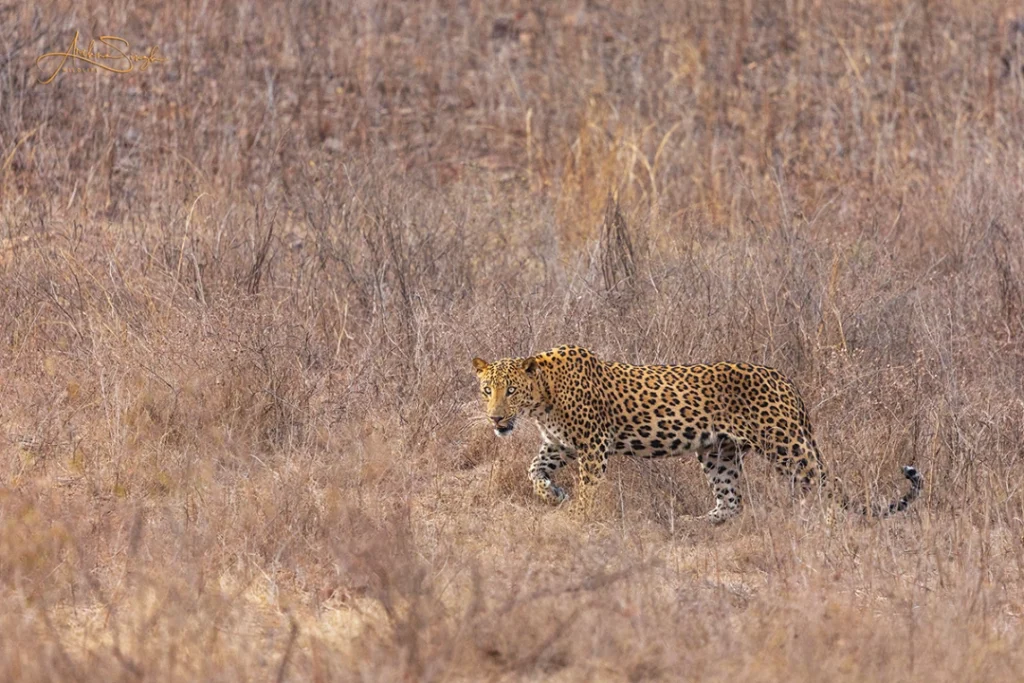
Image Credits : Original Photograph © Archna Singh | All Rights Reserved | Shared with WildlifeSafaris.in
Birds, Crocodiles, and Wetland Habitats
The central lakes—Padam Talab, Rajbagh Talab, and Malik Talab—serve as the biological heart of the park. These water bodies support a significant population of mugger crocodiles, which can be observed basking along the shores or tracking water birds.
For birdwatchers, these wetlands are highly productive, particularly during the winter months when migratory waterfowl join resident storks, herons, and egrets along the lake margins.
Dry Deciduous Forest Ecology & The Aravalli-Vindhya Junction
The physical terrain of Ranthambore is defined by its location at the junction of the Aravalli and Vindhya mountain ranges. This geological intersection forms a rugged landscape of flat-topped hills (dangs), sharp escarpments, and narrow, shaded ravines.
The dominant flora is the Dhok tree (Anogeissus pendula), a resilient species well-adapted to the arid Rajasthani climate. In winter, the dhok leaves turn shades of copper and red before dropping entirely in the dry summer months, transforming the forest from a dense thicket into an open, skeletal landscape that maximizes wildlife visibility.
Wildlife Checklist
| Wildlife Group | Notable Species Present | Primary Habitats within the Park |
| Apex Predator | Bengal Tiger | Core valleys, lake edges, old ruins, and ravines. |
| Other Carnivores | Leopard, Sloth Bear, Striped Hyena, Jackal, Fox, Mongoose. | Rocky outcrops, hillsides, and dry deciduous forest floor. |
| Occasional Sightings | Indian Wolf, Caracal. | Scrublands and open outer zones. |
| Herbivores | Sambar Deer, Chital, Nilgai, Langur, Rhesus Macaque. | Lakes, grassy meadows, and forest canopies. |
| Reptiles & Wetlands | Mugger Crocodile | Central lakes (Padam, Rajbagh, and Malik Talab). |
Photography Tip
In the dry summer months (April to June), focus your lens positions around the edges of the major lakes. Tigers frequently spend the middle of the day soaking in the water or resting in the shade of the lakeside ruins to escape the heat. The contrast of the orange coat against the green aquatic vegetation and dark stone structures offers exceptional compositional opportunities without requiring deep forest tracking.
Planning Your Stay and Itineraries
Accommodation Tiers
Most of the accommodation options for Ranthambore are distributed along Ranthambore Road, which connects the town of Sawai Madhopur to the main park gates. Stays are generally categorized into three broad tiers:
- Luxury Hotels & Premium Lodges: These properties cater to high-intent luxury travelers and offer high-end amenities, private naturalist services, and assistance with premium safari arrangements. They are designed to mirror classic safari camps while providing modern comforts.
- Mid-Range Resorts: These properties provide comfortable, air-conditioned rooms, swimming pools, and in-house dining options. They are well-suited for families and wildlife enthusiasts who want a comfortable base between early morning and afternoon drives.
- Budget Stays in Sawai Madhopur: Located closer to the railway station or the town center, these accommodations offer functional, low-cost rooms. They are the most practical choice for solo travelers and budget-conscious visitors who prioritize park access over resort amenities.
Suggested 2-Day and 3-Day Itineraries
Because safari permits are limited per shift, your itinerary should maximize your chances of experiencing different zones and track types.
- 2-Day Itinerary (Best for Quick Weekend Getaways): Ideal for visitors traveling from Jaipur or Delhi via rail. This layout typically allows for 2 to 3 safari shifts. It focuses heavily on standard core park tracking, leaving minimal time for outside exploration.
- 3-Day Itinerary (Recommended for Wildlife Enthusiasts): This timeline permits 4 to 5 safari shifts, allowing you to experience both lowland lake routes and the rugged ravine or sanctuary routes. It also provides sufficient time to visit the historic Ranthambore Fort without missing a morning or afternoon forest gate opening.
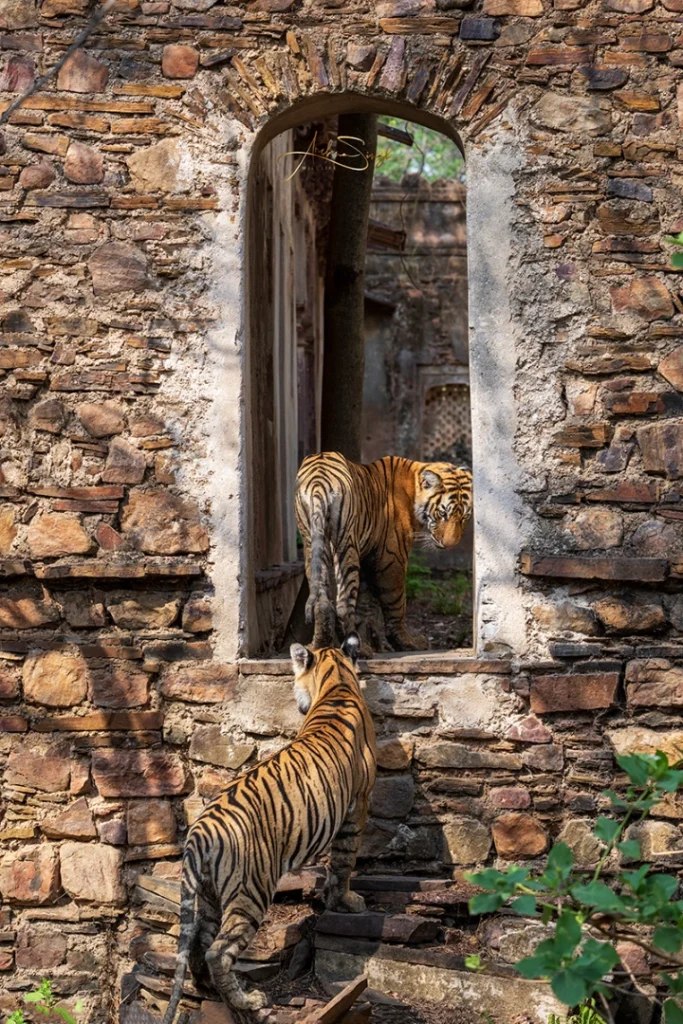
Image Credits : Original Photograph © Archna Singh | All Rights Reserved | Shared with WildlifeSafaris.in
Rules, Restrictions, and Responsible Travel
Operating inside a protected Project Tiger habitat requires strict adherence to administrative regulations managed by the Rajasthan Forest Department.
Safari Etiquette and Wildlife-First Conduct
- Noise Control: Visitors must maintain low voices inside the vehicles. Loud talking or shouting during animal sightings disrupts tracking and can cause wildlife to retreat into dense cover.
- Waste Management: Plastic disposal and littering are strictly prohibited inside the reserve. All waste must be carried back to your hotel or lodge.
- Vehicle Discipline: Disembarking from the safari vehicle is completely forbidden anywhere inside the forest tracks, except at designated, department-approved rest stations.
Current Regulations on Device Use and Behavior
As of 2026, regional reporting indicates that the forest department enforces tighter visitor conduct expectations. This includes reported strict rules and restrictions on mobile phone use during safaris to prevent disturbances to wildlife and maintain a quiet tracking environment. Always check the latest official notices from the Rajasthan Forest Department before entering the gates to avoid fines or vehicle disqualification.
Common Safari Planning Mistakes to Avoid
- Assuming Tiger Sightings are Guaranteed: Ranthambore is highly rated for predator visibility, but wildlife tracking is never guaranteed. Tigers are wild animals operating across vast, rugged terrain; approaching a safari with the sole expectation of seeing a tiger can lead to missing the broader park ecology.
- Booking via Reseller Portals: Many travelers accidentally use third-party aggregator sites that closely mimic official government branding. Always confirm you are using the official Rajasthan Forest Department portals to avoid inflated permit fees.
- Confusing the Core National Park with the Full Reserve: The core park covers 392 square kilometers, whereas the broader tiger reserve spans across the Sawai Mansingh and Keladevi sanctuaries. Understanding this boundary helps you maintain accurate expectations about your assigned safari zone routes.
- Avoiding the Summer Months Entirely: While the heat between April and June is intense, dismissing this window means missing out on the period when wildlife visibility around the permanent lakes peaks.
Frequently Asked Questions (FAQs)
What is Ranthambore National Park famous for?
Ranthambore is famous as one of India’s premier wilderness areas for observing Bengal tigers in their natural habitat, set against a unique landscape of dry deciduous forests and ancient historical ruins.
Where is Ranthambore National Park located?
The park is located in the Sawai Madhopur district of eastern Rajasthan, approximately 14 kilometers from the town of Sawai Madhopur.
What is the best time to visit Ranthambore?
The park is open from October to June. Winter (October to March) offers pleasant weather and excellent birdwatching, while summer (April to June) offers the highest visibility for tracking tigers near water bodies.
Is Ranthambore open all year round?
No. The core safari zones of the park are strictly closed during the monsoon season from July to September for forest regeneration and safety reasons.
Which months are best for tiger sightings?
The dry summer months of April, May, and June are considered the most productive for tiger sightings, as animals regularly visit the remaining permanent water bodies.
How do visitors book a Ranthambore safari online?
Safari permits must be booked online through the official reservation portal provided by the Rajasthan Forest Department.
What is the official website for safari booking?
The official booking mechanism is integrated into the Rajasthan government’s forest department portal. Visitors should double-check current links via the official Rajasthan Tourism website to avoid unofficial third-party aggregators.
What is the difference between a gypsy and a canter safari?
A gypsy is an agile, 6-seater open jeep ideal for photography and navigating narrow tracks. A canter is a larger, budget-friendly 20-seater open truck that provides elevated viewing but is less maneuverable.
Which safari zone is best for tiger sightings?
Tigers move freely across all zones. While zones featuring the central lakes (Padam, Rajbagh, and Malik Talab) offer open vistas and scenic historical backdrops, quality sightings occur across all ten safari tracks based on seasonal conditions and guide skills.
How many safari zones are there in total?
There are 10 officially designated safari zones open to tourism within the reserve.
What wildlife can be seen besides tigers?
The park is home to leopards, sloth bears, striped hyenas, crocodiles, sambar deer, chital, nilgai, langurs, and a wide variety of resident and migratory bird species.
Is Ranthambore a good destination for birdwatching?
Yes, especially during the winter months when the lakes host numerous migratory waterfowl alongside resident storks, herons, and wetland birds.
How many days are ideal for a complete trip?
A 3-day trip is ideal. It allows for 4 to 5 safari shifts across different zones and gives you ample time to tour the Ranthambore Fort without rushing your schedules.
Can children participate in safaris?
Yes, children are permitted on safaris in both gypsies and canters. Parents should pack adequate sun protection or warm layers depending on the season, along with water and light snacks.
What should travelers wear during a safari?
Wear neutral earth tones (khaki, olive green, tan) to blend into the forest environment. Bring heavy jackets, gloves, and caps for winter morning drives, and light, breathable cotton clothing for hot summer shifts.
How far is Ranthambore from Jaipur?
The park is approximately 160 to 180 kilometers from Jaipur, translating to a 3 to 4-hour drive or a 2 to 2.5-hour train journey to Sawai Madhopur.
Can visitors explore Ranthambore Fort during a safari trip?
Yes. The historic fort sits inside the park boundaries and can be visited independently of your scheduled forest safari tracking shifts.
Are mobile phones permitted inside the park during safaris?
Recent guidelines from the forest department place strict restrictions on mobile phone usage during safari tracking to minimize noise and prevent wildlife disturbance.
Is advance booking absolutely necessary?
Yes. Permits are strictly capped per shift to protect the habitat. Popular zones sell out months in advance, making spontaneous bookings on arrival highly unreliable.
Where should travelers look for accommodation in Sawai Madhopur?
Most lodges and resorts are situated along Ranthambore Road, which links the Sawai Madhopur railway station directly to the national park’s main entrances.
Conclusion
Ranthambore National Park remains a critical reference point for wildlife travel in India, combining dry deciduous tracking landscapes with a compelling historical setting. A successful trip to this reserve requires shifting your focus away from online sighting rumors and placing it firmly on thorough planning.
By securing your permits early through official Rajasthan Forest Department channels, choosing the right vehicle for your group’s goals, and maintaining realistic, wildlife-first expectations, you ensure a safe, organized, and authentic safari experience. Keep the landscape’s seasonal changes in mind, respect the field rules enforced by your naturalist guides, and allow the unique natural history of eastern Rajasthan to unfold naturally during your journey.
Image Use Disclaimer : Photographs contributed courtesy of wildlife photographer Archna Singh. Their inclusion on this website does not constitute or imply any endorsement, partnership, safari affiliation or commercial association with WildlifeSafaris.In. Archna Singh does not conduct or book safaris through this company.
Ranthambore National Park : Topics Cluster
- Ranthambore Complete Safari Guide
- Best Zones in Ranthambore
- Ranthambore Safari Zones Explained
- Ranthambore Safari Booking Step by Step Guide
- Ranthambore Safari Timings
- Ranthambore : Summer vs Winter
- Ranthambore Safari Costs
- Delhi to Rathambore
- Weekend Itinerary
- Ranthambore Naturalist Guide
- Ranthambore Photography
- How many days are enough?
- Ranthambore Luxury Wildlife Lodges
- Luxury Safari Stays in Ranthambore
- Ranthambore Best Hotels
- Wildlife in Rajasthan
- Ranthambore Common Safari Mistakes
- Ranthambore Foreign Visitors Guide (upcoming)
- Complete Ranthambore Luxury Safari Guide (upcoming)