
Learn how to improve your chances of seeing a tiger in India with practical advice on seasons, safari planning, reserve selection, guides, and expert field tips.
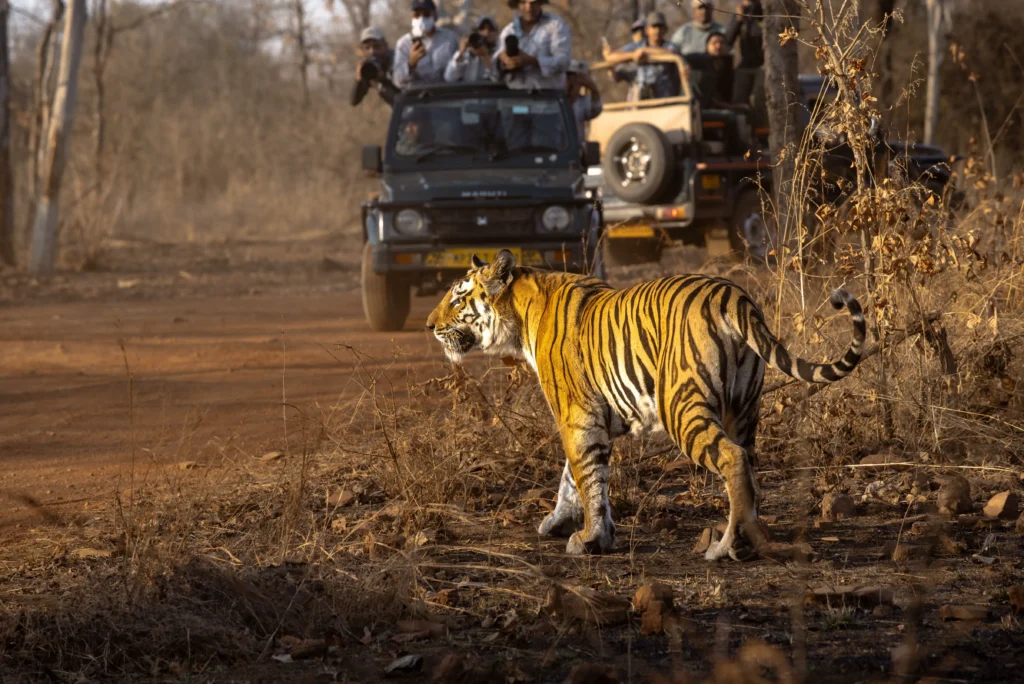
How to Increase Your Chances of Seeing a Tiger: A Practical Guide to Planning a More Successful Safari in India
Last Updated: September 2026
Introduction
Seeing a wild tiger is one of the highlights of any Indian safari, but it is never something that can be guaranteed. Even in reserves with healthy tiger populations, sightings depend on many factors, including where you go, when you visit, how many safaris you take, local weather conditions, and simply whether a tiger chooses to appear while you are there.
The good news is that you can significantly improve your chances through careful planning. Choosing the right reserve, visiting during the most suitable season, booking multiple game drives, and paying attention to your guide’s observations all increase the likelihood of a successful sighting. These steps improve the odds—they do not guarantee success.
This guide explains the factors that have the greatest influence on tiger sightings, separates common myths from practical advice, and provides a realistic strategy for planning a rewarding tiger safari in India. Whether you are visiting for the first time, travelling with family, or returning after an unsuccessful trip, the aim is to help you make informed decisions before you book and while you are in the field.
How to Increase Your Chances of Seeing a Tiger
The Honest Short Answer
If your main goal is to see a tiger, focus on the decisions that have the biggest influence before your safari even begins.
The most effective strategy is to:
- Visit during the dry season when visibility is generally better.
- Choose a reserve known for a healthy tiger population.
- Book more than one safari instead of relying on a single drive.
- Select the best available safari zone where booking systems allow.
- Listen carefully to an experienced guide throughout the safari.
- Stay patient and observant rather than expecting an immediate sighting.
Many travellers concentrate on finding the “best” reserve, but reserve choice is only one part of the equation. A well-planned itinerary with multiple safaris in suitable conditions often provides better overall chances than a single visit to a famous park.
Expert Tip: If your schedule allows, plan at least two or three safaris over multiple days. Each additional drive gives you another opportunity to encounter a tiger moving through its territory under different conditions.
Why Tiger Sightings Are Never Guaranteed
Wild tigers are free-ranging predators, not animals that appear on demand. They move across large territories, respond to weather, prey movements, breeding behaviour, and countless natural factors that visitors cannot control.
Even reserves with relatively high tiger densities experience days when few or no tigers are seen. Likewise, visitors sometimes enjoy excellent sightings in parks where tiger encounters are generally considered less frequent.
This uncertainty is part of what makes tiger safaris special. Every sighting is the result of good planning combined with favourable conditions and an element of chance. Honest safari operators and experienced naturalists therefore avoid promising sightings, regardless of the destination.
Understanding Detection Probability
One of the most useful concepts for safari planning is detection probability.
Detection probability refers to the likelihood of observers actually seeing an animal that is present in the landscape. A tiger may be within a few hundred metres of your vehicle, but dense vegetation, terrain, lighting, or the animal’s behaviour may prevent anyone from spotting it.
Several factors influence detection probability:
- Dense vegetation makes animals harder to see.
- Dry forests often provide better visibility than lush monsoon landscapes.
- Tigers may remain inactive in thick cover during hot periods.
- Animal movement changes with weather and the availability of water.
- Experienced guides often recognise subtle clues that less experienced observers might miss.
Understanding this concept helps set realistic expectations. A missed sighting does not necessarily mean there were no tigers nearby—it may simply reflect the natural challenges of observing wildlife in its habitat.
By planning around the factors that improve detection probability, you increase your overall chances while still respecting the unpredictable nature of wild animals.
The Biggest Factors That Affect Tiger Sightings
Many articles list dozens of tiger sighting tips without explaining which ones actually matter most. In reality, a handful of decisions have a much greater influence on your chances than everything else combined.
The most important factors are the ones you control before your safari begins—when you travel, where you go, how many drives you book, and who guides your safari. Once you are inside the park, patience and attentive observation become the biggest advantages.
Which Factors Matter Most?
| Factor | Practical Impact | Why It Matters |
| Choosing the right season | Very High | Dry conditions improve visibility and often concentrate wildlife around water sources. |
| Selecting a suitable tiger reserve | Very High | Reserves with healthy tiger populations generally provide better opportunities over multiple safaris. |
| Booking multiple safaris | Very High | Each additional game drive increases your overall chances of encountering a tiger. |
| Choosing an appropriate safari zone | High | Some zones consistently produce more sightings than others, although wildlife movement is never predictable. |
| Guide and driver experience | High | Skilled teams recognise animal behaviour, alarm calls, tracks and recent movement. |
| Your behaviour during the safari | Moderate | Remaining quiet and observant helps you notice wildlife and allows guides to focus on tracking. |
| Luck and animal behaviour | Always Important | Even perfect planning cannot guarantee a sighting because tigers are wild animals. |
The sections below explain how each factor influences your chances and how to use this knowledge when planning a safari.
Choose the Right Season
Season is one of the biggest influences on tiger sightings because it affects both tiger behaviour and how easily visitors can detect wildlife.
Across much of central India, experienced guides generally consider the dry months from March to June the most favourable period for tiger sightings. During this time:
- Water sources become fewer.
- Tigers frequently visit waterholes and streams.
- Forest vegetation becomes thinner, improving visibility.
- Animals spend more time in open areas, particularly during cooler parts of the day.
This does not mean winter is a poor time to visit. Between November and February, forests are greener, temperatures are more comfortable, birdlife is often excellent, and many mammals remain active. However, denser vegetation can sometimes make tigers harder to spot.
Similarly, parks that remain open during shoulder or monsoon periods may still produce memorable sightings, but weather conditions, vegetation and park accessibility vary considerably between reserves.
Season Comparison
| Season | Visibility | Tiger Behaviour | Visitor Comfort | Overall Sighting Potential* |
| March–June | Excellent | Frequent movement around water | Hot | Generally favourable |
| November–February | Moderate | Active but more concealed by vegetation | Comfortable | Good |
| Shoulder/Monsoon (where applicable) | Variable | Depends on reserve and rainfall | Variable | Variable |
*Actual sightings depend on many factors and cannot be guaranteed.
Decision Guide: If seeing a tiger is your highest priority and you are comfortable travelling in warmer weather, the late dry season generally offers the strongest overall conditions.
Pick the Right Tiger Reserve
Not every tiger reserve offers the same probability of encountering a tiger.
India has 58 notified tiger reserves, and the country’s official tiger estimation reports show that tiger abundance varies significantly between landscapes. Some reserves are widely recognised for supporting healthy tiger populations and consistently feature in discussions about successful sightings.
Among the reserves frequently associated with good tiger-viewing opportunities are:
- Bandhavgarh
- Tadoba-Andhari
- Corbett
- Ranthambore
- Kanha
- Pench (Madhya Pradesh)
- Nagarhole
- Bandipur
- Kaziranga
- Dudhwa
- Satpura
- Panna
Choosing one of these reserves does not ensure a sighting, but it may improve your overall odds compared with parks where tiger densities are lower or where habitat makes observation more difficult.
When selecting a reserve, consider more than tiger numbers alone. Also think about:
- Number of safari zones
- Duration of your stay
- Ease of obtaining permits
- Travel logistics
- Accommodation options
- Your broader wildlife interests
For example, a reserve with slightly lower tiger sighting potential may still be the better choice if you also hope to photograph birds, sloth bears, wild dogs or other species.
Field Note: Many experienced safari travellers return to the same reserve multiple times rather than trying a different park on every trip. Familiarity with a landscape often leads to a richer wildlife experience over time.
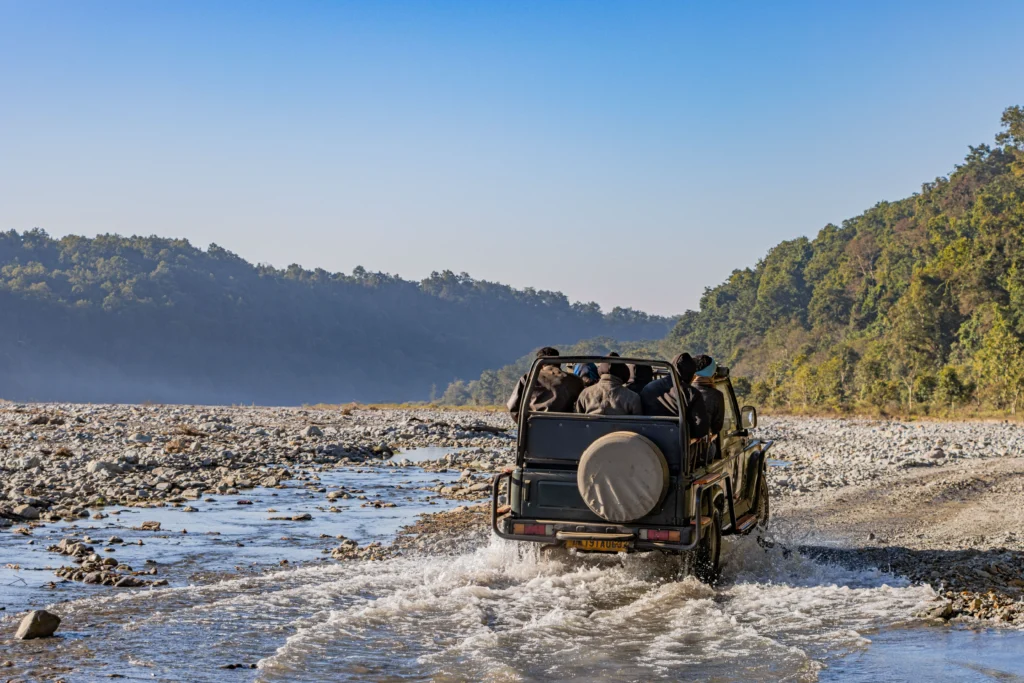
Image : Corbett Riverine Safari by the Ramganga River.
Select the Best Safari Zone
Many tiger reserves divide tourism areas into designated safari zones. Although wildlife moves freely between these areas, some zones develop stronger reputations because of recent tiger activity, reliable water sources or habitat characteristics.
Whenever the booking system allows, it is sensible to choose a zone that has recently been producing regular sightings. Local guides and authorised booking agencies often have the best understanding of recent animal movements, although no one can predict where a tiger will be on any particular day.
Keep these points in mind:
- No zone guarantees tiger sightings.
- Tigers frequently cross zone boundaries.
- A quieter zone can occasionally produce the best sightings of the day.
- Rotating between zones during multiple safaris often increases your overall opportunities.
Rather than searching for a “perfect” zone, think in terms of maximising opportunities across several game drives.
Book Multiple Safaris
If there is one recommendation that consistently appears in guidance from experienced safari operators, it is this:
Do not rely on a single safari.
Every game drive represents a new combination of:
- weather,
- animal movement,
- guide observations,
- recent tiger activity,
- and simple chance.
A tiger that remains hidden during one morning drive may be walking along a forest road that same evening.
Single Safari vs Multiple Safaris
| Number of Safaris | Expected Opportunity |
| One safari | Limited to one set of conditions and one period of tiger activity. |
| Two to three safaris | Multiple opportunities under changing conditions. |
| Four or more safaris | Better overall chances and more flexibility if weather or sightings vary. |
For travellers making a long journey or visiting from overseas, booking several safaris over two or three days generally offers far better value than hoping everything comes together during one drive.
Expert Tip: If your budget allows, spend less on luxury accommodation and invest in an additional safari. An extra game drive usually improves your chances more than upgrading your room.
Planning Your Safari for the Best Odds
Successful tiger sightings rarely happen because of a single good decision. Instead, they are usually the result of several well-planned choices working together. Selecting the right season, scheduling enough game drives, staying close to the reserve, and choosing suitable safari timings all contribute to increasing your overall chances.
This section explains how to combine these planning decisions into a practical safari strategy.
Best Months for Tiger Sightings
Although tigers can be seen throughout the tourism season, conditions vary considerably during the year.
The generally accepted pattern across many Indian tiger reserves is:
- March to June: Better visibility and improved chances of spotting tigers around remaining water sources.
- November to February: Comfortable weather, greener forests, and excellent overall wildlife viewing, although thicker vegetation may reduce visibility.
- Shoulder and monsoon periods (where parks remain open): Conditions depend on rainfall, park regulations, and local habitat.
It is important to understand why summer often improves sightings.
During the hotter months:
- Grass and undergrowth become less dense.
- Water becomes concentrated in fewer locations.
- Tigers often visit ponds, streams, and waterholes more frequently.
- Visibility for guides and visitors generally improves.
However, extremely hot afternoons can reduce wildlife movement, making early morning and late afternoon drives particularly valuable.
Winter offers a different experience. Forests are attractive, temperatures are pleasant, and many species remain highly active. If your goal is a broader wildlife holiday rather than focusing exclusively on tiger sightings, winter can be an excellent time to visit.
Family Travel Tip: Families with young children or older travellers often find winter temperatures more comfortable, even if tiger sightings may require a little more patience.
Morning vs Evening Safari
One of the most common questions among first-time visitors is whether morning or evening safaris are better for seeing tigers.
The honest answer is that both can produce excellent sightings, and neither consistently outperforms the other in every reserve or every season.
Morning safaris often offer:
- Cooler temperatures.
- Active birdlife.
- Fresh animal tracks left overnight.
- Opportunities to follow recent alarm calls.
Evening safaris may provide:
- Tigers becoming more active as temperatures begin to fall.
- Pleasant lighting for photography.
- Animals moving toward water before sunset.
Morning vs Evening Safari
| Morning Safari | Evening Safari |
| Cooler temperatures | Cooler conditions after daytime heat |
| Fresh tracks and recent signs | Wildlife often becomes active later in the day |
| Excellent soft light for photography | Warm evening light for landscapes and wildlife |
| Good choice during hot months | Can produce memorable sightings near water sources |
Rather than choosing one over the other, many experienced safari travellers recommend booking both, allowing you to experience different wildlife activity patterns across the day.
Expert Tip: If you are booking multiple safaris, include both morning and evening drives whenever possible. This provides more varied opportunities than repeating the same time slot.
Should You Stay Inside or Near the Reserve?
Accommodation does not directly increase tiger numbers, but where you stay can influence how efficiently you use your safari time.
Lodges located inside the reserve or close to the main entrance often offer practical advantages:
- Shorter travel time before each safari.
- Less fatigue from early morning road journeys.
- Easier access to the first safari departure.
- More flexibility if safari schedules change.
Properties farther away may be less expensive, but long transfers can make already early mornings even more demanding.
Stay Inside vs Outside the Reserve
| Stay Inside or Near the Reserve | Stay Farther Away |
| Shorter transfers | Longer daily travel |
| Easier early starts | Earlier wake-up times |
| More convenient for multiple safaris | Better suited to tighter budgets |
| Greater focus on wildlife experience | May suit travellers combining several destinations |
The best choice depends on your priorities.
If maximizing safari opportunities is your primary objective, staying close to the main safari gate is usually worth considering.
Build an Effective Safari Itinerary
Many first-time visitors underestimate how much difference a well-planned itinerary can make.
Instead of trying to fit a tiger safari into a short weekend visit, consider building enough flexibility into your schedule.
A practical itinerary might include:
- Arrival the afternoon before your first safari.
- Morning safari on Day 2.
- Evening safari on Day 2.
- Morning safari on Day 3.
- Optional additional evening safari if your schedule permits.
This approach provides several benefits:
- Multiple weather conditions.
- Different tiger movement patterns.
- Opportunities to visit different safari zones.
- Reduced pressure if one drive produces few sightings.
For photographers, additional safaris also increase the likelihood of encountering favourable lighting and more relaxed animal behaviour.
Photography Tip: Avoid treating the first tiger sighting as the only opportunity. Continue observing patiently. Tigers often remain visible longer than expected, and additional behaviour—such as walking, scent-marking, drinking, or interacting with cubs—may unfold if vehicles remain quiet and respectful.
Guide Quality Can Make a Meaningful Difference
Even the best reserve cannot guarantee a sighting, but an experienced guide can help you make the most of every opportunity.
Professional guides constantly interpret subtle clues that many visitors overlook, including:
- Alarm calls from chital, sambar, or langurs.
- Fresh pugmarks crossing the track.
- Recently disturbed vegetation.
- Scavenger activity around a possible kill.
- Information shared between authorised safari vehicles where permitted.
Experienced drivers also understand how to position the vehicle without disturbing wildlife while giving guests the best possible viewing angle.
It is important to keep expectations realistic. Even the most knowledgeable guide cannot produce a tiger on demand. Their expertise lies in reading the forest, interpreting animal behaviour, and increasing the chances of being in the right place at the right time.
Field Note: Many memorable sightings begin with seemingly ordinary signs—a distant alarm call, fresh pugmarks on a dusty track, or monkeys watching intently into the forest. Learning to appreciate these clues makes every safari more engaging, whether or not a tiger eventually appears.
What to Do Before and During Your Safari
Good planning gets you to the right reserve at the right time, but what you do once the safari begins can also influence your chances of seeing a tiger. Experienced guides often say that successful sightings come from paying attention to the forest rather than simply searching for stripes.
Every sound, movement, and animal behaviour can provide clues about what is happening nearby. Visitors who remain patient and observant usually enjoy a richer safari experience than those who focus only on finding a tiger.
Before You Enter the Park
Preparation starts well before your vehicle passes through the park gate.
A few simple habits can help you make the most of every safari.
Dress Appropriately
Choose clothing in muted, earthy colours such as:
- Olive green
- Brown
- Beige
- Khaki
- Grey
Bright colours are generally best avoided as they may be more noticeable to wildlife.
Wear comfortable clothing suitable for changing temperatures. Even during summer, early morning safaris can feel surprisingly cool while afternoons may become extremely hot.
Carry Only What You Need
A practical safari kit usually includes:
- Binoculars
- Camera with spare batteries and memory cards
- Hat or cap
- Sunglasses
- Drinking water
- Sunscreen
- Light jacket for morning drives
- Small backpack for essentials
Avoid carrying bulky luggage that reduces space inside the safari vehicle.
Practical Tip: Keep cameras and binoculars easily accessible. Wildlife encounters often happen quickly, leaving little time to unpack equipment.
Arrive Ready and On Time
Safari vehicles typically depart according to fixed entry schedules.
Arriving early allows time to:
- Complete any formalities.
- Organise photography equipment.
- Meet your guide.
- Settle into the vehicle before departure.
Rushing at the last minute often results in unnecessary stress before the safari even begins.
During the Safari
Once inside the reserve, the forest—not the visitors—sets the pace.
Many first-time travellers spend too much time scanning every bush for a tiger. Experienced guides instead watch the behaviour of the entire ecosystem.
Listening carefully, observing quietly, and following your guide’s instructions can significantly improve your understanding of what is happening around you.
Stay Quiet and Observe
Silence is one of the simplest yet most effective habits on safari.
Keeping conversations low allows everyone in the vehicle to hear important sounds from the forest, including:
- Alarm calls
- Monkey warnings
- Deer movement
- Bird activity
- Other vehicles communicating recent observations where permitted
Constant talking, loud phone conversations, or unnecessary movement distract both guides and fellow visitors.
Quiet observation also creates a more enjoyable experience, allowing you to appreciate the sounds of the forest that are often missed.
Learn to Recognise Alarm Calls
One of the most valuable skills in tiger tracking is understanding alarm calls.
Animals such as:
- Chital (spotted deer)
- Sambar deer
- Hanuman langurs
often give loud warning calls when they detect a predator nearby. Experienced guides use these calls to estimate the direction of predator movement and decide where to position the vehicle.
Alarm calls do not always indicate a tiger. Leopards, wild dogs, or other predators may also trigger similar responses.
However, repeated alarm calls from the same direction are among the most useful clues available during a safari.
Field Note: A forest that suddenly becomes quiet can sometimes be just as informative as one filled with alarm calls. Guides constantly interpret these subtle changes while tracking wildlife.
Watch for Pugmarks and Other Signs
Tigers leave many signs besides direct sightings.
Experienced guides often look for:
- Fresh pugmarks on dusty roads.
- Scratch marks on trees.
- Scent-marking locations.
- Fresh scat.
- Drag marks from recent kills.
- Disturbed vegetation.
These signs help build a picture of recent tiger activity, even when the animal itself remains hidden.
Fresh pugmarks crossing a road shortly before your vehicle arrives may indicate that a tiger is still nearby, encouraging guides to wait patiently rather than moving on immediately.
Understanding these clues also makes the safari far more engaging because you begin reading the forest as naturalists do.
Be Patient
Patience is often underestimated.
Some of the best tiger sightings occur after vehicles have remained quietly in one location for several minutes, waiting for the animal to emerge from cover.
Constantly asking the driver to move can reduce opportunities if the guide believes a tiger is approaching.
Remember that a tiger may:
- Rest in dense shade.
- Drink at a waterhole.
- Walk along a forest road.
- Cross a track unexpectedly.
- Remain concealed for long periods before appearing.
Waiting calmly is often the right decision.
Respect Wildlife and Other Visitors
Responsible behaviour improves the experience for everyone.
During a safari:
- Follow your guide’s instructions.
- Remain seated unless instructed otherwise.
- Avoid loud noises.
- Never attempt to attract wildlife.
- Never feed animals.
- Respect vehicle regulations.
- Give other vehicles enough space at sightings.
Responsible tourism protects wildlife while ensuring future visitors can enjoy similar experiences.
Responsible Tourism Tip: The goal of a safari is to observe natural behaviour, not to influence it. Ethical wildlife viewing always places animal welfare ahead of obtaining a photograph.
Wildlife Photography Tips
Photographing a tiger successfully involves much more than having an expensive camera.
Good photographs usually come from preparation, patience, and careful observation.
Before the Safari
- Charge batteries fully.
- Carry spare memory cards.
- Clean your lens.
- Keep camera settings ready before entering the park.
During the Safari
- Avoid standing suddenly.
- Keep movements slow.
- Listen to your guide before repositioning.
- Photograph behaviour, not just portraits.
- Continue shooting after the first few frames—interesting behaviour often follows.
Remember that the best safari photographs are not always of tigers.
Birds, elephants, sloth bears, deer, monkeys, reptiles, and forest landscapes all contribute to telling the story of your safari.
Photography Tip: Resist the temptation to spend the entire drive looking through the viewfinder. Watching wildlife directly often helps you anticipate behaviour before raising the camera.
Practical Safari Success Checklist
| Do This | Avoid This |
| Visit during a suitable season | Expect guaranteed sightings |
| Book multiple safaris | Rely on a single game drive |
| Choose a reserve known for healthy tiger populations | Select a park based only on convenience |
| Listen carefully to your guide | Ignore instructions |
| Stay quiet during the safari | Talk loudly throughout the drive |
| Watch for alarm calls and tracks | Focus only on looking for stripes |
| Be patient at promising locations | Constantly ask the driver to move |
| Enjoy all wildlife, not only tigers | Consider the safari unsuccessful if no tiger appears |
The most rewarding safaris are often those where visitors appreciate the entire forest. A tiger sighting may become the highlight of the trip, but observing animal behaviour, birdlife, changing landscapes, and the skills of experienced guides creates a memorable experience regardless of whether a tiger appears.
Common Mistakes That Reduce Your Chances of Seeing a Tiger
Many visitors unknowingly reduce their own chances of seeing a tiger through avoidable planning mistakes. While no strategy can guarantee success, avoiding these common errors gives you a much better opportunity to enjoy a rewarding safari.
1. Expecting a Guaranteed Tiger Sighting
Perhaps the biggest misconception is believing that famous tiger reserves guarantee sightings.
They do not.
Even reserves with healthy tiger populations are home to wild animals that move according to their own behaviour and habitat needs. Weather, vegetation, prey movement, and simple chance all influence whether a tiger is visible during your safari.
Treat every sighting as a privilege rather than an expectation.
2. Booking Only One Safari
Many first-time visitors travel long distances but book just a single game drive.
This gives you only one opportunity under one set of conditions.
Instead, book multiple safaris spread across different times of day whenever possible. Even one additional drive can significantly improve your overall chances because wildlife activity changes throughout the day and from one day to the next.
3. Choosing a Reserve Based Only on Convenience
The nearest reserve is not always the best choice if your primary objective is seeing a tiger.
Before booking, compare:
- Tiger population context.
- Habitat characteristics.
- Number of safari zones.
- Length of your stay.
- Travel logistics.
- Availability of safari permits.
Selecting the right reserve at the planning stage often has a greater impact than any decision you make during the safari itself.
4. Visiting Without Researching the Season
Tigers can be seen throughout the tourism season, but visibility and animal behaviour change during the year.
Choosing travel dates simply because they coincide with holidays may not provide the same opportunities as planning around seasonal wildlife conditions.
Research the reserve you intend to visit, as conditions vary across India.
5. Ignoring Your Guide
Professional guides spend hundreds of days each year inside the forest.
When they ask visitors to remain quiet, wait at a location, or pay attention to distant alarm calls, they are usually responding to subtle clues that many visitors cannot yet recognise.
Listening carefully to their advice improves not only your chances of seeing wildlife but also your understanding of the forest.
6. Focusing Only on Tigers
Ironically, visitors who look only for tigers often miss much of what makes an Indian safari special.
A single safari may also include:
- Leopards
- Sloth bears
- Wild dogs
- Gaur
- Elephants (in suitable landscapes)
- Hundreds of bird species
- Reptiles
- Rich forest ecosystems
Many experienced naturalists judge a safari by the quality of wildlife observations rather than by whether a tiger appeared.
Frequently Asked Questions
How can I increase my chances of seeing a tiger?
Choose a reserve with a healthy tiger population, visit during favourable seasonal conditions, book multiple safaris, select suitable safari zones where possible, travel with experienced guides, and remain patient throughout your visit. These steps improve your chances but cannot guarantee a sighting.
Which months are generally considered best for tiger sightings?
Across many Indian tiger reserves, the dry months from March to June are widely regarded as favourable because vegetation is thinner and tigers often spend more time around remaining water sources. Conditions vary between reserves, so always check local guidance before planning your trip.
Is a morning safari better than an evening safari?
Neither is universally better.
Morning safaris often provide cooler temperatures and fresh signs of animal movement, while evening drives may coincide with increased wildlife activity as temperatures fall. Booking both offers the greatest flexibility.
How many safaris should I book?
If your schedule and budget allow, aim for at least two or three safaris rather than relying on a single drive. Multiple game drives expose you to different weather conditions, animal movements, and safari zones, improving your overall chances.
Which tiger reserve offers the best chance of seeing a tiger?
There is no single reserve that guarantees sightings. However, official tiger population data and long-term visitor experience frequently highlight reserves such as Bandhavgarh, Tadoba, Corbett, Kanha, Pench, Ranthambore, and Nagarhole among those known for good opportunities.
Does staying inside the reserve improve my chances?
Staying inside or very close to the reserve does not increase tiger numbers, but it can reduce travel time, make early departures easier, and improve your overall safari experience.
Do experienced guides really make a difference?
Yes. Skilled guides interpret alarm calls, pugmarks, animal behaviour, and other field signs that many visitors overlook. While they cannot guarantee sightings, their experience can help maximise opportunities.
Does vehicle type affect tiger sightings?
The research brief does not identify vehicle type as a major factor. Guide quality, reserve choice, season, and the number of safaris generally have a much greater influence on your chances.
What should I do if I don’t see a tiger?
Remember that wildlife sightings are inherently unpredictable. Continue enjoying the wider safari experience, appreciate other species and forest behaviour, and, if possible, book another safari rather than assuming the reserve has no tigers.
Conclusion
There is no secret formula for seeing a wild tiger, but there is a smart way to plan your safari.
The strongest strategy combines several practical decisions:
- Visit during favourable seasonal conditions.
- Choose a reserve known for healthy tiger populations.
- Book multiple safaris.
- Select suitable safari zones where available.
- Stay close to the reserve.
- Travel with experienced guides.
- Observe quietly and patiently once inside the forest.
These choices improve your chances because they place you in better situations more often. They do not guarantee success, and that uncertainty is part of what makes tiger safaris so rewarding.
A tiger seen in the wild is never a scheduled attraction. It is the outcome of careful planning, skilled tracking, favourable conditions, and the animal’s own behaviour. Even if your safari ends without a tiger sighting, understanding alarm calls, reading tracks, observing other wildlife, and experiencing India’s forests in their natural state can make the journey worthwhile.
Approach your safari with realistic expectations, curiosity, and patience. If a tiger finally steps onto the forest track, the experience is likely to be all the more memorable because it happened on nature’s terms.
Tiger Safari in India : Topics Cluster
- Tiger Safari Planning Workbook
- Tiger Safari Booking Guide
- Best time for tiger sightings in India
- How to increase chances of tiger sighting?
- Tiger Safari Naturalist Guide
- Tiger Safari India Cost
- How to book a Tiger Safari in India?
- Best Wildlife Tour Operators in India
- Best Destination Cities for Tiger Safaris in India
- Tiger Safari under ₹25000
- Top 10 Budget Tiger Safaris 2026
- Tiger Photography Tips
- Best Tiger Reserves
- Top 10 Tiger Reserves by sighting chances
Safari Planning : Topics Cluster
- How to book a wildlife safari in India?
- Park by Park Online Safari Booking Guide
- Tiger Safari India Planning Workbook
- Park by Park Safari Permits Guide
- National Parks Permit Guide – Park by Park Guide
- Tatkal Safari Booking Guide – Last Minute Safari Permits Booking
- Tiger Safari in India Cost
- Indian Wildlife Safari Budget Planner
- Jeep vs Canter Safari
- Best time for Tiger Sightings in India
- How far advanced should you book safari permits?
- Can foreigners book Indian Wildlife Safari online?
- Special Permits Guide for Foreigners and Domestic Visitors
- How to book a Safari Permit online in India? 2026 step by step guide
- Senior Citizens Friendly Safari Planning
- Multi Generation Family Safari Planning
- 50 things to know before your first safari in India