
Plan your 2026 trip to Jim Corbett National Park. Learn how to book safari permits, choose the best travel zones, and understand official safety rules.
Introduction
Planning a trip to a premier wildlife destination requires clear logistical knowledge rather than promotional hype. Jim Corbett National Park operates under a strict, zone-based management system where gate rules, seasonal closures, and permit availability dictate your entire experience. Understanding how these moving parts fit together is the first step to executing a successful safari.
This guide provides an up-to-date, practical breakdown of the reserve’s operational framework for 2026. Whether you are a first-time visitor organizing a quick weekend trip or a dedicated naturalist tracking specific species, the information below will help you navigate the booking infrastructure, select the correct zones, and travel responsibly.
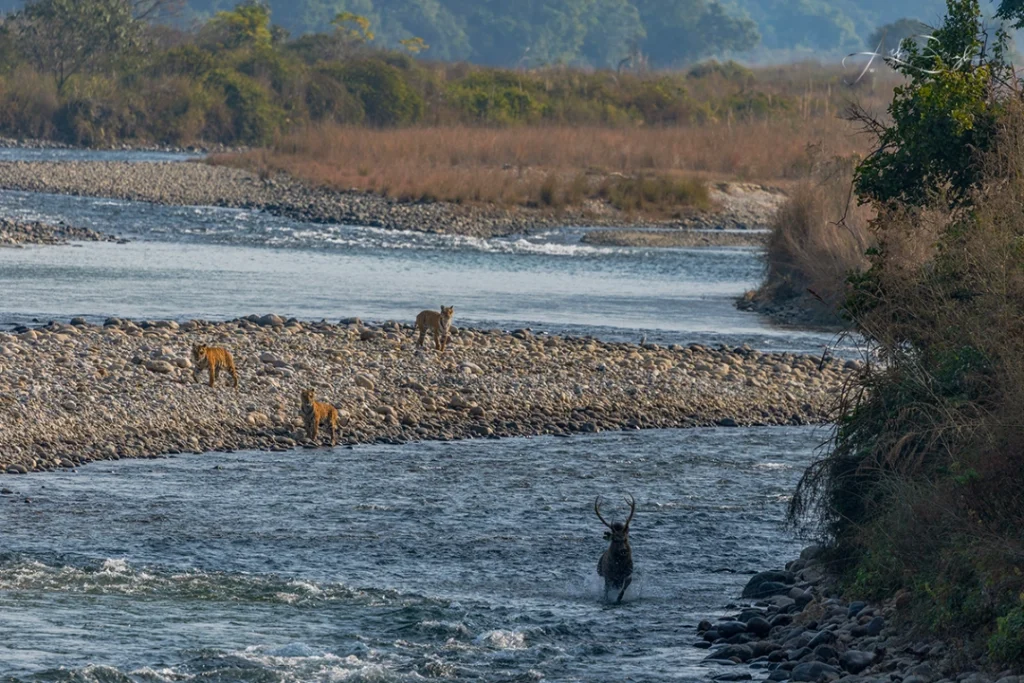
Image Credits : Original Photograph © Archna Singh | All Rights Reserved | Shared with WildlifeSafaris.in
Jim Corbett National Park at a Glance
Why It Is India’s Most Famous Tiger Reserve
If you are trying to decide where to go for an authentic wilderness experience in India, Jim Corbett National Park stands out because it is the country’s oldest established national park and serves as a foundational landscape for Project Tiger.
The reserve is highly regarded by conservationists because the official site presents it as holding the highest tiger density globally. This status is supported by a large, connected landscape that allows apex predators and large mammals to move naturally through distinct terrain types, ranging from riverine belts to dense sal forests.
From an ecological perspective, the park protects a critical portion of the sub-Himalayan belt. Its historical significance and structured conservation tourism model make it a benchmark destination for studying human-wildlife coexistence and population management.
Quick Facts for First-Time Visitors
- Official Status: Established as India’s first national park; functions as a core components provider for the larger Corbett Tiger Reserve.
- Primary Gateway Town: Ramnagar, located in the state of Uttarakhand.
- Key Tourism Zones: Dhikala, Bijrani, Jhirna, Dhela, Durgadevi, Sonanadi, Pakhro, and Garjia.
- Core Management Focus: Tiger conservation, wildlife rescue and rehabilitation, and mitigating human-wildlife conflict along the buffer boundaries.
Field Note: Visitors often confuse Corbett National Park with Corbett Tiger Reserve. The National Park represents the historic core area, while the Tiger Reserve includes a larger buffer zone network, managed under different tiers of protection and administrative rules.
How to Reach Jim Corbett National Park
If you are planning your journey from major metropolitan hubs, accessibility is one of the reserve’s main practical advantages. It serves as a frequent travel option for those based in Delhi and the National Capital Region (NCR) due to well-established transit links.
The town of Ramnagar serves as the central transport hub for the entire reserve. All administrative logistics, main entry gates, and primary resort clusters are accessible from this point.
- By Rail: Ramnagar has a direct railway terminus connected to Delhi. Overnight trains provide a practical option, arriving early in the morning near the main administrative booking offices.
- By Road: The reserve is connected to Delhi/NCR via national highways. Self-driving or hiring a private vehicle is straightforward, with the route passing through Hapur and Moradabad before reaching the foothills at Ramnagar.
- By Air: The closest domestic airport with regular commercial flights is Pantnagar, located southeast of the park, though most travelers prefer the direct road or rail routes from international hubs like Delhi.
Choosing your transport method matters because safari timings are strictly enforced. Arriving late at an entry gate due to transport delays can result in the automatic cancellation of your permit without a refund.
Safari Zones Explained & Zone Selection Guide
When choosing a safari zone, your primary decision should be based on your travel dates, your accommodation plans, and the type of vehicle access you prefer. The reserve is divided into distinct administrative zones to manage tourist traffic and protect core wildlife habitats. Each zone operates under specific seasonal timelines and entry rules.
Zone Operational Summary
The following matrix outlines the operational frameworks for each tourism zone as mandated by the reserve administration.
| Zone | Operational Season | Overnight Stay Availability | Primary Access Context |
| Dhikala | Seasonal Opening Window | Available (Forest Rest Houses) | Main valley, riverine habitat, canter day safaris. |
| Bijrani | Seasonal Opening Window | Available | Mixed forest and grassland terrain. |
| Jhirna | Open Throughout the Year | Available | Consistent year-round access, including monsoon. |
| Dhela | Open Throughout the Year | Available | Consistent year-round access, including monsoon. |
| Garjia | Open Throughout the Year | Available | Day safari alternative, open during monsoon. |
| Durgadevi | Seasonal Opening Window | Available | Hilly terrain, noted for birdwatching. |
| Sonanadi | Seasonal Opening Window | Available | Extended sanctuary area within the reserve. |
| Pakhro | Seasonal Opening Window | Available | Secondary entry point to the western outer structures. |
Detailed Zone Breakdowns
Dhikala Zone
Dhikala is the preferred option for wilderness photographers and birdwatchers who want to spend multiple days inside the core area of the reserve. It features an expansive landscape characterized by riverine channels, large grasslands, and old-growth sal forests.
The zone operates strictly within a seasonal opening window and closes completely during the monsoon months. Day visitors cannot access Dhikala by private or standard safari jeeps; day entry is restricted to conducted canter safaris organized by the park authorities. If you want to explore Dhikala in a jeep, you must secure a permit for an overnight stay at one of the government-run forest rest houses located inside the zone.
Bijrani Zone
Bijrani is a highly utilized day safari zone that offers an alternative to Dhikala for those staying in resorts around Ramnagar. It is characterized by diverse vegetation, combining open fields with dense jungle paths.
Like Dhikala, Bijrani follows a strict seasonal schedule and is closed to the public for a significant portion of the rainy season. Access is managed via the Amdanda entry gate, and permits must be reserved well in advance due to daily vehicle caps.
Jhirna and Dhela Zones
Jhirna and Dhela are the best choices for travelers planning trips during the summer rainy season or making last-minute arrangements when seasonal zones are fully booked. Both zones remain open throughout the year, providing predictable access regardless of weather-induced closures elsewhere.
These zones consist of recovered agricultural lands that have reverted to secondary forests and grasslands. They are highly functional for general wildlife viewing and provide stable infrastructure for educational family trips, even during the monsoon months when river channels in other zones become impassable.
Durgadevi, Sonanadi, Pakhro, and Garjia Zones
These zones distribute visitor numbers across the wider Corbett Tiger Reserve landscape to prevent overcrowding in the central zones.
- Garjia: Operates alongside Jhirna and Dhela as a year-round travel option, relieving pressure on the central gates during peak holiday weekends.
- Durgadevi: Located in the hilly northern section of the park, this seasonal zone provides access to riverbeds and upland forests, making it a key area for specialized birdwatching.
- Sonanadi and Pakhro: These zones extend into the sanctuary fields of the reserve, utilizing distinct entry points like Vatanvasa to cater to long-distance travelers and visitors seeking remote forest tracks away from the primary Ramnagar hubs.
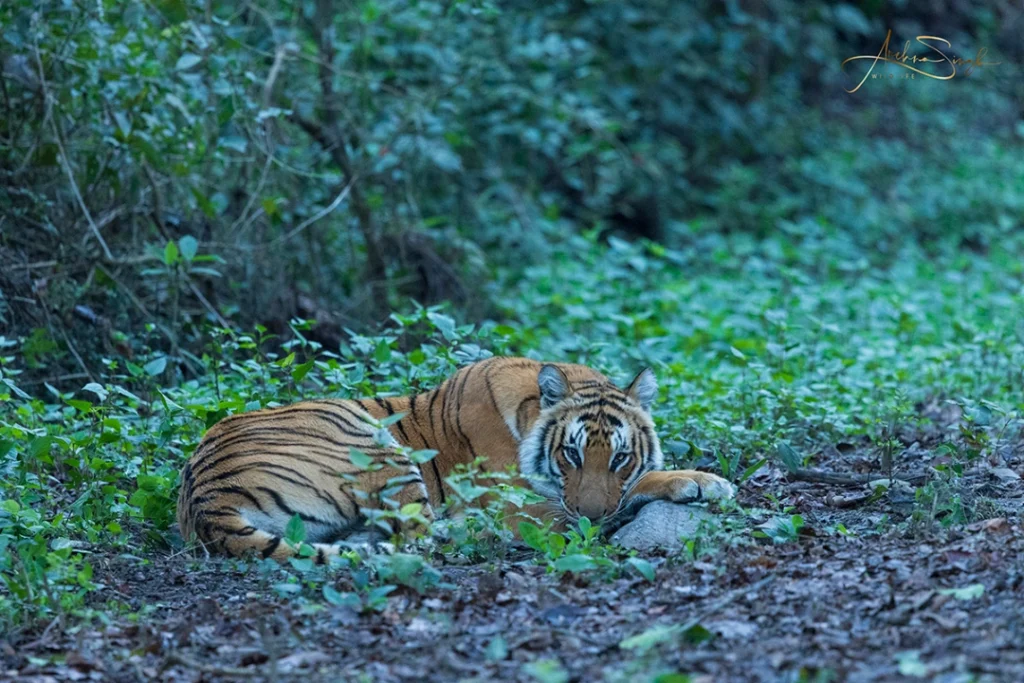
Image Credits : Original Photograph © Archna Singh | All Rights Reserved | Shared with WildlifeSafaris.in
Decision Guide: Which Zone Should You Choose?
To simplify your selection process, match your primary travel constraint to the options below:
- If you are traveling between July and September: You must choose Jhirna, Dhela, or Garjia, as they are the only zones explicitly open throughout the year.
- If you want to track birds and river reptiles in dawn light: Prioritize Dhikala or Durgadevi during their seasonal opening windows, utilizing the riverine habitats.
- If you are planning a day trip via jeep from a Ramnagar resort: Look for permits in Bijrani, Jhirna, or Dhela, which offer direct jeep access from the main southern boundaries.
- If you want an overnight stay inside the core national park: Focus entirely on booking a forest rest house within Dhikala.
Responsible Tourism Tip: Every zone has a strict limit on the number of vehicles permitted per session. Do not attempt to bribe or pressure guides to enter zones for which you do not hold a valid permit. This rule protects wildlife from vehicular crowding and ensures safety across the park borders.
Safari Booking, Permits, and 2026 Rules
Securing a safari in Jim Corbett National Park requires navigating a strict, quota-based permit system. The official administrative infrastructure dictates all entry rules, and you must finalize your access well before arriving in Ramnagar.
Safari Booking and Permits in 2026
The reserve operates an active online booking and permit environment. Understanding how this system works is essential, as outdated third-party information frequently misleads travelers.
How Permits Work
All conducted safaris require an official permit issued by the Corbett Tiger Reserve authorities. Because each zone has a strict limit on the number of daily entries, high-demand areas like Bijrani and Dhikala sell out rapidly.
For 2026 travel planning, it is highly recommended to verify your booking status immediately before your trip. The official website periodically posts notices regarding technical glitches and registration lists for light vehicles. Confirming your permit details directly through official channels prevents administrative issues at the entry gates.
Guide and Vehicle Rules
A common misconception among first-time visitors is that any vehicle can enter the park. This is not true; visitors must adhere to designated booking and vehicle rules. Unauthorized private vehicles are strictly prohibited from entering the tourism zones.
When booking, you must choose between two primary modes of transport:
- Jeep Safaris: Conducted in registered light vehicles, jeeps offer a smaller, more maneuverable option for exploring zones like Bijrani, Jhirna, and Dhela.
- Canter Safaris: These are large, open-air buses operated by park authorities. If you are a day visitor who wants to explore the Dhikala zone, you cannot use a jeep; a canter safari is your only permitted entry option.
Additionally, navigating the reserve requires professional oversight. The park mandates specific guide requirements for visitors to enforce safety rules, monitor behavior, and interpret the ecosystem.
What to Expect on Safari Day
Safaris are divided into specific morning and afternoon timings. You must report to your assigned entry gate—such as Amdanda for Bijrani or Dhangari for Dhikala—prior to the designated start time. Your guide and driver will handle the entry paperwork, but you must present the exact identification documents used to generate the online permit.
Expert Tip: Safari access is never entirely guaranteed, even with a confirmed permit. Conditions can change rapidly due to sudden weather shifts, deteriorating road status, or official management orders. Always follow the instructions of the forest department staff, as these decisions prioritize visitor safety and habitat protection.
Wildlife, Birdwatching, and Ecology
A realistic approach to wildlife viewing is essential for a successful safari. The reserve is home to a varied population of mammals, birds, and reptiles, but animal movements depend entirely on seasonal conditions, water availability, and natural habitat preferences. Tiger sightings are never guaranteed in any wild landscape, and assuming otherwise often leads to missed opportunities to observe the broader ecosystem.
Wildlife You Can See in Corbett
Big Cats and Mammals
The reserve provides a large, contiguous habitat for several major mammal species. While the Bengal tiger is the primary focus for many travelers, the park’s prey base and secondary predators are central to its ecological health.
- Apex Predators: The Bengal tiger and the Indian leopard are the primary big cats inhabiting the core and buffer zones. Tigers are generally tracked through pugmarks, alarm calls of prey species, and known movement corridors near water sources.
- Large Herbivores: Large herds of Asian elephants move through the river valleys, particularly in the Dhikala grasslands during the summer months.
- Deer Species: The chital (spotted deer), sambar (the largest deer in the reserve), and the smaller barking deer serve as the main prey base throughout the forest tracks.
- Other Mammals: Sloth bears are occasionally encountered in the hilly terrains, while wild boars and golden jackals are frequently seen along the main dirt paths and grassland edges.
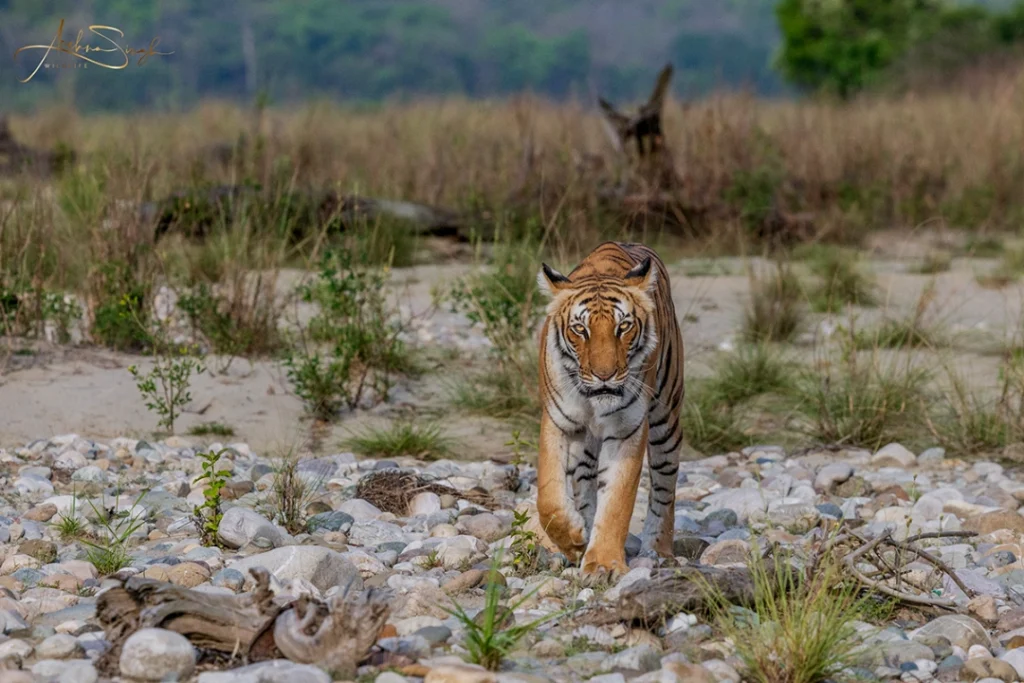
Image Credits : Original Photograph © Archna Singh | All Rights Reserved | Shared with WildlifeSafaris.in
Birdlife of the Riparian Ecosystem
Corbett is widely recognized by ornithologists as a premier birdwatching destination in Asia. According to data verified by Britannica, the reserve supports at least 600 resident and migratory bird species.
The intersection of the Ramganga River with the sub-Himalayan foothills creates distinct micro-habitats that attract various species throughout the year.
- Resident Species: You can reliably observe several varieties of kingfishers along the riverbanks, alongside the distinctively crested Asian paradise flycatcher in the dense sal canopy.
- Migratory Birds: During the winter months, the wetlands and water reservoirs host a high concentration of migratory waterfowl and shorebirds traveling along the Central Asian Flyway.
Reptiles and Habitat Diversity
The riverine channels and deep pools inside the park protect significant populations of aquatic reptiles.
- Crocodilians: The marsh crocodile (mugger) and the critically endangered gharial coexist in the deep waters of the Ramganga River and its associated reservoirs.
- Snakes and Constrictors: The Indian rock python and various species of venomous and non-venomous snakes inhabit the leaf litter and rocky outcrops of the lower foothills.
The Broader Ecological Context
Understanding why this reserve requires strict management involves looking at global biodiversity challenges. Data from the IUCN Red List indicates that more than 47,000 species worldwide are threatened with extinction, representing roughly 28% of all assessed species. Large, intact reserves like Corbett act as critical strongholds for maintaining species diversity against these global declines.
Furthermore, the United Nations emphasizes that healthy biodiversity underpins essential human needs, including food security, water purification, medicine, and local livelihoods. Because climate change and biodiversity loss are tightly linked, the preservation of continuous forest corridors in the sub-Himalayan region is a practical necessity for long-term regional environmental stability.
Photography Tip: When photographing birds or reptiles near the water channels, prioritize the dawn and dusk transitions. The low-angle light in zones like Dhikala or Durgadevi provides optimal clarity for capturing fine details without the harsh glare caused by midday river reflections.
Accommodation, Itineraries, FAQs, and Conclusion
Your choice of accommodation directly impacts your daily safari schedule and which zones you can reasonably access. Visitors must decide between staying inside the protected forest or utilizing the private hospitality infrastructure along the reserve’s perimeter.
Where to Stay
Forest Rest Houses
For travelers wanting immediate proximity to wildlife habitats, the reserve maintains several government-run Forest Rest Houses (FRHs) inside the core tourism zones. Staying at an FRH is the only way to experience the park overnight. These facilities offer basic amenities rather than luxury, prioritizing location over comfort. Securing a room requires booking well in advance through the official portal, as inventory is highly limited.
Resorts Near Ramnagar
Most visitors choose to stay in private resorts and budget hotels clustered around Ramnagar and the park’s outer boundaries. This option provides flexibility, allowing you to book morning and afternoon day safaris across multiple zones like Bijrani, Jhirna, and Dhela. Staying outside the park also offers reliable access to electricity, varied dining options, and cellular network coverage.
The Dhikala vs. Outside-Stay Decision
If you want to explore the expansive grasslands of the Dhikala zone in a small jeep, you must book a stay at the Dhikala FRH. If you choose to stay at a private resort outside the park, your only option for entering Dhikala is booking a seat on a scheduled day-trip canter (a large, open-air bus) operated by the forest department.
Suggested Itineraries for 2026
Structuring your time effectively prevents logistical delays at entry gates. Below are practical baseline schedules depending on your trip length.
| Trip Length | Accommodation Strategy | Recommended Safari Operations |
| 2-Day Quick Visit | Resort near Ramnagar. | Focus on one or two year-round or easily accessible zones like Jhirna or Bijrani via pre-booked jeep safaris. |
| 3-Day Standard | FRH inside the park OR a luxury resort outside. | If staying outside, mix a Bijrani jeep safari with a Dhikala canter day-trip. If staying inside, commit to a Dhikala or Bijrani FRH for continuous zone exploration. |
| 4-Day Deep Dive | Split stay: 2 nights outside, 2 nights at Dhikala FRH. | Combine big cat tracking in the central zones with dedicated birdwatching in riverine habitats or Durgadevi. |
Responsible Travel and Conservation
Tourism in Corbett is secondary to the administration’s primary goal of preserving the sub-Himalayan ecosystem.
Park Rules
Visitor behavior is heavily regulated to minimize environmental impact.
- You must be accompanied by a registered guide.
- Walking inside the core national park is strictly prohibited.
- Jeeps must stay on designated dirt tracks to protect the undergrowth and prevent off-roading disturbances.
Human-Wildlife Coexistence
The official park administration dedicates significant resources to managing the boundaries between the reserve and local villages. According to their 2026 updates, the reserve emphasizes active veterinary services, quick response teams, wildlife rescue, and rehabilitation programs. These initiatives manage human-wildlife conflict along the buffer zones and reinforce the park’s role as an active conservation center rather than just a tourism venue.
Common Mistakes to Avoid
- Assuming the park is fully open year-round: While Jhirna, Dhela, and Garjia remain open, major zones like Dhikala and Bijrani have strict seasonal closures, particularly during the monsoon.
- Expecting guaranteed tiger sightings: No wildlife sighting is guaranteed. Tigers are elusive, and fixating only on big cats means missing the reserve’s resident mammals, reptiles, and hundreds of bird species.
- Thinking private vehicles are allowed: You cannot drive your personal car into the tourism zones. You must use permitted jeeps or canters.
- Treating all zones as identical: Each zone has different terrain, rules, and entry gates. Booking a safari in one zone does not grant you access to another.
Frequently Asked Questions
Is Jim Corbett the same as Corbett Tiger Reserve?
No. Jim Corbett National Park forms the historic core area, while the Corbett Tiger Reserve encompasses a much larger landscape that includes the national park alongside extensive buffer zones and adjacent sanctuaries.
Which zone has the best tiger sightings?
Wildlife movement is dynamic and dependent on water, prey, and season. While Dhikala and Bijrani have strong historical sighting records, no zone can guarantee a tiger encounter.
What are the safari timings in 2026?
Safaris operate in two distinct shifts: one in the early morning and one in the afternoon. Exact entry times fluctuate slightly depending on the season and daylight hours.
How do I book a safari permit?
All permits must be booked online through the official Corbett Tiger Reserve website. Avoid unauthorized third-party vendors to ensure your booking is legitimate.
Is Corbett open during the monsoon?
Yes, but access is heavily restricted. The Jhirna, Dhela, and Garjia zones remain open throughout the year, while all other zones close during the rainy season.
Can I do a day safari in Dhikala?
Yes, but only via a conducted canter safari. Standard jeep day safaris are not permitted for visitors unless they are staying overnight inside the Dhikala zone.
Conclusion
A successful trip to Jim Corbett National Park relies on understanding its rules, respecting its seasonal rhythms, and booking well in advance through official channels. By choosing the right zone for your travel dates and managing your wildlife expectations, you can experience one of India’s most important and diverse ecological landscapes exactly as it operates today. Always verify the latest gate notices and permit availability directly with the forest department before finalizing your travel plans.
Image Use Disclaimer : Photographs contributed courtesy of wildlife photographer Archna Singh. Their inclusion on this website does not constitute or imply any endorsement, partnership, safari affiliation or commercial association with WildlifeSafaris.In. Archna Singh does not conduct or book safaris through this company.
Jim Corbett National Park : Topics Cluster
- Complete Safari Guide (2026)
- Safari Booking Guide: Complete Step-by-step Guide (2026)
- Best Zones in Corbett National Park
- Best time to Visit
- Safari Cost breakdown
- Safari Costs Explained 2026
- Dhikala vs Bijrani vs Jhirna Zones
- Corbett with Family
- Corbett vs Ranthambore
- Delhi to Corbett Travel Guide
- Weekend Trip to Corbett from Delhi 2N/3D
- Best Hotels and Resorts near Corbett
- Luxury Resort near Corbett
- Corbett Birdwatching Guide
- Corbett Photography Guide
- Wildlife in Uttarakhand