
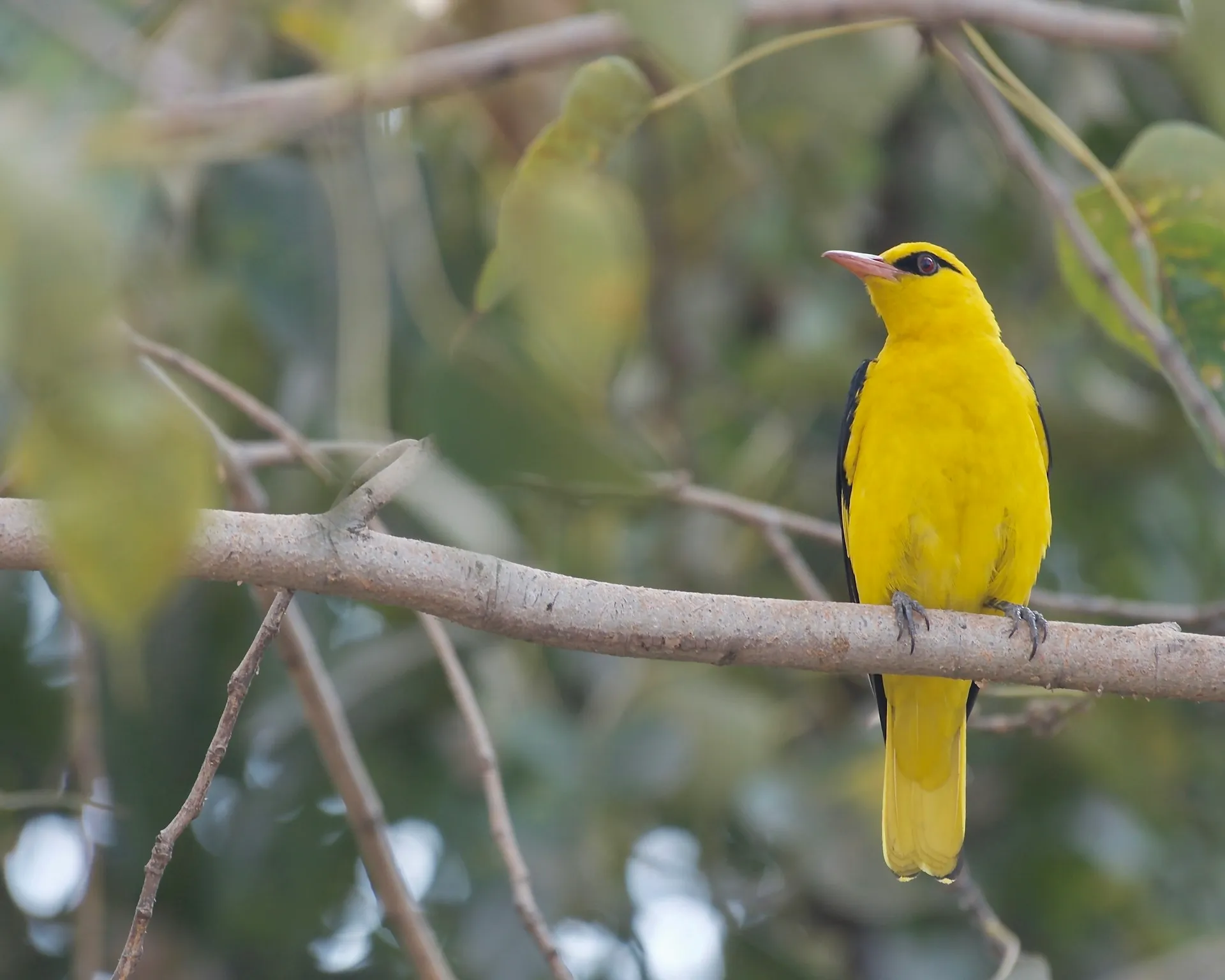
Plan your visit to Sanjay Van, South Delhi’s expansive ridge forest. Find accurate details on timings, metro access, entry points, birdwatching, and safety.
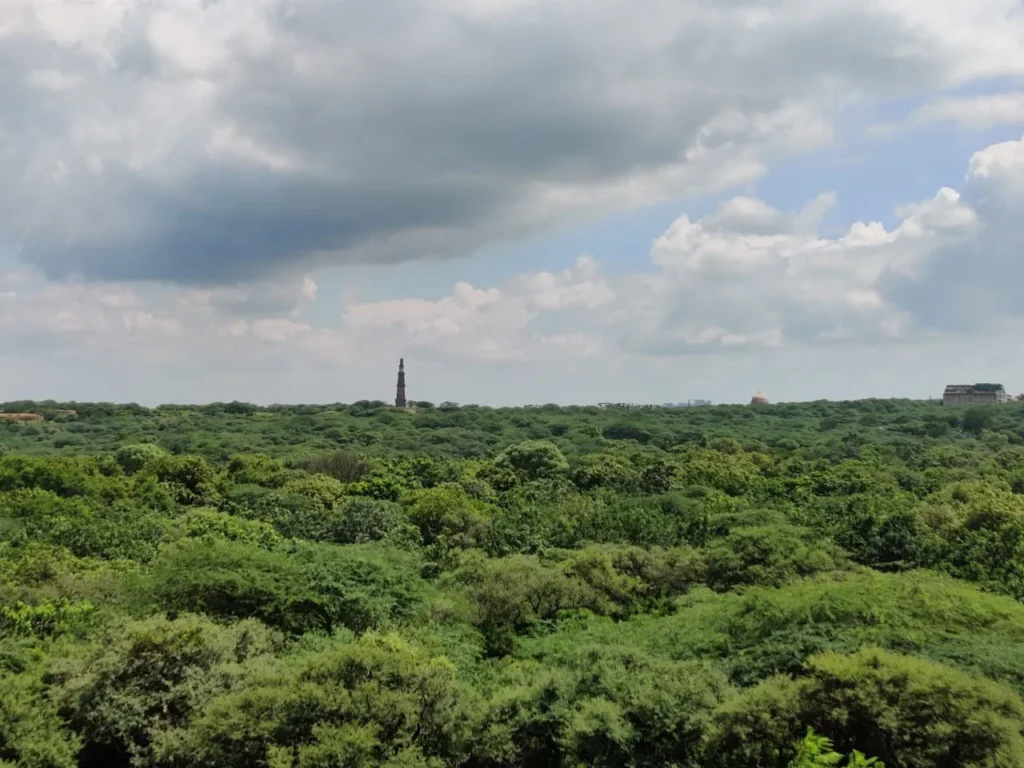
Image: Historic Qutab Minar seen from Sanjay Van. Source: dda.gov.in
Sanjay Van offers a substantial green escape right within the city limits of South Delhi. For residents and travellers looking to swap concrete roads for dirt tracks, this sprawling woodland provides a space for walking, birdwatching, and quiet outdoor exercise without requiring a drive outside the capital.
Navigating this urban forest requires some advance preparation. Because it functions as a rugged, reserved natural area rather than a manicured municipal park, visitors need to plan their entry points, understand safety protocols, and bring their own essential supplies. This guide details the practical logistics required to plan a successful trip.
What Is Sanjay Van?
Sanjay Van is an expansive, continuous tract of urban forest managed by the Delhi Development Authority (DDA). Unlike the standard neighborhood parks found throughout Delhi, this area is maintained with a focus on preserving its wilder, semi-arid woodland character.
Delhi’s South-Central Ridge and Aravalli Landscape
Sanjay Van is a critical component of the South-Central Ridge, which belongs to the ancient Aravalli hill landscape. This terrain features rocky paths, low hills, and a mix of dry deciduous trees and scrub vegetation.
The forest serves several important ecological functions for the city. It acts as an environmental corridor for local wildlife, lowers surrounding urban temperatures, and plays an essential role in groundwater recharge across South Delhi.
The Scale and Boundaries of the Forest
When researching the size of Sanjay Van, you will encounter varying numbers across official and historical travel records. Published figures generally range from approximately 443 acres to 783 acres, with some documents describing it broadly as a 780-acre green space. Notably, 1550 acres is listed on official DDA website.
This variation occurs because certain maps measure only the central core forest, while others include adjacent restored wetlands, boundary extensions, and reclaimed plots managed under the broader DDA green network. The forest shares edges with prominent South Delhi localities, sitting bordered by the Jawaharlal Nehru University (JNU) campus and Vasant Kunj on west , the Qutub Institutional Area on North, Mehrauli on South and East.
Timings, Entry Fees, and Key Rules
Sanjay Van is open exclusively during daylight hours, making it an ideal destination for early morning fitness enthusiasts and daytime nature observers.
Current Opening and Closing Hours
The forest follows a strict daytime schedule. Most recent operational records state that visitors are permitted inside from 5:00 AM to 8:00 PM.
Field Note: While the gates officially close in the evening, local authorities and park management bar entry after sunset. The deep interior trails lack artificial lighting, so you should plan your return walk well before the light fades.
Entry Fees and Visitor Accessibility
Entry to Sanjay Van is completely free. There are no ticket counters at the main gates, and visitors do not need to book passes in advance to walk or cycle through the main trails.
The tracks consist of unpaved dirt trails and natural rocky paths. While the flat, wider main paths are accessible for standard walking and sturdy bicycles, the smaller interior trails are uneven and not optimized for strollers or wheelchairs.
Forest Regulations: Do’s and Don’ts
Sanjay Van is a protected reserved forest, meaning standard park behaviors are regulated to protect local wildlife. Visitors must adhere to the following operational rules:
- Littering: You must carry all trash back out with you; waste bins are non-existent along the interior forest tracks.
- Wildlife Interaction: Feeding wild animals, including the local macaque populations and birds, is strictly prohibited.
- Off-Trail Wandering: Visitors should remain on the clearly defined walking and cycling tracks to avoid disturbing ground-nesting birds and to prevent encounters with resident reptiles.
- Commercial Amenities: There are no commercial food stalls, shops, or developed tourist centers inside the core forest area. Visitors must bring their own drinking water.
Visitor Snapshot Table
This reference table outlines the essential logistical facts for planning an excursion to Sanjay Van.
| Metric / Feature | Operational Detail |
| Managing Authority | Delhi Development Authority (DDA) |
| Total Area | 1550 acres as per official DDA website. |
| Entry Fee | Free |
| Official Operating Hours | 5:00 AM to 8:00 PM (Access barred after sunset) |
| Nearest Metro Stations | Qutub Minar Metro Station / R.K. Puram Metro Station |
| Primary Landscape Type | Semi-arid scrub and dry deciduous ridge forest |
| Top Activities | Birdwatching, trail walking, fitness running, and cycling |
| Basic Amenities | Limited; no interior food stalls or regular water outlets |
Sanjay Van Location and Access
Sanjay Van sits in a well-connected part of South Delhi, making it relatively straightforward to reach from various parts of the city. However, because the forest spans hundreds of acres and is bordered by several distinct neighborhoods—including Mehrauli, Vasant Kunj, and the Qutub Institutional Area—your choice of route should depend entirely on your preferred entry gate and mode of transport.
Choosing the Nearest Metro Station
If you are traveling by the Delhi Metro, there is no single “Sanjay Van” station. Instead, two main stations on different lines serve opposite sides of the forest ecosystem.
- Qutub Minar Metro Station (Yellow Line): This is the most practical station if you intend to explore the historic southern and western edges of the forest near Mehrauli. From here, you can easily take a short auto-rickshaw ride to the nearest entry gates. Gate no. 5 is on the Mehrauli side. It is one of the most popular drop off points for Sanjay Van. Saket and Malviya Nagar metro stations are also quite nearby and a short auto ride away as alternative metro stations.
- R.K.Puram (Magenta Line): This station provides the closest access to the northern boundary of the forest Gate no. 2 and Gate no. 3. It is highly convenient for visitors coming from West Delhi, Noida, or the domestic airport line who want to enter via the Qutub Institutional Area side. R. K Puram Metro station is at a short walking distance. Alternative metro stations nearby are IIT and Hauz Khas – both are a short auto ride away.
Entry Points and Parking Logistics
Sanjay Van features multiple entry gates around its perimeter, but they differ significantly regarding vehicle access and nearby infrastructure. Navigating these entry points effectively saves considerable walking time.
- Gate no. 3 (Qutab Industrial Area): Located near the various educational institutes and corporate offices, this gate is favored by morning walkers and joggers. It offers a direct route into the wide, well-trodden central paths. Limited roadside parking is typically available along the institutional lanes, though it fills up quickly on winter weekends.
- Mehrauli Gate (Gate no. 5): Positioned closer to the historic ruins and the southwestern edge of the ridge, this gate is best for visitors looking to combine a nature walk with a heritage tour. Parking here is constrained, so arriving via public transport or an auto-rickshaw is highly recommended.
- Vasant Kunj / Neela Hauz Side (Gate no. 1): This entry point sits near the restored Neela Hauz lake area. It is an excellent spot for birdwatchers tracking aquatic species before they head deeper into the dry scrub forest.
Practical Checklist: Before you leave your vehicle or step out of your cab, double-check which gate you are using. The gates are not interconnected by outer perimeter roads, so walking from one gate to another on the outside can take an hour.
Reaching the Forest by Cab or Auto
When booking a ride-hailing cab or directing an auto-rickshaw driver, using “Sanjay Van” as a generic destination can cause confusion and drop you off at a locked boundary wall or a dead-end road.
To ensure a smooth arrival, set your destination to specific local landmarks near the gates. For the northern entries, use landmarks within the Qutub Institutional Area (such as IIFT or Rockland Hospital). For the southern entries, use landmarks closer to Mehrauli or the JNU eastern boundary wall.
Vehicles are strictly barred from entering past the main security barriers at all gates. Your cab or auto will drop you at the perimeter road, and your excursion will proceed entirely on foot or by bicycle from that point forward.
Wildlife, Birds, and Native Flora
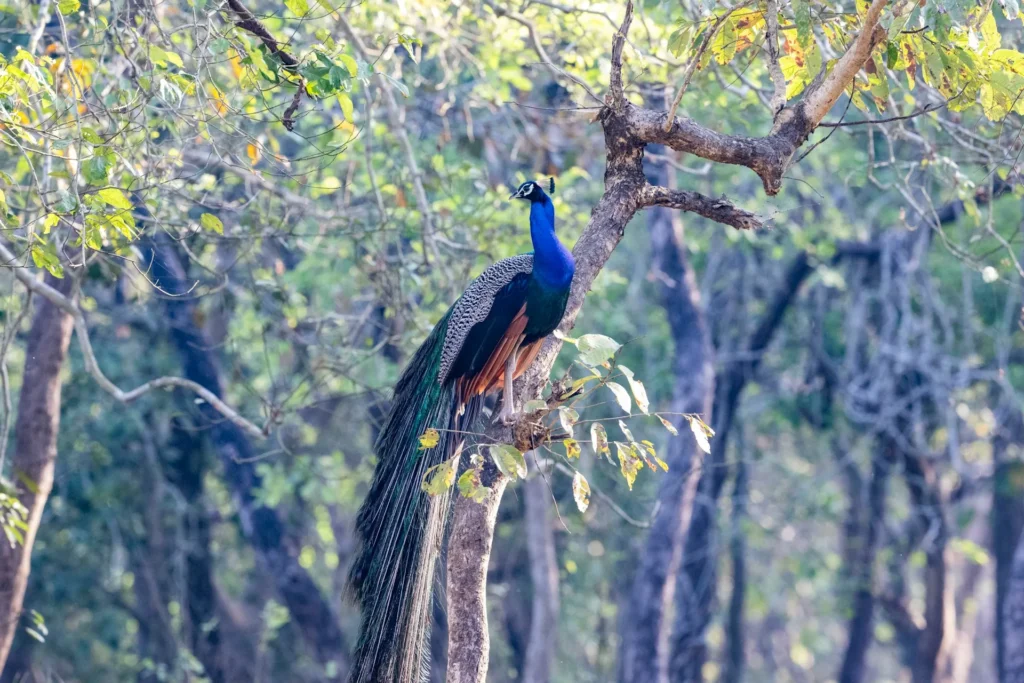
Sanjay Van is not a manicured botanical garden; it is a functioning ecosystem representing the native dry deciduous and scrub habitat of the Aravalli ridgeline. Understanding this environment is key to setting the right expectations for wildlife viewing. You will not find large predator safaris here, but rather a vital urban biodiversity corridor that sustains a surprising variety of birds, small mammals, and reptiles within the capital.
Did you Know? Delhi is ranked 2nd for bird diversity count among capital cities only after Nairobi.
Forest Vegetation and Environmental Challenges
The landscape of Sanjay Van is dominated by native ridge vegetation, which is adapted to rocky soils and semi-arid conditions. The primary native canopy includes species like neem and native keekar (acacia).
The forest plays a critical role in the city’s environmental health by providing dense shade, cooling the local urban microclimate, and serving as an essential zone for groundwater recharge. However, the ecosystem faces significant ecological pressure from Prosopis juliflora, an invasive plant species that aggressively competes with native flora and alters the natural scrub habitat.
Top Bird Species to Watch For
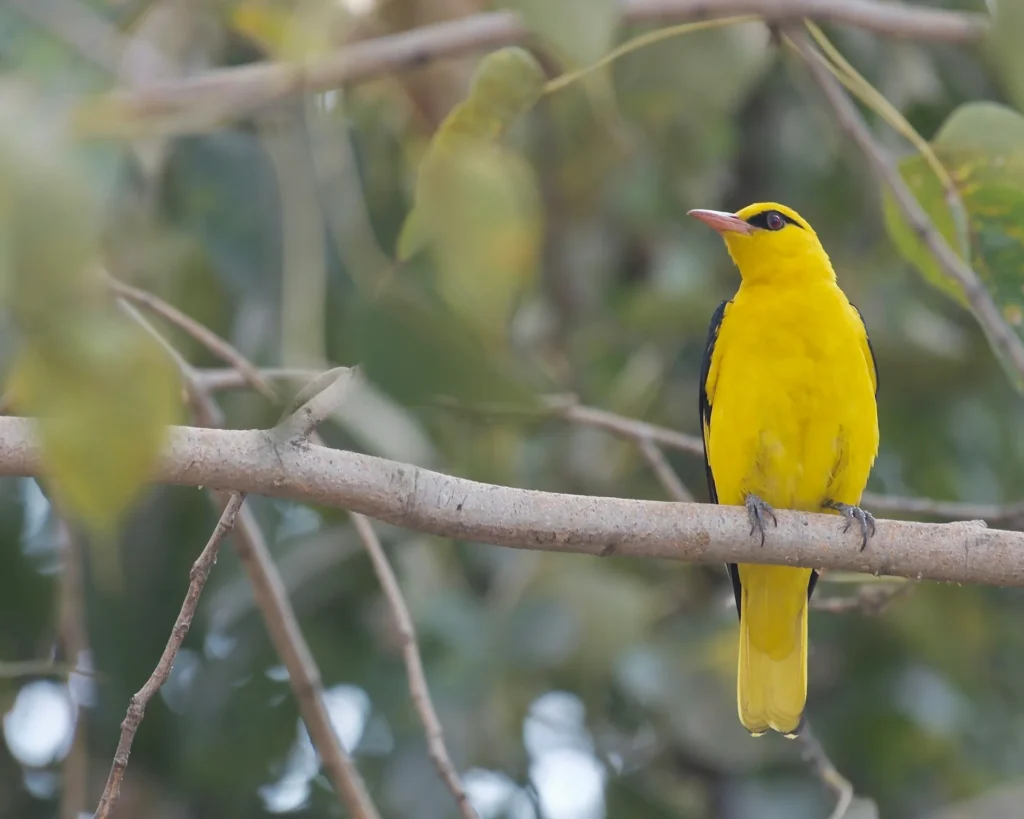
Image: Indian Golden Oriole
For birdwatchers, Sanjay Van is one of South Delhi’s most rewarding locations. The varied habitat of dry scrub, tall native trees, and nearby water bodies supports a wide array of resident and migratory species.
When walking the quiet interior trails, look and listen for:
- Canopy and Mid-level Birds: Eurasian golden oriole, Indian paradise flycatcher, rufous treepie, and the crested honey buzzard.
- Shrub and Scrub Dwellers: Grey-breasted prinia, Indian silverbill, Brahminy starling, jungle babbler, and the red-vented bulbul.
- Distinctive Calls and Colorful Sightings: Asian koel, purple sunbird, rose-ringed parakeet, white-breasted kingfisher, and the spotted owlet.
- Ground Birds: Peafowl are common, and the grey francolin can often be heard calling from the dense undergrowth.
Photography Tip: The dense canopy can create challenging, dappled lighting conditions for bird photography. Bring a lens with a wide aperture (f/4 or faster) and plan your walk for the first two hours after sunrise when bird activity peaks and the light is softest.
Resident Mammals and Reptiles
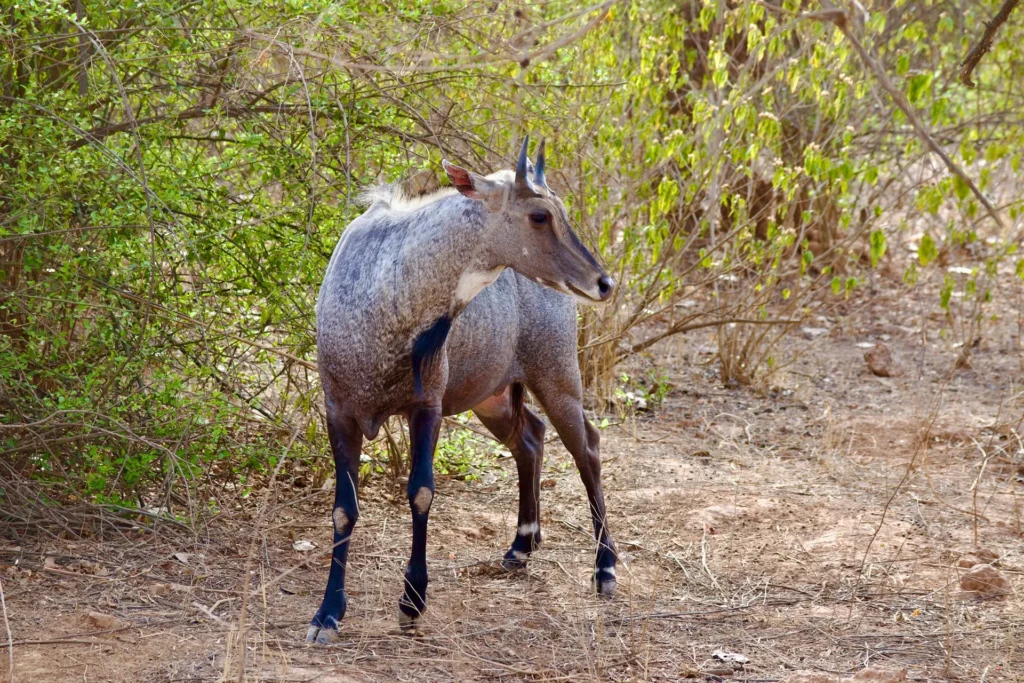
Image: Nilgais can be commonly seen in Sanjay Van. Notably, Nilgai is the state animal of Delhi.
While birds are the most visible wildlife, the forest supports several mammal species. Golden jackals and nilgai (blue bull) are frequently active, particularly in the early mornings and late afternoons. Observers walking the quieter tracks may also encounter the Indian hare, porcupine, and even sambar deer.
The rocky Aravalli terrain is also a natural habitat for reptiles. Monitor lizards and various snake species inhabit the forest floor and rock crevices.
Field Note: Always stay on the clearly marked walking tracks. Venturing into the dense scrub not only damages the undergrowth and disturbs nesting birds, but it also increases the risk of unexpected encounters with resting snakes or wildlife.
Best Seasons and Times for Wildlife Viewing
Wildlife visibility in a scrub forest changes dramatically with the seasons. Planning your visit according to the time of year will greatly influence what you see and how comfortable your walk will be.
Seasonal Wildlife and Visiting Quality Comparison
| Season | Path & Habitat Conditions | Wildlife Focus | Visitor Experience |
| Winter (Oct–Feb) | Cool, dry trails with sparse foliage making spotting easier. | Excellent for migratory birds and high mammal activity during the day. | The most comfortable time to visit. Peak season for birdwatchers and photographers. |
| Summer (Mar–Jun) | Very hot, dry, and dusty. Minimal natural shade at midday. | Resident birds are active at dawn. Animals retreat to deep shade early. | Requires an early morning start (5:00 AM) to avoid heat exhaustion. Carry extra water. |
| Monsoon (Jul–Sep) | Lush green foliage; dirt trails can become muddy and slippery. | High butterfly activity; excellent time to observe nesting resident birds. | Highly scenic, but heavy humidity and insect activity require proper clothing and repellent. |
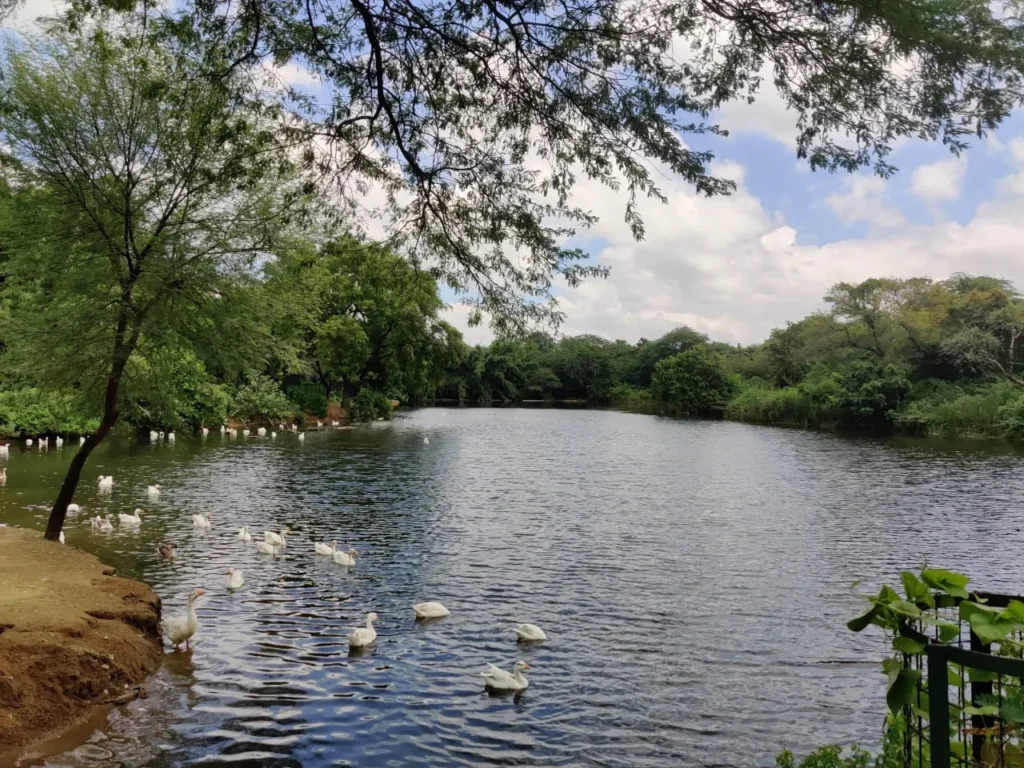
Image Source: dda.gov.in
Heritage and History Inside the Forest
Sanjay Van is not just an ecological asset; it is deeply embedded in one of Delhi’s oldest continuously inhabited landscapes. The forest floor is dotted with centuries-old architectural remnants that connect the woodland to the broader historical footprint of South Delhi.
Historic Ruins and Ancient Baolis
Walkers exploring the inner trails often encounter crumbling stone walls, old graves, and traditional stepwells, known locally as baolis. While many of these structures lack formal plaques or detailed historical markers, they offer a quiet glimpse into the region’s medieval past. Visitors should view these ruins as atmospheric fragments of history rather than strictly identified archaeological monuments, unless specifically verified.
Recently, civic authorities like the Delhi Development Authority (DDA) have actively undertaken restoration work to protect these specific heritage structures and their adjacent water bodies from further decay. In 2024, the DDA also led significant anti-encroachment drives to reclaim land and remove illegal structures within the forest boundaries.
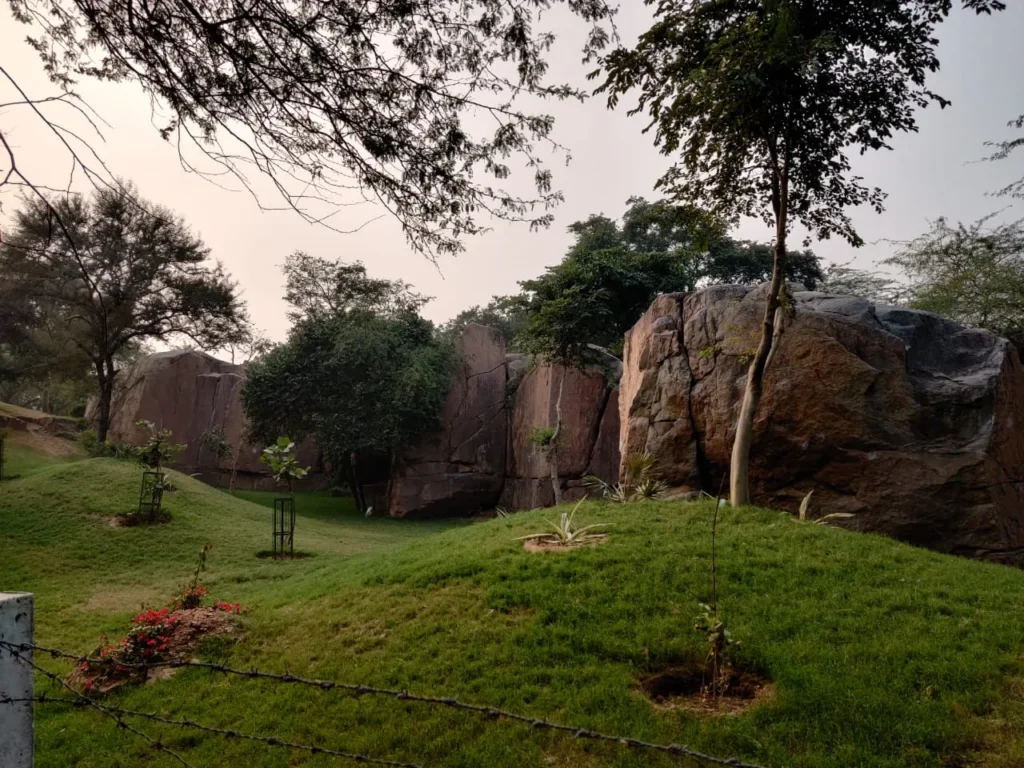
Image Source : dda.gov.in
Connection to the Mehrauli and Qutub Landscape
The geographical placement of Sanjay Van is no accident; it shares its borders directly with the Mehrauli archaeological zone and sits close to the Qutub Minar complex. Historically, this section of the Aravalli ridge served as a natural barrier, a hunting ground, and a water catchment area for the early cities of Delhi. Today, the preservation of the ruins inside Sanjay Van is increasingly tied to the broader protection of the Mehrauli heritage corridor.
Safety, Folklore, and Practical Reality
Because of its dense canopy, scattered historic graves, and relative isolation from city noise, Sanjay Van has developed an exaggerated reputation on the internet. Separating online rumors from practical visitor reality is essential for planning a safe trip.
Addressing the Haunted Forest Rumors
A significant amount of online content sensationalizes Sanjay Van by labeling it as a “haunted forest”. These claims are entirely based on folklore and urban legend; they hold no basis in verified civic or scientific fact.
The forest’s primary value is as a biodiversity corridor and a refuge for birdwatchers. The eerie reputation stems almost entirely from the combination of old graves under a thick tree canopy and the complete lack of artificial lighting, which makes the landscape genuinely dark and disorienting as dusk approaches.
Safety Guidelines for Solo Travelers and Families
Sanjay Van is generally safe for solo walkers, women, and families, provided that visitors follow basic precautions for urban nature reserves. The main trails see consistent use by local residents, fitness groups, and photographers, particularly in the mornings and late afternoons.
Expert Tip: To ensure a secure and pleasant visit, stick to the well-defined main trails where foot traffic is steady. Avoid venturing off-path into the dense scrub, as this not only damages the habitat but also isolates you from other walkers.
For optimal safety, strictly adhere to daylight visits. Park management bars access after sunset, and navigating the uneven, rocky tracks without daylight or streetlamps is a genuine physical hazard.
Myth vs. Fact Matrix
This matrix clarifies the most common misconceptions about visiting Sanjay Van.
| Common Claim / Myth | The Practical Reality |
| “Sanjay Van is a haunted forest.” | This is purely local folklore. The area is a reserved urban forest valued for its ecology, birdlife, and groundwater recharge capabilities. |
| “It is a highly developed picnic spot.” | False. Sanjay Van remains a rugged, semi-arid ridge forest. It lacks commercialization, food stalls, and manicured lawns. |
| “You can visit at night for ghost hunting.” | Authorities actively bar entry after sunset. The forest has no artificial lighting, making night entry unsafe and prohibited. |
| “It is just a small neighborhood park.” | Incorrect. It is a massive tract of the South-Central Ridge spanning hundreds of acres, serving as a critical wildlife corridor. |
Activities and Things to Do
Sanjay Van serves as a rugged space for outdoor recreation. Because it lacks commercial attractions, the activities here center entirely on nature exploration, fitness, and wildlife observation.
Walking and Nature Trails
The forest features an extensive network of dirt tracks and unpaved paths. These trails are ideal for light hiking and distance walking. Unlike paved city parks, the terrain here is uneven and rocky in places, providing a more authentic outdoor walking experience.
Cycling and Fitness Paths
Cyclists are permitted on the main arterial trails of Sanjay Van. The combination of dirt paths and slight elevation changes makes it a popular spot for mountain bikers and fitness runners looking for a challenging workout away from city traffic.
Photography and Quiet Excursions
With its dense canopy and diverse bird population, the forest is highly rated for wildlife and nature photography. It also functions as a quiet refuge for those looking to read, meditate, or escape the ambient noise of South Delhi.
Conservation and Recent Developments
As a reserved forest within a rapidly expanding metropolis, Sanjay Van requires ongoing active management to preserve its ecological integrity.
Habitat Restoration and Reclaiming Land
In 2024 and 2025, authorities carried out targeted restoration projects focused on safeguarding historical ruins and stabilizing internal water sources. Additionally, the DDA executed anti-encroachment drives to clear unauthorized structures and reclaim several thousand square meters of forest land along the perimeter.
Infrastructure Policies and the Reserve Forest Status
Maintaining the wild, uncommercialized nature of the ridge is a priority for local environmental boards. In 2025, the Ridge Board explicitly cleared eco-sensitive infrastructure plans—such as a minimal bamboo-and-thatch café concept—while strictly mandating that no trees be felled. This ensures that any visitor amenities do not compromise its official reserved forest status.
Combining Your Visit: Nearby Attractions
Because of its location in South Delhi, a morning walk in Sanjay Van can easily be integrated into a full-day historical or nature itinerary.
Integrating Qutub Minar and Mehrauli Archaeological Park
The southern gates of the forest place you within a short drive or auto-rickshaw ride of the Qutub Minar complex and the Mehrauli Archaeological Park. Combining these sites allows you to transition seamlessly from a rugged nature walk to an exploration of Delhi’s earliest architectural history.
Exploring Neela Hauz Lake
Located along the Vasant Kunj edge of the forest, Neela Hauz Lake is a restored wetland that functions as a crucial habitat for waterbirds. Visiting the lake edge before entering the main forest gates provides an excellent opportunity to spot aquatic avian species.
Nearby Destination Combinations
This guide outlines how to structure a combined visit to the forest and its surrounding landmarks.
| Destination | Primary Focus | Typical Visit Duration | Best Access Gate |
| Sanjay Van | Birdwatching, trail walking, and nature photography | 2–3 hours | Gate 1 (Qutub Institutional Area) or Mehrauli Gate |
| Qutub Minar | Monument sightseeing and medieval architecture | 1–2 hours | Mehrauli Gate (via short auto ride) |
| Mehrauli Archaeological Park | Historic ruins, tombs, and heritage trails | 2–3 hours | Mehrauli Gate |
| Neela Hauz Lake | Restored wetland and aquatic birdwatching | 45–60 minutes | Vasant Kunj / Neela Hauz Side |
Common Mistakes to Avoid
- Arriving too late in the day: During warmer months, arriving after 8:00 AM means missing peak bird activity and facing intense heat with minimal shade.
- Relying on generic GPS coordinates: Setting your map simply to “Sanjay Van” can guide you to a locked boundary fence. Always navigate using a specific landmark or entry gate, such as the Qutub Institutional Area.
- Forgetting to carry water: There are no vendors or water kiosks inside the core forest tracks. You must bring enough hydration for your entire walk.
- Wearing improper footwear: Slippers or thin-soled shoes are unsuited for the rocky, uneven paths of the Aravalli ridge. Wear sturdy walking shoes or sneakers.
- Expecting a manicured park: Visitors looking for manicured lawns, children’s play swings, or developed picnic spots will be disappointed; this is a wild, protected forest environment.
Frequently Asked Questions
What is Sanjay Van in Delhi?
Sanjay Van is a large, protected city forest located within the South-Central Ridge of Delhi, managed by the Delhi Development Authority (DDA).
Where is Sanjay Van located?
It is situated in South Delhi, bordered by the Qutub Institutional Area, Mehrauli, Vasant Kunj, and the JNU campus.
How big is Sanjay Van?
Reported figures vary across sources, ranging from roughly 443 acres to 783 acres, depending on whether adjacent restored areas are included. Notably, DDA website cites Sanjay Van size as 1550 acres.
Is there any entry fee?
No, entry to Sanjay Van is completely free for all visitors.
What are the opening and closing timings?
The forest is open during daylight hours, generally from 5:00 AM to 8:00 PM, though access is strictly barred after sunset.
Which metro station is nearest to Sanjay Van?
The closest options are the Qutub Minar Metro Station (Yellow Line) for the southern gates and the R.K.Puram Metro Station (Magenta Line) for the northern entries.
How do I reach Sanjay Van by car or cab?
Set your GPS destination to specific landmarks near the gates, such as the entry points in the Qutub Institutional Area or landmarks along the Mehrauli edge.
Is Sanjay Van safe for solo visitors?
Yes, the main trails are well-frequented by locals and fitness groups during daylight hours. Visitors should stick to these main tracks.
Is Sanjay Van safe for women and families?
The main trails are regularly used by walkers, runners and other visitors during daylight hours. For a more comfortable visit, solo travellers and families should stick to busier trails and avoid isolated areas. Families and solo female travelers should ensure they complete their walks and head toward the exits before sunset.
What birds are found in Sanjay Van?
Common species include the Eurasian golden oriole, Indian paradise flycatcher, crested honey buzzard, purple sunbird, Asian koel, and peafowl.
What animals live in Sanjay Van?
The forest supports small mammal populations, including nilgai, golden jackals, porcupines, Indian hares, and various native reptiles.
Can I go trekking or hiking there?
While there are no mountainous climbs, the unpaved, rocky dirt trails offer excellent opportunities for light hiking and nature walks.
Is cycling allowed in Sanjay Van?
Yes, cycling is permitted on the main arterial dirt trails, making it a popular location for local mountain bikers.
Is Sanjay Van good for photography?
It is an excellent location for bird and nature photography, particularly during the early morning hours when wildlife activity peaks.
What is the best time to visit Sanjay Van?
The winter months (October to February) offer the most comfortable weather for walking and the highest visibility for migratory birds.
Are there lakes or water bodies inside Sanjay Van?
Yes, the forest contains seasonal water bodies and connects to the restored Neela Hauz wetland along its outer boundary.
What heritage ruins or monuments are there?
The forest contains medieval stone walls, old graves, and traditional baolis (stepwells) that link it to the historic Mehrauli landscape.
Is Sanjay Van haunted?
No. The “haunted forest” stories are entirely local folklore and urban legend, amplified by the dark, unlit canopy at dusk.
What should I carry before visiting?
You should bring adequate drinking water, wear sturdy walking shoes, and carry any personal trash bags, as there are no amenities inside.
What nearby attractions should I combine with Sanjay Van?
You can easily pair your visit with trips to the Qutub Minar complex, Mehrauli Archaeological Park, or Neela Hauz Lake.
Conclusion
Sanjay Van remains one of Delhi’s most vital green spaces, offering a clear look at the city’s original Aravalli ridge landscape. By planning your entry point, wearing appropriate footwear, and arriving early in the day, you can experience a quiet, uncommercialized side of the capital that highlights both regional biodiversity and deep historic roots.
Author Note & Update Log: Written by the WildlifeSafaris.in Editorial Team. Last Updated: 15 September 2026.
Official Website link :- https://dda.gov.in/land-/scrm_sanjayvan
Download DDA PDF Guide :- https://dda.gov.in/sites/default/files/2025-08/sanjay_van.pdf
Wildlife in Delhi NCR : Topics Cluster