
Understand what an ecosystem is, how biotic and abiotic components interact, and why these living networks matter for wildlife and human survival.
What Is an Ecosystem? A Simple Definition
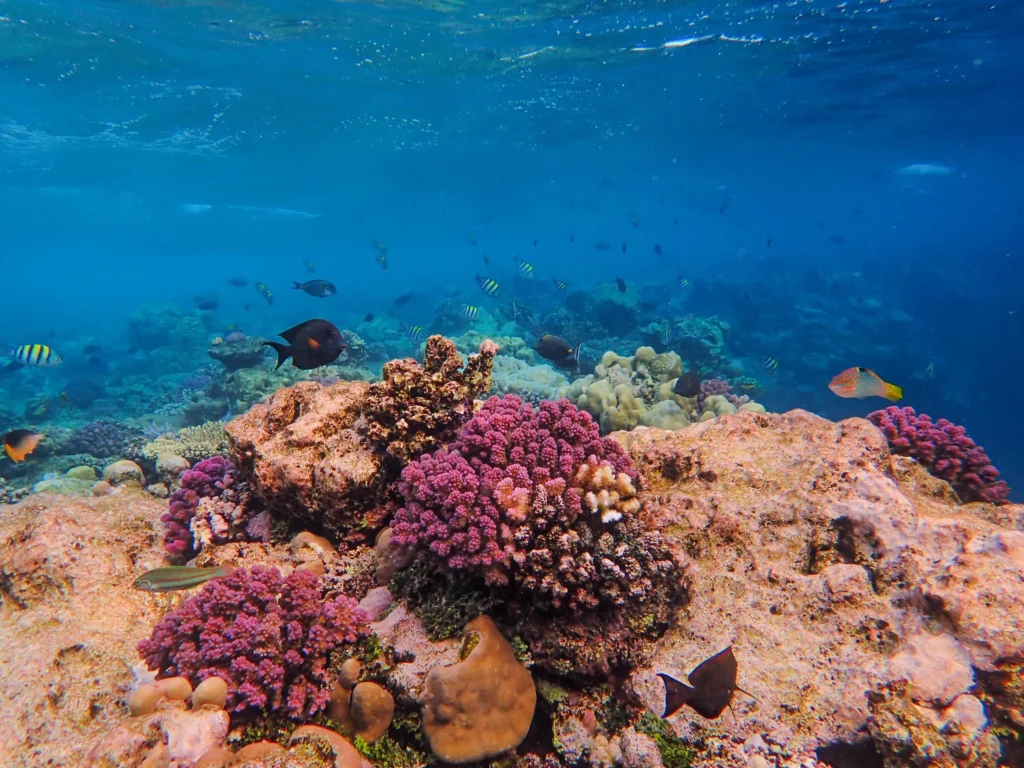
If you want to understand how wildlife survives in the wild, you need to understand the environment that supports it. An ecosystem is not just a geographical place; it is a dynamic network where living organisms interact with each other and with their non-living physical environment within a given area.
These systems are not always defined by rigid, permanent physical borders. Instead, they are conceptual units of study defined by the specific interactions taking place within them. Because of this, ecosystems scale dramatically in size. A temporary puddle of rainwater can form a functioning ecosystem, just as an entire regional forest landscape functions as one. Every ecosystem on Earth, regardless of size, is held together by two fundamental processes: the continuous flow of energy through the network and the cycling of nutrients within it.
The Core Components: Biotic vs. Abiotic Factors
Knowing the difference between the living and non-living elements of a landscape helps you anticipate wildlife behavior and understand why certain animals live only in specific areas. Every ecosystem is split into two primary components: biotic factors and abiotic factors.
Biotic Factors: The Living Community
Biotic factors include every living organism within the environment. This spans from microscopic bacteria in the soil to apex predators, plants, birds, and insects. These organisms depend directly on one another for food, shelter, pollination, and population regulation.
Abiotic Factors: The Physical Foundation
Abiotic factors are the non-living chemical and physical elements that dictate what kinds of life can survive in a specific area. These include sunlight, temperature, water availability, soil composition, and broader climate patterns. For example, the amount of rainfall an area receives directly determines whether it develops into a dense forest or an arid desert scrubland.
Comparison of Ecosystem Components
The table below highlights how these two components differ while remaining completely interdependent.
| Component | Definition | Core Examples | Role in the Ecosystem |
| Biotic Factors | The living organisms within a given environment. | Plants, animals, fungi, bacteria, pollinators, apex predators. | Drive energy transfer through consumption and recycle nutrients via decomposition. |
| Abiotic Factors | The non-living physical and chemical elements. | Sunlight, water, temperature, soil, air, climate. | Create the physical habitat and set the environmental limits for life. |
Field Note
When tracking wildlife, do not just look for the animals themselves. Pay close attention to the underlying abiotic factors, such as seasonal water holes and soil variations. These elements dictate where plants grow, which in turn determines where herbivores and apex predators will gather.
The Trophic Layers: Producers, Consumers, and Decomposers
To understand how wildlife networks function, it helps to categorize living organisms by how they obtain their energy. These groups are known as trophic levels, and each plays a distinct role in keeping the system balanced.
- Producers: These are self-sustaining organisms—primarily green plants and algae—that generate their own food through photosynthesis. They utilize the Sun as their primary energy source, forming the absolute baseline of life in the system.
- Consumers: These organisms cannot produce their own food and must consume other living things to survive. This group includes herbivores (primary consumers) that feed directly on plants, as well as carnivores and apex predators (secondary and tertiary consumers) that hunt other animals. It also includes specialized roles like pollinators, which are vital for plant reproduction.
- Decomposers and Detritivores: Often overlooked, these microorganisms and detritivores break down dead organic matter. By doing so, they complete the ecological loop, recycling vital nutrients back into the soil so that producers can use them again.
How Ecosystems Function: Energy and Nutrients
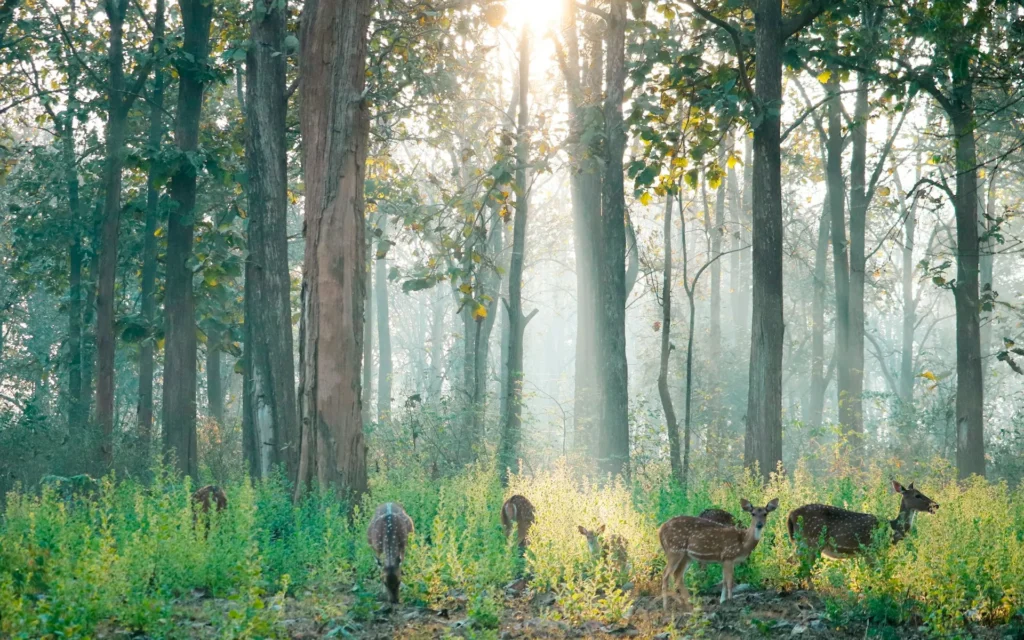
An ecosystem is not simply a static location; it is an active system defined by continuous biological and chemical interactions. To evaluate whether a wilderness area is thriving, you must look beyond just counting the animals. Ecosystem health is not the same as species richness alone; energy flow and nutrient cycling matter too. These two foundational processes act as the engine of the natural world, keeping populations balanced and habitats viable.
The Flow of Energy from the Sun
The Sun is the main energy source for almost all ecosystems. Energy enters the environment when plants (producers) capture sunlight and convert it into usable food.
When herbivores eat these plants, and predators subsequently hunt the herbivores, that initial solar energy is transferred upward. It is important to note that energy flows in a single direction. It is not recycled; instead, it is continuously used and gradually lost to the environment as heat as it moves from one organism to the next. Because energy dissipates at each step, ecosystems require a constant daily influx of sunlight to survive.
Food Chains and Interconnected Food Webs
A food chain outlines a direct, linear path of energy transfer—for example, grass eaten by a chital deer, which is then hunted by a tiger.
However, nature rarely operates in straight lines. In actual environments, multiple food chains intersect to form complex food webs. A tiger does not eat only chital; it also hunts sambar, wild boar, and smaller mammals. This dietary flexibility creates a resilient network. If one prey population declines due to disease or a bad monsoon, predators can shift their focus to other species, preventing the entire system from collapsing.
Field Note: Observing Energy Transfer
When you witness a predator on a kill during a safari, you are watching a food web function in real time. Pay attention to the scavengers that arrive afterward, such as vultures or jackals. They ensure that no available energy is wasted, acting as a crucial bridge between apex predators and the microscopic decomposers waiting in the soil.
The Vital Role of Nutrient Cycling
While ecosystems rely on a constant, one-way influx of energy from the Sun, they operate with a fixed, finite supply of physical matter. This means essential chemical elements—such as carbon, nitrogen, and phosphorus—must be continuously reused.
Nutrient cycling is the process of breaking down dead material and returning these necessary elements to the physical environment. Decomposers, such as fungi, earthworms, and soil bacteria, handle this critical task. When a mature tree falls in the forest or an animal dies, these organisms break down the complex organic matter. This process recycles the trapped nutrients back into the soil, where they can be absorbed by the roots of living plants, allowing the entire cycle to begin again.
Categorizing the Natural World: Types of Ecosystems
Broadly, naturalists and scientists categorize ecosystems based on their physical environments. Because ecosystems scale dramatically in size and do not always have fixed borders, classifying them helps us understand how different wildlife communities adapt to specific environmental pressures.
Terrestrial Ecosystems
Terrestrial ecosystems are land-based environments. They encompass a massive variety of landscapes, including tropical rainforests, alpine meadows, dry forests, expansive grasslands, and desert scrub. These land-based networks are critical to global wildlife conservation. For example, forests alone store about 80% of all terrestrial biodiversity.
Aquatic Ecosystems
Water-based ecosystems are generally divided by their salinity levels. Freshwater networks include ponds, rivers, lakes, and floodplains. Marine and coastal ecosystems feature saltwater environments such as coral reefs, mangroves, estuaries, and salt marshes.
Human-Modified Ecosystems
A common misconception is that humans exist entirely separate from nature. In reality, humans are part of ecosystems. Agricultural landscapes, urban ecosystems, and manipulated freshwater catchments function as highly modified ecosystems. Even in a city park or a farm field, biotic and abiotic factors interact, energy flows, and nutrients cycle.
Responsible Tourism Tip
When visiting sensitive environments like coral reefs or wetlands, remember you are stepping into a complex network, not just viewing scenery. Minor physical disturbances, such as walking off-trail or touching coral, directly alter the abiotic conditions that the entire biological community relies upon to survive.
Ecosystem vs. Habitat vs. Biome vs. Biosphere
One of the most frequent points of confusion for wildlife enthusiasts is the difference between terms like “habitat” and “ecosystem”. People often use them interchangeably, but they describe entirely different ecological concepts. Understanding these distinctions helps clarify how the natural world is organized.
A habitat is simply where an organism lives, while an ecosystem encompasses the entire web of interactions and processes occurring in that space. The table below breaks down the differences in scale and definition.
Table: Understanding Ecological Scales
| Term | Definition | Practical Example |
| Habitat | The specific physical location or environment where a particular species lives and finds food, water, and shelter. | A hollow tree trunk where an owl roosts, or a specific riverbank where a crocodile basks. |
| Ecosystem | A community of living organisms interacting with each other and their non-living physical environment within a specific area. | A seasonal wetland pond, complete with its water, soil, plants, fish, and predatory birds. |
| Biome | A vast regional or global area characterized by its distinct climate and dominant plant life. | The global tropical rainforest biome, or the African savanna biome. |
| Biosphere | The global sum of all ecosystems; the entire zone of life on Earth. | Planet Earth. |
Why Ecosystems Matter: Critical Services for Life
A healthy ecosystem does more than provide a scenic backdrop for a wildlife safari. These natural networks actively sustain human life, economies, and global health. The benefits that humans gain from the natural environment are known as ecosystem services.
To understand the scale of our reliance on these systems, consider the data: healthy ecosystems provide about 75% of global freshwater resources. More than 75% of global food crops rely on natural pollinators. Over 50% of modern medicines are derived from natural sources. Furthermore, forests are essential for climate regulation, absorbing roughly 2.6 billion tonnes of CO2 annually.
Table 3: The Four Categories of Ecosystem Services
Ecologists and global organizations, such as the Intergovernmental Science-Policy Platform on Biodiversity and Ecosystem Services (IPBES), group these benefits into four distinct categories.
| Service Category | What It Provides | Real-World Examples |
| Provisioning | The tangible physical products obtained from nature. | Food crops, fresh water, timber, and medicinal plants. |
| Regulating | The natural processes that regulate the environment. | Climate regulation, flood control, water purification, and disease regulation. |
| Supporting | The underlying processes necessary for all other services to function. | Nutrient cycling, soil formation, and photosynthesis. |
| Cultural | The non-material benefits people gain from natural ecosystems. | Recreation, wildlife tourism, spiritual significance, and education. |
Current Threats and Environmental Pressures
Because ecosystems rely on a delicate balance of biotic and abiotic factors, rapid changes can severely disrupt their ability to function. Climate change and habitat loss are currently the primary drivers of ecosystem degradation.
When abiotic factors—such as seasonal rainfall or average temperatures—shift too quickly, the biotic community cannot adapt fast enough. The physical destruction of habitats also removes critical ecosystem components. For example, since 1970, about 35% of the world’s wetlands have been lost. Monitoring these pressures is a major focus of modern biodiversity governance, with the IPBES scheduled to deliver its second comprehensive global assessment on biodiversity and ecosystem services in 2028.
Decision Guide: Supporting Conservation
When planning a wildlife trip, choose operators and lodges that actively protect the local ecosystem rather than just exploiting the wildlife. Look for properties that minimize their water usage (protecting abiotic resources) and support anti-poaching or habitat restoration initiatives (protecting biotic resources).
Common Misconceptions About Ecosystems
Understanding the natural world requires unlearning several common myths.
- Misconception: Ecosystems must be massive wilderness areas. Reality: Ecosystems are defined by interactions, not physical size. A temporary rainwater puddle containing microscopic life, algae, and insect larvae functions as a complete ecosystem.
- Misconception: An ecosystem is just another word for a habitat. Reality: A habitat is simply the physical location where a specific animal lives. An ecosystem is the entire working network of living and non-living things interacting in that space.
- Misconception: Lots of animals mean a healthy ecosystem. Reality: Ecosystem health is not measured by species richness alone. Proper energy flow and nutrient cycling are just as critical; a forest with many animals but failing soil nutrients will eventually collapse.
- Misconception: Humans exist outside of ecosystems. Reality: Humans are a highly influential part of ecosystems, not separate from them. We rely on them for survival and directly alter their functions through agriculture, infrastructure, and resource extraction.
Frequently Asked Questions
What is an ecosystem in simple words? An ecosystem is a community of living organisms interacting with each other and with their non-living physical environment in a specific area.
What are the two main components of an ecosystem? Every ecosystem is made up of biotic (living) factors and abiotic (non-living) factors.
What is the simplest ecosystem example? A small, temporary water puddle or a single water droplet can act as a simple ecosystem, containing non-living water and sunlight interacting with living bacteria, algae, and microscopic organisms.
What is the difference between a food chain and a food web? A food chain shows a single, straight-line path of how energy moves from one organism to another. A food web is a more accurate representation of nature, showing how multiple food chains overlap and intersect within an ecosystem.
Why are ecosystems important for humans? We depend on ecosystems for our fundamental survival. They provide the fresh water we drink, the pollinators required for our food crops, the natural compounds used in medicine, and the climate regulation necessary to keep the planet habitable.
Can ecosystems recover after damage? Yes, ecosystems have natural resilience and can recover from ecological disturbances through a process called succession. However, if the damage is too severe—such as complete habitat destruction or extreme climate shifts—the ecosystem may collapse or require intensive human intervention and restoration to recover.
Conclusion
An ecosystem is the fundamental operating system of the natural world. It is not just a static forest or a scenic wetland; it is a complex, working network where energy from the Sun and nutrients from the earth cycle through plants, predators, and decomposers. Whether you are observing a tiger hunting in the dry deciduous forests of India or simply watching a pollinator in a city park, you are witnessing an ecosystem in action. By understanding the critical balance between biotic and abiotic factors, we can become better naturalists, more responsible travelers, and stronger advocates for global wildlife conservation.
Author Note & Update Log: Written by the WildlifeSafaris.in Editorial Team. Last Updated: October2026.