
Discover where the Black-necked Crane is found in India, its habitat, population, conservation status, best birdwatching locations, and travel tips.
Introduction
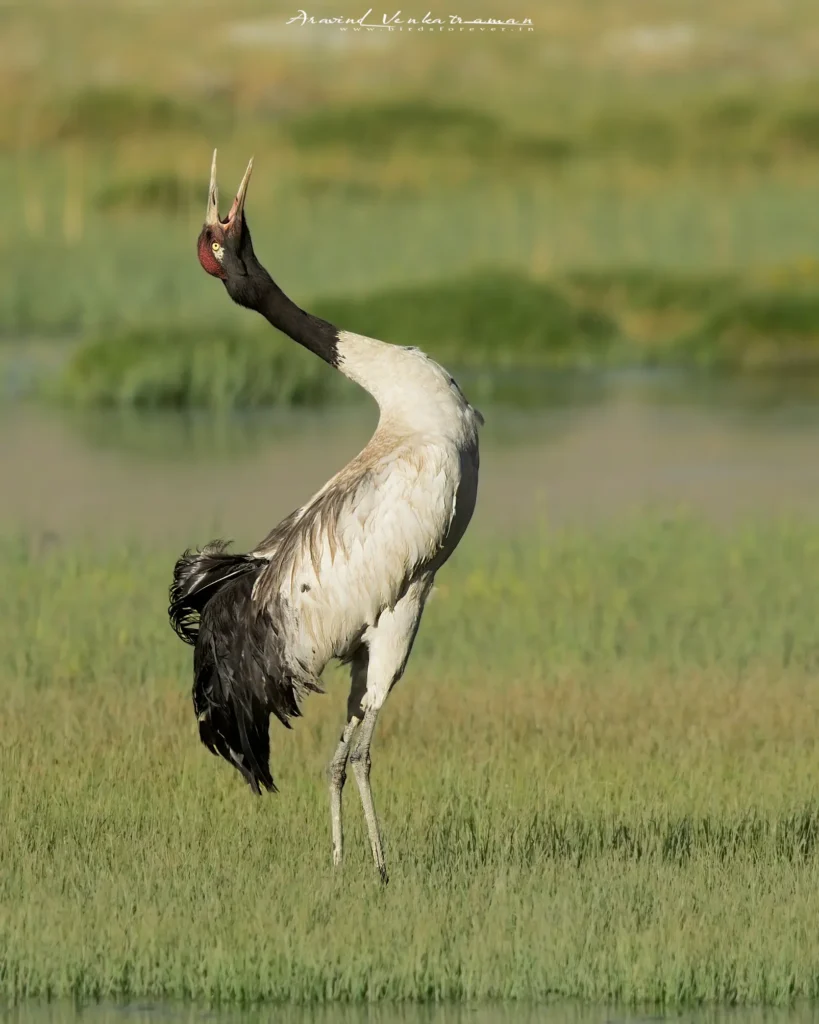
The Black-necked Crane (Grus nigricollis) is one of the few crane species adapted to life in the high-altitude wetlands of the Himalayas and the Tibetan Plateau. India supports only a small part of its global population, but that small population is especially important because the country contains the species’ only known breeding grounds outside the core Tibetan Plateau region and provides vital wintering habitat in the eastern Himalayas.
Unlike many birds that occur across large parts of India, the Black-necked Crane has a very limited Indian range. During summer, it breeds in the cold wetlands of eastern Ladakh, while a separate group spends winter in the valleys of Arunachal Pradesh. These isolated populations depend on healthy marshes, shallow lakes, and traditional pastoral landscapes that are increasingly affected by habitat change, infrastructure development, and human disturbance.
For birdwatchers, the species is among the highlights of Himalayan wildlife travel. For conservationists, it serves as an indicator of the health of fragile mountain wetlands. For local communities, particularly in Ladakh and among the Monpa people of Arunachal Pradesh, it also carries deep cultural significance.
This guide explains where the Black-necked Crane is found in India, how to identify it, why it is important, the threats it faces, and how visitors can observe it responsibly.
What Is the Black-Necked Crane?
The Black-necked Crane belongs to the crane family (Gruidae) and is scientifically known as Grus nigricollis. It is the only crane species that breeds mainly on the high-altitude plateau of Central Asia, where wetlands often lie between about 2,950 and 4,900 metres above sea level. India forms the south-western edge of this range through eastern Ladakh.
Identification
The species is relatively easy to recognise because of its distinctive colour pattern.
Key features include:
- Pale grey body
- Black head, neck and upper breast
- Bright red patch on the crown
- White patch behind the eye
- Long dark legs
- Straight grey bill
In flight, the bird flies with its neck fully extended, broad wings beating steadily, much like other crane species. Adults are elegant and unmistakable against the open wetlands they inhabit.
Quick Facts
| Feature | Details |
| Scientific name | Grus nigricollis |
| Family | Gruidae |
| Indian breeding area | Eastern Ladakh |
| Indian wintering area | Arunachal Pradesh |
| Habitat | High-altitude marshes, lakes and wetlands |
| Protection | Schedule I, Wildlife (Protection) Act, 1972 |
Where Is the Black-Necked Crane Found?
The species occurs across parts of the Tibetan Plateau and neighbouring regions of China, Bhutan, and India. Within India, however, its distribution is highly restricted.
Breeding Range in India
Eastern Ladakh is the only confirmed breeding region for the Black-necked Crane in India. Here, pairs nest in remote wetlands surrounded by open grasslands and shallow lakes. These wetlands provide nesting islands, feeding grounds, and relatively low levels of disturbance during the breeding season.
Wintering Range in India
During winter, a small number of Black-necked Cranes are found in Arunachal Pradesh, particularly in the Sangti and Zemithang valleys. These valleys provide suitable feeding areas and wetlands during the colder months after birds leave their breeding grounds.
Why India’s Wetlands Matter
India supports only a small proportion of the global population, but the wetlands of Ladakh and Arunachal Pradesh play different yet equally important roles in the species’ annual life cycle. Protecting both breeding and wintering habitats is essential for the long-term survival of the Indian population.
Distribution at a Glance
| Region | Importance |
| Eastern Ladakh | Breeding population |
| Sangti Valley (Arunachal Pradesh) | Wintering habitat |
| Zemithang Valley (Arunachal Pradesh) | Wintering habitat |
| Tibetan Plateau | Core global range |
Field Note: If your primary goal is to observe Black-necked Cranes in India, Ladakh offers the best opportunity during the breeding season, while Arunachal Pradesh provides a chance to see wintering birds in a very different Himalayan landscape.
Habitat, Ecology, Population & Conservation Status
Black-Necked Crane Habitat in India
The Black-necked Crane depends on healthy high-altitude wetlands throughout its annual life cycle. Although it occurs in only two parts of India, the habitats it uses in Ladakh and Arunachal Pradesh are quite different because they serve different purposes—breeding in one region and wintering in the other.
Breeding Wetlands of Ladakh
Eastern Ladakh is the only known breeding area for the Black-necked Crane in India. The birds nest in remote marshes, shallow lakes, wet meadows and riverine wetlands within the trans-Himalayan landscape, often at elevations between about 2,950 and 4,900 metres.
Suitable breeding habitat generally includes:
- Shallow freshwater marshes
- Wet sedge meadows
- Small islands within wetlands
- Open grasslands around lakes
- Areas with limited human disturbance during nesting
Wetlands in the Changthang region are particularly important because they provide nesting sites, feeding grounds and open visibility that helps cranes detect predators. Several of these wetlands also support many other migratory waterbirds, making them conservation priorities beyond a single species.
Field Note: Cranes usually choose nesting sites surrounded by shallow water, which offers some protection from terrestrial predators.
Wintering Habitats in Arunachal Pradesh
Unlike Ladakh, Arunachal Pradesh serves as a winter refuge rather than a breeding ground.
Small numbers of Black-necked Cranes spend winter in valleys such as:
- Sangti Valley
- Zemithang (Zimithang) Valley
These valleys contain riverine wetlands, agricultural fields, grasslands and marshes that provide feeding opportunities during winter. Compared with Ladakh’s open cold-desert landscape, these habitats receive more rainfall and support different vegetation.
Recent studies have highlighted growing pressure on some wintering habitats, particularly from proposed hydropower development and associated infrastructure, making these areas an increasing conservation concern.
Ladakh vs Arunachal Pradesh
| Feature | Ladakh | Arunachal Pradesh |
| Primary role | Breeding | Wintering |
| Landscape | High-altitude cold desert | Himalayan valleys |
| Main habitat | Marshes, lakes, wet meadows | River valleys, wetlands, agricultural fields |
| Important locations | Changthang wetlands | Sangti and Zemithang valleys |
Ecology and Natural History
Understanding how the Black-necked Crane lives helps explain why conserving wetlands is so important.
Diet
The Black-necked Crane is an omnivore whose diet changes with season and habitat.
It feeds on:
- Wetland plants
- Roots and tubers
- Seeds
- Grains
- Insects
- Small aquatic animals and other invertebrates
By foraging in wetlands and surrounding grasslands, the birds make use of a variety of food sources throughout the year.
Breeding Behaviour
Breeding takes place during the warmer months when Ladakh’s wetlands become free of snow and ice.
Pairs typically:
- Form long-term pair bonds
- Build nests within wetlands
- Lay eggs in relatively isolated locations
- Raise chicks in nearby marshes and wet meadows
The availability of undisturbed wetlands during this period is essential because repeated disturbance can affect breeding success.
Migration
The Black-necked Crane is a migratory species, although its movements are shorter than those of many long-distance migratory birds.
Broadly, the annual cycle is:
- Summer: Breeding in high-altitude wetlands, including eastern Ladakh.
- Winter: Wintering in lower Himalayan valleys such as Sangti and Zemithang in Arunachal Pradesh, while much of the global population winters elsewhere across its range.
Ecological Importance
The Black-necked Crane is often regarded as an indicator of healthy mountain wetlands.
Its presence generally reflects:
- Well-functioning marsh ecosystems
- Availability of clean freshwater
- Healthy wetland vegetation
- Low levels of prolonged disturbance
Protecting habitat for the crane also benefits many other wetland birds and the wider biodiversity of Himalayan marshes.
Population and Conservation Status
Although the Black-necked Crane has a broad range across the Tibetan Plateau, India supports only a small share of its global population. That makes every breeding pair in the country especially significant for national conservation.
Global Population
Different conservation sources provide slightly different estimates because surveys are conducted in different years.
The research brief notes:
- WWF India summarises the global population at around 11,000 birds.
- Other recent conservation sources estimate approximately 13,000–15,000 individuals.
These differences reflect updates in survey data rather than a contradiction about the species itself.
Population in India
According to information cited in a Lok Sabha reply based on Wildlife Institute of India surveys:
- Approximately 66–69 Black-necked Cranes were recorded in Ladakh during the 2016–2017 survey period.
- Around 11 birds were reported wintering in Arunachal Pradesh.
These figures provide a useful snapshot but should not be treated as current population totals, as numbers may change over time with improved monitoring.
Population Snapshot
| Region | Survey period | Reported population* |
| Ladakh | 2016–2017 | About 66–69 |
| Arunachal Pradesh | Recent government reporting | About 11 wintering birds |
*Population estimates depend on survey year and methodology.
Conservation Status
The species receives strong legal protection in India.
It is listed under Schedule I of the Wildlife (Protection) Act, 1972, providing the highest level of legal protection available under the Act.
One point requires careful interpretation: the research brief notes that different secondary sources describe the global IUCN status differently. Rather than repeating potentially outdated information, it recommends verifying the latest official IUCN Red List assessment immediately before publication.
Expert Tip: Whenever you see wildlife population figures online, check the survey year. For species with small populations like the Black-necked Crane, even a few years can make a meaningful difference to reported numbers.
Threats, Conservation, Responsible Birdwatching & Photography
Threats Facing the Black-Necked Crane
The Black-necked Crane depends on a relatively small number of wetlands in India. Because its breeding and wintering habitats are so limited, changes to these landscapes can have a significant impact on the species. The main threats are no longer limited to direct harm but increasingly involve habitat degradation and human disturbance.
Habitat Loss and Wetland Degradation
Healthy wetlands are essential throughout the crane’s life cycle. Changes to marshes, lakes and wet meadows can reduce nesting sites, feeding areas and safe resting places.
Major pressures include:
- Wetland degradation
- Habitat fragmentation
- Reclamation of marshes
- Altered water availability
- Loss of natural vegetation
Because the species breeds in relatively few wetlands in Ladakh, protecting these sites is especially important.
Infrastructure Development
Infrastructure projects can permanently alter crane habitat if they are not carefully planned.
The research brief highlights increasing concern over:
- Road construction
- Other infrastructure expansion
- Hydropower development affecting wintering habitat in Arunachal Pradesh
A recent BNHS study identified the Zemithang Valley as an area where future hydropower development could affect important winter foraging grounds.
Tourism Pressure
Wildlife tourism can support conservation by creating awareness and local livelihoods, but unmanaged tourism may disturb breeding birds.
Potential impacts include:
- Approaching nests too closely
- Off-road driving near wetlands
- Noise from vehicles and visitors
- Repeated disturbance during the breeding season
Responsible tourism focuses on observing wildlife without altering natural behaviour.
Grazing Pressure
Livestock grazing has long been part of Himalayan landscapes. However, excessive grazing in sensitive wetlands can alter vegetation structure and affect nesting and feeding habitats for cranes. Conservation efforts increasingly seek a balance between traditional livelihoods and wetland protection.
Free-Ranging Dogs
One of the less obvious threats comes from free-ranging and feral dogs.
The research brief notes that dogs can:
- Disturb nesting birds
- Predate eggs and chicks
- Reduce breeding success
Managing dog populations around important breeding wetlands has therefore become an important conservation priority.
Threat Comparison
| Breeding Areas (Ladakh) | Wintering Areas (Arunachal Pradesh) |
| Wetland degradation | Habitat alteration |
| Grazing pressure | Hydropower development |
| Tourism disturbance | Infrastructure expansion |
| Feral dogs | Disturbance around feeding areas |
Conservation Efforts
Protecting the Black-necked Crane requires cooperation between government agencies, researchers, conservation organisations and local communities.
Legal Protection
The species is listed under Schedule I of the Wildlife (Protection) Act, 1972, giving it the highest level of legal protection under Indian wildlife law.
Scientific Research and Monitoring
Population monitoring helps conservationists understand:
- Breeding success
- Population trends
- Habitat changes
- Emerging threats
Organisations mentioned in the research brief include:
- Wildlife Institute of India (WII)
- Zoological Survey of India (ZSI)
- WWF India
- Bombay Natural History Society (BNHS)
Their research contributes to population surveys, habitat assessment and conservation planning.
Community Conservation
Local communities play an important role because many important wetlands lie outside strictly protected areas.
Community participation can include:
- Protecting nesting wetlands
- Reducing disturbance
- Supporting sustainable grazing practices
- Promoting responsible tourism
The research brief also notes the cultural importance of the Black-necked Crane among Ladakhi and Monpa communities, which has helped encourage conservation awareness.
Conservation Organisations
| Organisation | Primary role |
| Wildlife Institute of India | Population surveys and research |
| WWF India | Species conservation and awareness |
| BNHS | Habitat research and monitoring |
| Zoological Survey of India | Scientific documentation |
Can You See Black-Necked Cranes in India?
Yes—but sightings require careful planning because the species has a restricted range.
Best Places
The research brief identifies these as the most important locations:
- Changthang region, Ladakh
- Tso Kar wetlands
- Sangti Valley
- Zemithang Valley
Birdwatchers should always check local conditions before planning a visit, as access, weather and crane presence vary by season.
Best Season
| Region | Best Opportunity |
| Eastern Ladakh | Breeding season |
| Sangti Valley | Winter |
| Zemithang Valley | Winter |
Responsible Birdwatching Tips
Watching Black-necked Cranes responsibly helps minimise disturbance while improving your chances of observing natural behaviour.
Follow these guidelines:
- Maintain a respectful distance.
- Never approach nests.
- Stay on established tracks.
- Keep noise to a minimum.
- Avoid sudden movements.
- Use binoculars or a spotting scope instead of walking closer.
- Follow local regulations and advice from guides.
These simple practices protect both the birds and their habitat.
Photography Tips
Photographing Black-necked Cranes requires patience rather than proximity.
Photography Tip
- Use a telephoto lens whenever possible.
- Photograph from existing roads or designated viewpoints.
- Avoid flushing birds for a better angle.
- Early morning often provides softer light and more natural behaviour.
- Never surround or block the birds’ movement.
Images captured without disturbing wildlife are both more ethical and often more rewarding.
Responsible Tourism Checklist
Before your visit, ask yourself:
✓ Am I keeping a safe distance?
✓ Am I avoiding sensitive nesting areas?
✓ Am I staying on designated routes?
✓ Am I following instructions from local guides?
✓ Am I leaving wetlands exactly as I found them?
✓ Am I respecting local communities and their traditions?
Responsible wildlife tourism supports conservation while allowing future visitors to enjoy the same landscapes.
Decision Guide: Is This the Right Birding Trip for You?
| Traveller | Recommendation |
| Serious birdwatcher | Highly recommended, especially with a knowledgeable local guide. |
| Wildlife photographer | Excellent if ethical photography practices are followed. |
| Families | Suitable for older children interested in birds and nature. |
| Casual tourists | Best combined with a broader Ladakh or Arunachal wildlife itinerary. |
Field Note: The Black-necked Crane is not a species that can be reliably seen on a casual visit. Flexibility, patience and respect for seasonal conditions are essential, and the experience should be viewed as an opportunity to appreciate Himalayan wetlands as much as the bird itself.
Common Mistakes, Frequently Asked Questions & Conclusion
Common Mistakes Visitors Make
The Black-necked Crane is especially sensitive to disturbance during breeding and wintering periods. Avoiding a few common mistakes can help protect the species and improve your wildlife experience.
1. Expecting Easy Sightings
Unlike common wetland birds, the Black-necked Crane occurs in very small numbers in India. Even in suitable habitat, sightings are never guaranteed. Planning your visit around the appropriate season improves your chances, but patience remains essential.
2. Approaching Too Closely
Trying to get closer for photographs or better views can disturb feeding birds or nesting pairs. Always use binoculars or a telephoto lens instead of reducing the distance.
3. Assuming Every Wetland in Ladakh Has Cranes
The species occupies only selected wetlands with suitable breeding conditions. Many lakes and marshes in Ladakh do not support nesting Black-necked Cranes.
4. Visiting at the Wrong Time of Year
Season matters. Birds are present in different parts of India at different times of the year, so visiting outside the appropriate season may result in disappointment.
5. Ignoring Local Advice
Local guides, forest staff and community members often know where birds have recently been seen and which areas should be avoided to minimise disturbance. Their guidance should always take priority over online information.
Frequently Asked Questions
Is the Black-necked Crane found only in India?
No. Its main range extends across the Tibetan Plateau and neighbouring parts of China and Bhutan. India supports only a small but important part of the global population.
Where does the Black-necked Crane breed in India?
The only known breeding area in India is eastern Ladakh, particularly the high-altitude wetlands of the Changthang region.
Where does it winter in India?
Small numbers winter in Arunachal Pradesh, especially in the Sangti and Zemithang valleys.
Is the Black-necked Crane the state bird of Ladakh?
Yes. The Black-necked Crane has been declared the State Bird of Ladakh, recognising both its conservation importance and its close association with the region’s high-altitude wetlands.
What does the Black-necked Crane eat?
Its diet includes wetland vegetation, roots, tubers, seeds, grains, insects and small aquatic animals, depending on season and habitat.
Is the Black-necked Crane migratory?
Yes. The species moves between breeding and wintering areas. In India, it breeds in Ladakh and winters in Arunachal Pradesh, while the wider global population follows migration routes across its range.
How many Black-necked Cranes are found in India?
Government information cited in the research brief refers to surveys that recorded about 66–69 birds in Ladakh during 2016–2017 and around 11 wintering birds in Arunachal Pradesh. These figures represent survey results rather than permanent population totals.
What are the biggest threats to the species?
The principal threats include:
- Wetland degradation
- Habitat fragmentation
- Infrastructure development
- Hydropower projects affecting wintering habitat
- Grazing pressure
- Tourism disturbance
- Free-ranging dogs around breeding sites
Is the Black-necked Crane protected by law?
Yes. It is listed under Schedule I of the Wildlife (Protection) Act, 1972, giving it the highest level of legal protection in India.
How can visitors help conserve the species?
Visitors can make a meaningful contribution by:
- Maintaining a respectful distance.
- Staying on designated roads and trails.
- Avoiding disturbance to nesting birds.
- Following local regulations.
- Supporting responsible local tourism businesses.
- Respecting the cultural values of local communities.
Conclusion
The Black-necked Crane is one of India’s most specialised wetland birds. Although only a small number occur within the country, India’s role in conserving the species is significant because it provides both the only known breeding grounds in eastern Ladakh and important wintering habitat in Arunachal Pradesh. Protecting these landscapes benefits not only the crane but also the broader network of high-altitude wetlands that support many other species.
For wildlife travellers, seeing a Black-necked Crane is rarely about adding another bird to a checklist. It is an opportunity to experience some of India’s most fragile mountain ecosystems and to understand how closely wildlife conservation is linked with healthy wetlands, scientific research and community stewardship.
Whether you are planning a birdwatching trip to Changthang, exploring the valleys of Arunachal Pradesh or simply learning about Himalayan wildlife, approaching these habitats with patience and respect helps ensure that the Black-necked Crane remains part of India’s natural heritage for generations to come.
Author Note & Update Log: Written by the WildlifeSafaris.in Editorial Team. Last Updated: August 2026.
Himalayas : Topics Cluster
- Himalayan Wildlife Comprehensive Guide
- Wildlife in Ladakh
- Himalayan Pheasants
- Raptors of Himalayas
- Wildlife in Sikkim
- Wildlife in Arunachal Pradesh
- Wildlife in Uttarakhand
- Wildlife in Himachal Pradesh
- Wildlife in Jammu and Kashmir
- Himalayan Black Bear
- Snow Leopard
- Kibber Wildlife Sanctuary Guide
- Great Himalayan National Park
- Khangchendzonga National Park
- Eastern Himalayas