
The Himalayan Region of India encompasses one of the most dynamic and ecologically fragile mountain systems on Earth, stretching across the northern frontiers of the country. Characterized by extreme altitudinal gradients, this region encompasses the Greater Himalayas, the Lesser Himalayas, and the Shivalik foothills, forming a monumental barrier that regulates the climate of the Indian subcontinent. The geological history of the Himalayas, born from the ongoing tectonic collision between the Indian and Eurasian plates, has created a highly complex topography intersected by major river systems such as the Ganges, Yamuna, and Teesta. The climate varies drastically with elevation, transitioning from sub-tropical conditions in the lower valleys to temperate broadleaf and coniferous forests, culminating in alpine meadows, permanent snowfields, and glaciers. Vegetation follows this altitudinal zonation, featuring dense stands of oak, pine, and deodar, giving way to extensive rhododendron scrub and alpine pastures renowned for their floral endemism. The biodiversity of the Himalayan Region is of global significance, sheltering a unique assemblage of Palearctic and Indo-Malayan lineages. This landscape is ecologically vital not only as a sanctuary for endangered high-altitude fauna like the Snow Leopard, Himalayan Musk Deer, and Red Panda but also as the primary watershed for millions of people downstream. Despite its ecological isolation, the region faces severe conservation challenges, including habitat fragmentation, climate change-induced glacial retreat, unregulated tourism, and poaching. Within this imperiled landscape, Biosphere Reserves serve as critical bastions of conservation. They safeguard representative ecosystems, foster scientific research on high-altitude ecology and climate resilience, and promote sustainable livelihoods for indigenous mountain communities whose traditional knowledge is inextricably linked to the preservation of this formidable yet vulnerable terrain.
Nanda Devi Biosphere Reserve
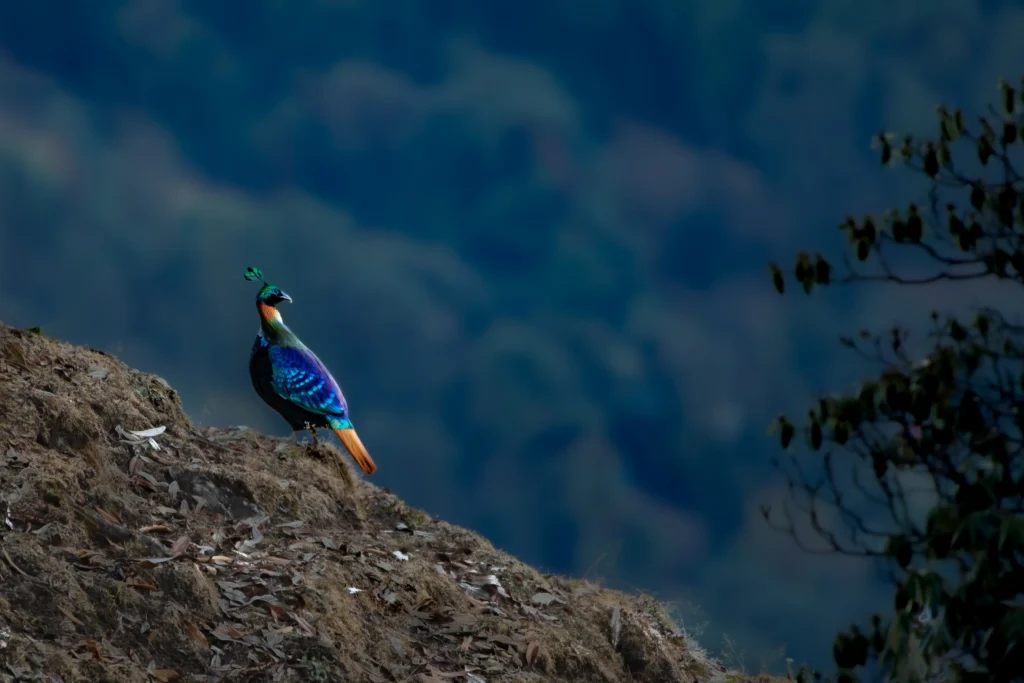
Located in the Garhwal Himalayas of Uttarakhand, the Nanda Devi Biosphere Reserve encompasses a rugged mountain landscape dominated by the Nanda Devi peak. Ranging in altitude from 1,800 to 7,817 meters, it spans a dramatic climatic gradient from temperate forests to permanent glacial ice. Drained by the Rishi Ganga, Dhauli Ganga, and Alaknanda rivers, the reserve features ecosystems transitioning from coniferous forests to extensive alpine meadows (bugyals), which host a remarkable floral diversity including the endemic Brahmakamal and various rare orchids. This pristine habitat supports highly adapted montane fauna, featuring flagship mammals like the Snow Leopard, Himalayan Musk Deer, Himalayan Tahr, Himalayan Black Bear, and Blue Sheep. The avian diversity includes the Himalayan Monal, Snow Partridge, and Koklass Pheasant, alongside specialized high-altitude amphibians. The reserve holds profound cultural significance for indigenous Bhotiya communities who possess deep traditional ecological knowledge and practice transhumance. Recognized for its unparalleled ecological significance and scientific research value regarding glacial ecology, the reserve was designated under the UNESCO Man and the Biosphere Programme in 2004. It serves as a vital sanctuary for endemic high-altitude biodiversity, a benchmark for studying climate impacts on Himalayan ecosystems, and a strictly regulated wilderness area of immense educational significance.
Landscape Connectivity
The Nanda Devi Biosphere Reserve is a critical anchor within the broader western Himalayan conservation landscape. Its core zones comprise the Nanda Devi National Park and the Valley of Flowers National Park, which collectively form a UNESCO World Heritage Site. This high-altitude sanctuary provides vital habitat connectivity across the Zanskar and Great Himalayan ranges, linking adjacent protected areas such as the Kedarnath Wildlife Sanctuary and the Askot Musk Deer Sanctuary through high-elevation ridges and glacial valleys. These ecological corridors are essential for the altitudinal migration and genetic exchange of wide-ranging species like the Snow Leopard and Himalayan Brown Bear. Furthermore, the reserve protects the headwaters of the Ganges river system, safeguarding crucial watershed services and climate resilience for the entire Indo-Gangetic plain. Although no international transboundary corridors are formally designated, its extensive protected forests ensure unbroken ecological continuity across the Garhwal and Kumaon Himalayan arc.
| Connected Protected Area | Category | State(s) | Relationship to the Biosphere Reserve |
| Nanda Devi National Park | National Park | Uttarakhand | Forms the central core zone of the reserve |
| Valley of Flowers National Park | National Park | Uttarakhand | Forms the secondary core zone of the reserve |
| Kedarnath Wildlife Sanctuary | Wildlife Sanctuary | Uttarakhand | Provides contiguous western Himalayan habitat connectivity |
| Askot Musk Deer Sanctuary | Wildlife Sanctuary | Uttarakhand | Supports eastern altitudinal connectivity for montane ungulates |
Khangchendzonga Biosphere Reserve
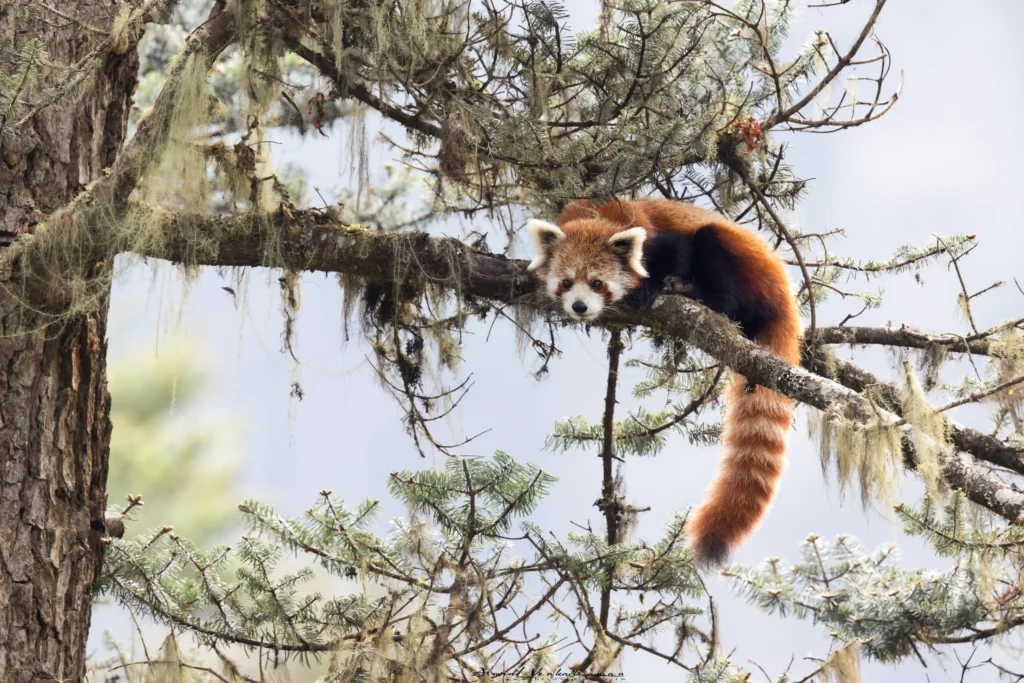
Situated in the state of Sikkim, the Khangchendzonga Biosphere Reserve is a superlative high-altitude landscape centered around Mount Khangchendzonga, the world’s third-highest peak. Encompassing extreme altitudinal variation from 1,220 meters to 8,586 meters, the reserve features a complex climatic spectrum ranging from subtropical valleys to arctic conditions. This dramatic gradient shapes distinct ecosystems, including broadleaf forests, dense temperate coniferous forests, impenetrable rhododendron scrubs, and alpine meadows interspersed with glaciers and high-altitude wetlands. The Teesta river system is heavily nourished by the reserve’s glaciers, sustaining rich aquatic and terrestrial habitats. The floral diversity is staggering, boasting numerous endemic orchids, rhododendrons, and medicinal alpine herbs. The reserve forms a critical refuge for rare flagship mammals, notably the Snow Leopard, Red Panda, Himalayan Musk Deer, Clouded Leopard, and Tibetan Wolf. Important avifauna includes the Blood Pheasant, Himalayan Griffon, and Satyr Tragopan. The landscape is deeply intertwined with the spiritual traditions of indigenous Lepcha and Bhutia communities, who consider the mountain sacred. Recognized for its exceptional biodiversity, geological features, and profound cultural-ecological integration, Khangchendzonga was inducted into the UNESCO MAB network in 2018, offering immense value for scientific research and responsible, highly regulated educational tourism.
Landscape Connectivity
The Khangchendzonga Biosphere Reserve functions as the ecological heart of the Eastern Himalayas, anchoring a vast network of protected areas across domestic and international borders. The reserve’s core is the Khangchendzonga National Park, a designated UNESCO Mixed World Heritage Site. To the south and east, it maintains critical ecological continuity with the Fambong Lho Wildlife Sanctuary, Kyongnosla Alpine Sanctuary, and the Singalila National Park in neighboring West Bengal, facilitating the trans-state movement of the endangered Red Panda and Himalayan Black Bear. Globally, it is a linchpin in a massive transboundary conservation landscape, sharing contiguous alpine borders with the Qomolangma National Nature Preserve in Tibet (China) to the north and the Kanchenjunga Conservation Area in Nepal to the west. This international connectivity is vital for the genetic viability of Snow Leopards and the protection of immense glacial watersheds, ensuring ecosystem services and climate resilience for the broader Teesta and Brahmaputra river basins.
| Connected Protected Area | Category | State(s) | Relationship to the Biosphere Reserve |
| Khangchendzonga National Park | National Park | Sikkim | Forms the core zone and primary protected landscape |
| Singalila National Park | National Park | West Bengal | Provides cross-state landscape connectivity for Red Pandas |
| Fambong Lho Wildlife Sanctuary | Wildlife Sanctuary | Sikkim | Supports contiguous buffer and lower-altitude connectivity |
| Kanchenjunga Conservation Area | Conservation Area | Nepal (International) | Forms a vital transboundary wildlife corridor to the west |
| Qomolangma National Nature Preserve | Nature Reserve | China (International) | Provides contiguous high-alpine habitat to the north |
Regional Summary Table: Himalayan Region
| Biosphere Reserve | State(s) | Government of India Notification Year | UNESCO MAB Recognition Year | Total Area (sq km) | Major Ecosystems | Flagship Species | Endemic Species | Major Protected Areas Included | Best Time to Visit |
| Nanda Devi | Uttarakhand | 1988 | 2004 | 5,860.69 | Temperate forests, alpine meadows, glacial ecosystems | Snow Leopard, Himalayan Musk Deer, Himalayan Tahr | Brahmakamal, Nanda Devi Pseudanthus | Nanda Devi NP, Valley of Flowers NP | May to October |
| Khangchendzonga | Sikkim | 2000 | 2018 | 2,931.12 | Subtropical to arctic forests, rhododendron scrub, alpine tundra | Red Panda, Snow Leopard, Clouded Leopard | Sikkim Rhubarb, Blood Pheasant (regional) | Khangchendzonga NP | April to May; October to November |