Discover Himalayan wildlife in India, from snow leopards to Himalayan monals. Explore habitats, national parks, conservation, and travel planning tips.
Comprehensive Guide to Himalayan Wildlife of India
Introduction
The Indian Himalayas contain some of the country’s most varied wildlife habitats. Stretching from Jammu & Kashmir and Ladakh in the northwest to Arunachal Pradesh in the east, this mountain system supports everything from dense broadleaf forests and alpine meadows to cold deserts and high-altitude wetlands. As the landscape changes with altitude, so do the animals and birds that live there.
This diversity means there is no single “Himalayan wildlife.” A traveller searching for snow leopards in Ladakh will encounter a very different ecosystem from someone looking for Himalayan monals in Himachal Pradesh or black-necked cranes in the wetlands of Changthang. Understanding these regional differences is the key to planning a rewarding wildlife trip.
The Himalayas are also important from a conservation perspective. They provide habitat for several threatened species, including the snow leopard, Himalayan musk deer, western tragopan and black-necked crane. Scientific surveys, protected-area management and community conservation programmes all play an important role in safeguarding these fragile mountain ecosystems.
Field Note: Wildlife sightings in the Himalayas are generally less predictable than in India’s tiger reserves. Patience, local knowledge and spending time in suitable habitat usually matter more than covering long distances.
Why Himalayan Wildlife Is Unique
From subtropical forests to cold deserts
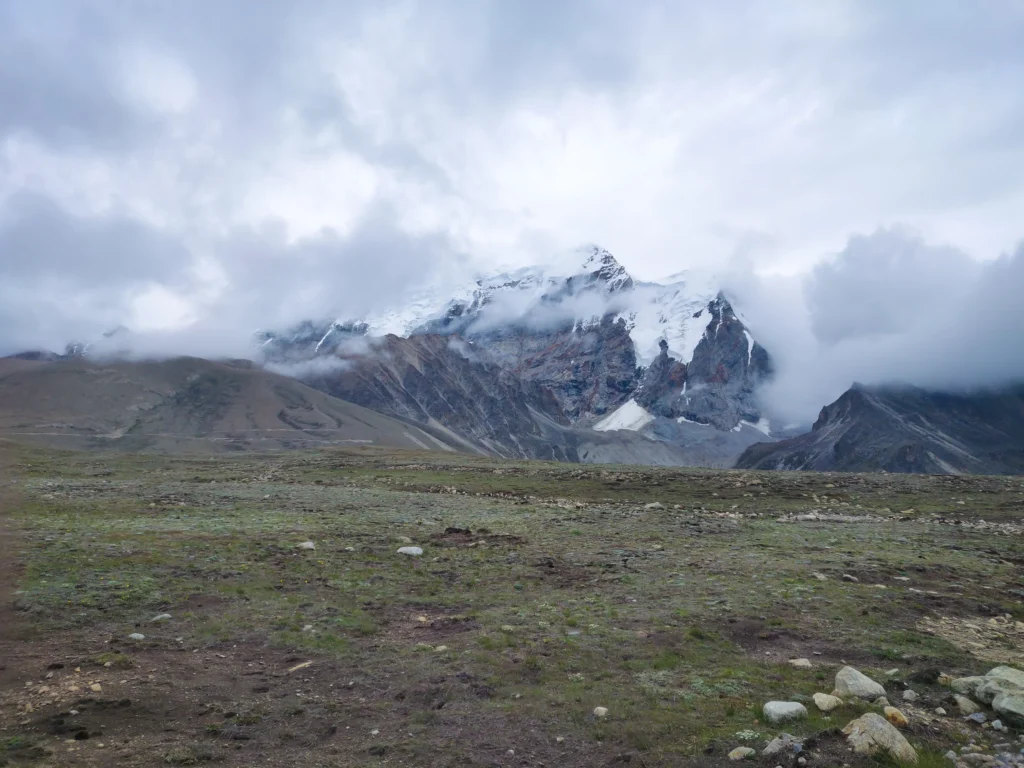
One of the defining characteristics of the Himalayas is the rapid change in habitat over relatively short distances. As elevation increases, forests gradually give way to conifer woodlands, alpine meadows, rocky slopes and finally the sparsely vegetated cold deserts of the Trans-Himalaya. Each habitat supports its own specialised wildlife.
For example:
- Lower elevations support black bears, leopards and many forest birds.
- Temperate forests provide habitat for pheasants such as the Himalayan monal and western tragopan.
- Alpine meadows are home to Himalayan tahr, bharal and musk deer.
- Cold deserts of Ladakh support snow leopards, Tibetan wolves and other high-altitude specialists.
How altitude shapes wildlife
Altitude influences temperature, vegetation, snowfall and food availability. As a result, many Himalayan animals occupy relatively narrow elevation ranges and may move seasonally in response to weather or food resources.
This also explains why the best wildlife destinations differ according to the species you hope to observe. A park known for pheasants may not be suitable for snow leopard tracking, while wetlands important for migratory cranes offer a completely different wildlife experience.
The Four Major Himalayan Wildlife Regions
| Region | Typical Habitats | Wildlife Highlights |
| Western Himalayas | Conifer forests, alpine meadows | Himalayan monal, western tragopan, Himalayan tahr |
| Central Himalayas | Mixed mountain forests | Musk deer, black bear, diverse forest birds |
| Eastern Himalayas | Moist broadleaf forests | Clouded leopard, exceptionally high bird diversity, many endemic species |
| Trans-Himalaya | Cold deserts, high-altitude wetlands | Snow leopard, bharal, black-necked crane, Tibetan wildlife |
Each region has its own ecological character, making the Indian Himalayas one of the country’s most varied wildlife landscapes rather than a single uniform ecosystem.
Expert Tip: If your primary goal is to observe a particular species, choose your destination based on habitat rather than state boundaries. In the Himalayas, elevation and ecosystem are usually better predictors of wildlife than administrative maps.
Wildlife of the Indian Himalayas by Region
The Indian Himalayas are too diverse to be treated as a single wildlife destination. Climate, rainfall, vegetation and altitude vary considerably from west to east, creating distinct ecological regions with different species and travel experiences. Understanding these regional differences helps visitors choose destinations that match their wildlife interests rather than relying on a general “Himalayan safari” idea.
Wildlife of the Western Himalayas
The Western Himalayas are the best-known region for mountain wildlife tourism. Covering parts of Jammu & Kashmir, Himachal Pradesh and Uttarakhand, this landscape combines conifer forests, alpine meadows and rugged mountain valleys.
Many of India’s most recognisable Himalayan mammals and pheasants occur here, making it an excellent region for first-time wildlife travellers. Protected areas such as the Great Himalayan National Park support a wide range of mammals and birds while also providing opportunities for trekking and nature observation.
Wildlife Highlights
Notable mammals include:
- Himalayan tahr
- Himalayan musk deer
- Bharal (blue sheep)
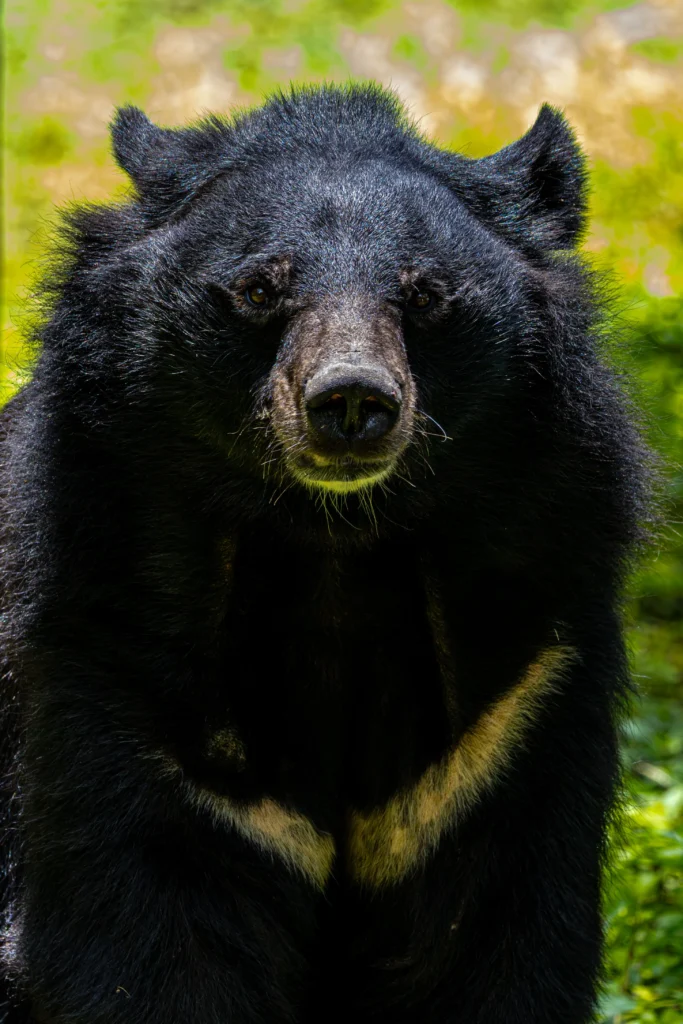
- Asiatic black bear
- Himalayan brown bear in suitable high-altitude habitats
- Common leopard
- Snow leopard in selected high mountain landscapes
Important bird species include:
- Himalayan monal
- Western tragopan
- Himalayan griffon
- Lammergeier
- Golden eagle
Field Note: Great Himalayan National Park is especially significant for birdwatchers because of its documented diversity, including more than 200 recorded bird species.
Wildlife of the Central Himalayas
The Central Himalayas, largely represented by Uttarakhand, form a transition between the western and eastern mountain systems. Dense forests merge into alpine grasslands, supporting both forest-dependent mammals and high-altitude specialists.
Compared with the western Himalayas, this region offers a broader mix of forest ecosystems, making it attractive for wildlife enthusiasts interested in mammals as well as mountain birds.
Typical wildlife includes:
- Himalayan black bear
- Himalayan musk deer
- Common leopard
- Himalayan tahr
- Himalayan monal
- Numerous forest birds adapted to temperate mountain habitats
Best For
- Multi-day wildlife treks
- Birdwatching
- Forest wildlife
- Landscape photography
Wildlife of the Eastern Himalayas
Stretching across Sikkim and Arunachal Pradesh, the Eastern Himalayas receive much higher rainfall than the western ranges. Moist forests, abundant rivers and varied vegetation support exceptionally high biodiversity.
The research brief highlights that this region is considerably richer in overall species diversity and contains many endemic reptiles and amphibians. It is also one of the world’s recognised biodiversity hotspots.
Wildlife Highlights
Key mammals include:
- Clouded leopard
- Common leopard
- Himalayan black bear
- Serow
Bird diversity is particularly impressive, with forests supporting numerous pheasants, laughingthrushes, babblers, raptors and other mountain specialists. Reptiles and amphibians are also far more diverse here than in much of the western Himalayas.
Photography Tip: The Eastern Himalayas are often a better choice for bird photographers than travellers focused solely on large mammals because bird diversity is exceptionally high across many forest habitats.
Wildlife of the Trans-Himalaya
The Trans-Himalayan region differs dramatically from the forested Himalayas. Found mainly in Ladakh and adjoining high-altitude landscapes, it consists of cold deserts, rocky mountains and high-altitude wetlands with very little tree cover.
Despite its seemingly barren appearance,this region supports several highly specialised animals adapted to extreme conditions.
Signature Species
- Snow leopard
- Bharal (blue sheep)
- Himalayan brown bear in suitable areas
- Black-necked crane
- Golden eagle
- Himalayan griffon
The region’s high-altitude wetlands are especially important for migratory birds. Changthang is widely recognised for its importance to the endangered black-necked crane and other wetland-dependent species.
Regional Comparison
| Region | Best Known For | Typical Habitats | Ideal Visitors |
| Western Himalayas | Mammals, pheasants, trekking | Conifer forests, alpine meadows | First-time wildlife travellers |
| Central Himalayas | Mixed mountain wildlife | Forests and alpine habitats | Birders and trekkers |
| Eastern Himalayas | Highest biodiversity | Moist forests | Birdwatchers and naturalists |
| Trans-Himalaya | Snow leopards and high-altitude wildlife | Cold deserts and wetlands | Experienced wildlife travellers and photographers |
Decision Guide
Choose the Western Himalayas if you want a balanced wildlife holiday with good infrastructure and opportunities to see iconic mountain mammals and pheasants.
Choose the Eastern Himalayas if your priority is biodiversity, birdwatching and exploring lush mountain forests.
Choose the Trans-Himalaya if your goal is observing high-altitude specialists such as the snow leopard or black-necked crane in stark mountain landscapes.
Iconic Mammals of the Indian Himalayas
The mammals of the Indian Himalayas are adapted to some of the country’s most demanding environments. Many survive long winters, steep terrain and limited food availability by moving seasonally between elevations or by developing specialised behaviour suited to mountain ecosystems.
Unlike the open forests of central India, Himalayan mammals are often difficult to observe. Dense forests, rugged valleys and vast alpine landscapes mean sightings usually depend on patience, experienced local guides and spending time in suitable habitat rather than covering large distances.
Snow Leopard (Panthera uncia)
The snow leopard is the flagship species of the Indian Himalayas and one of the world’s most elusive big cats. It inhabits rocky slopes, cliffs and cold deserts of the Trans-Himalayan region, where its pale coat provides excellent camouflage.
India’s first nationwide scientific Snow Leopard Population Assessment estimated 718 snow leopards, with populations spread across Ladakh, Jammu & Kashmir, Himachal Pradesh, Uttarakhand, Sikkim and Arunachal Pradesh. The assessment also highlighted that a significant portion of suitable habitat lies outside protected areas, emphasising the importance of landscape-level conservation.
Habitat
- Rocky mountains
- High-altitude valleys
- Cold deserts
- Alpine terrain
Diet
Snow leopards mainly prey on mountain ungulates such as bharal (blue sheep) and Himalayan ibex where available, along with smaller mammals.
Conservation
- IUCN Status: Vulnerable
- Protected under Schedule I of India’s Wildlife (Protection) Act.
Expert Tip: Seeing a snow leopard requires realistic expectations. Even experienced trackers may spend several days searching before locating one. Many visitors consider signs such as tracks, scrapes or fresh prey remains rewarding parts of the experience.
Himalayan Brown Bear
The Himalayan brown bear occupies some of the highest alpine and subalpine habitats in the western and Trans-Himalayan regions.
Compared with the more widespread Asiatic black bear, this species has a much more restricted distribution and is adapted to colder, more open landscapes.
Habitat
- Alpine meadows
- Rocky slopes
- High-altitude grasslands
Behaviour
The species is generally solitary and spends much of its time foraging for roots, berries, insects and other available food sources depending on the season.
Asiatic Black Bear
The Asiatic black bear is one of the Himalayas’ most widespread large mammals. It prefers temperate and broadleaf forests rather than the exposed alpine habitats used by brown bears.
Visitors are more likely to encounter signs such as claw marks on trees, footprints or feeding sites than the animals themselves.
Habitat
- Mixed mountain forests
- Temperate broadleaf forests
- Lower alpine zones
Best Region
- Western Himalayas
- Central Himalayas
- Eastern Himalayas
Himalayan Tahr
The Himalayan tahr is one of the most characteristic mountain ungulates of the western Himalayas. Sure-footed and well adapted to steep rocky terrain, it is commonly associated with alpine cliffs and high meadows.
Identification
- Thick reddish-brown coat
- Strong curved horns
- Robust build suited to mountain climbing
Habitat
- Alpine meadows
- Rocky escarpments
- High mountain slopes
Photography Tip: Early morning often provides the best opportunity to photograph Himalayan tahr while they graze on open slopes before retreating to steeper terrain.
Bharal (Blue Sheep)
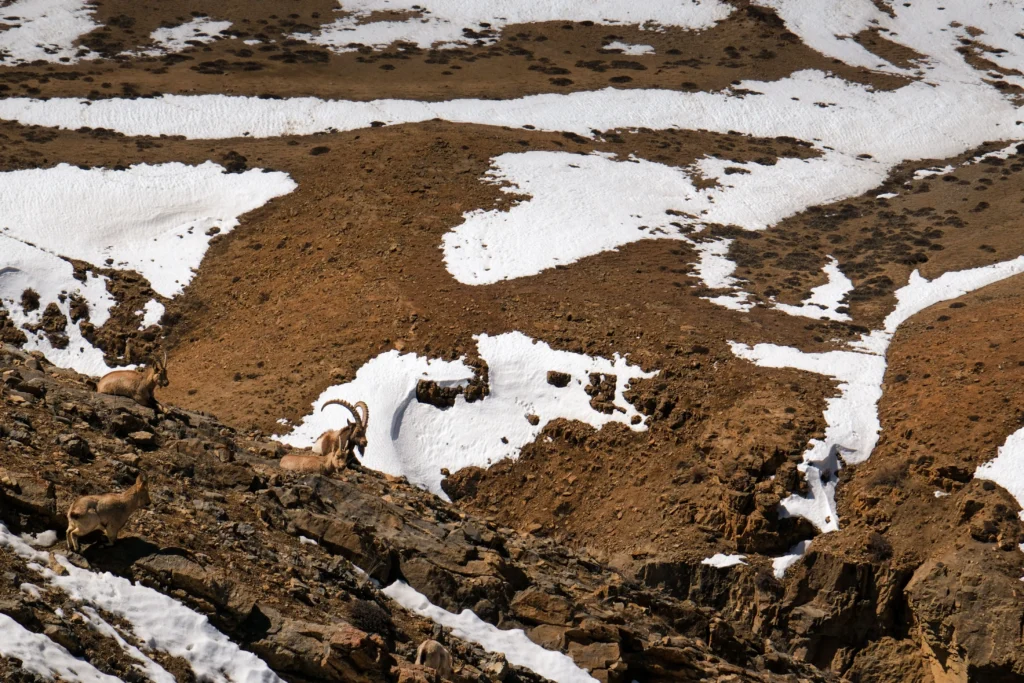
Despite its common name, the bharal combines characteristics of both sheep and goats. It is one of the principal prey species of the snow leopard across the Trans-Himalaya.
Its bluish-grey coat blends remarkably well with rocky mountain landscapes, making it surprisingly difficult to spot from a distance.
Habitat
- Cold deserts
- Alpine grasslands
- Rocky cliffs
Importance
Healthy populations of bharal are closely linked with healthy snow leopard landscapes because they form an important natural prey base.
Himalayan Musk Deer
The Himalayan musk deer is a shy forest and alpine-edge species recognised by its compact body and the elongated canine teeth of males.
Rather than antlers, males possess specialised musk glands that have historically made the species vulnerable to illegal hunting.
Habitat
- Dense conifer forests
- Subalpine woodland
- Alpine scrub
Behaviour
Musk deer are usually solitary and are most active during quieter periods of the day, making direct sightings relatively uncommon.
Himalayan Serow
The Himalayan serow is one of the lesser-known mountain mammals. It occupies steep forested slopes where its dark coat provides effective camouflage among rocks and vegetation.
Although not as famous as snow leopards or bears, the serow is an important component of Himalayan mountain ecosystems.
Common Leopard
The common leopard occurs throughout much of the Himalayan region, particularly in lower and middle elevations where forest cover and prey are abundant.
Because it is highly adaptable, the species occupies a broader range of habitats than the snow leopard, including areas closer to human settlements.
Clouded Leopard
The clouded leopard is primarily associated with the forests of the Eastern Himalayas. Unlike the snow leopard, it is a forest specialist rather than a high-altitude cold-desert predator.
Its beautifully patterned coat provides excellent camouflage in dense vegetation, and it is rarely observed in the wild due to its secretive behaviour.
Comparison of Iconic Himalayan Mammals
| Species | Main Habitat | Best Region | Notable Feature |
| Snow Leopard | Cold desert, rocky mountains | Trans-Himalaya | India’s flagship high-altitude predator |
| Himalayan Brown Bear | Alpine meadows | Western & Trans-Himalaya | Adapted to harsh mountain climates |
| Asiatic Black Bear | Temperate forests | Across much of the Himalayas | Forest-dwelling omnivore |
| Himalayan Tahr | Rocky alpine slopes | Western Himalayas | Expert mountain climber |
| Bharal | Alpine grasslands | Trans-Himalaya | Key prey of snow leopard |
| Himalayan Musk Deer | Conifer forests | Western & Central Himalayas | Known for musk gland in males |
| Himalayan Serow | Forested slopes | Eastern & Western Himalayas | Elusive mountain ungulate |
| Clouded Leopard | Moist forests | Eastern Himalayas | Arboreal forest cat |
Field Note: Large mammal sightings in the Himalayas are naturally less frequent than in many lowland national parks. Success often depends on understanding animal habitats, travelling in the right season and allowing sufficient time rather than expecting guaranteed sightings.
Birds That Define the Indian Himalayas and Lesser-known Himalayan Wildlife
The Indian Himalayas are among the country’s finest destinations for birdwatching. While mammals often receive most of the attention, the region’s forests, alpine meadows and high-altitude wetlands support an exceptional variety of resident and migratory birds.
Different habitats produce very different bird communities. Forest pheasants, soaring raptors and wetland specialists rarely share the same landscape, making habitat selection just as important as choosing the right season.
Himalayan Monal
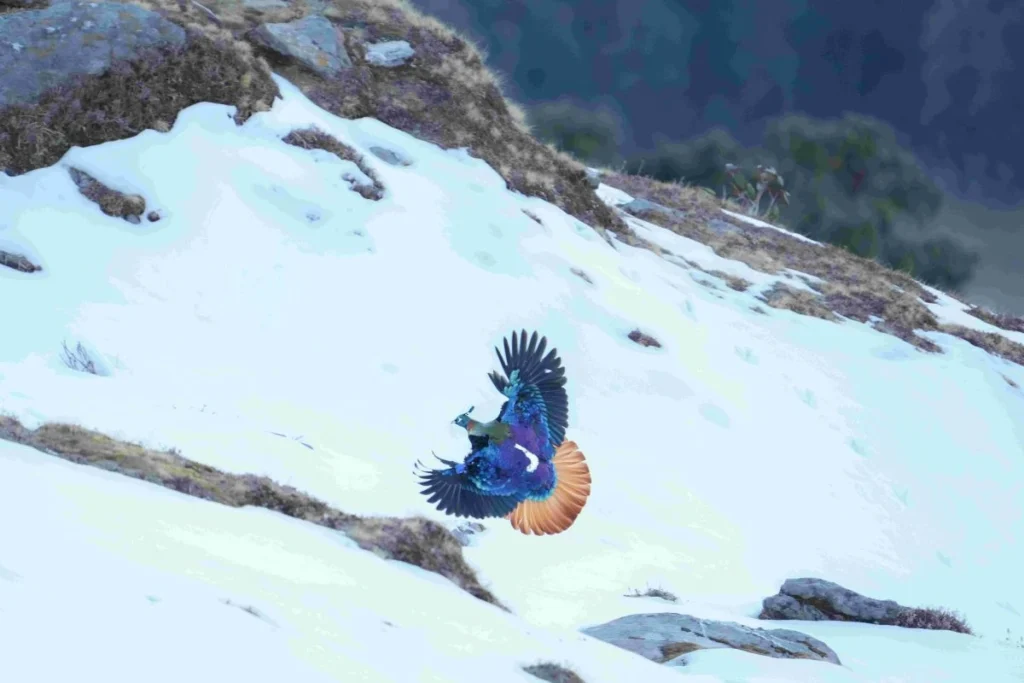
The Himalayan monal is one of India’s best-known mountain birds and is the state bird of Himachal Pradesh. Males are recognised for their iridescent plumage, while females have more subdued colours that provide camouflage during nesting.
The species inhabits temperate forests, rhododendron slopes and alpine meadows, moving seasonally according to snowfall and food availability.
Where It Occurs
- Himachal Pradesh
- Uttarakhand
- Other suitable western Himalayan forests
Best Habitat
- Oak forests
- Conifer forests
- Alpine meadows
Western Tragopan
The western tragopan is among the rarest pheasants found in the Indian Himalayas and is closely associated with the forests of the Great Himalayan National Park.
Its preference for dense mountain forests makes it difficult to observe, even in areas where it occurs naturally. The species is regarded as one of the region’s most sought-after birds by experienced birdwatchers.
Field Note: Birdwatchers often spend several days in suitable habitat before locating a western tragopan. Patience and knowledgeable local guides significantly improve the chances of success.
Black-necked Crane
The black-necked crane is one of the Himalayas’ most distinctive wetland birds. In India, it is closely associated with the high-altitude wetlands of Ladakh, where it breeds during the summer months.
Its dependence on relatively undisturbed marshes makes wetland conservation particularly important for the species. The research brief notes that the black-necked crane is listed as Endangered on the IUCN Red List and is protected under Schedule I of India’s Wildlife (Protection) Act.
Habitat
- High-altitude marshes
- Wetlands
- River valleys
- Alpine grasslands near water
Lammergeier (Bearded Vulture)
The lammergeier is one of the Himalayas’ most impressive soaring birds. Unlike most vultures, it is well known for feeding extensively on bones, which it drops onto rocks to break into smaller pieces.
It is commonly seen gliding along mountain ridges and cliffs using rising air currents.
Himalayan Griffon
The Himalayan griffon is another large mountain vulture that frequently patrols valleys and open mountain landscapes.
Its enormous wings allow efficient soaring over long distances while searching for carrion. Because it depends on healthy mountain ecosystems, it plays an important ecological role as a scavenger.
Golden Eagle
The golden eagle is one of the Himalayas’ principal birds of prey. It occupies cliffs, alpine grasslands and open mountain terrain where it hunts small mammals and birds.
Although widely distributed, it is usually encountered as single birds or pairs rather than large groups.
Comparison of Iconic Himalayan Birds
| Species | Primary Habitat | Best Region | Known For |
| Himalayan Monal | Temperate forests | Western Himalayas | Colourful mountain pheasant |
| Western Tragopan | Dense mountain forests | Great Himalayan National Park and surrounding forests | Rare forest pheasant |
| Black-necked Crane | High-altitude wetlands | Ladakh | Wetland specialist |
| Lammergeier | Rocky mountains | Across higher Himalayas | Bone-eating vulture |
| Himalayan Griffon | Mountain valleys | Across higher Himalayas | Large soaring scavenger |
| Golden Eagle | Alpine terrain | Throughout suitable Himalayan regions | Powerful mountain raptor |
Lesser-known Himalayan Wildlife
Although large mammals and colourful birds attract most visitors, the Himalayas support many other fascinating animals that receive comparatively little attention.
Reptiles
Reptile diversity varies across the Himalayas. The Eastern Himalayas support considerably more reptile species because of their warmer and wetter climate, while colder western and Trans-Himalayan landscapes naturally support fewer reptiles.
Many reptile species remain poorly studied, particularly in remote mountain habitats.
Amphibians
Mountain streams, forest floors and moist valleys provide habitat for numerous amphibians.
The research brief highlights that amphibian diversity and endemism are especially significant in the Eastern Himalayas, although scientific knowledge continues to evolve as new surveys are conducted.
Butterflies and Other Invertebrates
Butterflies, moths, bees, dragonflies and countless other invertebrates play essential ecological roles as pollinators, decomposers and components of mountain food webs.
While they are less visible in tourism literature, these smaller animals contribute substantially to Himalayan biodiversity.
Photography Tip: Spring and early summer often provide excellent opportunities for photographing butterflies, alpine flowers and insects at lower and middle elevations before the onset of heavy monsoon conditions in many Himalayan regions.
Why Smaller Wildlife Matters
Smaller animals are vital to healthy mountain ecosystems because they:
- Pollinate flowering plants.
- Help recycle nutrients.
- Control insect populations.
- Form an important food source for birds, reptiles and mammals.
- Reflect the overall health of mountain habitats.
Responsible Tourism Tip: When exploring alpine meadows or wetlands, remain on established trails wherever possible. Fragile vegetation and breeding habitats can take many years to recover from repeated disturbance.
Best National Parks and Wildlife Destinations in the Indian Himalayas
The best Himalayan wildlife destination depends on the species you hope to see. Unlike many wildlife holidays where one park offers a broad range of animals, Himalayan travel is often species-specific. Snow leopard enthusiasts head to the cold deserts of Ladakh, while birdwatchers may prefer the forests of Himachal Pradesh or the biodiverse landscapes of Arunachal Pradesh.
Choosing the right destination—and the right season—will usually have a greater impact on your trip than simply spending more days in the mountains.
Great Himalayan National Park (Himachal Pradesh)
The Great Himalayan National Park (GHNP) is one of India’s most important protected mountain landscapes and was inscribed as a UNESCO World Heritage Site in 2014. Covering forests, alpine meadows and high-altitude ecosystems, it is recognised for both its biodiversity and conservation value.
The park has documented:
- 31 mammal species
- 209 confirmed bird species
making it one of the country’s premier destinations for Himalayan wildlife and birdwatching.
Wildlife Highlights
- Himalayan monal
- Western tragopan
- Himalayan tahr
- Himalayan musk deer
- Asiatic black bear
- Himalayan griffon
- Lammergeier
- Numerous forest birds
Best For
- Birdwatching
- Wildlife trekking
- Nature photography
- Multi-day wilderness experiences
Expert Tip: GHNP is best explored on foot with trained local guides. Wildlife sightings are often a bonus to experiencing intact Himalayan ecosystems rather than the primary objective.
Changthang Wildlife Sanctuary (Ladakh)
Changthang represents one of India’s finest Trans-Himalayan landscapes. Vast high-altitude plains, wetlands and rocky mountains create habitat for wildlife specially adapted to extreme conditions.
The sanctuary is internationally important for its high-altitude wetlands, which support breeding populations of the black-necked crane and many migratory waterbirds.
Wildlife Highlights
- Snow leopard
- Bharal (blue sheep)
- Black-necked crane
- Golden eagle
- Himalayan griffon
Best For
- High-altitude wildlife
- Bird photography
- Snow leopard landscapes
- Wetland ecology
Uttarakhand’s High-Altitude Landscapes
Uttarakhand offers a mixture of temperate forests, alpine meadows and rugged mountain terrain.
Rather than focusing on one flagship species, the region provides opportunities to experience a broad range of Himalayan habitats supporting mammals, pheasants and mountain birds.
Typical Wildlife
- Himalayan monal
- Himalayan musk deer
- Asiatic black bear
- Himalayan tahr
- Common leopard
Best For
- First Himalayan wildlife trips
- Birdwatching
- Mountain trekking
- Landscape photography
Sikkim
Sikkim forms part of the Eastern Himalayas, one of the world’s recognised biodiversity hotspots.
Its varied elevations—from subtropical forests to alpine habitats—support a remarkable diversity of birds, mammals and lesser-known reptiles and amphibians.
Wildlife Highlights
- Clouded leopard
- Himalayan black bear
- Serow
- Rich birdlife
- Diverse forest ecosystems
Best For
- Birdwatchers
- Wildlife photographers
- Naturalists
- Biodiversity-focused travel
Arunachal Pradesh
Arunachal Pradesh contains some of India’s least disturbed mountain forests and contributes significantly to the exceptional biodiversity of the Eastern Himalayas.
Its forests support many specialised mammals and birds that are difficult to observe elsewhere in the country. The region is particularly valuable for birdwatchers because of its habitat diversity.
Best For
- Advanced birdwatching
- Forest wildlife
- Biodiversity exploration
- Multi-day nature expeditions
Jammu & Kashmir
The mountains of Jammu & Kashmir include alpine habitats, high valleys and rugged terrain supporting several iconic Himalayan mammals.
Parts of the region also contribute to India’s snow leopard landscape, alongside Ladakh, Himachal Pradesh and Uttarakhand.
Wildlife Highlights
- Snow leopard
- Himalayan brown bear
- Bharal
- Golden eagle
- Himalayan griffon
Comparison of Major Himalayan Wildlife Destinations
| Destination | Best Known For | Signature Wildlife | Best Suited To |
| Great Himalayan National Park | Birds and mountain mammals | Western tragopan, Himalayan monal, tahr | Birdwatchers, trekkers |
| Changthang Wildlife Sanctuary | High-altitude wildlife | Snow leopard, black-necked crane | Experienced wildlife travellers |
| Uttarakhand Highlands | Mixed Himalayan fauna | Monal, musk deer, black bear | Families, first-time visitors |
| Sikkim | Eastern Himalayan biodiversity | Clouded leopard, forest birds | Birders, photographers |
| Arunachal Pradesh | Biodiversity hotspot | Forest mammals and birds | Serious naturalists |
| Jammu & Kashmir | Alpine wildlife | Snow leopard, brown bear | Mountain wildlife enthusiasts |
Choosing the Right Destination
| Your Priority | Recommended Region |
| Snow leopard landscapes | Ladakh and Trans-Himalaya |
| Rare pheasants | Great Himalayan National Park |
| Birdwatching | Eastern Himalayas, GHNP |
| High-altitude wetlands | Changthang |
| Diverse mountain ecosystems | Uttarakhand |
| Biodiversity exploration | Sikkim and Arunachal Pradesh |
Practical Checklist Before Planning
- Decide which species you most want to see.
- Match your destination to the appropriate habitat.
- Allow enough time for weather-related delays in mountain regions.
- Hire experienced local guides where available.
- Carry clothing suitable for rapidly changing mountain conditions.
- Respect park regulations and avoid disturbing wildlife.
Family Travel Tip: Families interested in general Himalayan wildlife and scenic nature walks may find destinations in Himachal Pradesh and Uttarakhand more accessible than the high-altitude Trans-Himalayan landscapes, which require greater acclimatisation and logistical planning.
Conservation, Best Time to Visit, Responsible Wildlife Travel, Common Mistakes, FAQs & Conclusion
Conservation Challenges Facing Himalayan Wildlife
The Indian Himalayas support some of the country’s most specialised wildlife, but these ecosystems are also among its most fragile. Many species occupy narrow elevation ranges and depend on habitats that are increasingly affected by climate change, infrastructure development and human activity. The research brief emphasises that conservation efforts must extend beyond protected areas because many important wildlife landscapes lie outside national parks and sanctuaries.
Habitat Fragmentation
Road construction, expanding settlements and other infrastructure can divide wildlife habitats into smaller, isolated patches. This reduces movement between populations and may increase encounters between wildlife and people.
Large-ranging species such as the snow leopard are particularly affected because they require extensive mountain landscapes rather than small protected areas.
Climate Change
Mountain ecosystems respond quickly to changing temperatures. Shifts in snowfall, vegetation and water availability can gradually alter habitats, forcing wildlife to adjust their ranges.
Wetlands used by species such as the black-necked crane are especially sensitive to changes in hydrology, while alpine ecosystems may experience changes in plant communities that support grazing animals.
Human–Wildlife Conflict
Livestock grazing near wildlife habitats sometimes leads to conflict between people and predators such as the snow leopard. Conservation programmes increasingly recognise that protecting wildlife also requires supporting local communities that share these landscapes.
Community Conservation
Modern Himalayan conservation increasingly combines protected areas with community participation, scientific monitoring and landscape-level planning. The national snow leopard assessment illustrates the importance of managing wildlife across entire mountain landscapes rather than only within park boundaries.
Conservation Status of Flagship Species
| Species | Conservation Note |
| Snow Leopard | IUCN Vulnerable; Schedule I protection in India |
| Black-necked Crane | IUCN Endangered; Schedule I protection in India |
| Western Tragopan | Protected forest specialist requiring intact habitat |
| Himalayan Musk Deer | Vulnerable to habitat loss and historical poaching pressures |
Best Time to Visit for Himalayan Wildlife
There is no single best season for the entire Himalayas. The ideal time depends on your destination, elevation and target species.
| Season | Wildlife Highlights |
| Spring | Flowering alpine meadows, active birdlife, pleasant trekking conditions |
| Summer | High-altitude parks become accessible; breeding season for several birds |
| Autumn | Clear mountain views, favourable trekking weather and wildlife activity |
| Winter | Best period for snow leopard expeditions in suitable Trans-Himalayan landscapes |
Birdwatching
Spring and early summer generally provide excellent opportunities for observing breeding birds and resident pheasants in forest habitats. High-altitude wetlands also become important during the breeding season for species such as the black-necked crane.
Snow Leopard Expeditions
Winter is widely regarded as the preferred period for organised snow leopard tracking because animals may descend to lower elevations following their prey. Even then, sightings remain challenging and should never be expected as guaranteed outcomes.
Photography Tip: Mountain weather changes rapidly. Carry weather protection for cameras, spare batteries and sufficient storage, as cold temperatures can reduce battery performance.
Responsible Wildlife Tourism
Responsible travel helps minimise disturbance to wildlife while supporting conservation and local communities.
Follow Park Regulations
- Stay on designated trails where required.
- Respect guidance from park staff and local guides.
- Avoid entering restricted breeding or nesting areas.
Observe Wildlife Responsibly
- Watch animals from a respectful distance.
- Never attempt to attract wildlife with food or sounds.
- Keep noise levels low, especially around wetlands and forest habitats.
Minimise Environmental Impact
- Carry reusable water bottles where practical.
- Take all litter back with you.
- Avoid damaging alpine vegetation, which may recover very slowly.
Support Local Communities
Choosing local guides, homestays and responsible tourism operators helps ensure that mountain communities benefit from wildlife tourism, strengthening long-term conservation efforts.
Common Mistakes Visitors Make
- Expecting guaranteed sightings of elusive species such as the snow leopard.
- Choosing destinations without considering habitat or target species.
- Underestimating the effects of altitude and mountain weather.
- Trying to cover too many destinations in a short trip.
- Disturbing wildlife for closer photographs.
- Leaving established trails in fragile alpine ecosystems.
- Assuming all Himalayan regions support the same wildlife.
- Ignoring the importance of experienced local guides.
Frequently Asked Questions
What is the most famous animal in the Indian Himalayas?
The snow leopard is widely regarded as the flagship mammal of the Indian Himalayas because of its specialised high-altitude habitat and conservation significance.
Which Himalayan region has the greatest biodiversity?
The Eastern Himalayas generally support higher overall biodiversity than the western Himalayas due to their climate and varied habitats.
Which national park is best for Himalayan wildlife?
There is no single answer. Great Himalayan National Park is an excellent choice for mountain birds and mammals, while Changthang is better suited to high-altitude wildlife and wetland species.
Where can I see snow leopards in India?
Suitable snow leopard landscapes occur in Ladakh, Jammu & Kashmir, Himachal Pradesh, Uttarakhand, Sikkim and Arunachal Pradesh, although sightings are never guaranteed.
Is Himalayan wildlife suitable for family trips?
Yes, provided destinations are chosen according to fitness levels and altitude. Lower and middle Himalayan regions are generally easier for families than high-altitude Trans-Himalayan expeditions.
When is the best season for birdwatching?
Spring and early summer are generally productive because many birds are active during the breeding season, although timing varies by species and elevation.
Why is the Great Himalayan National Park important?
It is a UNESCO World Heritage Site known for its documented mammal and bird diversity and its role in conserving western Himalayan ecosystems.
Why are Himalayan wetlands important?
High-altitude wetlands provide essential habitat for species such as the black-necked crane and many migratory birds. Protecting these wetlands is important for maintaining Himalayan biodiversity.
Conclusion
The Indian Himalayas are far more than a landscape of snow-capped peaks. They encompass forests, alpine meadows, wetlands and cold deserts that together support one of the country’s richest collections of mountain wildlife.
From the elusive snow leopard of the Trans-Himalaya to the colourful Himalayan monal of western forests and the black-necked crane of Ladakh’s wetlands, each region offers a distinct wildlife experience shaped by altitude, climate and habitat.
For travellers, the key to a rewarding Himalayan wildlife journey is careful planning. Selecting destinations based on the species you hope to observe, travelling in the appropriate season and following responsible wildlife practices will lead to a deeper appreciation of these fragile mountain ecosystems.
As scientific research continues and conservation efforts expand beyond protected areas, responsible visitors can also contribute by supporting ethical tourism, respecting wildlife and recognising that the greatest reward is often understanding these landscapes rather than simply adding another species to a checklist.
- how bharal freeze against rocky slopes when alarmed,
- how lammergeiers use cliffs to break bones,
- how monals forage after snowfall,
- how snow leopard sign (scrapes, scent marks, pugmarks) is often encountered more frequently than the animal itself.
“This means birdwatchers and naturalists are likely to encounter a wider variety of species during a single trip, although dense forests can make photography more challenging.”
- the Himalayas are multiple ecosystems rather than one destination,
- successful wildlife travel depends on matching species with habitat,
- responsible tourism contributes to long-term conservation.
Himalayas : Topics Cluster
- Himalayan Wildlife Comprehensive Guide
- Wildlife in Ladakh
- Himalayan Pheasants
- Raptors of Himalayas
- Wildlife in Sikkim
- Wildlife in Arunachal Pradesh
- Wildlife in Uttarakhand
- Wildlife in Himachal Pradesh
- Wildlife in Jammu and Kashmir
- Himalayan Black Bear
- Snow Leopard
- Kibber Wildlife Sanctuary Guide
- Great Himalayan National Park
- Khangchendzonga National Park
- Eastern Himalayas
Safari Planning : Topics Cluster
- How to book a wildlife safari in India?
- Park by Park Online Safari Booking Guide
- Tiger Safari India Planning Workbook
- Park by Park Safari Permits Guide
- National Parks Permit Guide – Park by Park Guide
- Tatkal Safari Booking Guide – Last Minute Safari Permits Booking
- Tiger Safari in India Cost
- Indian Wildlife Safari Budget Planner
- Jeep vs Canter Safari
- Best time for Tiger Sightings in India
- How far advanced should you book safari permits?
- Can foreigners book Indian Wildlife Safari online?
- Special Permits Guide for Foreigners and Domestic Visitors
- How to book a Safari Permit online in India? 2026 step by step guide
- Senior Citizens Friendly Safari Planning
- Multi Generation Family Safari Planning
- 50 things to know before your first safari in India