Plan your dhole safari in India with field-tested advice on top national parks, pack behavior, seasonal visibility, and practical sighting locations.
Best Places to See Wild Dogs (Dholes) in India: A Field Naturalist’s Safari Guide
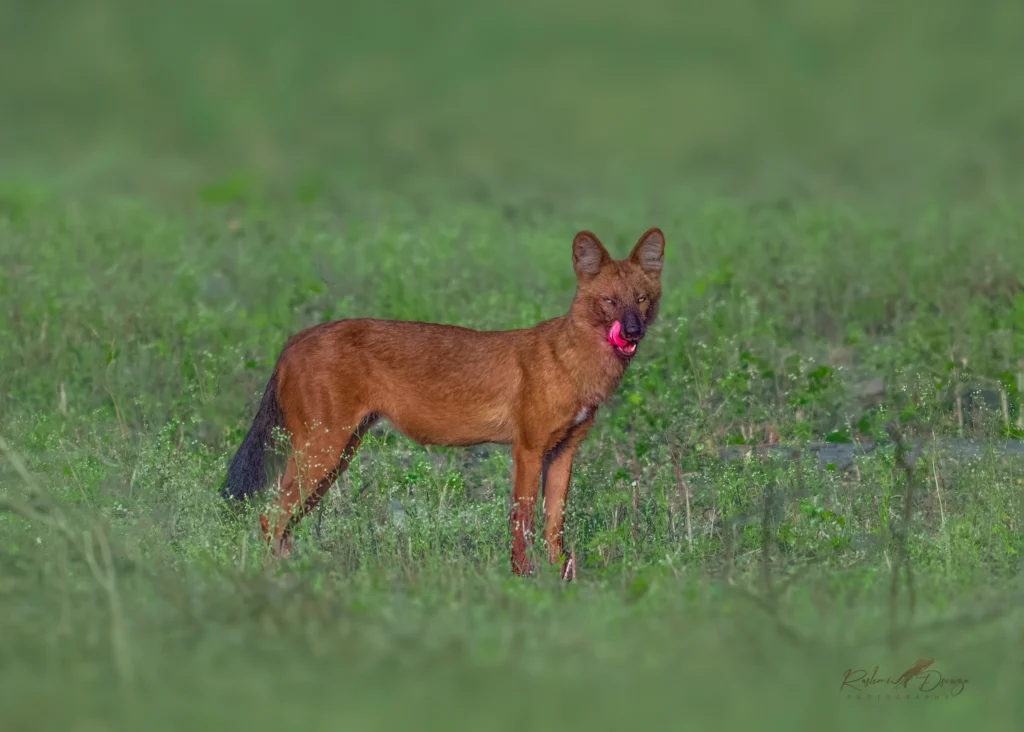
Dholes (Cuon alpinus), commonly known as Asiatic wild dogs or Indian wild dogs, are among the most efficient pack hunters in Asia. Unlike solitary big cats that rely on ambush, dholes rely on coordinated group stamina, vocal communication, and daytime movement.
Seeing a dhole pack in the wild requires choosing parks with stable resident packs, adequate prey densities, open sightlines, and moderate vehicle disturbance. India holds the largest remaining population of dholes globally, distributed across three primary landscapes: the Western Ghats, Central India, and the forested tracts of Northeast India.
Dhole Conservation at a glance:
| Scientific Name | Cuon alpinus |
| Global Status (IUCN) | Endangered |
| Global Adult Population | 1,000 – 2,500 mature individuals |
| Historical Range Loss | ~80% across South & Southeast Asia |
| Indian Legal Protection | Schedule II (Wildlife Protection Act) |
| Primary Social Unit | Packs of 2 to 24 individuals |
| Primary Activity Window | Diurnal (Dawn and Late Afternoon) |
Understanding Dhole Sighting Dynamics in India
Global Conservation Status and India’s Core Strongholds
The global population of mature dholes is estimated between 1,000 and 2,500 individuals. The species has been extirpated from roughly 80% of its historical range across Central, South, and Southeast Asia due to prey depletion, habitat fragmentation, disease transmission from domestic dogs, and human persecution.
India is the most critical country for the species’ long-term survival. Protected under Schedule II of the Wildlife (Protection) Act, 1972, viable breeding packs persist primarily in three contiguous landscape complexes:
- The Western Ghats Complex: Spanning Karnataka, Tamil Nadu, and Kerala, this contiguous forest network holds the highest density of wild dogs anywhere in the world.
- The Central Indian Landscape: Spanning Madhya Pradesh and Maharashtra, anchored by large tiger reserves with extensive open sal, teak, and bamboo woodlands.
- Northeast India: Forested tracts and hill corridors across Assam, Arunachal Pradesh, Mizoram, and Nagaland that maintain transboundary connectivity.
Field Note: A single dhole sighting does not confirm a thriving local population. Dholes have large home ranges that extend far beyond core park boundaries. In several regions of the Western Ghats, packs regularly move through tea and coffee plantation mosaics that border protected forests, using them as transit corridors between forest patches.
Dhole Lanscapes:
| Western Ghats | Central India | Northeast India |
|---|---|---|
|
|
|
What Makes a Reserve Reliable for Dhole Encounters?
Dholes are wide-ranging canids that can travel 10 to 20 kilometers in a day while hunting. Finding them consistently on safari depends on four specific ecological factors:
- Sufficient Ungulate Prey: Dholes prey primarily on medium-sized ungulates like chital (spotted deer) and sambar, alongside barking deer, wild boar, and four-horned antelopes. Reserves with low ungulate density rarely support resident packs.
- Open Understory and Visibility: While dholes live in moist deciduous and evergreen forests, dense lantana or thick brush makes detecting a fast-moving, low-profile canid very difficult. Open meadows, dry deciduous woodlands, and unpaved forest tracks provide the best visibility.
- Corridor Health and Low Disturbance: Packs avoid high-traffic, noisy tourist routes. Reserves with large undisturbed core zones and connected buffer forests allow packs to establish stable territories without splitting due to pressure.
- Diurnal Hunting Schedules: Because dholes hunt by sight during daylight hours—peaking between 06:00 to 10:00 and 15:30 to 18:30—they coincide directly with standard safari game drive hours.
The Western Ghats Strongholds: South India’s Premier Dhole Reserves
The contiguous forest belt comprising Bandipur, Nagarhole, Mudumalai, and Wayanad forms one of the most significant conservation landscapes in Asia. For safari travelers, this region offers the most consistent track record of pack sightings in India.
┌────────────────────────────────────────────────────────┐
│ NILGIRI BIOSPHERE CONTIGUOUS DHOLE NETWORK │
└───────────────────────────┬────────────────────────────┘
│
┌────────────────────┴────────────────────┐
▼ ▼
┌──────────────────────┐ ┌──────────────────────┐
│ NAGARHOLE │ │ BANDIPUR │
│ (Kabini Landscape) │◄──Shared River──►│ (Open Scrub & │
│ Moist Deciduous │ Boundary │ Dry Deciduous) │
└──────────┬───────────┘ └──────────┬───────────┘
│ │
│ ┌──────────────────────┐ │
└────────►│ MUDUMALAI │◄───────┘
│ (Moyar Gorge & │
│ Stream Basins) │
└──────────────────────┘
Bandipur National Park (Karnataka)
Bandipur is one of the best destinations in India for dhole sightings because of its open, dry deciduous terrain and healthy chital population.
Unlike evergreen forests where dense vegetation limits viewing, Bandipur’s scrublands and open teak forests allow visitors to track pack movements over long distances.
┌─────────────────────────────────────────────────────────────────────────┐
│ BANDIPUR SAFARI PROFILE: DHOLE │
├──────────────────────┬──────────────────────────────────────────────────┤
│ Primary Habitat │ Dry deciduous woodland, open scrub, teak forest │
│ Prime Sighting Zones │ Old Mysore-Ooty road tracks, central waterholes │
│ Best Safari Months │ October through March │
│ Key Prey Base │ Chital, Sambar, Wild Boar │
│ Best Safari Mode │ Forest Department 4×4 Gypsy or Safari Bus │
└──────────────────────┘
- Terrain Advantage: The park’s road network cuts through open woodland with broad verges, giving drivers and naturalists clear views when a pack uses the road to travel or hunt.
- Pack Behavior: Packs in Bandipur frequently use safari vehicle tracks in the early morning to avoid dew-laden grass and improve running efficiency.
- Photographic Conditions: The relatively open understory provides clean background separation and good light during morning safari hours.
Expert Tip: Book morning safaris in Bandipur’s core tourism zones during the drier winter months (December to February). Focus on forest edges where open clearings meet chital grazing herds.
Nagarhole National Park & Kabini (Karnataka)
Nagarhole provides a different habitat profile than Bandipur, characterized by moist deciduous forests, dense bamboo thickets, and the open backwaters of the Kabini Reservoir.
The park supports multiple resident packs that are habituated to safari vehicles, offering close-range observations of pack cooperation and social interactions.
┌─────────────────────────────────────────────────────────────────────────┐
│ NAGARHOLE SAFARI PROFILE: DHOLE │
├──────────────────────┬──────────────────────────────────────────────────┤
│ Primary Habitat │ Moist deciduous forest, bamboo, riverine meadows │
│ Prime Sighting Zones │ Kabini backwater shoreline, D.B. Kuppe routes │
│ Best Safari Months │ October through May │
│ Key Prey Base │ Chital, Sambar, Indian Muntjac │
│ Best Safari Mode │ Jeep safaris via Jungle Lodges or Forest Dept │
└──────────────────────┘
- Waterfront Sightings: During the dry months from February to May, dholes regularly patrol the exposed grassland margins along the Kabini backwaters, where prey concentrates near water.
- Social Activity: Nagarhole’s packs frequently rest on open dirt tracks and near forest clearings during mid-morning after completing a hunt.
- Interaction with Big Cats: Nagarhole has high densities of both tigers and leopards. Observing competitive interactions—such as dholes treeing a leopard or disputing a kill—is more frequently recorded here than in most other Indian parks.
Mudumalai Tiger Reserve (Tamil Nadu)
Mudumalai borders Bandipur to the south, separated by the Moyar River channel. The reserve features undulating terrain ranging from dry thorn scrub in the east to moist deciduous forest in the west.
┌─────────────────────────────────────────────────────────────────────────┐
│ MUDUMALAI SAFARI PROFILE: DHOLE │
├──────────────────────┬──────────────────────────────────────────────────┤
│ Primary Habitat │ Mixed dry scrub, moist deciduous, riverine beds │
│ Prime Sighting Zones │ Theppakadu zone, Moyar riverbank loops │
│ Best Safari Months │ October through March │
│ Key Prey Base │ Chital, Sambar, Four-horned Antelope │
│ Best Safari Mode │ Forest Department van and jeep routes │
└──────────────────────┘
- Landscape Connectivity: Mudumalai acts as a crucial movement corridor connecting the Nilgiri hills to the Eastern Ghats. Dhole packs frequently move between Mudumalai, Bandipur, and Wayanad.
- Streamside Habitats: The seasonal nullahs and the Moyar river valley provide sheltered bedding sites where packs rest during the heat of midday.
- Trip Integration: Mudumalai can be visited alongside Bandipur in a single 3-to-4-day trip, effectively doubling the number of game drives across the same regional dhole population.
Central India’s Core Landscapes: Prey-Rich Deciduous Forests
Central India offers a vastly different safari experience compared to the Western Ghats. The landscape is defined by vast tracts of sal and teak forests interspersed with extensive open meadows and bamboo thickets. This region supports high densities of ungulate prey, making it a reliable stronghold for dhole packs. For travelers planning broader wildlife itineraries, Central India provides the best opportunity to see dholes alongside tigers and leopards.
Kanha National Park (Madhya Pradesh)
Kanha is one of the most balanced wildlife destinations in India, offering excellent chances of observing wild dogs hunting in open terrain. The park’s famous maidans (open meadows) created by relocated villages serve as natural grazing grounds for large herds of chital and barasingha (swamp deer), creating prime hunting conditions for dhole packs.
┌─────────────────────────────────────────────────────────────────────────┐
│ KANHA SAFARI PROFILE: DHOLE │
├──────────────────────┬──────────────────────────────────────────────────┤
│ Primary Habitat │ Sal forests, extensive open meadows, bamboo belts│
│ Prime Sighting Zones │ Mukki and Kanha zones │
│ Best Safari Months │ November through May │
│ Key Prey Base │ Chital, Sambar, Barasingha │
│ Best Safari Profile │ Balanced big-cat and canid itineraries │
└──────────────────────┘
- Visibility Advantage: Kanha’s vast meadows allow visitors to observe dhole pack coordination from a distance. You can often watch the complete sequence of a hunt, from the initial flanking maneuvers to the final pursuit, without dense undergrowth breaking the line of sight.
- Pack Stability: Kanha supports several large, stable packs. Because the park management strictly limits vehicle numbers per zone, packs here are less prone to splitting from human disturbance.
- Trip Integration: A multi-day stay in Kanha provides a highly rounded central Indian safari, maximizing exposure to diverse habitats and prey bases.
Expert Tip: Request morning drives in the Mukki zone during the colder months (December to February). Dhole packs often sun themselves on the dirt tracks and rocky outcrops soon after sunrise to shake off the morning chill.
Tadoba-Andhari Tiger Reserve (Maharashtra)
While primarily known for its high-density tiger population, Tadoba is an excellent destination for observing dholes. The reserve’s dry deciduous teak forests and open meadows offer high visibility, particularly as the dry season progresses and water sources shrink.
┌─────────────────────────────────────────────────────────────────────────┐
│ TADOBA SAFARI PROFILE: DHOLE │
├──────────────────────┬──────────────────────────────────────────────────┤
│ Primary Habitat │ Dry deciduous teak forest, open meadows │
│ Prime Sighting Zones │ Moharli and Kolara buffer zones, Telia Lake │
│ Best Safari Months │ March through June │
│ Key Prey Base │ Chital, Sambar, Wild Boar │
│ Best Safari Profile │ High-visibility, big-cat and dhole trips │
└──────────────────────┘
- Dry Season Dynamics: Between March and June, the undergrowth in Tadoba dies back almost completely. Dholes are forced to visit the few remaining artificial waterholes and lakes, making their movements highly predictable.
- Buffer Zone Strength: Do not ignore Tadoba’s buffer zones. Many robust dhole packs hold territories in the Agarzari and Devada-Adegaon buffers, where prey density remains high but tiger competition is slightly lower.
Pench Tiger Reserve (Madhya Pradesh & Maharashtra)
Straddling two states, Pench offers classic central Indian teak forest interspersed with undulating terrain and dry riverbeds (nullahs). These geological features play a significant role in how dholes navigate and hunt within the reserve.
┌─────────────────────────────────────────────────────────────────────────┐
│ PENCH SAFARI PROFILE: DHOLE │
├──────────────────────┬──────────────────────────────────────────────────┤
│ Primary Habitat │ Teak forests, riverbanks, dry nullahs │
│ Prime Sighting Zones │ Touria zone, Karmajhiri │
│ Best Safari Months │ November through April │
│ Key Prey Base │ Chital, Sambar │
│ Best Safari Profile │ Mixed wildlife tourism, early morning drives │
└──────────────────────┘
- Topographical Movement: Dholes in Pench frequently use the sandy beds of dry nullahs as highways to move silently through the forest. Tracking fresh pugmarks in these riverbeds during the early morning often leads to successful sightings.
- Zone Selection: The Touria zone is historically reliable for dhole sightings due to its open teak forest and high concentration of chital. However, morning game drives are critical, as pack activity drops sharply by mid-day in Pench’s warmer climate.
Satpura Tiger Reserve (Madhya Pradesh)
For serious naturalists looking beyond standard jeep safaris, Satpura offers a specialized, low-disturbance environment. The terrain here is highly rugged, featuring sandstone peaks, deep ravines, and quiet forest tracts.
┌─────────────────────────────────────────────────────────────────────────┐
│ SATPURA SAFARI PROFILE: DHOLE │
├──────────────────────┬──────────────────────────────────────────────────┤
│ Primary Habitat │ Rugged sandstone hills, deep ravines, mixed scrub│
│ Prime Sighting Zones │ Madhai core, Churna route │
│ Best Safari Months │ November through April │
│ Key Prey Base │ Sambar, Chital, Indian Muntjac │
│ Best Safari Profile │ Quiet, low-disturbance, ecology-focused travel │
└──────────────────────┘
- Ecological Context: Satpura is ideal for travelers who prioritize the quality of the wilderness experience over rapid sightings. The lower vehicle density means that when you do encounter a dhole pack, the interaction is usually natural, prolonged, and undisturbed.
- Walking Safaris: Satpura is one of the few tiger reserves in India that permits guided walking safaris in the core zone. Finding dhole tracks, scat, and kill sites on foot provides a deeper understanding of their ecological footprint.
Ratapani Tiger Reserve (Madhya Pradesh)
Ratapani represents the shifting frontier of dhole conservation and monitoring in Central India. Located close to Bhopal, this reserve is gaining attention from researchers and early-adopter wildlife travelers.
- Emerging Significance: In January 2026, camera traps captured the first confirmed evidence of dholes in Ratapani.
- Conservation Value: This recent record highlights the reserve’s recovering habitat quality and its critical role as a corridor landscape. While it is not yet a primary destination for guaranteed tourist sightings, it is an important monitoring site for serious conservation followers.
Northeast India & Recent Field Rediscoveries
Historically, dholes ranged across the entire northeastern expanse of India. Today, sightings in this region are rare due to complex terrain, dense evergreen undergrowth, and historical prey depletion. However, recent camera-trap data proves that dholes are persisting—and in some cases, returning—to these vital transboundary corridors.
Kaziranga-Karbi Anglong Landscape (Assam)
The Kaziranga-Karbi Anglong landscape is primarily famous for the one-horned rhinoceros and tigers. However, it is currently the site of one of India’s most important canid recovery stories.
- Recent Rediscovery: Dholes were long considered locally extinct in this specific landscape. In June 2025, researchers documented the first modern camera-trap evidence of a dhole here.
- Pack Confirmation: By May 2026, subsequent field reporting suggested the return of an actual pack to the region, utilizing the crucial corridors connecting the flooded plains of Kaziranga to the higher grounds of Karbi Anglong.
- Traveler Relevance: While Kaziranga is not a park where you book a safari expecting to see dholes, conservation-minded travelers should understand that the forest they are driving through is actively supporting the return of an apex predator.
Dampa Tiger Reserve (Mizoram)
Dampa offers a completely different ecological setting: dense, contiguous rainforest and moist deciduous tracts.
- A Northeastern Refuge: Dampa has consistently recorded dhole presence, representing a crucial refuge for the species in a landscape where they face severe pressure from habitat loss.
- Prey Diversity: The prey base here shifts away from the large chital herds of Central India toward diverse forest ungulates like serow, barking deer, and wild pig.
- Safari Reality: Safaris in Dampa are challenging. The terrain is difficult, and the vegetation is thick. Sightings are opportunistic rather than reliable. It is a destination suited for dedicated conservation travelers and researchers rather than first-time safari planners.
Which Dhole Destination Fits Your Safari Priorities?
Choosing the right national park for a dhole safari depends entirely on your travel goals. A single park rarely satisfies every type of wildlife traveler. Use this decision guide to match your priorities with the most suitable landscape.
Best for First-Time Safari Travelers
Kanha National Park (Madhya Pradesh) & Bandipur National Park (Karnataka) First-time visitors require well-managed tourism infrastructure, experienced guides, and reliable sighting conditions. Kanha offers vast open meadows where predator-prey interactions are visible from a distance. Bandipur provides a straightforward, highly accessible dry-deciduous landscape with broad forest tracks that make tracking easy. Both parks have excellent lodge ecosystems and high standards of safari management.
Best for Photographers Requiring Open Visibility
Nagarhole National Park / Kabini (Karnataka) & Tadoba-Andhari Tiger Reserve (Maharashtra) Wildlife photographers need active packs, good lighting, and uncluttered backgrounds. Nagarhole’s Kabini backwaters draw dhole packs out of the dense forest and onto the open shoreline during the dry season, offering exceptional behavioral photography opportunities. Tadoba’s open dry deciduous forests and reliable waterhole activity during the summer months allow for clear, unobstructed shots of packs resting or drinking.
Best for Combined Big Cat and Canid Itineraries
Tadoba-Andhari Tiger Reserve (Maharashtra) & Pench Tiger Reserve (Madhya Pradesh) If your itinerary demands a high probability of seeing tigers, leopards, and dholes on the same trip, Tadoba and Pench are the most practical choices. Both reserves maintain high ungulate prey bases that support robust populations of all three apex predators. In these parks, the competitive dynamics between big cats and wild dogs occasionally play out near major water sources.
Best for Low-Disturbance, Ecology-Focused Trips
Satpura Tiger Reserve (Madhya Pradesh) & Dampa Tiger Reserve (Mizoram) For travelers who prefer quiet observation over rapid sightings, Satpura offers a rugged, low-vehicle environment where you can also track dholes on foot during guided walking safaris. Dampa caters to serious conservation followers wanting to explore a crucial northeastern refuge with diverse forest ungulates, though sightings here remain highly opportunistic.
Safari Timing: Seasons, Daily Activity, and Pack Behavior
Why Diurnal Habits Favor Daylight Game Drives
Unlike leopards or tigers, which hunt primarily at night or during twilight, dholes are distinctly diurnal. This biological trait is a massive advantage for safari travelers because dhole activity peaks during permitted game drive hours.
Packs are most active in the early morning shortly after sunrise, making dawn safaris the critical window for observing hunting, feeding, or social bonding. Activity drops sharply as the midday heat builds, with packs retreating to shaded riverbeds or thickets to rest. A secondary activity window opens in the late afternoon.
Month-by-Month Visibility and Sighting Tendencies
| Season | Visibility and Dhole Behavior |
|---|---|
| Oct – Nov | Post-monsoon. Lush vegetation reduces visibility. Packs remain active but are harder to track off-road. |
| Dec – Feb | Core winter. Excellent tracking conditions. Packs often sun themselves on dirt tracks and open rocks at dawn. |
| Mar – May | Dry season. Undergrowth dies back, maximizing visibility. Packs predictably visit remaining waterholes. |
| Jun – Sep | Monsoon season. Most core park zones are closed to tourism. Pups are often born during this period. |
Expert Tip: If you must choose between a morning or afternoon drive for dholes, always choose the morning. The cooler temperatures allow the pack to travel longer distances, increasing your chances of intersecting their path on the road network.
Dhole Biology, Pack Dynamics, and Field Identification
Social Hierarchy, Pack Hunting, and Communication
The dhole (Cuon alpinus) is one of the most highly social canids in the world. They live and hunt in highly cohesive packs ranging from 2 to 24 individuals. A pack is usually an extended family group led by a dominant breeding pair.
Unlike big cats that rely on stealth and a quick suffocating bite, dholes rely on extreme endurance. They hunt by coordinating in a flanking formation, running their prey (primarily chital, sambar, and wild boar) to the point of exhaustion.
In dense Indian forests, visual contact during a high-speed pursuit is impossible. Instead, dholes maintain formation using a distinct, high-pitched whistling vocalization. This unique “whistling dog” call is often the first indicator to a safari guide that a pack is hunting nearby.
Field Identification: Dhole vs. Indian Wolf vs. Feral Dog
A common mistake among first-time visitors is confusing a solitary dhole with a feral dog, golden jackal, or Indian wolf. Dholes have distinct anatomical adaptations suited for forest dwelling and hypercarnivory.
| Feature | Dhole | Indian Wolf | Feral / Village Dog |
|---|---|---|---|
| Coat Color | Distinct rust/red with white chest/belly | Pale grayish-brown or sandy | Highly variable (brown, black, piebald) |
| Tail | Very bushy, always black-tip | Straight, less bushy, black tip | Variable, often curled upward |
| Ears | Broad, rounded at the tips | Pointed, large | Variable shape and size |
| Habitat | Dense forest, woodland | Scrubland, open plains, arid | Near human settlements, forest edges |
| Primary Diet | Wild ungulates | Livestock, small mammals | Scavenged food, small rodents, refuse |
Field Note: If you see a medium-sized canid deep inside a protected forest core zone, observe the tail. A dhole’s tail is exceptionally bushy, remarkably long relative to its body, and always features a distinct black tip—an evolutionary marker used for visual signaling during group movement.
Complete Indian Dhole Destination Comparison
| Reserve | State | Primary Habitat | Best Months | Best For | Practical Note |
|---|---|---|---|---|---|
| Bandipur | Karnataka | Dry deciduous scrub, open teak forest | Oct – Mar | First-time visitors, photo clarity | Open tracks ease pack tracking |
| Nagarhole (Kabini) | Karnataka | Moist deciduous, reservoir shores | Oct – May | Behavioral photography | Packs gather at backwater edges |
| Mudumalai | Tamil Nadu | Mixed scrub, riverine corridors | Oct – Mar | Southern circuit itineraries | Shares packs with Bandipur |
| Kanha | Madhya Pradesh | Sal forest, open meadows | Nov – May | Balanced big-cat + canid safaris | High meadow visibility |
| Tadoba-Andhari | Maharashtra | Dry teak forest, waterholes | Mar – Jun | High-visibility dry season drives | Core and buffer both productive |
| Pench | MP / Maharashtra | Teak woodland, dry nullahs | Nov – Apr | Mixed wildlife, morning drives | Tracks along dry sandy riverbeds |
| Satpura | Madhya Pradesh | Sandstone hills, deep ravines | Nov – Apr | Quiet, walking safaris, ecology | Low vehicle pressure |
| Ratapani | Madhya Pradesh | Mixed dry deciduous, corridor belts | Oct – May | Conservationists, early adopters | Monitoring site; first camera traps |
| Kaziranga-Karbi Anglong | Assam | Floodplain margin, hill forest | Oct – Apr | Habitat recovery followers | Rediscovery site; packs returning |
| Dampa | Mizoram | Contiguous rainforest, steep hills | Nov – Apr | Wilderness naturalists | Challenging terrain and low viewing |
Responsible Safari Field Ethics and Pack Encounters
Dholes are wild carnivores with intricate social structures. Approaching a pack incorrectly can disrupt hunting runs, scatter family members, or cause them to abandon fresh kills to scavengers.
- Maintain Safe Vehicle Distance: Keep at least 20 to 30 meters between your safari jeep and a moving pack. Never allow your driver to block a road or cut off a pack’s line of movement.
- Cut Engine Noise Immediately: When a pack is sighted resting or vocalizing near the road, instruct the driver to turn off the engine. Dholes communicate via high-pitched whistling whistles; excessive vehicle idling drowns out these critical acoustic cues.
- Do Not Crowd Kill Sites: If a pack makes a kill near a track, keep vehicles stationed on one side of the road only. Circling or boxing in the kill site causes distress and often allows larger kleptoparasites like leopards or hyenas to drive the pack away prematurely.
- Stay Inside the Vehicle: Despite their superficial resemblance to domestic dogs, dholes are dangerous, cooperative predators capable of bringing down large prey. Never disembark from a vehicle or lean excessively outside the frame during a sighting.
Responsible Tourism Tip: Avoid sharing live GPS coordinates of active dhole dens on social media or direct messaging channels. Dhole pups are vulnerable to human disturbance and disease transmission from domestic canines.
Common Mistakes When Planning a Dhole-Focused Safari
Planning a safari specifically around wild dogs requires a different approach than booking a standard big-cat tour.
- Booking Only One or Two Game Drives: Dholes range over large territories and do not maintain predictable resting spots like resident leopards. Planning a minimum of 4 to 6 game drives in a proven park is necessary to build realistic sighting odds.
- Prioritizing Afternoon Drives Over Morning Windows: Dholes are diurnal hunters whose longest movements happen in the cool hours after dawn. Scheduling morning drives gives you the highest probability of catching a pack on the move.
- Ignoring Buffer Zones: In reserves like Tadoba and Pench, tourism buffer zones often feature less vehicle traffic and stable ungulate herds, making them productive areas for resident packs.
- Confusing Dholes with Feral Dogs: Visitors often overlook solitary wild dogs or mistake them for stray village dogs due to coat variations. Always check for the black bushy tail, rounded ears, and reddish coat.
- Chasing Big-Cat Crowds: Following radio calls for tiger sightings often pulls you away from quiet meadow edges and riverbeds where dholes hunt undisturbed.
Frequently Asked Questions About Seeing Dholes in India
1. Where is the best place to see wild dogs (dholes) in India?
Bandipur National Park and Nagarhole National Park (Kabini) in Karnataka provide the most consistent track record of wild dog sightings in India. Their open woodland habitats, large chital populations, and stable resident packs offer regular viewing opportunities along safari routes.
2. Are dholes endangered, and how many remain in the wild?
Yes, dholes (Cuon alpinus) are listed as Endangered on the IUCN Red List. Research estimates that only 1,000 to 2,500 mature individuals remain in the wild across their entire global range in South and Southeast Asia, with India holding the largest surviving population.
3. How do you distinguish a dhole from a golden jackal, Indian wolf, or stray dog?
A dhole has a distinct reddish-rust coat, a white chest patch, rounded ear tips, and a long, bushy black-tipped tail. Indian wolves have pale grayish-sandy coats and pointed ears. Feral dogs show variable coloration, thinner coats, and lack the uniform black-tipped bushy tail.
4. Are dholes diurnal or nocturnal?
Dholes are diurnal predators, meaning they are active during the day. Their primary hunting and traveling activity occurs during early morning hours (06:00 to 10:00) and late afternoon (15:30 to 18:30), coinciding with standard safari drive schedules.
5. Which park offers the highest chance of seeing dhole packs in South India?
Bandipur National Park offers the highest viewing probabilities in South India due to its dry deciduous terrain and open sightlines, closely followed by the Kabini backwater zone of Nagarhole.
6. Can you reliably see dholes in Kanha, Tadoba, or Pench?
Yes. Kanha, Tadoba, and Pench maintain healthy, resident dhole populations. Kanha’s open meadows (Mukki zone) and Tadoba’s dry-season waterholes (March to June) are reliable locations for observing pack dynamics in Central India.
7. What do dholes hunt, and what does their pack structure look like?
Dholes prey primarily on medium-sized ungulates such as chital (spotted deer), sambar, barking deer, and wild boar. They live in social packs typically numbering 2 to 24 individuals, led by a dominant breeding pair that coordinates group hunting and pup rearing.
8. Are dholes dangerous to tourists in safari jeeps?
Dholes naturally avoid human conflict and show no predatory interest in humans seated inside safari vehicles. However, they are powerful wild predators and must never be approached on foot or provoked.
9. Why were dholes recently documented in Kaziranga-Karbi Anglong and Ratapani?
Camera-trap confirmations in Kaziranga-Karbi Anglong (2025–2026) and Ratapani Tiger Reserve (2026) indicate recovering forest corridors, improving prey bases, and enhanced monitoring across secondary forest landscapes where the species was previously undetected or thought extirpated.
10. How many safaris should I book to maximize the chance of a dhole encounter?
Plan for at least 4 to 6 game drives spread over 3 days in a prime reserve such as Bandipur, Kanha, or Nagarhole. Because dhole packs patrol territories spanning dozens of square kilometers, multiple drives are essential to intercept their movement routes.
Conclusion & Practical Planning Takeaways
Observing a pack of dholes in the wild is one of the most rewarding wildlife experiences in India. Success requires aligning your travel window with seasonal visibility and understanding the diurnal rhythm of pack movements.
- For Southern Itineraries: Focus on Bandipur and Nagarhole between October and March for open scrub viewing and active shoreline patrols.
- For Central Indian Safaris: Combine Kanha and Tadoba between November and May to balance open meadow hunts with dry-season waterhole visibility.
- For Quiet, Low-Disturbance Travel: Choose Satpura for walking safaris and undisturbed observation in rugged terrain.
Prioritize early morning game drives, focus on open clearings bordering ungulate herds, and select reserves with large, contiguous forest corridors. When planned with realistic expectations, an Indian canid safari offers an unmatched look into the social complexity and hunting precision of Asia’s endangered whistling wild dog