
Discover where golden jackals live in India, their habitat, diet, behaviour, conservation status, threats, and the best places to see them in the wild.
Introduction
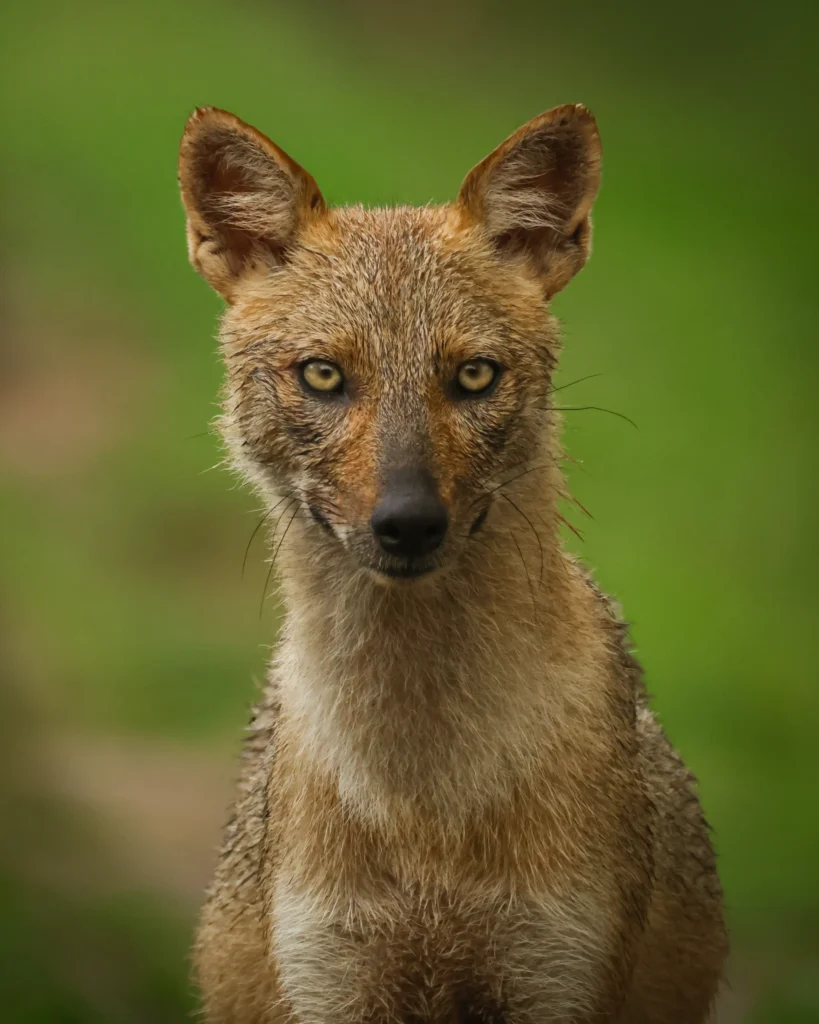
The golden jackal (Canis aureus) is one of India’s most adaptable wild carnivores. Unlike species that depend on large forests, golden jackals live across an impressive range of landscapes, from dry scrublands and agricultural fields to mangrove forests and even the outskirts of major cities. This flexibility has allowed them to remain widespread across much of the country, although local populations continue to face pressures from habitat loss, roads, disease, illegal trade, and increasing interactions with people.
Despite being familiar to many rural communities, golden jackals are often misunderstood. They are frequently mistaken for stray dogs, confused with wolves, or dismissed as simple scavengers. In reality, they are intelligent, opportunistic predators and scavengers that play an important ecological role by controlling small prey populations and cleaning up animal remains.
Recent research has also highlighted how remarkably adaptable these animals are. Studies from Mumbai’s mangrove ecosystems have shown that golden jackals can survive and even breed close to one of the world’s largest cities, offering valuable insights into how wildlife persists in increasingly urban landscapes.
Whether you are a wildlife enthusiast, photographer, student, or traveller hoping to spot one in the wild, understanding the golden jackal’s behaviour and habitat greatly improves both appreciation and chances of observation.
What Is the Golden Jackal?
The golden jackal is a medium-sized wild canid belonging to the dog family (Canidae). It is one of the most widely distributed wild canids in India and occurs across diverse habitats throughout the subcontinent. Genetic research suggests that Indian populations possess high genetic diversity, making the country an important part of the species’ evolutionary history.
Unlike wolves, which generally require larger wilderness areas, golden jackals have adapted successfully to living alongside humans. They can exploit natural prey, agricultural landscapes, wetlands, and even urban environments where food sources remain available.
Scientific Classification
| Classification | Details |
| Scientific name | Canis aureus |
| Common name | Golden Jackal |
| Family | Canidae |
| Order | Carnivora |
| Conservation status | Least Concern (IUCN) |
| Distribution | Widespread across much of India |
Field Note: Although commonly called the “Indian jackal,” the species found across most of India is the golden jackal (Canis aureus).
How to Identify a Golden Jackal
At first glance, a golden jackal may resemble a lean village dog, but several features help distinguish it in the field.
Typical identification features include:
- Medium-sized, slender body.
- Long legs suited for covering large distances.
- Pointed muzzle.
- Large upright ears.
- Bushy tail carried low.
- Coat colour ranging from pale sandy yellow to greyish-brown depending on season and locality.
- A darker back with lighter underparts is common.
Their appearance can also change seasonally as they shed and regrow their coat, making colour alone an unreliable identification feature.
Golden jackals are usually seen moving with a purposeful trot rather than the relaxed gait often observed in domestic dogs.
Expert Tip
When scanning open grasslands or forest edges during early morning or late evening, watch for an animal moving steadily with its tail held low and ears alert. This posture often distinguishes a golden jackal from free-ranging dogs even before binoculars reveal finer details.
Golden Jackal vs Indian Wolf vs Indian Fox vs Stray Dog
| Feature | Golden Jackal | Indian Wolf | Indian Fox | Stray Dog |
| Size | Medium | Largest | Small | Highly variable |
| Ears | Large and pointed | Smaller relative to head | Very large | Variable |
| Tail | Bushy, carried low | Bushy | Very bushy | Variable |
| Social behaviour | Usually pairs or small family groups | Packs | Mostly pairs | Highly variable |
| Habitat | Forests, grasslands, mangroves, farms, urban edges | Open grasslands | Grasslands and scrub | Human settlements |
| Diet | Omnivorous predator and scavenger | Carnivore | Small prey and insects | Human-associated food |
Understanding these differences is especially useful because golden jackals are among the wild mammals most frequently misidentified by first-time wildlife watchers.
Distribution, Habitats & Behaviour
Where Do Golden Jackals Live in India?
Golden jackals are among the most widely distributed wild canids in India. Unlike species restricted to dense forests or remote mountains, they occupy an impressive variety of landscapes wherever food, water, and some cover are available. This adaptability explains why they are found in both well-known protected areas and human-dominated environments.
Rather than relying on a single habitat, golden jackals move across multiple ecosystems depending on seasonal food availability and local conditions. This flexibility has helped them persist even as many natural landscapes have been altered by agriculture and urban development.
Distribution Across India
Golden jackals occur across much of mainland India, although local abundance varies considerably.
Representative regions include:
- Central Indian forests such as Kanha, Pench, and Bandhavgarh
- Grasslands of western and central India
- Agricultural landscapes throughout the Indo-Gangetic plains
- Coastal mangroves around Mumbai and Maharashtra
- Wetlands and riverine habitats
- Parts of the Western Ghats
- Himalayan foothills
- Coastal ecosystems including Coringa and parts of Goa
Unlike highly territorial predators that require large continuous forests, golden jackals often move between natural habitats, farmland, village edges, and scrublands during their daily activities.
Field Note: A tiger safari is not necessarily the best place to look for golden jackals. They are often easier to observe in open grasslands, wetland edges, mangroves, and agricultural mosaics where visibility is better.
Habitat Preferences
One of the species’ greatest strengths is its ecological flexibility.
Golden jackals successfully occupy:
Grasslands
Open grasslands provide excellent hunting opportunities for rodents, hares, reptiles, and ground-nesting birds.
Visibility is good, allowing jackals to detect both prey and danger over long distances.
Scrub Forests
Dry scrub vegetation offers ideal daytime shelter while remaining close to feeding areas.
These habitats often support healthy populations because they combine cover with abundant prey.
Deciduous Forests
Within larger forests, jackals frequently use:
- Forest edges
- Meadows
- Fire lines
- Riverbanks
- Open clearings
Rather than spending all their time deep inside forests, they often concentrate where multiple habitat types meet.
Agricultural Landscapes
Farmland supports jackals because it provides:
- Rodents
- Fallen fruit
- Crop residues
- Domestic animal carcasses
- Irrigation canals that supply water
Their ability to exploit agricultural areas explains why they remain relatively widespread despite extensive land-use change.
Mangroves
Recent studies have highlighted mangrove forests as surprisingly important habitat.
The mangrove belts around Mumbai—including Gorai, Manori, Vashi, Thane Creek, and the BARC region—support resident jackal populations despite being surrounded by dense urban development.
Urban Edges
Golden jackals frequently occupy:
- Village outskirts
- Industrial fringes
- Waste grounds
- Wetlands bordering cities
- Semi-natural green spaces
Their presence near people does not necessarily indicate habituation; most remain cautious and avoid direct human contact.
Comparison Table: Habitat Types Used by Golden Jackals in India
| Habitat | Why It Is Suitable | Typical Food Sources |
| Grasslands | Open visibility and abundant prey | Rodents, hares, birds |
| Scrublands | Dense cover with nearby feeding areas | Small mammals, reptiles |
| Deciduous forests | Shelter and varied food | Small vertebrates, carrion |
| Agricultural landscapes | Reliable food throughout the year | Rodents, fruit, carrion |
| Mangroves | Diverse prey and limited disturbance in some areas | Crabs, fish remains, birds, carrion |
| Urban edges | Human-generated food and adaptable habitat | Waste, rodents, small animals |
Why Are Golden Jackals So Adaptable?
Many carnivores disappear as landscapes become fragmented.
Golden jackals often persist because they possess several important adaptations.
They are:
- Omnivorous rather than strict meat-eaters.
- Comfortable using multiple habitat types.
- Capable of travelling long distances.
- Opportunistic hunters and scavengers.
- Able to alter activity patterns to avoid people.
These characteristics allow them to exploit changing environments more effectively than many larger carnivores.
However, adaptability should not be confused with immunity to threats. Habitat fragmentation, roads, disease, illegal trade, and increasing interactions with domestic dogs continue to affect many local populations.
Golden Jackal Behaviour and Ecology
Understanding behaviour greatly improves the chances of spotting a golden jackal in the wild.
Unlike tigers or leopards, jackals are often detected by observing movement rather than waiting at waterholes.
Daily Activity Patterns
Golden jackals are primarily nocturnal and crepuscular.
They are most active:
- Before sunrise
- During early morning
- Around sunset
- Throughout the night
In areas with little human disturbance, daytime activity may also occur.
Urban studies from Mumbai have confirmed predominantly nocturnal behaviour, which likely helps reduce encounters with people while allowing jackals to exploit city-edge habitats safely.
Photography Tip
For wildlife photographers, the first hour after sunrise and the final hour before sunset usually provide the best combination of natural light and jackal activity.
Social Structure
Golden jackals differ from wolves in their social organisation.
Instead of large packs, they most commonly live as:
- Breeding pairs
- Small family groups
- Parents with pups
- Occasionally small loose groups where food is abundant
The breeding pair typically maintains a territory and cooperates in raising young.
This relatively simple family structure reduces competition for food while enabling efficient defence of territory.
Territorial Behaviour
Golden jackals maintain territories that provide access to food, shelter, and breeding sites.
Territorial pairs communicate through:
- Vocalisations
- Scent marking
- Visual displays
Their familiar evening calls often help neighbouring pairs maintain spacing without physical confrontation.
For wildlife enthusiasts, hearing these calls at dusk is frequently the first indication that jackals are nearby.
Diet and Feeding Behaviour
Golden jackals are opportunistic omnivores rather than specialised hunters.
Their diet varies according to season and habitat but typically includes:
- Rodents
- Hares
- Birds
- Reptiles
- Insects
- Fruits
- Carrion
- Fish remains
- Crabs in coastal habitats
Scavenging forms an important part of their feeding strategy, helping recycle animal remains and reduce organic waste in natural ecosystems.
Recent scat analysis from Mumbai’s mangroves also revealed highly varied diets and even traces of plastic, illustrating how urban environments increasingly influence wildlife feeding behaviour.
Expert Tip
If you see a jackal foraging methodically with its nose close to the ground, it is often searching for insects, rodents, or fruit rather than actively hunting larger prey. Their behaviour reflects flexibility rather than dependence on any single food source.
Breeding, Ecology, Conservation & Threats
Breeding and Life Cycle
Golden jackals are among the few wild canids that typically form long-term pair bonds. A breeding male and female jointly defend their territory, raise their pups, and cooperate in finding food. This stable family structure is one reason the species adapts successfully to a wide range of habitats.
Pair Bonding
Unlike wolves that may live in larger packs, golden jackals usually live as a mated pair accompanied by their young.
The breeding pair works together to:
- Defend territory
- Locate food
- Protect den sites
- Raise pups
Young from previous litters may occasionally remain with their parents for some time, helping care for younger siblings before eventually dispersing.
Breeding Season
The exact timing of breeding can vary between regions depending on climate and food availability.
Field observations from Mumbai’s mangrove populations have reported evidence of breeding activity throughout the year, suggesting that urban environments with reliable food resources may influence breeding patterns.
Because breeding timing varies geographically, it is best not to assume a fixed breeding season across all of India.
Raising Pups
Jackal pups are born in sheltered dens that may be located in:
- Dense scrub
- Grassland vegetation
- Earthen burrows
- Natural cavities
- Thick mangrove vegetation
Both parents contribute to protecting and feeding the young.
During the first few months, pups remain close to the den before gradually accompanying adults on short exploratory movements.
Field Note: If you encounter a jackal repeatedly carrying food into dense vegetation, it may indicate a nearby den. Wildlife watchers should observe from a distance and never attempt to locate or approach den sites.
Ecological Importance
Although often recognised as scavengers, golden jackals play several ecological roles that benefit both natural ecosystems and human-dominated landscapes.
Natural Scavengers
By consuming animal carcasses, jackals help recycle nutrients and reduce the accumulation of decaying organic matter.
This scavenging behaviour contributes to ecosystem health and complements the work of vultures and other scavengers.
Predators of Small Animals
Golden jackals also regulate populations of:
- Rodents
- Rabbits and hares
- Reptiles
- Insects
- Ground-nesting birds
This makes them an important mesopredator in many ecosystems.
Seed Dispersal
Because they consume fruits as part of their omnivorous diet, jackals may also assist in dispersing seeds, contributing to vegetation regeneration in some habitats.
Living Between Wild and Human Landscapes
One of the species’ most distinctive ecological characteristics is its ability to move freely between forests, wetlands, agricultural fields, and village outskirts.
Rather than depending exclusively on protected areas, golden jackals often connect fragmented landscapes, making them valuable indicators of ecological connectivity.
Conservation Status
Despite their adaptability, golden jackals should not be regarded as a species free from conservation concerns.
IUCN Status
The golden jackal is currently classified as Least Concern on the IUCN Red List because of its wide distribution and overall global population.
However, this global assessment does not mean that every local population is secure.
Some populations experience significant pressures from habitat fragmentation, expanding infrastructure, disease, and illegal exploitation.
Legal Protection in India
Golden jackals receive legal protection under India’s Wildlife (Protection) Act.
However, the research brief notes that published sources differ regarding the exact Schedule under which the species is listed. For this reason, the applicable Schedule should be verified directly against the latest official version of the Wildlife (Protection) Act before publication.
This distinction is important because legal schedules can change through amendments, and relying solely on secondary sources may introduce inaccuracies.
Responsible Tourism Tip: Never encourage feeding or approaching jackals to obtain photographs. Habituating wild animals to people can increase conflict and alter their natural behaviour.
Why “Least Concern” Does Not Mean “No Threat”
A common misconception is that a species listed as Least Concern does not require conservation attention.
In reality, conservation status is assessed globally.
Local populations may still decline because of:
- Habitat destruction
- Road mortality
- Disease outbreaks
- Illegal hunting
- Fragmented landscapes
- Competition with free-ranging dogs
Protecting adaptable species before they become rare is generally more effective than attempting recovery after severe declines.
Threats Facing Golden Jackals in India
Although golden jackals tolerate modified landscapes better than many carnivores, they face several growing challenges.
Habitat Loss and Fragmentation
Urban expansion, industrial development, agriculture, and infrastructure projects continue to reduce and fragment natural habitats.
Even adaptable species require:
- Safe movement corridors
- Undisturbed breeding sites
- Reliable food resources
Fragmented habitats increase encounters with roads, people, and domestic animals.
Expanding Road Networks
Roads present multiple risks:
- Vehicle collisions
- Barrier effects that restrict movement
- Habitat fragmentation
- Increased human access into natural areas
These pressures are particularly significant where urban development surrounds wetlands and mangrove ecosystems.
Human–Wildlife Conflict
Golden jackals rarely pose a direct threat to humans.
However, conflicts can occur when they:
- Feed on poultry
- Scavenge near villages
- Use agricultural landscapes
- Encounter free-ranging livestock
Such situations may lead to retaliatory killing despite the species’ protected status.
Illegal Wildlife Trade
Although less publicised than trade involving larger carnivores, golden jackals are also targeted illegally.
A study covering seizures between 2013 and 2019 documented confiscations including:
- 126 skins
- 8 tails
- More than 370 so-called “jackal horns”
- 16 skulls
- 2 live jackals
Much of this trade is linked to traditional beliefs and superstition rather than biological value.
Common Misconception
The so-called “jackal horn” is not an actual horn. It is associated with superstition and illegal wildlife trade rather than any genuine anatomical structure.
Disease and Hybridization
One of the most significant emerging concerns involves interactions with domestic and feral dogs.
Researchers have highlighted risks including:
- Disease transmission
- Competition for food
- Hybridization
- Genetic dilution of wild populations
Recent studies from Mumbai have drawn attention to suspected hybridization between jackals and dogs, emphasising the need for continued monitoring.
Comparison Table: Major Threats and Possible Conservation Responses
| Threat | Potential Impact | Conservation Focus |
| Habitat fragmentation | Isolated populations | Maintain habitat connectivity |
| Roads | Mortality and restricted movement | Wildlife crossings and planning |
| Illegal trade | Direct population losses | Stronger enforcement and awareness |
| Free-ranging dogs | Disease and hybridization | Dog population management and vaccination |
| Pollution | Reduced habitat quality | Better waste management |
| Human conflict | Retaliatory killing | Community awareness and coexistence measures |
Expert Tip
If you encounter a golden jackal near a village or city, remember that its presence usually reflects remarkable adaptability rather than aggressive behaviour. Observing quietly from a distance provides a far better wildlife experience than attempting close interaction.
Golden Jackals in Mumbai’s Mangroves, Best Places to See Them, Practical Tips, FAQs & Conclusion
Golden Jackals in Mumbai’s Mangroves
One of the most important recent developments in Indian wildlife research is the discovery of thriving golden jackal populations in Mumbai’s mangrove ecosystems. These findings demonstrate that even one of the world’s largest metropolitan regions can support native carnivores when suitable habitat remains connected and relatively undisturbed.
Rather than surviving in isolated forest patches, these jackals occupy mangrove belts interwoven with creeks, wetlands, industrial areas, and expanding suburbs. This makes them an excellent example of wildlife adapting to rapidly changing landscapes.
What Recent Research Found
Recent field studies documented resident jackals in mangrove areas including:
- Gorai
- Manori
- Vashi
- Thane Creek
- Bhabha Atomic Research Centre (BARC) landscape
Researchers observed:
- Predominantly nocturnal activity
- Evidence of breeding
- Highly varied diets
- Continued persistence despite heavy urbanisation
Scat analysis also detected traces of plastic, highlighting how human waste increasingly influences wildlife living near cities.
Why This Research Matters
The Mumbai studies challenge several long-held assumptions.
They show that golden jackals:
- Do not depend exclusively on large forests.
- Can occupy well-connected urban wetlands.
- Continue performing ecological functions in cities.
- Face new conservation challenges, including pollution and interactions with free-ranging dogs.
The research also strengthens the case for conserving mangroves not only for coastal protection but also as valuable wildlife habitat.
Responsible Tourism Tip: Mangrove habitats are particularly sensitive. Stay on designated trails or authorised boat routes, minimise noise, and never leave litter behind.
Best Places to See Golden Jackals in India
Unlike tigers or elephants, golden jackals are rarely the primary attraction at wildlife destinations. They are usually rewarding secondary sightings for visitors who spend time observing quietly during the early morning or evening.
National Parks
Several tiger reserves regularly report jackal sightings, particularly around open meadows, grasslands, and park edges.
Representative examples include:
- Kanha National Park
- Pench National Park
- Bandhavgarh National Park
Although sightings are never guaranteed, these parks provide suitable habitat and experienced guides are familiar with areas where jackals are occasionally seen.
Grasslands and Scrublands
Open habitats often provide the best viewing opportunities because visibility is much greater than in dense forests.
Watch for jackals:
- Along dirt tracks
- Near seasonal water bodies
- Crossing open fields
- Hunting rodents in grasslands
Mangroves and Coastal Wetlands
For travellers interested in urban wildlife, Mumbai’s mangrove ecosystems have become one of India’s most fascinating locations to study golden jackal adaptation.
These landscapes offer a completely different perspective from traditional national parks.
Agricultural Landscapes
In many parts of India, jackals are more frequently encountered around villages and agricultural fields than inside protected forests.
These observations are generally opportunistic rather than planned wildlife-viewing experiences.
Comparison Table: Where to Look for Golden Jackals
| Habitat | Representative Locations | Best Opportunity |
| Tiger reserve grasslands | Kanha, Pench, Bandhavgarh | Early morning safari |
| Grasslands and scrub | Central and western India | Dawn and dusk |
| Mangroves | Mumbai, Thane Creek, Gorai, Manori, Vashi | Guided walks or authorised boat trips |
| Agricultural landscapes | Many rural regions of India | Opportunistic sightings |
| Wetlands and riverbanks | Various protected wetlands | Early morning observation |
Practical Checklist for Wildlife Watchers
Before heading out in search of golden jackals:
✓ Carry binoculars.
✓ Wear neutral-coloured clothing.
✓ Visit during dawn or dusk.
✓ Scan open areas slowly rather than focusing only on dense forest.
✓ Listen for vocalisations during the evening.
✓ Maintain a respectful distance.
✓ Never feed wildlife.
✓ Be patient—jackals often appear briefly before disappearing into vegetation.
Photography Tips
Golden jackals are alert and cautious animals.
To improve your chances of good photographs:
- Use a telephoto lens rather than approaching closely.
- Focus on behaviour instead of portrait shots alone.
- Position yourself with the sun behind you during early morning.
- Watch forest edges, grasslands, and wetland margins.
- Avoid sudden movements after spotting one.
Capturing natural behaviour—such as foraging, scent marking, or interactions between a breeding pair—is generally more rewarding than obtaining a close-up image.
Common Mistakes People Make About Golden Jackals
Mistaking them for stray dogs
Golden jackals are frequently overlooked because of their resemblance to free-ranging domestic dogs.
Assuming they only live in forests
They also inhabit:
- Grasslands
- Mangroves
- Agricultural land
- Wetlands
- Urban edges
Believing they are dangerous to people
Golden jackals are generally shy and avoid direct contact with humans.
Thinking “Least Concern” means conservation is unnecessary
Local populations still face habitat loss, illegal trade, disease, road mortality, and hybridisation with domestic dogs.
Looking only during midday
The highest chance of seeing jackals is usually around sunrise and sunset because they are primarily nocturnal and crepuscular.
Frequently Asked Questions
What is the scientific name of the golden jackal?
The golden jackal is Canis aureus.
Is the golden jackal found throughout India?
It is widespread across much of mainland India, although local abundance varies between regions.
Are golden jackals dangerous to humans?
Healthy wild jackals generally avoid people and are not considered a significant threat.
What do golden jackals eat?
They are opportunistic omnivores that feed on rodents, birds, reptiles, insects, fruits, carrion, fish remains, and other locally available food.
Do golden jackals hunt in packs?
Usually not. They most often hunt as pairs or small family groups rather than large packs.
Are golden jackals protected in India?
Yes. They are protected under India’s Wildlife (Protection) Act, although the applicable Schedule should always be verified using the latest official legislation before publication.
Where are the best places to see golden jackals?
Kanha, Pench, Bandhavgarh, grassland habitats, wetlands, and Mumbai’s mangrove ecosystems are among the best-known locations.
Why are Mumbai’s jackals important?
They demonstrate how native carnivores can survive in highly urbanised landscapes when suitable mangrove habitat is protected.
What is the biggest threat to golden jackals today?
Threats vary by region but commonly include habitat fragmentation, illegal wildlife trade, road mortality, pollution, disease, and interactions with free-ranging dogs.
Are golden jackals and Indian wolves the same species?
No. They are different canids with distinct size, behaviour, ecology, and habitat requirements.
Conclusion
The golden jackal is one of India’s most adaptable and ecologically important wild carnivores. Its ability to move between forests, grasslands, agricultural fields, wetlands, mangroves, and even city outskirts makes it a remarkable example of resilience in a rapidly changing landscape.
Yet adaptability should not be mistaken for invulnerability. Habitat fragmentation, illegal wildlife trade, disease, pollution, and increasing interactions with domestic dogs continue to affect local populations. Recent research from Mumbai’s mangroves has also shown that conserving connected natural habitats within and around cities can play an important role in safeguarding this species for the future.
For wildlife travellers, spotting a golden jackal often rewards patience rather than luck. Whether encountered trotting across a grassland at dawn, calling from the edge of a forest, or moving silently through coastal mangroves, it offers a reminder that some of India’s most fascinating wildlife thrives not only in famous national parks but also in the overlooked landscapes that connect them.