
Plan your Asiatic lion safari in Gujarat. Compare Gir National Park, Devalia, and satellite zones with official 2025 census data and practical travel advice.
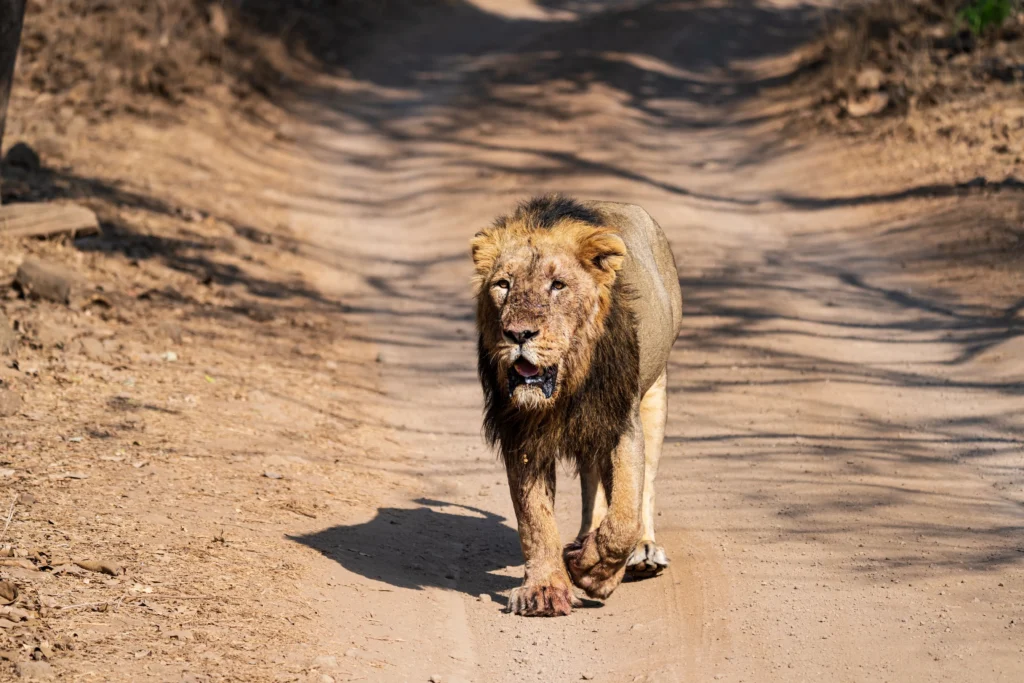
The Geography of Asiatic Lions: Where They Live Today
If you want to see an Asiatic lion (Panthera leo persica) in the wild, your destination search is geographically straightforward: Gujarat, India is the only place on Earth where they survive.
Unlike African wildlife travel, where lion populations are distributed across dozens of national parks and private reserves across multiple countries, wild Asiatic lion tourism is concentrated within a single interconnected conservation landscape in the Saurashtra region.
GREATER SAURASHTRA LANDSCAPE (35,000 sq km)
┌────────────────────────────────────────────────────────────────────────┐
│ │
│ [ Satellite Habitats ] [ Core Habitat ] │
│ • Barda Wildlife Sanctuary • Gir National Park │
│ • Girnar Wildlife Sanctuary (258 sq km Strict Core) │
│ • Mitiyala Wildlife Sanctuary • Gir Wildlife Sanctuary │
│ • Coastal Corridors & Revenue Lands (1,153 sq km Buffer) │
│ │
│ [ Fenced Safari Zone ] │
│ • Devalia Safari Park │
│ (412 ha Interpretation Zone) │
└────────────────────────────────────────────────────────────────────────┘
The Core Protected Area vs. Greater Saurashtra Landscape
The Gir Protected Area Network forms the historic heart of Asiatic lion conservation. It comprises:
- Gir National Park: A strictly protected core zone spanning approximately 258 to 259 square kilometers where no human habitation or livestock grazing is permitted.
- Gir Wildlife Sanctuary: Surrounding the national park core, this sanctuary covers roughly 1,153 square kilometers, creating a combined contiguous reserve of 1,412 square kilometers.
- Satellite Sanctuaries & Corridors: As the population has expanded, resident prides have established stable territories across 11 administrative districts in Saurashtra. These include Girnar, Barda, and Mitiyala Wildlife Sanctuaries, as well as revenue lands, scrub forests, and coastal belts.
Why Asiatic Lion Tourism Differs from African Safaris
Viewing Asiatic lions in Gir differs from tracking lions on the open plains of the Serengeti or the Maasai Mara:
- Habitat Structure: Gir is dominated by dry deciduous teak forests, thorny acacia scrub, rocky ridges, and seasonal riverine stretches. Visibility depends directly on the time of year and the density of foliage.
- Social Structure: Asiatic lions live in smaller prides than African lions. Adult males generally do not live with females full-time, associating primarily for mating or sharing large kills.
- Trail-Based Safari Regulations: Safaris in Gir run strictly on assigned, designated routes via open four-wheel-drive safari vehicles (Gypsies) accompanied by a mandatory forest department tracker and driver. Off-road tracking is strictly prohibited to protect the habitat.
The Best Places to See Asiatic Lions
When planning your trip, you must distinguish between core wild habitats, fenced interpretation zones, and satellite sanctuaries.
Destination Comparison: Where to Spot Asiatic Lions
| Destination | Location | Category | Sighting Predictability | Best For | Safari Format |
| Gir National Park | Sasan Gir, Gujarat | Core Wild Habitat | High (requires 2–3 drives) | Serious wildlife travelers, photographers | Open Gypsy, allocated routes |
| Devalia Safari Park | Sasan Gir, Gujarat | Fenced Interpretation Zone | Near-certain | First-timers, short visits, families | Safari bus or open Gypsy |
| Girnar Wildlife Sanctuary | Junagadh, Gujarat | Satellite Wild Habitat | Moderate / Variable | Trekkers, landscape travelers | Forest department Gypsy routes |
| Barda Wildlife Sanctuary | Porbandar / Devbhumi Dwarka, Gujarat | Developing Satellite Habitat | Low / Developing | Conservationists, offbeat travel | Limited ecotourism routes |
| Mitiyala Wildlife Sanctuary | Amreli, Gujarat | Wildlife Corridor Habitat | Variable | Off-the-beaten-track travelers | Limited access routes |
| Rampara Wildlife Sanctuary | Rajkot, Gujarat | Satellite Reserve | Low / Incidental | Birders, regional travelers | Day-visit safari track |
Gir National Park and Wildlife Sanctuary (The Core Wilderness)
Gir National Park is the primary destination for any traveler seeking a genuine wild lion safari. First declared a sanctuary in 1965 to rescue the species from near extinction, Gir represents the single most viable genetic reservoir of Asiatic lions in existence.
┌──────────────────────────────────────────────────────────────────────────┐
│ KEY DESTINATION FACTS: GIR NATIONAL PARK │
├────────────────────────────────┬─────────────────────────────────────────┤
│ Core National Park Area │ ~258–259 sq km │
│ Total Protected Ecosystem Area │ 1,412 sq km │
│ Primary Safari Base │ Sasan Gir (Sinh Sadan) │
│ Safari Format │ 3-hour open 4×4 Gypsy drive │
│ Vehicle Capacity │ Max 6 adults + 1 child per Gypsy │
│ Operating Season │ October 16 to June 15 (Closed Monsoon) │
└────────────────────────────────┴─────────────────────────────────────────┘
The Safari Experience in Gir
Safaris within the core park—officially called the Gir Jungle Trail—operate on a rotating route system. When your permit is validated at Sinh Sadan (the forest department headquarters in Sasan Gir), your vehicle is assigned one of several numbered safari tracks.
These routes wind through mixed dry deciduous forest, dry teak belts, and seasonal stream beds locally called nullahs.
Because lions often use dirt tracks for territorial marking and ease of movement during early mornings and late afternoons, sightings frequently take place directly along the road or resting in the shade of acacia thickets.
Naturalist Field Note: Unlike tiger tracking, which relies heavily on listening for prey alarm calls (such as spotted deer or langurs), lion tracking in Gir combines alarm call monitoring with visual search techniques along clearings, water troughs, and shaded nullahs where prides rest during the warmth of the day.
What Else You Can See in Gir
Gir is not a monoculture; it hosts a balanced apex predator dynamic and rich prey base:
- Leopards: Gir maintains one of the highest densities of Indian leopards in western India.
- Ungulates: Thousands of chital (spotted deer), sambar, nilgai (blue bull), and wild boar form the primary wild prey base for lions.
- Specialist Mammals: The world’s only four-horned antelope (chousingha), striped hyena, Indian golden jackal, and marsh crocodiles (mugger) in the Kamleshwar Reservoir.
Devalia Safari Park (Gir Interpretation Zone)
Devalia Safari Park is a 412-hectare fenced interpretation zone located approximately 12 kilometers from Sasan Gir. It was established by the Gujarat Forest Department to achieve two specific goals:
- Provide visitors with a reliable wildlife viewing experience within a compressed timeframe.
- Reduce vehicular tourism pressure inside the core protected forest of Gir National Park.
HOW DEVALIA DIFFERS FROM GIR CORE
┌──────────────────────────────────────┬───────────────────────────────────┐
│ GIR JUNGLE TRAIL (CORE) │ DEVALIA SAFARI PARK │
├──────────────────────────────────────┼───────────────────────────────────┤
│ • 1,412 sq km wild ecosystem │ • 412 ha fenced habitat zone │
│ • Unpredictable tracking experience │ • Near-certain sightings │
│ • 3 hours per safari shift │ • 30–55 minute safari run │
│ • Open Gypsy only │ • Forest Bus or Open Gypsy │
│ • Closed during monsoon │ • Open year-round (except Weds) │
└──────────────────────────────────────┴───────────────────────────────────┘
How Devalia Operates
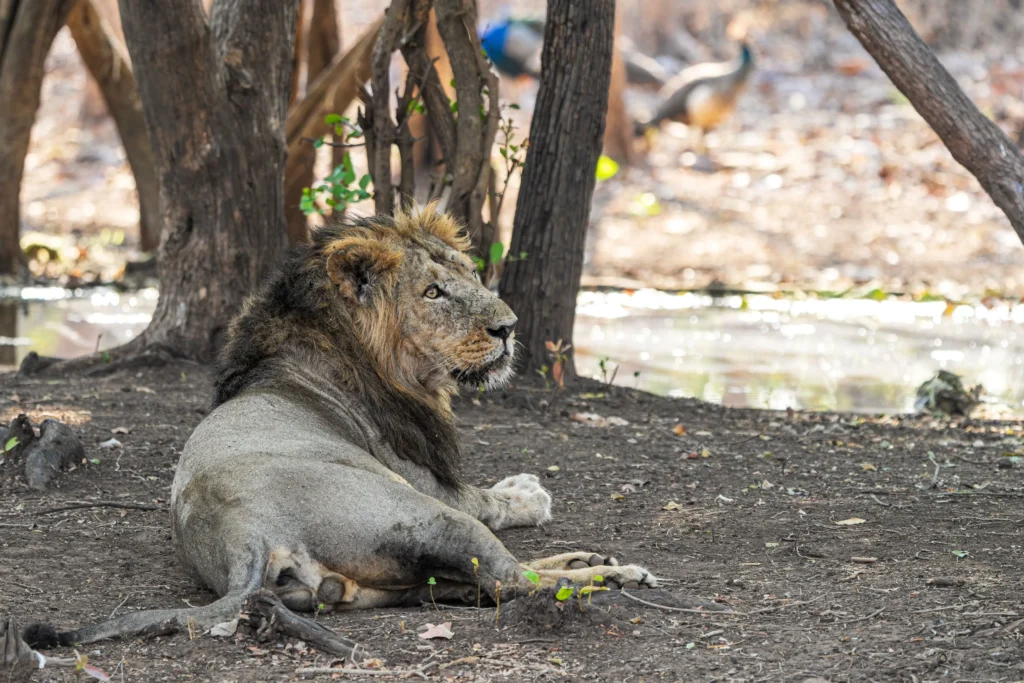
Devalia contains a representative sample of Gir’s natural habitat—open deciduous scrub, grass patches, and rocky outcrops—populated by resident Asiatic lions, leopards, spotted deer, blue bulls, and blackbucks.
Visitors can choose between two safari options:
- Department Minibus Safari: A 30 to 45-minute guided drive on a standard closed forest department bus.
- Open Gypsy Safari: A private, open Gypsy experience operating on dedicated tracks within the interpretation area, offering better angles for casual photography.
Expert Planning Tip: Devalia is the practical choice if you have only half a day in the region, are traveling with toddlers or elderly relatives who cannot endure a bumpy 3-hour wilderness track, or want to guarantee seeing a lion before your trip concludes. However, it should not replace the Gir Jungle Trail if you want an authentic tracking experience.
Girnar Wildlife Sanctuary
Located near Junagadh, Girnar Wildlife Sanctuary is a critical landscape-linked habitat that acts as a natural extension of the primary Gir ecosystem. The terrain here is highly undulating and heavily forested, sprawling around the Mount Girnar pilgrimage site. Safari routes have been introduced here to relieve vehicular tourism pressure on the core of Gir National Park.
Sightings in Girnar are inherently less predictable than in Sasan Gir due to the steep topography and dense foliage. However, it offers a quieter, less crowded tracking experience for visitors willing to prioritize forest atmosphere over guaranteed big cat sightings.
Barda Wildlife Sanctuary
Historically a natural range for the species, Barda Wildlife Sanctuary has recently emerged as a vital satellite reserve for Asiatic lions. Located closer to the coastal belt near Porbandar, Barda features hilly terrain and dense scrub forests. It is increasingly integrated into Gujarat’s long-term conservation strategy to establish secondary, geographically distinct populations outside the Gir core.
While ecotourism and dedicated safari routes are still in the early stages of development, Barda currently appeals primarily to travelers interested in offbeat destinations and the broader narrative of habitat expansion.
Mitiyala and Rampara Wildlife Sanctuaries
Both Mitiyala and Rampara serve as vital ecological stepping stones in the Saurashtra region. Mitiyala shares a contiguous, corridor-linked landscape with Gir, allowing lions to move freely between the sanctuary and the core park. Rampara, situated further north, is an enclosed woodland that supports regional ungulate populations and acts as a secondary refuge.
Neither destination is designed for mainstream commercial lion safaris, but their existence highlights the fact that Asiatic lions are actively expanding their territories and are no longer confined strictly to the boundaries of a single national park.
Clarifying Common Misconceptions: Kuno, Kumbhalgarh, and Velavadar
Wildlife travel listicles frequently mix active viewing destinations with proposed habitats or historical ranges. It is crucial to separate where lions might live in the future from where you can actually book a safari today.
Kuno National Park (Madhya Pradesh)
Kuno National Park was historically prepared and heavily studied as a primary relocation site for Asiatic lions to create a geographically separate backup population. However, there are currently no wild Asiatic lions in Kuno National Park. The park is an active conservation zone, but any tourism material suggesting it as a current Asiatic lion-viewing destination is inaccurate.
Kumbhalgarh Wildlife Sanctuary (Rajasthan)
Occasionally cited in broad tourism content as a potential lion habitat, Kumbhalgarh is not an active destination for Asiatic lion safaris. While it has been discussed in long-term conservation proposals, wild lions do not reside here.
Velavadar Blackbuck National Park (Gujarat)
Velavadar is a grassland ecosystem renowned for its large herds of blackbuck and healthy wolf population. While it sits within the broader Saurashtra ecological landscape and lions may occasionally traverse the regional corridors, Velavadar is a specialized grassland safari destination, not a dependable location for lion tracking.
Gir Jungle Trail vs. Devalia Safari Park: Which Should You Book?
Choosing between the Gir Jungle Trail and Devalia Safari Park is the most common decision travelers face. They are entirely different experiences serving different purposes.
Safari Style and Landscape
The Gir Jungle Trail takes you deep into the 1,412-square-kilometer protected ecosystem. You track lions naturally across rugged hills, dry deciduous forest, and open scrubland. You will spend three hours scanning the bush, deciphering alarm calls, and navigating uneven dirt tracks in an open 4×4 Gypsy.
Devalia Safari Park, by contrast, is a managed 412-hectare interpretation zone. The landscape is a condensed, fenced version of Gir’s habitat. The experience is highly predictable and visually straightforward, requiring minimal tracking effort.
Sighting Predictability vs. Wilderness Value
In the wild core of Gir, lion sightings are likely but never guaranteed. Factors such as weather, terrain, and prey movement dictate lion behavior on any given day.
In Devalia, sightings are virtually certain. Because the area is enclosed and lions are monitored closely, you will see them. However, this certainty trades away the authenticity and thrill of a genuine wild tracking experience.
Table 2: Gir Jungle Trail vs. Devalia Safari Park Comparison
| Feature | Gir Jungle Trail | Devalia Safari Park |
| Environment | True wild habitat (1,412 sq km) | Fenced interpretation zone (412 ha) |
| Duration | 3 hours | 30 to 55 minutes |
| Vehicle Type | Open 4×4 Gypsy | Forest Bus or Open Gypsy |
| Sighting Probability | High, but unpredictable | Guaranteed viewing |
| Monsoon Status | Closed (June 16 – Oct 15) | Open (except Wednesdays) |
| Primary Audience | Serious wildlife enthusiasts | Time-limited travelers, families |
Which Lion Destination Is Right for You?
Aligning your travel goals with the right destination prevents logistical frustration and manages expectations.
Best for First-Time Visitors
Gir National Park. If you are traveling specifically to see the last wild Asiatic lions, book two to three safaris on the Gir Jungle Trail. Multiple drives account for the unpredictability of the wild and provide the best opportunity to see lions exhibiting natural behaviors like patrolling, resting in riverbeds, or interacting with pride members.
Best for Guaranteed Sightings and Short Trips
Devalia Safari Park. If you are passing through the Saurashtra region on a broader cultural tour—perhaps visiting Somnath or Dwarka—and only have a half-day to spare, Devalia is the sensible choice. It provides guaranteed sightings without the logistical demands of a multi-day wildlife expedition.
Best for Serious Wildlife Photographers
Gir National Park. The open scrub and dry deciduous forests of the core park offer superior natural light and wild backdrops. Photographers require the three-hour duration of the Jungle Trail to wait for optimal positioning, behavioral moments, and unobstructed views away from chain-link fencing.
Best for Families with Young Children
Devalia Safari Park (Bus Safari). Three-hour Gypsy safaris in the core park can be dusty, hot, and exhausting for young children, especially since silence and stillness are required during tracking. The short, enclosed bus tour in Devalia keeps children comfortable and guarantees they will see a lion quickly.
Best for Offbeat and Conservation Travelers
Girnar or Barda Wildlife Sanctuary. For travelers who have already experienced Gir and want to explore the expanding edges of the Asiatic lion’s range, Girnar offers a quieter, more rugged alternative. Barda appeals to those interested in witnessing the early stages of a developing secondary habitat.
Asiatic Lion Population, Census Data, and Conservation
Understanding the conservation trajectory of the Asiatic lion (Panthera leo persica) adds valuable context to any safari. The species represents one of the most closely monitored big cat populations in the world, having recovered from an estimated 20 individuals in 1913 to a widespread regional population today.
ASIATIC LION POPULATION GROWTH
1,000 ──────────────────────────────────────────────────────── 891 (2025)
▲
750 ────────────────────────────────────── 674 (2020) ───┘
▲ (+32% increase)
500 ──────────────────── 523 (2015) ───┘
▲
250 ── 20 (1913) ────┘
0 ───────────────────────────────────────────────────────────
Key Takeaways from the 2025 Asiatic Lion Census
The 16th Asiatic Lion Census conducted in 2025 established new benchmarks for the species’ recovery and geographic distribution:
- Current Population: The 2025 census estimated a total of 891 Asiatic lions in Gujarat.
- Five-Year Growth: This represents a net increase of 217 lions—a growth rate of approximately 32% compared to the 674 individuals recorded in 2020.
- Expanded Geographic Range: The survey covered roughly 35,000 square kilometers across 11 districts and 58 talukas within the Saurashtra peninsula.
- Landscape Distribution: A significant proportion of the population now resides outside the core protected areas of Gir National Park and Sanctuary, occupying satellite habitats, coastal belts, and agricultural mosaic landscapes.
How the 2025 Census Was Conducted
Accurate wildlife monitoring across 35,000 square kilometers requires rigorous field methodology. The 2025 count employed standardized visual and technological protocols:
- Direct Beat Verification: Between 3,000 and 3,854 field personnel—including forest guards, field trackers, wildlife officers, and local volunteers—systematically covered designated forest beats over multiple days.
- Technological Integration: For the first time during an official census cycle, stationary and mobile CCTV surveillance supported traditional tracking to eliminate duplicate counts in shared territorial corridors.
- Individual Identification: Field teams recorded unique physical identifiers, such as ear notches, whisker spot patterns, facial scars, and tail tuft characteristics, to confirm individual profiles.
Project Lion and Future Habitat Management
While population growth reflects successful protection, it also introduces specific ecological challenges that define current conservation planning under Project Lion:
- Carrying Capacity in the Core: Gir National Park has effectively reached its natural carrying capacity for apex predators. This has caused prides to disperse naturally into human-dominated agricultural zones.
- Corridor Protection: Maintaining secure, unfragmented movement corridors between Gir, Girnar, Barda, and Mitiyala is critical to prevent isolated genetic clusters.
- Human-Lion Coexistence: In Saurashtra, traditional pastoral communities (such as the Maldharis) have coexisted with lions for generations. Maintaining community tolerance through timely compensation for livestock loss remains a central pillar of management.
- Disease Risk Management: Because the entire wild population is geographically concentrated in a single region, exposure to pathogens (such as Canine Distemper Virus) presents a persistent risk. Project Lion focuses heavily on localized healthcare monitoring, rapid response rescue units, and the development of secondary habitats like Barda.
Field Note on Habitat Dynamics: A rising census count does not eliminate conservation risks. Managing landscape connectivity, securing buffer habitats, and mitigating road and railway hazards across Saurashtra remain vital to the long-term survival of the species.
Asiatic Lion vs. African Lion: Key Differences
While both belong to the same species (Panthera leo), Asiatic and African lions have evolved distinct anatomical, behavioral, and social characteristics shaped by their respective environments.
KEY MORPHOLOGICAL IDENTIFIER
┌────────────────────────────────────────────────────────────────────────┐
│ │
│ ASIATIC LION AFRICAN LION │
│ • Sparser mane (ears visible) • Fuller, denser mane │
│ • Prominent longitudinal belly fold • Belly fold absent │
│ • Smaller pride structure • Large multi-male prides │
│ • Scrub & dry deciduous habitat • Open savanna & woodland │
│ │
└────────────────────────────────────────────────────────────────────────┘
Table 3: Asiatic Lion vs. African Lion Identification Guide
| Characteristic | Asiatic Lion (Panthera leo persica) | African Lion (Panthera leo leo) |
| Wild Range | Confined strictly to Gujarat, India | Sub-Saharan Africa |
| Belly Fold | Prominent longitudinal fold of skin along the abdomen (present in ~90% of individuals) | Absent (skin along the belly is taut) |
| Male Mane Density | Sparser and shorter; ears remain clearly visible | Full, dense, and often extends down the chest and underbelly; ears frequently obscured |
| Body Size & Weight | Slightly smaller; adult males typically weigh 160–190 kg | Larger; adult males typically weigh 175–230 kg |
| Pride Structure | Smaller prides (2–5 adult females); males live in bachelor groups and associate mainly for mating or large kills | Larger prides (4–12 adult females, multiple resident coalition males) |
| Habitat Type | Dry deciduous teak forests, rocky hills, and thorny scrubland | Open grasslands, savannas, and dense woodlands |
Best Time to Visit Gir for Lion Sightings
Gir National Park operates on a seasonal schedule determined by the southwest monsoon. The core park opens annually on October 16 and closes on June 15. Devalia Safari Park remains accessible throughout the year (except on Wednesdays).
ANNUAL SAFARI CALENDAR
┌────────────────────────────────────────────────────────────────────────┐
│ OCT 16 – FEB │ MAR – JUN 15 │ JUN 16 – OCT 15 │
│ Winter Season │ Summer Season │ Monsoon Closure │
│ • Comfortable weather │ • Dense post-rain bush │ • Core park closed │
│ • High tourist demand │ • High waterhole use │ • Breeding season │
│ • Mild temperatures │ • Thin leaf cover │ • Devalia open only │
└────────────────────────────────────────────────────────────────────────┘
Winter (November to February): Pleasant Weather and High Demand
Winter is the most comfortable period to visit Saurashtra. Morning temperatures can drop to 10°C, while afternoons remain mild at around 26°C to 28°C.
- Tracking Conditions: Early in the season (October to December), the forest retains post-monsoon greenery. Tall grasses and thick teak foliage make spotting wildlife slightly more challenging, but lions frequently sun themselves along dirt tracks during the cool morning hours.
- Logistics Note: This is the peak domestic tourism window, coinciding with Diwali, Christmas, and New Year holidays. Safari permits and premium accommodations sell out weeks in advance.
Summer (March to May): Optimal Visibility and Waterhole Activity
Summer brings daytime temperatures ranging between 35°C and 42°C. While the midday heat requires preparation, experienced wildlife enthusiasts consider this the most productive season for tracking.
- Tracking Conditions: Deciduous trees shed their leaves, significantly opening up visibility through the scrub. Natural water sources dry out, compelling prides and prey species to concentrate around permanent waterholes, artificial water troughs, and shaded riverbeds (nullahs).
- Photography Conditions: The harsh midday light softens during early morning and late afternoon shifts, while dust particles create warm golden tones across the dry landscape.
Table 4: Seasonal Planning & Sighting Conditions Overview
| Season | Months | Temperature Range | Habitat & Visibility | Sighting Ease | Tourist Traffic |
| Post-Monsoon | Mid-Oct to Nov | 18°C – 32°C | Lush green cover, dense foliage, tall grass | Moderate | Moderate to High |
| Winter | Dec to Feb | 10°C – 28°C | Drier vegetation, comfortable tracking climate | Good | Peak (book early) |
| Summer | Mar to mid-June | 28°C – 42°C+ | Dry, bare trees, open ground, waterhole focus | Highest | Moderate |
| Monsoon | June 16 to Oct 15 | 24°C – 34°C | Heavy rain, active breeding season | Core Closed | Low (Devalia only) |
How to Plan and Book Your Gir Lion Safari
Permits and Official Online Booking
All safari permits for Gir National Park (Gir Jungle Trail) and Devalia Safari Park must be booked online through the single official Gujarat Forest Department portal (girlion.gujarat.gov.in).
BOOKING STEP-BY-STEP WORKFLOW
┌────────────────────────────────────────────────────────────────────────┐
│ 1. Account Setup │ Register on official portal with valid ID │
│ 2. Select Product │ Choose “Gir Jungle Trail” or “Devalia” │
│ 3. Select Shift │ Morning (Shift 1/2) or Afternoon (Shift 3) │
│ 4. Enter ID Details │ Name, age, and passport/Aadhaar number per seat │
│ 5. Sinh Sadan Desk │ Report 30 mins early for Gypsy & guide voucher │
└────────────────────────────────────────────────────────────────────────┘
- Booking Window: Permit windows open up to 90 days in advance. Weekend and holiday slots fill rapidly.
- Vehicle Capacity: Each Gypsy permit covers a maximum of 6 adult visitors plus 1 child (aged 3–12).
- Identity Verification: The government photo ID entered during online booking must match the physical ID presented at the reception center (Sinh Sadan) before entering the park.
Safari Shifts, Vehicles, and Guides
Safaris in Gir operate in three fixed shifts per day to distribute vehicular traffic:
- Shift 1 (Morning): 06:00 / 06:30 to 09:00 / 09:30
- Shift 2 (Mid-Morning): 08:30 / 09:00 to 11:30 / 12:00
- Shift 3 (Afternoon): 15:00 / 15:30 to 18:00 / 18:30
Every Gypsy entering the Gir Jungle Trail is assigned a registered local driver, an open 4×4 safari Gypsy, and a forest department naturalist/tracker. Routes are allocated randomly by the forest department computer system upon arrival at Sinh Sadan to prevent vehicle crowding on specific roads.
Photography Tip: Bring a mid-to-long telephoto zoom lens (such as a 100–400mm or 200–600mm). Because off-road driving is prohibited, lions resting 20 to 50 meters into the scrub require focal reach. A protective dust cover for camera bodies and lenses is essential on dry gravel tracks.
How to Reach Sasan Gir
Sasan Gir is well-connected by road, rail, and air:
- By Air:
- Rajkot International Airport (Hirasar): Approximately 160 km (3.5 to 4 hours by road). Offers the most frequent domestic flight connections.
- Diu Airport: Approximately 105 km (2.5 to 3 hours by road).
- Keshod Airport: Approximately 50 km (seasonal and regional flight schedules).
- By Rail:
- Junagadh Junction: 55 km from Sasan Gir.
- Veraval Junction: 45 km from Sasan Gir.
- By Road: Well-paved state highways connect Sasan Gir to Junagadh, Somnath (50 km), and Rajkot.
Table 5: Suggested Gir & Gujarat Wildlife Itineraries
| Trip Length | Target Audience | Day-by-Day Structure | Expected Experience |
| 1-Day Express | Saurashtra cultural travelers | Day 1: Morning Devalia Safari Park drive; afternoon visit to Crocodile Breeding Centre; evening departure. | Guaranteed viewing in managed zone; zero wild tracking fatigue. |
| 2-Day Dedicated Safari | First-time wildlife travelers | Day 1: Afternoon Gir Jungle Trail (Shift 3). Day 2: Early morning Gir Jungle Trail (Shift 1) + afternoon Devalia or Girnar route. | Balanced wild tracking with high odds of multi-pride observations. |
| 4-Day Saurashtra Circuit | Photographers and eco-tourists | Day 1–2: 4 Gir Jungle Trail safaris. Day 3: Girnar Wildlife Sanctuary & Junagadh heritage. Day 4: Velavadar Blackbuck National Park transfer. | Comprehensive big-cat tracking paired with grassland ecology. |
Common Safari Mistakes to Avoid
- Booking Only One Jungle Safari: Wild tracking is subject to animal movement. Relying on a single 3-hour drive increases the risk of missing a sighting. Always schedule a minimum of two to three shifts.
- Assuming Devalia and Gir Jungle Trail Are Identical: Visitors often book Devalia expecting an open wilderness expedition, or book Gir core expecting guaranteed sightings at the entry gate. Understand that Devalia is a fenced interpretation zone, whereas the Jungle Trail is a wild forest drive.
- Booking Through Unauthorized Portals: Only permits booked via the official Gujarat Forest Department portal are legally recognized. Third-party aggregators frequently charge marked-up intermediary fees.
- Arriving During the Monsoon Closure: The core Gir Jungle Trail remains closed from June 16 to October 15. Planning a wilderness safari during this window results in access only to the fenced Devalia zone.
- Wearing Bright or Reflective Clothing: Bright colors (such as red, yellow, and white) stand out against the dry deciduous brush, alerting wildlife and disrupting natural behavior. Wear muted, earth-toned colors (olive, khaki, beige, brown).
- Expecting Savanna-Style Open Plains: Gir is a dry deciduous forest with dense teak patches and thorny scrub. Viewing requires patience and scanning through trees rather than gazing across flat grasslands.
Frequently Asked Questions (FAQs)
Where is the best place to see Asiatic lions in India?
Gir National Park and Wildlife Sanctuary in Gujarat is the primary and most dependable destination to observe wild Asiatic lions in their natural habitat.
Is Gir National Park the only wild habitat of Asiatic lions?
Yes. Asiatic lions live in the wild exclusively within Gujarat’s Saurashtra region, centered around the Gir Protected Area and connected satellite reserves such as Girnar and Barda.
Can Asiatic lions be seen outside Gujarat in India?
No wild populations of Asiatic lions exist outside Gujarat. Any lions located in other Indian states are housed in zoological facilities or managed safari parks.
What is the difference between Gir Jungle Trail and Devalia Safari Park?
The Gir Jungle Trail is a 3-hour wilderness drive through the 1,412-sq-km core protected forest in an open 4×4 Gypsy. Devalia Safari Park is a 412-hectare fenced interpretation zone designed for guaranteed, time-efficient sightings via bus or Gypsy.
Are lion sightings guaranteed during a Gir safari?
Sightings on the Gir Jungle Trail are frequent but never guaranteed, as lions move freely through natural terrain. Sightings inside Devalia Safari Park are virtually guaranteed due to its enclosed layout.
What is the latest Asiatic lion population in Gujarat?
The 16th Asiatic Lion Census conducted in 2025 estimated 891 lions across 11 districts in Gujarat, representing a 32% increase over the 674 individuals recorded in 2020.
What is the best time of year to visit Gir National Park?
December to February offers the most pleasant weather, while March to May provides the best visibility and wildlife tracking conditions around waterholes. The core park is closed from June 16 to October 15.
Can I see wild lions in Kuno National Park or Kumbhalgarh?
No. While Kuno (Madhya Pradesh) and Kumbhalgarh (Rajasthan) were evaluated in historical conservation proposals for species introduction, neither park currently houses wild Asiatic lions.
How many days are recommended for a safari trip to Gir?
A stay of two full days with three Gir Jungle Trail safaris provides the ideal balance to account for wildlife movement and experience different routes.
How do I book permits for a Gir safari?
Permits must be booked in advance on the official government website (girlion.gujarat.gov.in). Permits are issued per vehicle (up to 6 adults) and require valid identity document details.
Is private vehicle entry permitted inside Gir National Park?
No. Private personal vehicles are not permitted on safari routes. All visitors must travel in registered forest department open Gypsies operated by authorized drivers and accompanied by a guide.
What other animals share the habitat with Asiatic lions in Gir?
Gir supports a healthy population of Indian leopards, spotted deer (chital), sambar, nilgai, wild boar, four-horned antelopes (chousingha), striped hyenas, and marsh crocodiles.
Final Naturalist Verdict
The Asiatic lion’s survival in Gujarat remains one of global conservation’s most compelling recovery narratives. For travelers, experiencing these big cats requires setting clear expectations:
- If your priority is an authentic tracking experience, book two to three drives on the Gir Jungle Trail between December and May.
- If you have limited time or are traveling with small children, choose Devalia Safari Park for a fast, guaranteed view.
- If you are an experienced conservation traveler, explore the emerging satellite landscapes of Girnar and Barda to see how the species is expanding across Saurashtra.
Plan permits well in advance through the official state portal, respect park regulations in open vehicles, and allow the rhythm of the dry deciduous forest to dictate your safari experience
Gir National Park : Topics Cluster
- Gir Detailed Guide
- Gir National Park Quick Guide
- Ahmedabad to Gir Travel Guide
- Best Resorts near Gir National Park
- Asiatic lion
- Wildlife in Gujarat
- Biodiversity in Western India
- Wildlife tourism in Gujarat
- Scrub land ecosystem (upcoming)
- Can foreigners book Indian Safari online?
- Park by Park Online Safari Booking Guide
- Best National Parks for Beginners