
Learn about the Indian wolf’s habitat, distribution, behaviour, population, threats, conservation status, and where this elusive grassland predator survives in India.
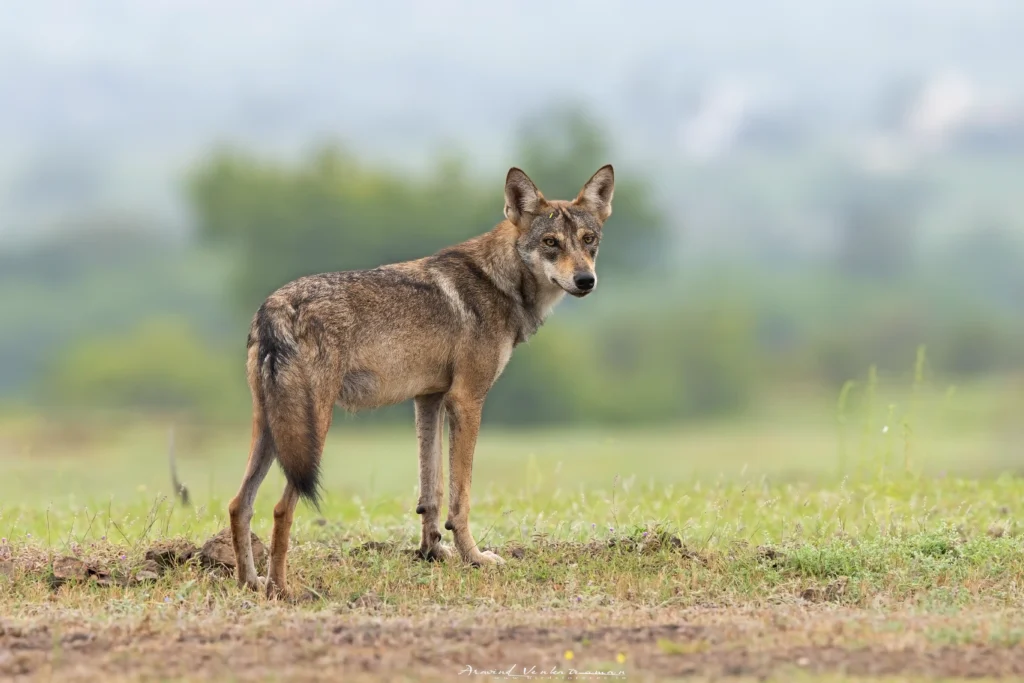
The Indian wolf is one of India’s least-known large carnivores despite occupying landscapes that millions of people live and farm in. Unlike tigers, lions or leopards, it rarely features in tourism campaigns, yet it is among the country’s most important predators of grasslands, scrublands and semi-arid ecosystems. Recent scientific research has also shown that it represents one of the oldest living wolf lineages, making its conservation important far beyond India.
The species faces a unique conservation challenge. While it receives the highest level of legal protection under Indian law, much of its range lies outside protected areas, where wolves share space with livestock, villages, roads and agriculture. This means their future depends not only on wildlife reserves but also on how India’s working landscapes are managed.
For wildlife travellers, the Indian wolf is not a species that can be reliably searched for on a typical safari. Sightings are uncommon, and even experienced naturalists may spend years without seeing one. Understanding where wolves live, why they prefer open country over forests, and how they fit into India’s grassland ecosystems offers a deeper appreciation of a predator that often goes unnoticed.
Indian Wolf at a Glance
| Feature | Details |
| Scientific name | Canis lupus pallipes |
| Common names | Indian Wolf, Indian Grey Wolf, Peninsular Wolf |
| Conservation status | Vulnerable (IUCN assessment) |
| Habitat | Semi-arid grasslands, scrublands, open forests and agro-pastoral landscapes |
| Main strongholds | Madhya Pradesh, Rajasthan, Gujarat and Maharashtra |
| Estimated mature population | Approximately 2,900–3,300 individuals (latest assessment) |
| Legal protection | Schedule I, Wildlife (Protection) Act, 1972 |
| International protection | CITES Appendix I |
Why the Indian Wolf Matters
The Indian wolf is more than another carnivore. It serves as an indicator of the health of India’s disappearing grasslands. Protecting wolves also helps conserve many other species that depend on these open habitats, including blackbuck, chinkara and numerous grassland birds. Because most wolves survive outside national parks, conserving them also encourages better coexistence between wildlife and rural communities.
What Is the Indian Wolf?
The Indian wolf is a population of grey wolf adapted to the warm, dry landscapes of the Indian subcontinent. It is generally recognised as Canis lupus pallipes, although ongoing scientific research continues to examine its evolutionary relationships within the wider grey wolf complex. Recent genetic studies indicate that the Indian wolf represents an ancient and evolutionarily distinct lineage, separated from many other wolf populations for a long period. This makes it one of the most significant wolf populations from a conservation perspective.
Scientific Name and Classification
The accepted scientific name is Canis lupus pallipes. It belongs to the family Canidae, which also includes foxes, jackals, dholes and domestic dogs.
Unlike wolves that inhabit Europe’s forests or North America’s snow-covered landscapes, the Indian wolf has evolved to survive in hot, open environments where temperatures can be extreme and prey is often widely dispersed.
Why Is the Indian Wolf Evolutionarily Important?
One of the most important discoveries in recent years is that the Indian wolf is not simply another regional grey wolf population. Genetic studies suggest it represents one of the oldest surviving wolf lineages in the world. This evolutionary uniqueness means that conserving Indian wolves also preserves millions of years of evolutionary history that cannot be replaced if the population declines further.
Field Note
If you imagine wolves as animals of snowy mountains and dense forests, the Indian wolf challenges that image. It is a predator of open country, where low vegetation, rolling grasslands and scrub provide enough cover for hunting while allowing long-distance movement across the landscape.
Where Do Indian Wolves Live?
The Indian wolf is primarily an animal of grasslands, scrublands and semi-arid plains, not dense forests. This habitat preference sets it apart from many other wolf populations worldwide. While forests occasionally form part of its range, wolves generally favour open landscapes where they can detect prey over long distances and travel efficiently across large territories.
Unlike species that depend on protected reserves, Indian wolves have adapted to living alongside people in agricultural and pastoral landscapes. As a result, many populations occur far from national parks, making coexistence with local communities an essential part of their conservation.
Distribution Across India
Indian wolves are distributed across much of peninsular and western India, although their range is fragmented and not continuous.
The strongest populations occur in:
- Madhya Pradesh
- Rajasthan
- Gujarat
- Maharashtra
Smaller or scattered populations are also found in:
- Chhattisgarh
- Telangana
- Andhra Pradesh
- Karnataka
- Odisha
- Jharkhand
Within these states, wolves occupy a mosaic of grazing lands, scrub forests, rocky plateaus, dry river valleys and agricultural landscapes. They generally avoid densely forested regions that are more suitable for tigers, leopards and dholes.
Important Wolf Landscapes
Several landscapes have contributed significantly to Indian wolf research and conservation, including:
- Nauradehi Wildlife Sanctuary (Madhya Pradesh)
- Panna landscape
- Pench landscape
- Satpura landscape
- Melghat region
- Great Indian Bustard Sanctuary (Maharashtra)
- Kachchh
- Saurashtra
- Mukundara Hills landscape
- Kawal landscape
- Udanti-Sitanadi landscape
- Indravati region
Many of these areas are valuable not because they contain large numbers of wolves, but because they illustrate how wolves persist in landscapes shared with people.
Why Do Indian Wolves Prefer Open Landscapes?
Indian wolves evolved in environments where visibility is high and vegetation is relatively sparse.
Open habitats provide several advantages:
- Better visibility while searching for prey.
- Easier movement across large territories.
- Suitable denning sites among rocky outcrops and earthen banks.
- Lower competition from large forest predators such as tigers.
These landscapes may appear empty to casual visitors, but they support a surprisingly diverse community of wildlife specially adapted to grassland ecosystems.
Field Note
One reason wolves remain difficult to observe is that grasslands often look deceptively open. Even low shrubs, rocky depressions and undulating terrain provide enough cover for wolves to remain hidden from people.
Habitat Preferences
The Indian wolf uses several habitat types, but not all are equally important.
| Habitat | Suitability | Why It Matters |
| Semi-arid grasslands | Excellent | Primary habitat with abundant hunting opportunities |
| Scrublands | Excellent | Good cover combined with open visibility |
| Agro-pastoral landscapes | High | Livestock and wild prey often coexist |
| Open dry forests | Moderate | Used where open structure is maintained |
| Arid desert margins | Moderate | Occupied in parts of western India |
| Dense forests | Low | Limited visibility and greater competition from other predators |
This flexibility partly explains why wolves survive across a wide geographic range despite extensive habitat modification.
Why Are Most Indian Wolves Found Outside Protected Areas?
One of the most important findings from recent conservation research is that only a small proportion of the Indian wolf’s range lies within protected areas. Most wolves live in landscapes used for grazing, farming and other human activities.
This has several important implications:
- National parks alone cannot secure the species’ future.
- Conservation must involve local communities.
- Grasslands outside reserves require greater recognition.
- Infrastructure planning becomes especially important because roads, canals and expanding settlements often intersect wolf habitat.
For many wildlife species, creating larger protected areas is a primary conservation strategy. For Indian wolves, maintaining connected and wildlife-friendly working landscapes is equally important.
Responsible Tourism Tip: When visiting grassland reserves or open scrub landscapes, stay on designated tracks and avoid approaching potential den sites. Disturbance during the breeding season can affect the survival of wolf pups.
Physical Characteristics
The Indian wolf is noticeably different from the large, thick-coated wolves of Europe or North America.
It is generally:
- Slender and lightly built.
- Long-legged for travelling across open terrain.
- Short-haired, an adaptation to India’s warm climate.
- Sandy grey to pale brown in colour, helping it blend into dry grasslands.
Compared with Himalayan wolves, Indian wolves have a finer build and a shorter, less dense coat suited to lower elevations and hotter conditions.
Although males are usually larger than females, both sexes are considerably smaller than many northern wolf populations.
Adaptations to India’s Climate
Living in some of India’s hottest landscapes has shaped the Indian wolf’s appearance and behaviour.
Important adaptations include:
- Short fur that helps dissipate heat.
- Activity concentrated during cooler hours, especially dawn, dusk and night.
- Large home ranges that allow packs to track scattered prey.
- Efficient long-distance travel across open country.
Rather than relying on dense vegetation for concealment, wolves often use terrain features such as shallow depressions, rocky ridges and scrub patches while hunting or travelling.
Behaviour and Ecology
Indian wolves are highly social carnivores, but their social organisation differs somewhat from wolves living in prey-rich northern ecosystems.
Because prey densities are generally lower and habitats are more open, packs tend to be relatively small.
Pack Structure
A typical pack usually consists of:
- A breeding pair.
- Their offspring from one or more years.
- Occasionally one or two additional related adults.
Research suggests that many packs contain around three adult animals, although somewhat larger family groups are also reported from field observations. Pack size can vary depending on prey availability and local environmental conditions.
Hunting Behaviour
Indian wolves are endurance hunters rather than ambush predators.
Instead of relying on surprise, they often:
- Detect prey over long distances.
- Work together to isolate vulnerable individuals.
- Use stamina to pursue prey across open ground.
This hunting style is well suited to grasslands and scrublands, where visibility is high and concealment is limited.
Diet
Indian wolves feed on a combination of wild prey and, in some areas, domestic livestock.
Wild prey commonly includes:
- Blackbuck
- Chinkara
- Indian hare
- Rodents
- Smaller mammals
Depending on local conditions, wolves may also consume livestock, particularly sheep and goats grazing in open landscapes. This contributes to conflict with pastoral communities and remains one of the principal conservation challenges for the species.
Breeding and Denning
Indian wolves typically raise their pups in underground dens or naturally sheltered sites.
Suitable den locations include:
- Earthen banks
- Rocky crevices
- Natural cavities
- Gentle slopes with limited human disturbance
Both parents, and sometimes other pack members, help care for pups. Young wolves remain with the family for an extended period before dispersing to establish new territories.
Photography Tip
Even in areas where wolves occur, sightings are uncommon. Wildlife photographers should focus on documenting the broader grassland ecosystem rather than expecting close wolf encounters. Patience, local knowledge and ethical field practices are far more important than attempting to approach den sites or disturb animals for photographs.
Population and Conservation Status
The Indian wolf has never been easy to count. It occupies vast landscapes, occurs at naturally low densities, avoids people, and spends much of its time outside protected areas. For these reasons, population estimates rely on scientific models rather than complete animal counts.
Recent assessments estimate that India supports roughly 2,900–3,300 mature Indian wolves, making it one of the world’s most important strongholds for this ancient wolf lineage. Earlier research estimated approximately 3,170 adult wolves, while the first dedicated IUCN assessment reported an estimated 2,877–3,310 mature individuals. These figures should be viewed as informed estimates rather than exact counts because they are based on habitat modelling, field surveys and occupancy analyses.
Why Population Estimates Change
Readers often notice different wolf population figures quoted in books, websites or news reports. This does not necessarily mean the population has increased or declined dramatically.
Population estimates vary because:
- Researchers use different survey methods.
- New areas may be included in assessments.
- Improved habitat models produce more accurate estimates.
- Some estimates count adults, while others refer to mature breeding individuals.
Rather than focusing on a single number, conservationists pay closer attention to long-term trends, habitat quality and the connectivity between wolf populations.
Expert Tip
Whenever you see a wildlife population figure, check when it was published and how it was estimated. Model-based estimates are valuable conservation tools, but they should never be interpreted as exact censuses.
Conservation Status
One of the most significant recent developments for the species has been its formal assessment on the IUCN Red List, where the Indian wolf has been assessed as Vulnerable. This reflects concerns about habitat fragmentation, declining grasslands, human conflict and the relatively small number of mature individuals.
The assessment also highlighted another important reality:
Only a small proportion of the Indian wolf’s distribution falls within protected areas.
This means that even well-managed national parks cannot secure the species on their own. Conservation must extend into agricultural landscapes, grazing areas and community-managed lands where wolves spend much of their lives.
Legal Protection in India
The Indian wolf receives the country’s highest level of legal protection.
| Protection | Status |
| Wildlife (Protection) Act, 1972 | Schedule I |
| International Trade | CITES Appendix I |
| Global Conservation Assessment | IUCN Red List – Vulnerable |
These legal safeguards prohibit hunting and regulate international trade. However, legal protection alone cannot eliminate threats such as habitat conversion or conflict with livestock owners.
Major Threats Facing the Indian Wolf
Unlike some endangered mammals threatened primarily by poaching, the Indian wolf faces numerous interconnected pressures across landscapes shared with people.
Habitat Loss and Fragmentation
The greatest long-term threat is the gradual disappearance of natural grasslands and scrublands.
Historically, these habitats were often labelled as “wastelands” despite supporting specialised wildlife. As a result, many have been converted for:
- Agriculture
- Industrial development
- Urban expansion
- Mining
- Infrastructure projects
- Commercial plantations
Unlike forests, grasslands have traditionally received less conservation attention, leaving wolves with increasingly fragmented habitat.
Why Grasslands Matter
Grasslands are not empty spaces waiting to be developed.
They support an entire ecological community, including:
- Indian wolves
- Blackbuck
- Chinkara
- Indian fox
- Numerous raptors
- Bustards and floricans
- Small mammals and reptiles
Protecting wolf habitat therefore benefits many species that depend on India’s open ecosystems.
Human-Wolf Conflict
Because wolves frequently share landscapes with livestock owners, conflict is inevitable.
Sheep and goats may become prey when wild prey is scarce or when livestock graze unattended in wolf habitat.
For rural families, losing even a few animals can represent a significant economic loss. Consequently, retaliatory killing has historically been an important threat in some areas.
Modern conservation increasingly focuses on reducing conflict rather than treating either people or wolves as the problem.
Successful approaches include:
- Fair compensation programmes
- Better livestock management
- Community participation
- Awareness programmes
- Protecting natural prey populations
Long-term conservation depends on making coexistence practical for local communities.
Feral Dogs, Disease and Hybridisation
Domestic and feral dogs represent one of the least visible but most serious threats facing Indian wolves.
Researchers have identified several concerns:
- Transmission of infectious diseases.
- Competition for food resources.
- Hybridisation through interbreeding.
- Disturbance around denning areas.
Hybridisation is particularly concerning because it may gradually reduce the genetic integrity of this evolutionarily distinct wolf lineage.
Disease outbreaks can also spread rapidly where wolf territories overlap with free-ranging dog populations.
Field Note
In many wolf landscapes, free-ranging dogs outnumber wolves by a wide margin. Managing dog populations benefits not only wolves but also many other wild carnivores.
Roads and Infrastructure
India’s expanding road network, canals, power infrastructure and industrial development increasingly intersect wolf habitat.
These projects can affect wolves by:
- Dividing territories.
- Increasing vehicle collisions.
- Restricting movement between populations.
- Encouraging further habitat conversion.
Even where direct mortality is low, fragmented landscapes make it harder for young wolves to disperse and establish new territories.
Competition with Other Predators
Although Indian wolves usually occupy open habitats, parts of their range overlap with other large carnivores, including:
- Leopards
- Tigers
- Dholes
This overlap may influence habitat use and prey selection, encouraging wolves to favour landscapes where competition is lower.
Rather than replacing these predators, wolves occupy a different ecological niche centred on open-country ecosystems.
Conservation Priorities
Conserving the Indian wolf requires a broader approach than simply expanding protected areas.
Researchers consistently highlight several priorities.
Protect Remaining Grasslands
The highest conservation priority is safeguarding India’s remaining natural grasslands and scrub ecosystems.
This includes:
- Preventing unnecessary habitat conversion.
- Maintaining habitat connectivity.
- Recognising grasslands as valuable ecosystems rather than degraded land.
Improve Coexistence
Because wolves live alongside people across much of their range, conservation depends on community support.
Important measures include:
- Faster livestock compensation.
- Improved livestock protection.
- Community awareness.
- Participation by local pastoral communities.
- Reducing unnecessary persecution.
Strengthen Scientific Monitoring
Continued monitoring helps conservationists understand:
- Population trends.
- Habitat changes.
- Dispersal between landscapes.
- Emerging threats such as disease.
Recent studies combining camera traps, radio telemetry, authenticated sightings and habitat modelling have significantly improved understanding of the species, but many regions still require further research.
Why the Indian Wolf Matters Beyond Wolves
The Indian wolf is often described as a flagship species for grassland conservation.
Protecting wolves also protects:
- Native grasslands.
- Open scrub ecosystems.
- Herbivores such as blackbuck and chinkara.
- Numerous birds that depend on open habitats.
- Ecological processes maintained by healthy predator populations.
In this sense, conserving the Indian wolf is not simply about saving one carnivore—it is about preserving an entire ecosystem that has historically received far less attention than India’s forests.
Responsible Tourism Tip: If you visit a grassland reserve where wolves occur, appreciate the landscape as much as the possibility of seeing the animal itself. Ethical wildlife travel recognises that healthy ecosystems are the real conservation success, even when the most elusive species remain out of sight.
Can You See Indian Wolves in the Wild?
For most wildlife travellers, seeing an Indian wolf should be considered a bonus rather than the primary objective of a trip. Wolves are naturally elusive, occur at low densities, and range across large territories. Even researchers monitoring known packs may spend days without a sighting.
Unlike tiger tourism, there are no destinations where wolf sightings can be predicted with any reliability. Instead, the experience is about understanding India’s grassland ecosystems and appreciating the signs of a species that has successfully adapted to living alongside people.
Landscapes Where Wolves Occur
Several landscapes are known to support Indian wolves or have contributed to scientific research.
| Landscape | Why It Matters |
| Nauradehi landscape | One of India’s important wolf landscapes and a focus of research. |
| Great Indian Bustard Sanctuary | Grassland ecosystem that supports wolves alongside other open-country wildlife. |
| Kachchh | Semi-arid habitat suitable for wolves and other desert-adapted species. |
| Saurashtra | Supports wolf populations in mixed pastoral landscapes. |
| Pench landscape | Research has improved understanding of wolf ecology outside core tiger habitat. |
| Satpura and surrounding landscapes | Illustrate coexistence between wolves and human-modified environments. |
The presence of wolves does not mean visitors are likely to see them. These landscapes are valuable because they demonstrate how wolves survive in working ecosystems rather than isolated wilderness.
What Wildlife Travellers Are More Likely to Observe
Even if wolves remain unseen, visitors may encounter:
- Blackbuck
- Chinkara
- Indian fox
- Nilgai
- Raptors hunting over grasslands
- Smaller mammals and reptiles adapted to open habitats
Experiencing these species provides insight into the ecosystem that supports wolves.
Responsible Wildlife Viewing
Because wolves often den close to human landscapes, responsible behaviour is particularly important.
Follow These Guidelines
- Stay on designated roads and tracks.
- Never attempt to locate active dens.
- Avoid using playback calls.
- Maintain a respectful distance if wolves are encountered.
- Keep noise to a minimum.
- Follow instructions from local forest staff and guides.
Photography Tip
Long lenses and patience are far more useful than trying to approach wildlife.
Images showing a wolf within its grassland habitat often tell a stronger conservation story than tightly cropped portraits.
Decision Guide: Is an Indian Wolf Safari Right for You?
| If your goal is… | Best choice |
| Guaranteed predator sightings | Choose a tiger-focused safari instead. |
| Understanding India’s grassland ecosystems | Indian wolf landscapes are an excellent choice. |
| Wildlife photography | Expect landscapes and ecosystem images, with wolf sightings being a bonus. |
| Learning about conservation | Wolf landscapes provide valuable insight into coexistence between wildlife and people. |
Indian Wolf vs Other Wolves
| Feature | Indian Wolf | Himalayan Wolf | Arabian Wolf |
| Main habitat | Grasslands, scrublands, semi-arid plains | High-altitude mountains | Deserts and arid regions |
| Climate adaptation | Hot, dry conditions | Cold alpine environments | Extremely arid deserts |
| Coat | Short and light | Thick and dense | Short and pale |
| Body build | Slender | More robust | Smaller and lightly built |
| Primary conservation challenge | Habitat conversion and coexistence | Isolation and climate pressures | Habitat degradation and persecution |
Timeline of Key Conservation Milestones
| Year | Milestone |
| 1972 | Indian wolf receives Schedule I protection under the Wildlife (Protection) Act. |
| Early research | Field studies begin documenting distribution and ecology across peninsular India. |
| 2021 | Genetic research reinforces the Indian wolf’s ancient evolutionary lineage. |
| 2022 | Comprehensive distribution and conservation assessment improves understanding of range and population. |
| Recent assessment | First dedicated IUCN Red List assessment classifies the Indian wolf as Vulnerable. |
Common Misconceptions
“Indian wolves mainly live inside national parks.”
Most populations occur outside protected areas in landscapes shared with people.
“They are simply smaller grey wolves.”
Research indicates that Indian wolves represent one of the world’s oldest surviving wolf lineages, making them evolutionarily distinctive.
“Grasslands are empty wastelands.”
Healthy grasslands support diverse wildlife communities and are essential for the survival of Indian wolves and many other specialised species.
“Legal protection alone will save the species.”
Strong laws are important, but long-term conservation also depends on habitat protection, community participation, scientific monitoring and effective conflict mitigation.
“Population estimates are exact.”
Published figures are scientific estimates based on field data and habitat modelling rather than complete counts.
Common Mistakes Readers Make
- Assuming wolves can be reliably seen on safari.
- Confusing Indian wolves with Himalayan wolves.
- Believing forests are their preferred habitat.
- Overlooking the ecological importance of grasslands.
- Assuming protected areas alone can conserve the species.
- Treating older population estimates as current figures without checking publication dates.
Frequently Asked Questions
Are Indian wolves endangered?
The Indian wolf is currently assessed as Vulnerable on the IUCN Red List, reflecting concerns about habitat fragmentation, human conflict and relatively small population size.
What is the scientific name of the Indian wolf?
The Indian wolf is commonly recognised as Canis lupus pallipes.
Where are Indian wolves found?
Their strongest populations occur in Madhya Pradesh, Rajasthan, Gujarat and Maharashtra, with additional populations in several other states across peninsular India.
How many Indian wolves remain?
Recent assessments estimate approximately 2,900–3,300 mature individuals. These are model-based estimates rather than exact counts.
Do Indian wolves live in forests?
They primarily occupy grasslands, scrublands and other open habitats. Dense forests are generally less suitable.
What do Indian wolves eat?
Their diet includes blackbuck, chinkara, hares, rodents and other wild prey. In some areas they also prey on livestock, contributing to human-wolf conflict.
Are Indian wolves dangerous to people?
Indian wolves generally avoid humans. Most conservation concerns relate to livestock depredation rather than direct attacks on people.
Why are feral dogs considered a threat?
Free-ranging dogs can compete with wolves, transmit diseases and hybridise with them, potentially affecting the long-term survival of genetically distinct wolf populations.
Why are grasslands so important?
Grasslands provide the habitat that Indian wolves require for hunting, denning and raising young while also supporting many other specialised wildlife species.
Can tourists see Indian wolves?
Sightings are possible but uncommon. Visitors should view wolf landscapes as opportunities to appreciate India’s grassland ecosystems rather than expecting guaranteed encounters.
Conclusion
The Indian wolf remains one of India’s most overlooked large carnivores despite its remarkable evolutionary history and ecological importance. Adapted to life in grasslands and semi-arid landscapes, it survives largely outside protected areas, sharing space with people across much of its range. This makes its conservation fundamentally different from that of forest-dependent species such as tigers.
Recent scientific research has significantly improved our understanding of the species, highlighting both its evolutionary uniqueness and the challenges it faces from habitat loss, fragmentation, disease, hybridisation and conflict with humans. At the same time, these studies demonstrate that effective conservation is possible when science, local communities and landscape-level planning work together.
For wildlife travellers, the Indian wolf offers a different perspective on nature. Rather than chasing guaranteed sightings, visiting wolf landscapes encourages an appreciation of India’s often-overlooked grasslands and the complex relationship between wildlife and people. Conserving this elusive predator ultimately means protecting an entire ecosystem—one that supports not only wolves but also blackbuck, chinkara, grassland birds and countless other species that depend on India’s open landscapes.
Author Note & Update Log: Written by the WildlifeSafaris.in Editorial Team. Last Updated: September 2026.