Explore Velavadar’s semi-arid grasslands. Learn about blackbuck herds, Indian wolves, Lesser Florican breeding, winter harrier roosts, and practical planning tips.
Velavadar National Park protects a highly specialized semi-arid tropical grassland ecosystem within the Bhal region of Gujarat. Despite spanning less than 35 square kilometres, this protected habitat supports India’s largest concentrated population of blackbuck. It serves as a critical evolutionary stronghold for the Indian grey wolf, provides primary breeding grounds for the endangered Lesser Florican, and hosts one of the largest wintering harrier roosts documented globally. Understanding the unique ecological mechanics, seasonal transformations, and localized habitat zones of Velavadar is essential for any researcher, naturalist, or traveler planning a visit.
Velavadar at a Glance
The following baseline data outlines the administrative and geographic structure of the park:
| Parameter | Specification |
| Official Name | Blackbuck National Park, Velavadar |
| Established | July 1976 |
| Total Protected Area | ~34.08 to 34.52 km² |
| Biogeographic Zone | 4B Gujarat-Rajwada Semi-Arid Zone (Bhal Region) |
| Nearest City Hub | Bhavnagar (~42 km) |
| Primary Authority | Gujarat Forest Department |
| Permit Portal | Official state e-governance platforms / Gir Online Permit Systems |
Landscape, Climate, and Habitats
Velavadar is situated on a flat, low-lying terrain near the Gulf of Khambhat. The park experiences a distinct semi-arid climate characterized by three sharp seasonal shifts: a scorching summer, a concentrated monsoon, and a mild winter. The interaction between localized soil chemistry and seasonal weather patterns divides the park into a mosaic of distinct micro-habitats, notably dense grasslands, sparse grass plains, Prosopis scrub pockets, and mudflats.
The Bhal Region and Saline Grasslands
The word “Bhal” signifies a region of clayey, alluvial soils characterized by high salinity and remarkable moisture-retention capabilities. Velavadar sits directly within this landscape, creating an environment where only specialized, salt-tolerant vegetation can survive.
The terrain functions as a vast, open plain with minimal structural variation. This open architecture determines how local wildlife operates. Blackbucks rely entirely on these unobstructed lines of sight to detect predators from a distance, using speed rather than cover to evade capture. Conversely, terrestrial predators like the Indian grey wolf and striped hyena utilize the subtle dips in the terrain and areas of taller, dense grass to approach prey or establish denning sites.
Wetlands, Rivers, and Seasonal Flooding
The hydrological profile of Velavadar is defined by its proximity to the coast and the flow of two seasonal rivers, the Parvalia and the Alang. The park features a natural drainage gradient where monsoon rainfall causes extensive seasonal inundation across the southern mudflats and low-lying depressions.
Rather than acting as a environmental disruption, this seasonal flooding serves as a vital ecological pulse:
- Ephemeral Marshes: Heavy rains turn dry clay depressions into productive temporary wetlands.
- Nutrient Cycling: The incoming floodwaters deposit vital nutrients, triggering a rapid growth of aquatic plants, seed production, and insect life.
- Waterbird Influx: These short-lived wetlands attract large numbers of migratory storks, cranes, pelicans, and ducks that rely on the seasonal abundance of food.
Once the monsoon recedes, these flooded zones dry out systematically, transforming back into cracked clay crusts and open saline flats that mark the arrival of the wintering migratory raptors.
Plants and Vegetation Types
The flora of Velavadar is highly specialized, adapted to survive the Bhal region’s high soil salinity, extreme summer temperatures, and seasonal inundation. The vegetation structure is primarily divided into open native grasslands, invasive scrub pockets, and seasonal marshlands. This specific arrangement of plant life forms the foundational energy source for the park’s herbivores and dictates the movement patterns of both resident and migratory species.
Native Vidi Grasses and Ecological Roles
The core habitat of the park consists of native grasslands, locally referred to as “vidi”. These grasses naturally arrange themselves into distinct patches of dense and sparse cover depending on the micro-topography and soil conditions.
The native vidi grasses serve several critical ecological functions:
- Primary Food Source: They sustain the park’s large herbivore populations, functioning as the primary grazing resource for thousands of blackbuck.
- Habitat Architecture: The varying heights of the grass provide breeding cover for specialized ground-nesting birds while maintaining the open sightlines required by prey animals to spot predators.
- Ecosystem Maintenance: The grass cycle plays a crucial role in maintaining natural fire regimes, which periodically clear dead organic matter and stimulate fresh, nutrient-rich growth.
Invasive Prosopis Control and Habitat Alteration
While the open vidi plains define Velavadar, the ecosystem faces significant alteration from Prosopis chilensis, an introduced woody shrub that forms dense scrub pockets within the park.
Prosopis fundamentally changes the grassland ecology. By growing into thickets, it creates heavy shade that suppresses the growth of native grasses beneath it. This structural change alters both the local fire regimes and the grazing patterns of herbivores, effectively shrinking the usable habitat for species that require wide-open spaces. Because of its aggressive growth and ability to fragment the grassland, managing and controlling Prosopis chilensis remains an ongoing priority for conservation authorities.
Marsh Vegetation and Temporary Wetlands
In the southern sectors of the park, near the Alang river and seasonal depressions, the flora shifts to marsh vegetation. These areas remain dry and cracked for much of the year but undergo a rapid botanical transformation during the monsoon floods.
When inundated, these temporary wetlands support specialized aquatic plants that drive rapid seed and nutrient cycling. This brief but intense period of plant growth provides critical foraging grounds for visiting waterbirds and helps sustain the broader food web well into the dry winter months.
Mammals of Velavadar
Velavadar National Park is globally recognized for its exceptional concentration of grassland mammals. The open, flat terrain of the Bhal region offers high visibility, making it one of the premier destinations in India for observing large herbivores and their natural predators interacting in an unobstructed environment.
Blackbuck Ecology and Herd Behaviour
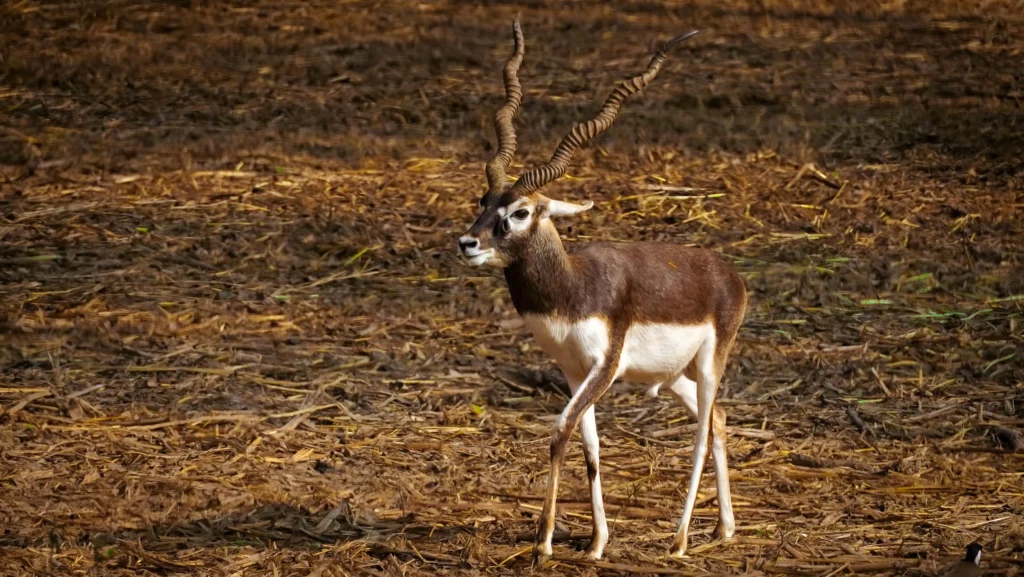
The blackbuck (Antilope cervicapra) is the flagship species of Velavadar. The park was originally established in 1976 specifically to protect these antelopes, and today it hosts the largest concentrated blackbuck population in India, with estimates historically reaching into the thousands.
Because the landscape lacks dense forest cover, blackbucks rely heavily on their sharp eyesight and extraordinary speed to survive. They are almost exclusively found in the open northern grazing plains where sightlines are clear. The social structure is highly visible to observers, particularly during the rutting season when dominant males—distinguished by their striking black and white coats and long, spiralling horns—actively defend their territories and display to herds of females and younger males.
Predators: Indian Grey Wolf and Striped Hyena
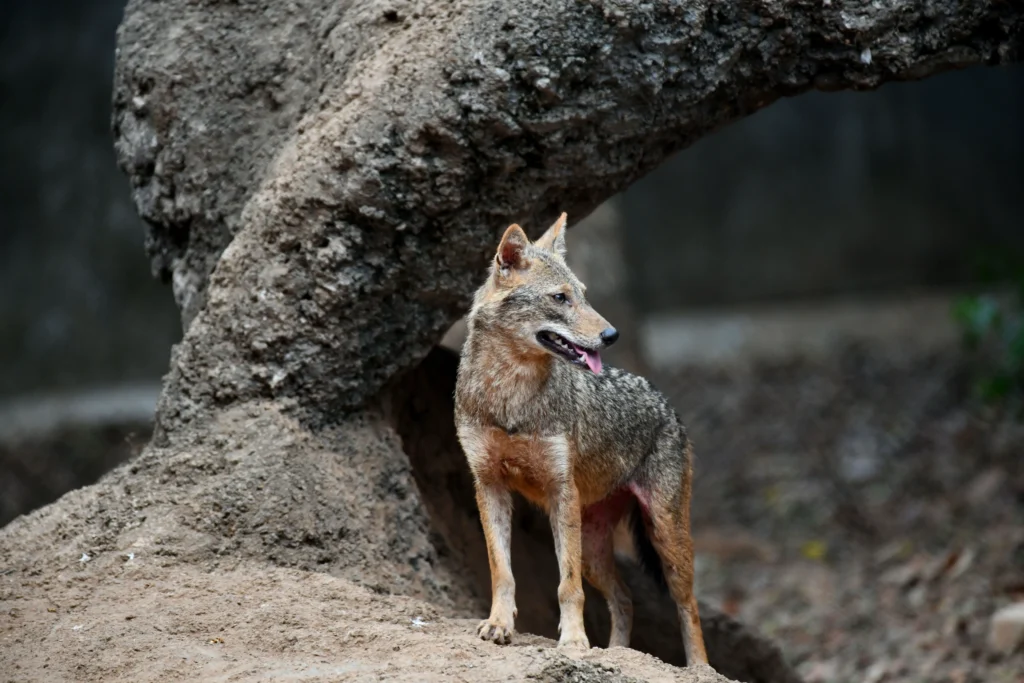
The primary apex predator of the Velavadar grasslands is the Indian grey wolf (Canis lupus pallipes). The park presents a rare and highly visible wolf-blackbuck predator-prey dynamic, providing critical observational data for researchers and wildlife enthusiasts. Unlike forest-dwelling carnivores, the wolves of Velavadar are frequently active during the day, utilizing the subtle depressions in the landscape and patches of taller grass to stalk blackbuck herds.
The striped hyena (Hyaena hyaena) is the park’s other major carnivore. Functioning as both a predator and the ecosystem’s primary scavenger, hyenas play a vital role in cleaning the grasslands of carrion, often utilizing the thicker scrub and denning sites near the park’s edges.
Photography Tip: For the best chance of photographing the Indian grey wolf, focus your efforts on the early morning hours near the edges of the dense grass patches, where wolves often patrol before the heat of the day sets in.
Other Mammals and the Grassland Food Web
Beyond the flagship species, Velavadar supports a diverse cast of mammals that fill various ecological niches within the grassland food web:
- Nilgai: India’s largest antelope (Boselaphus tragocamelus) is frequently seen browsing near the Prosopis scrub and marshy edges.
- Smaller Carnivores: The jungle cat, golden jackal, and Indian fox hunt smaller prey in the undergrowth, particularly rodents and ground-nesting birds.
- Prey Base: Wild boars and Indian hares contribute significantly to the diet of the park’s medium-sized predators and raptors.
Key Mammal Checklist
| Species | Primary Role in Ecosystem | Seasonal Visibility |
| Blackbuck | Primary grazing herbivore | Year-round resident (Highly visible) |
| Indian Grey Wolf | Apex predator | Year-round resident |
| Striped Hyena | Scavenger / Predator | Year-round resident (Mostly nocturnal/crepuscular) |
| Nilgai | Large browsing herbivore | Year-round resident |
| Jungle Cat & Foxes | Small-game predators | Year-round residents |
Birds and Migratory Highlights
Velavadar transforms dramatically for birders depending on the season. While resident grassland birds like larks, sandgrouse, and francolins are visible year-round, the park is internationally famous for two major avian events: the post-monsoon breeding of the Lesser Florican and the massive winter harrier roost. Understanding these seasonal windows is essential for planning a successful birding trip.
The Lesser Florican: Breeding and Courtship Displays
The Lesser Florican (Sypheotides indicus) relies on Velavadar as a critical breeding ground. The best time to observe these endangered birds is from August to October, immediately following the monsoon.
During this post-monsoon window, male floricans perform highly visible courtship displays. They leap vertically above the tall vidi grasses to attract females, a behavior that is both a major draw for wildlife photographers and a key indicator of the grassland’s ecological health. Because this species faces severe threats across India, securing these breeding grounds remains one of the park’s highest conservation priorities.
Harrier Roost: Winter Congregation Dynamics
From October to February, Velavadar hosts one of the world’s largest documented communal roosting sites for harriers. Thousands of Montagu’s, Pallid, and Marsh Harriers congregate in the park during these winter months.
These migratory raptors spend their daylight hours hunting over the surrounding agricultural fields and saline plains. As evening approaches, they return in massive numbers to roost on the ground in the open grasslands.
Field Note: For the best harrier roost viewing, position yourself near the open grasslands in the late afternoon. The spectacle peaks just before dusk, as hundreds of raptors circle and drop into the grass for the night.
Waterbirds and Wetland Seasonal Visitors
The seasonal flooding of the southern marshes dictates the presence of aquatic birds. When the Alang river floods and the temporary wetlands fill, they attract large flocks of pelicans, flamingoes, storks, ducks, and various waders. The globally vulnerable Sarus Crane is also found in the park, utilizing these wetlands for foraging. Once the water dries up in the late winter, these aquatic species move on, and the cracked clay shifts back to supporting terrestrial grassland species.
Key Bird Checklist & Viewing Windows
The following table highlights the primary avian species supported by the Velavadar ecosystem, based on park monitoring:
| Species / Group | Primary Habitat in Velavadar | Best Months to Visit |
| Lesser Florican | Tall native vidi grasses | Aug – Oct (Post-monsoon displays) |
| Montagu’s & Pallid Harriers | Open plains for roosting | Oct – Feb (Wintering) |
| Marsh Harrier | Wetland edges and grassland | Oct – Feb (Wintering) |
| Pelicans & Flamingoes | Seasonal marshes and mudflats | Monsoon / Early Winter |
| Sarus Crane | Wetlands and marsh edges | Year-round / Post-monsoon |
| Sandgrouse, Larks, Francolins | Dry scrub and sparse grassland | Year-round residents |
Threats and Conservation Actions
The primary ecological pressures threatening Velavadar include habitat fragmentation, the conversion of surrounding lands to agriculture, illegal livestock grazing pressure, human interference, and localized hydrological changes.
Invasive Prosopis Management and Grassland Restoration
The spread of the invasive woody shrub Prosopis chilensis remains an active management challenge within the park boundaries. Because this hardy species aggressively outcompetes native vidi grasses, it alters the open landscape structure that defining species rely on.
To counter this, the Gujarat Forest Department conducts targeted mechanical removal and restoration programs. Clearing these thickets is essential to maintain the wide-open corridors required by blackbucks for predator detection and to preserve the clear ground space needed for the wintering harrier roosts.
Community Engagement and Human-Wildlife Conflict Mitigation
Because Velavadar is surrounded by a matrix of agricultural fields and villages, wildlife regularly moves beyond the park’s administrative borders. Blackbucks frequently forage in surrounding crop fields, while wolves and hyenas hunt across private farmlands, creating potential points of human-wildlife conflict.
Active conservation strategies emphasize community-level partnerships. State forest authorities work alongside local communities to manage grazing rights along the periphery and implement mitigation measures. Fostering local stewardship and ensuring transparent support for crop or livestock damage are critical to maintaining the long-term coexistence of communities and predators outside the protected zone.
Indian Grassland and Wetland Ecosystem Comparison
To understand the unique conservation value of Velavadar, it helps to compare its scale, habitat, and pressures against other major Indian grassland and wetland landscapes:
| Conservation Area | Approximate Size | Primary Habitat Structure | Flagship Species | Key Environmental Threats |
| Velavadar National Park | ~34 km² | Semi-arid saline grassland (Bhal region) and seasonal marshes | Blackbuck, Indian Grey Wolf, Lesser Florican | Invasive Prosopis, habitat fragmentation, grazing pressure |
| Keoladeo National Park | ~29 km² | Semi-aquatic freshwater marshes and woodlands | Migratory waterfowl, raptors, python | Water scarcity, invasive water hyacinth, peripheral encroachment |
| Nal Sarovar Bird Sanctuary | ~120 km² | Shallow natural lake and low-lying aquatic grasslands | Greater Flamingo, migratory ducks, waders | Water pollution, tourism disturbance, agricultural runoff |
| Kaziranga Grasslands | ~430 km² (Core) | Alluvial tall elephant grasslands and riverine forests | Greater One-horned Rhinoceros, Bengal Tiger | Severe annual monsoonal flooding, poaching, invasive weeds |
Research Priorities and Data Gaps
Maintaining the ecological integrity of Velavadar depends on robust, up-to-date scientific data. Currently, several critical information gaps limit long-term conservation planning:
- Population Monitoring: There is a distinct need for standardized, multi-year population monitoring datasets for both blackbucks and Indian grey wolves to accurately track predator-prey dynamics over time.
- Hydrological Impacts: Comprehensive studies are required to determine how upstream water diversions and agricultural changes affect the seasonal flooding of the southern marshes.
- Invasive Mapping: High-resolution mapping is needed to track the regeneration rates of Prosopis following clearing operations.
- Climate Vulnerability: Research is needed to assess how shifting weather patterns affect the arrival times and roosting durations of migratory harriers and breeding floricans.
Addressing these data gaps requires structured research partnerships between state forest authorities, environmental universities, and specialized non-governmental organizations (NGOs). Furthermore, standardizing citizen science contributions—such as public bird-counting initiatives and regulated sighting reports—can provide valuable supplementary data to guide future policy decisions and buffer zone management.
Responsible Tourism Tip: When observing wildlife near the park boundaries, always remain inside your vehicle. Unregulated foot travel near agricultural edges can inadvertently drive animals into conflict zones or disturb sensitive nesting sites.
Visiting Velavadar & Responsible Wildlife Watching
Velavadar is located approximately 42 kilometres from the district headquarters of Bhavnagar in Gujarat, making it highly accessible by road.
When planning your trip, select your dates based on your primary wildlife interests:
- For the Lesser Florican: The optimal window is strictly post-monsoon, from August to October, when the males perform their breeding displays.
- For Raptors and Migrants: Winter, specifically between October and February, offers the best conditions to observe the massive harrier roosts and incoming migratory waterbirds.
To enter the park, visitors must secure permits through the Gujarat Forest Department’s state portals, such as the Gir online permit systems. Safaris are conducted using registered gypsy vehicles and accompanied by local forest guides arranged either privately or through the Forest Department.
Responsible Grassland Ethics: The open nature of the Bhal grasslands means human disturbance is highly visible. Always use registered vehicles and strictly follow your guide’s instructions. Never ask your driver to go off-track; driving over the grass damages the fragile soil crust, destroys the specialized vidi vegetation, and can crush the nests of ground-dwelling birds.
Common Mistakes to Avoid
- Arriving in the Wrong Season: Expecting to see the Lesser Florican display in January, or the harrier roost at its peak in May, will lead to disappointment. Always align your travel dates with the seasonal behaviour of your target species.
- Underestimating the Heat: The semi-arid climate means temperatures soar outside of the core winter months. Bring adequate sun protection and water, especially if visiting during the post-monsoon florican season.
- Ignoring the Wetlands: Many first-time visitors focus entirely on the northern grazing plains for blackbuck. Do not skip the southern sectors; the seasonal marshes near the Alang river are critical for observing wolves, hyenas, and a high volume of waterbirds.
- Pressuring Guides for Proximity: Blackbuck rely on maintaining a safe distance from perceived threats. Forcing a vehicle too close will cause the herd to bolt, ruining the sighting for yourself and stressing the animals.
Frequently Asked Questions
What is the total area of the park? The park spans a highly concentrated area of approximately 34.08 to 34.52 square kilometres.
Why is it called Blackbuck National Park? The park was established in July 1976 primarily to protect its resident herds of blackbuck, providing a safe haven for the species.
How many blackbucks actually live there? Velavadar hosts India’s largest blackbuck population. While precise counts fluctuate, historical estimates and local records frequently note populations reaching into the thousands.
Are guided safaris available? Yes. You can book registered vehicles and local guides, which are regulated by the Forest Department or organized through recognized private ecotourism operators.
Is camping allowed inside the park? Ecotourism zones and accommodation regulations are strictly managed by the Forest Department. Camping rules vary, and visitors must follow official permit guidelines and stay only in designated areas.
When is the absolute best time for birding? It depends on the species. Winter (October to February) is best for observing the harrier roosts and migrant waterbirds, while the post-monsoon period (August to October) is required to see the Lesser Florican.
Are wolves abundant and easy to see? Indian grey wolves are well-established here. Because the park offers open plains, the predator-prey dynamic between wolves and blackbucks is unusually visible compared to forested reserves.
Conclusion
Velavadar National Park is far more than just a sanctuary for antelopes. It is a globally significant stronghold for the semi-arid Bhal grassland ecosystem, sustaining complex predator-prey dynamics and critical breeding grounds within a remarkably compact footprint. Whether you are a researcher analyzing the impact of invasive Prosopis on native vidi grasses, or a photographer waiting for dusk at the harrier roost, Velavadar offers a masterclass in specialized ecological survival. By timing your visit carefully, securing the correct permits, and prioritizing low-impact observation, you contribute directly to the ongoing conservation of India’s golden grasslands.
Last updated : August 2026
Safari Planning : Topics Cluster
- How to book a wildlife safari in India?
- Park by Park Online Safari Booking Guide
- Tiger Safari India Planning Workbook
- Park by Park Safari Permits Guide
- National Parks Permit Guide – Park by Park Guide
- Tatkal Safari Booking Guide – Last Minute Safari Permits Booking
- Tiger Safari in India Cost
- Indian Wildlife Safari Budget Planner
- Jeep vs Canter Safari
- Best time for Tiger Sightings in India
- How far advanced should you book safari permits?
- Can foreigners book Indian Wildlife Safari online?
- Special Permits Guide for Foreigners and Domestic Visitors
- How to book a Safari Permit online in India? 2026 step by step guide
- Senior Citizens Friendly Safari Planning
- Multi Generation Family Safari Planning
- 50 things to know before your first safari in India