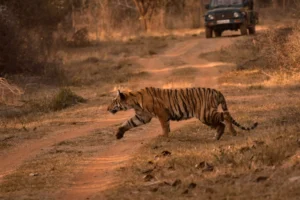
Plan your journey from Delhi to Jim Corbett National Park. Discover the best driving routes, train options, flight connections, and transit times.
Introduction, Overview & Transit Logistics
Choosing the correct mode of transport from Delhi to Jim Corbett National Park depends entirely on whether you prioritize schedule flexibility, travel comfort, or minimizing transit time. The gateway town for the reserve is Ramnagar. While driving gives you total control over your schedule, taking an overnight train eliminates highway fatigue and maximizes your time in the field.
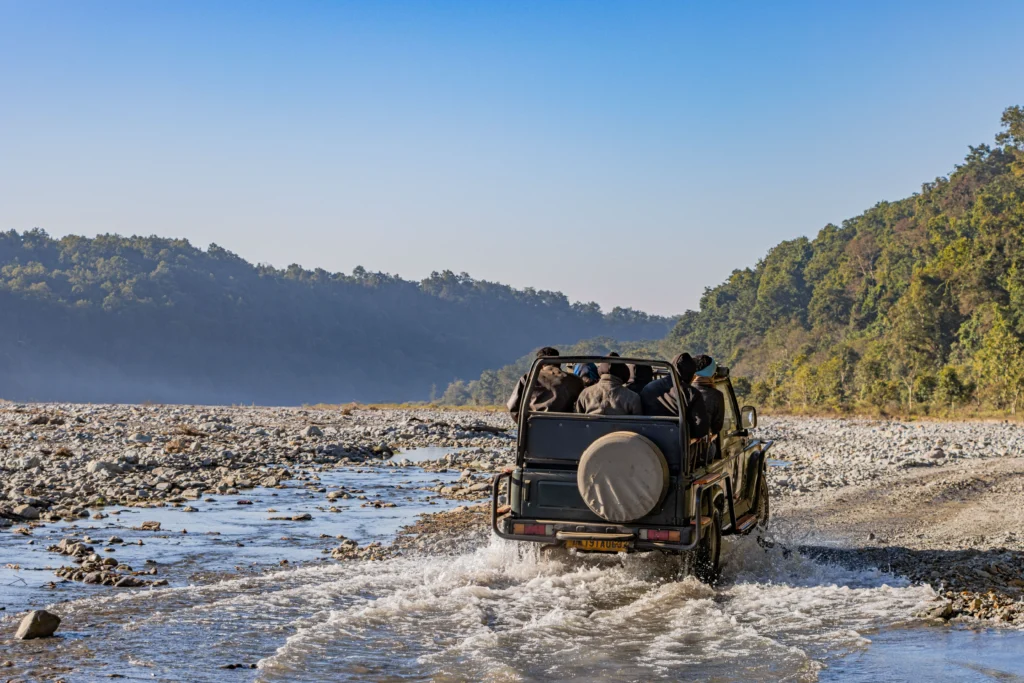
Jim Corbett National Park at a Glance
| Factor | Detail |
| Road Distance from Delhi | ~240 km to 260 km |
| Average Driving Time | 5 to 8 hours (dependent on traffic) |
| Primary Transit Hub | Ramnagar Railway Station (~12 km from park) |
| Nearest Airport | Pantnagar Airport (~84 km from park) |
| Main Park Operating Season | November to June (select zones open year-round) |
How to Reach Jim Corbett from Delhi
Traveling by Road: Optimal Routes and Driving Strategies
Driving from Delhi to Jim Corbett covers a distance of 240 km to 260 km. The journey typically requires 5 to 8 hours depending on how quickly you clear the Delhi National Capital Region (NCR) bottlenecks.
The most efficient route relies on National Highway 9 (NH9) and National Highway 24 (NH24) variations. The standard route runs from Delhi through Hapur, Moradabad, Kashipur, and finally into Ramnagar.
Field Note: To bypass heavy commuter traffic out of Delhi and avoid standard delays around Ghaziabad and Hapur, plan your departure between 4:00 AM and 4:30 AM. This early window places you past Moradabad before midday traffic peaks.
- Road Conditions: The highway sections up to Moradabad are generally well-maintained four-lane or six-lane divided tracks. The final state highway stretches connecting Kashipur to Ramnagar can narrow significantly and feature periodic potholes or construction diversions.
- Pit-Stops and Fuel: Established highway food plazas and reliable fuel stations are frequent along the Delhi-Moradabad stretch. Ensure your vehicle is fully fueled before leaving Kashipur, as stations become less frequent as you approach the park boundaries.
Traveling by Train: Ramnagar and Kathgodam Options
Rail travel stands as the most reliable, cost-effective, and safe option for weekend travelers. The absolute nearest railhead is Ramnagar Railway Station, located roughly 12 km from the park gates.
- Direct Options: The Ranikhet Express and the Corbett Link Express are the primary overnight choices operating from Delhi directly to Ramnagar. Boarding an overnight train allows you to sleep through the journey and arrive at the gateway by early morning, ready for an afternoon safari slot.
- Alternative Hubs: If direct tickets to Ramnagar are sold out, book a train to Kathgodam Railway Station, situated roughly 58 km from the reserve. From Kathgodam, local taxis are readily available at the station exit to transfer you to Ramnagar via a 1.5 to 2-hour drive.
Traveling by Air: Flight Limitations and Regional Connections
Flying is generally inefficient for this specific route due to erratic schedules and last-mile driving requirements.
- Pantnagar Airport (PGH): Located approximately 84 km from Ramnagar, Pantnagar is the closest domestic airport. Commercial flight frequencies from Delhi are highly variable and subject to short-notice seasonal cancellations. If you fly into Pantnagar, you must arrange a pre-booked private taxi to complete the remaining 2-hour drive to the park.
- Jolly Grant Airport (DED): Situated in Dehradun, this airport sits roughly 168 km from the park. It handles frequent daily flights from Delhi, but the subsequent road transfer down to Ramnagar requires 4 to 5 hours, neutralizing the time saved by flying.
Traveling by Bus: Direct Services and Boarding Points
For independent travelers or budget-conscious visitors, direct bus routes offer a straightforward point-to-point alternative.
Regular state transport buses (Uttarakhand Transport Corporation) and private operators service the route daily. Most direct buses depart from the Anand Vihar ISBT terminal in East Delhi. Buses drop passengers directly at the main Ramnagar bus stand. From there, you can hire local open gypsies or auto-rickshaws to reach your specific resort or safari entry point.
Travel Mode Comparison: Time vs. Cost
The table below breaks down realistic portal-to-portal travel times and estimated expense tiers for a one-way journey from central Delhi to Ramnagar.
| Transport Mode | Total Travel Time | Cost Tier | Practical Considerations |
| Private Car / Cab | 5 – 8 hours | Moderate to High | Highest flexibility; allows you to stop at will but subjects you to highway traffic. |
| Tempo Traveller | 6 – 8 hours | Moderate (Shared) | Ideal choice for fixed family groups or photography clubs traveling together. |
| Direct Train | 5 – 6 hours | Budget-Friendly | Highly punctual; allows you to sleep overnight, though tickets must be secured weeks in advance. |
| Commercial Flight | 4 – 5 hours (inc. airport wait) | High | Infrequent schedules out of Pantnagar; requires an additional 2-hour road taxi transfer. |
| Direct Bus | 6 – 9 hours | Economy | Least expensive option; subject to highway congestion and multiple local stops. |
Safari Permits and the Booking Process
Securing a safari permit is the most critical step in planning your Jim Corbett trip. Permits are mandatory for entry into any of the reserve’s core zones. Because Jim Corbett manages strict vehicle quotas to minimize ecological impact, permits for popular zones sell out rapidly. All bookings must be completed online through the official Corbett Tiger Reserve booking portal.
Core Safari Zones Explained
The national park is divided into distinct ecotourism zones to regulate tourist flow. Each zone offers a unique landscape and varying probabilities of wildlife encounters.
- Dhikala Zone: The most coveted zone, known for high tiger density and its expansive grasslands (chaurs). Day visitors are restricted to Canter (open bus) safaris here; jeep safaris are reserved exclusively for tourists staying overnight at the Dhikala Forest Rest Houses.
- Bijrani Zone: A favorite for day visitors, featuring a dense mix of Sal forests and open plains. It consistently offers excellent tiger sighting probabilities and operates exclusively with jeep safaris.
- Jhirna Zone: Open throughout the year (weather permitting), this zone is characterized by dry deciduous forest. It is highly reliable for spotting sloth bears, wild boars, and robust birdlife.
- Dhela Zone: Another year-round option, Dhela features moist deciduous forests and vast grasslands, making it excellent for birding and occasional big cat sightings.
- Sonanadi Zone: Located in the northern reaches, this pristine, less-crowded zone is ideal for tourists seeking tranquility and raw forest landscapes.
Safari Zone Comparison
| Safari Zone | Typical Open Season | Day Safari Type | Key Wildlife & Landscape Focus |
| Dhikala | Mid-Nov to Mid-June | Canter Safari Only | Vast plains; high tiger probability, elephant herds. |
| Bijrani | Mid-Oct to Mid-June | Jeep Safari | Sal forests; excellent tiger sightings, spotted deer. |
| Jhirna | Year-Round | Jeep Safari | Dry deciduous; sloth bears, wild boars, year-round access. |
| Dhela | Year-Round | Jeep Safari | Open grasslands; strong birding, occasional tigers. |
| Sonanadi | Mid-Nov to Mid-June | Jeep Safari | Deep forest terrain; isolation, elephants, leopards. |
Expert Tip: Before finalizing your booking, always verify the current zone status on the official Corbett authority site. Zones are subject to short-notice closures or standby periods—such as the Dhikala standby window typically occurring between June 1 and June 15—due to weather or administrative reasons.
Permit Booking Timelines and Rules
To secure your preferred zone and time slot, you must adhere strictly to the park’s advance booking schedules.
- Booking Window: Ensure you understand the specific rolling booking windows. Because weekend slots and premium zones vanish quickly, mark your calendar and attempt booking the exact day the reservation window opens.
- Required Documentation: During the online booking process, you must submit the details of a valid government-issued photo ID for every single passenger.
- Verification at the Gate: You are strictly required to carry the exact original ID used during the booking process on the day of the safari. Mismatched IDs or carrying photocopies will result in denied entry by forest guards.
- Cancellation Policy: Official park permits are non-transferable. Understand the refund policies clearly, as permits are generally strict about cancellations or modifications once payment is processed.
Safari Vehicle Guidelines and Regulations
Jim Corbett enforces strict rules regarding vehicle access to protect both visitors and the ecosystem.
- No Private Vehicles: You cannot drive your private car or SUV into the core safari zones under any circumstances. Only park-authorized gypsies and canters are permitted to enter.
- Jeep Capacity: A single registered jeep (gypsy) can accommodate a maximum of six adults, plus two children under the age of 12.
- Mandatory Guides: Every safari vehicle entering the reserve must be accompanied by a registered Nature Guide or Naturalist. Their expertise not only keeps you safe but significantly improves your chances of tracking wildlife.
- Safari Timings: Safaris operate in two designated shifts: an early morning slot and an afternoon slot. Night safaris are strictly prohibited inside the park boundaries.
Best Time to Visit for Wildlife and Birding
Understanding the seasonal shifts in Jim Corbett is crucial for setting your wildlife expectations. The park transforms dramatically throughout the year, meaning the “best” time depends entirely on whether you prioritize comfortable weather, bird watching, or tracking big cats.
Winter Season (November to February)
Winter is the most popular time to visit. The weather is cold in the mornings and pleasant during the day, making long safari drives comfortable. The dense post-monsoon vegetation is still intact, offering beautiful landscapes. This season is highly productive for observing Bengal tigers and is arguably the best time for birders, as winter migratory species arrive in large numbers.
Photography Tip: Morning safaris during winter often start with heavy mist. Pack a lens hood to manage condensation and prepare to shoot in low-light conditions until the sun clears the tree line.
Summer Season (March to June)
The summer months bring intense heat to the region, which causes the thick forest undergrowth to dry up and thin out. While the temperatures can be challenging for visitors, this lack of cover significantly increases visibility. As minor streams dry up, animals are forced to congregate around the remaining permanent waterholes. For dedicated wildlife photographers and those whose primary goal is spotting a tiger, the dry summer months offer the highest probability of sightings.
Monsoon Season (July to September)
Heavy rains dictate park operations during the monsoon. Due to the risk of washed-out dirt tracks and flooded seasonal rivers, the primary core zones (like Dhikala and Bijrani) shut down completely. However, zones like Jhirna and Dhela generally remain open. While you will not get deep core access, the monsoon is excellent for macro photography, lush green landscapes, and spotting resident bird species.
Accommodation Strategy: Where to Stay
Your choice of accommodation should not be an afterthought; it needs to align directly with your safari permits. Booking a resort in the wrong area can result in an unnecessary hour of driving in the dark just to reach your safari entry gate.
Forest Rest Houses vs. Buffer Zone Resorts
- Inside the Core (Forest Rest Houses): Staying at an FRH, such as the famous Dhikala complex, is the only way to experience the park at night. These government-run rest houses are basic in their amenities—do not expect luxury or air conditioning—but they offer unmatched, immediate access to the wilderness. You wake up inside the tiger reserve. Permits for FRHs are highly competitive and must be booked months in advance.
- Buffer Zone Resorts: The perimeter of the park, particularly along the Kosi River near Ramnagar and the Dhikuli village stretch, is lined with private accommodations ranging from budget homestays to high-end luxury lodges. These resorts offer swimming pools, varied dining options, and comfortable air-conditioned rooms.
Decision Guide: If you secure permits for the Bijrani or Garjiya zones, staying in a resort in the Dhikuli area is highly convenient. If your permits are for Jhirna or Dhela, look for accommodations closer to Ramnagar town or the Dhela village sector to minimize early morning transit times.
Wildlife and Ecology Profiles
Jim Corbett is not just a tiger reserve; it is a complex ecosystem supporting a wide diversity of fauna. Knowing what to look for and understanding basic animal behavior will greatly improve your field experience.
- The Bengal Tiger: Corbett has a healthy tiger population, but the dense Sal forests and tall elephant grass can make them difficult to spot. Tigers here are often tracked using alarm calls from deer and monkeys. The expansive grasslands (chaurs) of the Dhikala zone and the mixed forests of Bijrani are historically the most productive habitats for tiger encounters.
- Asiatic Elephants: Large herds of wild elephants are a major highlight of the park, particularly in the summer when they gather near the Ramganga River. Always maintain a respectful distance, as wild herds with calves can be highly protective and unpredictable.
- Herbivores and Prey Base: The park supports massive populations of spotted deer (chital), sambar deer, barking deer, and wild boar. You will often see them grazing in the open plains.
- Avifauna (Birds): With hundreds of recorded species, Corbett is a premier birding destination. Keep your binoculars ready for iconic species like the Great Hornbill, Pallas’s Fish Eagle, Crested Serpent Eagle, Plumbeous Water Redstart, and various kingfishers along the riverbanks.
Practical Weekend Itineraries from Delhi
To maximize your time in the field, your daily schedule must account for travel times and park shift hours. Below are two distinct micro-itineraries structured around standard transit options from Delhi.
Itinerary Matrix: 2-Day vs. 4-Day Plan
| Day | The 48-Hour Weekend Hustle (2 Days) | The Comprehensive Wildlife Tour (4 Days) |
| Day 1 | Early morning drive from Delhi (4:00 AM). Arrive at Ramnagar resort by midday. Afternoon Jeep Safari in Bijrani or Dhela. | Board overnight train (Ranikhet Express) from Delhi. Arrive in Ramnagar at dawn. Check-in, afternoon safari in Jhirna. |
| Day 2 | Morning Jeep Safari (5:30 AM). Check out of resort by noon. Drive back to Delhi, arriving by late evening. | Cross-zone transfer into Dhikala core zone via Canter or registered vehicle. Check into Dhikala Forest Rest House. Afternoon safari in Dhikala grasslands. |
| Day 3 | — | Morning and afternoon safaris deep within the Dhikala core. Focus on tiger tracking along the Ramganga River. |
| Day 4 | — | Morning safari in Dhikala. Exit the core zone by midday. Late afternoon departure via private cab or overnight train back to Delhi. |
Safety, Health, and Park Etiquette
Entering a tiger reserve requires strict adherence to administrative codes and safety guidelines to prevent conflicts with wildlife and park authorities.
- Vehicle Restraints: You must never step out of your safari vehicle inside the core zones except at designated forest rest areas or watchtowers. Animals view the vehicle as a singular object; stepping out breaks that illusion and can trigger defensive behavior.
- Color Codes: Dress in muted, earthy tones—such as khaki, olive green, grey, or brown. Bright neon colors or stark whites contrast harshly against the forest background and can startle sensitive wildlife.
- Waste Management: The park enforces a zero-litter policy. All plastic bottles, wrappers, and organic waste must be brought back out of the reserve in your vehicle’s trash bag.
- Medical Readiness: The nearest fully equipped medical facilities and emergency trauma centers are located in Ramnagar town. Resorts in the buffer zone generally keep basic first-aid kits on hand, but you must pack your own specific prescription medicines, insect repellents, and antihistamines.
Common Travel Mistakes to Avoid
- Relying on Private Vehicles for Safaris: Many first-time visitors drive their personal SUVs from Delhi assuming they can use them inside the reserve. Private vehicles are prohibited past the forest check-posts; you must use authorized open gypsies.
- Misaligning Lodges and Safari Gates: Booking a high-end luxury resort in the Marchula area while holding a safari permit for the Dhela or Jhirna zone forces you into an exhausting 1.5-hour drive on dark, broken roads before your 5:30 AM safari shift. Always secure your permits first, then choose a lodge nearby.
- Assuming Pantnagar Flights are Reliable: Travel blogs frequently suggest flying into Pantnagar from Delhi. However, these flights operate on irregular schedules and face frequent seasonal cancellations due to winter fog or monsoon rains. The train or a direct road journey remains far more predictable.
- Treating the Monsoon as Completely Closed: While the famous Dhikala and Bijrani zones shut down from July to September due to river flooding, Jhirna and Dhela remain open. Bypassing the park entirely during these months means missing out on top-tier birding opportunities.
Frequently Asked Questions
What is the exact distance and driving time from Delhi to Jim Corbett?
The road distance ranges between 240 km and 260 km depending on your precise departure point in Delhi. A typical drive requires 5 to 8 hours, highly dependent on Ghaziabad and Hapur highway traffic.
Which specific highway route offers the smoothest drive to Ramnagar?
The optimal route uses NH9 from Delhi to Moradabad, followed by the state highway through Kashipur to Ramnagar. This provides multi-lane divided highways for the majority of the journey.
Can I take a direct train from Delhi to Jim Corbett?
Yes, the Ranikhet Express and Corbett Link Express run directly from Delhi to the Ramnagar railway station, which sits 12 km from the park gates.
Is it practical to fly to Jim Corbett from Delhi?
Generally, no. While Pantnagar is the closest airport (84 km away), flights are limited and still require a 2-hour taxi ride, making trains or driving more time-efficient.
Where can I catch a direct bus from Delhi to Ramnagar?
Direct state-run and private Volvo or deluxe buses depart regularly from the Anand Vihar ISBT terminal in East Delhi.
How many days are ideal for a comprehensive wildlife trip?
A 3-day, 2-night stay allows you to experience 3 separate safari shifts across different zones without rushing the journey from Delhi.
When does Jim Corbett National Park open and close for the season?
Premium core zones like Dhikala and Bijrani open on November 15 and October 15 respectively, closing by mid-June. Jhirna and Dhela zones stay open year-round, weather permitting.
Which safari zones remain open during the monsoon season?
The Jhirna and Dhela zones remain operational for day jeep safaris during the rainy season.
How do I secure a jeep safari permit, and what documents are required?
Permits must be booked online via the official Corbett Tiger Reserve government portal. You need a valid government-issued photo ID (PAN Card, Aadhaar, or Passport) for every traveler.
Can I drive my personal SUV inside the core safari zones?
No. Private civilian vehicles are strictly barred from entering the core ecotourism zones. Only registered commercial gypsies are permitted.
What are the official safari timings, and which slot is better for sightings?
Morning shifts run roughly from 6:00 AM to 9:30 AM, and afternoon shifts from 2:00 PM to 5:30 PM (timings shift slightly with seasonal daylight changes). Morning slots are generally preferred during summer, while afternoon slots can be highly productive during chilly winters.
What are my realistic chances of encountering a Bengal tiger?
Tigers are solitary, territorial, and well-camouflaged in the dense Sal forests. Sighting probability increases if you book multiple safaris across high-density zones like Dhikala or Bijrani during the dry summer months (March to June).
Are night safaris permitted inside the reserve boundaries?
No, the forest department strictly prohibits any vehicular tourist movement inside the reserve after sunset.
Is there a minimum age restriction for children joining a safari?
There is no official minimum age limit, but children under 5 travel for free. Parents should note that long, bumpy 3.5-hour drives in open vehicles can be challenging for toddlers.
What medical and emergency facilities are available near the park?
Ramnagar town hosts several multi-specialty government and private clinics capable of handling emergencies. Advanced trauma cases require transfer to Haldwani or Delhi.
What clothing and gear should I pack for a winter versus summer safari?
For winter, bring heavy windproof jackets, gloves, and beanies, as open gypsies are freezing at dawn. For summer, pack light cotton clothing, a wide-brimmed hat, sunglasses, and high-SPF sunscreen.
Are guided walking safaris or river treks permitted?
Walking is strictly banned inside the core tiger zones. However, guided nature walks can be arranged through authorized resorts within specific buffer zones and village forest areas.
How accessible is the safari experience for elderly or disabled travelers?
Open gypsies require physical stepping up to board and involve bumpy travel over unpaved dirt tracks. Canter safaris in Dhikala offer slightly more stability but are still physically demanding.
What are the penalties for violating park code and disturbing wildlife?
Violations—such as littering, playing loud music, baiting animals, or stepping out of vehicles—can result in heavy monetary fines, immediate expulsion from the park, or legal prosecution under the Wildlife Protection Act.
What secondary attractions are worth visiting around Ramnagar?
Notable spots include the Garjiya Devi Temple (built on a rock in the Kosi River), the Corbett Museum at Choti Haldwani, and the scenic Corbett Falls.
Official Resources and Emergency Contacts
To guarantee a safe and verified booking experience, always deal directly with official channels rather than third-party aggregators.
- Official Permit Booking Portal: Corbett Tiger Reserve Official Web Online System (verify via government domain extensions).
- Administrative Office: Office of the Director, Corbett Tiger Reserve, Ramnagar, Nainital, Uttarakhand.
- Nearest Rail Inquiry: Ramnagar Railway Station Hub.
- Local Medical Facility: Government Combined Hospital, Ramnagar.
Conclusion
A successful trip from Delhi to Jim Corbett National Park relies on advanced coordination. By matching your travel window with the right transit option, securing your online permits months ahead, and matching your resort location to your assigned safari gates, you ensure your time is spent tracking wildlife rather than managing travel delays. Plan your trip using official channels, respect the boundaries of the forest, and let the natural rhythms of the landscape guide your field experience.
Author Note & Update Log: Written by the WildlifeSafaris.in Editorial Team. Last Updated: August 2026.
Jim Corbett National Park : Topics Cluster
- Complete Safari Guide (2026)
- Safari Booking Guide: Complete Step-by-step Guide (2026)
- Best Zones in Corbett National Park
- Best time to Visit
- Safari Cost breakdown
- Safari Costs Explained 2026
- Dhikala vs Bijrani vs Jhirna Zones
- Corbett with Family
- Corbett vs Ranthambore
- Delhi to Corbett Travel Guide
- Weekend Trip to Corbett from Delhi 2N/3D
- Best Hotels and Resorts near Corbett
- Luxury Resort near Corbett
- Corbett Birdwatching Guide
- Corbett Photography Guide
- Wildlife in Uttarakhand