
Plan your wildlife trip to see India’s rare deer. Discover the best protected areas and seasons to spot Sangai, Hangul, Barasingha, Hog deer, and Musk deer.
Best Places to See Rare Deer Species in India: Where to Spot Sangai, Hangul, Barasingha, Hog Deer, and Musk Deer
India is a highly rewarding destination for wildlife travel, but observing its rare deer species requires careful planning. Each species occupies a completely different habitat. You will not find them all on a single safari route. Instead, you must choose your destination based on which specific deer you want to observe: a floating wetland species, a Himalayan stag, a grassland specialist, or a furtive mountain dweller.
This guide helps you choose the right reserve for your wildlife goals, focusing entirely on rare, conservation-priority deer rather than common species like chital or sambar.
Why India’s Rare Deer Species Matter
Rare deer are primarily a habitat story. They serve as flagship species for their respective environments. The presence of Barasingha indicates healthy wetland grasslands, while the Sangai is entirely dependent on a floating vegetation system. By planning a trip to see these animals, you are choosing to visit fragile, highly specialized ecosystems that are critical for conservation.
Quick Reference: Best Places by Species
If you are planning a trip around a specific target species, start with this shortlist:
- Hangul (Kashmir Stag): Dachigam National Park, Jammu & Kashmir.
- Barasingha (Swamp Deer): Kanha National Park (Madhya Pradesh) and Kaziranga National Park (Assam).
- Himalayan Musk Deer: High-altitude Himalayan parks and sanctuaries.
Which Rare Deer Species Can You See in India?
To successfully observe these animals in the wild, it helps to understand their physical traits and behavior.
Sangai (Brow-antlered Deer)
The Sangai (Rucervus eldii) is the state animal of Manipur and is listed as Endangered on the IUCN Red List. The wild population is estimated by WWF-India to be about 200 individuals. You can identify them by their long brow tines, and they are strongly associated with floating islands of vegetation, known as phumdi, found on Loktak Lake.
Hangul (Kashmir Stag)
The Hangul (Cervus hanglu hanglu) is widely treated as Critically Endangered, with recent sources citing only a few hundred left in the wild. This subspecies of red deer is restricted entirely to the Kashmir Valley and its surrounding ranges. Because of their elusive nature and rugged habitat, observing Hangul requires patience.
Barasingha (Swamp Deer)
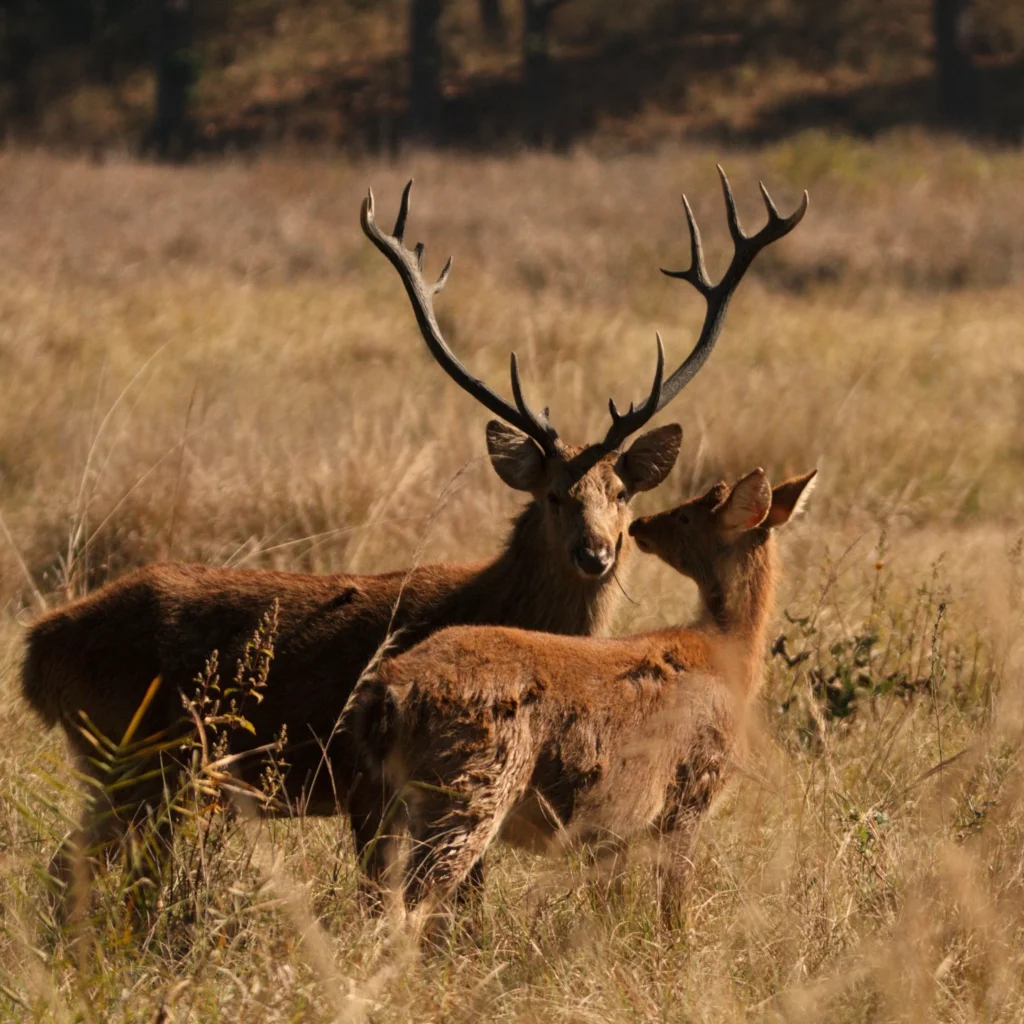
Barasingha (Rucervus duvaucelii) are listed as Vulnerable. Their name translates to “twelve-tined,” referring to the impressive antlers of mature males. Unlike the widely distributed chital, Barasingha are specialized wetland and grassland ecologically. Their populations are concentrated in a few specific protected areas, primarily split into hard-ground and eastern swamp deer populations.
Hog Deer
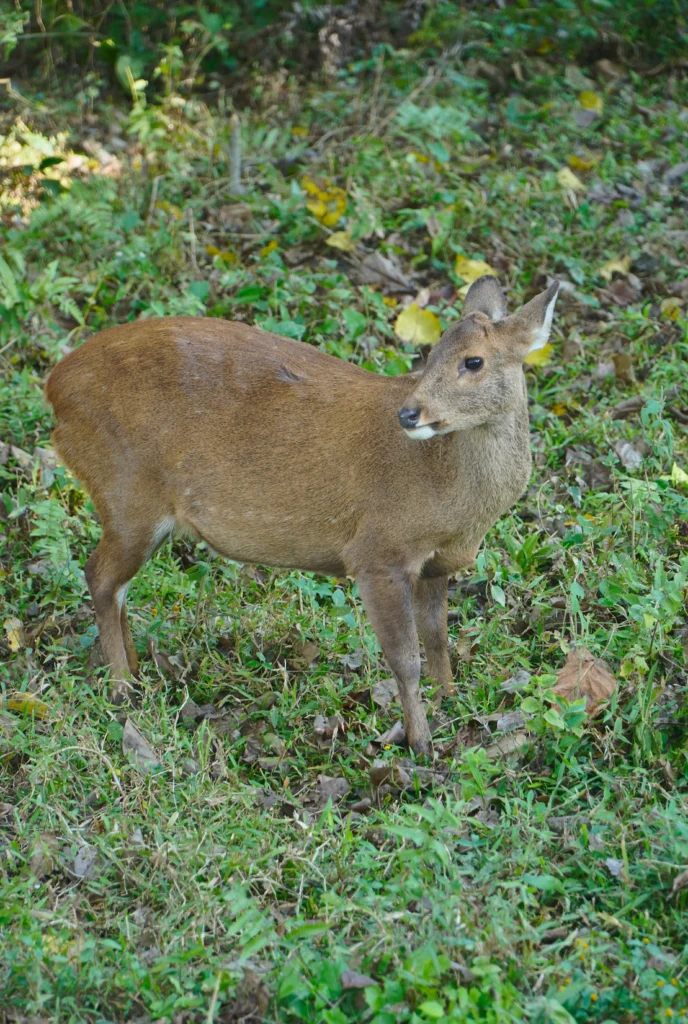
The Hog deer (Axis porcinus) is an Endangered species, with an estimated Indian population of 1,400 to 1,600. They prefer dense floodplain habitats, making them challenging to spot unless you are in the right terrain. They get their name from their habit of running with their head low, resembling a wild pig.
Himalayan Musk Deer
The Himalayan musk deer (Moschus leucogaster) is an Endangered, high-altitude species. They lack antlers entirely. These deer are not typical safari animals; they are elusive, mountain-dwelling species that usually require high-altitude trekking to observe.
Field Note: Do not confuse rare deer with the common deer frequently seen on Indian safaris. Chital (spotted deer), sambar, muntjac, and blackbuck are widely distributed. The species detailed in this guide live in restricted, fragmented habitats.
Rare Deer Field Guide
| Species | Primary Habitat | Distinguishing Feature | Conservation Status |
| Sangai | Floating vegetation (phumdi) | Distinctive long brow tines | Endangered |
| Hangul | Kashmir Himalayan terrain | Stag with prominent antlers | Critically Endangered |
| Barasingha | Wetlands and tall grasslands | Large, multi-tined antlers | Vulnerable |
| Hog Deer | Floodplains | Pig-like running posture, smaller size | Endangered |
| Musk Deer | High-altitude alpine forests | No antlers, high-altitude ecology | Endangered |
Best Places to See Rare Deer Species in India
When planning a wildlife trip to see India’s rare deer, destination selection is dictated entirely by the species you wish to observe. Because these animals are highly specialized to their environments, they do not overlap in the same parks.
Here is a detailed breakdown of the premier reserves for each species, including what to expect regarding terrain and viewing difficulty.
Keibul Lamjao National Park for Sangai
Keibul Lamjao National Park in Manipur is the only place in the world where you can see the Sangai in its natural habitat. The park is located on the southern end of Loktak Lake and is characterized by phumdi—a unique ecosystem of floating, decomposed plant matter. The Sangai are entirely dependent on this floating vegetation system.
- Practical Guidance: Accessing the park requires traveling to Manipur, which is well off the standard Indian wildlife circuit. Viewing is often done from watchtowers or by taking small boats to scan the floating islands. Because the population is restricted to this single, small area (estimated around 200 individuals), focused observation efforts here are generally successful.
Dachigam National Park and Kashmir for Hangul
Dachigam National Park, located just outside Srinagar in Jammu and Kashmir, is the primary stronghold for the Hangul, or Kashmir stag. This critically endangered deer is restricted entirely to the Kashmir Valley and its adjacent mountains.
- Practical Guidance: The Hangul is notoriously elusive, and sightings are never guaranteed. The terrain is rugged and mountainous. Wildlife viewers must be prepared for variable weather and challenging tracking conditions.
Expert Tip: Winter offers the best visibility for tracking the Hangul in Dachigam. When heavy snow blankets the higher elevations, the deer often move down into the lower valleys to forage, increasing the likelihood of sightings.
Kanha National Park for Barasingha
Kanha National Park in Madhya Pradesh is widely recognized as the definitive destination for seeing the hard-ground subspecies of the Barasingha. The park’s management successfully saved this subspecies from the brink of extinction, making it one of India’s most important conservation success stories.
- Practical Guidance: Kanha is an excellent choice for most visitors because it offers easy access, outstanding tourism infrastructure, and a well-regulated jeep safari system. The Barasingha are highly visible here as they graze in the park’s open meadows (maidans).
Kaziranga and Northeastern Wetlands for Eastern Swamp Deer
If you are looking for the eastern subspecies of the swamp deer, Kaziranga National Park in Assam is the premier destination. While Kaziranga is famous for rhinos, its vast floodplain grasslands provide the exact habitat required by these wetland-dependent deer.
- Practical Guidance: Kaziranga offers high visibility due to the open nature of its short and tall grasslands. This makes it an ideal destination for photographers and first-time wildlife travelers looking to observe rare deer alongside other megafauna.
Dudhwa and Floodplain Forests for Hog Deer
Dudhwa National Park in Uttar Pradesh is one of the most reliable places to spot the endangered Hog deer. This species favors the dense, tall, and wet grasslands of the Terai floodplains.
- Practical Guidance: Hog deer are smaller and prefer dense cover, making them more difficult to spot than Barasingha. They are often seen darting through the undergrowth or flushing out into the open when disturbed. Dudhwa remains relatively quiet compared to central Indian parks, offering a more secluded safari experience.
Himalayan Parks and Sanctuaries for Musk Deer
The Himalayan musk deer lives in high-altitude alpine forests and is a completely different proposition for wildlife travelers. They do not live in standard safari parks.
- Practical Guidance: Observing a musk deer requires high-altitude trekking in specialized Himalayan sanctuaries, such as Great Himalayan National Park. They are elusive, furtive mountain species, making them the most difficult deer on this list to observe. This experience is strictly for hardcore wildlife trackers and adventure seekers.
Destination Comparison Matrix
| Destination | Target Species | Terrain | Viewing Difficulty | Accessibility |
| Keibul Lamjao NP | Sangai | Floating wetlands (phumdi) | Moderate | Moderate (Requires travel to Manipur) |
| Dachigam NP | Hangul | Himalayan mountains | High | Easy access from Srinagar, but difficult tracking |
| Kanha NP | Barasingha (Hard-ground) | Forest and open meadows | Low | High (Excellent safari infrastructure) |
| Kaziranga NP | Swamp Deer (Eastern) | Floodplain grasslands | Low | High (Well-established tourism routes) |
| Dudhwa NP | Hog Deer | Tall Terai grasslands | Moderate | Moderate (Quieter park, fewer crowds) |
| Himalayan Sanctuaries | Musk Deer | High-altitude alpine forest | Very High | Low (Requires mountain trekking) |
Best Places to Visit by Traveler Type
Choosing the right destination depends entirely on your travel style and experience level in the field. Not every rare deer habitat is suitable for a standard family holiday, while some parks offer world-class infrastructure for first-time visitors.
Decision Guide: Matching Your Travel Style to the Destination
- For First-Time Wildlife Travelers: Kanha National Park and Kaziranga National Park are the most reliable choices. Both parks offer established safari routes, easy access, excellent guides, and high visibility for Barasingha (swamp deer).
- For Serious Photographers: Kaziranga and Kanha again lead the list because their open grasslands and meadows provide clear lines of sight. Dudhwa National Park is also excellent for photographers looking to document the Hog deer in a quieter setting without heavy tourist traffic.
- For Conservation Travelers: Keibul Lamjao National Park (for Sangai) and Dachigam National Park (for Hangul) offer deep insights into complex conservation challenges. Visiting these areas supports highly restricted, endemic species that require active protection.
- For High-Altitude Adventure Seekers: Himalayan parks and sanctuaries are the only places to look for the Himalayan musk deer. These expeditions require serious mountain trekking and are suited only for physically fit, experienced travelers.
Best Time to Visit for Deer Safaris
Timing your visit correctly is critical for spotting rare species, as their movements are heavily dictated by weather and habitat conditions.
Winter Visibility
Winter is generally the most comfortable and productive season for wildlife viewing across India. The cooler months dry out the tall grasses in parks like Kanha and Kaziranga, making Barasingha easier to spot. For the Hangul in Kashmir, heavy winter snow at higher elevations forces the deer down into the lower valleys of Dachigam to forage, significantly increasing your chances of a sighting.
Photography Tip: Rare deer are often easier to study than to photograph. To get clear images without harsh shadows, prioritize the early winter months and focus your efforts on the first hour of morning light or the final hour before sunset.
Monsoon Access and Habitat Conditions
The monsoon season drastically alters access and habitat use. Many central and northern Indian parks close entirely during the heavy rains (typically July to September). In places like Kaziranga, severe flooding forces wildlife, including swamp deer, to move to higher ground. In Keibul Lamjao, seasonal water levels directly impact the floating phumdi habitat of the Sangai. Always verify park opening dates before planning a trip between June and October.
Early-Morning and Late-Afternoon Viewing
Regardless of the season, deer are crepuscular, meaning they are most active during dawn and dusk. Midday safaris are rarely productive, as deer will retreat into dense cover to rest and avoid the heat. Plan to be at the park gates right when they open.
Conservation and Protection: Why These Habitats Matter
When you look for rare deer in India, you are looking at the health of fragile, specialized ecosystems. These species are conservation priorities precisely because their habitats are under severe pressure.
Threats by Species
The threats facing these animals are specific to their environments:
- Habitat Loss and Fragmentation: The expansion of agriculture and human settlements has severely restricted the ranges of the Hangul in Kashmir and the Barasingha in central India.
- Flooding and Water Changes: The Sangai is entirely dependent on the water levels of Loktak Lake. Changes in the local hydrology directly threaten the floating phumdi they stand on.
- Poaching: While anti-poaching efforts have improved, it remains a historical and ongoing threat for species like the Himalayan musk deer, which is targeted for its musk pod.
- Development Pressure: Encroachment into wetland and floodplain habitats continues to pressure Hog deer and swamp deer populations.
Responsible Wildlife Tourism
Tourism can support conservation when managed correctly, but it can also stress fragile environments.
Responsible Tourism Tip: When visiting delicate habitats like the floating wetlands of Manipur or the high-altitude forests of the Himalayas, strict ethical discipline is required. Always stay on designated routes, avoid crowding the animals, and respect park rules regarding noise and vehicle proximity. Never encourage drivers to go off-road to secure a better photograph.
Common Mistakes When Planning a Rare Deer Safari
Planning a wildlife trip around rare species comes with distinct logistical and tracking challenges. Avoiding these common missteps will save you time and set realistic expectations for your itinerary:
- Assuming all deer in India are common: Many visitors assume deer are abundant throughout every park. While spotted deer (chital) and sambar are widespread, species like the Sangai, Hangul, Barasingha, and Hog deer are habitat specialists confined to small, fragmented reserves.
- Expecting guaranteed sightings of mountain species: Tracking the Hangul in Dachigam or the Himalayan musk deer in high-altitude terrain requires patience, physical effort, and luck. Unlike grassland safaris where animals graze in open meadows, mountain sightings are never guaranteed.
- Treating musk deer as safari animals: Musk deer inhabit subalpine and alpine zones and cannot be observed from a safari jeep. They require multi-day mountain trekking and specialized high-altitude planning.
- Traveling during the peak monsoon: Heavy rains between June and September cause severe flooding in floodplain reserves like Kaziranga and Dudhwa, while altering the floating phumdi in Keibul Lamjao. Many parks close entirely during this period.
Frequently Asked Questions About Rare Deer in India
What are the best places to see rare deer species in India?
The best locations are Keibul Lamjao National Park in Manipur (Sangai), Dachigam National Park in Jammu and Kashmir (Hangul), Kanha National Park in Madhya Pradesh (Barasingha), Kaziranga National Park in Assam (Eastern swamp deer), and Dudhwa National Park in Uttar Pradesh (Hog deer).
Which rare deer species are found only or mainly in India?
The Sangai is strictly endemic to the floating wetlands of Keibul Lamjao in Manipur. The Hangul (Kashmir stag) is restricted to the Kashmir Valley and its adjacent mountain ranges.
Where can I see Sangai in the wild?
The only place to see the Sangai in the wild is Keibul Lamjao National Park, located on Loktak Lake in Manipur.
Where can I see Hangul in the wild?
Hangul can be tracked primarily in Dachigam National Park and surrounding areas of the Kashmir Valley.
Where can I see Barasingha in India?
You can see hard-ground Barasingha in Kanha National Park (Madhya Pradesh) and the eastern subspecies in Kaziranga National Park (Assam) and Dudhwa National Park (Uttar Pradesh).
Where can I see Hog deer in India?
Hog deer are most reliably spotted in the wet floodplain grasslands of Dudhwa National Park in Uttar Pradesh and Kaziranga National Park in Assam.
Where can I see Himalayan musk deer in India?
Himalayan musk deer inhabit high-altitude Himalayan protected areas, such as the Great Himalayan National Park, requiring mountain treks rather than standard vehicle safaris.
Which deer is the rarest in India?
The Sangai and the Hangul are among the rarest deer in India. The Sangai has an estimated wild population of around 200 individuals, while the Hangul is critically endangered with only a few hundred remaining in the wild.
What is the difference between Barasingha and Chital?
Chital (spotted deer) are smaller, keep their white spots into adulthood, and are common across central and southern forests. Barasingha are much larger, lack permanent adult spots, possess large multi-tined antlers, and live specifically in wetlands and tall grasslands.
What is the best season for deer sightings?
The winter months (November through March) offer the best combination of open visibility, comfortable weather, and active foraging behavior during early mornings and late afternoons.
Final Recommendations for Your Wildlife Trip
- Best Overall Destination for First-Time Travelers: Kanha National Park or Kaziranga National Park. Both provide well-managed safari operations, excellent viewing infrastructure, and reliable opportunities to see Barasingha alongside other major wildlife.
- Best Destination for an Endemic Rarity: Keibul Lamjao National Park. A journey to Manipur allows you to witness the endangered Sangai in a floating wetland environment found nowhere else on Earth.
- Best Destination for a Mountain Experience: Dachigam National Park. Visiting the lower valleys in winter provides your best opportunity to track the elusive Hangul in its native Himalayan habitat.