Plan your Corbett photography safari with expert tips on the best zones, seasonal timing, gear choices, and crucial updates on the new mobile phone ban.
Is Corbett Good for Photography?
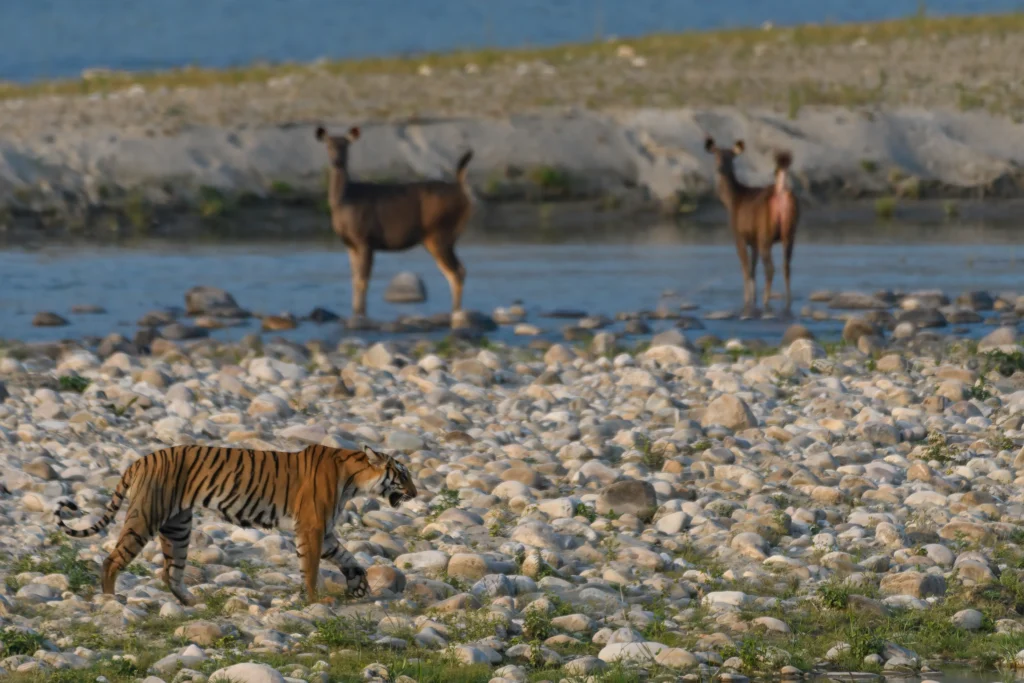
As India’s first national park, Jim Corbett National Park stands as one of the most recognizable safari landscapes for photographers. Capturing its wildlife requires careful preparation, clear seasonal planning, and a strict adherence to dynamic park regulations. A successful photography trip here depends on understanding the unique terrain and adapting your workflow to recent policy updates.
Corbett offers distinct visual opportunities that set it apart from other Indian tiger reserves. The park rewards photographers who value environmental compositions just as much as close-up animal portraits.
The Landscapes and Habitat Diversity
The photographic variety in Corbett stems directly from its diverse terrain. Photographers can work across distinct backdrops within a single safari drive, including open riverine vistas, expansive grasslands, dense sal forest edges, low-lying wetlands, and foothill scenery. This structural diversity allows you to frame wildlife against varied layers of depth and texture rather than uniform brush.
Primary Wildlife and Birding Subjects
While the Royal Bengal tiger is the primary target for many visitors, the park provides an extensive list of mammalian and avian subjects. Photographers can routinely encounter the Asiatic elephant, leopard, sloth bear, chital, sambar deer, and wild boar.
For bird photography, the park serves as a critical habitat for raptors and riverine species. Key avian subjects include the Pallas’s fish eagle, lesser fish eagle, crested serpent eagle, various kingfishers, hornbills, woodpeckers, and a massive influx of migratory waterbirds during specific months.
Crucial Photography Rules and Regulations
Corbett Tiger Reserve has sharpened its conservation policies to emphasize reduced human interference. Photographers must understand these boundaries to avoid heavy fines or equipment confiscation.
The Mobile Phone Ban
The most critical workflow update centers on a strict ban on mobile phones during safaris. Official regulations prohibit visitors from carrying or using mobile phones inside the safari vehicles.
Field Note: This policy shifts the entire field workflow. Photographers can no longer rely on a smartphone for secondary wide-angle shots, quick behind-the-scenes video clips, or focal length reference notes. You must be prepared to manage your entire day using dedicated camera bodies.
DSLR and Camera Body Permissions
While mobile phones are barred, standard dedicated photography equipment remains permitted. DSLR and mirrorless camera bodies are fully allowed on safari drives.
However, your physical movement is tightly constrained. Walking, trekking, or driving off designated tourism tracks inside the tiger reserve is completely illegal. Photographers must remain safely inside the authorized safari vehicle at all times and follow the direct commands of the certified naturalist and driver.
Drone Restrictions and Permissions
Drones are not a casual tool for visitors or standard media tracking. While specialized drone operations have been discussed under strict administrative frameworks, any drone use by regular tourists remains strictly permission-controlled and generally unauthorized. Operating a drone without written, official clearance from the forest department carries severe legal penalties.
Field Etiquette and Safe Distances
Achieving a clean shot should never come at the expense of animal welfare or park rules.
- Clothing: Photographers must wear dull-colored, earthy clothing (khaki, olive green, brown) to blend into the environment. Bright colors can alarm wildlife and cause them to retreat from the road edges.
- Noise Management: Keep noise to an absolute minimum. Instruct your vehicle group to remain silent when approaching a subject, and utilize silent electronic shutters on mirrorless bodies to prevent startling sensitive species.
- Proximity: Never pressure your driver to crowd an animal. Maintaining a safe distance is legally mandated and ensures the subject displays natural behavior, resulting in superior, authentic images.
- Artificial Lighting: The use of external flash units or any artificial light source is strictly prohibited during wildlife viewing, as it temporarily blinds and distresses the animals.
Best Season for Photography in Corbett
To choose the best time for your photography trip, decide whether your primary focus is large mammals or birds, as their peak visibility windows do not overlap. The changing climate throughout the operational year alters the forest structure, directly affecting line-of-sight and animal behavior.
Tiger Photography Window (March to June)
The months from March to June provide the highest probability for clean tiger frames. As afternoon temperatures rise, the dense undergrowth and deciduous foliage dry up and thin out, reducing the background clutter that often interferes with camera autofocus systems.
Furthermore, natural water holes inside the forest dry up, forcing apex predators and large herbivores to frequent the main river channels and remaining pools regularly. The harsh, direct sunlight during midday can create high-contrast shadows, making early morning and late afternoon hours the most productive times for balanced exposures.
Bird Photography Window (November to February)
Winter is the ideal period if your goal is to build an extensive avian portfolio. During these months, resident species are joined by a massive influx of migratory winter visitors, particularly waterfowl, waders, and raptors.
The winter light remains soft and directional for a longer duration during the day, allowing you to shoot at lower ISO settings without encountering harsh highlight clipping. Morning fog is common along the riverbeds in December and January, which can be leveraged to capture minimalist, high-key atmospheric images, though it requires patience until the mist clears enough for sharp tracking.
Landscape and Mixed Wildlife Shoulder Months
February and March serve as transition months that balance the advantages of both seasons. The weather is moderate, and the forest begins to shift from the lush post-monsoon green to the dry phase. This period is ideal for photographers who want to document a varied mix of mammals, active bird species, and changing foliage without enduring the intense heat of late summer or the heavy morning mist of mid-winter.
Table 1: Best Season by Photography Subject
| Subject | Optimal Months | Environmental Conditions | Strategic Value for Photographers |
| Tigers | March to June | High temperatures, drying foliage, wildlife concentrates near remaining water pools. | Clear lines of sight through sparse undergrowth; predictable movement near riverbeds. |
| Birds | November to February | Cooler climate, arrival of migratory winter visitors, soft winter light. | High species diversity; favorable lighting conditions throughout the mid-day hours. |
| Landscapes | October to November | High water levels, post-monsoon green foliage, crisp atmosphere. | Rich green backdrops and full river frames immediately after the rainy season. |
| Mixed Wildlife | February to March | Moderate temperatures, transitioning foliage, active seasonal behaviors. | Balanced conditions offering fair opportunities for both mammals and resident bird species. |
Mapping Corbett’s Photography Zones and Hotspots
Your choice of safari zone dictates the physical background of your images and the specific animal behaviors you can expect to document. Each zone operates on a distinct seasonal calendar and features unique terrain characteristics.
Dhikala Zone and the Ramganga Belt
Dhikala is highly sought after by wildlife photographers due to its vast, open vistas. Operating from 15 November to 15 June, this zone is characterized by the massive Chaur (grassland) and the wide gravel beds of the Ramganga River.
Field Note: Dhikala allows you to frame subjects against distant, uncluttered backgrounds. It is one of the finest locations in India for documenting herds of Asiatic elephants moving across open plains or tigers patrolling the river edges.
Bijrani Zone
Operating from 15 October to 30 June, Bijrani offers a classic forest environment dominated by mixed dry deciduous vegetation, sal patches, and rugged fire lines. The tracks here are narrower, creating a sense of intimacy in your images. It is an excellent zone for capturing close-up portraits of deer, wild boars, and langurs against dense forest textures, along with steady big cat sightings along the dry riverbeds.
Jhirna, Dhela, and Garjiya Zones
These zones remain open to visitors throughout the entire year, subject to weather conditions and safe track maintenance.
- Jhirna & Dhela: These zones feature large areas of reclaimed agricultural land that have transitioned into secondary scrub and open grasslands. They offer excellent opportunities for photographing low-light specialist birds, such as owls, along with sloth bears and elephants.
- Garjiya: This zone follows a riverine corridor where the forest meets rocky stream beds. It provides good opportunities for capturing elephants bathing or mammals descending steep embankments to drink.
Kosi Barrage and Wetland Areas
Located just outside the formal boundaries of the park zone, the Kosi Barrage and its adjacent marshy banks are highly productive areas for bird photographers. Because this area sits outside the safari zone restrictions, you can utilize tripods and spend extended periods tracking specific waterbirds, storks, ibises, and kingfishers without being confined to a moving vehicle.
Sitabani Zone
Sitabani acts as a buffer zone and operates year-round. While tiger sightings are less frequent here, the zone offers deep, mixed forest canopy roads and rocky hill terrain. It is a valuable location for landscape compositions, macro photography of forest insects, and tracking specific forest birds that prefer dense canopy cover.
Table 2: Zone-by-Zone Photography Potential
| Zone | Operational Window | Primary Habitats | Key Photographic Targets |
| Dhikala | 15 Nov – 15 June | Grasslands (Chaur), Ramganga riverbed, sal forests. | Tigers, Asiatic elephants, hog deer, raptors, wide-angle landscapes. |
| Bijrani | 15 Oct – 30 June | Mixed dry deciduous forests, riverbeds, forest edges. | Tigers, leopards, sloth bears, chital, jungle cats. |
| Jhirna & Dhela | Year-round | Dense secondary forests, open grasslands, riverbeds. | Elephants, sloth bears, resident birds, owls, tigers. |
| Garjiya | Year-round | Riverine forest corridor, rocky stream beds. | Tigers, elephants, wading birds. |
| Kosi Barrage | Year-round (Outside Park) | Open wetlands, riverbanks, marshy edges. | Migratory waterbirds, storks, ibises, kingfishers, river otters. |
| Sitabani | Year-round (Buffer Area) | Deep mixed forest, rocky hills, streams. | Forest birds, landscape compositions, general forest ecology. |
Camera Gear and Field Preparation
With the strict ban on mobile phones, you can no longer rely on your smartphone as a backup device for wide-angle shots, video clips, or note-taking. Your dedicated camera system must be fully equipped to handle everything from distant bird sightings to expansive landscape frames without swapping gear constantly in a dusty vehicle.
Choosing the Right Lenses
Flexibility is critical during a Corbett jeep safari. Because you cannot exit the vehicle or instruct the driver to go off-road, you must frame your subjects from fixed, often restrictive positions.
- Telephoto Zooms (The Workhorse): A versatile zoom lens in the 200–400mm or 100–500mm range is the most practical choice for mammal photography. It allows you to shoot a tight portrait of a tiger and immediately zoom out to capture an elephant herd crossing the Ramganga river.
- Super Telephoto Lenses: For dedicated bird photography, particularly for smaller forest species or raptors perched high in the canopy, a 600mm lens (or a 400mm paired with a 1.4x teleconverter) is highly recommended.
- Mid-Range Zooms: Do not ignore the wider end of the spectrum. A 24–70mm or 70–200mm lens is invaluable for capturing Corbett’s iconic landscapes, morning mist, and environmental portraits of wildlife within their habitat.
Camera Settings for Safari Conditions
The lighting in Corbett shifts rapidly. You may transition from tracking a leopard in the dense, dark canopy of a sal forest to photographing a tiger under the glaring midday sun on the open Chaur.
- Shutter Speed: Keep your shutter speed high. Aim for a minimum of 1/1000s for general wildlife to compensate for the slight vibrations of the safari jeep. Push this to 1/2000s or faster for birds in flight or running predators.
- Auto ISO: Utilize your camera’s Auto ISO feature with a designated maximum cap (e.g., ISO 6400). This allows your camera to automatically adjust to sudden changes in light—such as a subject moving from direct sunlight into heavy forest shadow—while you maintain control over your shutter speed and aperture.
- Autofocus and Drive Mode: Set your camera to continuous autofocus (AF-C or Servo AF) and use animal-tracking or eye-detection AF if your system supports it. Always utilize the silent electronic shutter to avoid alarming the subjects or disturbing other safari groups.
Dust Protection and Accessories
Corbett is notorious for its dry, dusty conditions, particularly between April and June when tiger sightings peak. Safari jeeps are open-top, meaning your gear is constantly exposed to the elements.
- Dust Defense: Keep a dry bag or a dedicated dust cover in your vehicle. A simple pillowcase or specialized lens sleeve can protect your equipment from the dust kicked up by other vehicles on the forest tracks. Always use a blower to clean your sensor back at the resort; never change lenses while the jeep is moving.
- Camera Support: Traditional tripods are highly impractical inside a crowded, bouncing six-seater gypsy. Instead, utilize a heavy-duty beanbag. You can rest it directly on the metal framing of the vehicle for excellent stability when tracking a stationary subject. Monopods can also work if you are using heavy prime lenses.
- Power and Storage: Because you cannot use a phone as a backup, bring double the number of batteries and memory cards you think you will need. The heat of the Indian summer can drain batteries faster than expected.
Table 3: Camera Equipment and Lens Selection Use Cases
| Gear Category | Specific Range / Type | Best Use Case in Corbett |
| Primary Telephoto Zoom | 100-400mm or 200-600mm | The ideal all-around choice. Perfect for tigers, elephants, and framing action from the jeep without missing a sudden movement. |
| Super Telephoto Prime | 500mm or 600mm | Essential for serious bird photographers targeting raptors, kingfishers, or distant waterfowl at the Kosi Barrage. |
| Mid-Range Zoom | 24-70mm or 70-200mm | Capturing the wide grasslands of Dhikala, atmospheric river mist, and environmental portraits showing the habitat. |
| Camera Body | Full-frame or APS-C Mirrorless | Silent shutter capabilities, superior autofocus tracking, and high-ISO performance for dark forest tracks. |
| Support System | Safari Beanbag | Providing stability over the vehicle’s metal railing without taking up the floor space required by a tripod. |
| Accessories | Dust covers, Rocket blower, Extra batteries | Essential defense against summer dust and ensuring you do not run out of power halfway through a drive. |
Fieldcraft and Safety
Understanding animal behavior and anticipating movement will improve your photography far more than buying a more expensive lens.
- Pre-Focus on Gaps: When tracking a tiger or leopard walking parallel to your jeep in the dense brush, do not try to focus through the leaves. Instead, find a natural gap in the foliage ahead of the animal, pre-focus on that spot, and wait for the subject to step into the frame.
- Listen to the Forest: Keep your ears open for alarm calls from sambar deer, langurs, and peafowl. These acoustic signals are often the first indicator that an apex predator is moving nearby.
- Respect Guide Instructions: Your certified naturalist understands the terrain and the boundaries of the park rules better than anyone. If they instruct you to stop shooting, lower your camera, or sit down to allow an animal space to cross, comply immediately.
Common Photography Mistakes to Avoid
A successful photography safari in Corbett requires avoiding several systemic errors that can ruin your images or conflict with park rules.
- Assuming a Phone is Sufficient: Relying on smartphones for quick adjustments or secondary footage is a direct violation of current rules. Bringing unapproved communication devices into the vehicle can lead to dynamic enforcement by park authorities.
- Chasing Close-Ups Exclusively: Many travelers focus entirely on filling the frame with a tiger’s face. In doing so, they miss the unique habitat elements of Corbett, such as the expansive gravel riverbeds and high sal canopies. Environmental portraits often tell a far more compelling story.
- Ignoring Non-Mammalian Subjects: Photographers frequently bypass opportunities to capture raptors, river birds, and deer because they are searching solely for large predators. This narrow focus results in significant downtime during a safari drive.
- Neglecting Active Dust Management: Failing to cover camera bodies between sightings allows fine dust to penetrate lens mounts and dials, causing mechanical lag or ruining sensor clarity during peak daylight hours.
Table 4: Official Rules and Device Permissibility
| Device / Action | Permissibility Status | Official Operational Rule |
| Mobile Phones | Strictly Prohibited | Not allowed inside safari vehicles during transit. |
| DSLR & Mirrorless | Fully Allowed | Permitted for use from inside the vehicle; no extra permit needed for standard tourists. |
| Drones | Restricted / Unauthorized | Requires high-level, advance written administrative permissions; completely banned for general tourists. |
| External Flash Units | Strictly Prohibited | Banned during all wildlife viewing to prevent animal distress. |
| Tripods | Restricted by Space | Impractical inside moving jeeps; highly useful in static zones outside the park like Kosi Barrage. |
| Off-Vehicle Trekking | Strictly Prohibited | Visitors must remain inside authorized vehicles on designated tracks at all times. |
Table 5: Photography Shot List by Forest Habitat
| Habitat Type | Key Animal & Avian Entities | Strategic Composition Approach |
| Grasslands (Chaur) | Asiatic elephants, hog deer, hunting raptors, tigers. | Low-angle positioning using beanbags; focus on wide environmental frames and herd movement. |
| Riverbeds & Wetlands | Pallas’s fish eagle, lesser fish eagle, crossing tigers, wading storks. | High shutter speeds (1/2000s+) to freeze water splashes; watch for reflections in early morning light. |
| Dense Sal Forest | Sambar deer, barking deer, langurs, tree canopies. | Open apertures (f/2.8 to f/4) and higher ISO configurations to balance deep shadow layers. |
| Road & Track Edges | Wild boars, jungle fowls, red foxes, emerging predators. | Pre-focus on predictable clearings in front of parallel-moving wildlife. |
Frequently Asked Questions About Corbett Photography
Is Jim Corbett good for wildlife photography?
Yes. Corbett is highly regarded for wildlife photography due to its unique combination of riverine landscapes, massive grasslands, and diverse species, including the Royal Bengal tiger and Asiatic elephant.
Which zone is best for photography in Corbett?
The best zone depends entirely on your subject. Dhikala is preferred for open landscapes, elephants, and wide riverbed frames. Bijrani is ideal for dense forest structures and intimate mammal portraits.
Is Dhikala the best zone for photos?
Dhikala offers the widest fields of view and distinct grassland vistas. However, access is seasonally limited from 15 November to 15 June, and booking slots fill up months in advance.
Is Bijrani better than Jhirna for photography?
Bijrani generally offers a more classic forest background and higher historical predator visibility during its open season (15 October to 30 June). Jhirna is open year-round and works well for documenting sloth bears and unique resident birds.
What is the best time of day for photography in Corbett?
Early morning and late afternoon provide the best lighting conditions. The directional light helps avoid harsh highlights, and wildlife is generally more active during these cooler hours.
Is winter or summer better for photography?
Summer (March to June) is superior for tiger tracking due to thinning foliage. Winter (November to February) is vastly superior for migratory bird photography and clear landscape lighting.
Are tigers easier to photograph in summer?
Yes. Sparse vegetation and the drying of interior forest pools force tigers to visit the main river channels regularly, increasing your chances of a clean shot.
Are birds easier to photograph in winter?
Yes. Hundreds of migratory waterbirds and raptors arrive in the park during winter, and the soft daylight allows for extended shooting hours without high-contrast shadows.
Are mobile phones allowed during safari?
No. Current park regulations strictly ban mobile phones during safari drives inside the tiger reserve.
Are DSLR cameras allowed during safari?
Yes. Dedicated DSLR and mirrorless camera systems are fully permitted for photography from inside the safari vehicle.
Are drones allowed in Corbett?
No. Drone operations are prohibited for general tourists and are restricted exclusively to specialized administrative functions requiring high-level official permits.
What lenses are best for Corbett wildlife photography?
A telephoto zoom lens like a 100–400mm or 200–600mm offers the best balance of reach and framing flexibility from a fixed vehicle position.
Conclusion
Capturing compelling wildlife images in Jim Corbett National Park requires aligning your target subjects with the correct zone and season. By matching your gear choices to the park’s environmental realities and strictly respecting the latest device rules and safety regulations, you ensure a productive field workflow. Prioritize the welfare of the forest and its wildlife above all else, and the landscape will naturally provide opportunities for authentic portfolio images.
Author Note & Update Log: Written by the WildlifeSafaris.in Editorial Team. Last Updated: August 2026.
Jim Corbett National Park : Topics Cluster
- Complete Safari Guide (2026)
- Safari Booking Guide: Complete Step-by-step Guide (2026)
- Best Zones in Corbett National Park
- Best time to Visit
- Safari Cost breakdown
- Safari Costs Explained 2026
- Dhikala vs Bijrani vs Jhirna Zones
- Corbett with Family
- Corbett vs Ranthambore
- Delhi to Corbett Travel Guide
- Weekend Trip to Corbett from Delhi 2N/3D
- Best Hotels and Resorts near Corbett
- Luxury Resort near Corbett
- Corbett Birdwatching Guide
- Corbett Photography Guide
- Wildlife in Uttarakhand