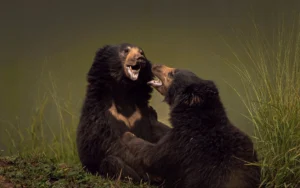
Discover why tigers are solitary animals, how territory, hunting strategy, prey distribution, and evolution shaped their behavior, and why they differ from lions.
Why Are Tigers Solitary?
Most people know that tigers usually live alone, but fewer understand why. Unlike lions, which live and hunt in prides, tigers have evolved to survive independently. Their solitary lifestyle is not a sign that they are unfriendly or antisocial—it is an adaptation that helps them hunt efficiently, defend resources, and raise young successfully.
A tiger’s way of life has been shaped by millions of years of evolution. The forests, grasslands, mangroves, and mountainous habitats where tigers evolved generally support scattered prey rather than large herds that require cooperative hunting. Living alone allows each tiger to exploit its territory without competing constantly with other adults.
Understanding tiger solitude also provides valuable insight into modern conservation. As habitats become fragmented and wild prey declines, the space that solitary tigers need becomes increasingly difficult to secure. Their behaviour is therefore closely linked to both ecology and conservation.
In this article, you’ll learn:
- What “solitary” really means in tiger ecology.
- Why evolution favoured independent living.
- How hunting strategy and territory influence behaviour.
- Why lions developed a different social system.
- When tigers do spend time together.
- Why solitary behaviour matters for tiger conservation today.
What Does “Solitary” Really Mean?
The word solitary often creates the wrong impression. It does not mean that tigers avoid every interaction with other members of their species. Instead, it means that adult tigers normally live, travel, hunt, and rest alone rather than forming permanent social groups.
This distinction is important because tigers regularly communicate with one another despite spending most of their lives apart. They leave scent marks, scratch trees, make vocal calls, and read signs left by neighbouring tigers. These indirect forms of communication help them maintain territories while avoiding unnecessary confrontations.
Rather than meeting frequently face to face, neighbouring tigers often know about each other’s presence through these territorial signals.
Field Note
Experienced wildlife guides often explain that a tiger may rarely see its neighbours directly, yet it constantly gathers information about them from scent markings and other signs. This communication system allows multiple tigers to occupy adjoining territories with surprisingly little direct conflict.
Why Did Tigers Evolve to Live Alone?
There is no single reason why tigers became solitary. Instead, several ecological and evolutionary factors work together to make independent living the most effective survival strategy.
The four most important reasons are:
| Factor | Why It Favors Solitary Living |
| Ambush hunting | Stealth is more effective with one hunter than a group. |
| Large territory requirements | Each tiger needs access to sufficient prey, water, and cover. |
| Scattered prey distribution | Food resources are usually too dispersed to support permanent groups. |
| Independent cub rearing | Female tigers can successfully raise cubs without coordinated group care. |
These factors reinforce one another. A tiger that hunts alone requires a large hunting area. Large territories naturally reduce contact with other adults, making solitary living both practical and efficient.
Solitary Does Not Mean Antisocial
Another common misconception is that tigers dislike each other.
In reality, tiger behaviour is better described as selectively social. Adult tigers usually avoid unnecessary contact because direct encounters can result in serious injuries. Even relatively small wounds can reduce a tiger’s ability to hunt, which may threaten its survival.
Instead of frequent physical interaction, tigers rely on communication systems that minimise conflict while still allowing them to find mates, establish territories, and reproduce successfully.
Avoiding conflict is often safer than winning a fight.
How Territory Shapes Tiger Behavior
A tiger’s solitary lifestyle is closely linked to the need for space. Every adult tiger requires a territory that provides enough prey, water, shelter, and breeding opportunities. Defending this area reduces competition and helps ensure a reliable food supply throughout the year.
Unlike social carnivores that share hunting grounds, tigers generally maintain exclusive home ranges. Adult males usually occupy larger territories that may overlap with those of several females, while neighbouring males typically avoid extensive overlap. This arrangement improves breeding opportunities while limiting direct competition between adult males.
Territory is therefore much more than an area on a map—it is the foundation of a tiger’s survival.
Why Large Territories Matter
A tiger’s territory must provide:
- Adequate prey throughout the year.
- Reliable water sources.
- Dense vegetation for stalking prey.
- Safe resting and breeding sites.
- Space with minimal disturbance from rival tigers.
If resources become scarce, tigers may travel farther, increasing the likelihood of encounters and territorial conflicts.
Expert Tip
When tracking tiger movements, researchers focus not only on where a tiger is seen but also on how it uses its territory over time. These movement patterns reveal habitat quality, prey availability, and breeding opportunities.
How Tigers Defend Their Territory Without Constant Fighting
Although tigers are powerful predators, they do not constantly fight over territory. Physical battles carry a high risk of injury, and even minor wounds can reduce hunting success.
Instead, tigers use an effective communication system to announce their presence and avoid unnecessary confrontations.
Common Territorial Signals
- Urine spraying
- Scent gland secretions
- Scratch marks on trees
- Ground scrapes
- Roaring and other vocalizations
- Footprints and travel routes
These signs provide neighbouring tigers with information about occupancy, sex, reproductive status, and recent activity.
Field Note
Forest guides often identify tiger movement by reading fresh pugmarks, scratch marks, and scent-marking locations. These signs may indicate that a tiger passed through an area hours or even days earlier without ever being seen.
Why Tigers Hunt Alone
One of the strongest reasons tigers remain solitary is their hunting strategy.
Tigers are ambush predators. Instead of chasing prey over long distances, they rely on stealth, camouflage, patience, and a sudden burst of speed. A successful hunt depends on approaching prey undetected until the final attack.
Cooperative hunting, as seen in lions, provides little advantage in the dense forests, tall grasslands, and wetlands where many tiger populations evolved. Additional hunters would often increase noise, movement, and the chance of alerting prey before the attack.
Hunting alone allows a tiger to:
- Move silently through vegetation.
- Choose the best approach without coordinating with others.
- Keep the entire kill rather than sharing it.
- Reduce competition for food.
- Adapt quickly to changing terrain and prey behaviour.
This strategy has proved highly effective for a predator capable of bringing down animals much larger than itself through surprise rather than teamwork.
How Prey Distribution Encouraged Solitary Living
Food availability also shaped tiger evolution.
Many of the deer, wild pigs, antelope, and other prey species that tigers hunt are spread across extensive landscapes rather than concentrated in dense groups large enough to support multiple adult predators feeding together.
When prey is dispersed:
- One hunter can usually secure enough food.
- Several adult tigers hunting together would increase competition.
- Sharing kills would reduce the energy gained by each individual.
- Larger groups would require much larger prey populations.
From an evolutionary perspective, independent hunting offered greater efficiency than permanent group living.
Comparison: Solitary vs Cooperative Hunting
| Feature | Tigers | Lions |
| Primary hunting style | Ambush by a single hunter | Often cooperative group hunting |
| Typical habitat | Forests, grasslands, mangroves, mixed landscapes | More open savannas and grasslands |
| Food sharing | Rare among adults | Common within prides |
| Dependence on teamwork | Low | High for many large prey species |
| Long-term social groups | Generally absent | Central to survival and reproduction |
This comparison highlights that neither strategy is universally better. Each evolved in response to different habitats, prey distributions, and ecological pressures.
How Solitary Tigers Stay Connected
Although adult tigers spend most of their lives alone, they are far from isolated.
Their communication system allows individuals to exchange information without frequent face-to-face meetings. Scent marks, vocal calls, claw marks, and other signs help maintain territories, locate potential mates, and reduce conflict.
In many ways, tiger communication enables a solitary lifestyle. Rather than eliminating social interaction, it replaces constant physical contact with an efficient network of environmental signals.
Tigers vs Lions: Why Their Social Systems Are Different
People often compare tigers and lions because they are both large cats, yet their lifestyles are remarkably different. The biggest difference is not their size or strength—it’s how they survive.
Tigers generally rely on independence, while lions depend on cooperation. These contrasting social systems evolved because each species adapted to different habitats, prey availability, and hunting strategies rather than because one species is more social than the other.
Why Lions Live in Prides
Lions benefit from group living because:
- Cooperative hunting can increase success against large prey.
- Pride members defend territory together.
- Females often help protect and raise cubs.
- Group living improves defence against rival lions.
Why Tigers Remain Solitary
Tigers gain different advantages from living alone:
- Ambush hunting works best without additional hunters.
- Large territories provide sufficient food for a single adult.
- Solitary living reduces competition over kills.
- Fewer direct encounters lower the risk of serious injuries.
Neither strategy is “better.” Each reflects millions of years of adaptation to different ecological conditions.
Tiger vs Lion Social Behaviour
| Behaviour | Tiger | Lion |
| Daily lifestyle | Mostly solitary | Lives in prides |
| Hunting | Usually alone | Often cooperative |
| Territory | Individually defended | Shared by pride members |
| Cub care | Primarily mother | Multiple females assist |
| Adult interactions | Mostly during mating or territorial encounters | Frequent social interaction |
This comparison illustrates that differences in ecology—not personality—shape how these big cats live.
When Do Tigers Spend Time Together?
Although tigers are primarily solitary, they are not completely isolated throughout their lives. There are several important situations in which they regularly interact.
1. Mother and Cubs
The strongest and longest-lasting social relationship in a tiger’s life is between a mother and her cubs.
After giving birth, the female raises her cubs alone. She nurses them, protects them from danger, teaches hunting skills, and gradually prepares them for independent life.
Young tigers generally remain with their mother for around two to three years before dispersing to establish territories of their own. During this period, the family functions as a close social unit even though adult tigers usually live independently.
Photography Tip
If you are fortunate enough to observe a tigress with cubs on safari, maintain a respectful distance and avoid encouraging guides to pressure the animals for closer sightings. A calm mother is far less likely to interrupt feeding, resting, or teaching behaviour.
2. During Mating
Adult males and females also spend time together during the breeding period.
These associations are usually temporary. Once mating is complete, both animals typically return to their normal solitary routines. Male tigers generally do not participate in raising cubs, making the mother solely responsible for parental care.
3. Occasional Tolerance Between Adults
Researchers have occasionally documented situations where adult tigers briefly tolerate one another around a kill or in neighbouring territories. Such observations are uncommon and should not be interpreted as evidence that wild tigers normally live in groups.
These exceptions demonstrate that tiger behaviour is flexible when ecological conditions allow, but permanent social groups remain rare.
4. Social Behaviour in Captivity
Captive tigers sometimes display more social flexibility than wild tigers because food, space, and mates are managed differently.
However, captive behaviour should not be considered representative of natural tiger ecology. Conditions in zoos, rescue centres, and managed breeding programmes differ substantially from those in the wild.
Responsible Tourism Tip
When learning about tiger behaviour, give greater weight to observations from wild populations than behaviours seen in captivity. Natural habitats provide the ecological conditions under which tiger behaviour evolved.
Why Solitary Behaviour Matters for Tiger Conservation
Understanding why tigers are solitary is essential for effective conservation.
Because each tiger requires sufficient space and prey, conserving isolated animals alone is not enough. Healthy tiger populations depend on large, connected landscapes that allow individuals to establish territories, find mates, and disperse safely.
Habitat fragmentation creates several challenges:
- Smaller territories may not support enough prey.
- Young dispersing tigers face greater risks when moving between habitats.
- Human–tiger encounters can increase.
- Opportunities for breeding may decline if populations become isolated.
Recent conservation assessments show that tiger recovery is possible in well-protected landscapes. At the same time, experts emphasize that the species remains critically depleted across much of its historical range, highlighting the continued importance of habitat protection, prey conservation, and landscape connectivity.
Expert Insight
Protecting a tiger means protecting the entire landscape it depends upon. Conservation efforts therefore focus not only on individual animals but also on maintaining connected forests, healthy prey populations, and ecological corridors that support naturally functioning territories.
Common Mistakes People Make About Tiger Solitary Behaviour
Misunderstanding tiger behaviour often leads to oversimplified conclusions. Here are some of the most common misconceptions and what the evidence actually shows.
Mistake 1: “Tigers are solitary because they dislike other tigers.”
Not true. Tigers avoid prolonged contact because living alone is the most efficient strategy for hunting, defending resources, and reducing the risk of injury. Their behaviour is driven by ecology and evolution rather than personality.
Mistake 2: “Tigers never interact with one another.”
Adult tigers regularly communicate through scent marks, vocalizations, and other territorial signals. They also come together for mating, while mothers spend several years raising their cubs.
Mistake 3: “All big cats have similar social lives.”
Each big cat species has evolved under different environmental conditions. Lions benefit from cooperative living, whereas tigers generally gain greater survival advantages by living independently.
Mistake 4: “Captive tiger behaviour reflects natural behaviour.”
Captive tigers may tolerate social housing under managed conditions, but this should not be confused with the behaviour of wild tigers living in natural habitats.
Frequently Asked Questions
Why are tigers solitary animals?
Tigers are solitary because their ambush hunting strategy, territorial requirements, prey distribution, and reproductive behaviour make independent living more efficient than permanent group living.
Do tigers always live alone?
Adult tigers usually do, but they regularly interact during mating, and mothers remain with their cubs for approximately two to three years while raising them.
Why don’t tigers live in prides like lions?
Lions evolved where cooperative hunting and group defence offered advantages. Tigers evolved in habitats where stealth hunting and large individual territories proved more successful.
How do tigers communicate if they live alone?
They communicate through scent marking, urine spraying, claw marks, ground scrapes, vocalizations, and other territorial signals that help reduce direct conflict while maintaining social awareness.
Do male tigers help raise cubs?
In most cases, no. Female tigers provide nearly all parental care, teaching cubs to hunt and survive before they disperse to establish their own territories.
Can tigers ever be social?
Yes, but only under specific circumstances such as mating, mother–cub relationships, occasional temporary tolerance in the wild, or managed conditions in captivity. These situations do not change the fact that adult tigers are primarily solitary.
Does solitary behaviour make tiger conservation more difficult?
Yes. Because each tiger requires extensive habitat and healthy prey populations, conservation efforts must protect large, connected landscapes rather than isolated patches of forest.
Are all tiger subspecies equally solitary?
While local ecological conditions may influence behaviour slightly, all living tiger subspecies are generally regarded as primarily solitary carnivores.
Conclusion
Tigers are solitary not because they are antisocial, but because living alone has proved to be the most successful survival strategy throughout their evolutionary history. Their ambush hunting style, need for extensive territories, dispersed prey, and largely independent cub-rearing all favour an independent lifestyle over permanent social groups.
At the same time, solitary does not mean isolated. Tigers communicate continuously through scent, sounds, and territorial markings, allowing them to avoid unnecessary conflict while locating mates and maintaining healthy spacing across the landscape. The close bond between a mother and her cubs further demonstrates that tiger social behaviour is flexible when it serves an ecological purpose.
Understanding why tigers live alone also deepens our appreciation of the challenges they face today. Conserving this iconic big cat means protecting the habitats, prey populations, and wildlife corridors that allow solitary individuals to thrive. By understanding the science behind their behaviour, we gain a clearer picture of what is required to ensure that wild tigers continue to survive across Asia for generations to come.