
Quick Facts and Highlights
| Parameter | Details |
| Official Name | Thattekad Bird Sanctuary (also known as Salim Ali Bird Sanctuary) |
| Location | Ernakulam District, Kerala, India (Northern bank of the Periyar River) |
| Total Area | Approximately 25 square kilometers |
| Established | 1983 |
| Primary Species | Ceylon Frogmouth, Malabar Trogon, Malabar Grey Hornbill, Black Baza |
| Nearest Airport | Cochin International Airport (COK) |
| Official Contact | Thattekad Ecotourism Office |
Why Thattekad Matters: Salim Ali’s Legacy
Thattekad Wildlife Sanctuary is Kerala’s first official bird sanctuary. The name “Thattekad” translates literally to “flat forest,” describing the characteristic low-land topography that sets it apart from the steeper, high-altitude regions of the Western Ghats. Despite its modest footprint of roughly 25 square kilometers, this reserve is recognized as an exceptionally rich bird habitat within the peninsula.
The sanctuary owes its protected status to Dr. Salim Ali, the pioneering ornithologist of India. During his systematic bird survey of Travancore in 1933, Dr. Ali recognized this specific low-land evergreen forest patch as an extraordinary concentration point for avian life. Following his formal recommendations, the government declared the region a sanctuary in 1983. Today, it holds international recognition as a Key Biodiversity Area (KBA), serving as a critical refuge for threatened species, structural forest specialists, and a long list of Western Ghats endemics.
Planning Your Visit: Arrival Logistics
Thattekad is highly accessible compared to many of India’s interior tiger reserves, making it straightforward to combine with broader Kerala travel routes.
How to Reach Thattekad
- By Air: Cochin International Airport (COK) is the closest airport, located roughly 45 kilometers away. A pre-paid taxi from the airport terminal to the sanctuary takes between 1.5 to 2 hours depending on traffic, costing approximately ₹1,500 to ₹2,000.
- By Rail: The nearest major railway stations are Aluva and Ernakulam Junction. Aluva is closer and less congested for travelers arriving from northern routes, while Ernakulam offers extensive connectivity across India. Taxis and local KSRTC buses run regularly from both locations toward Kothamangalam.
- By Road: The sanctuary sits roughly 12 kilometers northeast of Kothamangalam town. If you are driving from Kochi, follow the National Highway NH85 eastward through Muvattupuzha to Kothamangalam, then take the local route toward Bhoothathankettu and the sanctuary entry gate.
Opening Hours, Fees, and Permits
To plan your mornings effectively, you must coordinate around official gate schedules and ticketing protocols controlled by the Kerala Forest Department.
- Sanctuary Timings: The gates open daily from 6:00 AM to 6:00 PM. Serious birding requires arriving precisely at 6:00 AM to capture the peak period of dawn activity.
- Permit Allocation: Standard entry permits are issued directly at the main ecotourism office window near the park entrance. Advance online booking is highly recommended if you intend to secure specific forest department watchtowers or specialized multi-hour guided treks.
- Guide Regulations: Independent exploration is restricted to basic, marked public pathways near the entrance. To venture into the deep evergreen blocks or riparian zones where rare target species roost, you must hire a certified local naturalist guide through the ecotourism office.
Field Note: Do not attempt to save costs by bypassing a local naturalist guide. Many of Thattekad’s highly sought-after species, such as the Ceylon Frogmouth, rely on flawless camouflage and specific, hidden day-roosts. Without an experienced local tracker who monitors these territories daily, your chances of locating them in the dense understory drop significantly.
Seasonality, Habitats, and Species Highlights
When to Visit — Seasonality & Weather
The best time for serious birdwatching in Thattekad is from October to March. During these winter months, the weather is relatively dry, and the resident endemic bird population is highly active.
Visiting during the monsoon season requires careful consideration. The heavy, persistent rain typical of the Western Ghats can make wildlife observation difficult and significantly increases the presence of leeches on the forest trails. Furthermore, local authorities may occasionally close certain paths or restrict access due to weather conditions; it is always advisable to check for seasonal advisories before planning a monsoon trip.
Micro-Habitats and Ecosystem Dynamics
Unlike the high-altitude environments often associated with the Western Ghats, Thattekad is a distinctly low-elevation “flat forest”. The sanctuary is anchored by its position on the northern bank of the Periyar River, which creates a vital riparian zone that sustains the local ecosystem.
Within its compact footprint of roughly 25 square kilometers, the sanctuary holds a complex mosaic of vegetation. As you walk the trails, the environment shifts rapidly between dense tropical evergreen patches, semi-evergreen tracts, and open moist deciduous forests. The sanctuary boundaries also feature older plantations of teak and mahogany. This rapid transition between distinct micro-habitats is the primary reason Thattekad supports such a dense concentration of varied wildlife.
What to See — Birds, Mammals, and Reptiles
Target Bird Species
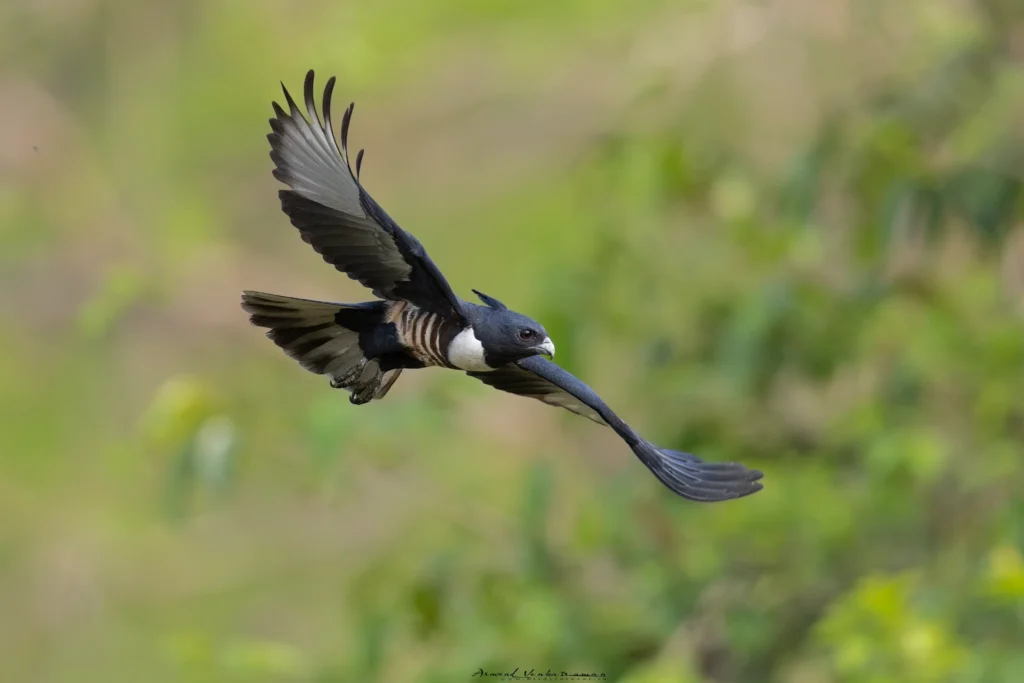
Thattekad is home to an estimated 250 to over 300 bird species. The main draw for international and domestic birders is the high density of Western Ghats endemics and specialized forest birds.
Below is a breakdown of the highest-priority target species found in the sanctuary based on recent biodiversity records:
Table 2: Key Avian Target Species & Habitat Preferences
| Common Name | Rarity / Status | Preferred Micro-Habitat |
| Ceylon (Sri Lanka) Frogmouth | Rare / Highly sought-after | Dense understory and dry leaf-litter roosts |
| Malabar Trogon | Western Ghats Endemic | Mid-canopy of evergreen and semi-evergreen patches |
| Malabar Grey Hornbill | Western Ghats Endemic | High canopy, often near fruiting trees |
| Black Baza | Notable resident/migrant | Forest edges and clearings |
| Malabar Whistling Thrush | Western Ghats Endemic | Shaded, rocky areas near streams |
| Nilgiri Wood Pigeon | Western Ghats Endemic | Dense evergreen canopy |
| Jungle & Jerdon’s Nightjar | Cryptic nocturnal species | Forest floor and scrub clearings |
| Malabar Parakeet | Western Ghats Endemic | Deciduous tracts and plantation edges |
| Crimson-backed Sunbird | Western Ghats Endemic | Flowering trees across various forest types |
Photography Tip: The Ceylon Frogmouth relies entirely on its plumage to mimic dead leaves and broken branches. Because they roost in the dark understory during the day, ethical photography is critical. Follow local forest rules regarding gear, and never use a flash, as it can disturb the birds and alert predators to their location.
Mammals, Reptiles, and Nocturnal Life
While birds are the primary focus, Thattekad supports a diverse array of other fauna. Biological surveys report approximately 34 mammal species within the sanctuary boundaries.
During standard daytime treks, you are most likely to encounter the bonnet macaque and the Indian giant squirrel. It is important to set realistic expectations regarding large mammals. While wild elephants and leopards are present in the broader landscape and occasionally move through the sanctuary, sightings are rare and should never be expected as a standard part of a visit. Other mammals commonly recorded include various species of deer and wild boar.
For those interested in nocturnal ecology, Thattekad is an excellent location to search for the slender loris. This small, cryptic primate is highly active at night, and specialized guided night walks offer the best chance for observation.
The sanctuary’s waterways and humid forest floor also support rich herpetofauna, with records indicating roughly 15 species of amphibians, including several endemic frogs, and up to 30 species of reptiles, including pythons and various snakes. Additionally, the adjacent Periyar river ecosystem sustains approximately 47 fish species.
Watchtowers, Trails, and Itineraries
Best Spots and Watchtowers
To maximize your time in the field, the forest department operates specific watchtowers and machans (elevated platforms) inside the sanctuary. The most notable locations are the Frogmouth Tower and the Hornbill Tower, along with the Ovunkal machan sites.
These structures offer excellent vantage points for observing canopy species and morning bird activity. However, they are highly sought after by serious birders and wildlife photographers.
Expert Tip: You cannot pitch a tent or camp anywhere you choose inside the reserve. Overnight stays within the sanctuary boundaries are strictly limited to these specific watchtowers and eco-stays. Because inventory is low, you must secure permits and bookings well in advance through the Thattekad ecotourism office.
Guided Treks and Activity Types
Exploration at Thattekad is primarily conducted on foot, which is ideal for birdwatching but requires patience and silence.
- Guided Eco-Treks: Walking the forest trails with a local guide is the standard method for exploring the sanctuary. Guides rely on their knowledge of local fruiting trees and roosting sites to locate target species.
- Night Walks: Thattekad is one of the few sanctuaries where guided night walks are possible, subject to current local rules. These nocturnal surveys are strictly guided and provide the only realistic opportunity to spot the slender loris, Jerdon’s nightjar, and active frogmouths.
- River Boating: For a different perspective, you can arrange boat rides along the Periyar River. This is an effective way to photograph riparian species and waterbirds without navigating dense undergrowth.
Sample Field Itineraries
To help organize your visit, here are practical schedules tailored to different travel styles. When planning your start time, always factor in the 1.5 to 2-hour drive from Cochin International Airport.
1-Day Express (The Serious Birder)
- 06:00 AM: Arrive at the gate precisely at opening. Meet your pre-booked guide.
- 06:15 AM – 10:00 AM: Focus immediately on the deep evergreen patches to locate endemics like the Malabar Trogon and Ceylon Frogmouth before temperatures rise.
- 10:00 AM – 03:30 PM: Break for lunch and rest outside the sanctuary.
- 03:30 PM – 06:00 PM: Return for the afternoon session, focusing on plantation edges and the Periyar riverbank to spot the Black Baza and Malabar Parakeet.
The Photographer’s Schedule
- Sunrise: Position yourself near the Periyar riverbank zones to utilize the soft morning light.
- Mid-Morning: Move to the Frogmouth or Hornbill Tower to shoot canopy species.
- Midday: Rest during the harsh midday light when bird activity is minimal.
- Late Afternoon: Walk the forest trails to capture ground-dwelling species and ending with sunset shots near the water.
The Family Day-Trip
- Morning: Arrive mid-morning and stick to the easily accessible public trails near the entrance.
- Late Morning: Visit the butterfly park and deer park, which are highly suitable and engaging for children.
- Afternoon: Take a short, relaxed boat ride on the river before heading to nearby Kothamangalam for lunch.
Practical Safety, Conservation, and Frequently Asked Questions
Practical Tips & Safety
Navigating a lowland tropical forest requires preparation. To ensure a safe and productive visit, consider the following practical logistics:
- Monsoon and Leeches: If you visit during or immediately after the monsoon season, leeches are highly prevalent on the forest trails. Wear specialized leech socks and reliable rain gear.
- Emergency Facilities: For medical emergencies, the nearest well-equipped healthcare facilities and hospitals are located in Kothamangalam and Aluva.
- Photography Rules: Drones are generally prohibited within the sanctuary to prevent disturbing the canopy species. Always follow forest department rules and never use flash photography near nesting sites or roosting nocturnal birds.
Common Mistakes to Avoid
- Expecting a Big-Game Safari: Thattekad is a specialized bird sanctuary. While elephants and leopards occasionally move through the broader landscape, sightings are not guaranteed and should not be the primary focus of your visit.
- Skipping the Local Guide: Assuming you can spot cryptic species like the Ceylon Frogmouth without a local naturalist is a mistake. These birds rely on flawless camouflage, and local guides know their specific daily roosting locations.
- Assuming Open Camping is Allowed: Visitors cannot pitch a tent anywhere in the sanctuary. Overnight stays inside the forest are strictly regulated and limited to specific watchtowers and machans, which require advance permits.
Conservation, Research & How to Help
Thattekad is formally recognized as a Key Biodiversity Area (KBA) due to its critical role in sustaining endemic Western Ghats species. Despite its protected status, the sanctuary faces ongoing conservation threats, primarily from habitat loss in the surrounding regions and the pressures of increasing tourism.
Visitors play a direct role in the sanctuary’s preservation. You can minimize your impact by keeping noise to an absolute minimum and strictly adhering to trail boundaries. For those interested in citizen science, contributing your sighting checklists to platforms like eBird helps researchers track species distribution and seasonal patterns over time.
Frequently Asked Questions (Top 20)
1. What and where is Thattekad Bird Sanctuary? It is Kerala’s first bird sanctuary, located on the northern bank of the Periyar River in the Ernakulam district.
2. How large is the sanctuary? It covers an area of approximately 25 square kilometers.
3. When was it established and why is it named after Salim Ali? It was formally established in 1983 following the recommendation of Dr. Salim Ali, who surveyed the area in 1933.
4. How many bird species are recorded here? Surveys consistently record between 250 and over 300 bird species.
5. Which rare or endemic birds can I expect to see? Key targets include the Ceylon Frogmouth, Malabar Trogon, Malabar Grey Hornbill, and Black Baza.
6. What other wildlife occurs in the sanctuary? You may encounter bonnet macaques, Indian giant squirrels, slender loris (at night), and a variety of reptiles and amphibians.
7. When is the best time to visit? October to March is the optimal window for birding, as the monsoon rains have subsided.
8. How do I reach Thattekad? Cochin International Airport (COK) is the nearest airport, and Aluva or Ernakulam are the closest major railheads.
9. What are the sanctuary opening hours and entry fees? The sanctuary is generally open from 6:00 AM to 6:00 PM; check with the ecotourism office for current daily entry fees.
10. Are local guides required for trekking? Yes, hiring a certified local guide is required for deep forest trails and highly recommended for locating rare species.
11. What accommodation options exist? Options include forest department watchtowers inside the sanctuary, nearby eco-lodges, and standard hotels in Kothamangalam.
12. Can I stay overnight inside the sanctuary? Yes, but only in designated watchtowers and machans, which require advance booking.
13. Are night walks allowed? Guided night walks are possible specifically for spotting nocturnal species like the slender loris, subject to local forest rules.
14. Is Thattekad suitable for families and children? Yes. The sanctuary features easily accessible paths, a butterfly park, and a deer park that are ideal for families.
15. What are the photography restrictions? Drones are generally not permitted, and flash photography should be avoided to protect the wildlife.
16. What kinds of boat rides are available? Visitors can arrange boat rides on the Periyar River, which are excellent for photographing waterbirds and riparian ecosystems.
17. How should I prepare for the monsoon? If visiting during the wet season, bring heavy-duty rain gear and specialized leech socks.
18. Where is the nearest healthcare facility? The nearest hospitals and emergency contacts are located in Kothamangalam and Aluva.
19. Can educational groups book visits? Yes, schools and research groups can coordinate educational visits directly through the Thattekad ecotourism office.
20. What are the primary conservation threats? The sanctuary is primarily threatened by habitat loss in adjacent areas and the environmental impact of unmanaged tourism.
Sources, Contacts & Downloads (upcoming)
To ensure your trip planning is based on the most current data, utilize the following resources:
- Downloads: Download our free Thattekad 50-Species Checklist (PDF) to track your sightings, which includes rarity tags and habitat notes.
- Bookings: Contact the official Thattekad Ecotourism Office directly to verify current watchtower availability, confirm guide fees, and secure permits prior to arrival.
- Citizen Science: Upload your trip data to eBird to assist with ongoing Key Biodiversity Area (KBA) monitoring.
About the Author: Written by the senior editorial team at WildlifeSafaris.in, combining field-tested logistics with data verified against Key Biodiversity Area (KBA) factsheets, BNHS surveys, and Kerala Tourism archives.
Update Log: Last Updated: August 2026.
Periyar National Park : Topics Cluster
- Periyar National Park Safari Guide
- Periyar Detailed Guide
- Best Resorts near Periyar National Park
- Periyar Wildlife Landscape
- Thattekad Bird Sanctuary
- Western Ghats Biodiversity
- Indian Elephant Guide
- Elephant Landscapes of India
- Wildlife in Kerala
- Wildlife Tourism in Kerala
- Mathikettan Shola National Park
- Nilgiri Biosphere Reserve Guide