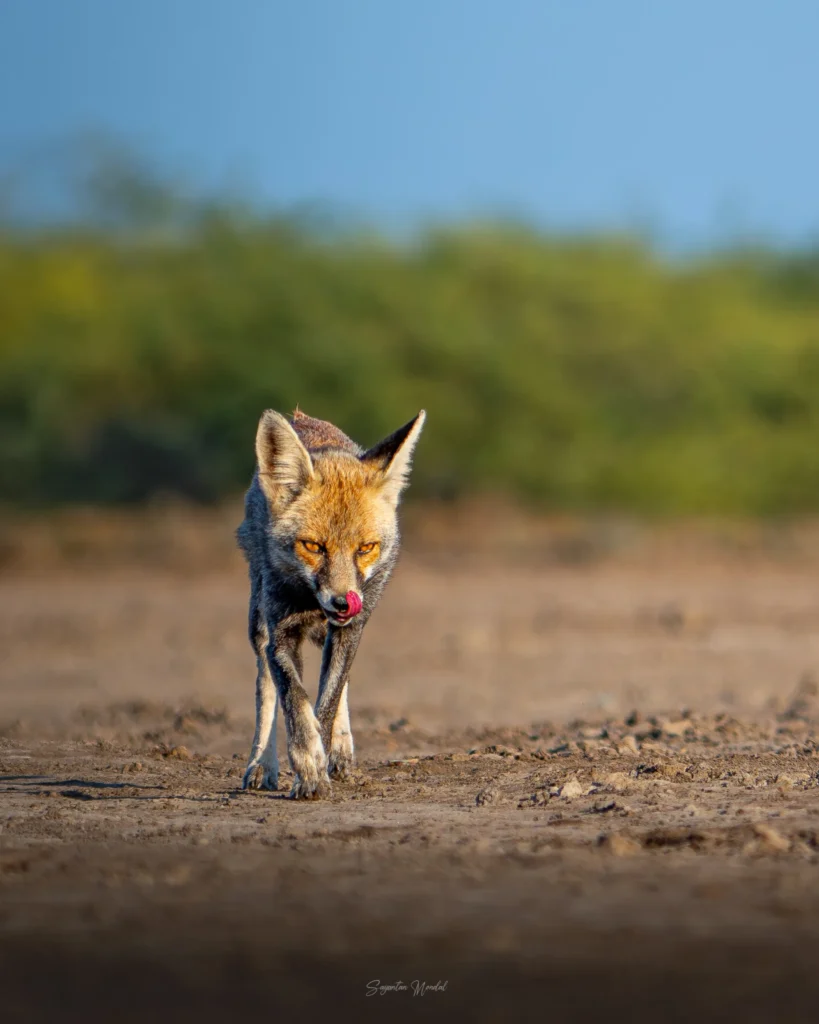
The Desert and Semi-Arid Region of western India encompasses a vast, sun-scorched expanse dominated by the Thar Desert and the geologically unique Rann of Kachchh, spreading primarily across Rajasthan and Gujarat. Geologically, this landscape is a fascinating product of both ancient tectonic activity and receding marine environments; the Rann was once a navigable shallow arm of the Arabian Sea that was uplifted by seismic forces, leaving behind immense, flat saline depressions. The climate is notoriously extreme, defined by fiercely hot, arid summers, negligible and highly erratic precipitation, and cold desert nights. This harsh environment dictates a highly specialized ecology, characterized by vast expanses of barren salt flats, undulating sand dunes, and fragile dry grasslands. The ephemeral Luni River and seasonal monsoon inundations temporarily transform parts of the landscape into massive, shallow wetlands, briefly erupting with biological activity. Vegetation is strictly xerophytic and halophytic, dominated by thorny scrub, hardy Acacia species, and salt-tolerant succulents. Despite the forbidding conditions, the biodiversity of this region is exceptional, supporting Palearctic and Afro-tropical lineages uniquely adapted to severe water scarcity and extreme heat. The region acts as a critical staging ground for millions of migratory birds navigating the Central Asian Flyway. However, the ecosystem faces severe conservation challenges, most notably the aggressive invasion of the exotic Prosopis juliflora tree, expanding commercial salt panning, overgrazing by domestic livestock, and the rapid proliferation of renewable energy infrastructure (wind and solar farms) that heavily disrupts avian flyways. Biosphere Reserves in this region are crucial for combating desertification, protecting uniquely adapted arid megafauna, and supporting the traditional, sustainable pastoralism of indigenous communities whose resilience mirrors the landscape itself.
Kachchh Biosphere Reserve
Located in the extreme western state of Gujarat, the Kachchh Biosphere Reserve is the largest biosphere reserve in India, encompassing the phenomenal landscapes of the Great Rann, the Little Rann, and the expansive Banni Grasslands. Situated at or near sea level, the terrain experiences an intensely arid climate characterized by scorching summer temperatures and high salinity. The major ecosystems comprise immense seasonal salt marshes that bake into cracked white desert during the dry season, interspersed with sparse thorny scrub and the rich, alluvial Banni savannah. This highly dynamic habitat is radically transformed by the brief monsoon, which creates vast, shallow wetlands that attract millions of migratory waterbirds, most notably serving as the largest breeding ground for the Greater Flamingo in the subcontinent. The reserve is globally paramount as the last refuge of the endangered Indian Wild Ass (Ghudkhur) and supports robust populations of the Desert Fox, Indian Wolf, Caracal, and the distinctive Spiny-tailed Lizard. The region is inextricably linked with the indigenous Maldhari pastoralists, who sustainably graze their unique Banni buffaloes in the grasslands. Designated by the Government of India in 2008, the reserve is ecologically unmatched as a seasonal saline wetland, offering immense scientific value for studying extreme halophytic adaptations, arid-land desertification, and the complex hydrology of marine-terrestrial transition zones.
Landscape Connectivity
The Kachchh Biosphere Reserve anchors an immense, largely continuous arid wilderness that spans the Indo-Pakistani border, functioning as a critical stronghold for desert-adapted wildlife. Its primary core zones are the expansive Wild Ass Sanctuary in the Little Rann and the Kutch Desert Wildlife Sanctuary in the Great Rann. These vast protected areas are ecologically tethered together by the Banni Grasslands and the Chari-Dhand Wetland Conservation Reserve, which act as indispensable corridors for the movement of wolves, foxes, and massive flocks of migratory avifauna along the Central Asian Flyway. To the west, the landscape maintains vital stepping-stone connectivity with the Narayan Sarovar Sanctuary, protecting crucial thorn-forest habitats. Internationally, the Great Rann shares an unbroken ecological continuum with the Thar Desert ecosystems of Sindh in neighboring Pakistan, forming a transboundary landscape that is absolutely essential for the genetic viability of wide-ranging arid megafauna and the protection of historic migratory flyways.
| Connected Protected Area | Category | State(s) | Relationship to the Biosphere Reserve |
| Wild Ass Sanctuary | Wildlife Sanctuary | Gujarat | Forms the primary core habitat for the Indian Wild Ass |
| Kutch Desert Wildlife Sanctuary | Wildlife Sanctuary | Gujarat | Encompasses the Great Rann and crucial flamingo breeding sites |
| Chari-Dhand | Conservation Reserve | Gujarat | Serves as a vital seasonal wetland for migratory avifauna |
| Narayan Sarovar Sanctuary | Wildlife Sanctuary | Gujarat | Provides essential thorn-forest connectivity to the west |
| Banni Grasslands | Reserved Forest | Gujarat | Constitutes a massive contiguous pastoral and scrubland corridor |
Regional Summary Table: Desert & Semi-Arid Region
| Biosphere Reserve | State(s) | Government of India Notification Year | UNESCO MAB Recognition Year | Total Area (sq km) | Major Ecosystems | Flagship Species | Endemic Species | Major Protected Areas Included | Best Time to Visit |
| Kachchh | Gujarat | 2008 | Not officially specified | 12,454 | Seasonal salt marshes, arid grasslands, thorny scrub | Indian Wild Ass, Desert Fox, Greater Flamingo | Spiny-tailed Lizard (regional), Campylanthus ramosissimus | Wild Ass WLS, Kutch Desert WLS, Chari-Dhand CR | November to March |