
Plan an ethical safari to see India’s Himalayan megafauna. Discover snow leopards, brown bears, and tahr across Hemis, GHNP, and key alpine parks.
Planning a journey to see the large mammals of the Indian Himalaya requires an understanding of extreme geography rather than standard safari schedules. Unlike the predictable tracking environments of central India’s deciduous forests, locating wildlife in the high-altitude zones of the north depends entirely on seasonal migrations, elevation changes, and terrain transitions.
Recent developments in wildlife research, particularly from camera-trap arrays and genetic sampling, have significantly altered how scientists track these species. At the same time, expanding human footprints, changing land-use patterns, and climate shifts are forcing these specialized animals into smaller alpine territories. This guide provides the practical context needed to understand their distribution, the scientific work protecting them, and the logistics required to observe them responsibly.
What is Himalayan Megafauna?
For travellers and researchers looking at the northern mountain ecosystems, “Himalayan megafauna” refers to the large-bodied mammals weighing over 15 to 20 kilograms that have adapted to survive above the tree line. These animals function as essential components of their respective habitats. Large predators act as indicator species for ecosystem stability, while specialized mountain ungulates maintain the vegetation dynamics of fragile alpine pastures.
Understanding where these animals live requires looking closely at the distinct mountain ecoregions and how altitude dictates their daily movements.
Ecoregions and Elevation Zones of the Indian Himalaya
The Indian Himalaya is not a uniform mountain chain; it is divided into four primary geographical sectors, each supporting a distinct community of animals:
- The Trans-Himalaya: The cold, dry rain-shadow desert areas like Ladakh and Spiti where trees are rare. This zone is the primary home of the snow leopard, the Himalayan wolf, and large wild sheep species.
- The Western Himalaya: Covering parts of Himachal Pradesh and Uttarakhand, containing mixed coniferous forests that transition into alpine meadows. This area supports species like the Himalayan tahr and the Himalayan brown bear.
- The Central Himalaya: The transitional mountain zones bordering Nepal, bridging western and eastern wildlife distributions.
- The Eastern Himalaya: Covering Sikkim and Arunachal Pradesh, characterized by high rainfall, dense forests, and sub-tropical to alpine transitions that support specialized species like the takin.
Within these ecoregions, wildlife distribution changes based on altitudinal zonation. Mountain animals move up or down across distinct elevation bands to survive:
[Above 4,500m] -- Permanent Snow & Rock Line (Snow Leopard, Tibetan Antelope)
[3,500m - 4,500m] -- Alpine Pastures & Scrub (Bharal, Brown Bear, Himalayan Wolf)
[2,800m - 3,500m] -- Sub-Alpine Sub-Alpine Tree Line (Musk Deer, Himalayan Tahr)
[Below 2,800m] -- Temperate Coniferous Forests (Common Leopard, Asiatic Black Bear)
Altitude dictates food availability and ambient temperature, meaning an animal’s location varies by season. During the summer, alpine meadows thaw, prompting herbivores to move up to higher ridges to feed on fresh grasses. Predators follow these herds upward.
In the winter, heavy snow covers the highest peaks, forcing wild sheep and goats down into lower valleys where food is accessible. Understanding these altitudinal shifts is critical for planning any field excursion, as it dictates exactly which valley or slope you must focus on during different months of the year.
Key Species to Know
Tracking wildlife in the high Himalayas requires setting aside the expectations built in central India’s tiger reserves. Here, species are distributed thinly across vast, vertical landscapes, and spotting them requires understanding their ecology and movement patterns. Below is a practical breakdown of the most sought-after megafauna.
Snow Leopard (Panthera uncia)
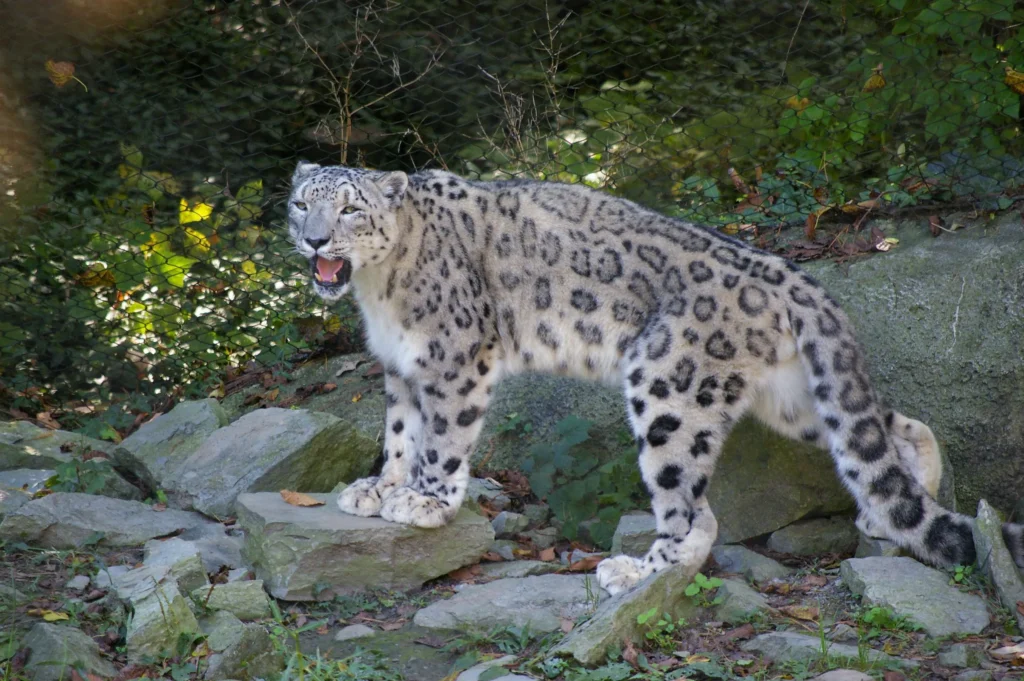
The snow leopard is the apex predator of the Trans-Himalayan and alpine zones. According to recent government and peer-reviewed counts, India’s snow leopard population is currently estimated at 718 individuals. The highest concentrations are found in the rugged terrains of Ladakh and the Spiti valley in Himachal Pradesh, with smaller, fragmented populations extending through parts of Uttarakhand, Sikkim, and Arunachal Pradesh.
Expert Tip: A widespread misconception is that snow leopards are easy to see in winter. While heavy snow does push their prey to lower elevations, the cats themselves do not descend predictably. Sighting one requires significant patience, extended time in the field, and a highly experienced local tracking team. For conservationists, camera-trap arrays remain a far more reliable method for monitoring their presence than physical tracking. The primary threats to their survival continue to be habitat fragmentation, poaching, and retaliatory killings by herders protecting livestock.
Himalayan Brown Bear (Ursus arctos isabellinus)
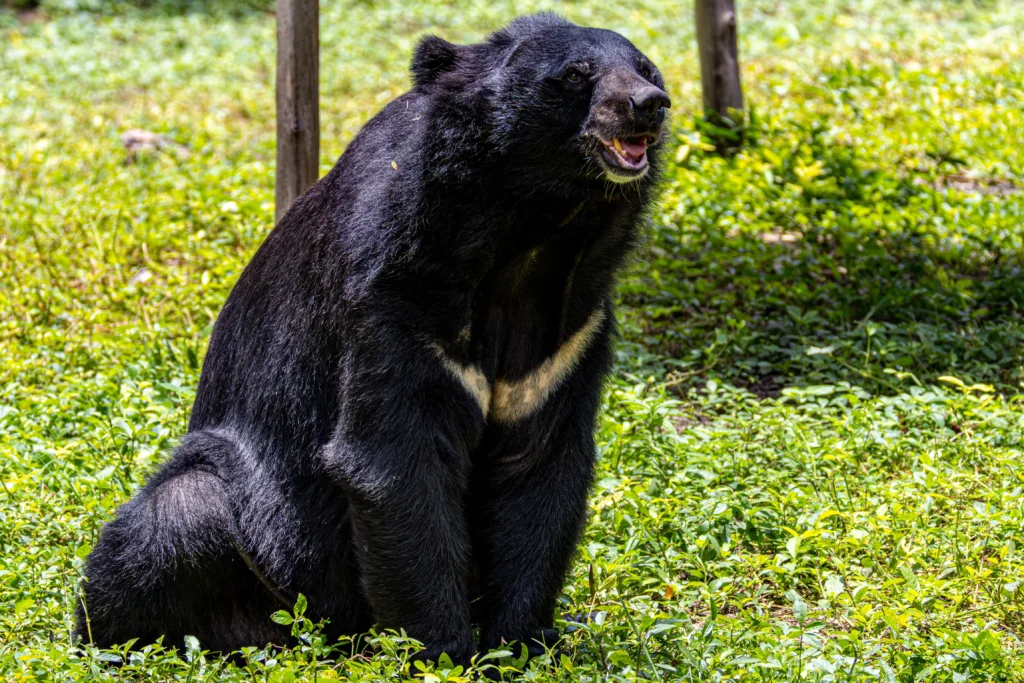
The Himalayan brown bear is primarily restricted to the Western Himalaya, particularly the higher alpine reaches of Himachal Pradesh and Uttarakhand. Unlike the Asiatic black bear, which is adapted to dense lower forests, the brown bear prefers open alpine meadows above the tree line.
They are increasingly coming into contact with humans, creating conflict hotspots near high-altitude herding camps and seasonal settlements. The most effective strategy for observation is scanning open alpine pastures with spotting scopes during the summer and early autumn months, just before they enter winter hibernation.
High-Altitude Herbivores: Tahr, Bharal, Musk Deer, and Takin
The predators of the Himalayas often dictate the headlines, but the mountain ungulates dictate the ecosystem.
- Bharal (Blue Sheep): Found predominantly in alpine pastures and scrub, bharal are the primary prey species for the snow leopard. While many Himalayan species are rare, bharal can be locally abundant and are frequently seen by trekkers in Ladakh and Spiti.
- Himalayan Tahr: Endemic to the western Himalaya, the tahr prefers the steep, rocky terrain near the sub-alpine tree line. They are highly agile and best spotted on precipitous cliffs.
- Musk Deer (Moschus spp.): Found in the sub-alpine tree line, the musk deer represents a complex of several distinct species with restricted distributions. They are highly elusive and severely threatened by poaching for their musk glands, prompting strict national protection and IUCN listings.
- Takin (Budorcas taxicolor): This robust, heavily built goat-antelope is confined to the Eastern Himalaya, specifically Sikkim and Arunachal Pradesh. They are best seen in dense bamboo and rhododendron forests, often moving in small herds.
Carnivores and Elusive Mammals: Wolves, Leopards, and Serow
The Himalayan ecosystem supports several other critical species, carefully separated by altitude and terrain.
- Common Leopard (Panthera pardus) & Asiatic Black Bear (Ursus thibetanus): These species typically dominate the temperate coniferous forests below 2,800 metres.
- Himalayan Wolf (Canis lupus chanco complex): Sharing the high-altitude trans-Himalayan deserts with the snow leopard, the Himalayan wolf is a highly specialized pack hunter.
- Himalayan Serow (Capricornis sumatraensis): A solitary and shy goat-antelope found on steep, forested slopes. Spotting a serow requires slow, quiet movement through dense undergrowth.
Top Himalayan Megafauna Species Quick-Reference Matrix
This matrix synthesizes the essential field data required for planning a target-specific wildlife trip to the Indian Himalayas, drawing from Zoological Survey of India (ZSI) data, IUCN classifications, and park authority records.
| Species | IUCN Status | Primary Indian Range | Typical Elevation | Key Threats | Target Protected Areas |
| Snow Leopard | Vulnerable | Ladakh, HP, UK, Sikkim, Arunachal | > 3,500m | Retaliatory killing, poaching | Hemis NP, GHNP, Khangchendzonga |
| Himalayan Brown Bear | Critically Endangered (Local) | Western Himalaya (HP, UK, J&K) | 3,000m – 4,500m | Human conflict, habitat loss | Great Himalayan NP (GHNP) |
| Bharal (Blue Sheep) | Least Concern | Trans & Western Himalaya | 3,500m – 5,000m | Livestock competition | Hemis NP, Nanda Devi |
| Himalayan Tahr | Near Threatened | Western Himalaya Endemic | 2,500m – 4,000m | Habitat fragmentation | GHNP, Nanda Devi |
| Musk Deer | Endangered | Western to Eastern Himalaya | 2,500m – 4,000m | Poaching for musk trade | GHNP, Nanda Devi |
| Takin | Vulnerable | Eastern Himalaya (Sikkim, Arunachal) | 2,000m – 4,000m | Habitat loss, hunting | Namdapha, Khangchendzonga |
| Himalayan Wolf | Vulnerable | Trans-Himalaya (Ladakh, Spiti) | > 3,500m | Retaliatory killing | Hemis NP |
| Asiatic Black Bear | Vulnerable | Lower Temperate Forests | < 3,000m | Poaching, human conflict | GHNP, Namdapha |
| Himalayan Serow | Vulnerable | Western & Eastern Himalaya | 2,000m – 4,000m | Habitat loss | GHNP, Khangchendzonga |
Monitoring and Science: Camera Traps and Genetics
Conserving high-altitude wildlife requires knowing exactly where these animals are and how their populations are faring. However, direct observation in the Himalayas is notoriously unreliable. The extreme terrain, harsh weather, and naturally low densities of alpine species make traditional visual censuses nearly impossible. To bridge this data gap, researchers rely on two primary field methodologies: widespread camera-trap networks and advanced genetic sampling.
Recent Surveys and Genetic Findings in India
In recent years, the approach to monitoring Himalayan megafauna has shifted from simple presence-absence tracking to understanding complex population structures.
The Zoological Survey of India (ZSI) has been at the forefront of this shift. In a major baseline study, ZSI researchers successfully identified 37 mammal species across six distinct study sites within the Indian Himalaya. More importantly, they have initiated structured genetic population studies on 13 of these species. This level of genetic monitoring provides insights that visual data simply cannot, such as genetic diversity, inbreeding risks, and the historical movement of populations across mountain ridges.
Simultaneously, the National Mission on Himalayan Studies (NMHS) has supported targeted research that directly impacts local management. A prime example is their genetic and population work on leopards in the Uttarkashi region. By analysing genetic markers, researchers can accurately identify individual animals and map population connectivity, which is critical for mitigating human-wildlife conflict in shared landscapes.
How Monitoring Informs Conservation Action
These scientific efforts do more than just count animals; they fundamentally change conservation priorities.
For instance, camera traps might show that a specific valley holds a high density of snow leopards. However, genetic sampling might reveal that this population is entirely isolated from neighbouring valleys due to infrastructure development. Armed with both data sets, forest departments know that their priority should not just be anti-poaching patrols in that specific valley, but the urgent protection of the transboundary corridors necessary to maintain genetic flow.
Field Note: For travellers, this science translates into tangible guidelines. When entering protected areas, visitors are often asked to stick to designated trails. This is not only for safety but to ensure that critical wildlife corridors—often identified via these very camera-trap and genetic studies—remain undisturbed by human scent and noise.
Field Methodologies Compared
Understanding how researchers gather data helps contextualise the population numbers you see in field guides and park literature. Below is a comparison of the two primary monitoring methods currently used in the Indian Himalaya.
| Feature | Camera-Trap Networks | Genetic Monitoring (eDNA, Scat, Hair) |
| Primary Output | Visual confirmation, behaviour, and density estimates. | Individual identification, genetic health, and population structure. |
| Strengths | Reliable for elusive species; works continuously in harsh weather; visual data is excellent for public engagement. | Can identify individuals without direct contact; reveals historical movement and connectivity; effective for species that look identical on camera. |
| Limitations | Only captures animals that walk past the sensor; difficult to identify individuals of un-patterned species (like brown bears or wolves). | Sample collection requires extensive ground surveys; DNA degrades quickly in wet conditions; laboratory analysis is time-consuming and expensive. |
| Recent Indian Application | Widespread use across Hemis and Great Himalayan National Park to establish baseline presence. | ZSI study of 13 Himalayan species; NMHS leopard genetics in Uttarkashi. |
Where to See Them Ethically
Planning a Himalayan wildlife trip requires aligning your target species with specific protected areas and narrow seasonal windows. Unlike traditional vehicle-based safaris, observing mountain megafauna usually involves trekking, acclimatisation, and establishing base camps at high altitudes.
Best National Parks by Species and Season
Choosing the right park depends entirely on what you want to see and your physical preparedness for the terrain.
- Hemis National Park (Ladakh): This is the premier destination for tracking the snow leopard, Himalayan wolf, and large herds of bharal. Sighting chances peak during the harsh winter months (January to March) when heavy snowfall at higher elevations forces both predators and prey down into accessible valleys.
- Great Himalayan National Park (Himachal Pradesh): A UNESCO World Heritage site offering incredible altitudinal diversity. It is the best reliable location to track western Himalayan endemics like the Himalayan tahr, as well as the Himalayan brown bear, musk deer, and Asiatic black bear. The optimal viewing seasons are spring (April to May) and autumn (September to November) when animals are active before and after winter snowfall.
- Khangchendzonga National Park (Sikkim): The primary target for eastern Himalayan species, particularly the takin and Himalayan serow. Wildlife viewing here requires navigating dense, steep forests and relies heavily on clear weather windows, typically in October, November, or late spring.
- Nanda Devi National Park (Uttarakhand): Known for its populations of tahr, bharal, and musk deer. Access is highly restricted to protect the fragile alpine environment, meaning visitors must focus on the buffer zones and strictly regulated trekking routes.
Permits, Guides, and Responsible Viewing Tips
Navigating the logistics of a Himalayan expedition is often as challenging as the trek itself. Many of the most productive wildlife habitats sit in sensitive border regions.
Practical Checklist: Logistics and Ethics
- Secure Permits Early: Inner Line Permits (ILPs) or specific forest department clearances are mandatory for regions near international borders, including Ladakh, Sikkim, and Arunachal Pradesh. Always process these through a registered local operator well in advance.
- Hire Local Trackers: Spotting a well-camouflaged snow leopard or distant tahr across a massive valley requires highly trained eyes. Local spotters understand the terrain, weather patterns, and animal behaviour far better than outside naturalists.
- Responsible Tourism Tip: High-altitude environments have a very slow recovery rate from human disturbance. Maintain a strict distance from wildlife, never use baiting techniques for photography, and minimize noise. Ensure your trekking crew respects designated camping zones to avoid blocking established wildlife migration corridors.
Threats and Conservation Responses
The reality of Himalayan travel is that visitors are observing an ecosystem under intense pressure. Recognizing the threats to these animals is essential for understanding the strict regulations placed on tourism and local land use.
Climate Change and Altitudinal Shifts
Climate change represents the most significant long-term threat to high-elevation megafauna. As temperatures rise, the tree line is steadily creeping upward. This effectively shrinks the available alpine habitat, forcing cold-adapted species into smaller, increasingly fragmented refugia near mountain peaks.
This altitudinal shift also causes new territorial overlaps. For example, as the temperate zone warms, lower-elevation predators like the common leopard are expanding their ranges upward, bringing them into direct competition with the snow leopard.
Human-Wildlife Conflict Mitigation and Community Programs
The most immediate threats on the ground are land-use change, heavy grazing pressure from domestic livestock, and retaliatory killings by herders. When natural prey populations decline due to livestock competition, predators like snow leopards and wolves frequently turn to hunting domestic sheep and goats.
However, there are proven success stories. Conservation in the Himalayas increasingly relies on community-based models rather than strict exclusion.
Field Note: Effective mitigation involves direct community support. Programs that provide financial compensation for livestock lost to predators have drastically reduced retaliatory killings. Furthermore, initiatives in the Great Himalayan National Park buffer zone that train local villagers in alternative livelihoods—such as operating ecotourism homestays and serving as official park guides—have successfully reduced historical poaching pressures while building local advocacy for wildlife protection.
Common Mistakes in Himalayan Wildlife Travel
Planning a trip to the high-altitude regions of India requires a different approach than arranging a typical wildlife safari. Avoid these common logistical and operational errors:
- Rushing the Acclimatisation Process: Attempting to travel directly to high-altitude tracking locations like Leh or Spiti and heading out into the field on day one frequently leads to acute mountain sickness (AMS). Plan for at least 48 to 72 hours of complete rest before starting any physical tracking.
- Packing Inadequate Gear: Standard safari clothing is completely insufficient for sub-zero temperatures and high-altitude winds. Rely on high-quality technical layers, including a windproof outer shell, heavy down jacket, thermal base layers, and sturdy trekking boots that have already been broken in.
- Expecting Vehicle-Based Viewing: Unlike central Indian tiger reserves where visitors remain inside jeeps, tracking Himalayan megafauna relies heavily on stationary scanning with spotting scopes and walking across rugged terrain. A basic level of physical fitness is required.
- Targeting the Wrong Season: Attempting to spot snow leopards in summer or looking for brown bears during their winter hibernation results in empty field days. Align your travel dates precisely with the seasonal movements of your target species.
Frequently Asked Questions
What is “Himalayan megafauna”?
In the context of the Indian Himalaya, megafauna refers to large-bodied mammals weighing over 15 to 20 kilograms that have adapted to live near or above the tree line. This includes apex predators like the snow leopard, pack hunters like the Himalayan wolf, and specialized mountain herbivores like the tahr and bharal.
Which large mammals are native to the Indian Himalaya?
Key native species include the snow leopard, Himalayan brown bear, Asiatic black bear, common leopard, Himalayan wolf, bharal (blue sheep), Himalayan tahr, musk deer, takin, and Himalayan serow.
Are all these species present across the entire Indian Himalaya?
No. Species distribution varies significantly between the western and eastern sectors, as well as by altitude. For example, the Himalayan tahr is endemic to the western Himalaya, whereas the takin is restricted to the wet, high-elevation forests of the eastern Himalaya.
Best national parks to see Himalayan megafauna?
Hemis National Park in Ladakh is the premier location for trans-Himalayan species like the snow leopard and wolf. The Great Himalayan National Park (GHNP) in Himachal Pradesh provides the best opportunities for western alpine species like the brown bear and tahr. Khangchendzonga National Park in Sikkim and Namdapha in Arunachal Pradesh are critical for eastern species like the takin.
When is the best time to visit for wildlife viewing?
For snow leopards and trans-Himalayan wolves, the winter months of January to March are optimal because snow forces the animals into lower valleys. For brown bears, tahr, and other alpine herbivores, the spring (April to May) and autumn (September to November) windows are ideal.
What are the major threats to Himalayan megafauna?
The primary documented threats include habitat loss and fragmentation, intense grazing pressure from domestic livestock, illegal wildlife trade, and climate-driven habitat shifts.
How does climate change affect high-elevation megafauna?
Rising temperatures cause the tree line to shift upward, shrinking the available alpine pastures. This forces specialized high-altitude species into smaller alpine zones and allows lower-elevation species, like the common leopard, to move higher up and compete with the snow leopard.
What camera-trap and genetic monitoring work exists?
The Zoological Survey of India (ZSI) recently conducted comprehensive surveys identifying 37 mammal species across six Himalayan sites, initiating genetic studies on 13 priority species. Additionally, the National Mission on Himalayan Studies (NMHS) funds vital population and genetic research, including monitoring leopard populations in areas like Uttarkashi.
Can I trek and camp in snow leopard habitat?
Yes, but it is strictly regulated. You must obtain permits from the relevant forest departments or district authorities. Camping is confined to designated zones to protect the fragile terrain and ensure human presence does not disrupt natural wildlife corridors.
How can travellers support conservation responsibly?
Choose local operators who employ community-based guides and trackers, stay in village homestays to direct financial benefits to local communities, follow strict leave-no-trace principles, and support vetted NGOs working on human-wildlife conflict mitigation.
Conclusion
Observing the megafauna of the Indian Himalaya is an experience defined by patience, landscape scale, and specialized wildlife adaptation. Successful field travel here relies on a clear understanding of altitudinal zones, seasonal transitions, and the biological realities of these animals.
As research from the ZSI and NMHS continues to improve our understanding of population genetics and habitat corridors, the role of the traveller is to minimize disturbance. By prioritizing ethical guiding practices, respecting local community structures, and understanding the scientific work protecting these mountains, visitors can ensure that these specialized ecosystems remain intact.
Author Note & Update Log: Written by N. Agarwal, Senior Editor, WildlifeSafaris.in Editorial Team. Last Updated: August 2026.
Himalayas : Topics Cluster
- Himalayan Wildlife Comprehensive Guide
- Wildlife in Ladakh
- Himalayan Pheasants
- Raptors of Himalayas
- Wildlife in Sikkim
- Wildlife in Arunachal Pradesh
- Wildlife in Uttarakhand
- Wildlife in Himachal Pradesh
- Wildlife in Jammu and Kashmir
- Himalayan Black Bear
- Snow Leopard
- Kibber Wildlife Sanctuary Guide
- Great Himalayan National Park
- Khangchendzonga National Park
- Eastern Himalayas