
Plan your birdwatching trip to Central India with this professional guide to its raptors, including eagles, vultures, and falcons, plus key hotspots and surveys.
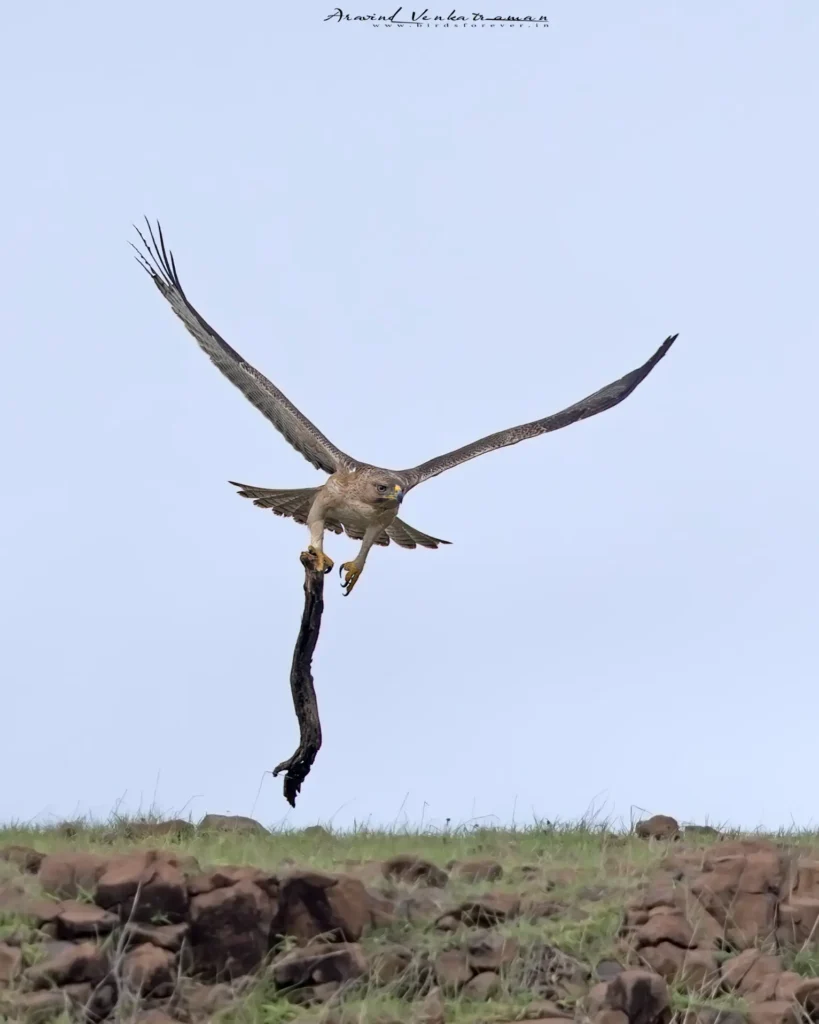
Central India is often associated primarily with tigers, but its diverse terrain makes it an equally vital landscape for birds of prey. From wide river valleys to dry deciduous forests, this region provides essential nesting grounds and hunting corridors for dozens of raptor species. Recent systematic conservation efforts in 2026 are currently shedding new light on how these birds utilize the landscape.
Why Central India Matters for Raptors
Central India is an essential stop for birdwatchers because the region’s diverse geography allows both resident species to nest year-round and migratory species to survive the winter.
A Landscape of Forests, Cliffs, Grasslands, and River Valleys
The core of Central India’s appeal for birds of prey lies in its structural variety. Wooded areas like the dry forests of Madhya Pradesh offer hunting perches and nesting sites for woodland specialists.
River systems create steep sandstone cliffs that serve as safe nesting ledges for cliff-dwelling scavengers, while open grassland edges and agricultural fields provide clear sightlines for open-country hunters.
Resident and Migratory Birds of Prey
This geographic mosaic supports two distinct groups of raptors throughout the year. Resident birds rely on the stable prey base of central Indian forests and river basins for year-round breeding and survival.
Meanwhile, winter visitors use the region as a critical terminus or stopover point along major global migration paths, significantly increasing local raptor diversity during the cooler months.
What Qualifies as a Raptor
Understanding what defines a raptor helps you narrow down what to look for in the field, moving beyond the common assumption that every large bird of prey is an eagle.
Eagles, Kites, Hawks, Falcons, Harriers, Buzzards, and Vultures
True raptors are specialized avian predators characterized by hooked bills designed for tearing meat and sharp, powerful talons for capturing prey.
In Central India, this definition spans multiple distinct families. It includes active hunters like eagles, falcons, harriers, and hawks, as well as specialized scavengers like vultures that depend entirely on carrion to survive.
The Inclusion of Owls in Field Surveys
While owls belong to a different evolutionary order (Strigiformes) than diurnal birds of prey, certain regional monitoring programs and ecological surveys group them together under a broader raptor context due to their shared predatory roles.
However, for standard birdwatching and conservation management purposes, field studies usually separate daytime hunters from nocturnal ones to better track their specific habitat needs.
Field Note: When observing birds of prey in Central India, always note the shape of the beak and feet. If the bird lacks heavily hooked talons and a tearing bill, it belongs to a different family entirely, even if it shares similar soaring behaviors.
Major Raptors You Can Find Here
Central India supports a diverse list of raptor species across its protected areas and agricultural borders. Understanding the different families—and the specific habitats they prefer—is the most reliable way to locate them in the field.
Eagles of Forest and Open Country
Central India hosts several prominent eagle species, divided roughly by their preferred hunting grounds.
For visitors on woodland safaris, the Crested Serpent-Eagle is one of the most frequently encountered species, often found watching for prey from mid-canopy perches in dry deciduous forests. The Short-toed Snake-Eagle favors similar but often drier, scrubbier environments.
In more open habitats and grasslands, you can look for the Tawny Eagle and the Indian Spotted Eagle. During the winter months, migratory species such as the Steppe Eagle and Greater Spotted Eagle arrive, increasing the density of large raptors in the region. Bonelli’s Eagle, a powerful and agile hunter, is also resident in the landscape and frequently patrols woodland edges and hilly terrain.
Photography Tip: Crested Serpent-Eagles are highly vocal and often remain perched on lower branches even when vehicles approach. Switch off your engine, stay quiet, and you can frequently secure clear, unobstructed photographs without causing the bird to flush.
Kites, Hawks, and Buzzards
Not all birds of prey require deep forest or pristine wilderness to thrive. Several species have adapted to fragmented or human-modified landscapes.
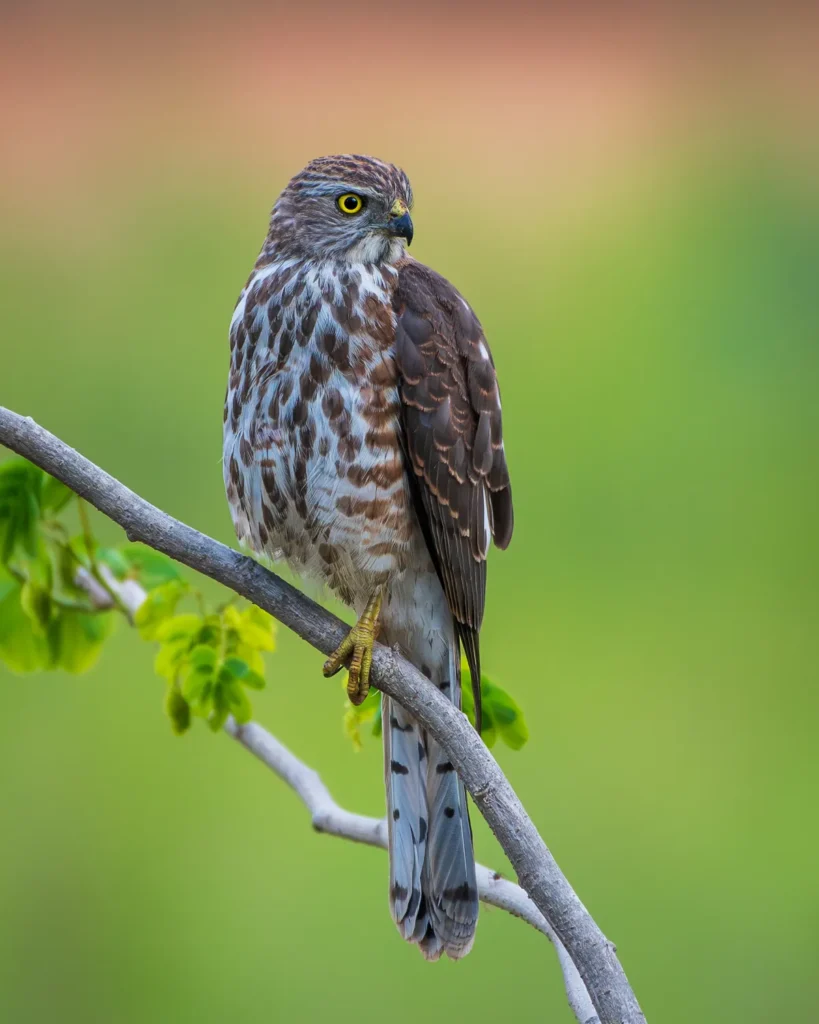
The Black Kite is widespread across urban and rural skies, while the Brahminy Kite is commonly seen near water bodies. The Shikra, a small but aggressive accipiter (hawk), darts through wooded areas and garden edges across the region. In the drier scrublands and open agricultural fringes, the White-eyed Buzzard is a common sight.
Falcons in Open Landscapes
Built for high-speed aerial pursuits, falcons require open skies and clear sightlines to hunt effectively.
The Laggar Falcon is a resident species of the Indian subcontinent that favors dry, open country and scrubland. The Peregrine Falcon, famously known for its speed, is also recorded in the region, often hunting other birds in flight over expansive grasslands or river valleys.
Vultures and Scavenger Specialists
Vultures are the ecological sanitation crew of the forest, entirely reliant on carrion. By clearing carcasses quickly, they severely reduce the spread of disease in the ecosystem.
Central India remains a vital stronghold for several critically endangered vulture species, including the Indian Vulture, White-rumped Vulture, Slender-billed Vulture, and Red-headed Vulture. The Egyptian Vulture and the large Cinereous Vulture (a winter visitor) are also present in the landscape. These heavy birds rely heavily on the thermal updrafts created by steep river valleys and cliffs—which double as secure nesting sites—to cover large territories in search of food.
Responsible Tourism Tip: Vultures are highly sensitive to disturbance, particularly around their cliff-side nesting colonies. Always maintain a respectful distance, keep noise to an absolute minimum, and use binoculars or a telephoto lens to observe them without altering their natural behavior.
Best Places to See Raptors
When choosing where to go for raptor watching, select destinations based on their terrain. Different landscapes attract completely different families of birds.
Chambal Riverine Cliffs
Chambal is one of the premier locations for raptor watching because its vertical mud and sandstone cliffs provide secure nesting ledges and clear visibility. Long-term winter surveys conducted in the National Chambal Gharial Sanctuary between 1983 and 2016 recorded 30 different raptor species. It is an excellent destination for viewing cliff-associated raptors, riverine scavengers, and various wintering eagles.
Ratapani and Central Madhya Pradesh Forests
Ratapani Wildlife Sanctuary and the surrounding forests of central Madhya Pradesh offer a reliable environment for tracking woodland-dependent species. The dense dry deciduous canopy provides the necessary shelter and prey base for resident forest eagles, such as the Crested Serpent-Eagle, as well as smaller forest hawks like the Shikra. These areas are central to ongoing regional raptor enumeration projects.
Tiger Reserves, Grassland Edges, and Farmland Mosaics
The periphery of major tiger reserves and adjacent agricultural fields are highly productive for open-country hunters. The transition zones where dense forest meets open grassland or cultivated fields allow raptors to scan for rodents and small reptiles easily. These mosaics are where you are most likely to observe harriers, falcons, and buzzards.
Key Raptor Hotspots in Central India
| Destination | Key Habitats | Focal Species | Optimal Terrain |
| Chambal Landscape | River valleys, vertical cliffs, sandbanks | Vultures, wintering eagles, riverine raptors | Deep gorges, open water |
| Ratapani & Central MP | Dry deciduous forest, woodland edges | Crested Serpent-Eagle, Shikra, forest eagles | Dense canopy, hilly tracts |
| Tiger Reserve Fringes | Grasslands, scrublands, forest edges | Harriers, falcons, buzzards, Tawny Eagle | Open plains, meadows |
| Farmland Mosaics | Agricultural fields, wetlands, rural trees | Black Kite, Brahminy Kite, White-eyed Buzzard | Cultivated plains, village ponds |
Seasonal Patterns and Migration
Timing your visit correctly is just as important as choosing the right location, as the regional raptor population changes completely between seasons.
Winter Visitors and Passage Migrants
The raptor population peaks significantly during the winter months, from October to March. Cold-weather migrants travel long distances to use the central Indian plains and wetlands as wintering grounds or temporary refuel stops. Species like the Steppe Eagle, Greater Spotted Eagle, and Cinereous Vulture arrive during this period, joining the local residents.
Resident Breeding Species
Resident raptors remain in Central India throughout the year, navigating seasonal shifts in water and prey availability. Many resident species, including several endangered vultures and forest eagles, utilize the late winter and dry summer months for nesting and rearing chicks, taking advantage of the clearer forest canopies for hunting.
The Importance of the Central Asian Flyway
Central India is an important geographical component of the Central Asian Flyway. This major avian migration corridor spans more than 30 countries. Migratory birds of prey move south along this corridor to escape the harsh northern winters, making the preserved habitats of Madhya Pradesh globally significant for flyway-scale biodiversity management.
Seasonal Status of Common Central Indian Raptors
| Species | Seasonal Status | Best Time to Observe |
| Crested Serpent-Eagle | Resident | Year-round |
| Shikra | Resident | Year-round |
| Steppe Eagle | Winter Visitor | October to March |
| Greater Spotted Eagle | Winter Visitor | October to March |
| Cinereous Vulture | Winter Visitor / Passage Migrant | Winter months |
| Indian Vulture | Resident | Year-round |
Family Travel Tip: If you are traveling with family, the winter months offer comfortable weather and the highest volume of bird activity. Open jeep safaris along forest edges provide easy viewing opportunities that keep children engaged without requiring long, stationary waits.
Conservation Status and Threats
While Central India remains a stronghold for many birds of prey, the populations of several species have experienced severe declines over the last two decades. Understanding these threats is crucial for both conservationists and wildlife tourists who want to support local ecosystems.
Diclofenac Legacy and Vulture Recovery
Vultures are essential to central Indian ecosystems because they act as a natural sanitation system, rapidly consuming carcasses and preventing the spread of diseases. However, Indian vulture populations collapsed drastically due to the veterinary drug diclofenac, which is highly toxic to them.
Because of this, multiple species found in Central India are now classified as Critically Endangered, including the White-rumped Vulture, Indian Vulture, Slender-billed Vulture, and Red-headed Vulture. Today, active recovery programs and the establishment of Vulture Safe Zones are critical components of regional conservation efforts.
Electrocution, Poisoning, and Habitat Change
Beyond the specific threat of diclofenac to scavengers, all raptors face broader environmental pressures. Uninsulated power lines pose a severe electrocution risk, particularly for large-winged species like eagles and vultures attempting to land or take off.
Secondary poisoning is another major risk; raptors often ingest toxins when they feed on rodents or carcasses that have been exposed to agricultural pesticides or deliberate baiting. Furthermore, habitat degradation—specifically the loss of nesting trees and the clearing of grassland edges—reduces both available territory and breeding success.
Why Prey Decline Impacts Raptors
Birds of prey are ecological indicators, meaning their presence signals a healthy, balanced environment. When the prey base—such as small mammals, reptiles, or smaller birds—declines due to habitat loss or agricultural intensification, raptor populations inevitably follow. Conserving these top-tier avian predators requires protecting the entire food web beneath them, right down to the ground-level vegetation that supports their prey.
Conservation Status of Key Central Indian Vultures
| Common Name | Scientific Name | Conservation Status |
| Indian Vulture | Gyps indicus | Critically Endangered |
| White-rumped Vulture | Gyps bengalensis | Critically Endangered |
| Slender-billed Vulture | Gyps tenuirostris | Critically Endangered |
| Red-headed Vulture | Sarcogyps calvus | Critically Endangered |
| Egyptian Vulture | Neophron percnopterus | Endangered |
Recent Surveys and Telemetry Work
Conservation strategies require accurate data. Historically, it has been difficult to track “hard-to-see” or wide-ranging raptor species across vast landscapes. However, 2026 has seen a major push in systematic monitoring in Madhya Pradesh, establishing the region as a primary focus for avian research.
WWF-India’s Madhya Pradesh Enumeration
To establish a clear baseline of raptor populations, a comprehensive statewide survey is currently underway. A recent report detailed that WWF-India’s Madhya Pradesh survey divided the state into 12,000 grids, each measuring 10 by 10 kilometers. With approximately 30% of these grids covered, the official findings are expected to be published in July 2026. This grid-based methodology helps researchers accurately estimate abundance and map distribution rather than relying on anecdotal sightings.
Satellite Telemetry and What It Can Reveal
In February 2026, WWF-India, the Madhya Pradesh Forest Department, and the Bombay Natural History Society (BNHS) launched a vital satellite telemetry program. The teams released five rescued raptors fitted with transmitters: four Indian vultures and one Cinereous vulture.
This telemetry data provides real-time insights into flight paths, foraging ranges, and survival rates across Central India and the broader Central Asian Flyway. Tracking these movements is essential for identifying previously unknown roosting sites and understanding exactly how these wide-ranging birds navigate human-modified landscapes.
Decision Guide: If you are planning a wildlife trip and want your tourism dollars to support conservation, prioritize visiting protected areas and reserves in Madhya Pradesh (such as Ratapani or the Chambal landscape) that actively participate in ongoing habitat protection and wildlife monitoring programs.
How to Identify Raptors in the Field
Identifying birds of prey in the field can be challenging because feather colors often vary by age and color morph. Instead of relying purely on plumage, experienced birdwatchers focus on shapes, flight patterns, and behavior.
Size, Silhouette, and Wing Shape
The shape of a bird in flight provides immediate clues about its family. Eagles generally feature long, broad wings with deep, finger-like primary feathers at the tips. Falcons have narrow, pointed, swept-back wings built for high-speed chases. Kites are easily recognized by their long, angled wings and deeply forked or notched tails.
Flight Style and Perch Behavior
Observing how a bird moves through the air narrows down the possibilities. Vultures soar for long periods on thermal updrafts without flapping, often holding their wings flat or in a slight ‘V’ shape. Harriers fly close to the ground over open plains, using a distinct flapping and gliding motion to surprise prey. Forest eagles tend to perch quietly within the tree canopy, while open-country buzzards and falcons prefer prominent, exposed perches like dead trees or telephone poles.
Habitat Cues
Where you spot a bird is often as telling as how it looks. If you observe a large raptor near a vertical sandstone cliff or river gorge, you are likely looking at a resident vulture or cliff-nesting specialist. A medium-sized bird of prey scanning an open agricultural field or low grassland is far more likely to be a buzzard, harrier, or falcon than a deep-forest eagle.
Identification Comparison by Group Silhouette and Flight Style
| Raptor Group | Silhouette Cues | Flight Pattern | Common Perching Behavior |
| Eagles | Broad, heavy bodies; long, rectangular wings with “fingered” tips | Steady, powerful soaring; occasional heavy wingbeats | Upright posture on high forest branches or isolated trees |
| Falcons | Compact, streamlined bodies; long, pointed wings | Rapid, choppy wingbeats; high-speed aerial dives | Exposed perches like power poles, wires, or bare rocks |
| Kites | Medium build; long wings; distinct forked or angled tail | Buoyant, graceful gliding; frequent tail twisting for steering | High branches near water bodies, roadsides, or villages |
| Vultures | Large, heavy frames; exceptionally wide wings; short tails | High-altitude soaring on thermal currents; rarely flaps | Large groups on rocky cliff faces or dead trees near carcasses |
| Harriers | Slender bodies; long, narrow wings; long tails | Low-altitude quartering over ground; wings held in a shallow ‘V’ | Frequently perches directly on the ground or low bushes |
Common Mistakes to Avoid
- Assuming Every Large Raptor is an Eagle: Many travelers mistake large buzzards, kites, or juvenile vultures for eagles. Check the tail shape, wing width, and perching habits to confirm the family before settling on an identification.
- Misidentifying Juvenile Plumage: Young raptors often look entirely different from their adult counterparts, lacking the distinct chest patterns or head colorings of mature birds. Use size, silhouette, and facial structure rather than feather color alone.
- Focusing Only on Core Tiger Reserves: While national parks are excellent for forest eagles, over-focusing on dense forest interiors means missing out on the diverse grassland, riverine, and open-country raptors that thrive along agricultural edges and cliff faces.
- Approaching Nesting Sites Too Closely: Getting too close to cliff edges or active nesting trees to secure a photograph can cause adult birds—especially sensitive vulture species—to abandon their nests or eggs. Always prioritize the bird’s safety by using a telephoto lens from a distance.
FAQs about Raptors of Central India
What are raptors?
Raptors are carnivorous birds of prey characterized by hooked bills designed for tearing meat and sharp, powerful talons used to capture and hold prey. The group includes eagles, falcons, hawks, harriers, buzzards, kites, and vultures.
Are vultures considered raptors?
Yes, vultures are specialized raptors. Unlike hunting eagles or falcons, they are scavenger specialists that feed almost exclusively on carrion, playing a critical role in keeping ecosystems clean and free of disease.
Which raptor species are most threatened in Central India?
The four resident Gyps and Sarcogyps vulture species—the Indian Vulture, White-rumped Vulture, Slender-billed Vulture, and Red-headed Vulture—are Critically Endangered due to historical exposure to the veterinary drug diclofenac.
Where is raptor diversity highest in Madhya Pradesh?
Raptor diversity is exceptionally high in the Chambal river landscape, where long-term winter surveys have recorded 30 different species, as well as the protected deciduous tracts of central Madhya Pradesh, including the Ratapani landscape.
Why do raptors matter to the local ecosystem?
Raptors serve as vital ecological indicator species. Because they sit at the top of the avian food chain, their population health reflects the stability of the entire underlying ecosystem, including the abundance of prey, quality of habitat, and presence of environmental toxins.
Conclusion
Central India is a premier destination for birdwatching, offering a vital refuge for dozens of resident and migratory birds of prey. Its unique mix of dry forests, steep river cliffs, and open grasslands supports everything from powerful canopy-hunting eagles to critically endangered scavenger communities.
With major systematic monitoring projects and satellite telemetry programs underway in 2026, researchers are gaining the precise data needed to safeguard these species across the Central Asian Flyway. Protecting these birds requires preserving the complex, interconnected landscapes they depend on to hunt, nest, and survive.
Author Note & Update Log: Written by the WildlifeSafaris.in Editorial Team. Last Updated: August 2026.
Bandhavgarh National Park : Topics Cluster
- Bandhavgarh Safari Guide
- Bandhavgarh Safari Guide First time visitors
- Bandhavgarh Safari Costs
- Bandhavgarh Safari Booking Guide
- Best Zones in Bandhavgarh
- Tala vs Magadhi vs Khitauli
- Bandhavgarh Safari Booking Guide
- Best Resorts by Gates in Bandhavgarh National Park
- Best Resorts and Lodges
- Best time to visit Bandhavgarh National Park
- Bandhavgarh Photography guide
- Bandhavgarh 3 Days itinerary
- Bandhavgarh Budget Guide
- Bandhavgarh photography guide
- Wildlife in Madhya Pradesh
- How far advanced should you book safari permits?
- Bandhavgarh luxury wildlife lodges
- Central India biodiversity
- Raptors of Central India
Kanha National Park : Topics Cluster
- Kanha Complete Guide
- Kanha National Park Quick Guide
- Kanha Best Zones and Gates
- How to reach Kanha National Park?
- Kanha Zones Guide
- Kanha Safari Cost
- Kanha Tiger Sighting Guide
- Kanha Safari Booking Guide
- Best Resorts near Kanha National Park
- Kanha Best Resorts by Gates
- Kanha luxury safari
- Biodiversity of Central India
- Rewilding and Wildlife Recovery in India
- Barasingha
- Wildlife in Madhya Pradesh
- Madhya Pradesh Wildlife Tourism
- How far advanced should you book safari permits?