
Plan your winter birdwatching across India with verified data on arrival dates, Central Asian Flyway routes, top species, key wetlands, and field tips.
Introduction, Migration Timing & The Central Asian Flyway
Every year between October and March, India’s wetlands, coastal mudflats, and shallow lagoons transform into one of the world’s most critical wintering landscapes. According to the Ministry of Environment, Forest and Climate Change (MoEFCC), over 370 species of migratory birds travel to the Indian subcontinent annually. These avian visitors travel thousands of kilometres across mountains, deserts, and oceans from breeding grounds in Siberia, Central Asia, Mongolia, and northern Europe.
Recent wetland censuses highlight the scale of this influx. In January 2026, Chilika Lake in Odisha recorded 11.32 lakh migratory birds, while Pulicat Lake on the Coromandel Coast supported over 52,000 birds, including 16,500 greater flamingos.
For birdwatchers, photographers, and naturalists, navigating this seasonal event requires an understanding of migration timing, flyway corridors, and geographic distribution across different wetland habitats.
Why Do Migratory Birds Visit India in Winter?
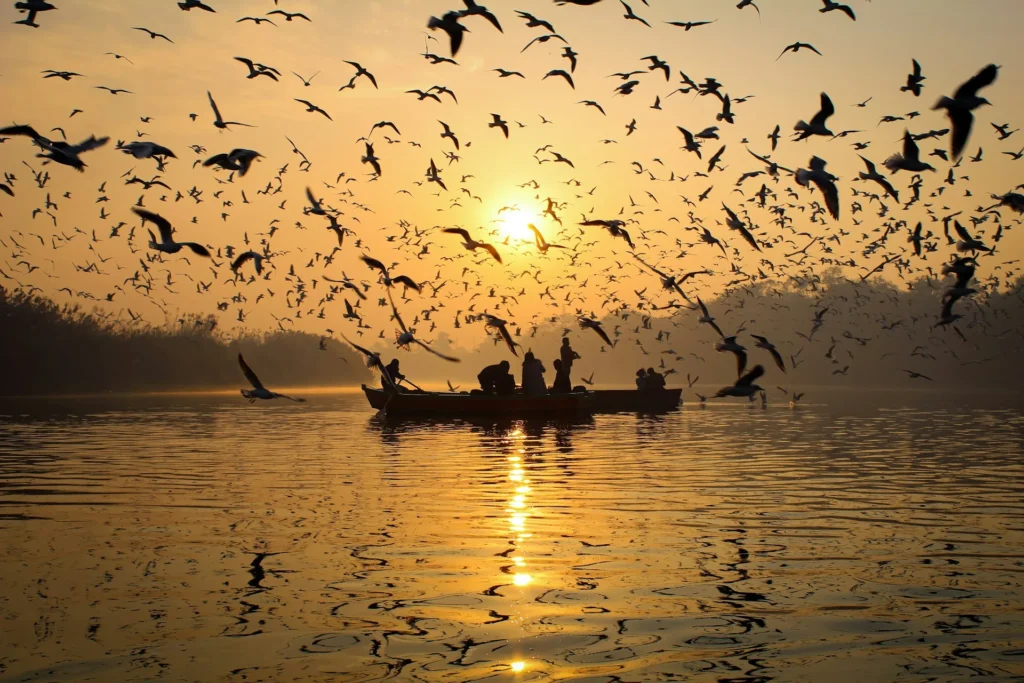
The seasonal movement of birds to India is driven primarily by survival pressures: severe temperature drops in the northern latitudes and the resulting depletion of food resources.
+——————————————————————-+
| NORTHERN BREEDING GROUNDS |
| (Siberia, Central Asia, Mongolia, Northern Europe) |
| |
| • Sub-zero temperatures freeze lakes, marshes, and topsoil |
| • Aquatic plants, seeds, invertebrates, and fish become trapped |
+———————————+———————————+
|
| Autumn Migration (CAF Route)
v
+———————————+———————————+
| INDIAN WINTERING HABITATS |
| |
| • Moderate tropical climate and open water bodies |
| • Rich foraging: tubers, shoots, plankton, crustaceans, fish |
| • Over 370 migratory species sustained across the subcontinent |
+——————————————————————-+
Seasonal Climate Shifts and Food Availability
During northern winters, sub-zero conditions freeze inland water bodies across Siberia, Central Asia, and the Tibetan Plateau. This ice cover cuts off access to aquatic plants, insects, molluscs, and fish. In response, birds fly south to the Indian subcontinent, where moderate winter temperatures keep wetlands open and biologically active.
India’s extensive network of freshwater marshes, shallow reservoirs, saline flats, and coastal lagoons provides an abundant food supply:
- Herbivorous waterfowl (such as bar-headed geese and Eurasian wigeons) feed on agricultural stubble, aquatic shoots, and marsh grasses.
- Filter feeders (such as greater and lesser flamingos) utilize coastal mudflats and hypersaline lakes to feed on plankton, algae, and small crustaceans.
- Piscivorous species (including spot-billed pelicans and painted storks) rely on fish populations in shallow waters.
- Probing waders and shorebirds forage for worms, larvae, and small invertebrates along exposed mud banks and tidelines.
India’s Geographic Placement on the Central Asian Flyway
India acts as the primary southern terminus for the Central Asian Flyway (CAF). Its varied topography—ranging from the trans-Himalayan entry points in Ladakh and Himachal Pradesh to the floodplains of the north and the brackish lagoons of the southern peninsula—provides diverse wintering habitats across different climatic zones.
Migration Calendar: Arrival, Peak, and Departure Windows
Migration is not a single, synchronized event. Different species arrive and depart according to their breeding cycles, journey distances, and feeding requirements.
MIGRATION WINDOWS:
SEP – OCT NOV – DEC – JAN FEB – MAR APR – MAY
Early Influx Peak Density Return Passage Late Departures
(Shorebirds/Waders) (Waterfowl, Geese, Cranes) (Northward Return) (e.g., Rosy Starlings)
Early Influx (September to October)
The earliest arrivals begin reaching northern and western Indian wetlands in September. These initial flocks primarily comprise waders and shorebirds (such as sandpipers, plovers, and stints) along with early passage passerines. By mid-October, early waterfowl such as northern pintails, garganeys, and common teals appear in Punjab wetlands, the Gangetic plains, and the Gulf of Khambhat.
Peak Wintering Season (November to January)
Mid-November through January represents the period of highest species diversity and population density across Indian sanctuaries. Large aggregations of geese, ducks, pelicans, and cranes establish stable feeding routines:
- November to mid-December: Arrival of long-distance trans-Himalayan migrants, including bar-headed geese and demoiselle cranes.
- Late December to January: Maximum wetland counts across central, eastern, and southern India (e.g., Chilika Lake, Keoladeo National Park, Pulicat Lake, and Rann of Kutch).
Spring Passage and Departures (February to March)
As temperatures rise across the subcontinent in late February, water levels in seasonal marshes decline. Most wintering waterfowl and cranes begin congregating in large staging flocks before starting their northward journey across the Himalayas:
- Mid-February: Early departures begin; wetlands in eastern India (such as Bhitarkanika) see initial groups of waterfowl heading north.
- March: Major departures of dabbling ducks, diving ducks, and cranes.
- April to May: Late-season departures. Certain species, such as rosy starlings, linger in southern and central India to feed on spring nectar and fruiting trees before returning to their breeding grounds in Central Asia and Eastern Europe.
Migration Timing of Key Winter Visitors
The following table summarizes the typical seasonal windows for major winter migratory species across Indian habitats:
| Species | Primary Origin | Arrival Period | Peak Period | Departure Period |
| Northern Pintail | Siberia, Northern Eurasia | Mid-Oct to Nov | Dec to Jan | Late Feb to Mar |
| Demoiselle Crane | Mongolia, Central Asia | Late Aug to Sep | Nov to Jan | Late Feb to Mar |
| Bar-headed Goose | Central Asia, Tibetan Plateau | Late Oct to Nov | Dec to Jan | Mid-Feb to Mar |
| Greater Flamingo | Rann of Kutch / Regional | Oct to Nov | Jan to Feb | Mar to Apr |
| Rosy Starling | Central Asia, Eastern Europe | Jul to Aug | Dec to Feb | Apr to May |
| Eurasian Wigeon | Northern Europe, Siberia | Late Oct to Nov | Dec to Jan | Late Feb to Mar |
The Central Asian Flyway: India’s Strategic Role and Conservation Priorities
The Central Asian Flyway (CAF) is one of the world’s nine major migratory flyways. It covers a vast continental corridor connecting northern breeding territories to wintering grounds in South Asia.
CENTRAL ASIAN FLYWAY (CAF) QUICK FACTS:
• Geographic Span: 30 Range Countries (Arctic Ocean to Indian Ocean)
• Total Species: Over 600 migratory bird species
• Conservation Concern: 48 globally threatened species; 40% of populations in decline
• Strategic Value of India: Provides wintering grounds for >90% of CAF bird species
Flyway Scale and Species Vulnerability
The CAF encompasses 30 countries, extending from the northernmost breeding ranges in the Russian Federation and Arctic shores down through Central Asian republics, Iran, Afghanistan, Pakistan, India, and the Maldives.
- Over 600 migratory bird species rely on the CAF corridor.
- Data compiled by BirdLife International indicates that 48 species along the CAF are globally threatened or near-threatened, with approximately 40% of populations exhibiting steady declines.
- India’s Strategic Dependency: India provides non-breeding, wintering, or stopover habitats for more than 90% of all bird species that travel along the Central Asian Flyway.
The health of Indian wetlands directly impacts breeding success and survival rates across the entire Eurasian flyway system.
The National Action Plan for CAF Conservation
Recognizing its international responsibility, India’s MoEFCC launched the National Action Plan for Conservation of Migratory Birds and their Habitats along the Central Asian Flyway (2018–2023). This policy framework coordinates species recovery plans, wetland monitoring, and habitat restoration.
The action plan prioritizes 20 high-conservation-value migratory species facing habitat stress:
- Eurasian Curlew (Numenius arquata)
- Crab Plover (Dromas ardeola)
- Black-tailed Godwit (Limosa limosa)
- Bar-tailed Godwit (Limosa lapponica)
- Red Knot (Calidris canutus)
- Greater Flamingo (Phoenicopterus roseus)
- Lesser Flamingo (Phoeniconaias minor)
- Indian Skimmer (Rynchops albicollis)
- Ferruginous Duck (Aythya nyroca)
- White-headed Duck (Oxyura leucocephala)
- Baer’s Pochard (Aythya baeri)
- Great Knot (Calidris tenuirostris)
- Sociable Lapwing (Vanellus gregarius)
- Spoon-billed Sandpiper (Calidris pygmaea)
- Yellow-breasted Bunting (Emberiza aureola)
- Dalmatian Pelican (Pelecanus crispus)
- Lesser White-fronted Goose (Anser erythropus)
- Marbled Teal (Marmaronetta angustirostris)
- Falcated Duck (Mareca falcata)
- Common Pochard (Aythya ferina)
Conserving these species requires maintaining functional stopover points and wintering habitats throughout India’s wetland systems.
Field Note — Migration Altitudes:
Species using the Central Asian Flyway employ diverse flight strategies. While low-level migrants follow coastlines and river valleys, trans-Himalayan migrants cross high mountain passes. The bar-headed goose (Anser indicus) is documented flying at altitudes exceeding 29,000 feet, traversing the Himalayan crest through specialized physiological adaptations that maximize oxygen delivery under extreme low-pressure conditions.
Species Profiles and Identification Guide
Understanding which species migrate to India and how to identify them transforms a basic wetland visit into an informed birdwatching experience. While over 370 migratory species visit the subcontinent annually, focusing on the most prominent and historically significant visitors helps structure your field observations.
Below is an identification profile of the top ten winter migratory birds to look for during the 2026 season.
Table 2: Identification Profile of Key Winter Migratory Species
| Species | Primary Origin | Key Field Identification | Prime Viewing Locations |
| Siberian Crane | Siberia, Northern Russia | Elegant white plumage, red face | Keoladeo National Park (now rare/absent) |
| Greater Flamingo | Rann of Kutch (Gujarat) | Pink flocks, long curved neck | Pulicat Lake, Rann of Kutch, Sambhar Lake |
| Demoiselle Crane | Central Asia, Mongolia | Small crane, black neck, red eye | Khichan (Rajasthan) |
| Bar-headed Goose | Tibet, Mongolia, Central Asia | Two black bars on the back of the head | Bharatpur, Harike, Dharwad, Tamil Nadu |
| Northern Pintail | Europe, Siberia, Northern Asia | Long pointed tail, graceful silhouette | Chilika Lake, Bharatpur, Harike, Deepor Beel |
| Rosy Starling | Central Asia, Eastern Europe | Pink-salmon plumage, dark head/wings | Rann of Kutch, Keoladeo, Tamil Nadu coast |
| Eurasian Wigeon | Europe, Asia | Chestnut head with a creamy yellow crown | Chilika, Surajpur, Punjab wetlands |
| Painted Stork | Central Asia, Africa | Yellow bill, orange-yellow plumage | Bharatpur, Chilika, Ranganthittu |
| Spot-billed Pelican | Southeast Asia, India | Large bill with dark spots, gregarious | Pulicat, Chilika, Vedanthangal |
| Black-winged Stilt | Europe, Asia, Africa | Strikingly long pink legs, black-and-white body | Surajpur, wetlands nationwide |
Key Winter Migratory Birds to Spot in India
1. Siberian Crane (Leucogeranus leucogeranus) — Current Status and History
The Siberian crane migrates over 5,000 kilometres from Siberia and northern Russia. Historically, Keoladeo National Park in Bharatpur was the only known wintering site for this species in India since the 1940s.
Today, sightings in India are exceedingly rare, and the species is largely absent. The last recorded wild wintering occurred in the 2010s. In 2023, wild migration failed for the first time, and only four captive-raised cranes reached India by cargo box. When planning a trip to Bharatpur, adjust your expectations; you are unlikely to spot a wild Siberian crane, but the park remains excellent for other migratory waterfowl.
2. Greater Flamingo (Phoenicopterus roseus)
Greater flamingos move from their breeding grounds in the Rann of Kutch, Gujarat, toward the southern peninsular wetlands for the winter. They are highly gregarious and feed in large pink flocks in shallow, brackish waters.
Pulicat Lake is currently one of the most reliable sites for viewing massive congregations; a January 2026 census recorded 16,500 greater flamingos here. Waders typically arrive at Pulicat in October, while peak flamingo numbers arrive around April, though they winter in large numbers across other coastal and inland saline habitats.
3. Demoiselle Crane (Grus virgo)
Known locally in Rajasthan as the Kurjan, the demoiselle crane is a small crane species originating from Central Asia, Mongolia, and Eastern Europe. Approximately 20,000 of these cranes migrate annually to Khichan in Rajasthan.
Conservation Field Note: Individual tracking using color rings has revealed the extreme endurance of these birds. One tagged demoiselle crane from Russia/Mongolia was recorded flying 47,060 kilometres over eight years, demonstrating a remarkable seven-year return fidelity to Khichan.
4. Bar-headed Goose (Anser indicus)
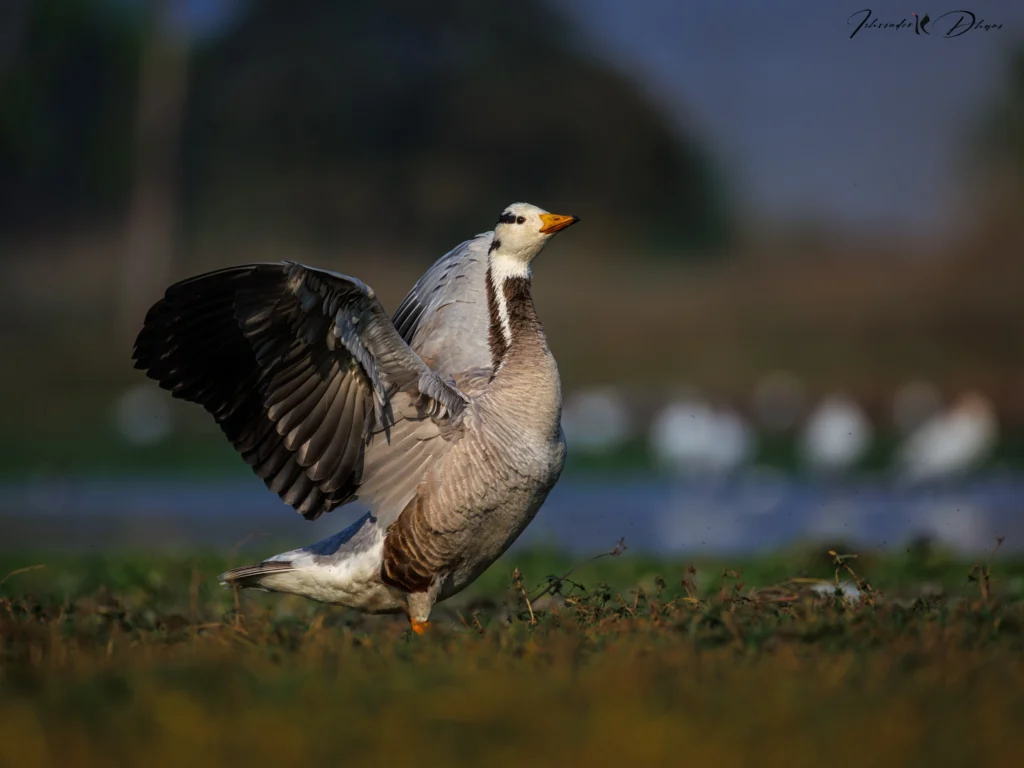
Originating from Tibet, Mongolia, and Central Asia, the bar-headed goose is recognized by its distinct honking call and the two black bars on the back of its head. They winter from November to March across lowland swamps, lakes, and rivers throughout India.
This species is the highest-flying bird in the world, crossing the Himalayas at altitudes exceeding 29,000 feet. Recent observations indicate a high degree of range flexibility. On January 3, 2026, they were sighted at Chandu Budhera in Gurugram, near Delhi NCR. Furthermore, they have established a regular winter presence in Tamil Nadu, which falls outside their traditional wintering range.
5. Northern Pintail (Anas acuta)
The northern pintail travels from Europe, Siberia, and northern Asia to Indian lakes and marshes. Identifiable by its long, pointed tail and graceful silhouette, it is one of the most abundant winter visitors to the subcontinent. In January 2026, the northern pintail was the most populous species at Chilika Lake, with a staggering count of 218,993 individuals.
6. Rosy Starling (Pastor roseus)
Breeding in Central Asia and Eastern Europe, rosy starlings spend a significant portion of the year in India, migrating between July–August and departing around April–May. They feature distinctive pink-salmon plumage.
These birds are famous for their murmurations—synchronized, shapeshifting flock flights over wetlands and agricultural fields before roosting. In January 2026, thousands arrived in the Thoothukudi district of Tamil Nadu, creating spectacular aerial displays.
Photography Tip: To photograph murmurations, arrive at roosting sites an hour before sunset. Use a fast shutter speed to capture the sharp shapes of the flock against the evening sky without motion blur.
7. Eurasian Wigeon (Mareca penelope)
A dabbling duck from Europe and Asia, the Eurasian wigeon is common across Chilika, Surajpur, and the Punjab wetlands. The breeding male is easily identified by its chestnut head and creamy yellow crown.
Identification Guide: During the non-breeding season, pay close attention to eclipse plumage. The non-breeding drake (male) closely resembles the female, appearing largely brown and muted, which can complicate field identification.
8. Painted Stork (Mycteria leucocephala)
Migrating from Central Asia and Africa, the painted stork is a large wading bird. It is characterized by its heavy yellow bill and distinctive orange-yellow plumage on its hindquarters. They are best observed in shallow waters where they sweep their bills side to side to catch fish. Reliable winter locations include Bharatpur, Chilika, and Ranganthittu.
9. Spot-billed Pelican (Pelecanus philippensis)
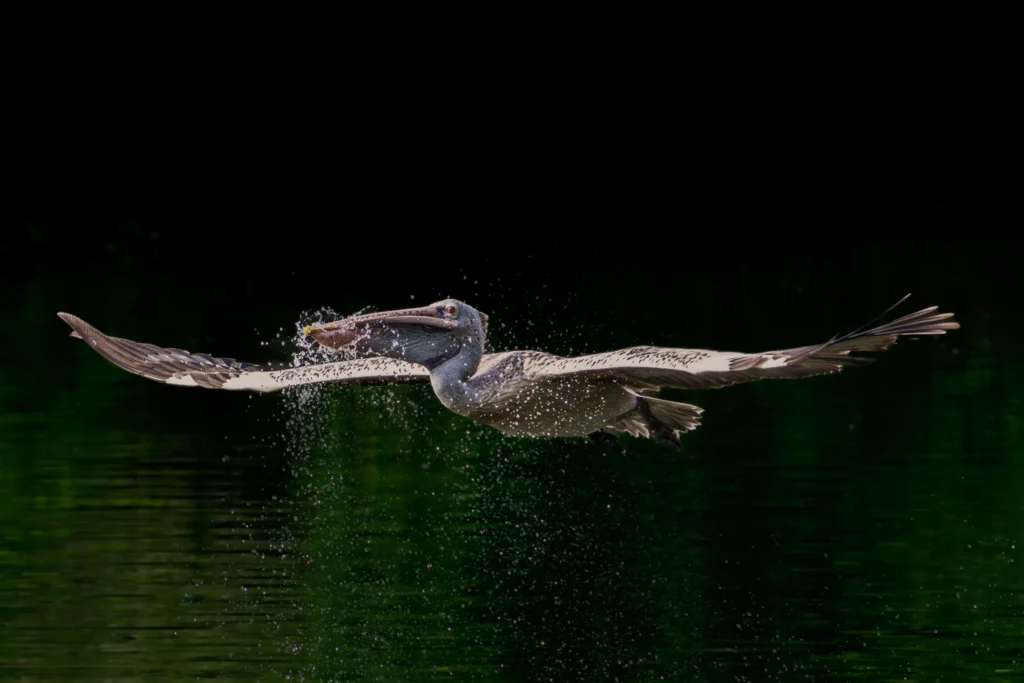
Originating from Southeast Asia and other parts of India, the spot-billed pelican features a large bill with characteristic dark spots. They are highly gregarious birds that feed and roost in large flocks. You can consistently spot them during winter at Pulicat Lake, Chilika Lake, and the Vedanthangal Bird Sanctuary.
10. Black-winged Stilt (Himantopus himantopus)
Visiting from Europe, Asia, and Africa, the black-winged stilt is ubiquitous across wetlands nationwide, including sites like Surajpur. They are immediately recognizable by their strikingly long pink legs and stark black-and-white body plumage. Because of their leg length, they often wade in deeper water than other shorebirds, picking insects and small crustaceans from the surface.
Premier Sanctuaries and Wetlands by Region
Choosing where to travel depends heavily on the specific species you want to see and how much time you have. While North India offers iconic trans-Himalayan species and high-density national parks, coastal and southern wetlands support massive congregations of flamingos and waders.
The table below compares four of the most significant wintering sites based on recent 2026 census data to help you prioritize your itinerary.
Table 3: Regional Wetland Comparison: Census Counts and Peak Months
| Wetland / Sanctuary | State | Key Winter Species | Recent Count Data (2026) | Prime Viewing Months |
| Chilika Lake (Nalabana) | Odisha | Northern pintail, Eurasian wigeon | 11.32 lakh total birds | Nov–Mar |
| Pulicat Lake | AP / Tamil Nadu | Greater flamingos, spot-billed pelicans | 52,000 birds (16,500 flamingos) | Nov–Apr |
| Khichan Conservation Reserve | Rajasthan | Demoiselle cranes | ~20,000 cranes | Nov–Feb |
| Keoladeo National Park | Rajasthan | Painted storks, pelicans, migratory ducks | Official data varies annually | Nov–Feb |
Top Bird Sanctuaries and Wetlands for Winter Birding
North India: Keoladeo, Khichan, Sultanpur, and Harike
North India receives the first influx of trans-Himalayan migrants and offers excellent infrastructure for dedicated bird photography trips.
- Keoladeo National Park (Bharatpur), Rajasthan: This UNESCO wetland is the most famous bird sanctuary in India. It is excellent for spotting painted storks, pelicans, and various migratory ducks between November and February. Be aware that the Siberian crane is now rare or absent here; the last wild wintering occurred in the 2010s.
- Khichan, Rajasthan: This village provides a unique community-based viewing experience. The Rajasthan Forest Department recently announced it as India’s first conservation reserve for demoiselle cranes. Approximately 20,000 demoiselle cranes winter here annually from November to February.
- Sultanpur Wetland, Haryana: Located conveniently near Delhi NCR, Sultanpur is a highly accessible day-trip destination for spotting ducks, northern pintails, shovellers, and rosy starlings between November and February.
- Harike Wetland, Punjab: Situated at the confluence of the Beas and Sutlej rivers, Harike is a major wintering site for the northern pintail, various ducks, and waders from November to February.
Decision Guide — Weekend Trips from Delhi NCR: If you have only one day, visit Sultanpur Wetland. For a two- to three-day trip, Keoladeo National Park offers better habitat diversity and paved walking/cycling trails that allow for extended observation.
East India: Chilika Lake and Bhitarkanika
The eastern coastline supports vast populations of waterfowl, making it ideal for birders interested in high-density counts rather than just species variety.
- Chilika Lake (Nalabana Bird Sanctuary), Odisha: This massive brackish water lagoon is a mandatory visit for waterfowl enthusiasts. A January 2026 census recorded 11.32 lakh birds here, with the northern pintail being the most populous species at 218,993 individuals. The best viewing window is November to March.
- Bhitarkanika, Odisha: Known primarily for its mangroves and crocodiles, this site also hosts bar-headed geese, pintails, Eurasian wigeons, and raptors. In 2026, it hosted 1.52 lakh birds across 106 species. Note that winter birds often begin their return journey early from here, with departures noted around mid-February.
West India: Great Rann of Kutch, Nalsarovar, and Sambhar Lake
The arid landscapes of the west feature expansive saline flats that attract large flocks of filter-feeding birds.
- Rann of Kutch (Great and Little), Gujarat: The vast salt marshes are primary wintering grounds for flamingos, spoonbills, pelicans, and northern pintails from November to March.
- Nalsarovar Bird Sanctuary, Gujarat: A shallow lake surrounded by marshes, providing excellent habitat for waterfowl and migratory ducks between November and February.
- Sambhar Salt Lake, Rajasthan: India’s largest inland salt lake draws large numbers of flamingos (which maintain their pink coloration in winter), pelicans, and ducks from December to February.
South India: Pulicat Lake, Vedanthangal, Ranganthittu, and Kumarakom
South India requires a different timing strategy, as many waders arrive early, while larger species like flamingos peak later in the season.
- Pulicat Lake, Andhra Pradesh / Tamil Nadu: Following favorable monsoons and Cyclone Michaung-related rains, Pulicat recorded 52,000 birds in January 2026, including 16,500 greater flamingos. It is also highly reliable for spot-billed pelicans and Eurasian wigeons. Waders typically arrive in October, while flamingos peak around April.
- Vedanthangal, Tamil Nadu: One of the oldest water bird sanctuaries in the country, it hosts dense breeding colonies of herons, cormorants, teals, and ibises from November to March.
- Ranganthittu, Karnataka: Located on the banks of the Cauvery River, this sanctuary is known for migratory birds and freshwater turtles. Visit between November and February.
- Kumarakom, Kerala: Situated on Vembanad Lake, this site supports various waterbirds and migratory species from November to February.
Field Guide, Conservation, Common Mistakes, FAQs & Conclusion
Preparation and ethical conduct in the field dictate the quality of your birdwatching experience. Because migratory birds are often recovering from exhaustive journeys or building fat reserves for their return flights, responsible observation is critical.
Table 4: Essential Field Gear and Optics Checklist
| Item Category | Recommendation | Field Purpose |
| Optics | 8×42 or 10×42 binoculars | Provides the best balance of magnification, field of view, and light-gathering for wetland scanning. |
| Clothing | Muted colors (olive, grey, brown) | Blends into the marsh environment; warm layers are essential for early mornings. |
| Photography | Camera with a telephoto lens (400mm+) | Allows for detailed species documentation without encroaching on the birds’ comfort zones. |
| Reference | Field guide or offline identification app | Essential for distinguishing similar species (e.g., various dabbling ducks or waders in eclipse plumage). |
Practical Birdwatching Guide: Optics, Timing, and Field Ethics
Recommended Gear and Optimal Viewing Hours
The most productive birdwatching occurs during the early morning hours. Aim to be at the wetland or sanctuary between 6:00 AM and 9:00 AM. During this window, birds are highly active as they forage for their first meal of the day, and the soft morning light provides the best conditions for clear observation and photography.
Dress in muted colors like olive, grey, or brown to avoid startling the flocks. Because winter mornings near large water bodies are cold, wear warm, removable layers. Always carry a field guide and a pair of binoculars; an 8×42 specification offers an excellent field of view for scanning large flocks of waterfowl.
Field Etiquette and Responsible Observation
When observing migratory birds, prioritize their welfare over a photograph. Follow these basic ethical guidelines:
- Maintain Distance: Never force a bird to fly. If a flock stops feeding and looks at you with alarm, you are too close.
- Minimize Noise: Keep voices low, mute mobile phones, and avoid slamming car doors near roosting or feeding sites.
- Stay on Trails: Stick to designated paths to avoid trampling sensitive marsh vegetation or disturbing shoreline nests.
- No Playback: Never use audio playback to attract birds, as this causes unnecessary stress and disrupts their natural behavior.
Habitat Conservation and Village-Level Protection Models
The survival of the 370+ migratory species visiting India depends entirely on habitat preservation. Currently, 48 species along the Central Asian Flyway (CAF) are globally threatened, and 40% of CAF bird populations are in decline.
The Khichan Coexistence Model
Conservation does not rely solely on heavily regulated national parks. The village of Khichan in Rajasthan offers a powerful model of community-based bird-human coexistence. Local residents, spearheaded by conservationists like Sevaram Mali, have systematically protected and fed wintering demoiselle cranes for decades. Recognizing this success, the Rajasthan Forest Department announced Khichan as India’s first conservation reserve specifically for demoiselle cranes in 2025.
Wetland Encroachment and Habitat Pressures
Outside of protected reserves, wintering sites face severe pressures. Major threats include urban encroachment, intensive commercial fisheries, and general habitat degradation. Protecting these environments requires enforcing the National Action Plan for CAF, which prioritizes the conservation of 20 vulnerable species by securing their wintering and stopover habitats across the subcontinent.
Common Misconceptions About Winter Migration in India
- “Siberian cranes are a regular sight at Keoladeo National Park.” This is no longer true. Sightings are now rare or absent, with the last wild wintering occurring in the 2010s.
- “Flamingos are only found in the Rann of Kutch.” While Kutch is a massive breeding ground, southern wetlands hold vast winter populations. Pulicat Lake recorded 16,500 greater flamingos in January 2026.
- “Migration only happens from October to March.” This is an oversimplification. Arrivals span from September to November, peak counts occur between November and December, and departures happen from February to March. Some species, like the rosy starling, stay in India from July–August until April–May.
- “Only North India gets migratory birds.” South India hosts highly significant wintering populations, particularly waders and flamingos, at sites like Pulicat Lake and Vedanthangal.
- “The northern pintail is a rare bird.” Far from it. It was the most populous species recorded at Chilika Lake during the January 2026 census, numbering 218,993 individuals.
Frequently Asked Questions
When do migratory birds arrive in India? Arrivals begin between September and November as birds depart their northern breeding grounds. The peak density across most Indian sanctuaries occurs from November to December.
Do Siberian cranes still visit Keoladeo National Park? They are now rare or entirely absent. The last recorded wild wintering was in the 2010s, and in 2023, the only arrivals were four captive-raised cranes transported via cargo box.
What is the Central Asian Flyway (CAF)? The CAF is a major migratory route crossing 30 countries from the Arctic Ocean to the Indian Ocean. It is used by over 600 migratory bird species, with India providing wintering sites for more than 90% of them.
Where can I see large flocks of flamingos in winter? Pulicat Lake in Andhra Pradesh/Tamil Nadu and the Rann of Kutch in Gujarat are premier locations. In January 2026, Pulicat Lake hosted 16,500 greater flamingos.
How many migratory bird species visit India? According to the Ministry of Environment, Forest and Climate Change, India provides stopover or wintering habitat to more than 370 species of migratory birds.
Conclusion: Supporting Wetland Conservation
India serves as a critical wintering refuge for over 370 migratory bird species. From the high-altitude crossings of the bar-headed goose to the massive congregations of northern pintails at Chilika Lake, these seasonal movements represent a vital component of global ecology.
Experiencing this migration comes with a responsibility to protect it. You can directly support conservation efforts by choosing ethical wildlife tourism, respecting sanctuary rules, and minimizing your footprint in sensitive wetland habitats. Furthermore, participating in citizen science initiatives—such as the Great Backyard Bird Count (GBBC) or logging your sightings on eBird—provides researchers with the vital data needed to protect these species and secure the Central Asian Flyway for future migrations.