
Discover the rarest birds in India, from the Great Indian Bustard to 124 endemic species. Explore current population data, habitats, and top birding sanctuaries.
Introduction
India supports an avian population of over 1,300 recorded species, shaped by diverse ecosystems ranging from Himalayan alpine scrub and arid Thar grasslands to moist tropical evergreen tracts in the Western Ghats. Within this landscape are some of the planet’s most threatened birds.
According to the International Union for Conservation of Nature (IUCN) Red List, 15 bird species found in India are classified as Critically Endangered. Several, such as the Great Indian Bustard, number fewer than 150 individuals in the wild. In addition, field documentation from Endemic Bird Day 2024 recorded 124 endemic species found exclusively within India’s borders.
Planning a trip to observe rare avifauna requires practical knowledge of habitat types, seasonality, accessibility, and current conservation boundaries. This guide provides a factual breakdown of India’s rarest bird species, their current population status, primary habitats, and the dedicated reserves where they persist.
Understanding India’s Rare Bird Landscape
A bird is generally considered rare due to one of three factors: extreme geographical restriction (endemicity), rapid population collapse resulting in an endangered conservation status, or elusive behavior combined with specialized habitat requirements.
┌─────────────────────────────────────────────────────────────┐
│ INDIA’S RARE AVIFAUNA │
├──────────────────────────────┬──────────────────────────────┤
│ 15 Critically Endangered │ 124 Endemic Bird Species │
│ Species (IUCN Red List) │ (Restricted to India) │
├──────────────────────────────┼──────────────────────────────┤
│ • 4 Grassland Specialists │ • 30+ Western Ghats │
│ • 4 Scavengers (Vultures) │ • 20+ Himalayas │
│ • 4 Wetland Specialists │ • 10+ Andaman & Nicobar │
│ • 1 Forest Specialist │ • Central India & Thar │
│ • 2 Practically Extinct │ │
└──────────────────────────────┴──────────────────────────────┘
Key Threats Driving Avian Endangerment
The decline of India’s rarest birds stems from specific, measurable pressures on isolated ecosystems:
- Grassland Conversion: Open semi-arid grasslands and scrub habitats have historically been classified as wastelands, leading to agricultural expansion, infrastructure encroachment, and solar/wind power corridor construction. This has severely impacted ground-nesting species like the Great Indian Bustard and Bengal Florican.
- Veterinary Toxicity: The non-steroidal anti-inflammatory drug (NSAID) diclofenac, administered to livestock, caused catastrophic kidney failure in vultures feeding on treated cattle carcasses, collapsing populations across the subcontinent by over 95%.
- Wetland Degradation: Hydrological changes, intensive fishing, dam construction, and flood control along major rivers like the Brahmaputra have reduced nesting banks and feeding grounds for specialists like the White-bellied Heron.
- Fragmented Forest Canopies: Logging, commercial plantations, and road construction in the Western Ghats and central Indian deciduous forests isolate breeding pairs into unsustainable micro-pockets.
Field Note: When birding in semi-arid and grassland reserves, keep movements confined strictly to marked trails and designated vehicle tracks. Ground-nesting species build cryptic nests directly on the substrate; off-track exploration can inadvertently destroy clutches.
The 15 Critically Endangered Birds of India
The IUCN Red List identifies 15 bird species occurring in India that face an extremely high risk of extinction in the wild.
Master Directory of India’s 15 Critically Endangered Birds
| Species | Primary Habitat | Known Distribution | Population Status | Primary Threat |
| Great Indian Bustard (Ardeotis nigriceps) | Dry grasslands, open scrub | Rajasthan, Gujarat, Maharashtra, Karnataka, AP | <150 wild individuals | Habitat conversion, power lines |
| Bengal Florican (Houbaropsis bengalensis) | Tall alluvial grasslands | Assam, Arunachal Pradesh, UP, MP | <1,000 individuals | Grassland drainage, farming |
| Jerdon’s Courser (Rhinoptilus bitorquatus) | Rocky, scrub forest understory | Andhra Pradesh, Gujarat, MP, Rajasthan | Elusive / Data Deficient | Scrub clearing, disturbance |
| Sociable Lapwing (Vanellus gregarius) | Open dry plains, wetlands | Winter migrant (North & West India) | Migratory non-breeding visitor | Hunting, flyway habitat loss |
| Forest Owlet (Athene blewitti) | Dry deciduous teak forests | Maharashtra, MP, Jharkhand | Highly localized | Teak forest degradation |
| White-bellied Heron (Ardea insignis) | Undisturbed riverbanks | Assam, Arunachal Pradesh | Extremely small global population | River alteration, poaching |
| Baer’s Pochard (Aythya baeri) | Freshwater lakes, marshes | Winter migrant (East & NE India) | Rare winter visitor | Wetland conversion, hunting |
| Siberian Crane (Leucogeranus leucogeranus) | Shallow wetlands, marshes | Formerly Keoladeo NP (Rajasthan) | Historical winterer; no recent records | Central flyway disruptions |
| Spoon-billed Sandpiper (Calidris pygmaea) | Coastal intertidal mudflats | Winter migrant (East coast estuaries) | Rare winter passage migrant | Intertidal mudflat loss |
| Indian Vulture (Gyps indicus) | Cliffs, semi-arid open scrub | Across Central, West, and Peninsular India | Critically low | Diclofenac poisoning |
| White-backed Vulture (Gyps bengalensis) | Forest edges, rural plains | Across mainland India | Critically low | Diclofenac poisoning |
| Red-headed Vulture (Sarcogyps calvus) | Open country, wooded hills | Across northern and central reserves | Severely depleted | Carcass contamination, habitat loss |
| Slender-billed Vulture (Gyps tenuirostris) | Sub-Himalayan forest plains | Sub-Himalayan belt, Assam, Bengal | Extremely scarce | Diclofenac poisoning |
| Himalayan Quail (Ophrysia superciliosa) | Steep grassy hill slopes | Uttarakhand (Mussoorie, Nainital) | Practically extinct (last seen 1876) | Historic hunting, habitat change |
| Pink-headed Duck (Rhodonessa caryophyllacea) | Secluded forest wetlands | Terai swamps, Gangetic floodplains | Practically extinct (last seen 1930s) | Habitat drainage, historic hunting |
Critically Endangered Grassland and Forest Specialists
Grassland and forest ecosystems harbor some of India’s most ecologically sensitive and range-restricted birds.
CRITICALLY ENDANGERED TERRESTRIAL BIRDS
│
┌─────────────────────────┴─────────────────────────┐
▼ ▼
GRASSLAND SPECIALISTS FOREST SPECIALISTS
• Great Indian Bustard (<150 in wild) • Forest Owlet (Melghat, Satpura)
• Bengal Florican (<1,000 global) • Jerdon’s Courser (Scrub understory)
• Sociable Lapwing (Migratory plains)
Great Indian Bustard (Ardeotis nigriceps)
- IUCN Status: Critically Endangered
- Current Wild Population: Under 150 individuals nationally
- Key Habitats: Desert National Park (Rajasthan), Banni Grasslands and Kutch Bustard Sanctuary (Gujarat)
Standing nearly a meter tall, the Great Indian Bustard is one of the heaviest flying birds in the world. The species requires extensive, contiguous landscapes of open short-grass plains and dry thorn scrub.
Over 85% of the remaining wild individuals reside in Rajasthan’s Thar Desert. The birds face significant mortality from overhead power transmission cables due to their narrow frontal field of vision, alongside habitat fragmentation caused by infrastructure development.
Bengal Florican (Houbaropsis bengalensis)
- IUCN Status: Critically Endangered
- Current Population: Fewer than 1,000 individuals globally
- Key Habitats: Manas National Park, Kaziranga National Park, Orang National Park (Assam), and parts of Uttar Pradesh and Madhya Pradesh
The Bengal Florican depends exclusively on undisturbed lowland alluvial grasslands dominated by tall grasses. During the breeding season, males perform dramatic vertical display flights above the grass canopy to establish territories and attract females. The widespread conversion of floodplains into agricultural paddies and overgrazing by domestic cattle remain primary drivers of their ongoing decline.
Jerdon’s Courser (Rhinoptilus bitorquatus)
- IUCN Status: Critically Endangered
- Current Population: Elusive / Extremely small
- Key Habitats: Sri Lankamalleswara Wildlife Sanctuary (Andhra Pradesh), with historical scrub records across Gujarat, Rajasthan, and Madhya Pradesh
Believed extinct for most of the twentieth century, this nocturnal, ground-running wader was rediscovered in 1986 near Cuddapah in Andhra Pradesh. Jerdon’s Courser occupies a very specific habitat: open, rocky thorn scrub dominated by acacia and bushes with a thin understory. Because of its strictly nocturnal habits and subtle calls, population estimates remain difficult to confirm, and the species is threatened by illegal clearing of scrubland for agriculture and canal construction.
Forest Owlet (Athene blewitti)
- IUCN Status: Critically Endangered
- Current Population: Localized, small isolated populations
- Key Habitats: Melghat Tiger Reserve (Maharashtra), Satpura Tiger Reserve (Madhya Pradesh), Betla National Park (Jharkhand)
The Forest Owlet represents one of Indian ornithology’s most notable rediscoveries. Missing for 113 years and presumed extinct, an American researcher confirmed a living specimen in 1997 in western Maharashtra. Unlike many owls, the Forest Owlet is diurnal and crepuscular, hunting lizards, small rodents, and insects in open dry deciduous forests, particularly where teak (Tectona grandis) stands exist.
Sociable Lapwing (Vanellus gregarius)
- IUCN Status: Critically Endangered
- Current Population: Rare non-breeding migratory visitor
- Key Habitats: Open fallow agricultural fields and short grasslands of Rajasthan and Gujarat
The Sociable Lapwing breeds in the steppes of Kazakhstan and southern Russia, with a fraction of its central Asian flyway population migrating to the arid and semi-arid plains of northwest India during the winter months. The bird forms loose flocks, frequenting plowed fields, saline flats, and dry wasteland edges where it feeds on terrestrial invertebrates.
Critically Endangered Wetland and Scavenger Species
Wetland loss and chemical toxicity in food chains have brought waterbirds and vultures to critical levels across the subcontinent.
┌─────────────────────────────────────────────────────────────┐
│ WETLAND & SCAVENGER THREATS │
├──────────────────────────────┬──────────────────────────────┤
│ Wetland Specialists │ Scavenger Species (Vultures) │
├──────────────────────────────┼──────────────────────────────┤
│ • White-bellied Heron │ • Indian Vulture │
│ • Baer’s Pochard │ • White-backed Vulture │
│ • Spoon-billed Sandpiper │ • Red-headed Vulture │
│ • Siberian Crane (Hist.) │ • Slender-billed Vulture │
├──────────────────────────────┼──────────────────────────────┤
│ Primary Threat: Wetland │ Primary Threat: Diclofenac │
│ Drainage & Alteration │ Toxicity via Cattle Carcasses│
└──────────────────────────────┴──────────────────────────────┘
White-bellied Heron (Ardea insignis)
- IUCN Status: Critically Endangered
- Current Population: One of the rarest herons in the world
- Key Habitats: Namdapha National Park, Nameri National Park, and riverbanks along the Brahmaputra River system in Assam and Arunachal Pradesh
Standing over 1.2 meters tall, the White-bellied Heron requires fast-flowing, clean, undisturbed gravel and shingle beds along subtropical sub-Himalayan forest rivers. It avoids human presence entirely. Dam construction, riverbed stone mining, and illegal netting have depleted suitable nesting and foraging stretches throughout its narrow Northeast Indian range.
Migratory Wetland Specialists
- Baer’s Pochard (Aythya baeri): A diving duck that breeds in East Asia and winters in very small numbers across deep, vegetated freshwater lakes and reservoirs in Assam, West Bengal, and northern India. Extensive wetland drainage has reduced its wintering records to occasional isolated sightings.
- Spoon-billed Sandpiper (Calidris pygmaea): A small wading bird characterized by a spatula-shaped bill tip. It utilizes coastal mudflats along the eastern seaboard of India during winter migration. Intertidal land reclamation across its migratory staging areas has caused severe population declines.
- Siberian Crane (Leucogeranus leucogeranus): Historically wintered at Keoladeo National Park in Bharatpur, Rajasthan. Bharatpur served as the primary documented wintering ground for the central population of this species from the 1940s onwards. The flock ceased visiting in the 2000s due to hunting along the Afghanistan-Pakistan migration corridor.
The Vulture Crisis: Indian, White-backed, Red-headed, and Slender-billed
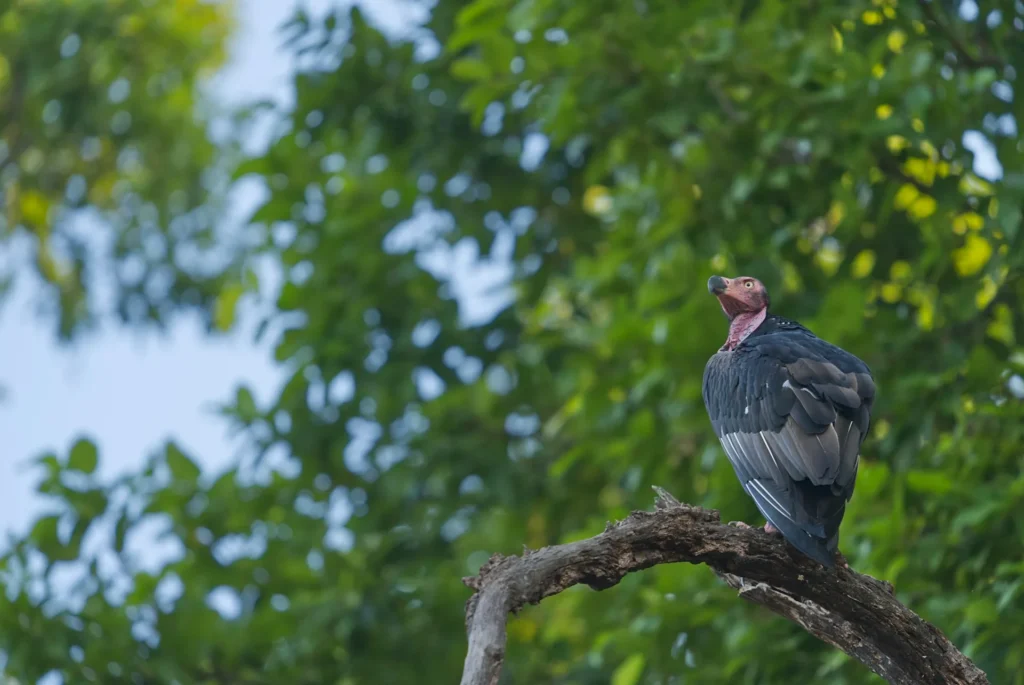
India is home to four vulture species currently classified as Critically Endangered:
- Indian Vulture (Gyps indicus): Cliffs, ruins, and open woodland across central and peninsular India.
- White-backed Vulture (Gyps bengalensis): Tall nesting trees in rural farmlands and forested edges across mainland India.
- Red-headed Vulture (Sarcogyps calvus): Open savannas and wooded slopes, solitary or paired feeder.
- Slender-billed Vulture (Gyps tenuirostris): Sub-Himalayan riverine plains and Terai forests of North and Northeast India.
THE VULTURE DECLINE MECHANISM
│
Veterinary Diclofenac administered to cattle as anti-inflammatory
│
▼
Cattle dies; carcass left for scavengers
│
▼
Vultures feed on contaminated meat -> Ingest Diclofenac
│
▼
Acute visceral gout & rapid renal failure
│
▼
Population dropped >95% across India within 15 years
Vultures play a vital ecological role by rapidly stripping and sanitizing carcasses, preventing the spread of diseases such as anthrax and rabies. The introduction of veterinary diclofenac in the 1990s caused rapid kidney failure in feeding birds. Despite a nationwide ban on veterinary diclofenac, illegal formulations and alternative toxic drugs remain an obstacle to natural recovery, making captive conservation breeding centres vital for their long-term survival.
Great Indian Bustard: Population Numbers, Habitats, and Breeding
The Great Indian Bustard (Ardeotis nigriceps) is India’s most critically threatened avian species. Historically widespread across the open plains of western, central, and southern India, the entire wild population now numbers fewer than 150 individuals.
┌────────────────────────────────────────────────────────────────────────┐
│ GREAT INDIAN BUSTARD POPULATION STATUS (2026) │
├───────────────────────────────────┬────────────────────────────────────┤
│ Wild Population Distribution │ Captive Breeding Inventory │
├───────────────────────────────────┼────────────────────────────────────┤
│ • Rajasthan (Desert NP): 128 birds│ • Captive Care Total: 70 birds │
│ • Gujarat (Kachchh): 3 lone │ • Conservation Breeding Total: 73 │
│ females │ • New Chicks This Season: 5 chicks │
│ • Maharashtra/AP/Karnataka: │ • Gujarat Centre: 1st chick born │
│ <10 individuals each │ March 28, 2026 │
├───────────────────────────────────┴────────────────────────────────────┤
│ Total Wild Population: <150 birds | Captive Target: 100+ breeding birds│
└────────────────────────────────────────────────────────────────────────┘
Wild Populations in Rajasthan, Gujarat, and Peninsular India
- Rajasthan (128 Wild Birds): Over 85% of the global wild population is concentrated in the Jaisalmer and Barmer districts of western Rajasthan, predominantly within and around Desert National Park. The open dhrab-grass flats provide essential feeding grounds on grasshoppers, beetles, and seeds, alongside low-disturbance courtship areas.
- Gujarat (3 Lone Females): In the Banni Grasslands and Kutch Bustard Sanctuary of Gujarat, the wild population has dropped to just 3 surviving females. Without wild males present in the state, natural reproduction in Gujarat’s wild habitats has effectively ceased.
- Peninsular Remnants (<10 Each): Fragmented populations persist in small pockets across Maharashtra (Nannaj / Great Indian Bustard Sanctuary), Andhra Pradesh (Rollapadu Wildlife Sanctuary), and localized patches of Karnataka. These isolated groups face extreme demographic isolation and low genetic exchange.
Captive Breeding Progress and Recent Milestones
Given the high mortality from collision with high-voltage power transmission cables, the primary strategy to avoid extinction has shifted toward ex-situ conservation breeding.
- Conservation Breeding Centres (Rajasthan): Managed by the Wildlife Institute of India (WII) and the Rajasthan Forest Department, the primary captive facilities at Sam and Ramdevra house 70 birds in captive care, with a combined institutional pool of 73 birds across breeding programs. Five new chicks hatched this season, including two chicks born in March 2026.
- Gujarat Hatching Breakthrough: On March 28, 2026, the captive breeding centre in Kachchh, Gujarat, successfully hatched its first Great Indian Bustard chick following a decade-long program of artificial incubation and captive management.
- Long-Term Objective: The conservation goal is to build a captive founder population of 100 or more healthy individuals before piloting monitored, soft-release reintroduction programs in predator-proof, cable-free grassland enclosures.
Practically Extinct Species: Himalayan Quail and Pink-headed Duck
While officially categorized as Critically Endangered on the IUCN Red List, two of India’s native bird species have produced no verified wild sightings for several decades and are considered practically extinct by ornithologists.
PRACTICALLY EXTINCT AVIAN SPECIES
│
┌───────────────────────────┴───────────────────────────┐
▼ ▼
HIMALAYAN QUAIL PINK-HEADED DUCK
• Habitat: Steep montane grass (1,650–2,400 m) • Habitat: Lowland swamp floodplains
• Range: Mussoorie & Nainital (Uttarakhand) • Range: Terai belt & Gangetic wetlands
• Last Wild Record: 1876 • Last Wild Record: Late 1930s
Himalayan Quail (Ophrysia superciliosa)
- Historic Elevation: 1,650 m to 2,400 m above sea level
- Historic Range: Western Himalayas, notably steep, limestone-rich slopes around Mussoorie and Nainital in Uttarakhand
- Status Assessment: Last reliably recorded in 1876.
The Himalayan Quail was a secretive, ground-dwelling gamebird with a distinct red bill and legs, adapted to dense, steep grass tussocks and brushwood on craggy hillsides. It was known only from roughly a dozen museum specimens collected during the nineteenth century. Unregulated colonial-era sport hunting, combined with localized forest clearing and livestock grazing across its high-altitude wintering hills, led to its disappearance. Despite targeted field surveys in Kumaon and Garhwal, no living individuals have been located.
Pink-headed Duck (Rhodonessa caryophyllacea)
- Historic Habitat: Heavily vegetated forest pools, tall elephant grass swamps, and alluvial floodplains
- Historic Range: Northern and eastern India, particularly the Gangetic plains, Bihar, and the Assam Terai belt
- Status Assessment: Last confirmed wild sighting in the late 1930s.
Distinguished by its chocolate-brown plumage paired with a bright pink neck, head, and bill, the Pink-headed Duck was a shy, non-migratory waterfowl that nested in secluded tall-grass wetlands. The systematic draining of seasonal swamps for agriculture, alongside habitat degradation and market hunting across the Gangetic floodplains, eliminated the species from its core riverine strongholds.
Endemic Birds of India: 124 Species Found Nowhere Else
Endemic species are birds whose natural distribution is strictly confined to India’s political borders. Data compiled during Endemic Bird Day 2024—based on 3,075 field checklists from 1,309 participating birders—documented 124 endemic species active across distinct biogeographical zones.
Master Breakdown of India’s Primary Endemic Zones
| Biogeographic Zone | Documented Endemics | Typical Elevation / Habitat | Representative Endemic Species |
| Western Ghats | 30+ species | Shola grasslands, wet evergreen rainforests | Nilgiri Pipit, Malabar Parakeet, Malabar Grey Hornbill, Flame-throated Bulbul |
| Himalayan Belt | 20+ species | Temperate broadleaf forests, alpine scrub (2,100–4,500 m) | Himalayan Monal, Satyr Tragopan, Cheer Pheasant, Western Tragopan |
| Andaman & Nicobar | 10+ species | Oceanic tropical forests, isolated volcanic isles | Nicobar Pigeon, Nicobar Scrubfowl, Andaman Woodpecker, Narcondam Hornbill |
| Central & Arid India | 7+ species | Dry deciduous teak forests, arid scrub | Forest Owlet, Rock Bush Quail, Painted Bush Quail, Sind Sparrow |
Western Ghats Endemics (30+ Species)
The Western Ghats mountain chain forms India’s most concentrated endemic bird zone, characterized by ancient evergreen forests and high-altitude montane shola-grassland mosaics.
WESTERN GHATS ELEVATIONAL ZONING
│
┌───────────────────────────────┴───────────────────────────────┐
▼ ▼
HIGH-ALTITUDE SHOLAS (>1,500 m) MID-TO-LOW ELEVATION FORESTS
• Nilgiri Pipit • Nilgiri Laughingthrush • Malabar Parakeet
• Nilgiri Sholakili • Flame-throated Bulbul
• Broad-tailed Grassbird • White-bellied Blue Flycatcher
- Nilgiri Pipit (Anthus nilghiriensis): Confined to open montane grasslands situated above 1,500 meters, predominantly around the Nilgiri, Anamalai, and Palani hills. It nests in ground tussocks and relies on fire-free grassland patches.
- Malabar Parakeet (Psittacula columboides): A blue-winged parakeet that frequents the canopy of moist deciduous and wet evergreen forests along the western escarpment.
- Malabar Grey Hornbill (Ocyceros griseus): A medium-sized hornbill lacking a prominent casque, common in fruit-bearing fig canopies across the Western Ghats foothills.
- Flame-throated Bulbul (Rubigula gularis): Recognizable by its ruby-orange throat patch, this species occupies dense understory along stream beds in evergreen forest tracts.
- Other Key Endemics: Nilgiri Wood Pigeon, Nilgiri Thrush, Malabar Lark, and White-bellied Blue Flycatcher.
Field Note: In the Western Ghats, bird activity in shola-forest pockets peaks early. The optimal window for observing high-altitude endemics like the Nilgiri Pipit and Nilgiri Sholakili is between 06:15 and 09:00 AM before mist and wind increase across the ridges.
Himalayan Endemics (20+ Species)
The Indian Himalayan arc contains high-altitude specialists adapted to rugged terrain and heavy seasonal snowfall between 2,100 and 4,500 meters.
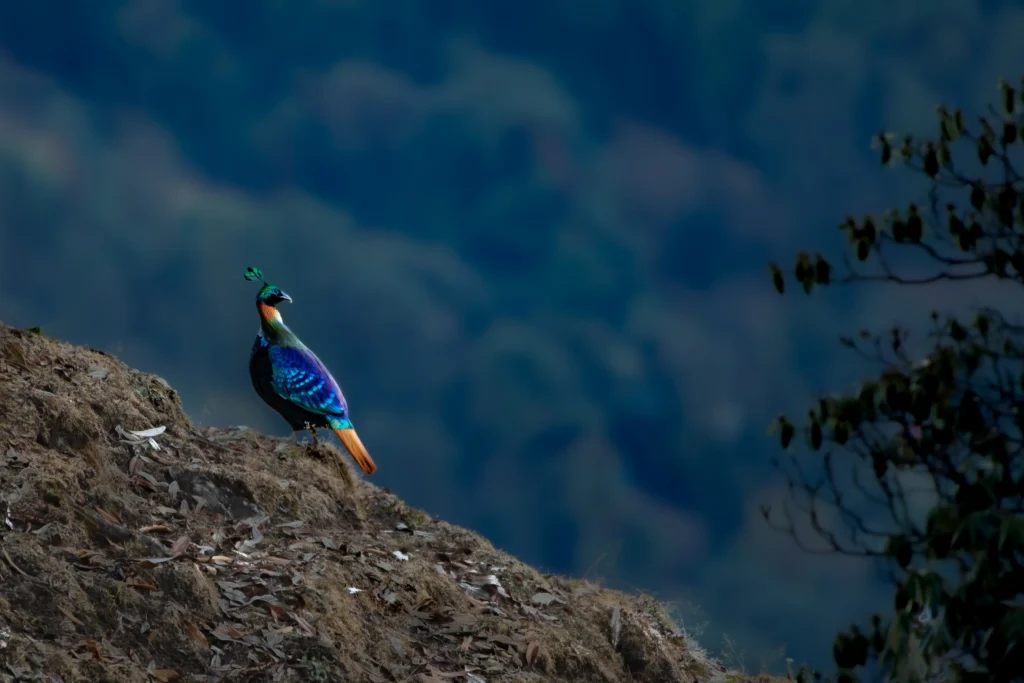
- Himalayan Monal (Lophophorus impejanus): The state bird of Uttarakhand, famous for the iridescent multi-colored plumage of the male. It roots in oak-rhododendron forests and alpine meadows, digging for tubers and high-altitude invertebrates.
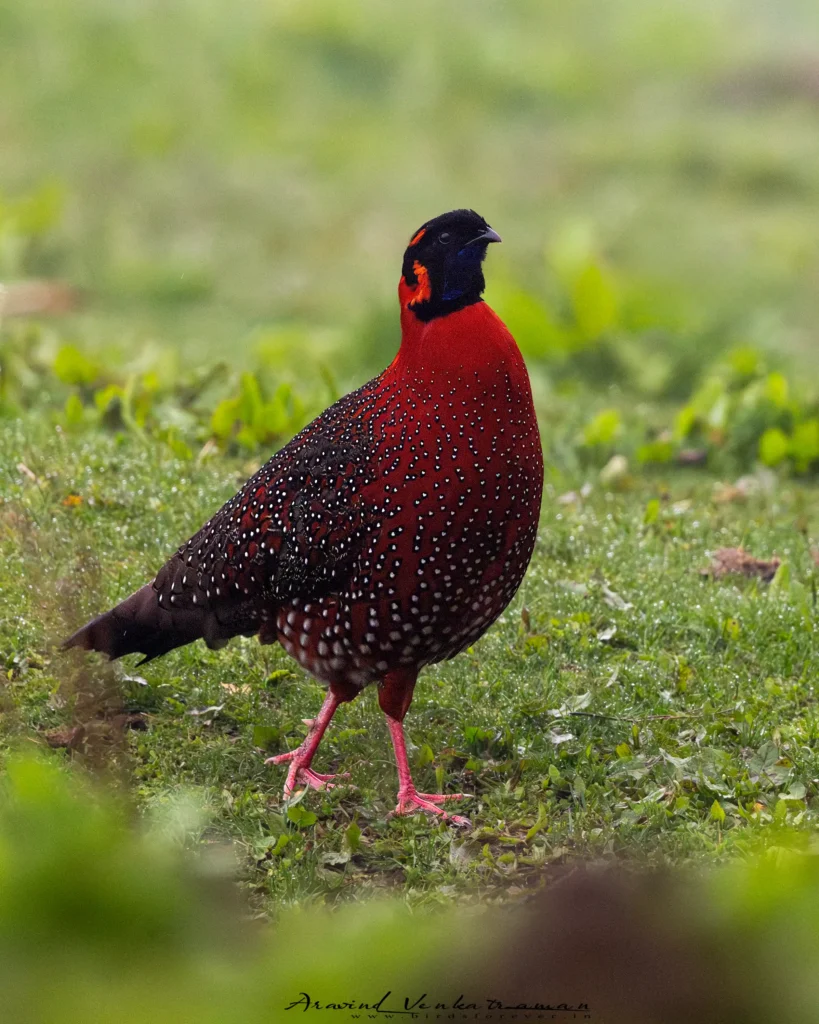
- Satyr Tragopan (Tragopan satyra): A crimson-breasted montane pheasant with horn-like blue wattles displayed during spring courtship, found in dense damp bamboo and rhododendron thickets.
- Cheer Pheasant (Catreus wallichii): Inhabits precipitous grassy ravines and scrub-covered rock faces in the Western and Central Himalayas. Unlike forest pheasants, it prefers steep, open hillside terrain.
- Western Tragopan (Tragopan melanocephalus): A heavily spotted, elusive pheasant confined to narrow valleys with mature temperate forests in Himachal Pradesh and Jammu & Kashmir.
Andaman and Nicobar Endemics (10+ Species)
Due to geographic isolation from the Asian mainland, the Andaman and Nicobar archipelago supports evolutionary endemics with restricted home ranges.
┌────────────────────────────────────────────────────────────────────────┐
│ ANDAMAN & NICOBAR ISLAND ENDEMICS │
├───────────────────────────────────┬────────────────────────────────────┤
│ Andaman Island Group │ Nicobar Island Group │
├───────────────────────────────────┼────────────────────────────────────┤
│ • Andaman Woodpecker │ • Nicobar Pigeon (Caloenas │
│ • Andaman Masked Owl │ nicobarica) │
│ • Andaman Serpent-Eagle │ • Nicobar Scrubfowl (Megapodius │
│ • Andaman Treepie │ nicobariensis) │
│ • Andaman Scops Owl │ • Nicobar Parakeet (Psittacula │
│ • Narcondam Hornbill (Narcondam │ caniceps) │
│ Island only, <300 birds) │ │
└───────────────────────────────────┴────────────────────────────────────┘
- Narcondam Hornbill (Rhyticeros narcondami): With a global population under 300 individuals, this species is restricted to the 6.8 sq km volcanic terrain of Narcondam Island in the Andaman Sea.
- Nicobar Pigeon (Caloenas nicobarica): The closest living relative to the extinct dodo, characterized by iridescent metallic green-bronze plumage and a white tail. It roams between uninhabited, densely forested outer islets.
- Nicobar Scrubfowl (Megapodius nicobariensis): A mound-building megapode that uses decomposing beach vegetation and sand mounds to incubate its eggs along coastal forest borders.
- Andaman Endemics: Andaman Woodpecker, Andaman Masked Owl, Andaman Treepie, and Andaman Wood Pigeon.
Best Locations to Spot Rare Birds in India
Knowing exactly where to find critically endangered and highly localized endemic birds is the foundation of planning a specialized wildlife trip. Unlike widespread megafauna, rare birds require travelers to visit specific micro-habitats, ranging from high-altitude sholas to remote oceanic islands.
Below is a practical guide to India’s most important birding sanctuaries for rare sightings, prioritizing locations with established protection protocols and viable populations.
Top Sanctuaries and National Parks for Rare Bird Spotting
| Sanctuary / Location | State / Territory | Key Target Rare Species | Travel Accessibility |
| Desert National Park | Rajasthan | Great Indian Bustard | Moderate; guided jeep tours available |
| Banni Grasslands | Gujarat | Great Indian Bustard, Demoiselle Crane | Moderate; flat terrain |
| Eaglenest Wildlife Sanctuary | Arunachal Pradesh | Bugun Liocichla | Difficult; remote, requires permits |
| Nameri National Park | Assam | White-bellied Heron | Moderate; walking safaris permitted |
| Melghat Tiger Reserve | Maharashtra | Forest Owlet | Moderate; established central circuits |
| Satpura National Park | Madhya Pradesh | Forest Owlet | Moderate; boat and walking safaris |
| Great Himalayan National Park | Uttarakhand / HP | Himalayan Monal, Western Tragopan | Moderate to Difficult; high-altitude trekking |
| Thattekad Bird Sanctuary | Kerala | Malabar Trogon | Easy; well-developed tourist infrastructure |
| Narcondam Island | Andaman Sea | Narcondam Hornbill | Difficult; highly restricted island access |
| Nicobar Islands | Andaman & Nicobar | Nicobar Pigeon, Nicobar Scrubfowl | Difficult; restricted access |
Arid and Grassland Hotspots
- Desert National Park (Rajasthan): This is the primary stronghold for the Great Indian Bustard, holding roughly 128 individuals. The park consists of undulating sand dunes, craggy rocks, and open dhrab grasslands. Visitors must use designated safari routes to avoid disturbing ground-nesting birds.
- Banni Grasslands (Gujarat): A seasonal marsh and saline plain that supports massive flocks of wintering Demoiselle Cranes and holds Gujarat’s last three wild female Great Indian Bustards.
Eastern Himalayan and Riverine Hotspots
- Eaglenest Wildlife Sanctuary (Arunachal Pradesh): Located in the remote northeast, Eaglenest is famous as the only known habitat of the Bugun Liocichla, a species discovered here in 2006. The terrain is steep, heavily forested, and requires specialized planning and permits to access.
- Nameri National Park (Assam): Nameri is one of the few reserves where visitors can scan the undisturbed banks of the Jia Bhoroli river (a tributary of the Brahmaputra) to look for the critically endangered White-bellied Heron.
Central Indian Deciduous Hotspots
- Melghat Tiger Reserve (Maharashtra): This dry deciduous teak forest is the site where the Forest Owlet was famously rediscovered in 1997 after being considered extinct for over a century.
- Satpura & Betla National Parks (Madhya Pradesh & Jharkhand): Both reserves offer secondary habitats for the Forest Owlet, providing excellent central Indian birding circuits that combine well with tiger safaris.
Decision Guide: For first-time wildlife travelers focusing on birds, Satpura National Park and Nameri National Park offer the best balance of rare species sightings and manageable accessibility. Hardcore twitchers seeking endemics will need to plan dedicated, multi-day expeditions to Eaglenest or the high-altitude trails of the Great Himalayan National Park.
Conservation Efforts: Project Great Indian Bustard
With the wild population of the Great Indian Bustard dropping below 150 individuals, the Indian government and scientific community have shifted from purely habitat-based protection to active ex-situ conservation. Project Great Indian Bustard is currently the most critical avian recovery program in the subcontinent.
Conservation Breeding Centre Successes
The primary conservation breeding strategy is managed by the Wildlife Institute of India (WII) and the Rajasthan Forest Department. The strategy involves collecting eggs from the wild, artificially incubating them, and rearing the chicks in predator-free environments.
- Current Population: As of March 2026, there are 70 bustards in captive care, bringing the total number of birds in conservation breeding centres to 73.
- Recent Hatchings: The program has achieved significant recent success, with 5 new chicks born this season, including 2 hatched in March 2026 at the Rajasthan centre.
- Future Goals: The long-term objective is to raise a healthy founder population of over 100 birds, which will eventually be used to repopulate protected, cable-free grassland zones.
The Gujarat Breakthrough
In a major conservation milestone, the captive breeding centre in Kachchh, Gujarat, successfully hatched its first Great Indian Bustard chick on March 28, 2026, after a decade of intensive effort. This breakthrough is particularly important because the wild population in Gujarat had dwindled to just 3 lone females, meaning natural wild breeding in the state had ceased.
Government Initiatives for Rare Bird Protection
The survival of India’s most threatened birds relies on a combination of scientific monitoring, habitat protection, and policy enforcement by state and national bodies.
Wildlife Institute of India (WII) and Protected Areas
The WII conducts the primary population monitoring studies for critically endangered species, tracking the roughly 150 Great Indian Bustards across the country to understand their movement patterns and habitat requirements. Guided by this research, the Union Environment Ministry oversees the designation and management of critical protected areas, including Desert National Park, Eaglenest, and Melghat Tiger Reserve.
WWF India and Vulture Protection Programs
Non-governmental organizations play a crucial role in advocacy and field protection. WWF India actively supports Great Indian Bustard population monitoring and advocates for the protection of their shrinking grassland habitats.
Additionally, conservation organizations were instrumental in securing the nationwide ban on veterinary diclofenac, the drug responsible for the collapse of India’s four critically endangered vulture species. WWF and government bodies continue to support conservation breeding centres for vultures to establish safe, diclofenac-free populations for future release.
Field Planning and Ethical Guidelines for Rare Bird Watching
Observing critically endangered or endemic birds requires disciplined field ethics, appropriate optics, and an understanding of sensitive micro-habitats. Ground-nesting species and island endemics are especially vulnerable to disturbances caused by unethical photography and off-track exploration.
┌────────────────────────────────────────────────────────────────────────┐
│ FIELD PROTOCOLS FOR RARE BIRDWATCHING │
├───────────────────────────────────┬────────────────────────────────────┤
│ Photography & Equipment │ Habitat Protection & Ethics │
├───────────────────────────────────┼────────────────────────────────────┤
│ • Optics: 8×42 or 10×42 binocular │ • No acoustic playback near nests │
│ • Telephoto: 400mm–600mm focal │ • Stay on designated safari tracks │
│ • No electronic flash units │ • Avoid crowding active perches │
│ • Neutral, muted field clothing │ • Obtain all inner-line / island │
│ │ permits in advance │
└───────────────────────────────────┴────────────────────────────────────┘
Photography and Equipment Guidelines
- Optics Selection: An 8×42 or 10×42 binocular with high light transmission is essential for dense canopy habitats such as the Western Ghats or Eaglenest Wildlife Sanctuary.
- Telephoto Lenses: Use lenses with focal lengths between 400mm and 600mm to photograph rare species from a safe distance without encroaching on their flight initiation distance.
- No Artificial Flash: Flash photography is strictly avoided around nocturnal species such as the Forest Owlet or Jerdon’s Courser, as artificial lighting can cause temporary disorientation and disrupt hunting.
- Muted Clothing: Wear earth tones (khaki, olive green, or dull brown) to avoid triggering alarm responses in skittish grassland birds like the Great Indian Bustard and Bengal Florican.
Ethical Field Practices and Habitat Protection
- Avoid Audio Playback: Using recorded bird calls to draw out elusive species causes unnecessary stress and can distract breeding birds from guarding nests or feeding chicks.
- Strict Track Discipline: In arid habitats like Desert National Park and the Banni Grasslands, never drive off marked trails. Ground-nesting birds lay cryptically colored eggs directly on the gravel or short grass, making them susceptible to vehicle crushing.
- Permit Compliance: Remote birding locations such as Narcondam Island, the Nicobar archipelago, and protected border zones in Arunachal Pradesh require specialized administrative and forest department permits before entry.
Common Mistakes to Avoid When Planning Rare Bird Safaris
- Assuming Rare Birds Inhabit General Tiger Reserves: Many critically endangered species, like the Bengal Florican or Great Indian Bustard, are habitat specialists confined to open grasslands and scrub forests, not standard dense sal or teak tiger habitats.
- Relying on Outdated Population Figures: Expecting common sightings of birds like the Great Indian Bustard ignores the reality that fewer than 150 remain in the wild across the entire country.
- Visiting During the Monsoon in Wetland / Grassland Belts: Heavy rains flood alluvial grasslands in Assam (Kaziranga, Manas) and submerge breeding grounds, making access impossible.
- Underestimating Trekking Demands in High-Altitude Sanctuaries: Spotting Himalayan endemics like the Western Tragopan or Satyr Tragopan requires multi-day trekking at elevations between 2,100 and 4,500 meters.
- Traveling Without Local Guides: Spotting cryptic species like the Forest Owlet or White-bellied Heron without an experienced local naturalist significantly lowers sighting probability.
Frequently Asked Questions
1. What are the rarest birds in India?
The rarest birds in India include the Great Indian Bustard (under 150 wild individuals), Bengal Florican (fewer than 1,000 left), White-bellied Heron, Forest Owlet, Jerdon’s Courser, Narcondam Hornbill (under 300 birds), and four critically endangered vulture species.
2. Which birds are critically endangered in India?
India has 15 bird species categorized as Critically Endangered on the IUCN Red List. These include 4 grassland specialists (Great Indian Bustard, Bengal Florican, Jerdon’s Courser, Sociable Lapwing), 4 vulture species (Indian, White-backed, Red-headed, Slender-billed), 4 wetland species (White-bellied Heron, Baer’s Pochard, Siberian Crane, Spoon-billed Sandpiper), 1 forest specialist (Forest Owlet), and 2 practically extinct species (Himalayan Quail, Pink-headed Duck).
3. How many Great Indian Bustards are left in India?
There are fewer than 150 Great Indian Bustards remaining in the wild. Over 128 reside in western Rajasthan, 3 lone females survive in Gujarat, and fewer than 10 birds each persist in fragmented pockets across Maharashtra, Andhra Pradesh, and Karnataka.
4. Where can I find the Great Indian Bustard in India?
The most reliable location to spot the Great Indian Bustard is Desert National Park near Jaisalmer, Rajasthan. Secondary, though significantly smaller, populations exist in Gujarat’s Banni Grasslands and Kutch Bustard Sanctuary.
5. What is the population of the Bengal Florican in India?
The total global population of the Bengal Florican is estimated at fewer than 1,000 individuals. In India, it is primarily found in the alluvial grasslands of Assam (such as Manas and Kaziranga National Parks), as well as protected pockets in Uttar Pradesh and Madhya Pradesh.
6. Which birds are endemic only to India?
India is home to 124 documented endemic bird species that occur nowhere else. Key examples include the Nilgiri Pipit, Malabar Grey Hornbill, Malabar Parakeet, Himalayan Monal, Nicobar Pigeon, and Bugun Liocichla.
7. Is the Himalayan Quail extinct in India?
The Himalayan Quail is considered practically extinct. It was historically found on steep, brushy slopes between 1,650 m and 2,400 m elevation near Mussoorie and Nainital in Uttarakhand, with no verified wild sightings since 1876.
8. Is the Pink-headed Duck extinct in India?
The Pink-headed Duck is considered practically extinct. It was historically distributed across the secluded wetlands and floodplains of northern and eastern India, but has had no confirmed wild records since the late 1930s.
9. Where can I find the White-bellied Heron in India?
The White-bellied Heron is found along undisturbed, fast-flowing rivers in Northeast India, particularly within Namdapha National Park, Nameri National Park, and along tributaries of the Brahmaputra River in Assam and Arunachal Pradesh.
10. Which vulture species are critically endangered in India?
Four vulture species are classified as Critically Endangered in India: the Indian Vulture (Gyps indicus), White-backed Vulture (Gyps bengalensis), Red-headed Vulture (Sarcogyps calvus), and Slender-billed Vulture (Gyps tenuirostris). Their populations collapsed primarily due to poisoning from the veterinary drug diclofenac.
11. Where can I spot the Forest Owlet in India?
The Forest Owlet can be found in the dry deciduous teak forests of Melghat Tiger Reserve in Maharashtra, Satpura National Park in Madhya Pradesh, and Betla National Park in Jharkhand.
12. What is the population of Jerdon’s Courser in India?
Jerdon’s Courser is an extremely rare, elusive nocturnal bird with a very small, unquantified population. It was rediscovered in 1986 and is historically associated with scrub and rocky understory habitats in Andhra Pradesh, Madhya Pradesh, and Rajasthan.
13. Where can I find the Bugun Liocichla in India?
The Bugun Liocichla is found almost exclusively in the high-elevation montane forests of Eaglenest Wildlife Sanctuary in Arunachal Pradesh, where it was first discovered and described to science in 2006.
14. What is Project Great Indian Bustard?
Project Great Indian Bustard is an institutional conservation initiative led by the Union Environment Ministry, the Wildlife Institute of India, and state forest departments. It focuses on habitat protection, power-line mitigation, and ex-situ conservation breeding to rescue the species from extinction.
15. Are there captive breeding programs for rare birds in India?
Yes. India runs active captive breeding programs for the Great Indian Bustard (holding over 70 birds in captive care across Rajasthan and Gujarat) as well as dedicated vulture conservation breeding centres across several states.
16. Which endemic birds are found only in the Western Ghats?
Over 30 endemic bird species live in the Western Ghats, including the Nilgiri Pipit, Nilgiri Laughingthrush, Malabar Parakeet, Malabar Grey Hornbill, Flame-throated Bulbul, Nilgiri Wood Pigeon, and Broad-tailed Grassbird.
17. Which endemic birds are found only in the Himalayas?
The Himalayan belt supports more than 20 endemic and specialized high-altitude species, including the Himalayan Monal, Satyr Tragopan, Cheer Pheasant, Western Tragopan, and the historically recorded Himalayan Quail.
18. What is the population of the Narcondam Hornbill?
The global population of the Narcondam Hornbill is under 300 individuals. The species is endemic to a single, 6.8-square-kilometer volcanic landmass—Narcondam Island—in the Andaman Sea.
19. Where can I spot the Nicobar Pigeon in India?
The Nicobar Pigeon is found exclusively on uninhabited outer islands of the Andaman and Nicobar archipelago in the eastern Indian Ocean. Access to these islands is strictly regulated to protect the bird and local indigenous tribes.
20. What government initiatives protect rare birds in India?
Key government initiatives include the Wildlife Institute of India’s population monitoring programs, the Union Environment Ministry’s conservation breeding centres, the creation of protected sanctuaries (such as Desert National Park and Eaglenest), and statutory bans on toxic veterinary drugs like diclofenac.
Conclusion: The Future of India’s Rare Avifauna
India’s rare and endemic avifauna reflects both the richness of the subcontinent’s biomes and the severe challenges posed by rapid landscape transformation. With 15 critically endangered bird species and 124 documented endemics, the preservation of specialized habitats—from dry arid grasslands to high-altitude shola pockets—is vital for ecological balance.
While species like the Great Indian Bustard and White-bellied Heron remain on the brink of extinction, recent milestones in captive breeding and active field research offer a pathway toward recovery. For wildlife travelers, birdwatchers, and photographers, practicing strict field ethics, supporting local community guides, and adhering to protected area guidelines ensure that future generations can continue to observe these remarkable birds in the wild.