
Explore the biodiversity of the Eastern Himalayas, including ecosystems, endemic wildlife, protected areas, conservation challenges, and responsible wildlife travel.
Introduction, Regional Overview & Biodiversity Hotspot
Introduction
The Eastern Himalayas are among the most biologically important mountain regions on Earth. Stretching from eastern Nepal through Bhutan and northeast India into southeastern Tibet and parts of Yunnan in China, they support an extraordinary variety of habitats within a relatively compact area. Dense tropical forests, temperate woodlands, alpine meadows, glaciers, and fast-flowing rivers all occur across dramatic elevational gradients, allowing thousands of plant and animal species to coexist.
This diversity has earned the Eastern Himalayas recognition as one of the world’s global biodiversity hotspots. The region is home to well-known species such as the Red Panda, Snow Leopard, Bengal Tiger, Asian Elephant, and Greater One-horned Rhinoceros, alongside countless orchids, rhododendrons, frogs, butterflies, and many lesser-known organisms that occur nowhere else. Researchers continue to discover new species here, highlighting how much of the region remains scientifically unexplored.
For wildlife travellers, the Eastern Himalayas offer far more than the chance to see charismatic mammals. They provide opportunities to experience one of the world’s richest ecological landscapes, where biodiversity changes dramatically with altitude and where conservation depends on cooperation between multiple countries, protected areas, and local communities.
What Are the Eastern Himalayas?
The Eastern Himalayas form the eastern section of the Himalayan mountain system and encompass landscapes across Nepal, Bhutan, northeast India, southeastern Tibet, and adjoining parts of southwest China. Although different organizations define the exact boundaries slightly differently, the region broadly extends from Nepal’s Koshi Valley eastwards to northwest Yunnan.
Within India, the hotspot includes important parts of:
- Sikkim
- Arunachal Pradesh
- Northern West Bengal
- Parts of Assam and adjoining Himalayan foothills
Its transboundary nature makes conservation particularly complex, as wildlife frequently moves across political borders while habitats remain ecologically connected.
Why the Region Matters
Several factors distinguish the Eastern Himalayas from many other mountain systems:
- Exceptional species richness across many groups
- High levels of endemism
- Large changes in climate and vegetation over short distances
- Numerous protected areas connected through ecological corridors
- Continued discoveries of previously unknown species
These characteristics make the region important not only for biodiversity conservation but also for climate resilience, freshwater security, and scientific research.
Field Note: Unlike many wildlife destinations where biodiversity is concentrated in a single habitat, the Eastern Himalayas are defined by rapid ecological transitions. A journey from the foothills to the alpine zone can pass through several distinct ecosystems within a single day, each supporting its own communities of plants and animals.
Why the Eastern Himalayas Are a Global Biodiversity Hotspot
A biodiversity hotspot is not simply an area with many species. To qualify, a region must contain exceptionally high numbers of endemic species while also facing significant threats to its natural habitats.
The Eastern Himalayas meet both criteria.
Extraordinary Endemism
Isolation created by mountain ranges, deep valleys, varied climates, and long evolutionary history has allowed many plants and animals to evolve independently. As a result, numerous species occur nowhere else on Earth.
This includes many orchids, rhododendrons, amphibians, reptiles, and mammals that occupy very specific habitats and narrow elevational ranges. Such specialization also makes many species particularly vulnerable to habitat loss and climate change.
Elevation Drives Biodiversity
One of the defining features of the Eastern Himalayas is the rapid change in altitude—from tropical lowlands to snow-covered peaks.
These steep elevational gradients create a sequence of habitats that include:
- Tropical evergreen forests
- Subtropical forests
- Temperate broadleaf forests
- Conifer forests
- Alpine scrub
- Alpine meadows
- Permanent snow and glaciers
Each habitat supports distinct wildlife communities, contributing to the region’s exceptional biological diversity.
Conservation Beyond Protected Areas
While national parks and biosphere reserves play a central role in protecting biodiversity, scientists increasingly emphasize that long-term conservation also depends on landscape connectivity and collaboration with local communities. Many species rely on habitats outside formally protected areas and move across international borders during seasonal migrations or dispersal.
This broader landscape approach has become one of the defining themes of modern conservation in the Eastern Himalayas.
Major Ecosystems and Wildlife Diversity
Major Ecosystems of the Eastern Himalayas
One of the defining characteristics of the Eastern Himalayas is the remarkable variety of ecosystems found across a relatively small geographic area. Altitude, rainfall, temperature, and topography change rapidly, creating a series of habitats that support different communities of plants and animals. This ecological diversity is one of the primary reasons the region is recognised as a global biodiversity hotspot.
Tropical and Subtropical Forests
The lower elevations receive heavy monsoon rainfall and support evergreen and semi-evergreen forests with dense vegetation.
These forests provide habitat for:
- Asian Elephant
- Bengal Tiger
- Clouded Leopard
- Gaur
- Hoolock Gibbon
- Hornbills
- Numerous reptiles and amphibians
Large rivers and fertile valleys further increase habitat diversity, supporting wetlands and riparian forests that are important for both resident and migratory species.
Temperate Broadleaf Forests
As elevation increases, tropical forests gradually give way to temperate broadleaf forests dominated by oak, maple, chestnut, magnolia and other deciduous trees.
These forests are particularly important for:
- Red Panda
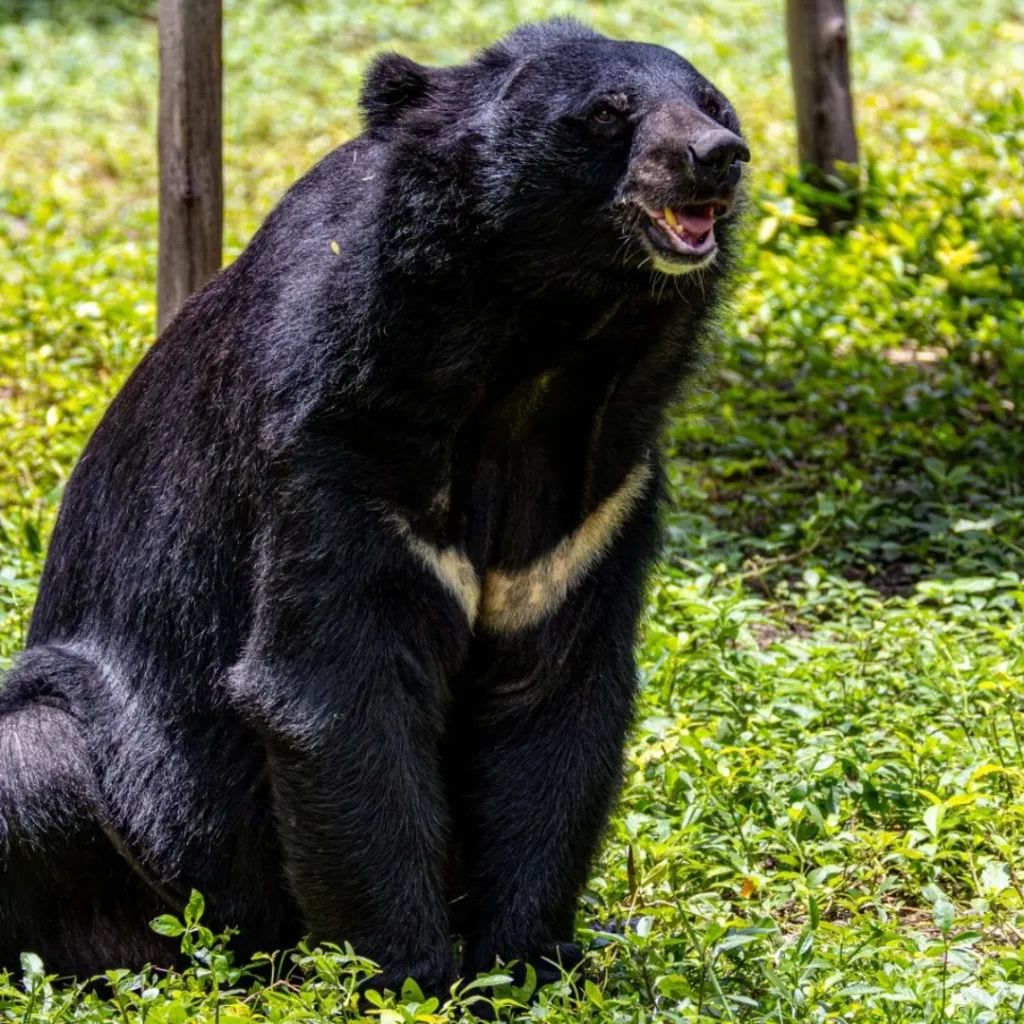
- Himalayan Black Bear
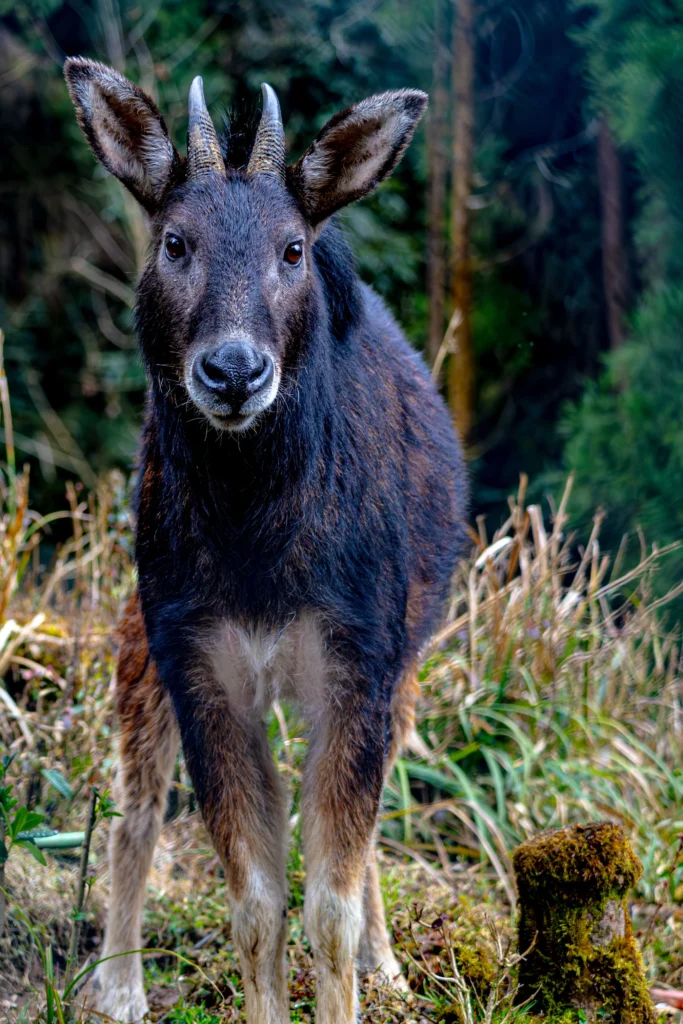
- Himalayan Serow
- Satyr Tragopan
- Various laughingthrushes and babblers
The cool, moist climate also supports abundant mosses, ferns and epiphytic orchids.

Conifer Forests
Higher elevations are characterised by forests of fir, spruce, pine and hemlock.
Although wildlife densities may appear lower than in tropical forests, these habitats are crucial for several mountain specialists, including:
- Himalayan Musk Deer
- Takin
- Himalayan Monal
- Blood Pheasant
- Yellow-throated Marten
Many of these species depend on relatively undisturbed forests and are sensitive to habitat fragmentation.
Alpine Meadows
Above the tree line, forests give way to alpine grasslands and shrublands.
These open landscapes experience long winters, strong winds and short growing seasons but support specially adapted plants and animals, including:
- Snow Leopard
- Blue Sheep
- Himalayan Marmot
- Pikas
- High-altitude medicinal plants
During summer, alpine meadows burst into bloom with wildflowers, attracting pollinating insects and providing grazing grounds for both wild herbivores and domestic livestock.
Rivers, Wetlands and Glacial Landscapes
The Eastern Himalayas are often described as Asia’s “water towers” because their glaciers, snowfields and rivers supply freshwater to millions of people downstream.
Fast-flowing rivers, marshes and wetlands also support:
- Freshwater fishes
- Otters
- Water birds
- Amphibians
- Aquatic insects
These freshwater ecosystems are increasingly recognised as conservation priorities because they face pressure from dams, pollution and changing river flows.
Comparison: Major Ecosystems of the Eastern Himalayas
| Ecosystem | Typical Elevation | Characteristic Wildlife |
| Tropical forests | Low elevations | Elephant, Tiger, Hornbills, Hoolock Gibbon |
| Temperate forests | Mid elevations | Red Panda, Black Bear, Satyr Tragopan |
| Conifer forests | High elevations | Musk Deer, Monal, Takin |
| Alpine meadows | Above tree line | Snow Leopard, Blue Sheep, Marmots |
| Rivers & wetlands | Across elevations | Otters, freshwater fish, amphibians |
Wildlife of the Eastern Himalayas
The Eastern Himalayas support an exceptional range of wildlife across multiple taxonomic groups. While charismatic mammals often receive the most attention, the region is equally significant for birds, amphibians, reptiles, plants and countless invertebrates. Many of these species are endemic or have highly restricted distributions.
Mammals
The region supports around 255 terrestrial mammal species across different landscapes, ranging from tropical forests to alpine habitats. Conservation studies have also identified many threatened mammals that require urgent protection.
Some of the best-known mammals include:
- Red Panda
- Snow Leopard
- Bengal Tiger
- Asian Elephant
- Greater One-horned Rhinoceros
- Himalayan Musk Deer
- Himalayan Black Bear
- Takin
- Clouded Leopard
- Himalayan Serow
Many of these species require extensive, connected habitats, making landscape-scale conservation essential.
Field Note: Spotting large mammals in the Eastern Himalayas is often more challenging than in India’s central tiger reserves. Dense forests, steep terrain and naturally low wildlife densities mean patience—and realistic expectations—are important.
Bird Diversity
Birdwatchers regard the Eastern Himalayas as one of Asia’s finest regions because of its remarkable diversity across elevation zones.
Important bird groups include:
- Himalayan Monal
- Satyr Tragopan
- Blood Pheasant
- Hornbills
- Laughingthrushes
- Sunbirds
- Flycatchers
- Numerous endemic and range-restricted passerines
Seasonal migrations further increase diversity, with many species moving between elevations in response to changing weather and food availability.


Photography Tip
Early mornings in temperate forests often provide the best opportunities for photographing pheasants and forest birds. A telephoto lens and quiet observation are generally more productive than moving frequently between locations.
Amphibians and Reptiles
Although less familiar to most visitors, amphibians and reptiles represent one of the most scientifically important components of Eastern Himalayan biodiversity.
Researchers continue to document:
- Range-restricted frogs
- Salamanders
- Lizards
- Snakes
- Data-deficient species that remain poorly studied
Because many amphibians depend on cool, moist habitats, they are especially vulnerable to habitat alteration and climate change.
Butterflies and Other Invertebrates
Invertebrates receive far less public attention than mammals, yet they perform essential ecological functions.
Butterflies, bees, moths, beetles and other insects:
- Pollinate flowering plants
- Support food webs
- Help recycle nutrients
- Serve as indicators of ecosystem health
The research brief highlights that these smaller organisms are often overlooked despite their importance for conservation planning.
Plant Diversity
The Eastern Himalayas are equally renowned for their botanical wealth.
Notable plant groups include:
- Rhododendrons
- Orchids
- Magnolias
- Medicinal plants
- Alpine flowering herbs
- Bamboo species
Many plants are adapted to narrow ecological niches, making them particularly susceptible to habitat loss. Their diversity also supports insects, birds and mammals that depend on flowers, fruits or forest structure for survival.
Expert Tip
If your primary interest is flowering plants rather than large mammals, plan your visit around spring, when rhododendrons, orchids and alpine wildflowers are typically at their most colourful. Exact flowering periods vary with elevation and annual weather conditions.
Why Biodiversity Extends Beyond Big Mammals
One common misconception is that conservation in the Eastern Himalayas is mainly about protecting tigers, elephants or snow leopards.
In reality, scientists increasingly emphasise that long-term ecosystem health depends equally on lesser-known species—including amphibians, insects, fungi and plants—that maintain ecological processes such as pollination, seed dispersal and nutrient cycling. Protecting entire ecosystems rather than individual flagship species is therefore considered the most effective conservation strategy.
Flagship Species, Protected Areas and Conservation Challenges
Flagship Species of the Eastern Himalayas
The Eastern Himalayas support hundreds of mammals, birds, reptiles, amphibians and plants, but a handful of species have become symbols of the region’s conservation importance. These flagship species help raise public awareness while also representing the health of the ecosystems they inhabit.
Red Panda (Ailurus fulgens)
The Red Panda is one of the Eastern Himalayas’ most recognisable mammals and is closely associated with cool temperate forests containing dense bamboo undergrowth.
It occurs across parts of Nepal, Bhutan, northeast India and southwestern China.
Its survival depends on:
- Continuous temperate forest habitat
- Healthy bamboo forests
- Minimal human disturbance
- Connected forest corridors
Habitat fragmentation remains one of the biggest long-term threats to the species.
Photography Tip: Red Pandas are naturally elusive. If you’re hoping to see one, consider guided wildlife tours in suitable habitats rather than expecting sightings during general sightseeing trips.
Snow Leopard (Panthera uncia)
Often called the “ghost of the mountains,” the Snow Leopard inhabits remote alpine and subalpine landscapes at high elevations.
It is rarely seen because of:
- Vast home ranges
- Rugged terrain
- Excellent camouflage
- Naturally low population densities
Protecting alpine habitats and maintaining prey populations such as Blue Sheep are essential for its conservation.
Bengal Tiger (Panthera tigris)
Although many people associate Bengal Tigers with India’s central forests, they also occur within suitable lowland habitats of the Eastern Himalayas.
These forests form part of larger conservation landscapes where tigers coexist with:
- Asian Elephants
- Clouded Leopards
- Gaur
- Wild boar
- Numerous deer species
Maintaining connected forests allows tigers to disperse between protected areas.
Asian Elephant (Elephas maximus)
Asian Elephants occupy the foothills and tropical forests of the Eastern Himalayas.
Unlike many protected-area species, elephants frequently move across landscapes that include forests, agricultural land and human settlements.
Their conservation therefore depends not only on national parks but also on:
- Wildlife corridors
- Landscape planning
- Community participation
- Reducing human-elephant conflict
Greater One-horned Rhinoceros (Rhinoceros unicornis)
The Greater One-horned Rhinoceros survives in suitable grassland and riverine habitats within parts of the Eastern Himalayan landscape.
Its recovery demonstrates the importance of:
- Long-term habitat protection
- Effective anti-poaching measures
- Scientific monitoring
- Cooperation between conservation agencies
Himalayan Musk Deer
Found in high-elevation forests and alpine habitats, Himalayan Musk Deer are among the region’s specialised mountain mammals.
They face pressure from:
- Habitat degradation
- Illegal hunting
- Fragmented populations
Protecting intact mountain forests benefits musk deer as well as numerous other high-altitude species.
Comparison: Flagship Mammals of the Eastern Himalayas
| Species | Primary Habitat | Why It Matters |
| Red Panda | Temperate forests | Indicator of healthy mountain forests |
| Snow Leopard | Alpine mountains | Apex predator of high-altitude ecosystems |
| Bengal Tiger | Tropical forests | Umbrella species requiring large landscapes |
| Asian Elephant | Forests and foothills | Maintains ecological connectivity through seed dispersal |
| Greater One-horned Rhinoceros | Riverine grasslands | Successful conservation icon |
| Himalayan Musk Deer | Conifer and alpine forests | Sensitive indicator of mountain habitat quality |
Protected Areas and Important Wildlife Landscapes
Protected areas form the backbone of biodiversity conservation in the Eastern Himalayas. However, scientists increasingly emphasise that parks alone are not enough. Wildlife also depends on ecological corridors and well-managed landscapes that connect protected habitats across national boundaries.
Khangchendzonga Biosphere Reserve
Located in Sikkim, Khangchendzonga is among India’s most significant mountain protected areas.
Its importance lies in:
- Wide elevational range
- Diverse ecosystems
- Important Red Panda habitat
- Alpine wildlife
- Rich plant diversity
The reserve also demonstrates how cultural traditions and biodiversity conservation can coexist within mountain landscapes.
Namdapha National Park
Namdapha National Park in Arunachal Pradesh is one of India’s largest protected areas and encompasses habitats ranging from lowland evergreen forests to high mountains.
Its varied terrain supports an impressive range of wildlife and makes it one of the country’s most biologically diverse protected areas. The park is frequently highlighted in discussions of Eastern Himalayan biodiversity because of its extensive habitat diversity.
Other Important Protected Areas
Across the Eastern Himalayan region, numerous protected areas contribute to biodiversity conservation.
These include protected landscapes in:
- Bhutan
- Nepal
- Northeast India
- Southwestern China
Together they protect representative ecosystems from tropical forests to alpine environments while supporting migratory and wide-ranging wildlife.
Transboundary Conservation
Wildlife does not recognise political borders.
Species such as elephants, snow leopards and red pandas often move across international boundaries during their lives.
Because of this, organisations increasingly promote transboundary conservation, where neighbouring countries cooperate on:
- Habitat connectivity
- Wildlife monitoring
- Scientific research
- Anti-poaching efforts
- Landscape-level conservation planning
The research brief identifies this approach as one of the region’s most important conservation priorities.
Responsible Tourism Tip: When visiting protected areas, choose guides and operators who follow local regulations, employ local communities and respect wildlife viewing guidelines. Responsible tourism can provide economic incentives that strengthen conservation.
Conservation Challenges
Despite its biological importance, the Eastern Himalayas face numerous conservation pressures.
Habitat Fragmentation
Road construction, expanding settlements, agriculture and infrastructure development can divide forests into smaller patches.
Fragmented habitats:
- Restrict wildlife movement
- Reduce genetic diversity
- Increase conflict between people and wildlife
- Make species more vulnerable to local extinction
Maintaining ecological corridors has therefore become a major conservation objective.
Climate Change
Climate change presents one of the greatest long-term challenges for mountain ecosystems.
According to the research brief, climate vulnerability assessments indicate that many protected areas—particularly isolated high-elevation reserves—face increasing risks under future climate scenarios. Species may be forced to shift their ranges upward, while those already occupying the highest elevations have limited options for further movement.
Hunting and Illegal Wildlife Trade
Although legal protection has improved across much of the region, illegal hunting and wildlife trade continue to threaten several species.
Targeted animals include those valued for:
- Body parts
- Traditional medicine
- Meat
- Illegal wildlife trade
Effective conservation requires both law enforcement and community engagement.
Why Local Communities Matter
Modern conservation increasingly recognises that protecting biodiversity cannot rely solely on government agencies.
The research brief highlights the importance of community-led conservation, sustainable livelihoods and local stewardship. Many successful initiatives involve local residents in habitat protection, ecotourism and monitoring programmes, helping align conservation goals with community well-being.
Expert Tip: Conservation success in the Eastern Himalayas is measured not only by the number of protected areas but also by how effectively forests remain connected and how actively local communities participate in protecting them.
Recent Discoveries, Responsible Tourism, Common Mistakes, FAQs & Conclusion
Recent Discoveries and Research
The Eastern Himalayas continue to surprise scientists. Despite decades of research, new species are still being discovered, particularly in remote valleys, cloud forests and high-altitude ecosystems. These discoveries range from orchids and flowering plants to frogs, reptiles and small mammals, demonstrating that the region remains one of the world’s least completely documented biodiversity hotspots.
The continued discovery of new species also highlights an important conservation reality: many organisms may disappear before they are formally described if their habitats are degraded.
Research Priorities
The research brief identifies several areas where further scientific work is urgently needed:
- Better surveys of amphibians, reptiles and invertebrates
- Long-term monitoring of climate-sensitive species
- Improved understanding of wildlife corridors
- Cross-border ecological research
- Updated species distribution maps
- Continued taxonomic studies in poorly explored regions
Climate Change and Future Conservation
Mountain ecosystems are particularly sensitive to changing temperatures.
As climates warm, many species are expected to shift towards higher elevations. However, those already living near mountain summits may eventually run out of suitable habitat. The research brief also notes that several high-elevation protected areas have been identified as especially vulnerable to climate change, reinforcing the need for landscape-scale conservation rather than isolated reserves.
Field Note: Conservation in the Eastern Himalayas is no longer focused solely on protecting individual parks. Increasingly, scientists view connected landscapes that allow wildlife to move between habitats as the key to long-term resilience.
Responsible Wildlife Tourism in the Eastern Himalayas
Responsible tourism can contribute positively to conservation when visitors make informed choices. While tourism alone cannot protect biodiversity, it can generate local livelihoods, encourage habitat protection and increase awareness of conservation challenges.
Follow Park Regulations
Protected areas have rules designed to minimise disturbance to wildlife.
Visitors should always:
- Stay on designated trails where required.
- Follow instructions from guides and forest staff.
- Respect restricted areas.
- Never attempt to approach or feed wildlife.
Choose Responsible Operators
When planning a wildlife trip, look for operators who:
- Employ local guides.
- Follow ethical wildlife viewing practices.
- Support community-based tourism.
- Minimise environmental impacts.
- Comply with local conservation regulations.
Respect Wildlife
Good wildlife watching is based on patience rather than pursuit.
Avoid:
- Loud noises.
- Flash photography when inappropriate.
- Chasing animals for photographs.
- Disturbing nesting or resting wildlife.
Support Local Communities
Many mountain communities play an important role in conservation.
Choosing locally owned accommodation, hiring certified local guides and purchasing locally made products helps ensure that tourism benefits the people who live alongside wildlife.
Photography Tip
Carry a telephoto lens whenever possible. It allows you to photograph wildlife from a respectful distance without causing unnecessary disturbance.
Practical Checklist for Wildlife Travellers
Before visiting the Eastern Himalayas:
✓ Research the protected area you plan to visit.
✓ Check seasonal accessibility.
✓ Pack suitable clothing for rapidly changing mountain weather.
✓ Carry binoculars for birdwatching.
✓ Bring a field guide or bird identification app.
✓ Use reusable water bottles and minimise plastic waste.
✓ Respect local customs and community guidelines.
✓ Maintain realistic expectations—many species are naturally elusive.
Common Misconceptions About the Eastern Himalayas
“The Himalayas are one uniform ecosystem.”
They are not. The Eastern Himalayas contain numerous ecosystems ranging from tropical forests to alpine meadows, each supporting distinct wildlife communities.
“Only large mammals matter.”
While species such as tigers and snow leopards attract attention, insects, amphibians, fungi and plants are equally important for maintaining healthy ecosystems.
“Protected areas alone can conserve biodiversity.”
National parks are essential, but long-term conservation also depends on ecological corridors, sustainable land use and community participation beyond protected area boundaries.
“Wildlife sightings are guaranteed.”
Unlike some well-known safari destinations, the Eastern Himalayas consist largely of dense forests and rugged mountains. Wildlife is often difficult to observe, and successful trips require patience rather than expectations of guaranteed sightings.
Frequently Asked Questions
Where are the Eastern Himalayas located?
The Eastern Himalayas extend from eastern Nepal through Bhutan and northeast India into southeastern Tibet and parts of Yunnan in China.
Why are the Eastern Himalayas considered a biodiversity hotspot?
They combine exceptional species richness, high levels of endemism and significant conservation threats, meeting the internationally recognised criteria for a global biodiversity hotspot.
Which animals are most closely associated with the region?
Some of the best-known species include:
- Red Panda
- Snow Leopard
- Bengal Tiger
- Asian Elephant
- Greater One-horned Rhinoceros
- Himalayan Musk Deer
- Himalayan Black Bear
What makes the region so biologically diverse?
Large differences in altitude, climate and rainfall create many distinct ecosystems within a relatively small area, allowing thousands of plant and animal species to coexist.
Are new species still being discovered?
Yes. Scientific expeditions continue to document previously undescribed plants, amphibians, reptiles and other organisms, particularly in remote parts of the region.
Which protected areas are especially important?
The research brief highlights Khangchendzonga Biosphere Reserve, Namdapha National Park and numerous protected landscapes across Nepal, Bhutan and northeastern India as key conservation areas.
What are the biggest threats to biodiversity?
Major threats include:
- Habitat fragmentation
- Climate change
- Infrastructure development
- Illegal wildlife trade
- Loss of ecological connectivity
How can visitors support conservation?
Visitors can contribute by choosing responsible tour operators, respecting park regulations, supporting local communities and following ethical wildlife viewing practices.
Conclusion
The Eastern Himalayas are one of the planet’s most important mountain landscapes for biodiversity. Their extraordinary range of ecosystems—from tropical forests and temperate woodlands to alpine meadows and glaciers—supports an exceptional diversity of wildlife, including many species found nowhere else on Earth.
Yet this biological wealth faces growing pressures from habitat fragmentation, climate change and other human activities. Protecting it requires more than expanding protected areas. Long-term success depends on maintaining ecological connectivity, strengthening transboundary conservation, supporting scientific research and working closely with local communities.
For wildlife travellers, the Eastern Himalayas offer far more than opportunities to search for iconic species like the Red Panda or Snow Leopard. They provide a chance to understand how landscapes, climate, culture and biodiversity are interconnected—and why conserving one of the world’s great mountain ecosystems matters for both nature and people.
Whether you visit for birdwatching, wildlife photography, trekking or simply to appreciate the region’s remarkable natural history, travelling responsibly helps ensure that the Eastern Himalayas remain a refuge for wildlife and a source of scientific discovery for generations to come.
Himalayas : Topics Cluster
- Himalayan Wildlife Comprehensive Guide
- Wildlife in Ladakh
- Himalayan Pheasants
- Raptors of Himalayas
- Wildlife in Sikkim
- Wildlife in Arunachal Pradesh
- Wildlife in Uttarakhand
- Wildlife in Himachal Pradesh
- Wildlife in Jammu and Kashmir
- Himalayan Black Bear
- Snow Leopard
- Kibber Wildlife Sanctuary Guide
- Great Himalayan National Park
- Khangchendzonga National Park
- Eastern Himalayas