
Discover Meghalaya’s wildlife biodiversity, protected areas, rare species, birdlife, national parks, conservation efforts, and practical wildlife travel tips.
Introduction, Biodiversity Overview & Why Meghalaya Matters
Introduction
Meghalaya is often celebrated for its waterfalls, caves, and monsoon landscapes, but its forests are equally significant. Situated within the Indo-Burma Biodiversity Hotspot, the state supports an impressive variety of mammals, birds, reptiles, amphibians, fish, and countless invertebrates across evergreen forests, grasslands, rivers, limestone caves, and community-managed woodlands.
Official biodiversity records highlight the scale of this diversity. Meghalaya has documented 5,538 faunal species, including 139 mammal species, 540 bird species, 94 reptiles, 33 amphibians, and 152 fish species. Its protected-area network covers approximately 1,133.9 square kilometres, representing about 5.06% of the state’s geographical area, and includes two national parks, four wildlife sanctuaries, and one biosphere reserve.
Unlike destinations where wildlife is concentrated inside a few famous parks, Meghalaya’s biodiversity extends well beyond formally protected areas. Sacred groves, community forests, reserve forests, and traditional conservation practices all play an important role in protecting habitats and supporting wildlife across the state.
This guide explains what makes Meghalaya biologically important, introduces its major wildlife groups, profiles its protected areas, explores conservation challenges, and provides practical advice for travellers interested in experiencing the state’s natural heritage responsibly.
Why Meghalaya Is One of India’s Most Important Biodiversity Regions
Meghalaya’s ecological importance comes from the combination of its geography, climate, and long history of community-based conservation. Rather than depending on a single ecosystem, the state contains a wide range of habitats that support different wildlife communities.
Meghalaya Within the Indo-Burma Biodiversity Hotspot
The state forms part of the globally recognised Indo-Burma Biodiversity Hotspot, one of the world’s biologically important regions. This designation reflects the area’s high species diversity and the presence of plants and animals found in relatively restricted ranges.
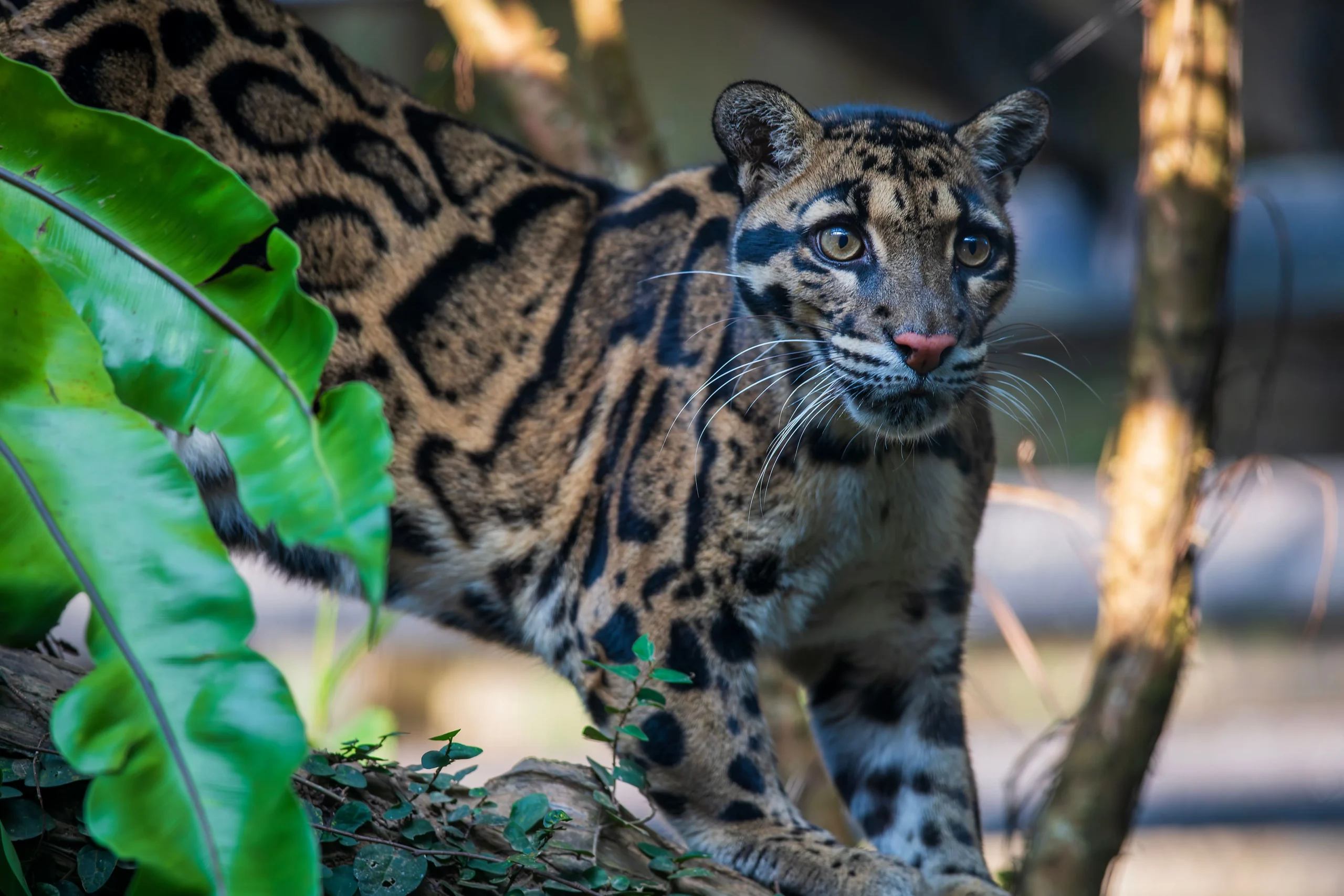
For wildlife enthusiasts, this means Meghalaya offers opportunities to learn about species that are uncommon elsewhere in India, including the state’s flagship mammal, the Clouded Leopard, along with primates such as the Western Hoolock Gibbon and Bengal Slow Loris.
Why the State Supports Such Diverse Wildlife
Several natural factors contribute to Meghalaya’s biodiversity:
- High annual rainfall that supports evergreen and semi-evergreen forests.
- Variation in elevation, creating multiple climatic zones.
- Extensive river systems and freshwater habitats.
- Limestone landscapes and cave ecosystems.
- Sacred groves and community forests that have remained protected for generations.
Together, these habitats allow many different animal groups to coexist, from forest primates and elephants to hornbills, amphibians, freshwater fish, and numerous smaller organisms.
Meghalaya Biodiversity at a Glance
| Category | Official Figure |
| Total recorded faunal species | 5,538 |
| Mammals | 139 |
| Birds | 540 |
| Reptiles | 94 |
| Amphibians | 33 |
| Fish | 152 |
| Protected-area coverage | 1,133.9 sq km |
| Share of state under protected areas | About 5.06% |
| National Parks | 2 |
| Wildlife Sanctuaries | 4 |
| Biosphere Reserve | 1 |
Field Note: Many of Meghalaya’s most celebrated species are officially recorded from the state, but that does not mean visitors should expect regular sightings. Animals such as the Clouded Leopard, Bengal Slow Loris, and several forest carnivores are naturally elusive, largely nocturnal, or occur at low densities. Wildlife travel here is best approached as an opportunity to appreciate intact forest ecosystems rather than to expect guaranteed encounters with flagship species.
Mammals, Birds, Reptiles & Aquatic Wildlife
Mammals of Meghalaya
Meghalaya supports one of the richest mammal assemblages in northeastern India. Official records list 139 mammal species and subspecies, ranging from large herbivores and carnivores to primates, bats, and small forest mammals. Dense evergreen forests, rugged hills, river valleys, and community forests provide a variety of habitats, although many species are naturally elusive and seldom seen during a short visit.
For wildlife travellers, Meghalaya should not be viewed as a destination where sightings of large mammals are guaranteed. Instead, its appeal lies in knowing that these forests continue to support a remarkable diversity of wildlife, even when much of it remains hidden.
The Clouded Leopard: Meghalaya’s State Animal
The Clouded Leopard is the official state animal of Meghalaya and one of its best-known wildlife symbols. Adapted to life in dense forests, this medium-sized cat is recognised by its distinctive cloud-shaped markings and exceptional climbing ability.
Despite being recorded from Meghalaya, the Clouded Leopard is extremely difficult to observe in the wild. It is secretive, primarily active during low-light hours, and occupies extensive forest habitats where direct encounters are uncommon. Its presence is therefore more significant as an indicator of healthy forests than as a realistic wildlife-viewing target for visitors.
Primates of Meghalaya
Meghalaya is particularly important for primate conservation. Among its most notable species are:
- Western Hoolock Gibbon, India’s only ape.
- Bengal Slow Loris, a nocturnal primate rarely encountered.
- Capped Langur, found in suitable forest habitats.
The Western Hoolock Gibbon is especially significant because it depends on continuous forest canopies for movement. Habitat fragmentation can isolate family groups, making intact forests and wildlife corridors essential for its long-term survival.
Photography Tip: If your goal is photographing primates, spend time quietly observing the forest canopy during the early morning rather than constantly walking. Listening for calls often proves more effective than searching visually.
Elephants and Other Large Mammals
Meghalaya’s forests also support several larger mammals, including:
- Asian Elephant
- Gaur
- Dhole
- Pangolin
- Wild Water Buffalo (officially recorded within the state)
Elephants move across large landscapes that often extend beyond protected areas into reserve forests and community lands. Their movements highlight the importance of maintaining habitat connectivity across the state rather than relying solely on national parks.
As with many forest mammals in northeast India, sightings depend heavily on season, habitat, luck, and time spent in the field.
Lesser-Known Mammals
While charismatic mammals attract most attention, Meghalaya’s forests also support numerous smaller mammals, including bats, rodents, civets, squirrels, and insectivores. These species receive less public attention but play important ecological roles such as seed dispersal, pollination, and insect control.
For naturalists, these lesser-known mammals often provide equally rewarding observations during extended field visits.
Birds of Meghalaya
Birdwatchers regard Meghalaya as one of northeastern India’s rewarding destinations because of its varied habitats and extensive forest cover. Official records list approximately 540 bird species, reflecting the state’s diverse ecosystems rather than any single habitat type.
From evergreen forests and river valleys to wetlands and highland forests, different landscapes support different bird communities throughout the year.
Hornbills and Forest Birds
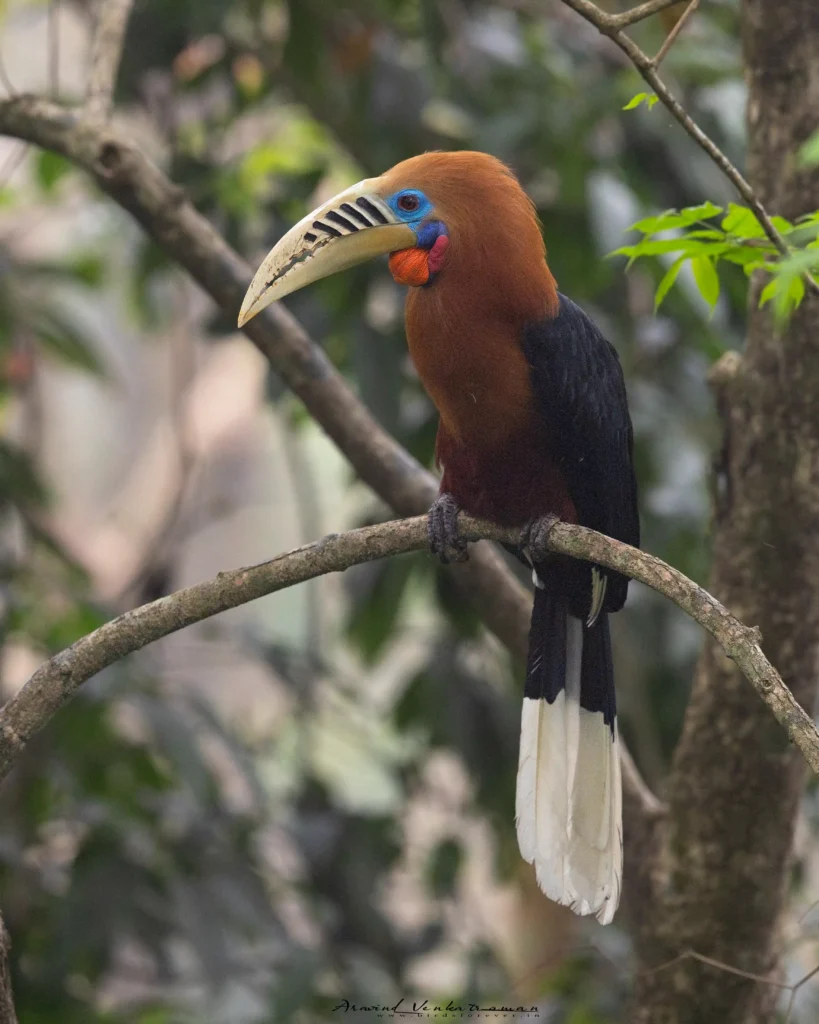
Hornbills are among Meghalaya’s best-known birds, with the Rufous-necked Hornbill standing out as one of the state’s flagship forest species. The research also identifies several notable forest birds, including:
- Grey Sibia
- Blyth’s Kingfisher
- Various pheasants
- Peafowl
- Numerous forest specialists
Hornbills are particularly important because they disperse seeds over long distances, helping regenerate tropical forests.
Birdwatching Across Different Habitats
Rather than focusing on a single hotspot, birdwatchers can expect different species in different habitats.
For example:
- Dense forests favour hornbills, kingfishers, and forest specialists.
- River systems attract aquatic birds.
- Open areas support grassland and edge species.
- Seasonal wetlands may receive migratory waterbirds.
This habitat diversity makes Meghalaya attractive to both experienced birders and travellers hoping to observe a variety of forest birds.
Expert Tip: Early morning remains the most productive period for birdwatching. Forest birds are generally more active shortly after sunrise, when both calls and movement are easier to detect.
A Practical Expectation for Birders
Unlike destinations where wildlife concentrates around waterholes, Meghalaya’s forests require patience. Dense vegetation often means birds are heard before they are seen.
Visitors who move slowly, minimise noise, and spend longer at promising locations generally enjoy better birdwatching than those trying to cover many sites in a single day.
Reptiles, Amphibians and Freshwater Life
Although mammals and birds receive most attention, Meghalaya’s biodiversity extends well beyond these groups. Official records document:
- 94 reptile species
- 33 amphibian species
- 152 freshwater fish species
These groups contribute significantly to the state’s ecological health.
Reptiles
Reptiles occupy forests, wetlands, rocky slopes, and riverbanks throughout Meghalaya. While relatively little wildlife tourism focuses specifically on reptiles, they form an essential part of the state’s food webs as both predators and prey.
Amphibians
Meghalaya’s high rainfall and humid climate provide suitable conditions for frogs, toads, and other amphibians.
Because amphibians are highly sensitive to environmental change, healthy amphibian populations often indicate well-preserved freshwater habitats and forest ecosystems.
Fish and Aquatic Biodiversity
The state’s rivers, streams, and wetlands support a rich freshwater fish community, with 152 officially recorded species. These aquatic ecosystems also sustain numerous invertebrates and contribute to the broader ecological functioning of Meghalaya’s landscapes.
For visitors, these habitats may not offer classic safari-style wildlife viewing, but they are an important reminder that biodiversity includes far more than large mammals.
Wildlife Diversity Summary
| Wildlife Group | Officially Recorded Species |
| Mammals | 139 |
| Birds | 540 |
| Reptiles | 94 |
| Amphibians | 33 |
| Freshwater Fish | 152 |
| Total Recorded Faunal Species | 5,538 |
Field Note: A species being officially recorded from Meghalaya does not mean visitors are likely to see it. Many mammals are nocturnal, canopy-dwelling, or naturally rare, while numerous birds remain deep within forest interiors. Successful wildlife travel in Meghalaya is less about compiling long sighting lists and more about appreciating one of India’s most diverse forest ecosystems.
Protected Areas, Rare Species & Sacred Groves
Protected Areas of Meghalaya
Meghalaya’s protected-area network forms the backbone of wildlife conservation in the state. According to official data, it covers approximately 1,133.9 square kilometres, or about 5.06% of Meghalaya’s geographical area, and consists of two national parks, four wildlife sanctuaries, and one biosphere reserve.
Each protected area has its own ecological character. Rather than trying to visit them all, it is more useful to choose destinations based on your interests—whether that is birdwatching, rainforest ecology, scenic landscapes, or learning about conservation.
Nokrek National Park
Located in the Garo Hills, Nokrek National Park covers approximately 47.48 sq km and forms the core of the Nokrek Biosphere Reserve.
The park protects evergreen and subtropical forests that support many of Meghalaya’s flagship mammals and birds. It is particularly important because it safeguards large tracts of relatively undisturbed forest that provide habitat for species such as:
- Clouded Leopard
- Western Hoolock Gibbon
- Asian Elephant
- Bengal Slow Loris
- Numerous forest birds
For most visitors, Nokrek is less about guaranteed wildlife sightings and more about experiencing one of Meghalaya’s most significant protected forest landscapes.
Balpakram National Park
With an area of approximately 220 sq km, Balpakram National Park is Meghalaya’s largest national park.
The park is known for:
- Extensive forest habitats
- Deep gorges and plateau landscapes
- Important mammal populations
- High conservation value within the Garo Hills region
Because of its relatively large size and varied terrain, Balpakram supports a broad range of habitats, making it valuable for both wildlife conservation and ecological research.
For travellers interested in wilderness landscapes rather than intensive tourism infrastructure, Balpakram offers a distinctly different experience from Meghalaya’s better-known hill stations.
Nongkhyllem Wildlife Sanctuary
Nongkhyllem Wildlife Sanctuary covers around 29 sq km and is among Meghalaya’s best-known wildlife sanctuaries.
It is especially recognised for:
- Rich birdlife
- Forest mammals
- Mixed evergreen forest habitats
- Opportunities for nature observation
Birdwatchers frequently consider Nongkhyllem one of the state’s more rewarding protected areas because of its healthy forest ecosystems and diversity of resident species.
Narpuh Wildlife Sanctuary
Covering approximately 59.90 sq km, Narpuh Wildlife Sanctuary protects an important section of eastern Meghalaya’s forests.
The sanctuary contributes to conservation by protecting:
- Evergreen forests
- Limestone landscapes
- Diverse wildlife habitats
- Ecological connectivity between forest areas
Its varied terrain supports numerous mammals, birds, reptiles, and amphibians typical of Meghalaya’s tropical forests.
Siju Wildlife Sanctuary
Although relatively small at 5.81 sq km, Siju Wildlife Sanctuary protects valuable forest habitat within the Garo Hills.
The sanctuary contributes to the wider conservation network by preserving habitat for forest wildlife and complementing larger protected landscapes nearby.
Baghmara Pitcher Plant Sanctuary
At only 0.02 sq km, Baghmara Pitcher Plant Sanctuary is Meghalaya’s smallest protected area.
Rather than being known for large mammals, it protects the habitat of the famous pitcher plant, highlighting that biodiversity conservation is not limited to charismatic wildlife. Protecting specialised habitats is equally important for preserving unique plant species and the smaller organisms associated with them.
Nokrek Biosphere Reserve
Beyond individual parks and sanctuaries, the Nokrek Biosphere Reserve represents one of Meghalaya’s most important conservation landscapes.
A biosphere reserve aims to balance biodiversity conservation with sustainable use by local communities. In Meghalaya, this broader landscape approach recognises that wildlife conservation cannot rely solely on protected-area boundaries but must also involve surrounding forests and community participation.
Protected Areas Comparison
| Protected Area | Type | Area | Best Known For |
| Nokrek | National Park | 47.48 sq km | Evergreen forests, flagship mammals, biosphere reserve |
| Balpakram | National Park | 220 sq km | Large wilderness landscape and mammal habitat |
| Nongkhyllem | Wildlife Sanctuary | 29 sq km | Birdwatching and forest wildlife |
| Narpuh | Wildlife Sanctuary | 59.90 sq km | Forest ecosystems and limestone habitats |
| Siju | Wildlife Sanctuary | 5.81 sq km | Protected forest habitat |
| Baghmara Pitcher Plant | Wildlife Sanctuary | 0.02 sq km | Pitcher plant conservation |
| Nokrek | Biosphere Reserve | Core conservation landscape | Integrated biodiversity conservation |
Rare, Endemic and Threatened Wildlife
One of Meghalaya’s greatest conservation values lies not simply in the number of species recorded but in the presence of animals that are uncommon, habitat-specific, or threatened across their wider ranges.
Clouded Leopard
The Clouded Leopard remains Meghalaya’s flagship mammal. As a forest-dependent predator, its continued presence indicates the importance of maintaining large, connected forest landscapes.
Western Hoolock Gibbon
India’s only ape depends on continuous forest canopies for movement. Habitat fragmentation can isolate family groups, making long-term forest conservation especially important.
Bengal Slow Loris
This nocturnal primate is rarely seen by visitors but represents another example of Meghalaya’s specialised forest fauna.
Rufous-necked Hornbill
Among the state’s most recognisable birds, the Rufous-necked Hornbill is closely associated with mature forests. By dispersing seeds over long distances, hornbills play an important ecological role in forest regeneration.
Field Note: Wildlife guidebooks often highlight charismatic species, but many of Meghalaya’s conservation successes depend equally on protecting less familiar reptiles, amphibians, insects, freshwater fish, and forest plants that maintain healthy ecosystems.
Sacred Groves and Community Conservation
One feature that distinguishes Meghalaya from many wildlife destinations is the importance of sacred groves and community-managed forests.
These forests have often been protected for generations through traditional customs and local stewardship rather than modern conservation laws alone. Sacred groves and community forests are an important component of Meghalaya’s biodiversity conservation strategy.
Why Sacred Groves Matter
Sacred groves serve several important ecological functions:
- Protect old-growth forest patches.
- Preserve native plant diversity.
- Provide habitat for birds, mammals, reptiles, and insects.
- Act as refuges within increasingly fragmented landscapes.
Because these forests often remain relatively undisturbed, they can protect species that struggle to survive in more heavily modified environments.
Community-Based Conservation
Recent initiatives by the Meghalaya Biodiversity Board—including awareness programmes, biodiversity competitions, collaboration with local organisations, and the notification of the Mawtneng Biodiversity Heritage Site in 2026—demonstrate that conservation continues to evolve through partnerships between government agencies and local communities.
Responsible Tourism Tip: When visiting sacred groves or community-managed forests, remember that many are culturally significant as well as ecologically valuable. Follow local guidance, stay on designated paths where available, avoid disturbing wildlife, and respect any site-specific customs or restrictions.
Conservation, Wildlife Tourism, Common Mistakes, FAQs & Conclusion
Conservation Challenges
Meghalaya’s forests continue to support impressive biodiversity, but this diversity faces several ongoing pressures. These challenges affect not only individual species but also the long-term health and connectivity of entire ecosystems.
Habitat Fragmentation
Many of Meghalaya’s larger mammals, particularly elephants and primates, require extensive, connected forests. When forests become fragmented by development or land-use changes, wildlife movement becomes more difficult, increasing the risk of isolated populations and human–wildlife conflict.
Mining and Forest Degradation
Mining, habitat degradation, and forest loss among the important conservation concerns affecting Meghalaya. While the severity varies across the state, these pressures can alter habitats, affect water quality, and reduce the availability of suitable wildlife habitat.
Hunting Pressure
Illegal hunting remains a concern for certain wildlife species. Although legal protection exists for many animals, effective conservation depends on habitat protection, enforcement, and continued cooperation with local communities.
Community Conservation and Recent Initiatives
One encouraging aspect of Meghalaya’s conservation story is the continued involvement of local communities and government institutions.
Recent initiatives by the Meghalaya Biodiversity Board include:
- Biodiversity awareness programmes.
- A biodiversity photography competition.
- A biodiversity hackathon.
- A January 2026 collaboration (MoU) with NESFAS.
- Notification of the Mawtneng Biodiversity Heritage Site in 2026.
These initiatives demonstrate that biodiversity conservation extends beyond protected areas and increasingly involves education, citizen participation, and community stewardship.
Wildlife Tourism in Meghalaya
Wildlife tourism in Meghalaya differs from the classic safari experience offered by many central Indian national parks. Dense forests, rugged terrain, and naturally elusive wildlife mean that the emphasis is on exploring intact ecosystems rather than expecting frequent sightings of large mammals.
Visitors interested in birds, forests, ecology, and natural history are likely to appreciate Meghalaya more than those seeking guaranteed encounters with iconic wildlife.
Choosing the Right Destination
Your choice of destination depends on your interests.
| Interest | Recommended Area |
| Forest landscapes | Balpakram National Park |
| Flagship mammals and rainforest ecology | Nokrek National Park |
| Birdwatching | Nongkhyllem Wildlife Sanctuary |
| Limestone forests | Narpuh Wildlife Sanctuary |
| Unique plant diversity | Baghmara Pitcher Plant Sanctuary |
| Community conservation | Sacred groves and surrounding forests |
Best Time to Visit
It is best to consult the latest information from the Meghalaya Forest Department or local park authorities before planning your visit.
Responsible Wildlife Viewing
Responsible travel helps minimise disturbance to wildlife while supporting conservation efforts.
Practical Checklist
- Stay on authorised trails where permitted.
- Maintain a respectful distance from wildlife.
- Never feed wild animals.
- Keep noise levels low in forest areas.
- Carry back all litter.
- Respect local customs, particularly in sacred groves.
- Follow instructions from forest officials and local guides.
Responsible Tourism Tip: Meghalaya’s biodiversity extends well beyond protected areas. Community forests and sacred groves deserve the same respect as national parks, both for their ecological importance and their cultural significance.
Photography Tip
Forest photography in Meghalaya requires patience rather than speed.
Dense vegetation often limits visibility, so consider these approaches:
- Carry binoculars as well as a camera.
- Use natural light during early morning.
- Spend longer at promising locations instead of constantly changing sites.
- Photograph landscapes, plants, insects, fungi, and forest details—not just large animals.
A successful wildlife trip should not be judged solely by the number of mammals photographed.
Common Mistakes Visitors Make
Expecting Frequent Sightings of Rare Mammals
Species such as the Clouded Leopard and Bengal Slow Loris occur in Meghalaya, but they are naturally elusive and should not be expected during a typical visit.
Assuming Protected Areas Are the Only Important Habitats
Sacred groves, community forests, and reserve forests contribute significantly to biodiversity conservation across the state.
Focusing Only on Large Mammals
Meghalaya’s biodiversity includes hundreds of bird species, reptiles, amphibians, freshwater fish, insects, and plants that are equally important to its ecosystems.
Treating Official Species Lists as Wildlife Checklists
Official records indicate species known to occur within the state—not animals that visitors are likely to see on every trip.
Frequently Asked Questions
Why is Meghalaya considered a biodiversity hotspot?
Because it forms part of the Indo-Burma Biodiversity Hotspot and supports diverse habitats, including evergreen forests, rivers, limestone landscapes, and sacred groves that collectively sustain thousands of recorded species.
Which is the state animal of Meghalaya?
The Clouded Leopard is the official state animal.
How many animal species are recorded in Meghalaya?
Official records document 5,538 faunal species, including mammals, birds, reptiles, amphibians, fish, and numerous invertebrates.
How many bird species occur in Meghalaya?
Official biodiversity data records approximately 540 bird species.
Which national parks are found in Meghalaya?
The state’s two national parks are Nokrek National Park and Balpakram National Park.
Where can visitors learn about Meghalaya’s wildlife?
Protected areas such as Nokrek, Balpakram, Nongkhyllem, Narpuh, and Siju provide opportunities to experience different forest ecosystems, while sacred groves offer insight into traditional conservation practices.
Is Meghalaya good for birdwatching?
Yes. With around 540 recorded bird species, varied forest habitats, and notable birds such as hornbills and Blyth’s Kingfisher, Meghalaya is one of northeastern India’s rewarding birdwatching destinations.
Are elephants found in Meghalaya?
Yes. Asian Elephants are officially recorded from Meghalaya, although sightings depend on location, season, and natural wildlife movements.
What role do sacred groves play in conservation?
They preserve old forest patches, protect biodiversity, and demonstrate how traditional community stewardship can complement formal protected-area management.
What is the most important takeaway for wildlife travellers?
Approach Meghalaya as a destination for exploring healthy forest ecosystems rather than expecting frequent sightings of rare mammals. Its greatest strength lies in the diversity of habitats, birds, primates, plants, and community-led conservation.
Conclusion
Meghalaya is one of India’s most biologically significant states, not because it promises easy wildlife sightings, but because it safeguards an extraordinary range of habitats within the Indo-Burma Biodiversity Hotspot. Official records documenting 5,538 faunal species, together with a network of national parks, wildlife sanctuaries, biosphere reserves, sacred groves, and community-managed forests, reflect a landscape where biodiversity extends far beyond protected-area boundaries.
For wildlife travellers, the experience is best measured by immersion rather than checklists. Listening to gibbons calling through forest canopies, searching for hornbills above towering trees, walking beneath ancient forests, or learning how local communities have protected sacred groves for generations offers a deeper appreciation of Meghalaya’s natural heritage than simply hoping to spot a rare predator.
Whether you are a birder, photographer, researcher, or nature enthusiast, Meghalaya rewards patience, curiosity, and responsible travel. By visiting thoughtfully and respecting both wildlife and local conservation traditions, you contribute to the continued protection of one of India’s most valuable biodiversity landscapes.