
Planning a Ranthambore safari? Discover which zones offer the highest tiger-sighting probabilities, how the booking system works, and seasonal wildlife patterns.
Which Ranthambore zones are best for tiger sightings?
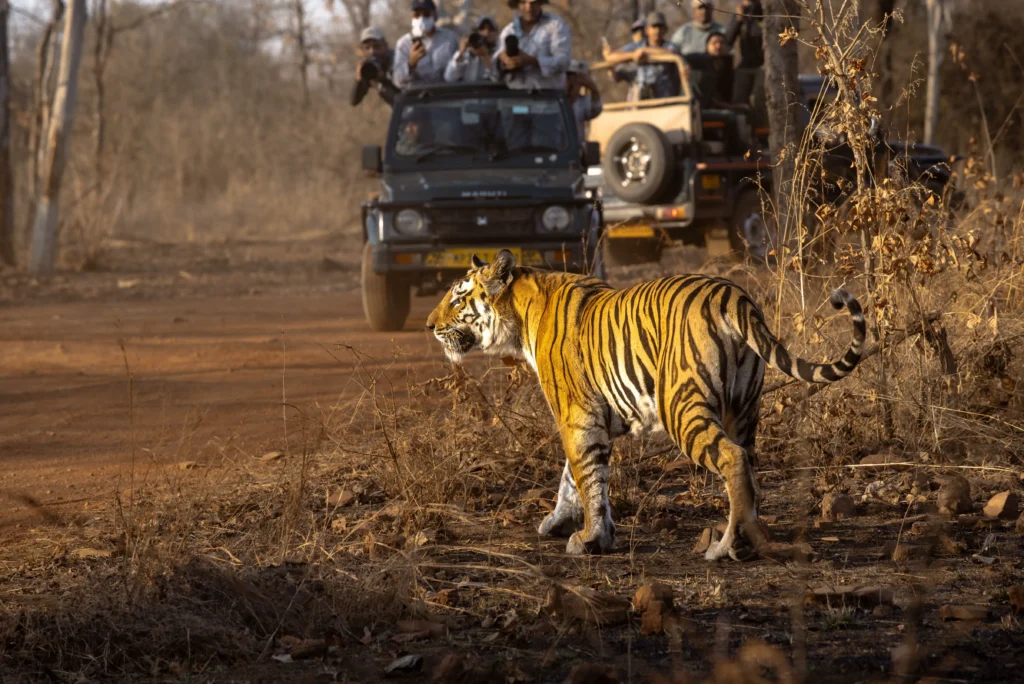
Tiger sightings are never guaranteed in Ranthambore National Park, as wildlife movement depends entirely on changing territories, seasonal water availability, and natural prey behavior. However, historic sighting data and seasonal tracking patterns show that certain sectors consistently offer higher probabilities than others.
The short answer for first-time visitors
If you are visiting Ranthambore for the first time, your primary objective should be securing vehicle permits for Zones 1 through 5. Among these core tracking areas, Zone 2 and Zone 3 are widely documented by naturalists and regular safari-goers as the most reliable choices for clear tiger sightings. These two zones feature permanent water bodies and valley topographies that concentrate both predator and prey populations throughout the tourism season.
Why Zones 1–5 usually rank higher
The historical core of the reserve is contained within Zones 1 to 5. These zones feature interconnected valley systems, large natural lakes, and alluvial fan edges that create optimal ambush cover for large felids. Because the prey density—particularly populations of chital and sambar deer—is concentrated around these core lowlands, multiple tiger generations have established overlapping home ranges here. This ecological stability translates into more frequent and predictable wildlife tracking opportunities compared to the steep, arid escarpments often found in the outer buffer zones.
Field Note
While a zone’s historical reputation provides a useful baseline, tiger home ranges are highly fluid. A dominant male’s territory shift or a tigress moving her new litter into secluded rocky ravines can alter sighting frequencies between zones within a single season. Always treat zone selection as a matter of improving your baseline probabilities rather than purchasing a guaranteed encounter.
How Ranthambore safari zones work
Ranthambore National Park is divided into 10 distinct safari zones to regulate tourism vehicle density and protect the park’s fragile dry deciduous forest tracts. The reserve operating framework is closely managed under National Tiger Conservation Authority (NTCA) guidelines, separating intensive tourism zones from undisturbed breeding nuclei.
[ RANTHAMBORE SAFARI BLOCKS ]
|
+———————-+———————-+
| |
[ CORE TOURISM ZONE ] [ BUFFER TOURISM ZONE ]
(Zones 1 – 5) (Zones 6 – 10)
| |
• Interconnected lowlands • Steep outer escarpments
• High water body density • Fragmented corridor terrain
• Higher tiger tracking history • Emerging sighting relevance
Random allocation vs. requested zone
A common point of confusion for travelers is how safari zones are assigned. When booking through the official reserve management system, you can request a preferred zone based on current vehicle quotas. However, because demand for the core tracks is exceptionally high, the forest department uses an automated distribution system.
If your preferred zone is fully booked, the system will allocate an available zone automatically. This means your final itinerary may feature a mix of core and secondary zones. To maximize your chances, bookings should be made several months in advance to secure specific core zone allocations before the seasonal quotas fill up.
Core, buffer, and monsoon closures
The 10 zones are broadly split into core areas and buffer areas. Zones 1 through 5 constitute the main core park infrastructure, while Zones 6 through 10 primarily encompass peripheral buffer forests, hillsides, and migratory corridors.
This distinction dictates the park’s operational year:
- Core Zones (1–5): These zones are strictly closed to all tourism activities during the annual monsoon season, typically running from July 1st through September 30th, due to degraded track safety and breeding season protections.
- Buffer Zones (6–10): These peripheral zones frequently remain open for wildlife viewing throughout the monsoon months, subject to real-time road condition assessments by local forest authorities.
Outside of the monsoon window, the entire park operates across two daily shifts—a morning safari and an afternoon safari—with exact gate timings adjusting dynamically each month to align with shifting daylight hours.
Comparison: Zones 1–5 vs. Zones 6–10
For many planners, the most pressing question is whether to accept a booking in Zones 6–10 if the historically favored Zones 1–5 are sold out. While Zones 1–5 remain the top priority for maximizing tiger sighting probabilities, the outer buffer zones should not be dismissed entirely.
Recent tracking data shows that as the tiger population in Ranthambore expands, individuals frequently establish territories or move through these buffer corridors. Zones 6 and 9, in particular, have shown increasingly consistent sighting records in recent seasons.
Here is a practical breakdown of how the two macro sectors compare to help you make an informed booking decision.
| Feature | Zones 1–5 (Core Tourism Area) | Zones 6–10 (Buffer & Outer Precincts) |
| Tiger Probability | Historically the highest; permanent water bodies attract concentrated prey and predators. | Lower overall probability, though Zones 6 and 9 are emerging as strong secondary options. |
| Crowding | Very high tourist demand; routes can feel congested during peak winter and spring months. | Generally quieter with fewer vehicles, offering a more secluded forest tracking experience. |
| Terrain & Scenery | Interconnected valleys, large lakes (such as Padam Talao), and historic ruins. | Rugged ravines, steep hilly escarpments, and drier scrub forest. |
| Seasonality | Strictly closed to all tourism during the monsoon season (July 1st – September 30th). | Frequently remain open during the monsoon, subject to local road conditions. |
The access logic dilemma
A major practical difference between the two sectors involves logistics and travel time. If you book any zone from 1 to 5, your safari vehicle will enter through the primary park access routes just outside Sawai Madhopur. This makes hotel pickups fast and ensures you spend your time inside the park rather than driving to it.
In contrast, the entry gates for Zones 6 through 10 are scattered around the park’s periphery. If you are allocated Zone 8, 9, or 10, you must account for longer transit times from your accommodation to the specific gate before your actual safari begins. For example, the gate for Zone 9 (Qual Ji) is located near the Chakal River, which can require a 40 to 45-minute drive from the main town.
Are Zones 6–10 worth booking?
Yes, especially if you are traveling during peak holidays when the core zones are sold out, or if you are visiting during the monsoon. Rather than skipping Ranthambore entirely, a safari in the buffer areas still provides a genuine wildlife tracking opportunity.
Zone 6 is highly recommended as an alternative. It shares a boundary with Zone 1, and its landscape features open grasslands that support good visibility. The frequent movement of well-known tigers across this boundary means that Zone 6 often performs just as well as some core zones on any given week.
Decision Guide
As we analyzed the booking patterns and territory data—referenced comprehensively in the Act as a senior SEO strategist, wildlife researche (31).docx file—the consensus is clear: book Zones 1–5 as your first choice. If they are unavailable, accept a booking for Zone 6. If only Zones 7, 8, or 10 are available, temper your tiger-sighting expectations and focus on the broader wildlife experience, including leopards, sloth bears, and excellent birding.
Zone-by-zone tiger sighting guide
When planning your safaris, it is important to understand the distinction between a zone’s historical fame and its current tiger occupancy. While dominant males and breeding females shift their territories over time, Zones 1 through 5 consistently offer the most stable tracking environments. This stability is driven by the presence of permanent water bodies, open grassland edges, and predictable prey movement.
Here is a naturalist’s breakdown of the core tourism zones to help you understand what to expect on the ground.
Zone 1
Zone 1 is a heavily forested track that serves as a vital corridor for tigers moving toward the park’s outer boundaries. The entry is marked by Singh Dwar, a prominent historical gateway. Because it shares a porous boundary with Zone 6, tigers frequently cross between these two sectors. While the forest cover here can be dense—making tracking slightly more challenging than in the open lake zones—it provides excellent shade during the hotter months and supports a robust population of sambar and nilgai.
Zone 2
If you are prioritizing raw tiger-sighting probability, Zone 2 is repeatedly highlighted by guides and researchers as one of the strongest options in Ranthambore. The area is defined by the Jhalra territory and features a high concentration of waterholes surrounded by rocky terrain. This combination of reliable water and natural ambush points creates an optimal environment for hunting, meaning tigers are frequently observed resting near the water or stalking prey through the underbrush. It also holds strong records for leopard and sloth bear sightings.
Zone 3
Zone 3 is widely considered the most famous and scenic sector of the reserve. It encompasses Ranthambore’s major lake systems, including Padam Talao and Rajbagh Lake, bordered by the historic Jogi Mahal. Because the landscape opens up significantly around these water bodies, visibility is excellent. Tigers in this zone are often sighted walking along the lake edges or resting in the ruins.
Photography Tip Zone 3 is the top choice for wildlife photographers. The combination of wide-open sightlines across the lakes, aquatic birds in the foreground, and the backdrop of Ranthambore Fort allows for environmental portraits that are difficult to capture in the denser, forested zones. Morning safaris here offer excellent golden-hour light reflecting off Padam Talao.
Zone 4
Zone 4 is deeply embedded in Ranthambore’s modern history, having served as the primary territory for the legendary tigress Machli. Today, it remains a high-interest zone with strong sighting records. The tracks wind through dense foliage and open out at Malik Talao and the Lakkarda area, which are critical watering points during the dry season. The undulating terrain here often provides elevated vantage points from the safari vehicle.
Zone 5
Sharing much of its landscape and wildlife movement with Zone 4, Zone 5 stretches into the Kachida valley. Tigers frequently move between Zones 4 and 5, meaning a quiet morning in one can quickly change if a predator crosses the boundary. The vegetation here is a mix of dhok (Anogeissus pendula) woodland and scattered grasslands, offering reliable tracking opportunities, particularly in the warmer months when animals stick closely to the shaded valley floors.
Core Zones (1–5) Comparison Summary
| Zone | Sighting Probability | Major Landmarks | Photographer Rating | Landscape Profile |
| Zone 1 | High | Singh Dwar | Good | Dense forest cover, corridor to Zone 6 |
| Zone 2 | Very High | Jhalra | Excellent | Rocky terrain, high density of waterholes |
| Zone 3 | Very High | Padam Talao, Rajbagh Lake, Jogi Mahal | Exceptional | Large open lakes, historic ruins |
| Zone 4 | High | Malik Talao, Lakkarda | Excellent | Mixed woodland, historic tiger territories |
| Zone 5 | High | Kachida | Good | Valley topography, shares borders with Zone 4 |
Zones 6 to 10: The Outer Precincts and Buffers
While the core zones dominate booking requests, the buffer areas provide a quieter, less congested tracking experience. These outer precincts are characterized by steep hilly escarpments, rugged ravines, and drier scrub forests.
- Zone 6: This is widely considered the best of the buffer zones. Because it shares a porous boundary with Zone 1, tiger movement between the two is frequent. Its landscape features open grasslands, which significantly improve visibility compared to denser forest tracts.
- Zones 7 and 8: These zones feature steep, rocky terrain. While their tiger densities are lower than the core valleys, this elevated, rugged landscape is excellent for spotting leopards and sloth bears, which often avoid the dominant tigers in the lowlands.
- Zone 9: Located near the Chakal River, this zone requires a 40 to 45-minute drive from the main town before your safari even begins. However, as noted in the Act as a senior SEO strategist, wildlife researche (31).docx file, Zone 9 has become increasingly relevant in current sighting patterns, with established tigers frequently utilizing the river corridor.
- Zone 10: Featuring a mix of hilly terrain and fragmented corridors, Zone 10 generally offers the lowest probability for tiger sightings. However, it remains a viable option for general wildlife viewing and birding, particularly during the monsoon when core zones are closed.
What else you may see besides tigers
A common mistake first-time visitors make is focusing so heavily on tigers that they ignore the broader ecosystem. Ranthambore is a thriving dry deciduous forest, and the presence of a healthy prey base is exactly what supports the apex predators. Furthermore, tracking other wildlife is often the primary method guides use to locate tigers, relying heavily on the alarm calls of deer and monkeys.
Here is what you should look for, depending on which zone you are allocated:
- Leopards: Because tigers are the dominant predators, leopards are frequently pushed to the peripheries of the park to avoid conflict. You are more likely to encounter them in the higher elevations, rocky outcrops, and buffer areas like Zones 7 and 8.
- Sloth Bears: These elusive mammals are a highlight of any Indian safari. They are commonly spotted foraging in rocky terrain or near fruiting trees. Sightings often peak during the summer months when they are actively seeking water and seasonal fruits.
- Prey Species: The park supports large populations of sambar deer (the tiger’s preferred prey in Ranthambore), chital (spotted deer), nilgai (blue bull antelope), and wild boar. Observing a herd of sambar at the water’s edge in Zone 3 or 4 is an integral part of the Ranthambore experience.
- Rare Mammals: Though highly elusive, the caracal is present in Ranthambore and occasionally sighted by exceptionally fortunate visitors.
- Birdlife: The large lake systems—particularly Padam Talao, Rajbagh Lake, and Malik Talao in Zones 3 and 4—support a rich diversity of aquatic birds. Bring a good pair of binoculars, as the birding here provides excellent activity during the quieter hours of a safari when mammalian movement slows down.
Field Note: The Importance of Alarm Calls
When your safari vehicle suddenly stops and the guide asks for absolute silence, they are listening for alarm calls. Sambar, chital, and langurs emit sharp, distinct vocalizations when they spot a predator. Understanding these calls transforms the safari from a simple drive into an active tracking experience. If you are in a high-density area like Zone 2 or Zone 3 and hear a continuous sambar call, a tiger is likely moving nearby.
Best time and strategy for tiger sightings
A zone’s potential is heavily influenced by the season and the time of day you visit. Tiger movement in Ranthambore is dictated by temperature and water availability. While securing a core zone improves your baseline probability, your timing often determines the quality of the sighting.
Morning vs. evening safari
Ranthambore operates two daily safari shifts, and the official timings change throughout the year to align with sunrise and sunset. Each shift offers distinct advantages for tracking and photography.
| Safari Shift | Tiger Movement | Photography Conditions | Temperature & Comfort |
| Morning | High activity early on; predators are often on the move before settling into shade. | Excellent; soft, golden-hour light reflecting off water bodies like Padam Talao. | Very cold in winter; pleasant in summer. |
| Evening | Activity increases late in the shift as temperatures drop; tigers often visit waterholes to drink. | Good, but light fades quickly near the end of the safari, particularly in dense valleys. | Hot during early hours, cooling down by late afternoon. |
Summer vs. winter vs. monsoon dynamics
Your seasonal timing drastically alters how the park operates and where wildlife congregates.
- Summer (April to June): This is widely considered the best time for sheer tiger-sighting probability. As ephemeral streams dry up, wildlife is forced to concentrate around the few remaining permanent water bodies, such as the lakes in Zones 3 and 4 or the waterholes in Zone 2. While the heat can be intense, the lack of dense undergrowth makes tracking much easier.
- Winter (October to March): The most popular time to visit. The weather is comfortable, and the forest is lush post-monsoon. Because water is abundant everywhere, tigers are less dependent on specific lakes and may be tracked across wider territories.
- Monsoon (July to September): Tourism in the core zones (1–5) is strictly closed under official guidelines. However, buffer zones often remain open, depending on real-time road conditions. This period offers excellent birding and a highly atmospheric, green forest, though large cat sightings drop significantly.
Common mistakes to avoid when choosing a zone
- Assuming sightings are guaranteed: No zone offers a 100% guarantee. Treat your zone selection as a matter of probability, not a purchased ticket to a tiger encounter.
- Dismissing Zones 6–10: Many travelers refuse to book if the core zones are full. In reality, zones like 6 and 9 have strong, established tiger activity and offer excellent, less crowded tracking alternatives.
- Relying purely on outdated historical data: Tiger territories shift. A zone that was famous for a specific individual five years ago may have a different occupancy rate today. Current tracking data always overrides historical fame.
- Waiting too long to book: Because allocation is tied to strict vehicle quotas and can default to a random assignment if your preference is full, last-minute planners often miss out on the core zones entirely.
FAQs about Ranthambore safari zones
Which Ranthambore zone is best for tiger sightings? Zones 1 through 5 are historically the strongest performers, with Zones 2 and 3 frequently cited by naturalists as having the highest sighting probabilities due to their terrain and water sources.
Can I choose a specific zone while booking? You can request a specific zone during the official booking process. However, because demand often exceeds the strict vehicle quotas, the system relies heavily on automated allocation. If your chosen zone is full, you will be assigned randomly to an available track.
Are Zones 1–5 genuinely better than Zones 6–10? For first-time visitors prioritizing tiger sightings, Zones 1–5 offer superior probability and easier access. However, Zones 6–10 are not “bad” zones; they are simply buffer areas with lower tiger densities, though they still produce meaningful sightings and often feature fewer crowds.
Which zone includes Padam Talao? Padam Talao, one of Ranthambore’s largest and most famous lakes, is located in Zone 3.
What are the official safari timings? Safaris operate in two shifts—morning and evening. The exact entry and exit times fluctuate dynamically by season based on changing daylight hours.
Official information, booking guidance, and sources
To ensure a safe and responsible visit, it is vital to understand that Ranthambore is heavily regulated to protect its ecology. The reserve’s management framework, including the strict division of core and buffer tourism boundaries, is mandated by National Tiger Conservation Authority (NTCA) guidelines.
Because booking algorithms prioritize availability and strict quotas to limit tourism pressure, early planning is essential. Always rely on the official Rajasthan forest department portals for booking and confirming seasonal shift timings, rather than third-party guarantees.
By approaching your Ranthambore safari with an understanding of ecological realities rather than demanding guaranteed encounters, you ensure a richer, more authentic wildlife tracking experience regardless of which zone you ultimately explore.
Author Note & Update Log: Written by the WildlifeSafaris.in Editorial Team. Last Updated: October 2026.
Ranthambore National Park : Topics Cluster
- Ranthambore Complete Safari Guide
- Best Zones in Ranthambore
- Ranthambore Safari Zones Explained
- Ranthambore Safari Booking Step by Step Guide
- Ranthambore Safari Timings
- Ranthambore : Summer vs Winter
- Ranthambore Safari Costs
- Delhi to Rathambore
- Weekend Itinerary
- Ranthambore Naturalist Guide
- Ranthambore Photography
- How many days are enough?
- Ranthambore Luxury Wildlife Lodges
- Luxury Safari Stays in Ranthambore
- Ranthambore Best Hotels
- Wildlife in Rajasthan
- Ranthambore Common Safari Mistakes
- Ranthambore Foreign Visitors Guide (upcoming)
- Complete Ranthambore Luxury Safari Guide (upcoming)