
Discover the top 20 wetland birds of India, where to see them, migration patterns, best birdwatching wetlands, identification tips, and conservation insights.
Top 20 Wetland Birds of India: Identification, Best Places to See Them & Birdwatching Guide
Wetlands are among India’s most productive natural habitats. From Himalayan lakes and floodplain marshes to coastal lagoons, mangrove creeks, reservoirs, and estuaries, these ecosystems support hundreds of bird species throughout the year. Some birds live in these habitats permanently, while others travel thousands of kilometres along the Central Asian Flyway to spend the winter in India.
For birdwatchers, wetlands offer some of the country’s most rewarding wildlife experiences. A single morning at a well-managed wetland can reveal elegant flamingos feeding in shallow water, pelicans fishing cooperatively, storks stalking through marshes, ducks resting after long migrations, and terns skimming just above rivers in search of fish.
India’s growing network of Ramsar Sites—wetlands recognised as internationally important—plays a vital role in protecting these habitats. Many of these wetlands are also among the country’s finest destinations for birdwatching, photography, and nature tourism.
Why India’s Wetlands Matter for Birds
India lies along the Central Asian Flyway, one of the world’s major migratory bird routes. Every year, millions of waterbirds move between breeding grounds in northern Europe and Asia and warmer wintering areas farther south. Indian wetlands provide essential places where these birds can rest, feed, and survive during their long journeys.
The country is also home to a remarkable diversity of resident wetland birds that depend on marshes, lakes, rivers, mangroves, reservoirs, and estuaries throughout the year. Together, resident and migratory species make India’s wetlands some of the most important bird habitats in Asia.
What Is a Wetland Bird?
A wetland bird is any bird that depends on wetlands for feeding, breeding, nesting, or resting. This broad group includes:
- Storks and ibises
- Pelicans and darters
- Cranes
- Flamingos
- Ducks and geese
- Herons and egrets
- Terns and skimmers
- Fish-eating raptors
Not every species spends its entire life in wetlands. Some breed elsewhere and visit wetlands seasonally, while others rely on them throughout the year. This distinction helps explain why Indian wetlands host different bird communities in summer, monsoon, and winter.
Field Note: Human-made reservoirs, irrigation tanks, barrages, and village ponds can also become valuable habitats for wetland birds. Many important birding locations in India are managed water bodies rather than natural lakes alone.
Ramsar Sites and the Central Asian Flyway
The Ramsar Convention identifies wetlands of international importance based on their ecological value. India now has 99 Ramsar Sites, covering more than 1.38 million hectares of wetlands. Many of these support large numbers of resident and migratory waterbirds, including several globally threatened species.
Well-known examples include:
- Keoladeo National Park (Rajasthan)
- Chilika Lake (Odisha)
- Point Calimere Wildlife and Bird Sanctuary (Tamil Nadu)
- Thol Lake Wildlife Sanctuary (Gujarat)
- Bhindawas Wildlife Sanctuary (Haryana)
- Kabartal Wetland (Bihar)
- Ranganathittu Bird Sanctuary (Karnataka)
Many of these wetlands are monitored through the Asian Waterbird Census, a long-running citizen science programme that helps scientists understand bird populations and assess the health of wetland ecosystems.
How We Selected These 20 Wetland Birds
India supports far more than twenty wetland bird species, so this list is not intended to be a complete checklist. Instead, it highlights birds that combine several important qualities:
- Strong association with Indian wetlands
- Ecological importance
- Visibility for birdwatchers
- Representation of different wetland habitats
- Conservation significance
- Distribution across multiple regions of India
The result is a balanced guide featuring some of the country’s most recognisable and rewarding wetland birds—from towering cranes and colourful flamingos to graceful skimmers, diving ducks, and specialised fish-eating raptors.
Expert Tip: Rather than trying to spot every species in one trip, choose a wetland based on the birds you most want to see. Different wetlands excel for flamingos, pelicans, ducks, cranes, or river birds, making destination choice just as important as timing.
Top 20 Wetland Birds of India (Large Wading Birds)
Large wading birds are among the easiest wetland species to observe because of their size, distinctive shapes, and feeding behaviour. Most spend hours slowly walking through shallow water, probing mud for fish, frogs, crustaceans, molluscs, and aquatic insects. Their presence often indicates a healthy wetland with abundant food and suitable nesting habitat.
These birds are also favourites among wildlife photographers, especially during the breeding season when many develop colourful plumage or elaborate courtship displays.
Painted Stork (Mycteria leucocephala)
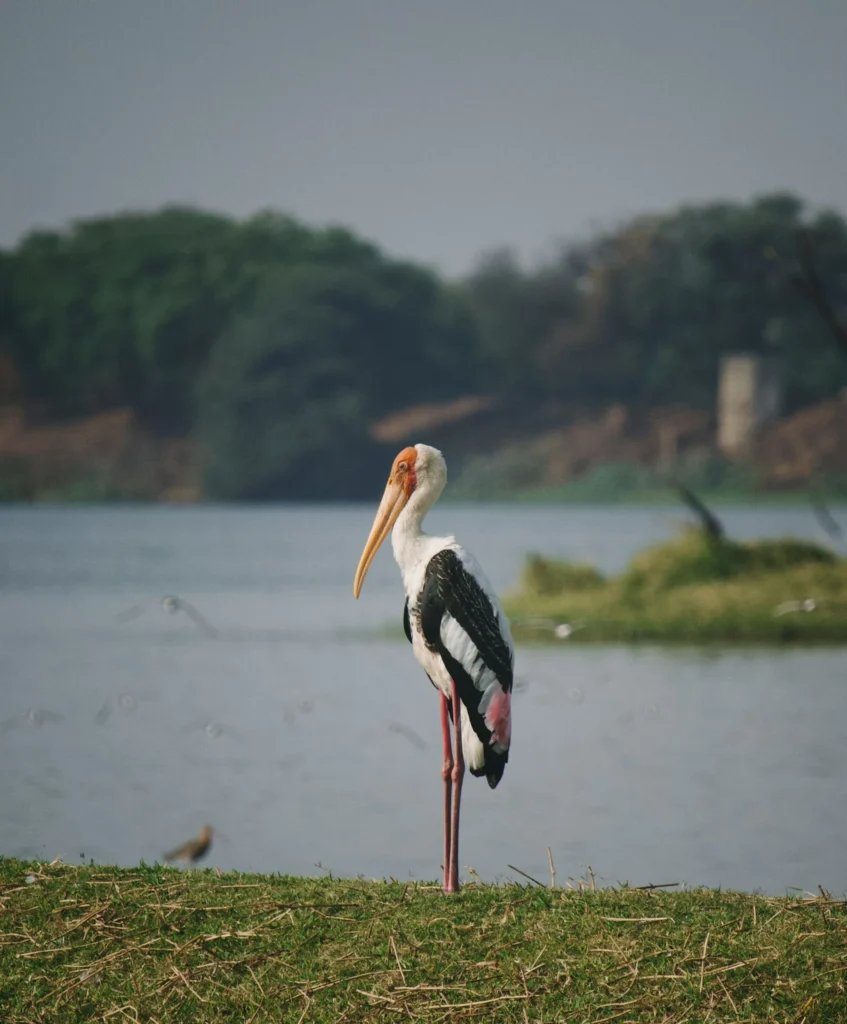
The Painted Stork is one of India’s most recognisable wetland birds. Its pink tertial feathers, black-and-white patterned wings, and long yellow bill make it easy to identify, even from a distance.
Unlike many other storks, Painted Storks often feed in groups. They slowly sweep their partially open bills through shallow water until they detect fish by touch, snapping the bill shut in a fraction of a second.
Identification
- White body with black barred wings
- Bright pink feathers near the tail
- Long yellow slightly curved bill
- Bare orange face in adults
- Height around one metre
Status
Resident across much of India, although local movements occur in response to rainfall and water availability.
Typical Habitat
- Marshes
- Floodplains
- Lakes
- Reservoirs
- Village wetlands
- Bird sanctuaries
Best Places to See Painted Storks
- Keoladeo National Park
- Ranganathittu Bird Sanctuary
- Bhindawas Wildlife Sanctuary
- Sultanpur National Park
- Thol Lake Wildlife Sanctuary
Conservation Note
Painted Storks depend on healthy wetlands with stable water levels and plentiful fish. Loss of nesting trees, drainage of wetlands, and pollution can reduce breeding success.
Photography Tip: Early morning offers the best opportunities to photograph Painted Storks feeding in soft light before heat haze develops over shallow wetlands.
Spot-billed Pelican (Pelecanus philippensis)
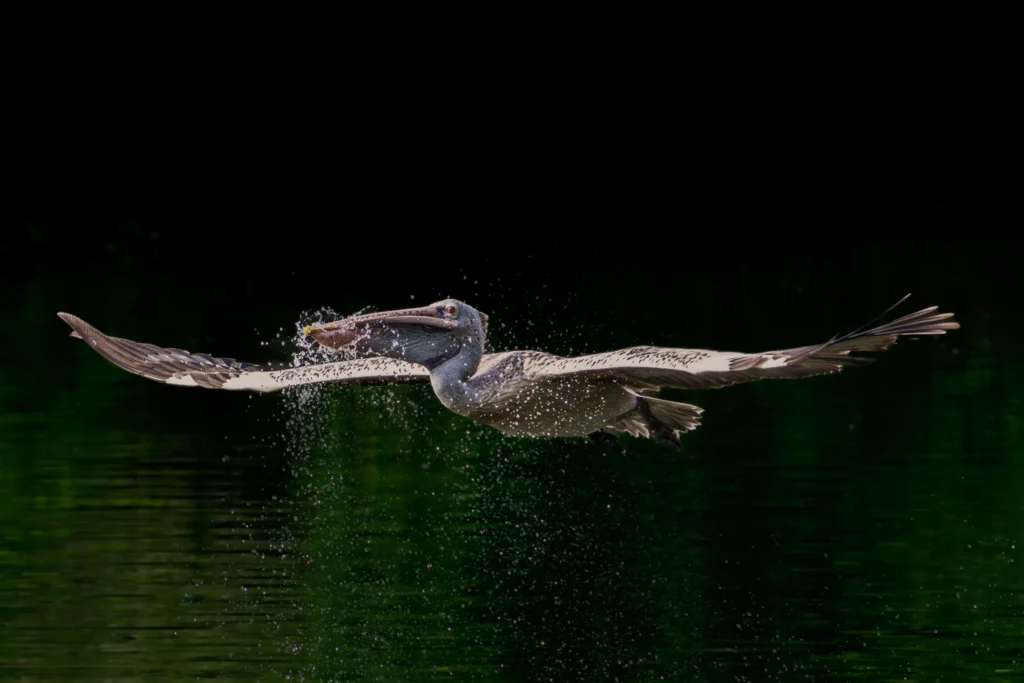
The Spot-billed Pelican is one of India’s largest freshwater birds and an excellent example of cooperative feeding behaviour. Groups often work together to herd fish into shallow water before scooping them up using their large throat pouches.
Although enormous, these pelicans are graceful fliers, travelling between feeding areas and nesting colonies with slow, powerful wingbeats.
Identification
- Large greyish-white body
- Pale bill with dark spots on the upper mandible
- Prominent throat pouch
- Broad wings
- Short crest during breeding season
Status
Largely resident, with seasonal local movements between wetlands depending on water conditions.
Typical Habitat
- Large lakes
- Reservoirs
- Marshes
- Coastal lagoons
- Fish-rich wetlands
Best Places to See Spot-billed Pelicans
- Ranganathittu Bird Sanctuary
- Chilika Lake
- Point Calimere Wildlife and Bird Sanctuary
- Various reservoirs in southern India
Conservation Note
Protection of nesting colonies and undisturbed feeding wetlands remains essential for maintaining healthy populations.
Field Note: Pelicans often indicate productive wetlands because they require abundant fish to support their large body size.
Dalmatian Pelican (Pelecanus crispus)
The Dalmatian Pelican is one of the largest flying birds in the world and an uncommon winter visitor to parts of India. It is especially valued by experienced birdwatchers because sightings are far less frequent than those of the Spot-billed Pelican.
Its massive size, silvery-grey plumage, and shaggy appearance distinguish it from other pelicans.
Identification
- Very large body
- Silvery-grey plumage
- Curly feathers on the head and neck
- Massive pale bill with throat pouch
- Heavy, slow wingbeats in flight
Status
Winter migrant to selected Indian wetlands.
Typical Habitat
- Large freshwater lakes
- Reservoirs
- Extensive marshes
- Ramsar wetlands
Best Places to See Dalmatian Pelicans
- Chilika Lake
- Selected northern and western Indian Ramsar wetlands where wintering birds are occasionally recorded
Conservation Note
The species is considered globally significant from a conservation perspective, making every wintering wetland especially valuable.
Black-headed Ibis (Threskiornis melanocephalus)
The Black-headed Ibis is instantly recognisable by its white body and featherless black head. It feeds by probing soft mud with its long curved bill, searching for insects, crustaceans, molluscs, frogs, and other small aquatic animals.
The species often forages alongside storks, egrets, and spoonbills in shallow wetlands.
Identification
- White plumage
- Bare black head and neck
- Long downward-curving black bill
- Long black legs
Status
Resident across much of the Indian subcontinent, with local seasonal movements.
Typical Habitat
- Marshes
- Paddy fields
- Floodplains
- Freshwater wetlands
- Estuaries
Best Places to See Black-headed Ibis
- Keoladeo National Park
- Bhindawas Wildlife Sanctuary
- Sultanpur National Park
- Kabartal Wetland
Conservation Note
The species benefits from the protection of wetlands that maintain shallow feeding areas throughout the year. Habitat degradation remains a concern in many regions.
Asian Openbill (Anastomus oscitans)
The Asian Openbill is named after the distinctive gap between the upper and lower mandibles of its bill. This unusual adaptation allows it to handle one of its favourite foods—freshwater snails—with remarkable efficiency.
During the monsoon and post-monsoon months, large flocks may gather in wetlands where snail populations are abundant.
Identification
- Greyish-white body
- Glossy dark wings
- Thick bill with a noticeable gap
- Long pinkish legs
Status
Primarily resident, with seasonal local movements linked to rainfall and feeding opportunities.
Typical Habitat
- Marshes
- Flooded agricultural fields
- Lakes
- Village ponds
- Slow-moving rivers
Best Places to See Asian Openbills
- Keoladeo National Park
- Ranganathittu Bird Sanctuary
- Bhindawas Wildlife Sanctuary
- Eastern Indian wetlands
Interesting Behaviour
Unlike generalist feeders, Asian Openbills are highly specialised snail predators. Their unique bill structure enables them to extract snails from their shells with surprising speed.
Woolly-necked Stork (Ciconia episcopus)
The Woolly-necked Stork is distinguished by the bright white feathers covering its neck, contrasting sharply with its otherwise dark body. It is generally seen singly or in pairs rather than in large flocks.
Although associated with wetlands, it also uses agricultural landscapes, grasslands, and wooded areas near water.
Identification
- Dark body
- White woolly-looking neck
- Long dark bill
- Red legs in adults
Status
Resident in suitable habitats across much of India.
Typical Habitat
- Wet grasslands
- Marshes
- Rivers
- Irrigation tanks
- Agricultural wetlands
Best Places to See Woolly-necked Storks
- Keoladeo National Park
- Kabartal Wetland
- Bhindawas Wildlife Sanctuary
- Several Ramsar wetlands across northern and central India
Conservation Note
The species depends on a mosaic of wetlands and surrounding agricultural landscapes. Maintaining this habitat connectivity is important for its long-term survival.
Comparison Table: Large Wading Birds
| Species | Resident or Migratory | Favourite Habitat | Good Places to See |
| Painted Stork | Resident | Marshes, lakes | Keoladeo, Ranganathittu |
| Spot-billed Pelican | Resident | Large lakes, reservoirs | Chilika, Ranganathittu |
| Dalmatian Pelican | Winter migrant | Large freshwater wetlands | Chilika and selected Ramsar wetlands |
| Black-headed Ibis | Resident | Marshes, floodplains | Keoladeo, Kabartal |
| Asian Openbill | Resident | Marshes, paddy fields | Keoladeo, Bhindawas |
| Woolly-necked Stork | Resident | Wet grasslands, wetlands | Keoladeo, Kabartal |
Expert Tip: If you’re new to birdwatching, spend time observing how these birds feed rather than focusing only on their appearance. Feeding style, posture, and habitat often provide quicker identification than plumage alone, especially when birds are distant.
Top 20 Wetland Birds of India (Cranes, Flamingos, Geese & Ducks)
This group includes some of India’s most recognisable wetland birds. Flamingos often gather in spectacular flocks along coastal wetlands, cranes command attention with their height and courtship displays, while geese and ducks are among the most anticipated winter migrants. Together, they illustrate the diversity of habitats that Indian wetlands support, from shallow saline lagoons to freshwater lakes and floodplain marshes.
Sarus Crane (Antigone antigone)
The Sarus Crane is the world’s tallest flying bird and one of India’s most iconic wetland species. Standing nearly as tall as an adult human, it is known for its elegant posture, bright red head and upper neck, and lifelong pair bonds.
Unlike many other cranes, the Sarus Crane is largely resident in India. Pairs defend territories around wetlands and flooded agricultural fields, where they feed on roots, tubers, grains, insects, amphibians, and small aquatic animals.
One of the most memorable sights is the species’ elaborate courtship dance, during which pairs leap into the air, spread their wings, and call loudly in synchrony.
Identification
- Very tall grey body
- Bare red head and upper neck
- Long pinkish legs
- Straight pointed bill
- Slow, graceful flight with outstretched neck
Status
Resident across parts of northern, central, and western India.
Typical Habitat
- Freshwater marshes
- Flooded grasslands
- Village ponds
- Agricultural wetlands
- Shallow lakes
Best Places to See Sarus Cranes
- Sarsai Nawar Jheel
- Keoladeo National Park
- Wetlands of Uttar Pradesh
- Agricultural wetlands in Gujarat
Conservation Note
Successful breeding depends on undisturbed wetlands and surrounding farmland. Habitat alteration and wetland drainage remain important conservation concerns.
Field Note: Sarus Cranes are often easier to locate by their loud trumpeting calls than by sight, especially when vegetation is tall.
Greater Flamingo (Phoenicopterus roseus)
Few wetland birds attract as much attention as the Greater Flamingo. Large flocks feeding in shallow lagoons create one of India’s most memorable birdwatching spectacles.
Their pink colour comes from pigments obtained through algae and tiny aquatic organisms in their diet. They feed by holding their heads upside down in the water and filtering food using specialised structures inside the bill.
Identification
- Pale pink body
- Long pink legs
- Long S-shaped neck
- Large bill with black tip
- Black flight feathers visible in flight
Status
Found in both resident and migratory populations depending on the region.
Typical Habitat
- Coastal lagoons
- Mudflats
- Salt pans
- Estuaries
- Shallow saline wetlands
Best Places to See Greater Flamingos
- Point Calimere Wildlife and Bird Sanctuary
- Chilika Lake
- Coastal wetlands of Gujarat
- Wadhvana Wetland
Conservation Note
Flamingos depend on stable water levels and productive shallow wetlands. Disturbance and changes in hydrology can affect feeding opportunities.
Photography Tip: Flamingos are most active during the cooler hours after sunrise and before sunset, when softer light also enhances their pink plumage.
Lesser Flamingo (Phoeniconaias minor)
Although smaller than the Greater Flamingo, the Lesser Flamingo often appears brighter pink. It feeds mainly on microscopic algae and cyanobacteria, making it highly dependent on suitable water chemistry.
Large congregations are particularly associated with saline wetlands.
Identification
- Smaller than Greater Flamingo
- Deep pink plumage
- Dark crimson bill
- Bright red eyes
- Long slender legs
Status
Seen seasonally at several important Indian wetlands.
Typical Habitat
- Salt lakes
- Coastal lagoons
- Saline wetlands
- Mudflats
Best Places to See Lesser Flamingos
- Point Calimere Wildlife and Bird Sanctuary
- Gujarat’s coastal wetlands
- Selected Ramsar wetlands supporting flamingo flocks
Conservation Note
Point Calimere regularly supports substantial numbers of both Greater and Lesser Flamingos, highlighting its international importance for waterbirds.
Bar-headed Goose (Anser indicus)
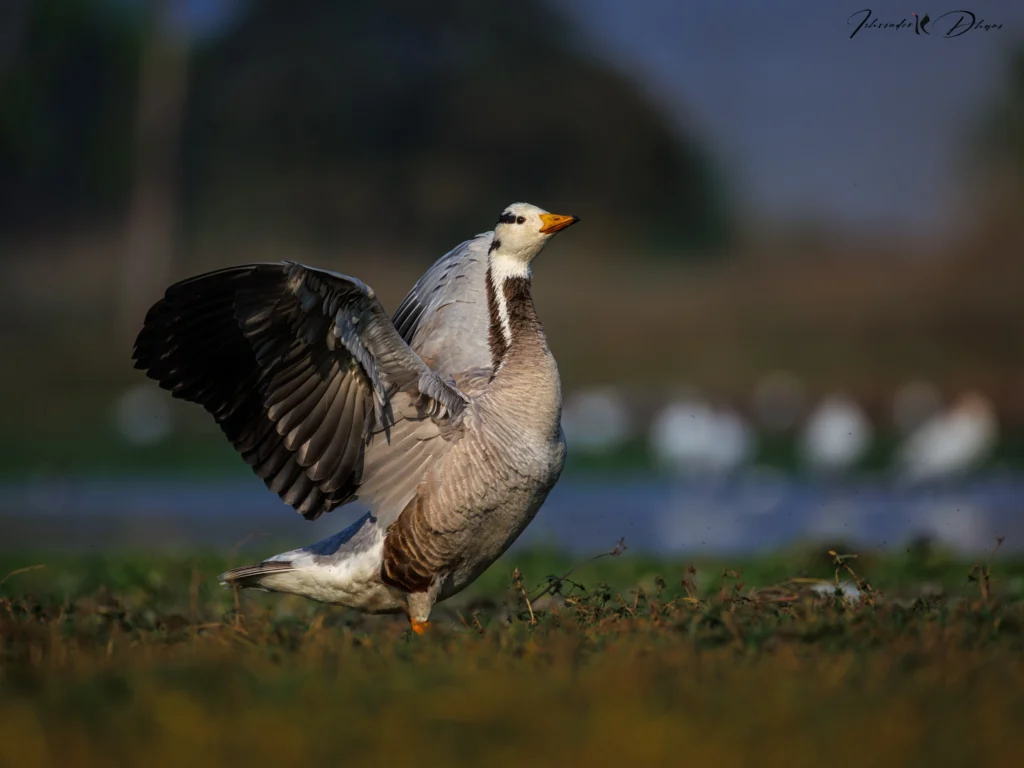
The Bar-headed Goose is famous for one extraordinary reason—it undertakes one of the highest known migratory flights of any bird, crossing the Himalayas to reach wintering grounds in India.
During winter, these geese gather in lakes, reservoirs, and marshes, where they graze on grasses and aquatic vegetation.
Identification
- Pale grey body
- Two bold black bars across the white head
- Orange-yellow bill
- Orange legs
Status
Winter migrant.
Typical Habitat
- Lakes
- Reservoirs
- Floodplains
- Marshes
- Riverbanks
Best Places to See
- Keoladeo National Park
- Pong Dam Lake
- Northern Indian wetlands
- Several Ramsar sites across northern India
Interesting Behaviour
After arriving in India, many flocks spend the winter feeding quietly before returning north to breed once temperatures rise.
Greylag Goose (Anser anser)
The Greylag Goose is another familiar winter visitor. Although less striking than the Bar-headed Goose, its large flocks are a characteristic feature of northern Indian wetlands during winter.
Identification
- Uniform grey-brown body
- Orange bill
- Pale belly
- Pink legs
Status
Winter migrant.
Typical Habitat
- Freshwater lakes
- Floodplains
- Marshes
- Agricultural wetlands
Best Places to See
- Keoladeo National Park
- Pong Dam Lake
- Haiderpur Wetland
Common Teal (Anas crecca)
The Common Teal is one of the smallest ducks regularly seen in India during winter. Large flocks often gather on shallow lakes, where they feed on seeds, aquatic plants, and small invertebrates.
Identification
Male (winter)
- Chestnut head
- Broad green eye patch
- Grey body
Female
- Brown mottled plumage
- Smaller size
- Compact appearance
Status
Winter migrant.
Typical Habitat
- Marshes
- Shallow lakes
- Flooded grasslands
- Reservoir margins
Best Places to See
- Keoladeo National Park
- Bhindawas Wildlife Sanctuary
- Chilika Lake
- Numerous northern wetlands
Red-crested Pochard (Netta rufina)
Among India’s winter ducks, the Red-crested Pochard is one of the easiest to identify. The male’s bright orange head stands out even at considerable distance.
Unlike dabbling ducks, pochards spend much of their time diving underwater in search of aquatic vegetation.
Identification
Male
- Orange rounded head
- Bright red bill
- Black breast
- Pale body
Female
- Brown head
- Grey-brown body
- Dark bill
Status
Winter migrant.
Typical Habitat
- Deep lakes
- Reservoirs
- Freshwater wetlands
Best Places to See
- Keoladeo National Park
- Chilika Lake
- Large northern Indian wetlands
Ferruginous Duck (Aythya nyroca)
The Ferruginous Duck is a medium-sized diving duck recognised by its rich chestnut colouring and pale eyes. It often prefers quieter wetlands with abundant aquatic vegetation.
Because it is less numerous than many winter ducks, birdwatchers are usually pleased to encounter one.
Identification
- Rich chestnut body
- Bright white undertail
- Pale eyes
- Rounded head
Status
Winter migrant with conservation significance.
Typical Habitat
- Freshwater lakes
- Marshes
- Quiet wetlands
- Vegetated reservoirs
Best Places to See
- Keoladeo National Park
- Bhindawas Wildlife Sanctuary
- Other bird-rich Ramsar wetlands
Conservation Note
The Ferruginous Duck is frequently highlighted in wetland conservation discussions because healthy freshwater habitats are essential for its wintering populations.
Comparison Table: Cranes, Flamingos, Geese & Ducks
| Species | Resident/Migratory | Preferred Habitat | Best Viewing Season |
| Sarus Crane | Resident | Freshwater wetlands | Year-round |
| Greater Flamingo | Resident & seasonal migrant | Coastal lagoons, salt pans | Winter |
| Lesser Flamingo | Seasonal visitor | Saline wetlands | Winter |
| Bar-headed Goose | Winter migrant | Lakes & marshes | November–February |
| Greylag Goose | Winter migrant | Floodplains & lakes | November–February |
| Common Teal | Winter migrant | Shallow freshwater wetlands | November–February |
| Red-crested Pochard | Winter migrant | Deep lakes | November–February |
| Ferruginous Duck | Winter migrant | Freshwater marshes | November–February |
Expert Tip: If your main goal is to see migratory ducks and geese, plan your visit between November and February, when many northern wetlands support the greatest diversity of wintering waterfowl. Coastal wetlands are particularly rewarding for flamingos during this period.
Top 20 Wetland Birds of India (River Birds, Wetland Raptors), Best Wetlands & Seasonal Birdwatching Guide
While large wading birds and winter ducks are often the first species visitors notice, India’s wetlands also support specialist birds that occupy more specific ecological niches. Some skim the surface of rivers to catch fish, while others soar above lakes searching for prey. These species are often indicators of relatively healthy aquatic ecosystems and add another dimension to birdwatching beyond the familiar storks and pelicans.
Indian Skimmer (Rynchops albicollis)
The Indian Skimmer is one of the most distinctive birds found in the Indian subcontinent. Its unusual bill, with the lower mandible longer than the upper, allows it to feed by flying low over calm water while skimming the surface.
When the lower bill touches a fish, the upper bill snaps shut almost instantly.
Identification
- Black upperparts
- White underparts
- Bright orange bill with longer lower mandible
- Long pointed wings
- Forked tail
Status
Resident in parts of India, though local populations are vulnerable.
Typical Habitat
- Wide rivers
- River islands
- Sandbanks
- Large reservoirs
Best Places to See
- Chambal River
- National Chambal Sanctuary
- Selected large river systems with exposed sandbanks
Conservation Note
Indian Skimmers rely on undisturbed sandbanks for nesting. River modification, excessive disturbance, and changing water flows have reduced suitable breeding habitat in many areas.
Black-bellied Tern (Sterna acuticauda)
The Black-bellied Tern is a graceful river bird that catches fish by plunge-diving into the water. During the breeding season, adults develop the black underparts that give the species its name.
Unlike coastal terns, this species depends largely on inland rivers and wetlands.
Identification
- Slender body
- Grey upperparts
- White forehead
- Black belly during breeding season
- Long pointed wings
Status
A species of conservation concern associated with healthy river ecosystems.
Typical Habitat
- Rivers
- Reservoirs
- Wetlands
- Sandbanks
Best Places to See
- Large river systems
- Wetlands connected to major rivers
- Protected bird sanctuaries
Conservation Note
Breeding success is closely linked to the availability of undisturbed river islands and exposed sandbars.
River Tern (Sterna aurantia)
The River Tern is another elegant fish-eating bird commonly associated with inland rivers and reservoirs. It is recognised by its bright yellow bill and buoyant flight.
Unlike many coastal terns, it spends much of its life along freshwater systems.
Identification
- Grey body
- White forehead
- Black cap during breeding season
- Bright yellow bill
- Long forked tail
Status
Resident across suitable freshwater habitats in India.
Typical Habitat
- Rivers
- Reservoirs
- Lakes
- Sandbanks
Best Places to See
- Chambal River
- Ranganathittu Bird Sanctuary
- Large reservoirs across peninsular India
Grey-headed Fish Eagle (Ichthyophaga ichthyaetus)
The Grey-headed Fish Eagle is one of India’s specialist wetland raptors. Unlike many birds of prey that hunt mammals, this eagle feeds mainly on fish captured from lakes, rivers, and reservoirs.
Although not frequently encountered, it is an exciting sight for birdwatchers because of its powerful build and impressive hunting ability.
Identification
- Grey head
- Dark brown upperparts
- White belly
- Powerful hooked bill
- Broad wings
Status
Resident where suitable fish-rich wetlands remain.
Typical Habitat
- Forested lakes
- Rivers
- Reservoirs
- Wetlands with mature trees
Best Places to See
- Large protected wetlands
- Forested reservoirs
- Ramsar wetlands supporting fish-eating birds
Behaviour
The eagle usually hunts from an exposed perch before swooping down to capture fish near the water’s surface.
Pallas’s Fish Eagle (Haliaeetus leucoryphus)
Pallas’s Fish Eagle is among India’s most significant wetland raptors from a conservation perspective. It is associated with extensive freshwater wetlands where large fish populations support its specialised diet.
Because it occurs at relatively low densities, sightings are often memorable highlights for experienced birdwatchers.
Identification
- Large dark brown eagle
- Pale head
- Heavy yellow bill
- Broad wings
- White tail with dark terminal band
Status
Conservation-priority species associated with major wetlands.
Typical Habitat
- Large lakes
- Reservoirs
- Marshes
- River systems
Best Places to See
- Major Ramsar wetlands
- Chilika Lake
- Large freshwater wetlands supporting healthy fish populations
Conservation Note
Protecting large, undisturbed wetlands is essential because these eagles require extensive hunting territories and reliable fish resources.
Comparison Table: River Birds & Wetland Raptors
| Species | Main Food | Preferred Habitat | Best Known For |
| Indian Skimmer | Fish | Rivers & sandbanks | Surface-skimming feeding technique |
| Black-bellied Tern | Fish | Rivers & wetlands | Agile plunge-diving |
| River Tern | Fish | Rivers & reservoirs | Bright yellow bill |
| Grey-headed Fish Eagle | Fish | Forested wetlands | Perch hunting |
| Pallas’s Fish Eagle | Fish | Large freshwater wetlands | Powerful wetland raptor |
Best Wetlands in India for Birdwatching
India’s wetlands vary greatly in size, habitat, and bird diversity. Some are famous for winter migrants, while others support impressive resident bird populations throughout the year. Choosing the right destination depends on the species you hope to see.
| Wetland | State | Why Visit | Notable Birds |
| Keoladeo National Park | Rajasthan | One of India’s best-known birdwatching destinations | Storks, ducks, geese, cranes, pelicans |
| Chilika Lake | Odisha | Asia’s largest brackish water lagoon | Flamingos, pelicans, ducks, fish eagles |
| Point Calimere Wildlife and Bird Sanctuary | Tamil Nadu | Coastal wetland with large waterbird concentrations | Greater & Lesser Flamingos, pelicans |
| Thol Lake Wildlife Sanctuary | Gujarat | High bird diversity recorded in Ramsar documentation | Waterfowl, waders, storks |
| Bhindawas Wildlife Sanctuary | Haryana | Excellent accessibility and diverse birdlife | Ducks, ibises, storks |
| Kabartal Wetland | Bihar | Important floodplain wetland | Migratory waterbirds, cranes |
| Ranganathittu Bird Sanctuary | Karnataka | Breeding colonies of large waterbirds | Pelicans, painted storks, darters |
| Pong Dam Lake | Himachal Pradesh | Major wintering site | Geese, ducks, migratory waterbirds |
Decision Guide
- First-time birdwatchers: Keoladeo National Park
- Flamingo photography: Point Calimere or coastal Gujarat
- Large breeding colonies: Ranganathittu
- Winter ducks and geese: Pong Dam Lake
- Mixed species diversity: Chilika Lake
When Is the Best Time for Wetland Birdwatching?
Bird diversity changes considerably throughout the year. Understanding these seasonal patterns helps visitors choose the right destination and maximise their chances of seeing target species.
| Season | What You Can Expect |
| Winter (November–February) | Peak season for migratory ducks, geese, flamingos and many waterbirds. Best overall birdwatching period. |
| Summer (March–June) | Mostly resident species. Water levels shrink, sometimes concentrating birds into smaller areas. |
| Monsoon (July–September) | Breeding season for many resident wetland birds. Courtship displays and nesting activity become more noticeable. |
| Post-monsoon (October) | Wetlands refill, resident populations increase, and the first migratory birds begin arriving. |
The research brief highlights winter as the most rewarding season for observing migratory waterbirds, while also noting that wetlands remain important year-round for resident species, breeding colonies, and local seasonal movements.
Resident vs Migratory Wetland Birds
Understanding whether a bird is resident or migratory helps explain why species lists change with the seasons.
| Resident Species | Winter Migrants |
| Painted Stork | Bar-headed Goose |
| Spot-billed Pelican | Greylag Goose |
| Sarus Crane | Common Teal |
| Black-headed Ibis | Ferruginous Duck |
| Asian Openbill | Red-crested Pochard |
| River Tern | Dalmatian Pelican |
It is important to remember that not every wetland bird follows the same pattern. Some species are permanent residents, others migrate thousands of kilometres, and a few make shorter seasonal movements depending on rainfall and water availability.
Responsible Birdwatching Tip: Observe birds from a respectful distance, remain on designated trails where available, avoid disturbing nesting colonies, and never use loud sounds or drones to attract wildlife. Responsible behaviour helps minimise stress on birds, particularly during migration and breeding seasons.
.
Conservation Challenges, Birdwatching Ethics, Common Mistakes, FAQs & Conclusion
Wetland birds depend on healthy ecosystems throughout their lives. Whether they breed in India or arrive from thousands of kilometres away, they need wetlands that provide reliable food, clean water, safe nesting sites, and minimal disturbance. Protecting these habitats benefits not only birds but also fisheries, groundwater recharge, flood control, and local communities.
Conservation Challenges Facing India’s Wetland Birds
India’s wetlands face a variety of pressures that affect both resident and migratory birds. Some threats reduce the amount of available habitat, while others lower the quality of existing wetlands.
Habitat Loss
Many wetlands have been drained, filled, or altered for agriculture, urban expansion, and infrastructure projects. As shallow marshes and floodplains disappear, birds lose important feeding and breeding areas.
Pollution
Runoff carrying sewage, industrial waste, plastics, and agricultural chemicals can degrade wetland ecosystems. Poor water quality affects fish, aquatic plants, and invertebrates that many wetland birds depend upon for food.
Changes in Water Management
Dams, barrages, excessive water extraction, and altered river flows can significantly change wetland conditions. Water that is too deep, too shallow, or absent at critical times may reduce suitable habitat for feeding or nesting birds.
Invasive Plants
Invasive aquatic plants such as water hyacinth can cover large areas of open water, reducing feeding opportunities for many species and changing the ecological balance of wetlands.
Human Disturbance
Frequent disturbance from uncontrolled tourism, boating near nesting colonies, loud noise, and off-trail movement may cause birds to abandon feeding or breeding sites. This is especially important during migration and nesting seasons.
Threat Comparison Table
| Threat | Potential Impact on Birds |
| Wetland drainage | Loss of feeding and nesting habitat |
| Pollution | Reduced food availability and poorer water quality |
| Altered water levels | Disrupted breeding and feeding areas |
| Invasive plants | Less open water for feeding |
| Human disturbance | Nest abandonment and increased stress |
| Habitat fragmentation | Smaller, isolated bird populations |
How Birdwatchers Can Help Protect Wetlands
Birdwatching and wildlife photography can support conservation when practised responsibly.
A few simple habits make a meaningful difference:
- Stay on designated paths whenever possible.
- Observe birds from a respectful distance.
- Avoid approaching nests or breeding colonies.
- Keep noise to a minimum.
- Never feed wild birds.
- Do not use drones unless specifically permitted.
- Carry back all litter, including food packaging.
- Respect local regulations and protected-area guidelines.
Responsible Tourism Tip: Your best wildlife photograph should never come at the expense of a bird’s welfare. If a bird changes its behaviour because of your presence, you are probably too close.
Practical Checklist for Wetland Birdwatching
Before your trip, consider carrying:
- Binoculars (8×42 or 10×42 are popular choices)
- Field guide or bird identification app
- Camera with a telephoto lens, if photographing birds
- Neutral-coloured clothing
- Sun protection and drinking water
- Notebook for recording observations
- Small daypack
- Rain protection during the monsoon
For winter birdwatching, early mornings can be surprisingly cool in northern India, so dressing in layers is often more comfortable than wearing a single heavy jacket.
Common Mistakes Birdwatchers Make
Many beginners assume birdwatching is simply about spotting as many species as possible. In reality, patience and observation usually lead to more rewarding experiences.
Some common mistakes include:
Visiting at the Wrong Time of Year
Many migratory species are present only during winter. Travelling in summer with expectations of seeing winter visitors often leads to disappointment.
Walking Too Quickly
Birds are often detected by movement, calls, or behaviour rather than colour. Slowing down and scanning carefully usually reveals more species.
Focusing Only on Famous Birds
Flamingos, cranes, and pelicans attract attention, but wetlands also support fascinating terns, skimmers, ibises, darters, ducks, and raptors that are equally rewarding to observe.
Disturbing Wildlife
Approaching birds too closely may interrupt feeding or cause them to fly repeatedly, wasting valuable energy.
Ignoring Habitat Clues
Learning where different birds prefer to feed is often more useful than memorising identification features. For example:
- Ducks usually gather on open water.
- Storks prefer shallow wetlands.
- Terns are often seen over rivers and reservoirs.
- Fish eagles usually perch near large water bodies.
Frequently Asked Questions
What are wetland birds?
Wetland birds are species that depend on wetlands for feeding, breeding, nesting, or resting. They include ducks, cranes, flamingos, pelicans, storks, ibises, terns, skimmers, and many others.
How many wetland bird species occur in India?
India supports hundreds of wetland-associated bird species. This guide highlights twenty well-known species chosen for their ecological importance, visibility, and relevance to birdwatchers.
Which is the best wetland for birdwatching in India?
There is no single answer. Keoladeo National Park is widely regarded as an excellent destination for first-time visitors, while Chilika Lake, Point Calimere, Ranganathittu, Thol Lake, and Pong Dam each offer different birdwatching opportunities.
When is the best time to see migratory wetland birds?
For most destinations, November to February is the peak season because many migratory ducks, geese, flamingos, and other waterbirds arrive during winter.
Are all wetland birds migratory?
No. Many species, including the Painted Stork, Sarus Crane, Spot-billed Pelican, Asian Openbill, and River Tern, are resident in India, while others migrate seasonally.
Why are Ramsar Sites important for birds?
Ramsar Sites are wetlands recognised for their international ecological importance. Many support large numbers of resident and migratory waterbirds and play a vital role in conservation.
What is the Central Asian Flyway?
The Central Asian Flyway is one of the world’s major migratory bird routes. It connects breeding areas in northern Eurasia with wintering grounds in South Asia, including many Indian wetlands.
Can beginners enjoy wetland birdwatching?
Absolutely. Wetlands are among the easiest places to begin birdwatching because many birds are relatively large, active during daylight, and often visible in open habitats.
Conclusion
India’s wetlands are far more than scenic lakes or seasonal marshes. They are dynamic ecosystems that support an extraordinary variety of birdlife, from resident species such as the Painted Stork and Sarus Crane to remarkable migrants like the Bar-headed Goose and Ferruginous Duck. Together, these birds illustrate the ecological importance of wetlands across the country.
Whether you visit the freshwater marshes of Keoladeo National Park, the vast brackish waters of Chilika Lake, the flamingo-rich shores of Point Calimere, or one of India’s many Ramsar wetlands, every visit offers an opportunity to better understand the connection between birds, water, and healthy ecosystems.
The best birdwatching experiences come not from ticking off the longest species list but from observing behaviour, learning habitats, and appreciating the seasonal rhythms that shape wetland life. By travelling responsibly and supporting wetland conservation, every visitor can help ensure these remarkable habitats continue to welcome both resident and migratory birds for generations to come.