Plan your trip to Intanki National Park (Ntangki) in Nagaland. Learn about its rainforest wildlife, travel routes from Dimapur, history, and visitor expectations.
Introduction, Overview & Naming, Location, History & Timeline
Intanki National Park is best suited for travelers who prefer low crowds, dense forest scenery, and birdwatching over highly commercialized vehicle safaris. It is a protected area that rewards patience, slow travel, and an interest in rainforest ecology.
Understanding the administrative and geographic layout of the park helps set proper expectations before you book a trip. This guide clarifies how to navigate the park, its historical legal protections, and how to organize your arrival.
What Is Intanki National Park?
Intanki National Park is a protected area covering approximately 202.00 to 202.02 square kilometers. Managed by the Forest Department of Nagaland, the park serves as a critical refuge for dense rainforest species and regional wildlife.
Unlike heavily touristed parks in central India, Intanki is less commercialized. The infrastructure is designed around eco-tourism and wilderness preservation rather than mass-market holiday crowds.
Why it is also called Ntangki
Field Note: Intanki and Ntangki are alternate spellings used for the exact same protected area.
Official materials from the Peren district administration often use the spelling “Ntangki”, while Nagaland Forest Department records typically refer to it as “Intanki”. Travelers looking for routes, maps, or permits should know these names are completely interchangeable.
Where Is Intanki National Park Located?
The park is located in the Peren district of Nagaland. It sits along the western border of the state, directly adjacent to the neighboring state of Assam.
For management purposes, the forest territory is split into two distinct administrative sections: Intanki Range A and Intanki Range B.
[Assam: Dhansiri Reserved Forests] <— Wildlife Corridor —> [Nagaland: Intanki National Park]
Dimapur to Intanki route
Dimapur is the primary travel hub for accessing the park. The park boundary is situated roughly 37 kilometers away from Dimapur town. This route is the most practical choice for first-time visitors because Dimapur contains the nearest major railway station and airport infrastructure.
Peren to Intanki route
If you are traveling from the district headquarters, the park is about 40 kilometers away from Peren town. This mountain route connects the park to the rest of the Peren district’s tourism points, though the roads are subject to local terrain and seasonal weather changes.
History and Legal Timeline of the Park
The territory comprising Intanki National Park has undergone multiple shifts in its official protection status over the past century. Its origins date back to the colonial era, making it one of the oldest managed forest patches in the region.
The forest originally gained protected status as a Reserved Forest in 1923 under British administration. Following Indian independence, its wildlife value prompted an upgrade to a Wildlife Sanctuary in 1975.
The area was officially designated a National Park in 1993. Recognizing its importance for seasonal elephant movements, the government declared it an official Elephant Reserve in 2005.
Timeline: 1923 to 2025
The table below outlines the historical and legal milestones that shaped the park’s boundaries and management policies:
| Year | Legal / Administrative Status | Conservation Impact |
| 1923 | Declared a Reserved Forest | Established initial legal boundaries and prohibited unchecked logging. |
| 1975 | Upgraded to a Wildlife Sanctuary | Shifted management focus toward habitat preservation and wildlife tracking. |
| 1993 | Declared a National Park | Granted highest tier of statutory protection, restricting commercial extraction. |
| 2005 | Designated as an Elephant Reserve | Integrated the park into national elephant corridor protection frameworks. |
| 2017 | Eco-Sensitive Zone Community Agreement | Established local community consensus around the protective buffer zones. |
| 2024 | Documentary Feature | Highlighted regional forest conservation efforts in local media. |
| 2025 | Oil India Limited (OIL) Project Launch | Secured targeted CSR funding to enhance anti-poaching patrols and eco-tourism. |
Ecology, Habitat, and Wildlife
Wildlife viewing in a dense rainforest environment is fundamentally different from a safari in an open grassland. Because visibility is limited by heavy foliage, tracking wildlife requires patience, an understanding of the ecology, and a reliance on alarm calls and tracks.
The biodiversity here is exceptional, but visitors should adjust their expectations: this park is about observing a complex ecosystem rather than ticking off guaranteed sightings of big cats.
Wildlife and Biodiversity
Intanki supports an array of species adapted to dense cover and steep terrain. The dense canopy and rugged undergrowth provide excellent protection for both predators and prey, making it a critical stronghold for several endangered and endemic species.
Key mammals
The park is an official Elephant Reserve, and Asian elephants are among the most significant species protected here. The forest is also one of the few places in India where you can find the Hoolock gibbon, the country’s only ape species.
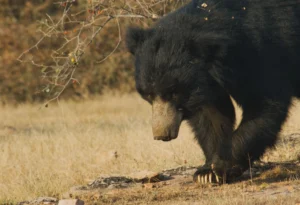
Other notable primates include the golden langur. The predator population is highly elusive but includes the tiger, clouded leopard, and wild dog (dhole). You may also encounter sloth bears, flying squirrels, and wild buffalo or mithun (a semi-domesticated bovine closely tied to Naga culture).
Expert Tip: Because clouded leopards are largely arboreal (tree-dwelling) and nocturnal, daytime sightings are extremely rare. Focus your daytime tracking efforts on ground-dwelling herbivores and primates.
Key birds
Intanki is a highly productive destination for birdwatchers. The undisturbed canopy supports large frugivores (fruit-eaters) that require old-growth trees for nesting.
Hornbills are the major draw for most birders visiting Nagaland, and the park provides vital habitat for them. Black storks are also present, alongside a wide variety of regional rainforest species.
Photography Tip: Rainforest bird photography is challenging due to low light under the canopy. A fast lens (f/2.8 or f/4) and a camera with good high-ISO performance will yield much better results than relying solely on a long, slow telephoto lens.
Wildlife Directory by Category
The table below outlines the primary species of interest recorded within the park’s boundaries:
| Category | Notable Species |
| Mammals | Asian elephant, Hoolock gibbon, tiger, clouded leopard, golden langur, wild buffalo / mithun, sloth bear, wild dog, flying squirrel |
| Birds | Hornbills (various species), black stork |
| Reptiles | Monitor lizard, python |
| Flora | Bamboo, orchids, tree ferns, tropical evergreen and semi-evergreen species |
Flora and Habitat
The landscape of Intanki is dominated by tropical and sub-tropical rainforests. This includes broad swathes of tropical evergreen and semi-evergreen forest species.
The understory is rich and complex, featuring dense bamboo thickets, large tree ferns, and a wide variety of native orchids. This thick, layered vegetation acts as a natural water catchment and provides a constant food supply for the park’s herbivores and primates.
Why the forest corridor matters
Intanki does not exist in isolation. Its true ecological value lies in its connectivity. The park shares a direct boundary with the Dhansiri Reserved Forests in the Karbi Anglong district of neighboring Assam.
[Assam: Dhansiri Reserved Forests] <— Wildlife Corridor —> [Nagaland: Intanki National Park]
This contiguous stretch of forest functions as a vital wildlife corridor. Large, wide-ranging mammals—particularly Asian elephants—rely on this corridor to migrate seasonally in search of food and water. Without this cross-border connectivity, elephant populations would become isolated, leading to human-wildlife conflict and a decline in genetic diversity. Protection of Intanki is therefore crucial to the health of the broader Northeast Indian rainforest ecosystem.
Practical Travel Planning (Best Time to Visit, How to Reach, Rules & Permits)
Proper planning is essential for any visit to Intanki. Because the park operates with minimal commercial tourism infrastructure, travelers must arrange their logistics, timing, and permits carefully.
Best Time to Visit Intanki National Park
The ideal time to visit Intanki National Park is during the dry winter and early spring months, spanning from November to April. During this window, the weather is cool and pleasant, making forest walks and wildlife tracking significantly easier.
The dense rainforest environment means that the monsoon season (roughly May to October) brings heavy, persistent rainfall. During the rains, the unpaved forest trails become slippery, and road access from Dimapur or Peren can be severely disrupted by mud. Furthermore, thick vegetation and high water levels make tracking wildlife nearly impossible during the peak monsoon.
Expert Tip: If your primary goal is birdwatching—particularly to see hornbills—aim for February to April. During these warmer spring months, many rainforest trees begin fruiting, drawing large frugivorous birds out into the upper canopy where they are easier to observe.
How to Reach Intanki National Park
Intanki is relatively accessible compared to other remote northeastern parks, largely due to its proximity to Dimapur, Nagaland’s primary commercial hub.
- By Air: Dimapur Airport is the closest aviation gateway to the park. You can hire a taxi directly from the airport to the park boundary, which is roughly 37 kilometers away.
- By Train: The Dimapur Railway Station is well-connected to Guwahati and other major Indian cities. It is the most convenient railhead for visitors arriving from outside the state.
- By Road: You can reach the park via road from either Dimapur (about 37 km) or the district headquarters of Peren town (about 40 km). Keep in mind that travel times in Nagaland are dictated by road conditions and hill terrain rather than pure distance.
Travel Logistics Overview
The table below summarizes the essential transit points for planning your arrival:
| Transport Mode | Nearest Hub | Distance to Park | Notes |
| Air | Dimapur Airport | ~37 km | Hire a taxi directly from Dimapur to the park boundary. |
| Train | Dimapur Railway Station | ~37 km | Best option for visitors traveling via the North East Frontier Railway. |
| Road (Primary) | Dimapur | ~37 km | The most reliable and frequently used access route. |
| Road (District) | Peren Town | ~40 km | Scenic route connecting the park to other district attractions. |
Permits and Park Rules
Nagaland enforces strict access rules to protect its indigenous culture and fragile ecosystems.
Inner Line Permit (ILP)
All domestic Indian tourists visiting Nagaland must obtain an Inner Line Permit (ILP). This is a mandatory travel document issued by the state government. You can apply for an ILP online through the official Nagaland portal or obtain it in person at designated offices before your arrival. Foreign nationals must register with the Foreigner’s Registration Officer (FRO) or the local police station within 24 hours of arrival.
Forest Permissions Because Intanki is managed strictly for conservation rather than high-volume tourism, visitor access is tightly regulated by the Nagaland Forest Department. Always confirm your entry permissions and secure local guidance before traveling to the park gates.
Decision Guide: Do you need a guide?
Yes. The park’s dense rainforest terrain and lack of marked commercial tracks mean that exploring alone is unproductive and potentially unsafe. An authorized forest guide can navigate the undergrowth and interpret alarm calls, drastically improving your chances of a successful field outing.
Activities, Visitor Expectations, Recent Developments, Common Mistakes, FAQs, and Conclusion
Things to Do in and Around the Park
Most activities in Intanki center on quiet observation rather than fast-paced driving. Because the park lacks a vast network of commercial jeep trails, exploring on foot with a local guide is the primary way to experience the forest.
Trekking, camping, and birdwatching
Guided trekking allows you to fully appreciate the micro-ecosystems of the tropical rainforest. You will spend most of your time tracking bird calls, examining animal tracks, and observing the dense flora.
Birdwatching is exceptionally rewarding here, especially for species like hornbills and black storks. Camping within or near the park boundaries is sometimes permitted through regulated eco-tours, but you must arrange this in advance with the forest department or authorized local operators.
Nearby Attractions
If you are basing your trip out of Dimapur or Peren, you can combine your visit to Intanki with other regional highlights. The broader Peren district offers deep insights into Zeliangrong Naga culture, while Dimapur contains historical Kachari ruins and vibrant local markets. However, Intanki itself remains the primary ecological draw in this specific district.
Travel Tips and Visitor Expectations
The most crucial step in planning a trip to Intanki is setting the right expectations. If you arrive expecting the highly managed, vehicle-heavy safaris of parks like Ranthambore or Kanha, you will be disappointed. Intanki is a wilder, less structured environment.
Travel Expectation Matrix: Intanki vs. Mainstream Commercial Safari Parks
| Feature | Intanki National Park | Mainstream Commercial Parks |
| Wildlife Visibility | Low visibility due to dense rainforest canopy; requires patience and tracking. | High visibility in open grasslands and dry deciduous forests. |
| Infrastructure | Minimal; focused on raw eco-tourism and basic forest tracks. | Extensive; abundant lodges, paved access, and established jeep routes. |
| Crowd Level | Very low; excellent for solitude and uninterrupted birding. | High; often requires booking safaris months in advance. |
| Primary Draw | Rainforest biodiversity, hornbills, Hoolock gibbons, and undisturbed ecosystems. | Big cat sightings (tigers, leopards) and large herbivore herds. |
Conservation, Protection, and Recent Updates
Intanki is actively managed to prevent encroachment and poaching. The Nagaland Forest Department has deployed an 80-member armed protection force to patrol the park’s boundaries and secure the wildlife corridor.
Eco-tourism development
Conservation efforts here are evolving. In 2017, local communities reached an agreement to support the declaration of an eco-sensitive zone around the park.
More recently, in February 2025, a significant eco-tourism initiative backed by corporate social responsibility (CSR) funding from Oil India Limited was launched. This project is designed to strengthen both park protection and community-based tourism infrastructure. Additionally, local media and a 2024 wildlife documentary have brought renewed attention to the park’s ecological importance, helping to raise its profile as a conservation priority in Northeast India.
Common Mistakes
- Expecting guaranteed tiger sightings: While tigers are present, the dense terrain makes seeing them highly unlikely. Focus instead on primates, birds, and forest ecology.
- Traveling during the monsoon: The heavy rains from May to October make the forest trails dangerous and largely inaccessible.
- Arriving without permits: Access is strictly regulated. Never arrive at the park gate without first securing your Inner Line Permit (ILP) and forest department permissions.
Frequently Asked Questions
Where is Intanki National Park located? It is located in the Peren district of Nagaland, approximately 37 kilometers from Dimapur and 40 kilometers from Peren town.
Why is it also called Ntangki? Intanki and Ntangki are alternate spellings for the same protected area. Both names are used interchangeably in official government documents and local administration records.
Is Intanki an elephant reserve? Yes. In addition to being a national park, it was officially declared an Elephant Reserve in 2005 to protect seasonal migration routes.
What animals live in Intanki National Park? The park is home to Asian elephants, Hoolock gibbons, clouded leopards, tigers, wild dogs (dholes), sloth bears, hornbills, and wild buffalo (mithun).
What is the best season to visit Intanki? The most practical time to visit is during the dry winter and early spring months, from November to April.
Conclusion
Intanki National Park offers a rare opportunity to explore a genuinely undisturbed Northeast Indian rainforest. While it lacks the conveniences of mainstream tourism, it compensates with rich biodiversity, critical conservation value, and the chance to observe species like the Hoolock gibbon and hornbill in their natural habitat. By planning your logistics carefully, respecting the park’s rules, and traveling with the right expectations, you can experience one of Nagaland’s most important ecological sanctuaries.
Author Note & Update Log: Written by the WildlifeSafaris.in Editorial Team. Last Updated: August 2026
Safari Planning : Topics Cluster
- How to book a wildlife safari in India?
- Park by Park Online Safari Booking Guide
- Tiger Safari India Planning Workbook
- Park by Park Safari Permits Guide
- National Parks Permit Guide – Park by Park Guide
- Tatkal Safari Booking Guide – Last Minute Safari Permits Booking
- Tiger Safari in India Cost
- Indian Wildlife Safari Budget Planner
- Jeep vs Canter Safari
- Best time for Tiger Sightings in India
- How far advanced should you book safari permits?
- Can foreigners book Indian Wildlife Safari online?
- Special Permits Guide for Foreigners and Domestic Visitors
- How to book a Safari Permit online in India? 2026 step by step guide
- Senior Citizens Friendly Safari Planning
- Multi Generation Family Safari Planning
- 50 things to know before your first safari in India