Plan your trip to Jessore Sloth Bear Sanctuary in Gujarat. Explore travel logistics, trekking routes, sloth bear conservation, and wildlife safety.
Complete Guide to Jessore Sloth Bear Sanctuary: Logistics & Wildlife
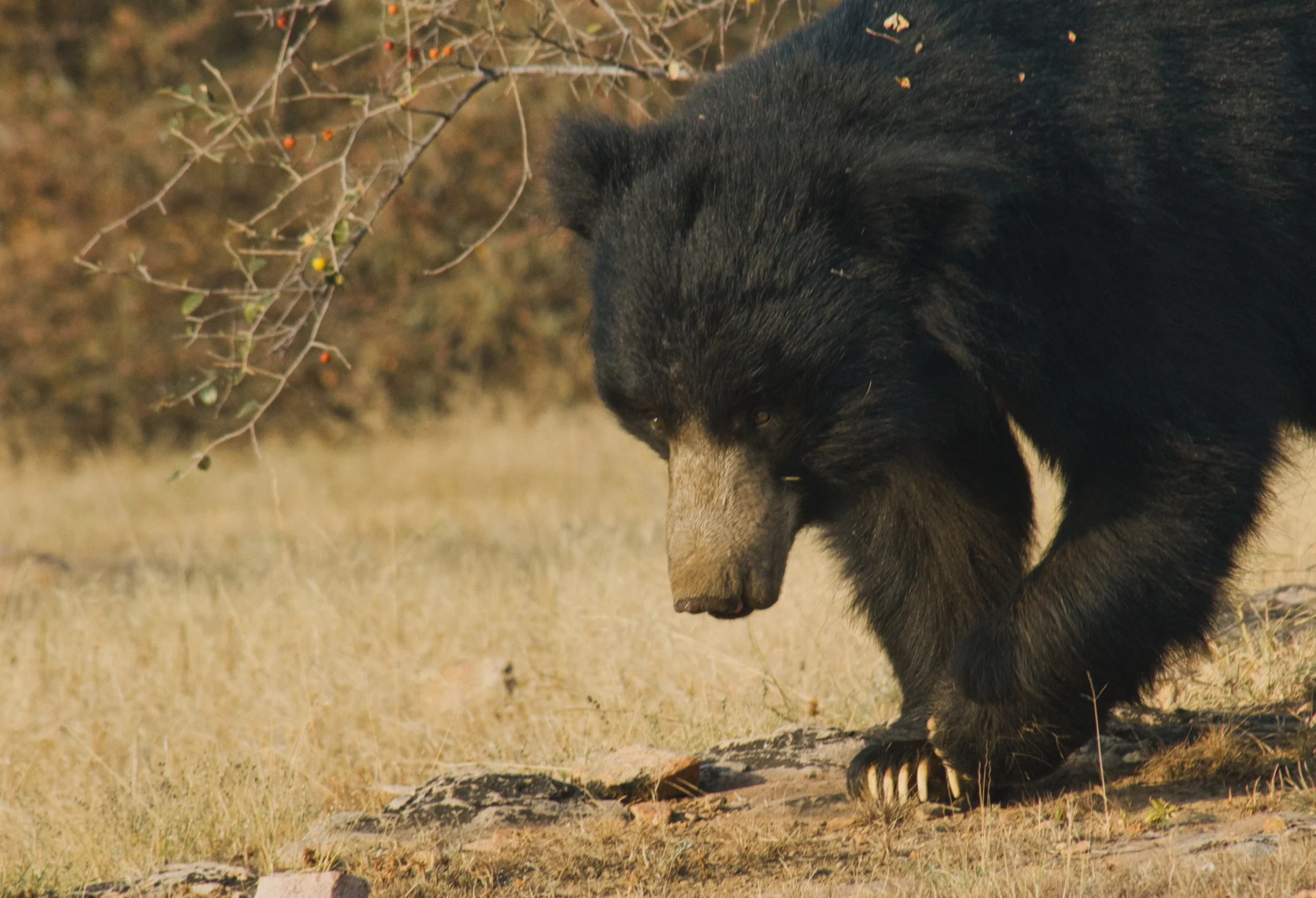
Jessore Sloth Bear Sanctuary is one of the most significant protected areas in Western India for the conservation of the Indian sloth bear (Melursus ursinus). Situated in the rugged Aravalli terrain of North Gujarat, this sanctuary offers a distinct wilderness experience shaped by dry forests, rocky hills, and semi-arid landscapes. Unlike the highly commercialized tiger reserves of Central India, Jessore provides a focused look at a vulnerable species navigating a unique environmental transition zone.
For travelers, researchers, and trekkers, navigating Jessore requires an understanding of its seasonal patterns, terrain challenges, and the specific habits of its wildlife. This guide details the practical logistics, ecological realities, and planning strategies required for an informed visit.
What Is Jessore Sloth Bear Sanctuary?
Jessore Sloth Bear Sanctuary is a designated wildlife reserve encompassing the Jessore hills within the Aravalli mountain range. If you are looking for a wilderness destination in Gujarat that combines high-altitude trekking with specialized wildlife tracking, Jessore is the most suitable option in the northern region.
The sanctuary covers an official area of 180.66 square kilometers. It operates under the jurisdiction of the Gujarat Forest Department, which manages both its wildlife preservation initiatives and its public tourism zones. The area serves as a secure habitat explicitly dedicated to protecting the declining populations of the Indian sloth bear.
Jessore Sloth Bear Sanctuary Quick Facts
| Parameter | Details | Source Reference |
| Official Location | Banaskantha District, Gujarat, India | Gujarat Forest Department |
| Total Protected Area | 180.66 square kilometers | Gujarat Tourism |
| Year of Establishment | May 1978 | Official Government Records |
| Primary Flagship Species | Indian Sloth Bear (Melursus ursinus) | Field Conservation Reports |
| Landscape / Mountain Range | Jessore Hills, Aravalli Range | Topographical Surveys |
| Primary Forest Type | Tropical Dry Deciduous & Desert Thorn Forest | Ecological Classifications |
| Official Sighting Hours | 06:00 AM to 06:00 PM daily | Gujarat Tourism Listing |
Where Is It Located?
If you are planning your transit, navigating toward the far northern corner of Gujarat near the interstate border with Rajasthan is required. The sanctuary is situated entirely within the Banaskantha district.
Regional Geography and Access Points
The physical entry points to the forest are located near the town of Iqbalgadh. For those setting up a base camp or locating regional services, the commercial city of Palanpur sits approximately 35 to 45 kilometers away, depending on your chosen access gate.
The sanctuary embraces the Jessore Hill structure, which features the second-highest peak in Gujarat. This elevation provides a stark, vertical contrast to the surrounding flat, semi-arid plains of the North Gujarat landscape.
Why the Sanctuary Matters
Jessore serves a dual purpose: it acts as a critical wildlife refuge and plays a vital role in regional climate stabilization. Understanding this dual identity helps visitors appreciate why strict access rules are enforced across the reserve.
The Ecological Desert Buffer
The geographical positioning of the Jessore hills makes it an essential environmental barrier. The sanctuary functions as a direct ecological buffer zone between the encroaching dry desert ecosystem of the Thar Desert to the west and the remaining dry deciduous forest ecosystems of Central and Western India.
By maintaining a continuous, protected forest canopy and intact root systems across these 180 square kilometers, the sanctuary assists in resisting regional desertification. It effectively arrests the physical expansion of desert sands into the fertile agricultural tracts of northern and central Gujarat.
History and Establishment
Before its declaration as a protected area, the intensifying pressures of livestock grazing, timber extraction, and expanding human settlements threatened to fragment the fragile Aravalli forest tracts. Recognizing the rapid degradation of crucial sloth bear denning sites, the state authorities intervened.
The sanctuary was formally established in May 1978 under the Wildlife Protection Act. The primary objective behind this legislative protection was to isolate the vulnerable sloth bear populations from increasing human encroachment, while preserving the structural integrity of the ancient Aravalli mountain ecosystem.
Over the decades, management has evolved from basic border enforcement to active habitat restoration, soil conservation, and community-led eco-development projects.
Habitat and Forest Type
The environmental conditions within Jessore are defined by harsh, dry summers, erratic monsoon patterns, and highly rocky terrain. These factors have generated a resilient botanical profile capable of surviving prolonged periods of water scarcity.
The sanctuary features two primary forest classifications:
- Tropical Dry Deciduous Forests: Found mainly along the valleys, lower slopes, and seasonal stream beds where moisture retains longer into the dry season.
- Desert Thorn Forests: Dominating the exposed ridges, higher peaks, and peripheral transition zones where water retention is minimal.
[ Thar Desert Sands ] —> ( Desert Thorn Peripheral Forest ) —> [ Jessore Dry Deciduous Core Valley ]
Botanists and forest officials have identified 406 distinct species of plants within the broader Banaskantha conservation landscape. The dominant native trees and shrubs that define the bear’s habitat include:
- Ber (Ziziphus mauritiana): A critical seasonal food source for sloth bears.
- Khair (Acacia catechu): Providing structural cover across the lower rocky slopes.
- Gando Baval (Prosopis juliflora): An invasive but widespread thorn bush present in the buffer zones.
- Dhav (Anogeissus latifolia): A key structural component of the dry deciduous tracts.
Other notable flora includes dudhalo, saledi, kadaya, siras, and gorad. This thorny, dense vegetation creates an ideal sanctuary for a variety of mammals, hiding cave networks and providing abundant foraging material along the forest floor.
Field Note
Keep an eye out for the kadaya trees (Sterculia urens) along the steeper rocky paths. Also known as the gum karaya tree, it is easily recognized by its distinct, pale shimmering white bark, which stands out against the darker, thorny vegetation of the Aravalli slopes.
Wildlife You Can Spot
While the sanctuary is named for its most prominent resident, the Aravalli ecosystem supports a much wider ecological network. The dry deciduous and desert thorn forests provide critical shelter and foraging grounds for a diverse array of mammals, birds, and reptiles adapted to semi-arid conditions.
Understanding the wildlife profile of Jessore helps manage expectations; sightings here require patience, an understanding of the terrain, and knowledge of animal movement patterns, particularly around seasonal water sources.
Unlike the open grasslands of other Indian reserves where visibility is high, Jessore’s rocky, scrub-heavy terrain conceals its wildlife well. The animals here are highly adapted to camouflage and rugged movement.
Core Wildlife Matrix
| Species Category | Key Species Present | Sighting Context & Significance |
| Apex Predators & Scavengers | Leopard, Striped Hyena, Indian Wolf, Jackal, Fox | Leopards act as the primary feline predator in these hills. Hyenas and wolves are elusive and prefer the rocky, undisturbed ridges. |
| Primates | Rhesus Macaque, Langur | Frequently spotted in the lower forested valleys and near entry zones. |
| Herbivores & Omnivores | Indian Sloth Bear, Blue Bull (Nilgai), Wild Boar, Indian Porcupine | Blue bulls are often seen in the peripheral scrublands, while porcupines remain strictly nocturnal. |
| Small Carnivores | Indian Civet Cat | Seldom seen during the day; relies on dense scrub for cover. |
| Reptiles | Snakes, Tortoises, Lizards | Highly active during the monsoon months when the rocky terrain retains heat and moisture. |
Mammals
The mammalian diversity in Jessore is substantial. Alongside the flagship sloth bear, the leopard is the most significant predator patrolling the ridges. Due to the rocky caves and dense undergrowth, leopards find ample natural dens.
The lower valleys and peripheral zones support populations of blue bull (nilgai) and wild boar, which often move between the forest edge and surrounding areas. Scavengers and smaller predators, including the striped hyena, Indian wolf, jackal, and fox, utilize the higher, more barren desert thorn ecosystems. You will also commonly encounter rhesus macaques and langurs, particularly where the forest canopy thickens. Nocturnal foragers like the Indian porcupine and the Indian civet cat are present but rarely spotted by day-trippers.
Birds
The varied elevations of the Jessore hills create distinct micro-habitats for avian life. Raptors utilize the thermal currents rising from the heated rock faces to scan the valleys for prey. The dry scrubland provides excellent camouflage for ground-dwelling birds, while the thicker deciduous patches along seasonal streams attract a variety of songbirds and insectivores.
Reptiles
The arid, rocky environment is an ideal habitat for reptiles. The sanctuary is home to various species of snakes and lizards that utilize the extensive rock crevices for shelter and thermoregulation. Tortoises are also documented within the sanctuary limits, typically found closer to the moist valley floors or seasonal waterbeds.
Sloth Bear Conservation and Behaviour
The Indian sloth bear (Melursus ursinus) requires specific ecological conditions to thrive: ample fruiting trees, soft soil or termite mounds for foraging, and secure rocky caves for denning. Jessore provides this exact combination. However, managing this population requires constant scientific monitoring, especially given the proximity of human settlements to the forest boundary.
Human-Bear Coexistence Research
A common misconception is that sloth bears in this landscape are strictly nocturnal. Recent field research conducted in 2024 and published in 2025 provides a clearer picture of their habits. Using camera traps, transects, focus groups, and interviews, researchers documented human-sloth bear coexistence around the sanctuary.
The study found that while the bears are predominantly crepuscular (active during dawn and dusk) and nocturnal, their activity is not exclusively restricted to the night. The data showed that most bear detections occurred within the forested areas rather than human-dominated zones, indicating that the sanctuary’s core habitat successfully anchors the population.
The Impact of Water Scarcity
The most significant driver of animal movement—and potential conflict—in Jessore is the extreme heat and water scarcity during the summer months. The 2025 study highlighted that as natural waterbeds dry up, bears are forced to travel further to hydrate and forage, occasionally bringing them to the forest edges.
To mitigate this risk and support human-bear coexistence, forest management focuses heavily on habitat amelioration. The strategic placement of artificial water sources within the deep forest helps retain the wildlife during the driest months. Additionally, local fruit-tree plantations, prioritizing native species like ber, ensure a reliable food supply within the sanctuary boundaries, reducing the necessity for bears to forage near village agricultural lands.
Expert Tip
If you are visiting specifically to see sloth bears, your best chances are at first light or late in the afternoon. Mid-day tracking is generally unproductive, as the bears retreat into the deep, cool rock caves of the upper ridges to escape the intense Aravalli heat.
Best Time to Visit
The sanctuary’s environment changes drastically across the year. The dry deciduous and desert thorn forests shed their leaves in the deep summer, offering high visibility but grueling trekking conditions. Conversely, the post-monsoon months transform the Aravalli hills into a dense, green canopy, making the landscape highly photogenic but complicating wildlife tracking.
For the most balanced experience—combining comfortable daytime temperatures with good trail access—the winter months are optimal.
Seasonal Planning Guide
| Season | Average Conditions | Flora / Landscape State | Wildlife Sighting Conditions | Trail Comfort for Trekking |
| Winter (Nov – Feb) | Cool mornings, mild days | Deciduous trees retain some foliage; clear skies. | High. Animals are active longer into the morning. | Excellent. Best time for climbing Jessore Hill. |
| Summer (Mar – Jun) | Extreme heat, dry air | Barren, dry thorn scrub; minimal water retention. | Moderate. Bears and leopards stay near artificial water sources. | Poor. Extreme heat makes mid-day trekking unsafe. |
| Monsoon (Jul – Oct) | Humid, heavy rainfall | Lush, dense vegetation; seasonal streams actively flowing. | Low visibility due to dense undergrowth. | Moderate to Poor. Rocks become highly slippery. |
How to Reach Jessore Sloth Bear Sanctuary
The sanctuary is located in the Banaskantha district of North Gujarat, positioned near the border with Rajasthan. The primary entry points into the forest are accessed via the town of Iqbalgadh.
By Road
Road travel is the most practical way to reach the sanctuary gates. The closest major commercial center is Palanpur, which is located approximately 35 to 45 kilometers away depending on the specific forest gate you are navigating toward. Visitors usually hire private taxis or drive personal vehicles from Palanpur or Ahmedabad.
By Rail
Palanpur Junction is the most convenient railhead. It is well-connected to major cities in Gujarat and Rajasthan. From the station, you will need to arrange local road transport for the remaining one-hour drive to the Iqbalgadh access points.
By Air
Sardar Vallabhbhai Patel International Airport in Ahmedabad is the closest major commercial airport. From Ahmedabad, it is a straightforward drive north toward Palanpur and Banaskantha.
Travel Logistics Matrix
| Origin Point | Distance (Approx.) | Recommended Mode | Travel Time & Convenience |
| Iqbalgadh | < 10 km | Taxi / Private Car | 15–20 mins. The closest local base for immediate gate access. |
| Palanpur | 35–45 km | Taxi / Private Car | 1 hour. Best regional hub for hiring dedicated transport. |
| Ahmedabad | 180–190 km | Car / Outstation Cab | 3.5–4 hours. Smooth highway driving until Palanpur. |
Nearby Places to Visit
Jessore is rarely visited in isolation. Because of its location in North Gujarat, travelers typically integrate the sanctuary into a broader regional itinerary combining wildlife, history, and pilgrimage.
Within the sanctuary limits or immediately adjacent, many visitors stop at the Kedarnath Mahadev temple and Muni ji ki kutiya. These act as popular waypoints for trekkers moving through the Jessore hills.
Further afield, the region offers several notable destinations:
- Ambaji Temple: A major pilgrimage site in the Aravalli hills, often combined with a wildlife tour.
- Polo Forest: An ancient forest area known for ruined temples and dense foliage, offering a different ecological experience from the arid Jessore ridges.
- Idar Fort: A historical hilltop fort offering steep rocky climbs similar to the Jessore terrain.
- Balaram Palace Resort: A heritage property near Palanpur, frequently used as a premium base camp for exploring the surrounding sanctuaries.
Regional Wildlife Venues Compared
| Feature | Jessore Sloth Bear Sanctuary | Balaram Ambaji Wildlife Sanctuary |
| Primary Focus | Sloth bear conservation and Aravalli ecology. | Broad biodiversity and floral corridors connecting Gujarat and Rajasthan. |
| Landscape | Steep, rocky hills; dry deciduous and desert thorn buffer. | Hilly tracts, denser catchment areas, and agricultural fringes. |
| Visitor Profile | Dedicated wildlife trackers, rugged trekkers, and niche photographers. | General nature tourists, pilgrims en route to Ambaji, and weekend road-trippers. |
Family Travel Tip
If you are travelling with children or elderly family members, prioritize the lower valley trails rather than attempting the steep climb up Jessore Hill. Combine a morning safari walk with a comfortable afternoon drive toward the nearby Ambaji Temple or Balaram Palace for a well-rounded day trip.
Visitor Rules and Safety Tips
Navigating the rocky, scrub-heavy environment of the Aravalli hills means adhering strictly to forest department guidelines. The rules here are enforced both for visitor safety and to minimize stress on the resident wildlife populations.
Trekking Etiquette
Stay on designated forest paths. The dry deciduous and thorn forest terrain hides sudden drops, loose rocks, and wildlife dens. Keep noise levels low. Loud conversations or music not only guarantee that you will miss wildlife sightings, but they also disrupt the natural behavior of the sanctuary’s inhabitants.
Bear-Safety Precautions
Sloth bears have notoriously poor eyesight and hearing, which makes them easily startled. A surprised sloth bear at close range may charge defensively. If you are walking the lower valley trails, particularly during the early morning or late afternoon, it is safer to travel in a small group. Maintain a normal conversational volume so animals hear your approach from a distance. Never approach a cave, den, or water source directly without scanning the surrounding area first.
What Not to Do
- Do not treat the sanctuary as a casual selfie stop: Respect the boundaries of the protected area.
- Do not enter outside official hours: The sanctuary is strictly regulated, and entry outside the 6:00 AM to 6:00 PM window is prohibited.
- Do not feed wildlife: This includes the rhesus macaques and langurs frequently seen near the entry gates. Feeding alters their natural foraging habits and encourages aggression.
Recent Conservation Updates
The management of Jessore Sloth Bear Sanctuary is actively evolving, supported by new field research and national conservation priorities.
National Bear Conservation Programme Inclusion
In a significant development for the region, reports from January 2026 confirmed that the sanctuary has been included in the National Bear Conservation Programme. This inclusion channels targeted focus and resources into protecting the Aravalli sloth bear population and securing its critical habitat.
Habitat Improvement Efforts
A comprehensive, peer-reviewed study published in 2025 analyzed the ecological and behavioral drivers of human-sloth bear coexistence around the sanctuary. Using camera traps, transects, and community focus groups, researchers identified summer water scarcity as a major factor forcing bears toward the forest edges. To mitigate human-wildlife conflict, ongoing habitat amelioration efforts include water conservation projects and the active plantation of native fruit-bearing trees inside the sanctuary to ensure reliable food and water sources.
Common Misconceptions
When planning a trip, visitors often bring assumptions that do not apply to this specific environment.
- It is only a sloth bear site: While the bear is the flagship species, the sanctuary protects a complete dry-forest ecosystem supporting leopards, hyenas, wolves, and a massive variety of reptiles and birds.
- It is just a tourist hill: Jessore Hill is fundamentally an ecological barrier. Its protected forest cover acts as a vital buffer, checking the eastward expansion of desertification into fertile lands.
- Sloth bears are strictly nocturnal here: While largely active at night and during twilight hours (crepuscular), the 2025 field research confirmed that their activity is not exclusively nocturnal, particularly within the deep cover of the forested areas.
- It is located near Gir: Wildlife tourists often confuse Gujarat’s regions. Jessore is located in Banaskantha in North Gujarat, right near the Rajasthan border, far removed from the southern landscapes of Gir or Junagadh.
FAQs
What is the total area of the sanctuary? The sanctuary covers approximately 180.66 square kilometers of the Aravalli mountain range.
Are guides or permits needed? Yes. Entry is regulated by the Gujarat Forest Department, and utilizing a local guide is highly recommended for navigation and safety in the rocky terrain.
Is Jessore Hill part of the sanctuary? Yes, the sanctuary encompasses the Jessore hills, which features the second-highest peak in the state of Gujarat.
Are there temples inside or near the sanctuary? Yes. Trekkers and pilgrims frequently visit the Kedarnath Mahadev temple and Muni ji ki kutiya, which are located within or closely adjacent to the sanctuary limits.
Is the area affected by desertification? The region to the west is facing desertification from the Thar Desert. The sanctuary actively serves as a natural buffer to prevent this desert expansion into the surrounding dry deciduous ecosystems.
Conclusion
Jessore Sloth Bear Sanctuary offers a distinct alternative to standard safari destinations. It demands a bit more physical effort and careful logistical planning, but rewards visitors with an uncrowded look at a vital Aravalli ecosystem. Whether you are trekking up Jessore Hill, studying the unique desert thorn flora, or tracking sloth bears through the rocky valleys, approaching the sanctuary with patience and respect ensures a highly rewarding wildlife experience.
Author Note & Update Log: Written by the WildlifeSafaris.in Editorial Team. Last Updated: August 2026
Safari Planning : Topics Cluster
- How to book a wildlife safari in India?
- Park by Park Online Safari Booking Guide
- Tiger Safari India Planning Workbook
- Park by Park Safari Permits Guide
- National Parks Permit Guide – Park by Park Guide
- Tatkal Safari Booking Guide – Last Minute Safari Permits Booking
- Tiger Safari in India Cost
- Indian Wildlife Safari Budget Planner
- Jeep vs Canter Safari
- Best time for Tiger Sightings in India
- How far advanced should you book safari permits?
- Can foreigners book Indian Wildlife Safari online?
- Special Permits Guide for Foreigners and Domestic Visitors
- How to book a Safari Permit online in India? 2026 step by step guide
- Senior Citizens Friendly Safari Planning
- Multi Generation Family Safari Planning
- 50 things to know before your first safari in India