
Master the identification of India’s flycatcher species. A practical field guide covering paradise-flycatchers, blue flycatchers, endemics, and winter migrants.
Introduction
Small, insect-eating birds that dart from perches to catch prey mid-air are among the most frequently encountered species for birders in India. This guide simplifies the identification challenges associated with these birds, whether you are tracking resident forest species, looking for long-distance winter migrants, or searching for high-elevation endemics.
Understanding these birds requires looking closely at their taxonomic families, seasonal movements, and specific habitats. By mastering a few key diagnostic features, you can confidently identify these active forest birds in the field.
What Are Flycatchers?
To identify these birds accurately, you must first separate popular names from formal taxonomic classifications. While many birds are colloquially called “flycatchers,” they belong to distinct lineages that vary significantly in behavior, appearance, and conservation needs.
Understanding the Family Muscicapidae
The true old-world flycatchers found in India belong to the family Muscicapidae. This family consists of small, highly active insectivores that typically hunt using a “sallying” technique—flying out from a fixed perch to snap up insects mid-air before returning to the same branch or a nearby spot. They are characterized by flattened bills with rictal bristles at the base, which help them capture flying insects.
True Flycatchers vs. Paradise-Flycatchers
You cannot rely solely on the word “flycatcher” to determine a bird’s evolutionary group. True old-world flycatchers—such as those within the Ficedula and Cyornis genera—are taxonomically separated from paradise-flycatchers, which belong to the genus Terpsiphone.
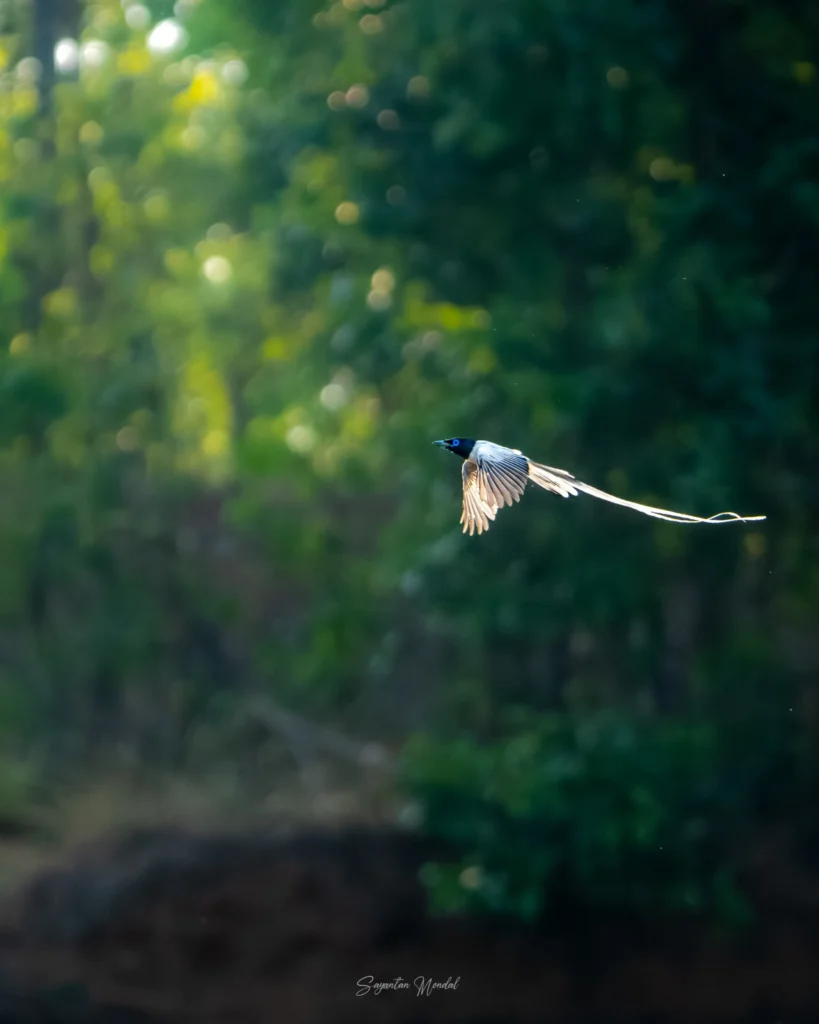
Paradise-flycatchers are highly ornamental birds that serve as major targets for wildlife travelers and photographers. However, they belong to a completely different evolutionary lineage, even though their insect-hunting habits closely overlap with true flycatchers.
Major Flycatcher Groups in India
Planning a birding trip requires an understanding of how India’s flycatchers are distributed across seasons and geographies. They fit into four primary ecological groups, each presenting its own identification and location parameters.
Resident vs. Migratory Flycatchers
Seasonality dictates which species you will see in any given month. Resident flycatchers live year-round in specific forest or woodland habitats, though some undertake short, within-India altitudinal or regional migrations.
Conversely, migratory species arrive during the winter months from breeding grounds further north. These winter visitors utilize local woodland, garden, and plantation belts across India before departing in the spring.
Endemic and Range-Restricted Species
If you want to see species found nowhere else in the world, you must target specific mountain systems. India holds unique flycatchers that are entirely restricted to localized montane environments, such as the high-elevation shola forests and hills of the Western Ghats. These species require targeted conservation focus due to their highly specific habitat needs and limited geographic ranges.
Indian Flycatcher Species Profiles
Knowing which species you are likely to encounter in different regions helps set realistic birding expectations. The following profiles cover the most sought-after flycatchers in India, detailing their status and habitat requirements based on current conservation assessments.
Table 1: Ecological Overview of Key Indian Flycatcher Species
| Common Name | Scientific Name | Movement Status | Habitat Preference | Range in India |
| Indian Paradise-flycatcher | Terpsiphone paradisi | Resident & within-India migrant | Forest and plantation environments | Widespread large distribution |
| Red-breasted Flycatcher | Ficedula parva | Winter migrant | Woodland and plantation belts | Widespread across India in winter |
| Nilgiri Flycatcher | Eumyias albicaudatus | Resident | Montane forests | Endemic to the Western Ghats |
| Black-and-orange Flycatcher | Ficedula nigrorufa | Resident | Montane forests | Endemic to the Western Ghats |
| Hainan Blue Flycatcher | Cyornis hainanus | Recent distributional record | Forested habitats | Arunachal Pradesh (Northeast India) |
Indian Paradise-flycatcher (Terpsiphone paradisi)
Despite its highly ornamental appearance, this bird is relatively accessible for travelers. According to the State of India’s Birds, the Indian Paradise-flycatcher is globally classified as Least Concern and is protected under Schedule II of the Wildlife Protection Act. It operates as both a year-round resident in some areas and a within-India migrant in others, specializing in forest and plantation habitats. Currently, the species maintains a large distribution range with a stable annual population trend.
Red-breasted Flycatcher (Ficedula parva)
This small insectivore is a classic winter migrant to India. Preferring woodland and plantation habitats, it arrives in the subcontinent during the colder months. Like the Indian Paradise-flycatcher, it holds a global status of Least Concern and falls under Schedule II of the Wildlife Protection Act.
Expert Tip: If you are birding in central or northern Indian woodlands between November and February, this is one of the most reliable migratory flycatcher targets.
Nilgiri Flycatcher (Eumyias albicaudatus)
The Nilgiri Flycatcher is an endemic species strictly restricted to the Western Ghats. Because its range is limited to specific southern hill systems, it is a primary target for nature travelers visiting high-elevation habitats.
Black-and-orange Flycatcher (Ficedula nigrorufa)
Sharing a similar geographical restriction with the Nilgiri Flycatcher, the Black-and-orange Flycatcher is another endemic bird of the Western Ghats. Range-restricted species like this one require localized conservation efforts, as their populations cannot rely on widespread geographical safety nets.
Blue Flycatchers of Northeast India (Cyornis Species)
The forested eastern states, particularly Arunachal Pradesh, host a high diversity of blue flycatchers belonging to the genus Cyornis. These are some of the most challenging birds for naturalists to identify. They are considered cryptic species, meaning different species share heavily overlapping plumage and vocal variations, requiring careful observation to separate.
Recent Taxonomic and Range Updates
Birding in India is an evolving science. Official species lists and geographical ranges frequently change as new field data is verified by researchers and taxonomy committees.
The Hainan Blue Flycatcher Discovery
Distributional limits are continually being updated by field naturalists. In 2026, a report documented the first-ever sighting of the Hainan blue flycatcher in Arunachal Pradesh. This new record added a tenth Cyornis species to India’s official bird list, highlighting the importance of Northeast India for flycatcher diversity.
Evolving Taxonomy and Bird Lists
Understanding flycatchers requires referencing current data, as taxonomic work regularly reorganizes species groupings. The IOC World Bird List routinely issues taxonomic and species updates that dictate how birds are classified and named.
Field Note: Do not rely on outdated field guides when attempting to identify complex groups like blue flycatchers. Always cross-reference recent sightings with the latest IOC taxonomy to ensure your identification matches current scientific consensus.
Flycatcher Identification Guide
Identifying flycatchers in the field requires more than just a quick glance at their colors. Because several species look nearly identical, birders must rely on a combination of contextual clues rather than physical appearance alone.
Why Flycatchers Are Hard to Identify
Taxonomic work shows that flycatcher identification is difficult because certain groups are cryptic. These species share overlapping plumage characteristics and vocal variations, which often confuses both novice and experienced observers. Assuming that a single plumage trait is enough for a positive identification is a common misconception.
Key Cues: Plumage, Voice, Habitat, and Season
To accurately identify these birds, you must systematically evaluate four primary cues: size and shape, plumage, habitat, and call.
For challenging complexes, such as blue flycatchers, visual markers are insufficient. You must use vocal evidence and location context to confirm what you are seeing.
Photography Tip: When photographing flycatchers, use your phone to record their calls. Because cryptic species are difficult to separate visually, an audio recording is often the only way to confirm a sighting later with taxonomic experts.
Table 2: Field Identification Matrix for Confusing Species Pairs
Many resources list species without explaining the challenges between similar-looking birds. The table below highlights the most frequent identification hurdles.
| Confusing Pair | Identification Challenge | Key Context Required |
| Indian vs. Amur Paradise-flycatcher | High visual similarity between the two paradise-flycatchers. | Requires careful observation of plumage differences, combined with geographic range and seasonality. |
| Nilgiri vs. Blue-throated Flycatcher | Similar blue plumage traits in overlapping geographic areas. | Requires strict attention to habitat elevation, specific range, and vocalizations. |
Best Places to See Flycatchers in India
Rather than seeking exact GPS coordinates, successful flycatcher birding requires targeting specific landscapes at the right time of year. Different geographic zones support entirely different taxonomic groups.
The Western Ghats Montane Forests
If you want to observe endemic and range-restricted species, you must visit the montane forests of the Western Ghats.
The high-elevation habitats in this region are strictly required by species like the Nilgiri Flycatcher and the Black-and-orange Flycatcher. The most critical areas for these endemics include the Agasthyamalai, Anamalai, Nilgiri, and Pandalam hills.
Northeast India and the Eastern Himalayas
For birders interested in complex taxonomic groups, the forested eastern states are the primary destination. Northeast India, and Arunachal Pradesh in particular, is the most important landscape for observing a high diversity of Cyornis blue flycatchers. The recent discovery of the Hainan blue flycatcher here underscores the region’s importance for range extensions and new records.
Woodland and Plantation Belts
You do not always have to visit remote mountains to find flycatchers. Widespread woodland and plantation environments across the country support both resident birds, like the Indian Paradise-flycatcher, and long-distance migrants.
Decision Guide (Seasonality): If you are birding in central or northern Indian woodlands, plan your trip during the winter months. Seasonality guidance is crucial here, as these belts temporarily host migratory species, such as the Red-breasted Flycatcher, that are entirely absent during the summer.
Conservation Status and Environmental Threats
A bird’s current abundance does not guarantee its future survival. Understanding the conservation context of India’s flycatchers is essential for responsible wildlife travel, as different species face drastically different environmental pressures.
Widespread Species and the “Common” Misconception
A frequent misconception in birding is that common species do not need conservation attention. However, conservation assessments from the State of India’s Birds demonstrate that widespread species can still experience population declines. The label “common” relates to current distribution, not necessarily long-term safety or range stability.
Climate Impact and Protected-Area Gaps
The most urgent threats are faced by range-restricted birds. Western Ghats climate-impact reporting has highlighted potential mid-century range loss for endemic flycatchers. Because these birds are highly specialized to montane environments, they cannot simply migrate to new habitats as temperatures shift.
Furthermore, much of the suitable habitat for these endemics lies outside of officially protected areas. Their survival is closely tied to the broader protection of shola forest ecosystems and the management of invasive species threats across the Western Ghats.
Common Mistakes to Avoid
- Treating all flycatchers as the same: Assuming that all flycatchers belong to the same group is a fundamental error. India’s flycatcher-related birds encompass multiple genera and distinctly different ecological groups.
- Dismissing paradise-flycatchers: Some birders treat paradise-flycatchers as purely ornamental birds rather than serious birding targets. In reality, they are key species for practicing identification skills and planning travel birding.
- Relying on a single plumage trait: Assuming a single visual marker is enough for identification will lead to errors. For some cryptic flycatchers, vocalizations and geographic range are mandatory for a positive ID.
- Using outdated field guides: Because flycatcher taxonomy and official species lists change frequently based on new data (like the IOC World Bird List updates), relying on old field guides can result in misidentification.
Frequently Asked Questions
What are flycatchers? In the Indian context, the term “flycatcher” refers to several groups of small, primarily insectivorous birds. True old-world flycatchers belong to the family Muscicapidae, while others, like paradise-flycatchers, belong to different families entirely.
Are paradise-flycatchers true flycatchers? No. While they share similar insect-hunting behaviors, paradise-flycatchers belong to the genus Terpsiphone and are not part of the true old-world flycatcher family (Muscicapidae).
Which flycatchers are found in the Western Ghats? The Western Ghats host strictly endemic species that occur nowhere else in the world, most notably the Nilgiri Flycatcher and the Black-and-orange Flycatcher.
Which flycatchers are found in Northeast India? Northeast India, particularly Arunachal Pradesh, is highly significant for observing a diverse range of blue flycatchers belonging to the genus Cyornis.
Which flycatchers are migratory in India? India hosts several winter migrants, such as the Red-breasted Flycatcher, which arrives in the country’s woodland and plantation belts during the colder months before returning north to breed.
Are flycatchers threatened in India? While some species like the Indian Paradise-flycatcher maintain large, stable distributions, range-restricted endemic species in the Western Ghats face significant threats from habitat loss and climate change.
Practical Birding Checklist
To maximize your chances of accurately identifying and observing flycatchers in the field, follow this basic framework:
- Carry quality binoculars: Essential for tracking small, fast-moving birds in dense forest canopy.
- Record calls: Use a phone or audio recorder when encountering difficult groups like blue flycatchers; vocalizations are often the only reliable ID tool.
- Note the habitat and season: Always write down the exact elevation, forest type, and month of your sighting, as many species are highly restricted by altitude or winter migration timing.
- Verify with current taxonomy: Cross-reference your sightings with the latest IOC taxonomic updates to ensure you are using current scientific names and recognizing recent range records.
Conclusion
Observing flycatchers in India offers a window into the country’s complex forest ecosystems, from the high-altitude sholas of the Western Ghats to the dense broadleaf forests of Arunachal Pradesh. By moving beyond simple visual identification and paying attention to taxonomy, seasonality, and habitat, you will dramatically improve your field skills. Ultimately, tracking these active birds not only makes for a highly rewarding wildlife trip but also highlights the critical importance of preserving India’s diverse and fragile woodland environments.
Author Note & Update Log: Written by the WildlifeSafaris.in Editorial Team. Last Updated: August 2026