
Discover the unique pheasant species of the Himalayas. Learn about the Himalayan monal, western tragopan, their high-altitude habitats, and conservation.
What Are Himalayan Pheasants?
If you are planning a birdwatching trip to the high-altitude forests of Asia, understanding Himalayan pheasants is essential for targeting the right areas and elevations. The term “Himalayan pheasants” does not refer to a single bird. Instead, it describes a distinct group of large, ground-dwelling birds belonging to the order Galliformes and the family Phasianidae that inhabit the montane regions of Asia.
These birds are vital indicators of ecosystem health. Because they rely heavily on specific forest structures and altitudinal zones, changes in their populations often signal broader environmental shifts in the alpine and subalpine zones. For travelers and researchers alike, tracking these birds requires a clear understanding of their distinct taxonomic profiles, variations in plumage, and regional rarities.
Main Himalayan Pheasant Species
To plan an effective field itinerary, you must treat each species individually. They occupy distinct ecological niches, and their behaviors vary considerably across the Western and Eastern Himalayas.
| Common Name | Scientific Name | Altitude Range | IUCN Status |
| Himalayan Monal | Lophophorus impejanus | 2,100–4,500 m | Least Concern |
| Western Tragopan | Tragopan melanocephalus | High Altitude | Vulnerable |
| Cheer Pheasant | Catreus wallichii | Specific Bands | Vulnerable |
| Koklass Pheasant | Pucrasia macrolopha | Mixed Forests | Varies Regionally |
Himalayan Monal (Lophophorus impejanus)
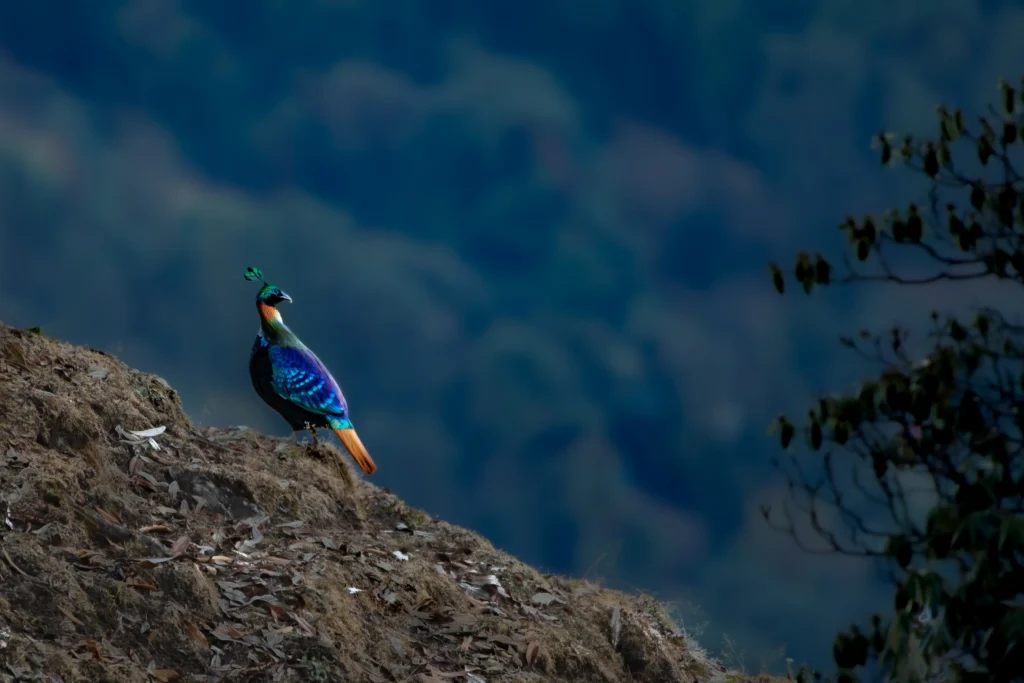
The Himalayan monal is the most widely recognized pheasant in the region and serves as the national bird of Nepal. It is highly sought after by wildlife photographers due to the intensely colorful, iridescent plumage of the males.
- Altitude and Habitat: This species typically occurs in high-altitude forest habitats and alpine shrublands, maintaining a broad vertical range between 2,100 and 4,500 meters above sea level.
- Conservation Status: Globally, the Himalayan monal is listed as Least Concern on the IUCN Red List. However, this global status can mask localized risks, as regional populations face ongoing pressure from hunting and habitat degradation.
Field Note
While the Himalayan monal is relatively common compared to its peers, do not expect easy sightings year-round. Their location depends heavily on the season, as they move up or down the mountainsides in response to snow cover and food availability.
Western Tragopan (Tragopan melanocephalus)
The western tragopan is a flagship species of the Western Himalayas and represents one of the primary targets for dedicated birdwatchers. It is far more elusive and structurally sensitive than the monal.
- Abundance and Range: This is a rare bird. Recent population summaries estimate that only 3,000 to 9,500 mature individuals survive globally, restricted to a fragile, fragmented subpopulation.
- Conservation Status: Due to its small population size and specialized habitat requirements, the western tragopan is classified as Vulnerable. Captive-breeding initiatives and strict habitat management remain critical to its long-term survival.
Cheer Pheasant (Catreus wallichii)
The cheer pheasant lacks the bright, multi-colored plumage seen in the monal or tragopan, but it occupies a highly specialized ecological niche in the western Himalayan belt.
- Distribution and Abundance: The cheer pheasant is classified as Vulnerable. Its distribution is highly localized. For instance, a peer-reviewed population survey conducted in the Jhelum Valley estimated a local breeding population of approximately 2,490 pairs.
- Methodology Notes: Researchers note that while these localized numbers provide hope, actual occupancy limits and strict habitat preferences mean the species remains vulnerable to sudden environmental changes or human encroachment.
Koklass Pheasant (Pucrasia macrolopha)
The koklass pheasant is another key component of the Himalayan Galliformes assembly, frequently studied alongside the monal and western tragopan.
- Coexistence: Field research utilizing GIS-based spatial analysis in locations like the Great Himalayan National Park confirms that the koklass pheasant regularly utilizes mixed-species habitats.
- Behavioral Identity: Unlike some of its more solitary neighbors, the koklass is known for its distinct vocalizations, which field researchers use during seasonal population monitoring.
Other Notable Species
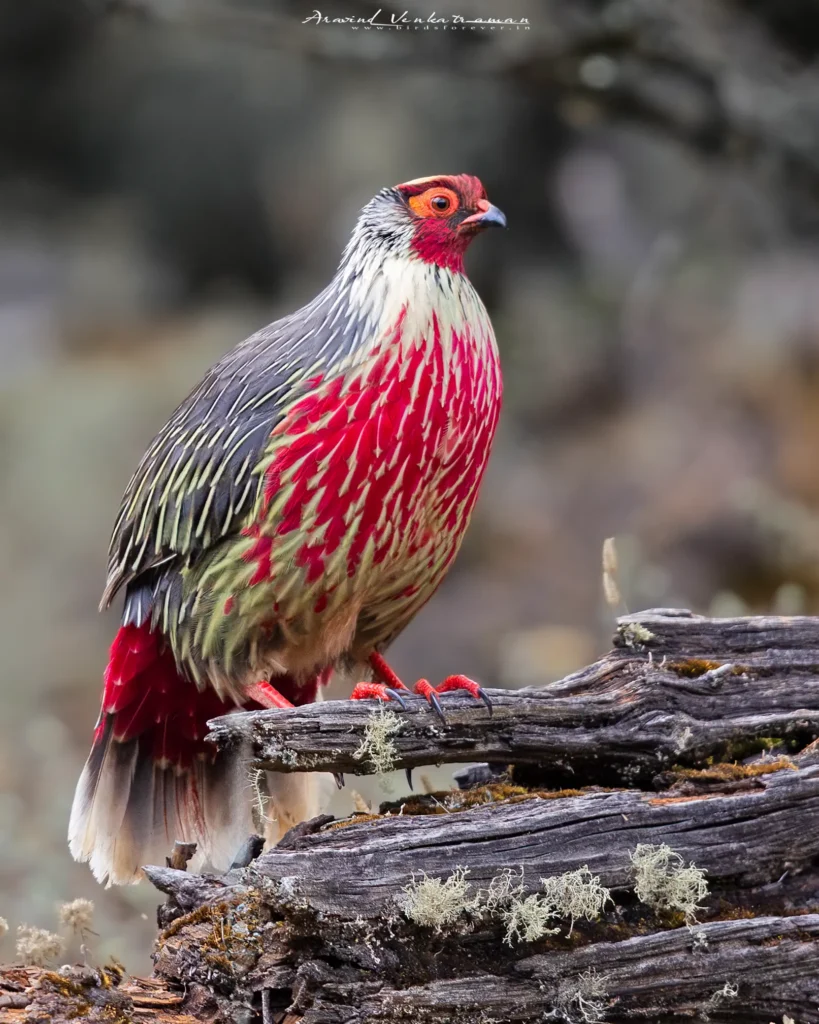
When traveling through the broader Himalayan transit zones, you may also encounter species such as the blood pheasant (Ithaginis cruentus) and Sclater’s monal (Lophophorus sclateri). The blood pheasant is typically found in high-altitude coniferous forests and bamboo thickets, while Sclater’s monal is restricted to specific remote tracts of the Eastern Himalayas.
Where Himalayan Pheasants Live
Finding Himalayan pheasants requires knowing exactly where to look. They are not uniformly distributed across the mountain range. Instead, their presence is dictated by highly specific regional boundaries and altitudinal bands across the Western and Eastern Himalayas.
Geographic Distribution by Country
The broader group of Himalayan pheasants ranges across several countries, but individual species have distinct territorial limits. For example, the cheer pheasant and western tragopan are strictly western Himalayan species.
| Region / Country | Key Distribution Notes |
| India | Crucial habitats in Himachal Pradesh and Uttarakhand |
| Nepal | Strongholds for the Himalayan monal (its national bird) |
| Pakistan | Key populations of the cheer pheasant (e.g., Jhelum Valley) |
| Bhutan | Eastern ranges support varied montane species |
| Southern Tibet | High-altitude alpine and subalpine habitats |
(Note: Distribution spans India, Nepal, Pakistan, Bhutan, and southern Tibet.)
Seasonal Elevation Shifts
You cannot rely on a single altitude figure when searching for these birds. Himalayan pheasants undertake altitudinal migration, meaning elevation heavily drives their seasonal movement and detectability.
During the warmer breeding months, species like the Himalayan monal push higher into alpine and subalpine shrublands. When winter brings heavy snow, they descend into lower temperate conifer and rhododendron forests to find accessible foraging grounds.
Expert Tip
When planning a birdwatching itinerary, always align your target elevation with the season. A location that is highly productive for pheasant sightings in May could be completely devoid of activity in January due to heavy snow cover pushing the birds into lower valleys.
Habitat and Behavior
Himalayan pheasants are ground-dwelling birds. While they are capable of flight—often bursting steeply downhill when startled—they spend the vast majority of their time walking and foraging on the forest floor.
Forest Structure and Coexistence
The survival and density of these birds are heavily tied to the physical structure of the forest. They rely on dense temperate conifer and rhododendron forests, utilizing the undergrowth for both food and cover from predators.
Research confirms that multiple species often utilize the same environments. Field studies conducted in the Great Himalayan National Park used GIS-based spatial analysis to study the Himalayan monal, koklass, and western tragopan together, confirming the high ecological value of mixed-species habitats.
However, this reliance on specific forest undergrowth makes them highly sensitive to environmental alterations. The long-term persistence of pheasants in a given area is directly influenced by local grazing pressure, human disturbance, and the frequency of forest fires.
Photography Tip
Because these birds are ground-dwelling and rely on the cover of dense conifer and rhododendron undergrowth, natural lighting is often poor. Bring a fast lens and be prepared for high ISO shooting, particularly during early morning hours when the birds are most active.
Conservation Status by Species
When researching Himalayan pheasants, it is critical to separate broad population estimates from local realities. The conservation status of these birds is highly variable and depends entirely on the species and the specific region in question.
Global vs Regional Status
A common misconception is that a global “Least Concern” rating means a species is entirely safe from decline. In the Himalayas, conservation status can differ sharply between global assessments and regional realities.
For example, the Himalayan monal is classified globally as Least Concern. However, recent data indicates that while the monal is common locally in parts of Nepal, it remains under intense pressure from hunting and habitat disturbance in specific areas. Colorful plumage does not mean a species is safe from these localized threats.
Conversely, species restricted to the western Himalayas face universally precarious situations:
- The western tragopan is classified as Vulnerable, with small, fragmented subpopulations that rely heavily on captive-breeding and active conservation management.
- The cheer pheasant is also classified as Vulnerable, occupying highly specific, localized breeding zones that make it susceptible to environmental changes.
CITES and Legal Protection
To combat poaching and international smuggling, the CITES (Convention on International Trade in Endangered Species) appendices provide a critical legal framework. These international trade controls regulate the movement of listed Himalayan pheasant species and their parts or derivatives, such as their ornamental feathers. Together, the IUCN Red List and CITES frameworks remain the essential, up-to-date reference points for the conservation and trade status of these birds.
Threats to Himalayan Pheasants
The survival of Himalayan pheasants is heavily dependent on specific environmental conditions, making them highly vulnerable to both local human activities and macro-level climate trends.
Human Disturbance and Habitat Loss
Because these species rely on the dense understory of temperate conifer and rhododendron forests, any alteration to the forest structure directly impacts their survival. The primary local threats include:
- Livestock Grazing: High grazing pressure degrades the undergrowth that pheasants require for foraging, cover, and nesting.
- Hunting: Despite legal protections, hunting remains a localized threat, often driven by the demand for meat or colorful plumage.
- Habitat Alteration: Human encroachment and changes in forest fire frequency can rapidly destroy critical ground-level habitat.
Responsible Tourism Tip
Because Himalayan pheasants are highly sensitive to human disturbance and rely heavily on ground-level undergrowth, wildlife travelers must stay on designated trails. Venturing off-path in subalpine zones can damage fragile nesting habitats and increase the stress on already vulnerable populations.
Climate Change and Range Shifts
Climate change represents a severe, long-term threat to high-altitude montane birds. Recent climate-change habitat modeling indicates that the core habitat for Himalayan pheasants is likely to shift upward in both altitude and latitude as global temperatures rise.
This upward shift makes the strict conservation of high-elevation forests increasingly urgent. As the birds are pushed higher to find suitable climate and forest structures, species like the western tragopan may eventually run out of viable habitat at the highest peaks.
Best Places to See Them
Successful birdwatching in the Himalayas requires targeting specific protected areas that align with the habitat preferences of your target species.
Key Protected Areas
While Himalayan pheasants are distributed across multiple countries, certain national parks and reserves offer the highest probabilities for sightings due to active conservation management and intact forest structures.
| Protected Area | Location | Target Species |
| Great Himalayan National Park | Himachal Pradesh | Western Tragopan, Koklass, Monal |
| Dhorpatan Hunting Reserve | Nepal | Cheer Pheasant |
| Jhelum Valley | Azad Kashmir | Cheer Pheasant |
(Note: These locations feature prominently in recent peer-reviewed population surveys and GIS habitat modeling studies.)
Field Survey Methods and Sighting Tips
Spotting these ground-dwelling birds visually is notoriously difficult due to the dense undergrowth of their habitats. Consequently, biologists rarely rely on visual-only surveys.
Instead, researchers heavily depend on dawn call counts to monitor pheasant populations. Species like the koklass and western tragopan have distinct vocalizations that carry well through the alpine air in the early morning.
Expert Tip
Birdwatchers should adopt the same scientific approach used in field surveys: prioritize acoustic tracking at dawn. Position yourself near mixed conifer and rhododendron forests before sunrise, map the calls you hear, and then attempt visual spotting as the light improves.
Common Planning Mistakes
Even experienced wildlife travelers often misjudge the realities of tracking high-altitude birds. Avoid these frequent misconceptions:
- Assuming a single elevation: A common mistake is believing all Himalayan pheasants share the same habitat or elevation range. Each species occupies a distinct ecological niche.
- Misinterpreting “Least Concern”: Travelers often assume the Himalayan monal is universally abundant because of its global IUCN rating. In reality, global status can differ significantly from regional assessments, and local populations may be highly fragmented and under intense pressure.
- Ignoring altitudinal migration: Many visitors fail to account for seasonal elevation shifts. Searching high-altitude alpine shrublands in the middle of winter will yield nothing, as the birds have already descended into lower valleys to escape the snow.
Frequently Asked Questions
What is a Himalayan pheasant? “Himalayan pheasants” is not a single species; rather, it is a broad term used to describe a diverse group of pheasant-like birds from the montane regions of Asia.
Is the Himalayan monal a pheasant? Yes, the Himalayan monal belongs to the family Phasianidae and the order Galliformes, making it a true pheasant.
Which Himalayan pheasant is the rarest? The western tragopan is generally considered one of the most vulnerable of the flagship species, with recent summaries estimating that only 3,000 to 9,500 mature individuals remain in one fragile subpopulation.
What altitude do Himalayan pheasants live at? Altitude ranges are highly species-specific and seasonal. For example, the Himalayan monal typically utilizes habitats between 2,100 and 4,500 meters, but it shifts its elevation depending on snow cover and food availability.
Do Himalayan pheasants migrate? They do not migrate across continents, but they do undertake altitudinal migration, moving vertically up and down the mountainsides in response to the changing seasons.
Are Himalayan pheasants protected under CITES? Yes, the CITES appendices remain an essential legal framework for international trade controls, regulating the illegal movement of listed species and their derivatives.
Why are dawn call counts used in pheasant surveys? Because these birds live in dense temperate conifer forests, visual detection is unreliable. Dawn call counts allow researchers to locate and estimate populations based on the birds’ early morning territorial vocalizations.
Conclusion
Himalayan pheasants are far more than just subjects for wildlife photography; they serve as critical indicator species for the health of Asia’s alpine and subalpine forests. Because their survival is inextricably linked to specific forest structures, local grazing pressures, and human disturbance, population shifts often signal broader ecological changes. Furthermore, as climate change models indicate their core habitats may shift upward in altitude, the strict conservation of high-elevation forests is becoming increasingly urgent. Whether you are an ecologist studying GIS habitat data or a birder planning an expedition to the Great Himalayan National Park, understanding the unique behaviors, regional rarities, and localized threats to these birds is essential for both appreciating them and ensuring their long-term survival in the wild.
Author Note & Update Log: Written by the WildlifeSafaris.in Editorial Team. Last Updated: August 2026
Himalayas : Topics Cluster
- Himalayan Wildlife Comprehensive Guide
- Wildlife in Ladakh
- Himalayan Pheasants
- Raptors of Himalayas
- Wildlife in Sikkim
- Wildlife in Arunachal Pradesh
- Wildlife in Uttarakhand
- Wildlife in Himachal Pradesh
- Wildlife in Jammu and Kashmir
- Himalayan Black Bear
- Snow Leopard
- Kibber Wildlife Sanctuary Guide
- Great Himalayan National Park
- Khangchendzonga National Park
- Eastern Himalayas