Looking to see wild one-horned rhinos in India? Compare Kaziranga, Pobitora, Orang, and Bengal parks with practical safari tips, density data, and seasonal advice.
Best Places to See One-Horned Rhinoceros in India: A Field Guide & Safari Planner
Introduction
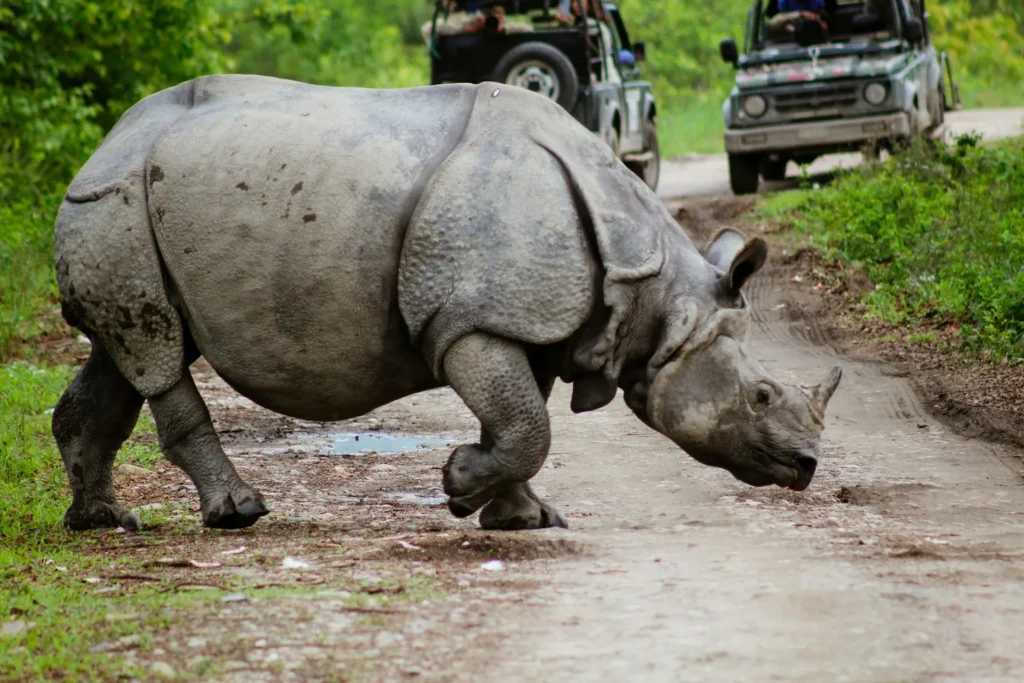
Seeing a greater one-horned rhinoceros (Rhinoceros unicornis) in the wild is one of Asia’s great wildlife spectacles. Weighing between 1,800 and 2,700 kg and armor-plated in folded hide, this species represents one of the world’s most successful conservation turnarounds. Once reduced to near extinction at the turn of the twentieth century, intensive protection and habitat management have brought the global wild population up to approximately 4,075 individuals.
Today, the species is classified as Vulnerable on the IUCN Red List. Its wild range in India is restricted primarily to alluvial floodplains and wet grasslands in Assam, northern West Bengal, and the Indo-Nepal Terai arc.
Because these animals rely on specific wetland and grassland ecosystems, you cannot find them in typical dry deciduous forests or central Indian tiger reserves. Choosing where to go depends on how much time you have, whether you prioritize large landscapes or high animal density, and which other species you hope to track.
What Makes a Rhino Destination Great: Habitat, Scale, and Density Explained
Understanding how rhinos use their territory makes trip planning straightforward. A park with thousands of rhinos is not always easier to explore than a compact sanctuary with a smaller, denser herd.
+————————————————————————-+
| THE TWO KEY SAFARI METRICS EXPLAINED |
+————————————+————————————+
| POPULATION SCALE | RHINO DENSITY |
| (e.g., Kaziranga: ~2,613) | (e.g., Pobitora: 107) |
| * Spreads across multiple zones | * Concentrated in compact area |
| * Diverse landscapes & wetlands | * Fast, high-probability views |
| * Multi-day exploration needed | * Ideal for day trips |
+————————————+————————————+
Population Size vs. Rhino Density
- Population scale refers to the total number of animals residing within a protected area. Kaziranga holds the world’s largest population, with approximately 2,613 rhinos recorded in the 2022 census. However, because Kaziranga spans hundreds of square kilometers divided into distinct administrative ranges, sightings require systematic exploration across multiple game drives.
- Rhino density measures the number of individuals per square kilometer. Pobitora Wildlife Sanctuary holds around 107 rhinos within a small core area. This gives Pobitora the highest rhino density on Earth. Sighting probabilities here are high even on a single two-hour safari drive, making it a reliable stop for travelers with limited time.
The Role of Alluvial Floodplains, Wet Grasslands, and Beels
Greater one-horned rhinos are semi-aquatic grazers. They feed primarily on tall grasses such as Saccharum elephantinus, reeds, and aquatic vegetation.
A prime rhino sanctuary requires three geographic features:
- Riverine Alluvial Plains: River systems that deposit nutrient-rich silt, sustaining fast-growing grasses.
- Oxbow Lakes and Beels (Water Bodies): Shallow wetlands where rhinos wallow for hours during the heat of the day to regulate body temperature and deter biting insects.
- Higher Woodland Ground: Natural ridges and elevated patches where animals seek refuge during annual monsoon inundations.
Field Note: During the peak dry season (March to May), tall grasslands are managed through controlled burning by forest departments. This dramatically improves visibility, drawing rhinos out of dense 4-meter-high cover toward water channels and freshly sprouting shoots.
Quick Decision Guide: Which Park Matches Your Safari Goals?
To choose the right park, match your travel itinerary and group priorities to the destination strengths below.
Best for First-Time Visitors: Kaziranga National Park (Assam)
Kaziranga is the primary choice for anyone making their first dedicated wildlife trip to Northeast India. It offers established tourism infrastructure, multiple safari zones, and a diverse mammal checklist that includes wild water buffalo, swamp deer, Asian elephants, and tigers.
Best for Short Trips and High Sighting Probability: Pobitora Wildlife Sanctuary (Assam)
Pobitora is located roughly 45–50 kilometers from Guwahati. If you only have a single morning or afternoon free, its dense rhino population provides the quickest route to reliable sightings in open marshland.
Best for Low Crowds and Focused Photography: Orang National Park (Assam)
Orang sits on the northern bank of the Brahmaputra River and hosts approximately 125 rhinos. It receives a fraction of Kaziranga’s tourist traffic, offering quiet tracks and unobstructed viewing of rhinos moving through short grasslands and riverine channels.
Best for Mixed Wilderness and Scenery: Manas National Park (Assam)
Manas combines riverine savannas with the forested foothills of Bhutan. While its rhino population is still recovering through active reintroduction efforts, the park provides dramatic Himalayan scenery and rare biodiversity, including golden langurs and pygmy hogs.
Best for Eastern India Road Trips: Jaldapara and Gorumara (West Bengal)
For travelers exploring the Dooars region, Darjeeling, or Sikkim, Jaldapara and Gorumara offer accessible rhino safaris without traveling deep into Assam.
The Assam Strongholds: India’s Core Rhino Sanctuaries
For wildlife travelers, the Brahmaputra River valley in Assam is the epicenter of global rhino conservation. The state’s floodplains and grasslands support the vast majority of the world’s remaining population. If your primary goal is seeing a one-horned rhino, your itinerary will almost certainly anchor around one of these four protected areas.
Kaziranga National Park: The Global Stronghold
Is Kaziranga the best place for a rhino safari? For the vast majority of travelers, yes. It is the flagship destination and the most reliable location for a full-scale, multi-day wilderness experience.
Kaziranga is the world’s largest stronghold for the species, home to approximately 2,613 rhinos according to the 2022 estimate. This UNESCO World Heritage site holds roughly two-thirds of the world’s entire wild Indian rhino population.
The park’s immense alluvial floodplains, tall elephant grass, and riverine habitats create the perfect environment. Because of its scale, Kaziranga supports a complete ecosystem. Alongside rhinos, safaris here offer high chances of spotting Asian elephants, wild water buffalo, swamp deer, and tigers.
- Safari Logistics: The park is divided into distinct zones, primarily the Central (Kohora), Western (Bagori), Eastern (Agaratoli), and Burapahar ranges. Jeep safaris provide the best mobility to cover ground and track movement.
- Target Visitor: First-time wildlife travelers, photographers, and those wanting a comprehensive Indian safari experience.
Photography Tip: The tall winter grass can obscure large animals. To photograph rhinos in the open, focus on the edges of the wetlands during the mid-morning hours, or visit between March and May when controlled grass burning improves sightlines.
Pobitora Wildlife Sanctuary: The World’s Highest Rhino Density
Where is the best place to guarantee a sighting if I only have one day? Pobitora is the practical answer. Located a short drive from Guwahati, it is the most efficient rhino-viewing destination in India.
While Kaziranga has the sheer numbers, Pobitora holds the record for the highest rhino density in the world. The 2022 census recorded 107 rhinos living within a highly compact sanctuary. A 2025 report highlights that Pobitora has also remained entirely poaching-free for 11 years, a significant conservation milestone.
Because the habitat is small and concentrated, rhinos are highly visible. Visitors often spot multiple individuals grazing in the open marshlands within the first twenty minutes of a safari drive.
- Safari Logistics: Viewing is straightforward, often requiring just a single morning or afternoon jeep safari.
- Target Visitor: Travelers on tight schedules, families with young children who prefer shorter drives, and visitors looking for quick, high-probability wildlife encounters.
Expert Tip: Because Pobitora is small, habitat pressure is intense. Treat it as a half-day add-on to a larger Northeast India itinerary rather than a multi-day basecamp.
Orang National Park: The Quiet North Bank Alternative
Can I photograph rhinos without competing for space with dozens of other jeeps? Orang National Park provides the classic Assamese riverine habitat with a fraction of the tourist footfall.
Located on the northern bank of the Brahmaputra River, Orang is often described as a miniature Kaziranga. According to the International Rhino Foundation, the park currently holds a healthy, growing population of about 125 rhinos.
Orang offers a quieter, more solitary safari experience. You will not find the massive hotel infrastructure of Kaziranga here, but you will find peaceful game drives and clear views of wildlife moving through the riverine channels.
- Safari Logistics: Infrastructure is basic, and safaris require slightly more independent planning.
- Target Visitor: Returning wildlife enthusiasts, serious photographers, and low-crowd safari seekers.
Manas National Park: Restored Foothill Wilderness
Is there a park where I can combine rhino tracking with Himalayan scenery? Manas National Park borders Bhutan and offers a drastically different landscape from the central Brahmaputra floodplains.
Manas is a biodiversity-rich landscape defined by riverine savannas and dense foothill forests. The rhino population here is a product of successful translocation and recovery efforts.
While sightings in Manas are rated as moderate to high, they are not as effortless as in Kaziranga or Pobitora. The draw here is the wider wilderness context. It is an excellent destination for nature-focused trips where rhinos share the habitat with unique endemic species like golden langurs and pygmy hogs.
- Safari Logistics: Requires longer drives through varied terrain. Sightings often happen in forest clearings rather than vast open swamps.
- Target Visitor: General nature lovers, birders, and travelers seeking a diverse, multi-species wilderness experience.
Beyond Assam: Rhino Habitats in West Bengal and the Terai
While Assam holds the largest share of the wild population, viable rhino habitats also exist in the Dooars region of northern West Bengal and the Terai floodplains along the India–Nepal border. These destinations suit travelers who are exploring eastern or northern India and want to add a rhino safari to their regional itinerary without traveling into Assam.
+————————————————————————-+
| INDIA’S THREE CORE RHINO REGIONS |
+————————————+————————————+
| 1. BRAHMAPUTRA FLOODPLAINS | 2. DOOARS REGION (WEST BENGAL) |
| (Kaziranga, Pobitora, Orang) | (Jaldapara, Gorumara) |
| * World’s largest population | * Riverine grasslands |
| * Alluvial wetlands & beels | * Foothill forest corridors |
+————————————+————————————+
| 3. INDO-NEPAL TERAI ARC |
| (Dudhwa, Katerniaghat, Valmiki) |
| * Reintroduced populations & transboundary corridors |
| * Sal forests bordering open wet grasslands |
+————————————————————————-+
Jaldapara National Park (West Bengal): The Dooars Riverine Corridor
Can I see one-horned rhinos in West Bengal? Yes. Jaldapara National Park is West Bengal’s primary rhino sanctuary and holds the state’s largest herd.
Located in the Alipurduar district at the foothills of the eastern Himalayas, Jaldapara centers on the floodplain of the Torsa River. The habitat consists of riverine forests and tall moist grasslands that support a stable, breeding rhino population.
Sightings are rated as moderate to high. Jeeps cover set routes through the core grassland tracts, where rhinos frequently graze during morning and late afternoon hours.
- Safari Logistics: Easily reached via Bagdogra Airport or New Jalpaiguri (NJP) railway station, making it simple to combine with Darjeeling or Sikkim routes.
- Target Visitor: Family travelers, regional road-trippers, and wildlife enthusiasts building an Eastern Himalayan circuit.
Gorumara National Park (West Bengal): Compact Safari Routes Near Siliguri
Which park is best for a quick wildlife stop in North Bengal? Gorumara National Park offers short, structured safari drives through mixed forest and river flats along the Murti and Raidak rivers.
Gorumara is a compact reserve located closer to Siliguri than Jaldapara. While its rhino population is smaller, the park features several specialized watchtowers (such as Jatraprasad and Rhino Point) overlooking salt licks and open glades where rhinos regularly emerge from the timberline.
- Safari Logistics: Safari operations are split between fixed watchtower visits and standard vehicle tracks.
- Target Visitor: Short-stay travelers, photographers wanting elevated vantage points from watchtowers, and visitors looking for a convenient wildlife excursion in the Dooars.
Dudhwa National Park (Uttar Pradesh): The Reintroduced Terai Population
Can rhinos be seen outside Northeast India? Yes, in Uttar Pradesh’s Dudhwa National Park, which protects a successful reintroduced population in the Terai arc.
Dudhwa’s rhinos live in a dedicated, protected grassland enclosure area within the park. The project was initiated in the 1980s to create an insurance population outside Assam and reduce extinction risk from localized disease outbreaks or catastrophic flooding.
Sightings are moderate and depend on entering the designated rhino monitoring sectors. The park combines wet alluvial grasslands with dense sal woodlands, offering a distinctly different landscape from Assam’s wide floodplains.
- Safari Logistics: Located in the Lakhimpur Kheri district, Dudhwa requires advance planning for permits and safari vehicles.
- Target Visitor: Conservation travelers, wildlife researchers, and regular safari-goers seeking to experience the Terai ecosystem.
Katerniaghat and Valmiki: Corridor Landscapes and Transient Movement
Do parks like Katerniaghat and Valmiki offer regular rhino safaris? No. These reserves serve primarily as ecological corridors and recovery zones rather than regular commercial viewing destinations.
- Katerniaghat Wildlife Sanctuary (Uttar Pradesh): Forms part of the Dudhwa tiger and rhino landscape. While individual rhinos use its wetlands and riverbanks along the Girwa River, sightings are rare and incidental.
- Valmiki Tiger Reserve (Bihar): Bordering Nepal’s Chitwan National Park, Valmiki occasionally records transient rhinos moving across the border along riverine channels.
Field Note: Do not book a trip to Katerniaghat or Valmiki with the sole expectation of seeing rhinos. These parks are vital for habitat connectivity and genetic exchange, but they do not provide the sighting reliability of Kaziranga, Pobitora, or Jaldapara.
Comparing India’s Top Rhino Sanctuaries
The tables below break down sighting reliability, terrain, and visitor profiles across all primary and secondary destinations.
Comprehensive Destination Comparison Matrix
| Destination | State | Rhino Population / Density Context | Sighting Reliability | Best For | Key Practical Note |
| Kaziranga | Assam | ~2,613 individuals (World’s largest population) | Very High | First-time safari travelers, photographers, multi-day wildlife trips | Book safaris across multiple zones (Central, Western, Eastern) to maximize varied sightings. |
| Pobitora | Assam | 107 individuals (Highest density globally) | Very High (within compact area) | Day trips from Guwahati, short-stay travelers, quick sightings | Excellent for a 3–4 hour morning or afternoon visit; limited multi-day exploration. |
| Orang | Assam | ~125 individuals (Stable, growing herd) | High | Low-crowd safaris, quiet photography | Basic tourist infrastructure; ideal for independent wildlife travelers. |
| Manas | Assam | Reintroduced population under active protection | Moderate to High | Nature-focused itineraries, scenic landscapes, mixed biodiversity | Sightings happen in open savanna glades set against the Bhutan Himalayan foothills. |
| Jaldapara | West Bengal | Largest population in northern West Bengal | Moderate to High | Family trips, travelers visiting Darjeeling/Sikkim circuits | Jeep routes traverse riverbanks and grassland tracks along the Torsa River. |
| Gorumara | West Bengal | Compact population centered around watchtower zones | Moderate | Short regional excursions, watchtower viewing | Best combined with broader Dooars road trips; observation towers offer elevated sightlines. |
| Dudhwa | Uttar Pradesh | Dedicated reintroduced population in Terai arc | Lower to Moderate | Conservation-focused travelers, Terai wildlife itineraries | Sighting requires permits to access designated rhino management sectors. |
| Katerniaghat | Uttar Pradesh | Transient corridor movement | Low to Occasional | Offbeat explorers, wetland specialists | Conservation corridor value rather than commercial sighting reliability. |
| Valmiki | Bihar | Occasional transboundary movement from Nepal | Low to Occasional | Field researchers, off-the-beaten-path travelers | Critical transboundary connectivity, but sightings are unpredictable. |
Assam Stronghold Trade-Off Matrix
Choosing among Assam’s four rhino parks comes down to trade-offs between crowd density, travel time, and overall wildlife diversity.
| Feature | Kaziranga | Pobitora | Orang | Manas |
| Drive Time from Guwahati | ~4.5 to 5 hours | ~1.5 to 2 hours | ~3.5 to 4 hours | ~3.5 to 4 hours |
| Recommended Stay | 3 to 4 days | 0.5 to 1 day | 1 to 2 days | 2 to 3 days |
| Safari Traffic | High (multiple zones distribute vehicles) | Moderate (single main gate) | Low (very few daily vehicles) | Low to Moderate |
| Secondary Wildlife Highlights | Wild water buffalo, swamp deer, elephants, tigers | Wetland birds, wild boar | Gangetic dolphins (nearby river), hog deer | Golden langur, pygmy hog, clouded leopard |
| Landscape Style | Wide river floodplains, vast beels, elephant grass | Flat alluvial marshes and agricultural borders | Flat riverine grasslands and scrub | Alluvial savannas backing into forested hills |
Best Time to Visit and Seasonal Visibility Dynamics
Rhino viewing in India is dictated by seasonal weather and grassland management cycles. Most parks open in October or November and close by mid-May or June as monsoon rains arrive.
+————————————————————————-+
| ANNUAL RHINO SAFARI CALENDAR |
+——————-+——————–+——————————–+
| NOV – FEB | MAR – MAY | JUN – OCT |
| * Cool weather | * Best visibility | * Parks closed |
| * Morning mist | * Tall grass | * Floodplains inundated |
| * Tall grass | * Waterhole focus | * Wildlife moves to highlands |
+——————-+——————–+——————————–+
Winter Safari Season (November to February)
Winter is the most comfortable period for travel in Northeast India and the Dooars. Temperatures are mild, and migratory wetland birds arrive in large numbers across park lakes (beels).
- Visibility Factors: Grasslands remain tall and dense following the monsoon. Early morning game drives often encounter thick ground fog, which burns off by mid-morning.
- Rhino Behavior: Rhinos graze openly during the sunny middle hours of the day to warm themselves before retreating to thick scrub or water bodies in the late afternoon.
Pre-Monsoon Dry Season (March to May)
For focused wildlife photography and maximum sighting numbers, the dry pre-monsoon months offer the clearest conditions.
- Grassland Burning: Forest departments conduct controlled burning of tall elephant grass between February and March. This clears obstructed sightlines and encourages fresh, green shoots that draw rhinos into open plains.
- Waterhole Concentration: As smaller streams dry up, rhinos spend long hours wallowing in permanent oxbow lakes and river channels to escape daytime heat.
Monsoon Closures and Seasonal Flood Dynamics (June to October)
Assam’s riverine parks undergo annual flooding caused by heavy monsoon rainfall and swollen river systems.
- Park Closures: Commercial safari tracks in Kaziranga, Pobitora, Orang, and Manas are closed to tourists during this period.
- Ecological Role: Floods deposit fertile alluvial silt, replenishing the wetlands that sustain the rhino population. During severe floods, rhinos migrate across southern boundaries toward elevated areas like the Karbi Anglong hills for safety.
Month-by-Month Safari Guide
| Month | Safari Track Status | Grass Height & Visibility | Sighting Conditions |
| October | Partial opening (route-dependent) | Very tall; wet terrain | Moderate; limited route access |
| November – December | Fully open | Tall; occasional morning mist | High; comfortable temperatures |
| January – February | Fully open | Moderate; burning begins in Feb | High; active grazing near water bodies |
| March – April | Fully open | Low; post-burning open views | Highest; clear view across floodplains |
| May | Pre-monsoon showers begin | Sprouting grass; rising humidity | High; heat drives wallowing behavior |
| June – September | Closed (Monsoon flood season) | Inundated floodplains | Closed for tourism |
Planning Your Rhino Safari: Bookings, Vehicles, and Logistics
Securing a smooth rhino safari in India requires planning your transport, permits, and vehicle slots well in advance.
Jeep Safaris vs. Managed Elephant-Backed Viewing
- Jeep Safaris (4×4 Gypsys): The primary and most versatile way to explore rhino habitats. Jeeps cover dozens of kilometers in a single drive, allowing you to sample multiple habitat types, wetlands, and open savannas within a safari zone.
- Managed Elephant-Backed Viewing: Offered at select designated locations (such as parts of Kaziranga or Jaldapara) under strict forest department supervision. These short morning excursions maneuver through tall grass where vehicles cannot enter, offering close-range viewing of feeding rhinos.
Responsible Tourism Tip: When booking jeep safaris, hire official park naturalists or local guides registered with the forest department. Their knowledge of seasonal animal movements and alarm calls significantly improves your tracking success.
Permit Timelines, Gate Allocations, and Gateway Towns
- Gate Allocations: In large reserves like Kaziranga, safari permits are issued per specific administrative zone (e.g., Central/Kohora, Western/Bagori, Eastern/Agaratoli). Book drives across at least two distinct zones to experience varied terrain and wildlife activity.
- Booking Windows: Secure entry permits and vehicle allocations 30 to 60 days in advance, especially for weekend travel between December and March.
- Transport Hubs:
- Kaziranga / Orang / Pobitora: Fly into Lokpriya Gopinath Bordoloi International Airport in Guwahati or Jorhat Airport. Guwahati offers direct highway connectivity (NH715) to all central Assam parks.
- Jaldapara / Gorumara: Fly into Bagdogra Airport or take a train to New Jalpaiguri (NJP), followed by a 2.5 to 3.5-hour road drive into the Dooars.
- Dudhwa: Accessible via Lucknow Airport, followed by a 4.5 to 5-hour drive north to Palia Kalan/Dudhwa.
Greater One-Horned Rhino: Field Biology and Conservation Realities
Understanding the natural history of Rhinoceros unicornis helps explain why these animals behave the way they do on safari.
+————————————————————————-+
| ONE-HORNED RHINO: KEY FIELD FACTS |
+————————————+————————————+
| * Scientific Name: Rhinoceros | * Body Mass: 1,800 to 2,700 kg |
| unicornis | * Horn Length: 20 to 61 cm |
| * IUCN Status: Vulnerable | * Primary Diet: Grasses, reeds, |
| * Global Population: ~4,075 | aquatic plants |
+————————————+————————————+
Anatomy, Diet, and Senses
- Hide and Armor Plates: The thick, hairless skin of the greater one-horned rhino features distinct folds around the neck, shoulders, and rump, studded with wart-like tubercles that create an armor-plated appearance.
- Horn Structure: Both males and females possess a single horn composed of compressed keratin—the same protein found in hair and hooves—measuring between 20 and 61 cm in adults.
- Sensory Balance: Rhinos have poor eyesight and struggle to identify stationary objects beyond 30 meters. However, their sense of smell and hearing are keen; tubular ears rotate independently to track distant sounds across open plains.
- Dietary Habits: Primarily solitary grazers, rhinos feed on tall grasses, sedges, reeds, and submerged aquatic plants, using their prehensile upper lip to curl around stems.
Conservation Recovery: How Anti-Poaching and Translocation Worked
At the beginning of the twentieth century, unchecked hunting and habitat conversion reduced the Indian rhino to fewer than 200 individuals. Today, with approximately 4,075 animals in the wild, the species represents one of the most significant conservation turnarounds in Asia.
- Intensive Anti-Poaching: Dedicated armed forest staff, computerized patrolling, and community intelligence networks have suppressed poaching across major strongholds. Notably, Pobitora Wildlife Sanctuary has maintained a zero-poaching record for over 11 consecutive years.
- Range Expansion & Translocation: Programs like the Indian Rhino Vision (IRV) have translocated rhinos to restore breeding populations in historical habitats such as Manas National Park.
- National Action Planning: The Wildlife Institute of India (WII) has proposed long-term action plans to relieve habitat pressure by relocating rhinos to protected areas across five Indian states, ensuring genetic diversity and safeguarding against localized disease outbreaks.
Field Safety and Safari Ethics Near Large Herbivores
Greater one-horned rhinos are generally placid grazers, but they are powerful, massive animals capable of charging at speeds exceeding 40 km/h when startled or defending young calves.
+————————————————————————-+
| SAFARI ETHICS CHECKLIST |
| [ ] Maintain a buffer of at least 30-40 meters from solitary rhinos |
| [ ] Give mothers with calves double clearance and an open retreat path |
| [ ] Keep engine noise down and never box an animal between jeeps |
| [ ] Remain fully seated inside your registered vehicle at all times |
| [ ] Avoid bright-colored clothing; choose khaki, olive, or beige tones |
+————————————————————————-+
- Follow Guide Commands: Always follow the directions of your park driver and naturalist. If a rhino raises its head, snorts, or curls its ears forward, it is signaling distress—allow the driver to back away smoothly.
- Never Block Movement Paths: Do not position vehicles across clear pathways leading between grazing marshes and water channels.
Common Mistakes to Avoid When Planning a Rhino Safari
- Treating Kaziranga as a Single-Zone Destination: Booking all safaris in one gate or zone reduces variety. Book across Central (Kohora), Western (Bagori), and Eastern (Agaratoli) ranges for a balanced mix of wetlands, grasslands, and birdlife.
- Overlooking Smaller High-Density Parks: Skipping Pobitora or Orang because they are smaller than Kaziranga is a mistake. Pobitora offers unmatched density for short itineraries, while Orang delivers crowd-free game drives.
- Visiting During Late Monsoon: Attempting to plan safaris in July, August, or September leads to disappointment, as core protected areas remain closed due to heavy flood conditions.
- Expecting Rhinos in Deep Dry Woodlands: Unlike tigers or leopards that frequent dry deciduous forests, rhinos require wetlands and alluvial savannas. Plan trips specifically around river-valley floodplains.
- Assuming Wild Sightings Are 100% Guaranteed: While sighting probabilities in Kaziranga or Pobitora are very high, wildlife movements depend on daily weather, water levels, and seasonal grass cover. Dedicate at least 3 to 4 game drives to ensure quality encounters.
Frequently Asked Questions
1. Where is the best place to see one-horned rhinoceros in India?
Kaziranga National Park in Assam is the premier destination, holding roughly two-thirds of the world’s population (~2,613 individuals) across a large floodplain ecosystem.
2. Is Kaziranga or Pobitora better for seeing rhinos?
It depends on your schedule. Kaziranga is better for a multi-day wildlife holiday with diverse species, whereas Pobitora is ideal for a fast day trip from Guwahati with the world’s highest rhino density.
3. Which national park has the highest rhino density in the world?
Pobitora Wildlife Sanctuary in Assam holds the highest density globally, with 107 rhinos inhabiting a small, concentrated wetland sanctuary.
4. Can you see wild rhinos outside Assam?
Yes. You can see wild one-horned rhinos in northern West Bengal at Jaldapara and Gorumara National Parks, as well as a reintroduced population in Uttar Pradesh’s Dudhwa National Park.
5. What is the best month to photograph one-horned rhinos?
March and April are the best months. Forest departments complete controlled grass burnings by early spring, opening clear sightlines across the plains while rising temperatures draw rhinos to water bodies.
6. Are one-horned rhinos dangerous to safari vehicles?
Rhinos are generally calm, but females with calves or territorial bulls can charge if crowded or surprised. Staying inside designated vehicles and maintaining respectful distances ensures complete safety.
7. How many one-horned rhinos are left in the wild?
The global population is estimated at approximately 4,075 individuals, with the vast majority living in protected areas across India and Nepal.
8. Are rhino sightings guaranteed on an Indian safari?
No wild animal sighting is ever guaranteed. However, in core areas like Kaziranga’s Western/Central zones or Pobitora, sighting probabilities during open season are among the highest for any large mammal in Asia.
9. Can rhinos be seen on standard jeep safaris?
Yes. Standard 4×4 open jeep safaris are the primary and most effective method for tracking rhinos along designated park tracks.
10. What other wildlife shares habitat with the one-horned rhino?
In Assam’s floodplains, rhinos share space with wild water buffalo, Asian elephants, swamp deer (barasingha), hog deer, Bengal tigers, and hundreds of resident and migratory wetland birds.
Practical Field Summary and Suggested Itineraries
Choosing where to see one-horned rhinos in India comes down to your available travel time and regional focus.
+————————————————————————-+
| RECOMMENDED TRIP TEMPLATES |
+————————————————————————-+
| 1. THE ASSAM CLASSIC (4 Days) |
| Day 1: Arrive Guwahati -> Transfer to Pobitora for afternoon safari |
| Day 2: Morning transfer to Kaziranga (Central Zone safari) |
| Day 3: Kaziranga (Western Zone AM / Eastern Zone PM) |
| Day 4: Morning Kaziranga safari -> Return transfer to Guwahati |
+————————————————————————-+
| 2. THE PHOTOGRAPHER’S LOW-CROWD ROUTE (5 Days) |
| Day 1-2: Orang National Park (quiet riverine drives & dolphin boat) |
| Day 3-5: Kaziranga National Park (dedicated multi-zone tracking) |
+————————————————————————-+
| 3. THE DOOARS & FOOTHILLS CIRCUIT (3 Days) |
| Day 1: Bagdogra to Jaldapara National Park |
| Day 2: Jaldapara morning grassland drive -> Gorumara PM watchtower |
| Day 3: Morning safari in Gorumara -> Onward to Darjeeling / Bagdogra |
+————————————————————————-+
Whether you choose the vast, water-carved plains of Kaziranga, the compact marshes of Pobitora, or the foothill river tracks of Jaldapara, seeing these armored grazers in their natural habitat remains one of India’s most rewarding wildlife encounters. Plan for the dry season, secure your zone permits early, and allow enough time across multiple drives to experience the full rhythm of the floodplains.