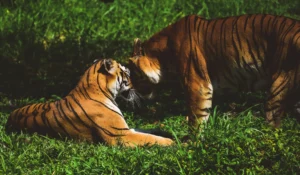
Learn how long tigers live in the wild and captivity, what affects their lifespan, cub survival, subspecies differences, and why conservation matters.
Introduction
One of the most common questions about tigers has a surprisingly nuanced answer. While many sources mention a single number, a tiger’s lifespan depends greatly on where it lives and the challenges it faces throughout its life.
In general, wild tigers typically live between 10 and 15 years, while tigers in captivity often live for 20 years or more. This difference is mainly due to food availability, veterinary care, injuries, disease, territorial conflicts, and threats such as poaching and human-wildlife conflict.
Understanding how long tigers live also provides insight into the pressures faced by one of the world’s largest cats. A tiger that survives long enough to reproduce successfully contributes to the future of its population, making lifespan an important indicator of conservation success.
Whether you are a wildlife enthusiast, student, photographer, or someone planning a safari in India, knowing what influences a tiger’s longevity helps build a deeper appreciation of its life in the wild.
How Long Do Tigers Live?
Average Lifespan in the Wild
Most wild tigers live around 10–15 years, although some individuals die much earlier. A tiger’s life in the wild is demanding from its very beginning.
Young cubs face high mortality, while adults must continuously defend territories, hunt successfully, avoid injuries, and cope with increasing human pressures. Even healthy adult tigers can lose their lives due to conflicts with rival tigers, prey shortages, disease, or encounters with people.
Older wild tigers often struggle as their hunting ability declines. Worn teeth, reduced strength, injuries, and competition from younger animals make survival increasingly difficult.
Average Lifespan in Captivity
Tigers living in zoos, wildlife parks, and accredited conservation facilities generally survive 20 years or longer, with some individuals reaching their mid-twenties.
Several factors contribute to this longer lifespan:
- Regular access to nutritious food
- Veterinary care and disease management
- Protection from poachers
- No competition for territory
- Reduced risk of starvation
- Treatment for injuries that would be fatal in the wild
However, a longer lifespan does not necessarily mean a captive tiger experiences the same quality of life as a wild tiger. Captivity removes many natural risks but also limits opportunities to roam, hunt, establish territories, and display natural behaviours. For this reason, wildlife biologists distinguish between living longer and living naturally.
Why There Is No Single Lifespan for Every Tiger
There is no fixed age at which every tiger dies. Instead, lifespan varies according to several interacting factors, including:
- Habitat quality
- Availability of prey
- Protection from poaching
- Human disturbance
- Disease
- Territorial competition
- Individual health and genetics
A tiger living in a well-protected reserve with abundant prey may survive considerably longer than another tiger living in a fragmented landscape with frequent human conflict.
Field Note: Wildlife researchers usually refer to a range rather than a fixed age because survival varies greatly between individuals and landscapes. An average lifespan should never be confused with the maximum age ever recorded.
Wild vs Captive Tiger Lifespan at a Glance
| Environment | Typical Lifespan | Main Influencing Factors |
| Wild | 10–15 years | Hunting success, prey availability, territorial conflicts, disease, poaching, habitat quality |
| Captivity | 20+ years | Reliable food, veterinary care, protection from predators and poaching, managed environment |
This comparison highlights why conservation efforts focus not only on increasing tiger numbers but also on improving the conditions that allow wild tigers to survive long enough to reproduce and maintain healthy populations.
What Determines a Tiger’s Lifespan? & Tiger Cub Survival
What Determines a Tiger’s Lifespan?
Although tigers are powerful predators, they face numerous challenges throughout their lives. A tiger’s lifespan is influenced by a combination of natural ecological factors and human-caused threats. Understanding these factors explains why some individuals survive well into old age while others die much younger.
Food Availability
A healthy prey population is one of the most important requirements for a long-lived tiger.
Tigers depend on large herbivores such as deer and wild pigs for most of their diet. When prey becomes scarce due to habitat degradation, illegal hunting, or competition, tigers must travel farther and expend more energy to find food.
Poor nutrition can lead to:
- Reduced body condition
- Lower reproductive success
- Greater vulnerability to disease
- Increased conflict with humans as tigers may attack livestock
Protected landscapes with abundant prey generally support healthier tiger populations than forests where prey numbers have declined.
Habitat Quality
A tiger needs extensive habitat with adequate cover, reliable water sources, and sufficient prey.
Large, connected forests allow tigers to establish territories, disperse naturally, and avoid unnecessary conflicts. In contrast, fragmented landscapes divided by roads, farms, or settlements increase the risks of injury, starvation, and encounters with people.
Habitat fragmentation can also isolate tiger populations, making long-term survival more difficult.
Territorial Conflicts
Adult tigers are highly territorial animals.
Males compete intensely for breeding territories, while females defend areas that provide enough prey to raise cubs. These territorial disputes can lead to serious injuries, particularly among adult males.
Although many confrontations end with one tiger retreating, some result in wounds that later become infected or reduce the animal’s ability to hunt successfully.
Older tigers often lose territories to younger, stronger rivals, reducing their access to food and increasing the likelihood of conflict.
Disease and Injuries
Like all wild animals, tigers are vulnerable to disease and physical injuries.
Common causes include:
- Injuries sustained while hunting large prey
- Wounds from fights with rival tigers
- Broken teeth that reduce hunting efficiency
- Infections following untreated injuries
- Diseases that weaken the animal over time
In captivity, veterinary care can often treat these conditions. Wild tigers, however, must recover on their own, and even relatively minor injuries can become life-threatening.
Human-Wildlife Conflict
As forests become increasingly fragmented, encounters between people and tigers become more common.
Tigers may leave protected areas in search of prey or territory and enter agricultural landscapes or villages. These situations can result in livestock attacks, retaliatory killings, accidental poisoning, or road and railway collisions.
Recent reports from India indicate that tiger deaths outside protected reserves remain an important conservation concern, highlighting the challenges of managing wildlife in human-dominated landscapes.
Poaching
Despite stronger protection in many tiger range countries, poaching continues to threaten tiger survival.
Tigers may be illegally killed for their skin, bones, or other body parts used in illegal wildlife trade. Wire snares intended for other animals can also seriously injure or kill tigers.
Effective anti-poaching patrols, intelligence networks, and habitat protection remain essential for improving the survival of wild tiger populations.
Expert Tip
When reading about tiger lifespan, remember that biology sets the potential lifespan, but environmental conditions determine whether a tiger reaches that potential. The same species can experience very different survival outcomes depending on habitat quality, prey abundance, and human pressures.
Factors That Influence Tiger Longevity
| Factor | Effect on Lifespan | Why It Matters |
| Prey availability | High | Adequate food supports health and reproduction. |
| Habitat quality | High | Large, connected forests reduce stress and conflict. |
| Territorial competition | Moderate to High | Injuries from rival tigers can shorten lifespan. |
| Disease and injuries | High | Untreated illnesses or wounds may become fatal. |
| Human-wildlife conflict | High | Retaliation, accidents, and habitat encroachment increase mortality. |
| Poaching | Very High | Illegal hunting remains one of the most significant threats in many regions. |
How Long Do Tiger Cubs Survive?
A tiger’s life is most vulnerable during its first two years. While adult tigers are formidable predators, cubs face numerous risks before they become independent.
Conservation sources indicate that around half of tiger cubs may not survive beyond their first two years, making early-life mortality a significant factor in tiger population dynamics.
Why Cub Survival Matters
Every breeding female invests considerable time and energy in raising her cubs.
Because tiger populations grow slowly, the survival of each litter plays an important role in maintaining healthy populations. When cub mortality is high, population recovery becomes much slower, even if adult tigers survive.
For conservationists, improving cub survival is therefore just as important as protecting adult tigers.
Common Causes of Cub Mortality
Young tiger cubs face a variety of natural and human-related risks, including:
- Starvation if the mother cannot hunt successfully
- Disease and infections
- Abandonment in disturbed habitats
- Predation by other carnivores in some situations
- Infanticide by rival male tigers after territorial takeovers
- Human disturbance and habitat degradation
As cubs grow, they gradually learn to hunt by observing their mother. Only after becoming independent do they begin searching for territories of their own—a stage that brings new challenges and risks.
Field Note: A tiger population with many breeding females and high cub survival is generally more resilient than one where adult numbers appear stable but few cubs reach adulthood. For this reason, scientists monitor both adult survival and cub recruitment when assessing the health of tiger populations.
Tiger Subspecies, Oldest Recorded Tigers & Why Lifespan Matters for Conservation
Do Different Tiger Subspecies Live for Different Lengths?
Many people assume that one tiger subspecies naturally lives much longer than another. Current evidence suggests that environmental conditions usually have a greater influence on lifespan than subspecies alone. Factors such as habitat quality, prey abundance, protection from poaching, and human disturbance generally determine how long an individual tiger survives.
Bengal Tiger (Panthera tigris tigris)
The Bengal tiger is the most numerous tiger subspecies and is found mainly in India, with smaller populations in Nepal, Bhutan, and Bangladesh.
Because Bengal tigers occupy a wide range of habitats—from Himalayan foothills and central Indian forests to the Sundarbans mangroves—their survival depends heavily on local conditions. Tigers living in well-protected reserves with abundant prey often survive longer than those in fragmented landscapes where conflict with humans is more common.
Amur (Siberian) Tiger
The Amur tiger inhabits the Russian Far East and parts of northeastern China.
Its cold environment presents challenges very different from those faced by tropical tiger populations. Long winters and lower prey densities require these tigers to maintain very large territories. Nevertheless, when protected from poaching and habitat loss, they can achieve lifespans similar to other wild tiger populations.
Sumatran Tiger
The Sumatran tiger is found only on the Indonesian island of Sumatra.
As the smallest living tiger subspecies, it occupies dense tropical forests that differ considerably from the open forests of mainland Asia. Habitat loss and fragmentation remain major threats, making conservation efforts particularly important for its long-term survival.
Malayan, Indochinese and South China Tigers
These subspecies have experienced severe population declines over recent decades.
For these populations, survival is influenced more by conservation challenges—including habitat loss, prey depletion, and illegal hunting—than by any inherent biological differences in lifespan. The South China tiger is now considered functionally extinct in the wild, with only captive individuals remaining.
Tiger Subspecies Overview
| Subspecies | Primary Range | Conservation Context |
| Bengal Tiger | India, Nepal, Bhutan, Bangladesh | Largest remaining wild population; India is the global stronghold. |
| Amur (Siberian) Tiger | Russia, Northeast China | Adapted to cold forests; protected populations have shown recovery. |
| Sumatran Tiger | Sumatra, Indonesia | Restricted range; threatened by habitat loss. |
| Malayan Tiger | Peninsular Malaysia | Small and declining population requiring intensive conservation. |
| Indochinese Tiger | Mainland Southeast Asia | Highly fragmented populations. |
| South China Tiger | Captive population only | Functionally extinct in the wild. |
Field Note: Although these subspecies occupy different environments, there is no strong evidence that one naturally enjoys a dramatically longer lifespan than another. Protection from threats is usually the deciding factor.
What Is the Oldest Tiger Ever Recorded?
When discussing tiger longevity, it is important to distinguish between average lifespan and maximum recorded age.
Most wild tigers never reach extreme old age because they must continually hunt, defend territories, and survive natural and human-related threats. In contrast, captive tigers benefit from regular food, veterinary care, and protection from many hazards.
Oldest Captive Tigers
Several captive tigers have lived into their mid-twenties, demonstrating the species’ biological potential under carefully managed conditions.
These individuals are exceptional rather than typical. Most captive tigers do not necessarily reach these ages, but they often live considerably longer than their wild counterparts because many common causes of early mortality are removed.
Oldest Wild Tigers
Reliable records of exceptionally old wild tigers are uncommon.
Older wild tigers often experience:
- Reduced hunting success
- Worn teeth
- Declining physical strength
- Injuries accumulated over many years
- Competition from younger rivals
As a result, relatively few wild tigers survive beyond the upper end of the typical lifespan range.
Average Lifespan vs Maximum Recorded Age
| Measure | Meaning |
| Average lifespan | The age most tigers are expected to reach under typical conditions. |
| Maximum recorded age | The oldest documented individuals, representing rare exceptions rather than the norm. |
Understanding this distinction helps avoid the common misconception that all tigers can routinely live into their twenties.
Why Tiger Lifespan Matters for Conservation
A tiger’s lifespan is more than an interesting biological fact—it is an important indicator of ecosystem health and conservation success.
When adult tigers survive longer, they have more opportunities to reproduce and raise multiple litters. Healthy breeding adults, combined with good cub survival, contribute directly to stable or growing populations. Conversely, frequent deaths among breeding adults can slow recovery even when new cubs are born.
Adult Survival and Population Recovery
Conservation programmes aim to improve survival throughout every stage of a tiger’s life.
Key priorities include:
- Protecting large forest landscapes
- Maintaining healthy prey populations
- Reducing poaching
- Preserving wildlife corridors
- Minimising human-tiger conflict
- Monitoring tiger health and mortality
Each of these measures increases the likelihood that tigers will survive long enough to reproduce successfully.
India’s Role in Tiger Conservation
India holds the world’s largest population of wild tigers and therefore plays a central role in the species’ future.
Official estimates reported in the research brief indicate that India recorded 3,682 wild tigers during the 2022 national assessment, making the country the global stronghold for the species. Continued monitoring, habitat management, and anti-poaching efforts remain central to India’s tiger conservation strategy.
India’s extensive network of tiger reserves, supported by initiatives such as Project Tiger and the National Tiger Conservation Authority (NTCA), has helped protect many important breeding populations. However, conservation challenges remain, particularly outside protected areas where expanding infrastructure and human activities increase the likelihood of conflict.
Recent Conservation Developments
Recent conservation assessments highlighted in the research brief show both encouraging progress and continuing challenges.
Key developments include:
- The IUCN’s Green Status assessment recognised that conservation actions have prevented further declines, while also describing the species as Critically Depleted in terms of historical recovery.
- Recent reports have drawn attention to increasing tiger deaths outside protected reserves, underlining the importance of habitat connectivity and conflict mitigation.
- India continues to monitor its tiger population through regular nationwide assessments to guide future conservation planning.
Responsible Tourism Tip: Visitors to tiger reserves contribute to conservation when they follow park regulations, remain inside designated vehicles, avoid disturbing wildlife, and support responsible tourism operators that respect protected-area guidelines.
Common Misconceptions, Frequently Asked Questions & Conclusion
Common Misconceptions About Tiger Lifespan
Misconception 1: All tigers live for more than 20 years.
Reality: Most wild tigers live for about 10–15 years. Lifespans exceeding 20 years are generally associated with captivity, where food, veterinary care, and protection from many natural threats are available.
Misconception 2: Tigers in zoos always have a better life.
Reality: Captive tigers often live longer because they avoid starvation, poaching, and territorial fights. However, captivity cannot fully replicate the complex behaviours of a wild tiger, such as hunting, defending territories, or ranging across large forest landscapes. A longer lifespan should not automatically be interpreted as a better quality of life.
Misconception 3: One tiger subspecies naturally lives much longer than another.
Reality: Current evidence suggests that habitat quality, prey availability, disease, and human pressures have a much greater influence on lifespan than subspecies alone.
Misconception 4: White tigers are a separate species.
Reality: White tigers are not a separate species or subspecies. They are a rare colour variant of the Bengal tiger caused by a genetic trait. Some captive white tiger populations have experienced health problems associated with inbreeding, but these issues should not be generalised to all tigers.
Misconception 5: Conservation only increases tiger numbers.
Reality: Successful conservation also improves adult survival, cub survival, habitat connectivity, prey availability, and long-term population stability. Lifespan is therefore one indicator of healthier ecosystems and effective wildlife management.
Frequently Asked Questions
How long do tigers live on average?
Wild tigers typically live 10–15 years, while captive tigers often live 20 years or more, depending on their health and management.
Why do tigers live longer in captivity?
Captive tigers receive regular food, veterinary treatment, protection from poaching, and are not required to defend territories or hunt for survival.
Can a tiger live for 25 years?
Yes. Some captive tigers have reached their mid-twenties, although such ages are exceptional and not representative of the average lifespan.
Why do wild tigers usually die younger?
Wild tigers face numerous challenges, including territorial fights, injuries, disease, prey shortages, habitat loss, poaching, and human-wildlife conflict.
Which tiger subspecies lives the longest?
There is no reliable evidence that any living tiger subspecies consistently lives significantly longer than the others. Environmental conditions generally play the larger role.
Do female tigers live longer than males?
Individual survival varies, but adult males often experience more territorial conflicts, which can increase their risk of injury. Lifespan ultimately depends on many interacting factors rather than sex alone.
How many tiger cubs survive to adulthood?
Cub mortality is relatively high. Conservation sources cited in the research brief indicate that around half of tiger cubs may not survive beyond their first two years, making cub survival a major conservation priority.
Does conservation increase tiger lifespan?
Conservation efforts cannot change the tiger’s biological lifespan, but they can improve the likelihood that individuals survive closer to their natural lifespan by reducing threats such as poaching, habitat fragmentation, and prey depletion.
Why is India so important for tiger conservation?
India supports the world’s largest population of wild tigers and contains many of the species’ most important breeding landscapes. Conservation decisions made in India therefore have a significant influence on the global future of the species.
What is the difference between lifespan and life expectancy?
Lifespan refers to the maximum age an individual can potentially reach, whereas life expectancy describes the average survival expected under typical conditions.
Conclusion
The answer to “How long do tigers live?” is best expressed as a range rather than a single number. Most wild tigers survive for 10–15 years, while those in captivity often live 20 years or more under managed conditions. Behind these figures lies a complex interaction of biology, habitat quality, prey availability, disease, territorial competition, and human influence.
Perhaps the most important lesson is that a tiger’s lifespan reflects the health of the ecosystem in which it lives. Protected forests with abundant prey and effective conservation measures allow more tigers to reach adulthood, reproduce successfully, and contribute to stable populations. Conversely, habitat fragmentation, poaching, and human-wildlife conflict continue to shorten lives and threaten long-term recovery.
For visitors to India’s tiger reserves and other tiger landscapes across Asia, every sighting represents far more than a memorable wildlife encounter. It is evidence of decades of conservation work that has enabled one of the world’s most recognisable predators to survive in increasingly human-dominated landscapes. Understanding how long tigers live—and why some survive longer than others—offers valuable insight into both the challenges and the progress of tiger conservation.
Tiger Safari in India : Topics Cluster
- Tiger Safari Planning Workbook
- Tiger Safari Booking Guide
- Best time for tiger sightings in India
- How to increase chances of tiger sighting?
- Tiger Safari Naturalist Guide
- Tiger Safari India Cost
- How to book a Tiger Safari in India?
- Best Wildlife Tour Operators in India
- Best Destination Cities for Tiger Safaris in India
- Tiger Safari under ₹25000
- Top 10 Budget Tiger Safaris 2026
- Tiger Photography Tips
- Best Tiger Reserves
- Top 10 Tiger Reserves by sighting chances