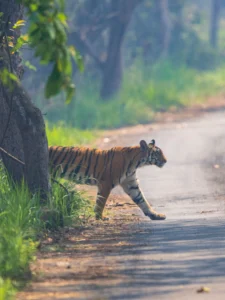
Discover why leopards climb trees to protect prey, avoid predators, rest, and survive. Learn the science, adaptations, and fascinating behavior.
Introduction & Why Leopards Climb Trees
Why Do Leopards Climb Trees?
If you’ve ever seen a leopard resting on a tree branch or carrying an antelope high into a tree, you may have wondered why this big cat goes to such extraordinary effort.
The simple answer is that tree climbing helps leopards survive.
Unlike lions, which often rely on the strength of a pride, or cheetahs, which depend on speed, leopards are solitary predators. Every successful hunt represents valuable food that they cannot afford to lose. Climbing trees allows them to protect their meals from scavengers, avoid dangerous confrontations, find secure resting places, and sometimes gain a better view of their surroundings.
Although hoisting prey into trees is the behavior most people associate with leopards, it is only one part of a broader survival strategy. Whether in the African savanna, Indian forests, or rocky mountain habitats, leopards adjust their climbing behavior according to the threats, prey availability, and competition around them.
Why Tree Climbing Is So Important
Tree climbing offers several advantages that help explain why leopards are regarded as the best climbers among the world’s big cats.
The four main reasons are:
- Protecting kills from hyenas, lions, and other scavengers.
- Escaping threats and reducing conflict with larger predators.
- Resting in cool, secure locations during the day.
- Watching prey and monitoring their surroundings from an elevated position.
Each of these behaviors improves a leopard’s chances of surviving and successfully raising young.
A Survival Strategy Rather Than a Special Trick
Many people assume that leopards climb trees simply because they are naturally agile. While they are indeed excellent climbers, their ability has evolved because it provides practical advantages in everyday life.
For a solitary predator, losing a freshly killed animal to scavengers means wasting the energy spent stalking, chasing, and overpowering prey. Likewise, avoiding unnecessary fights with lions, hyenas, or wild dogs reduces the risk of injury—an injury that could threaten a leopard’s ability to hunt.
Tree climbing therefore represents an efficient way to conserve both food and energy while minimizing danger.
Field Note
Safari guides often observe that a leopard’s behavior changes after making a successful kill. Instead of feeding immediately, the animal may first assess nearby threats before deciding whether the prey should remain on the ground or be hoisted into a tree. This decision depends on prey size, surrounding predators, and the effort required to lift the carcass.
Why Leopards Hoist Their Kills Into Trees
One of the most distinctive leopard behaviours is dragging a freshly killed animal up a tree. This can look almost unbelievable, especially when the prey weighs as much as—or even more than—the leopard itself. However, this behaviour is driven by a simple goal: protecting a hard-earned meal from competitors.
Unlike lions, which often feed in groups, leopards hunt alone. Every successful hunt requires patience, stealth, and a significant amount of energy. Losing that prey to another predator means the leopard must hunt again, increasing both energy expenditure and the risk of injury.
Protecting Food from Hyenas and Other Scavengers
On the ground, a fresh carcass quickly attracts scavengers and competing predators. Depending on the habitat, these may include:
- Spotted hyenas
- Lions
- African wild dogs
- Other leopards
Among these, hyenas are particularly effective at stealing kills. Studies cited in the research brief indicate that leopards lose roughly 20% of their kills to kleptoparasitism, with hyenas responsible for about half of those losses.
By lifting prey into a tree, a leopard places it beyond the reach of most scavengers. While lions may occasionally climb low branches and other leopards can also access trees, the number of animals capable of stealing the carcass is greatly reduced.
What Is Kleptoparasitism?
Kleptoparasitism is the ecological term for one animal stealing food that another has captured.
For leopards, this is a constant challenge because they hunt alone and cannot defend a carcass against several large competitors simultaneously. Tree climbing is therefore an effective strategy to reduce food theft rather than relying on physical confrontation.
Carrying Surprisingly Heavy Prey
One of the most impressive aspects of leopard behaviour is their ability to hoist large animals into trees.
Research highlighted in the brief found that leopards have successfully lifted prey weighing approximately 40% to 140% of their own body weight. This remarkable feat is possible because of their powerful shoulders, muscular forelimbs, strong jaws, and exceptional climbing ability.
Watching a leopard haul an impala or antelope vertically up a tree is one of the clearest demonstrations of the species’ strength and agility.
Why Hoisted Kills Are Worth the Effort
Dragging a carcass into a tree requires considerable energy. A leopard will only invest that effort if the expected benefit outweighs the cost.
A hoisted kill offers several advantages:
- Reduced risk of food theft.
- More uninterrupted feeding time.
- Lower chance of dangerous confrontations.
- Better opportunity to return and feed over several days.
Studies also show that hoisted carcasses are generally fed on for longer than kills left on the ground, allowing the leopard to extract more nutritional value from each successful hunt.
Why Leopards Don’t Hoist Every Kill
Despite their climbing ability, leopards do not carry every carcass into a tree.
Their decision depends on several factors, including:
- The size and weight of the prey.
- The amount of nearby competition.
- The availability of suitable climbing trees.
- The energy required to lift the carcass.
- Whether immediate feeding is safer than moving the prey.
In some situations, the effort of hoisting a kill may exceed the benefits. Additionally, carcasses hanging in trees can sometimes become visible to other leopards, creating a different kind of competition. The decision is therefore a careful balance between effort, risk, and reward rather than an automatic behaviour.
Comparison: Hoisted Kill vs Ground Kill
| Aspect | Hoisted Kill | Ground Kill |
| Risk of scavenger theft | Lower | Higher |
| Feeding time | Usually longer | Often interrupted |
| Energy required | High | Low |
| Chance of confrontation | Reduced | Greater |
| Best used when | Competitor pressure is high | Competition is low or prey is too heavy |
Expert Tip
If you see a leopard repeatedly looking up into nearby trees after making a kill, it may be assessing potential branches before attempting to hoist the carcass. Guides often watch for this behaviour because it can signal one of the most memorable wildlife sightings on safari.
What Makes Leopards Such Good Climbers?
Leopards are widely regarded as the most accomplished tree climbers among the world’s big cats. While lions, tigers, and jaguars can climb to varying degrees, leopards combine strength, agility, balance, and flexibility in a way that makes climbing a routine part of their daily lives rather than an occasional behaviour.
Their climbing ability is not due to a single feature but to a combination of physical adaptations that have evolved over thousands of years.
Powerful Muscles
A leopard’s shoulders, forelimbs, and neck are exceptionally muscular. These muscles generate the force needed to climb steep trunks while supporting the weight of both the leopard and, in many cases, a heavy carcass.
This strength explains how a leopard can pull prey weighing close to—or even exceeding—its own body weight into a tree, an ability rarely matched by other large cats.
Retractable Claws
Leopard claws remain sharp because they stay retracted when the animal walks.
When climbing, the claws extend and grip the bark like natural hooks, providing secure traction on vertical trunks and rough branches. This grip allows the leopard to move confidently both upward and downward.
Flexible Spine and Mobile Shoulders
A flexible spine allows the leopard’s body to twist and adjust while climbing through branches.
Its highly mobile shoulder joints provide a wide range of movement, enabling the forelimbs to reach around trunks, grip uneven surfaces, and maintain balance even when carrying prey.
Together, these features help the leopard negotiate trees that would be difficult for heavier or less agile predators.
Long Tail for Balance
A leopard’s long tail functions as a balancing aid.
As the animal walks along narrow branches or changes direction, the tail shifts position to help maintain stability. This is particularly important when moving with a heavy carcass suspended from its jaws.
Without this balancing mechanism, navigating tree canopies would be far more difficult.
Physical Adaptations That Support Tree Climbing
| Adaptation | How It Helps |
| Powerful forelimbs | Pull the body and prey up tree trunks |
| Strong neck and jaws | Carry heavy carcasses while climbing |
| Retractable claws | Provide excellent grip on bark |
| Flexible spine | Allows agile movement through branches |
| Long tail | Maintains balance on narrow limbs |
| Mobile shoulder joints | Improve climbing reach and flexibility |
Do Leopards Hunt From Trees?
Although leopards are famous for resting and feeding in trees, they usually hunt on the ground rather than launching attacks from branches.
Leopards are classic ambush predators. They rely on stealth, camouflage, and patience to approach prey before making a short, explosive attack.
Trees can sometimes assist this hunting strategy, but they are generally observation posts rather than hunting platforms.
Watching Prey from Above
An elevated branch provides an excellent vantage point.
From a tree, a leopard can:
- Watch animal movements without being easily detected.
- Monitor competitors entering the area.
- Assess whether it is safe to return to a stored carcass.
- Rest while remaining aware of its surroundings.
This elevated perspective allows the leopard to gather information while conserving energy.
Resting in Cool, Safe Locations
Trees also provide comfortable resting places during the hottest parts of the day.
Higher branches often offer:
- Better airflow.
- Shade from direct sunlight.
- Reduced disturbance from ground-dwelling animals.
- Greater security while sleeping.
Instead of constantly remaining alert on the ground, a leopard resting in a tree can recover energy before hunting again later.
Behaviour Varies Across Habitats
Not every leopard climbs with the same frequency.
The research brief notes that climbing behaviour changes according to:
- Habitat type.
- Tree availability.
- Prey size.
- Competition from predators such as hyenas and lions.
For example, leopards living in open African savannas with abundant large predators may hoist kills more frequently than individuals inhabiting rocky landscapes or dense forests where different survival strategies may be more effective.
Leopard vs Lion vs Cheetah: Which Climbs Best?
All three species are capable of climbing to some extent, but they do so for different reasons and with varying levels of skill.
| Feature | Leopard | Lion | Cheetah |
| Regular tree climber | Yes | Occasionally | Occasionally |
| Frequently hoists prey | Yes | No | No |
| Uses trees for resting | Common | Sometimes | Occasionally |
| Primary climbing purpose | Food protection, safety, resting | Observation or resting | Observation and scanning surroundings |
| Overall climbing ability | Excellent | Moderate | Limited |
The leopard stands apart because climbing is deeply integrated into its feeding ecology and daily survival. For lions and cheetahs, climbing is generally an occasional behaviour rather than a defining characteristic.
Photography Tip
If you spot a leopard in a tree during a safari, avoid focusing only on the animal. Include the trunk, branches, or the hoisted prey in your composition. These elements help tell the complete story of the leopard’s remarkable climbing behaviour and provide valuable ecological context.
Do All Leopards Climb Trees?
Although climbing is one of the leopard’s defining characteristics, not every leopard climbs with the same frequency or for the same reasons. Tree-climbing behaviour varies according to habitat, prey availability, tree cover, and the presence of competing predators.
A leopard living in the open savannas of Africa faces different challenges from one living in the forests of India or the rocky mountains of Central Asia. As a result, climbing is a flexible survival strategy rather than a fixed behaviour.
Habitat Makes a Difference
Leopards are among the most adaptable big cats, occupying habitats that include:
- Tropical forests
- Dry deciduous forests
- Savannas
- Grasslands
- Rocky hills
- Mountain regions
- Semi-arid landscapes
In areas with abundant trees and intense competition from lions or hyenas, leopards are more likely to hoist prey into branches. In habitats where suitable trees are scarce or large competitors are less common, they may rely on other ways of protecting their kills.
African and Asian Leopards
The research brief highlights that leopard behaviour should not be overgeneralized across their entire range.
African leopards are well known for spectacular tree-hoisting behaviour because many live alongside lions and spotted hyenas. In contrast, Asian leopard populations occupy a wider variety of habitats, from dense forests to mountainous terrain, where climbing patterns may differ depending on local ecological conditions.
Young Leopards Learn by Practice
Tree climbing is partly instinctive, but young leopards also develop their skills through experience.
Juveniles spend time climbing trees while playing, exploring, and following their mothers. These activities help them build the strength, coordination, and confidence needed to climb efficiently as adults.
As they mature, climbing becomes an essential part of hunting, feeding, and avoiding danger.
Leopard Tree Climbing in India: What Safari Visitors Should Know
India is home to the Indian leopard (Panthera pardus fusca), one of the most adaptable leopard subspecies. From the dry forests of Rajasthan to the evergreen forests of the Western Ghats and the Himalayan foothills, Indian leopards occupy a remarkable variety of habitats. As a result, tree-climbing behaviour varies across the country depending on habitat, prey availability, and competition.
Unlike many African landscapes where spotted hyenas and lions frequently compete with leopards, most Indian forests present a different ecological setting. In many regions, tigers are the dominant competitor, while dholes (Asian wild dogs), sloth bears, and occasionally other leopards may also influence leopard behaviour. Consequently, Indian leopards do not necessarily hoist every kill into a tree, although they remain highly capable climbers.
Where Are Tree-Climbing Leopards Most Often Seen?
Safari visitors occasionally observe leopards resting or feeding in trees in several Indian protected areas, including:
- Kabini (Nagarhole National Park)
- Bandipur National Park
- Pench National Park
- Satpura Tiger Reserve
- Tadoba-Andhari Tiger Reserve
- Ranthambore National Park
- Jhalana Leopard Reserve
However, sightings of leopards with hoisted prey are opportunistic rather than predictable. They depend on the individual leopard, available trees, prey size, recent hunting success, and local competition.
Why Indian Leopards Sometimes Behave Differently
Several factors influence climbing behaviour in India:
- Dense forests can provide natural cover on the ground, reducing the need to cache prey in trees.
- Areas with high tiger density may encourage leopards to avoid encounters by using trees more frequently.
- Rocky landscapes, such as parts of Rajasthan and central India, may provide alternative refuges where climbing is less essential.
- Suitable tree species and branch structure also affect whether prey can be hoisted safely.
Because these conditions differ from one landscape to another, visitors should avoid expecting identical behaviour across all Indian national parks.
Field Note: A leopard resting on a tree branch during an Indian safari is often conserving energy or monitoring its surroundings—not necessarily preparing to hunt. Spending time quietly observing the animal’s posture and behaviour can provide valuable insights into its daily routine.
Photography Tip
If you encounter a leopard in a tree during an Indian safari, avoid asking your guide to reposition the vehicle repeatedly. Remaining patient and quiet often results in more natural behaviour and better photographic opportunities while minimizing disturbance to the animal.
This section strengthens the article’s relevance for Indian readers and safari travellers while aligning with WildlifeAbsolutely. For WildlifeSafaris.in, you can expand the India-specific section into a richer editorial section like this:
Leopard Tree Climbing in India: What Safari Visitors Should Know
The Indian leopard (Panthera pardus fusca) is one of the world’s most adaptable big cats. It occurs across almost every major habitat in India, including dry deciduous forests, moist forests, scrublands, rocky hills, tea estates, agricultural landscapes, and even the outskirts of towns and cities. This adaptability means that tree-climbing behaviour is influenced by local conditions rather than following a single pattern across the country.
Unlike African leopards, which frequently compete with lions and spotted hyenas, Indian leopards often share their habitat with Bengal tigers, dholes (Asian wild dogs), sloth bears, and occasionally other leopards. In tiger reserves, climbing trees can provide temporary safety, while in rocky landscapes, natural caves and boulder formations may serve the same purpose.
Tree Climbing Across Different Indian Landscapes
Leopard behaviour varies noticeably across India’s diverse ecosystems.
Central Indian Tiger Landscapes
In reserves such as Kanha, Pench, Bandhavgarh, Satpura, Tadoba, and Melghat, leopards coexist with tigers. Here, they often avoid direct encounters by using steeper terrain, rocky outcrops, and trees. Hoisting prey may occur, especially where competition for food is intense, although it is less frequently observed than in many African safari destinations.
Southern India’s Forests
Parks including Nagarhole (Kabini), Bandipur, BRT Tiger Reserve, Mudumalai, Anamalai, and Periyar support healthy leopard populations living among large trees and dense forests. Visitors occasionally observe leopards resting on large branches during the day, particularly after feeding.
Western India’s Rocky Habitats
In areas such as Jhalana Leopard Reserve, Jawai, and parts of the Aravalli Hills, leopards rely heavily on rocky caves, cliffs, and granite outcrops for shelter. Although they remain excellent climbers, they may spend more time using elevated rocks than trees because suitable natural shelters are readily available.
Himalayan Foothills and Northeastern India
Leopards inhabiting the Himalayan foothills and northeastern forests encounter different prey species, cooler climates, and varied terrain. Their climbing ability remains important, but the behaviour is influenced by local vegetation and landscape structure.
Best Places in India to Observe Leopards in Trees
Although no safari can guarantee this behaviour, visitors occasionally witness leopards resting or feeding in trees in:
- Kabini (Nagarhole National Park)
- Bandipur National Park
- Pench National Park
- Satpura Tiger Reserve
- Tadoba-Andhari Tiger Reserve
- Ranthambore National Park
- Jhalana Leopard Reserve
- Jawai Leopard Conservation Reserve
Such sightings are unpredictable and depend on factors such as recent hunting success, suitable trees, prey size, weather, and the presence of competing predators.
Seasonal Behaviour in India
Seasonal conditions can also influence where leopards choose to rest.
- During hot summer afternoons, shaded tree branches often provide cooler resting places with better airflow.
- During the monsoon, dense foliage offers additional cover from both rain and potential disturbance.
- In winter, leopards may spend more time resting on sunny rocks or open ground during cooler mornings before becoming active around dawn and dusk.
These are general field observations and can vary between landscapes and individual animals.
Safari Photography Tip
If you spot a leopard in a tree, avoid concentrating only on close-up portraits. Wider compositions that include the surrounding forest, tree trunk, or a hoisted kill provide a stronger visual story and better illustrate the ecological significance of the behaviour.
Field Note
Many experienced naturalists consider a leopard carrying prey into a tree to be one of the rarest and most rewarding behaviours to witness during an Indian safari. While unforgettable, such events are uncommon and should be appreciated as exceptional natural occurrences rather than expected safari highlights.
Conclusion
Leopards climb trees because doing so improves their chances of survival. Whether protecting a valuable kill from scavengers, escaping danger, resting above the ground, or watching the landscape from an elevated position, tree climbing helps these solitary predators conserve energy while reducing risk.
Their powerful muscles, sharp retractable claws, flexible spine, and remarkable balance make them the finest climbers among the world’s large cats. Yet this behaviour is not performed automatically. Leopards carefully weigh the costs and benefits of climbing based on habitat, prey size, competition, and local conditions.
Understanding why leopards climb trees reveals much more than an impressive physical ability—it offers insight into the complex ecological decisions that shape the daily lives of one of nature’s most adaptable predators.
Why Understanding Tree Climbing Matters for Leopard Conservation
Tree climbing is more than an interesting behaviour—it reflects the ecological pressures leopards face in the wild.
Habitat fragmentation, declining prey populations, and increasing encounters with humans can all influence how leopards hunt, move, and use trees. Understanding these natural behaviours helps researchers and conservationists assess habitat quality and the challenges different leopard populations face.
The research brief also notes that leopard populations and conservation status vary across regions. Their distribution is uneven, and behaviour should always be interpreted within the context of local habitats rather than assuming all leopards behave identically.
Responsible Tourism Tip
If you encounter a leopard resting or feeding in a tree during a safari, keep a respectful distance and avoid making loud noises. Disturbing a leopard may force it to abandon a valuable meal or move unnecessarily, wasting precious energy.
Common Misconceptions About Leopard Tree Climbing
- Myth: Leopards climb trees only to sleep.
- Fact: Protecting food is one of the primary reasons they climb.
- Myth: Leopards climb only when chased.
- Fact: They also climb to rest, observe their surroundings, and reduce conflict.
- Myth: Every successful hunt ends with the prey in a tree.
- Fact: Hoisting a carcass requires considerable energy, so leopards do it selectively.
- Myth: Lions and other big cats climb just as well.
- Fact: Leopards are the most accomplished tree climbers among the large cats.
- Myth: Tree climbing is simply an impressive spectacle for safari visitors.
- Fact: It is a carefully evolved survival strategy shaped by competition, energy conservation, and habitat conditions.
Frequently Asked Questions
1. Why do leopards climb trees?
To protect food, avoid predators, rest safely, and observe their surroundings.
2. Why do leopards drag prey into trees?
Mainly to reduce the risk of losing their kill to scavengers such as hyenas.
3. Can leopards carry prey heavier than themselves?
Yes. Research cited in the brief records leopards hoisting prey weighing approximately 40% to 140% of their own body weight.
4. Do leopards always store kills in trees?
No. The decision depends on prey size, competition, habitat, and the energy required.
5. Do leopards sleep in trees?
Yes. Trees provide secure and comfortable resting places during the day.
6. Do leopards hunt from trees?
Usually not. They are primarily ground-based ambush predators.
7. Which predators steal leopard kills?
Spotted hyenas are among the most important competitors, along with lions, wild dogs, and occasionally other leopards.
8. Are all leopards equally good climbers?
All leopards are capable climbers, but climbing behaviour varies with habitat and local ecological pressures.
9. Why don’t lions hoist prey into trees?
Lions generally rely on group defence rather than storing prey above ground.
10. Is tree climbing unique to leopards?
No, but leopards use it far more frequently and effectively than other big cats.