
Discover India’s raptors with this complete guide covering identification, habitats, migration, conservation, and the best places to watch birds of prey.
Raptors of India: The Complete Guide to Eagles, Hawks, Falcons, Kites, Vultures and Other Birds of Prey
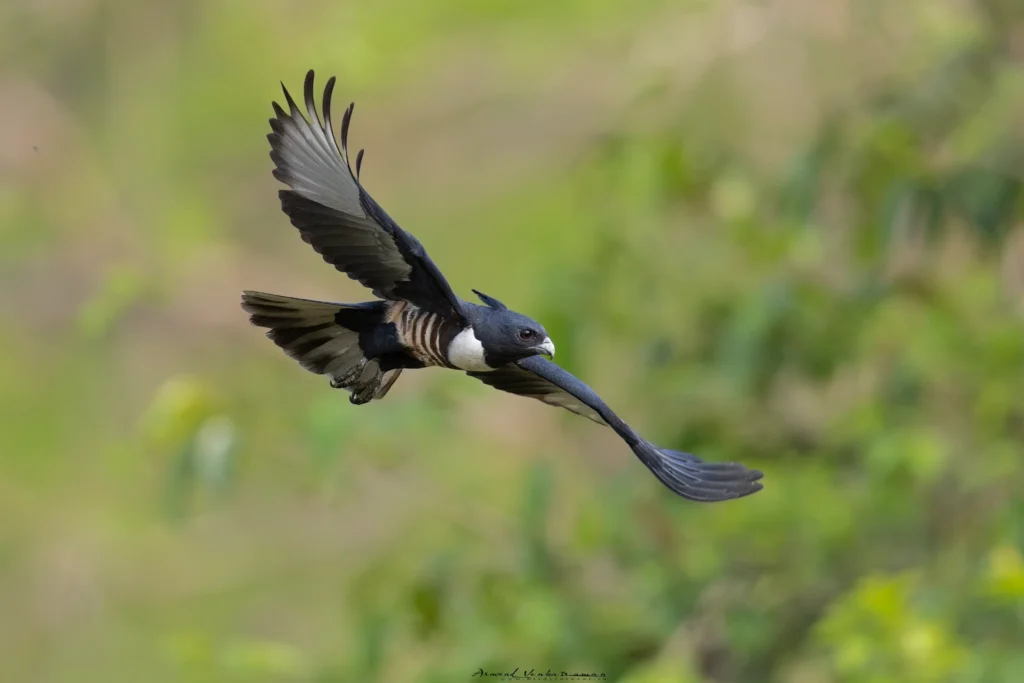
India is one of the world’s most rewarding countries for watching birds of prey. From Black Kites circling above busy cities to Himalayan vultures soaring over mountain valleys and harriers gliding low across winter grasslands, raptors occupy almost every landscape across the country. They are among the easiest birds to notice, yet often the hardest to identify correctly.
For wildlife travellers, learning the basics of raptor identification adds a new dimension to every safari or birdwatching trip. Instead of focusing only on mammals or colourful birds, you’ll begin noticing the silhouettes overhead, the hunting styles across open fields, and the subtle differences between species that at first glance appear remarkably similar.
Raptors also play an essential ecological role. As predators and scavengers, they help regulate prey populations, remove animal carcasses, and serve as indicators of ecosystem health. Unfortunately, many of India’s birds of prey are facing increasing pressure from habitat loss, poisoning, pesticides, electrocution, and other human-related threats. Recent surveys and conservation studies suggest that several species are declining, highlighting the importance of continued research and protection.
This guide explains what makes a bird a raptor, introduces the major groups found in India, explores where they live, and discusses the conservation challenges they face. Whether you’re a beginner, a wildlife photographer, or an experienced birder looking for a practical reference, this article will help you better understand these remarkable birds.
What Is a Raptor?
A raptor, also called a bird of prey, is a bird specially adapted for hunting or scavenging. Raptors share three defining features:
- Excellent eyesight for locating prey from long distances.
- Strong, curved talons for catching or gripping food.
- A hooked beak designed for tearing flesh.
These adaptations allow different raptor species to hunt mammals, birds, reptiles, fish, insects, or, in the case of vultures, feed primarily on carrion. Although their diets vary widely, their anatomy reflects a shared evolutionary role as predators or scavengers.
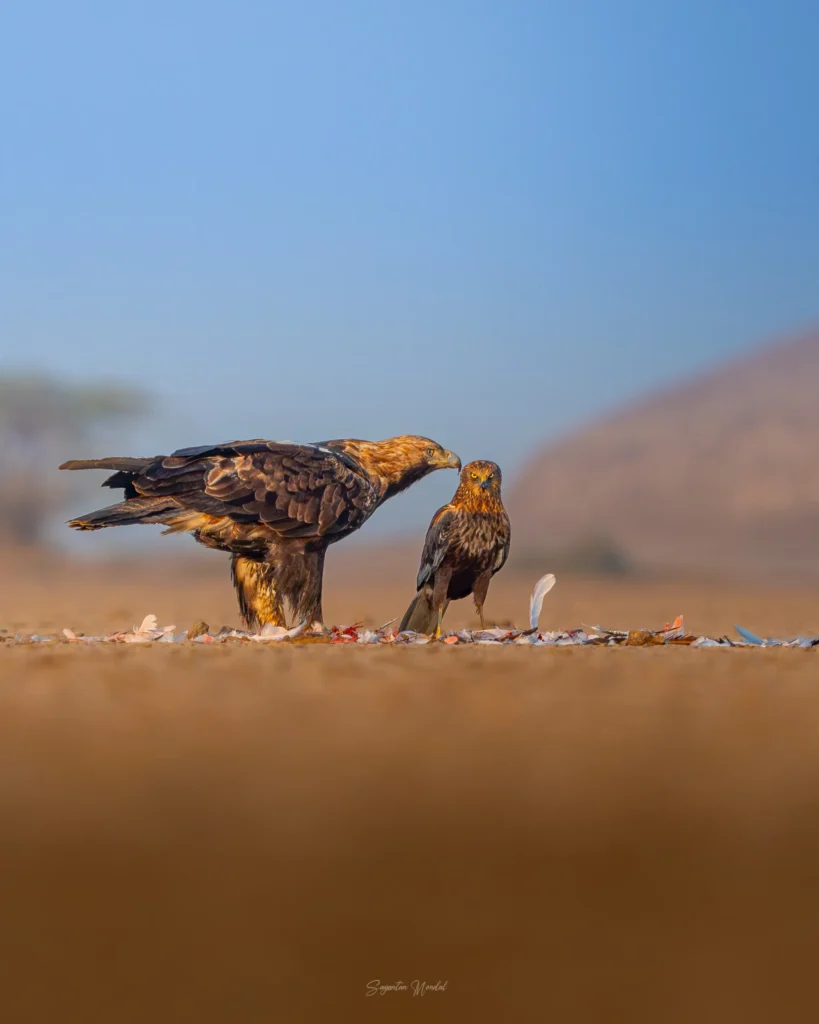
Diurnal and Nocturnal Raptors
Most people associate raptors with birds seen soaring during the day, such as eagles, kites, falcons, and hawks. These are known as diurnal raptors because they are active in daylight.
Owls, however, are nocturnal raptors. While they differ in appearance and behaviour, they possess the same essential hunting adaptations—powerful talons, hooked bills, and exceptional senses. Including owls gives a more complete picture of India’s birds of prey.
Are Vultures Raptors?
Yes. This is one of the most common misconceptions among wildlife enthusiasts.
Although vultures rarely hunt live prey, they are true raptors because they share the anatomical characteristics of birds of prey. Their role as scavengers is just as important as that of hunting raptors. By rapidly consuming animal carcasses, vultures help limit the spread of disease and recycle nutrients back into ecosystems.
Why Raptors Matter
Raptors sit near the top of many food chains. Because they depend on healthy prey populations and suitable habitats, changes in their numbers often reflect broader environmental changes. Declining raptor populations can signal problems such as habitat degradation, pesticide contamination, or disruptions in food availability.
For conservationists, monitoring raptors provides valuable insights into ecosystem health. For birdwatchers and safari travellers, these birds offer an opportunity to observe some of nature’s most specialised hunters in action. Whether it’s a Shikra darting through woodland, an Osprey diving for fish, or a Black Kite effortlessly riding warm air currents above a city, each sighting reveals a different survival strategy shaped by millions of years of evolution.
Field Note: When you’re on safari, don’t keep your eyes fixed on the ground. Spend a few moments scanning the sky at regular intervals. Many memorable wildlife sightings begin as a distant silhouette circling high above the landscape
Major Groups of Raptors Found in India
India supports more than 112 recorded raptor species, although the exact total varies depending on taxonomic treatment and whether vagrant species and nocturnal owls are included. Together, these birds occupy nearly every habitat in the country, from Himalayan cliffs and tropical forests to deserts, wetlands, farmland, and even major cities.
Rather than trying to memorise every species, beginners will find it easier to first understand the major groups of raptors. Each group has distinctive features, hunting techniques, and preferred habitats that make field identification much simpler.
Major Raptor Groups at a Glance
| Group | Typical Features | Common Diet | Common Indian Examples |
| Eagles | Large, broad wings, powerful build | Mammals, birds, reptiles | Steppe Eagle, Tawny Eagle, Greater Spotted Eagle |
| Hawks & Buzzards | Medium-sized, agile hunters | Small mammals, birds, reptiles | Shikra, Common Buzzard |
| Kites | Long wings, graceful soaring flight | Carrion, rodents, fish, insects | Black Kite, Brahminy Kite, Black-winged Kite |
| Falcons | Slim bodies, pointed wings, extremely fast | Birds and small mammals | Peregrine Falcon, Laggar Falcon |
| Harriers | Long wings, long tail, low gliding flight | Rodents, reptiles, ground birds | Montagu’s Harrier, Pallid Harrier, Pied Harrier |
| Serpent-Eagles & Fish-Eagles | Specialised hunters | Snakes or fish | Crested Serpent-Eagle, Osprey |
| Vultures | Large soaring scavengers | Carrion | White-rumped, Egyptian, Red-headed, Himalayan Vultures |
| Owls | Mostly nocturnal with forward-facing eyes | Rodents, insects, birds | Numerous owl species across India |
This table provides a broad introduction. Many individual species vary in size, behaviour, and habitat.
Eagles
Eagles are among India’s largest and most recognisable birds of prey. They have broad wings, strong legs, and powerful talons that allow them to capture relatively large prey. Many species rely on soaring flight, using rising warm air (thermals) to travel long distances while conserving energy.
Some well-known Indian eagles include:
- Steppe Eagle
- Tawny Eagle
- Greater Spotted Eagle
- Indian Spotted Eagle
Several eagle species are difficult to distinguish in the field because they belong to closely related groups with subtle differences in plumage and proportions. Even experienced birders often rely on multiple identification features rather than a single characteristic.
Field Identification Tips
Look for:
- Large overall size
- Broad wings with finger-like primary feathers
- Slow, steady soaring
- Powerful silhouette
- Heavy bill and thick legs
Young eagles frequently look quite different from adults, making age an important factor in identification.
Expert Tip: Don’t try identifying large eagles by colour alone. Pay closer attention to wing shape, proportions, tail length, and flight behaviour.
Hawks and Buzzards
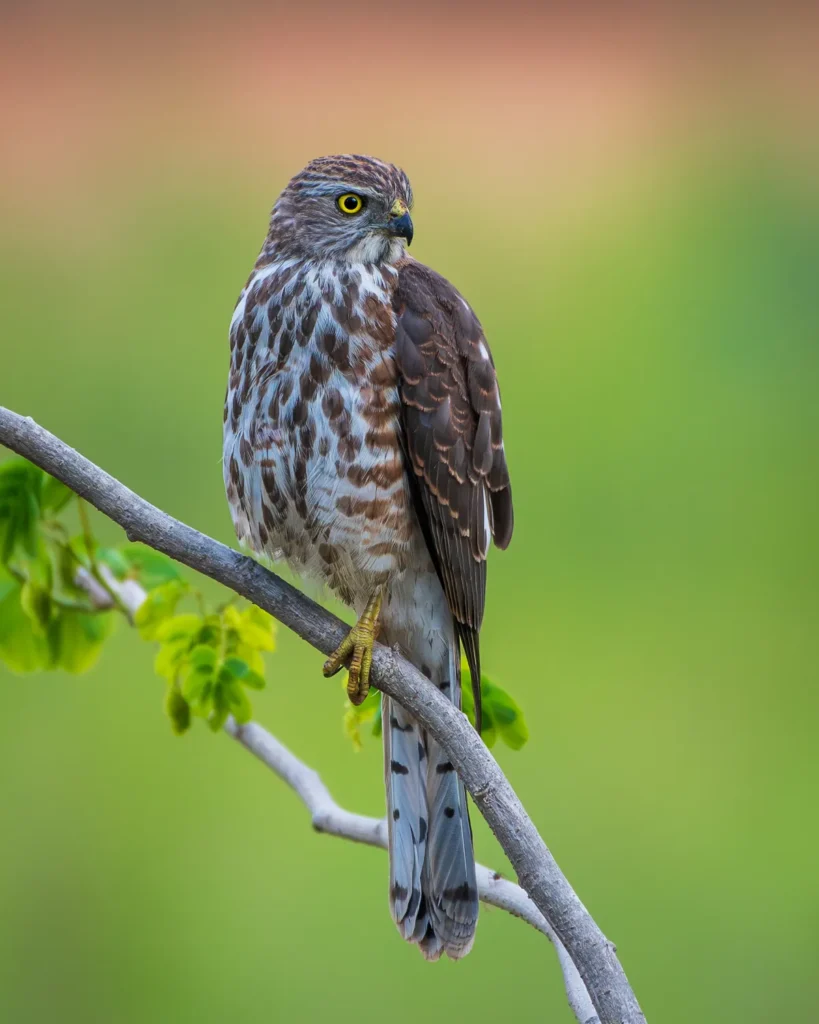
Hawks are generally medium-sized woodland hunters. They are built for agility rather than prolonged soaring and often hunt by making rapid dashes through trees or surprising prey from concealed perches.
One of India’s most familiar hawks is the Shikra, which is frequently seen around villages, agricultural fields, gardens, and city parks.
Buzzards, while related, usually spend more time soaring over open landscapes while searching for prey below.
Typical Prey
- Small birds
- Lizards
- Rodents
- Large insects
Identification Features
- Rounded wings
- Long tails
- Quick wingbeats
- Excellent manoeuvrability
- Upright perching posture
For many birdwatchers, the Shikra becomes the first hawk they learn to identify because of its widespread distribution and frequent sightings.
Kites
Kites are among the easiest raptors for beginners because they are both widespread and highly visible.
The Black Kite is perhaps India’s most familiar bird of prey. It is commonly seen soaring above cities, rivers, farmland, and highways, often taking advantage of thermals and urban food sources.
Another distinctive species is the Brahminy Kite, recognised by its striking chestnut body and contrasting white head and breast.
The Black-winged Kite differs from many other kites by frequently hovering while searching for rodents in open fields.
Typical Characteristics
- Long, relatively narrow wings
- Graceful soaring
- Forked or slightly notched tail in some species
- Opportunistic feeding habits
Because kites spend long periods circling overhead, they often provide excellent opportunities to practise recognising silhouettes.
Photography Tip: Early morning and late afternoon light often highlights the underwing patterns of soaring kites, making identification photographs much easier.
Falcons
Falcons are built for speed rather than soaring.
Unlike eagles and kites, falcons have long, pointed wings and streamlined bodies that allow rapid pursuit of prey in open air.
India’s best-known falcons include:
- Peregrine Falcon
- Laggar Falcon
The Peregrine Falcon is famous worldwide for its spectacular hunting dives, although observing one performing a full-speed stoop requires both patience and luck.
Identification Clues
- Long pointed wings
- Compact body
- Fast, direct flight
- Rapid wingbeats
- High-speed aerial hunting
Falcons usually appear more athletic and streamlined than similarly sized hawks.
Harriers
Harriers are distinctive because they hunt differently from most other raptors.
Instead of soaring high overhead, they fly low across grasslands, marshes, and agricultural fields with their wings held in a shallow V. This slow, buoyant flight allows them to detect rodents, reptiles, and ground-nesting birds hidden in vegetation.
Important Indian species include:
- Montagu’s Harrier
- Pallid Harrier
- Pied Harrier
Many harriers are winter visitors that migrate considerable distances before reaching India.
Where to Look
- Open grasslands
- Wetland margins
- Agricultural landscapes
- Semi-arid plains
Watching a harrier quarter slowly across a field is one of the easiest ways to recognise this group.
Serpent-Eagles and Fish-Eagles
Some raptors have evolved to specialise on particular prey.
Crested Serpent-Eagle
One of India’s most frequently encountered forest raptors, the Crested Serpent-Eagle feeds largely on snakes and other reptiles. Its loud whistling call often reveals its presence before it is seen.
Look for:
- Broad rounded wings
- Short tail
- Prominent crest
- Slow soaring above forest canopy
Osprey
The Osprey is one of the world’s best fish-catching raptors.
It is commonly found around rivers, lakes, reservoirs, estuaries, and coastal waters during migration and winter.
Unlike most other raptors, it plunges feet-first into water to catch fish with specially adapted talons.
Vultures
Vultures are among the most important yet most threatened raptors in India.
Rather than hunting live prey, they feed primarily on carcasses, performing an essential sanitation service by removing dead animals before disease can spread.
Important Indian vultures include:
- Indian White-rumped Vulture
- Egyptian Vulture
- Slender-billed Vulture
- Himalayan Vulture
- Red-headed Vulture
Several species have experienced severe declines, making vulture conservation one of India’s most important wildlife priorities.
Identification Features
- Very broad wings
- Small head adapted for scavenging
- Long periods of effortless soaring
- Often seen in groups around carcasses or cliffs
Field Note: Large soaring birds with bare-looking heads are often vultures rather than eagles. Observing feeding behaviour usually confirms the identification.
Owls
Although many people think only daytime hunters are raptors, owls also belong to the bird-of-prey group.
They differ from diurnal raptors in several ways:
- Mostly active at night
- Large forward-facing eyes
- Exceptional hearing
- Silent flight enabled by specialised feather structure
These adaptations make them highly effective nocturnal predators. They feed mainly on rodents, insects, reptiles, and smaller birds, depending on the species.
Because owls are usually heard before they are seen, learning their calls can be just as useful as learning their appearance.
Birdwatcher’s Decision Guide
If you’re just beginning to identify Indian raptors, start with these widespread and relatively easy species:
| Good Beginner Species | Why They’re Easier |
| Black Kite | Very common, frequently soaring over cities |
| Brahminy Kite | Distinctive colour pattern |
| Shikra | Common in woodland and urban areas |
| Black-winged Kite | Characteristic hovering behaviour |
| Crested Serpent-Eagle | Loud calls and unmistakable forest silhouette |
| Osprey | Easy to recognise around water due to fishing behaviour |
Focusing on a handful of familiar species first will make it much easier to recognise less common raptors as your experience grows.
Identification, Habitats & Migration
Learning to identify raptors takes practice, but you don’t need to memorise every species. Experienced birders usually begin by identifying the group first—such as eagle, kite, harrier, or falcon—and then narrow it down to the species using a combination of shape, behaviour, habitat, and location.
One of the biggest mistakes beginners make is relying only on plumage colour. Light conditions, age, and feather wear can dramatically change a bird’s appearance. Structural features and flight behaviour are often far more reliable.
How to Identify Raptors in the Field
Start with the Silhouette
When a raptor is soaring overhead, its silhouette often provides the first and most useful clue.
Ask yourself:
- How broad are the wings?
- Are the wings pointed or rounded?
- Is the tail short, long, square, rounded, or forked?
- Does the bird glide effortlessly or flap frequently?
- Is it flying high or close to the ground?
With practice, you’ll begin recognising common species before noticing their colours.
Wing Shape
Different raptor groups have evolved wing shapes suited to their hunting style.
| Wing Shape | Usually Indicates | Examples |
| Broad, rounded wings | Efficient soaring | Eagles, vultures |
| Long narrow wings | Graceful gliding | Kites |
| Long pointed wings | Speed | Falcons |
| Long wings held in a shallow V | Low hunting flight | Harriers |
| Broad rounded forest wings | Woodland hunting | Serpent-eagles |
Wing shape is often easier to judge than plumage, especially when birds are flying against bright skies.
Tail Shape
The tail also offers valuable clues.
| Tail Type | Common Groups |
| Broad and rounded | Eagles |
| Long and rounded | Hawks |
| Slightly forked or notched | Black Kite and some other kites |
| Long and narrow | Harriers |
| Shorter and compact | Falcons |
Although tail shape alone rarely identifies a species, combining it with wing shape quickly narrows the possibilities.
Flight Behaviour
Many raptors can be recognised simply by the way they move.
Eagles
- Circle on thermals
- Slow, powerful wingbeats
- Long periods of soaring
Kites
- Relaxed, buoyant flight
- Frequent gliding
- Constant adjustments with the tail
Falcons
- Fast, purposeful flight
- Rapid wingbeats
- High-speed pursuit
Harriers
- Fly low over grasslands
- Gentle rocking motion
- Slowly quarter the ground while searching for prey
Vultures
- Barely flap at all
- Spend long periods soaring
- Often travel in groups
Watching flight style is one of the fastest ways to improve your field skills.
Hunting Techniques
Each raptor group has evolved a different hunting strategy.
| Group | Typical Hunting Style |
| Eagles | Ambushes or powerful aerial attacks |
| Hawks | Fast surprise attacks through woodland |
| Falcons | High-speed pursuit of birds |
| Harriers | Slow searching over grasslands |
| Kites | Opportunistic feeding and scavenging |
| Osprey | Diving feet-first into water |
| Vultures | Locating carcasses while soaring |
Behaviour often reveals more than appearance.
For example, if you see a large bird repeatedly hovering over farmland, you’re unlikely to be watching an eagle. Likewise, a bird plunging into a lake is much more likely to be an Osprey than another large raptor.
Beginner’s Identification Checklist
Instead of asking “Which species is this?”, ask these questions in order:
✓ Is it soaring, gliding, hovering, or flapping?
✓ Is it flying high or close to the ground?
✓ Are the wings broad or pointed?
✓ Is the tail long, short, or forked?
✓ What habitat is it using?
✓ Is it hunting, scavenging, or carrying prey?
✓ Does its behaviour match the group you suspect?
This simple sequence usually produces more accurate identifications than focusing on colour alone.
Expert Tip: Carry binoculars, but don’t spend every second looking through them. Watch the bird with your naked eye first to understand its flight pattern before examining finer details.
Where Raptors Live in India
One reason India supports such a diverse raptor community is its extraordinary range of habitats. Different species have evolved to exploit forests, deserts, mountains, wetlands, grasslands, farmland, and urban environments.
Forests
Forests support one of the richest assemblages of raptors in India.
Recent research from Rajasthan found that forests and woodlands held the highest raptor species richness, even within predominantly arid landscapes.
Typical forest raptors include:
- Crested Serpent-Eagle
- Oriental Honey-buzzard
- Various hawks
- Several owl species
Dense forests favour species that rely on surprise attacks from concealed perches rather than prolonged soaring.
Grasslands and Open Country
Open habitats are ideal for species that hunt by scanning large areas.
Typical grassland raptors include:
- Harriers
- Buzzards
- Eagles
- Black-winged Kite
These landscapes allow birds to detect rodents, reptiles, and ground-nesting birds from the air.
Healthy grasslands remain among India’s most important but least protected bird habitats.
Deserts
The Thar Desert is one of India’s most significant raptor landscapes.
Recent studies have documented impressive species diversity across Rajasthan’s arid and semi-arid regions, while ongoing GPS telemetry work in and around Desert National Park is improving understanding of breeding raptors and their movements.
Visitors may encounter:
- Egyptian Vulture
- Steppe Eagle
- Tawny Eagle
- Various falcons
- Migratory harriers during winter
Field Note: Desert landscapes may appear empty at first glance, but patient scanning often reveals soaring raptors using thermals that form over the warming sand.
Wetlands, Rivers and Coastal Areas
Water bodies attract several specialised raptors.
The best-known is the Osprey, which depends almost entirely on fish.
Wetlands also provide hunting opportunities for:
- Marsh-hunting harriers
- Kites
- Eagles visiting water sources
Large reservoirs and estuaries become especially productive during winter migration.
Mountains and Himalayan Landscapes
The Himalayas support a distinct community of raptors adapted to high elevations.
Large soaring birds use mountain updrafts created by valley winds and cliffs.
Important regions include:
- Himalayan foothills
- Eastern Himalayas
- Upper Brahmaputra Valley
These landscapes are recognised for their high raptor diversity and remain priorities for both birdwatching and conservation.
Agricultural Landscapes
Many people overlook farmland as birdwatching habitat.
Yet agricultural fields often support:
- Black-winged Kites
- Shikras
- Harriers
- Buzzards
- Black Kites
Rodents, reptiles, insects, and small birds make cultivated landscapes attractive hunting grounds for many adaptable species.
Urban Environments
Some raptors have adapted remarkably well to human settlements.
The Black Kite is perhaps the best example. It thrives in many Indian cities, where warm air currents, abundant food, and nesting opportunities allow healthy populations to persist.
Urban birdwatching can therefore provide excellent opportunities to study raptor behaviour without travelling to protected areas.
Habitat Comparison
| Habitat | Raptors Commonly Seen |
| Forests | Serpent-eagles, hawks, owls, Honey-buzzards |
| Grasslands | Harriers, eagles, buzzards |
| Deserts | Eagles, vultures, falcons, harriers |
| Wetlands | Osprey, harriers, kites |
| Mountains | Vultures, eagles, Himalayan specialists |
| Farmland | Kites, Shikras, Black-winged Kite |
| Cities | Black Kite, Shikra |
Resident and Migratory Raptors
India hosts both year-round resident raptors and species that migrate thousands of kilometres each year. Understanding this distinction helps birdwatchers know what to expect during different seasons.
Resident Raptors
Resident species breed and remain in India throughout the year.
Examples include:
- Black Kite
- Shikra
- Brahminy Kite
- Crested Serpent-Eagle
- Oriental Honey-buzzard
These birds can generally be observed in suitable habitats regardless of season.
Winter Visitors
Many raptors arrive during autumn and spend the winter in India before returning to breeding grounds farther north.
Examples include:
- Steppe Eagle
- Pallid Harrier
- Montagu’s Harrier
- Greater Spotted Eagle
Winter therefore offers excellent opportunities to observe species that are absent during the breeding season.
Why Migration Matters
Migration is one of the most demanding stages in a raptor’s life. Birds travelling across countries depend on a chain of suitable habitats for feeding and resting. Problems anywhere along these routes—from habitat loss to poisoning or collisions with infrastructure—can affect populations even if their breeding areas remain intact.
For birdwatchers, seasonal movements also explain why a species seen regularly in one region during winter may be completely absent a few months later.
Responsible Birdwatching Tip: If you encounter roosting or nesting raptors, observe from a respectful distance. Repeated disturbance can cause birds to abandon nests or expend valuable energy, particularly during migration and breeding seasons.
Conservation, Best Places to Watch Raptors & Practical Birding Advice
India’s raptors face a wide range of conservation challenges. While some adaptable species, such as the Black Kite, continue to thrive in human-dominated landscapes, many others have experienced significant declines. Recent research also highlights that several Indian raptor species remain poorly studied, making continued monitoring and scientific research essential for effective conservation.
Why Raptors Are Declining
Raptors occupy the top of the food chain, which makes them particularly vulnerable to environmental change. Problems affecting prey populations, habitats, or food quality eventually affect the birds themselves.
The State of India’s Birds 2023 assessment identified many raptors among the country’s declining bird groups, while recent research continues to highlight the need for species-specific conservation efforts.
Habitat Loss and Fragmentation
As forests, grasslands, wetlands, and open landscapes are converted for agriculture, urban development, and infrastructure, suitable nesting and hunting areas become increasingly fragmented.
Large soaring raptors often require extensive territories, while woodland hunters depend on mature forests with adequate prey. Even if birds survive habitat loss, fragmentation can reduce breeding success and increase competition for remaining resources.
Poisoning
Poisoning remains one of the most serious threats, particularly for scavenging raptors.
Vultures and other scavengers may consume carcasses contaminated with toxic substances intended to kill predators or feral animals. Secondary poisoning can affect multiple birds feeding on the same carcass.
Because many scavengers gather together, a single poisoning incident can impact several individuals at once.
Pesticides and Environmental Contamination
Raptors accumulate pollutants through the food chain.
Chemicals used in agriculture can affect prey species and gradually concentrate in predators that feed on them. Long-lived birds are especially vulnerable because contaminants may build up over many years.
Although the effects vary among species and locations, pesticide accumulation continues to be recognised as an important conservation concern.
Electrocution and Collisions
Power infrastructure presents another growing challenge.
Large birds with broad wings may be electrocuted when perching on unsafe power structures, while collisions with wires can injure or kill both soaring and migratory species.
These risks are particularly significant in open landscapes where transmission lines intersect important flight paths.
Reduced Food Availability
Changes in land use can reduce populations of:
- Rodents
- Reptiles
- Fish
- Ground-nesting birds
- Other natural prey
Scavenging species may also face reduced access to safe carcasses, affecting breeding success and survival.
Human Disturbance
Repeated disturbance around nesting sites can lead to nest abandonment or reduced breeding success.
Activities that may affect breeding birds include:
- Off-road driving
- Frequent photography at close range
- Recreational climbing near nesting cliffs
- Tree felling during the breeding season
- Unregulated tourism
Responsible wildlife viewing helps minimise these impacts.
Current Conservation Efforts
Although the challenges are significant, several encouraging initiatives are improving understanding of India’s raptors.
State of India’s Birds
The 2023 State of India’s Birds assessment brought renewed attention to declining raptor populations and highlighted the need for stronger monitoring, habitat protection, and research into the causes of population change.
Rajasthan Raptor Research
A 2025 study from Rajasthan documented 43 raptor species across multiple habitat types.
One of its notable findings was that forests and woodlands supported the highest species richness, closely followed by open habitats and rangelands. This reinforces the importance of conserving a variety of landscapes rather than focusing on a single habitat type.
Tamil Nadu Statewide Survey
A statewide survey completed in 2026 recorded 51 raptor species and more than 5,600 individual birds from nearly 3,900 observations.
The survey highlighted southern forests as important refuges for threatened vultures and demonstrated the value of coordinated, large-scale monitoring programmes.
GPS Tracking in the Thar Desert
Modern conservation increasingly relies on satellite technology.
Recent work in and around Desert National Park has begun using GPS telemetry to track breeding raptors. These studies provide valuable information about movement patterns, habitat use, and threats that would be difficult to understand through ground observations alone.
Citizen Science
Birdwatchers also contribute to conservation.
Observations submitted through organised bird-monitoring programmes help researchers:
- Track migration timing
- Monitor long-term population trends
- Identify important habitats
- Detect changes in species distribution
These records become increasingly valuable when collected consistently over many years.
Responsible Tourism Tip: Report what you observe, but avoid publicly sharing the exact locations of active nests of rare raptors. Limiting disturbance can improve breeding success.
Threats and Conservation Responses
| Major Threat | Why It Matters | Conservation Response |
| Habitat loss | Reduces nesting and hunting areas | Habitat protection and restoration |
| Poisoning | Can kill multiple scavengers | Better regulation and awareness |
| Pesticides | Contaminate the food chain | Safer agricultural practices |
| Electrocution | Causes direct mortality | Bird-safe power infrastructure |
| Human disturbance | Affects breeding success | Responsible tourism and protected nesting sites |
| Knowledge gaps | Some species remain poorly studied | Long-term monitoring and research |
Best Places to Watch Raptors in India
Because different raptors prefer different habitats, no single destination offers every species. Visiting a variety of landscapes throughout the year provides the greatest diversity.
Rajasthan
Rajasthan is among India’s premier raptor destinations.
Its combination of deserts, grasslands, forests, wetlands, and rocky hills supports a wide variety of birds of prey. The Thar Desert and Desert National Park are especially important for eagles, vultures, falcons, and migratory species. Recent research has further highlighted the region’s significance for raptor conservation.
Eastern Himalayas
The Eastern Himalayas support one of the country’s richest bird communities.
Landscapes including Assam, the Upper Brahmaputra Valley, and the Manas–Kaziranga region provide opportunities to observe forest raptors, soaring eagles, and seasonal migrants.
Western Ghats
The forests of the Western Ghats are particularly rewarding for woodland species.
Visitors should look for:
- Crested Serpent-Eagle
- Oriental Honey-buzzard
- Forest hawks
- Several owl species
Dense forest can make sightings brief, but patient observation often yields excellent views.
Central India
Tiger reserves and surrounding forests in central India support a healthy diversity of birds of prey.
Even while searching for mammals, visitors frequently encounter:
- Crested Serpent-Eagle
- Black Kite
- Shikra
- Various eagles
- Owls
Looking upward between mammal sightings often reveals species that many safari visitors overlook.
Tamil Nadu
The statewide survey completed in 2026 demonstrated the importance of Tamil Nadu’s forests for raptor diversity, particularly for threatened vultures.
The state’s varied landscapes—including forests, hills, wetlands, and agricultural areas—support both resident and migratory species.
Himalayan Foothills
River valleys, cliffs, and mountain forests provide excellent opportunities to observe soaring vultures, large eagles, and seasonal migrants using natural updrafts.
Where Beginners Should Start
If your goal is simply to begin recognising India’s birds of prey, you do not need to travel to remote wilderness.
Start by visiting:
- A nearby wetland
- An urban park
- Agricultural fields
- A city riverfront
- A protected forest
- A local bird sanctuary
These habitats often produce sightings of common species such as Black Kites, Shikras, Brahminy Kites, and Black-winged Kites, allowing you to build identification skills before searching for rarer birds.
Practical Checklist for Your First Raptor-Watching Trip
Before heading out, consider carrying:
- ✓ 8×42 or 10×42 binoculars
- ✓ A field guide or bird identification app
- ✓ Notebook or birding journal
- ✓ Camera with a telephoto lens (optional)
- ✓ Drinking water and sun protection
- ✓ Neutral-coloured clothing
- ✓ Patience—many of the best sightings come after long periods of scanning the sky.
Photography Tip: Resist the temptation to move closer to a perched raptor. A relaxed bird behaving naturally almost always results in better photographs than one flushed by human presence.
Common Misconceptions, Frequently Asked Questions & Conclusion
Common Misconceptions About Raptors
Birds of prey are often misunderstood, particularly by people who are new to birdwatching. Clearing up a few common misconceptions can make identifying and appreciating raptors much easier.
“Raptors are only eagles.”
This is one of the most widespread misconceptions.
Eagles are only one group within the larger raptor family. India’s birds of prey also include hawks, buzzards, kites, falcons, harriers, serpent-eagles, fish-eagles, vultures, and owls. Each group has evolved different hunting strategies and occupies different ecological niches.
“All raptors hunt live prey.”
Not all do.
While eagles, falcons, hawks, and harriers actively hunt, vultures are specialised scavengers. Rather than catching live prey, they locate and consume carcasses, helping to remove animal remains from the environment and reducing the spread of disease.
“Owls aren’t raptors.”
They are.
Owls possess the same defining characteristics as other birds of prey:
- Hooked beaks
- Powerful talons
- Exceptional vision and hearing
- A carnivorous diet
The main difference is that most owls are active at night, while most other raptors are active during the day.
“All large soaring birds are eagles.”
Large birds soaring overhead are often identified as eagles when they may actually be vultures, kites, or buzzards.
Experienced birdwatchers first examine:
- Wing shape
- Tail shape
- Flight style
- Habitat
- Behaviour
Only then do they attempt species identification.
“If a species migrates, it isn’t threatened.”
Migration does not guarantee safety.
Migratory raptors depend on suitable habitats across several countries during their annual journeys. Habitat loss, poisoning, collisions, or hunting anywhere along these routes can affect their populations.
“Common birds don’t need conservation.”
Some widespread species remain abundant, but many of India’s raptors are experiencing long-term declines.
Recent research shows that several species remain poorly studied, making continued monitoring essential for understanding population trends and conservation priorities.
Frequently Asked Questions
What is a raptor?
A raptor is a bird of prey equipped with keen eyesight, powerful talons, and a hooked beak for hunting or scavenging. India’s raptors include eagles, hawks, kites, falcons, harriers, vultures, serpent-eagles, fish-eagles, and owls.
How many raptor species are found in India?
Recent compilations record more than 112 raptor species in India. The exact number varies depending on taxonomic treatment and whether nocturnal owls and occasional vagrant species are included.
Are vultures considered raptors?
Yes.
Although vultures feed primarily on carrion, they share the defining anatomical features of birds of prey and are an important part of India’s raptor community.
Are owls included among raptors?
Yes.
Owls are nocturnal birds of prey and belong to the broader raptor group, even though they differ in behaviour from most daytime hunting species.
Which raptors are easiest for beginners to identify?
Many beginners start with:
- Black Kite
- Brahminy Kite
- Shikra
- Black-winged Kite
- Crested Serpent-Eagle
- Osprey
These species are either widespread, distinctive in appearance, or have characteristic flight behaviour.
What is the difference between an eagle and a hawk?
In general:
- Eagles are larger, broader-winged birds built for soaring and taking larger prey.
- Hawks are usually smaller, more agile hunters adapted to woodland and surprise attacks.
However, there is considerable variation between species, so size alone should not be used for identification.
Which Indian raptors migrate?
Several species visit India during winter, including:
- Steppe Eagle
- Greater Spotted Eagle
- Montagu’s Harrier
- Pallid Harrier
Resident species such as the Black Kite and Shikra remain in India throughout the year.
Where are the best places to watch raptors in India?
Some of the country’s most rewarding raptor landscapes include:
- Rajasthan and the Thar Desert
- Desert National Park
- Eastern Himalayas
- Western Ghats
- Central Indian forests
- Tamil Nadu
- Himalayan foothills
Different regions support different species, so visiting a range of habitats provides the greatest diversity.
Why are many raptors declining?
Current research identifies several major threats, including:
- Habitat loss
- Poisoning
- Pesticide accumulation
- Electrocution
- Human disturbance
- Reduced prey availability
The importance of each threat varies among species and regions.
How can birdwatchers help conserve raptors?
Simple actions can make a meaningful difference:
- Observe birds from a respectful distance.
- Avoid disturbing nests or roosts.
- Record sightings through citizen science platforms.
- Support protected areas and responsible tourism.
- Learn to identify species accurately before sharing observations.
Every reliable sighting contributes to a better understanding of India’s raptor populations.
Conclusion
Raptors are among India’s most fascinating birds, not only because of their size and hunting ability but also because they reveal the health of the landscapes they inhabit. Whether soaring above deserts, gliding over wetlands, patrolling forests, or circling above busy cities, these birds occupy an important place in the country’s ecosystems.
For birdwatchers, learning to identify raptors begins with careful observation rather than memorising long species lists. Paying attention to silhouette, wing shape, flight style, habitat, and behaviour will quickly improve your field skills and make every outing more rewarding.
At the same time, India’s birds of prey face increasing challenges. Habitat loss, poisoning, electrocution, and other human-related pressures continue to affect many species, while research has shown that numerous raptors remain under-studied. Ongoing surveys, satellite tracking, and citizen science projects are helping fill these knowledge gaps, but long-term conservation will depend on continued research, habitat protection, and responsible wildlife tourism.
The next time you’re exploring a national park, driving through open countryside, or simply looking up from a city street, take a moment to scan the sky. A soaring silhouette could be the start of a deeper appreciation for one of India’s most important—and often overlooked—groups of birds.