Plan an affordable Indian wildlife trip. Discover the best tiger reserves, rhino parks, and birding destinations you can realistically visit under ₹50,000.
Best Safari Destinations in India Under Rs 50,000
A safari in India does not have to cost a fortune. With the right park, season, and booking strategy, you can plan a highly rewarding wildlife trip under Rs 50,000.
For most travelers, Rs 50,000 is a very realistic budget for a two to four-night wildlife trip, provided you manage your transport and accommodation efficiently. Budget safari packages in India are often marketed between Rs 15,000 and Rs 25,000 for three to four days. The key to staying within this budget is balancing the number of park drives you take with the type of accommodation you book.
The Reality of a ₹50,000 Safari Budget
When planning an affordable wildlife trip, it is vital to separate your core wildlife goals from luxury hospitality. A Rs 50,000 trip works perfectly for a solo traveler or a couple taking two to four safaris, staying in budget or mid-range lodges, and using regional transport.
If your starting point is a major metro city like Delhi, Mumbai, Bengaluru, or Kolkata, reaching the park is often the biggest variable in your budget. A long-haul, flight-heavy itinerary may easily breach your Rs 50,000 cap unless you deliberately reduce your safari count or choose cheaper lodging. Conversely, choosing a park within driving or train distance leaves more money for actual park permits and guides.
Expert Tip: Public reporting in 2025 and 2026 highlights stronger scrutiny on tiger tourism. This includes strict restrictions on core-habitat disturbance and a complete ban on night tourism. Because routes are pre-designated and tightly controlled by the National Tiger Conservation Authority (NTCA), booking early and choosing the right zone matters more than ever.
How Much a Budget Safari Actually Costs
Understanding where your money goes allows you to adjust your trip to fit your specific needs. Here is how a Rs 50,000 budget breaks down for a typical three-day, two-night trip for two people.
| Expense Category | Estimated Cost Range (₹) | What This Covers |
| Transport | 5,000 – 15,000 | Train tickets or a self-driven road trip from a nearby major city. Flights will push this higher. |
| Stay | 6,000 – 12,000 | Two to three nights in a budget or mid-range wildlife lodge, forest rest house, or homestay. |
| Safaris & Permits | 10,000 – 18,000 | Two to three private jeep safaris (including permit, vehicle fee, and mandatory guide). |
| Food & Transit | 4,000 – 8,000 | Meals (if not included in the stay) and local transfers from the railway station or bus stand to your lodge. |
| Contingency | 3,000 – 5,000 | Tips for guides and drivers, camera fees, or minor emergency expenses. |
Transport Costs
Road trips and overnight trains are the most effective ways to protect your safari budget. For example, traveling from Delhi to Jim Corbett or Ranthambore by train keeps transport costs minimal, leaving plenty of room in your budget for multiple private jeeps. If you must fly, book well in advance to prevent airfare from consuming half of your total trip budget.
Stay and Food Costs
You do not need to stay in a luxury tent to see wildlife. Many excellent budget and mid-range properties sit just outside the park gates. Booking a plan that includes all meals (AP or American Plan) is often more cost-effective because isolated safari lodges have few independent dining options nearby.
Safari Permits and Vehicle Costs
Safari costs are never a flat rate. The price depends heavily on the season, the specific zone you choose, the vehicle type, and the booking channel.
- Jeep Safaris: These are private vehicles (usually seating up to six) and offer the best mobility and photography angles. You pay for the permit, the vehicle hire, and the guide fee.
- Canter Safaris: If you are traveling solo or simply want to cut costs, canters (shared open-air buses) dramatically reduce your park entry expenses.
Field Note: Do not show up at a popular tiger reserve expecting to buy a permit at the gate. Safari routes are strictly allocated to prevent overcrowding in core zones. Last-minute bookings often force you into less productive buffer zones or completely sold-out situations.
Top Safari Destinations Ranked by Value (Tigers & Big Cats)
If your primary goal is to spot a tiger on a budget, you do not need to book the most expensive lodges. The cost of your trip will depend heavily on how early you book, the type of zone you choose, and your willingness to use shared safaris. Here are the most reliable big-cat destinations that comfortably fit a Rs 50,000 budget.
Tadoba-Andhari Tiger Reserve: The Best Overall Tiger Value
If your priority is seeing a tiger without spending a fortune, Tadoba-Andhari Tiger Reserve is often the most reliable choice because of its strong sighting appeal and availability of good value stays. Notified in 1995, the reserve covers approximately 1,727 sq km.
- Why it fits the budget: Tadoba offers a wide range of affordable accommodations near popular gates, keeping your daily overheads low.
- Sighting appeal: The park’s dry landscape forces animals toward water sources, providing an excellent chance to see tigers without paying for premium, multi-day packages.
- Expert Tip: Booking early is critical because routes and quotas matter significantly in Tadoba. The National Tiger Conservation Authority (NTCA) enforces strict route stability, meaning you cannot change your designated path once inside. Securing a core zone permit well in advance is the best way to maximize your chances.
Bandhavgarh Tiger Reserve: The High-Aspiration Tiger Trip
If you want the highest chance of big-cat sightings and are willing to manage your spending carefully, Bandhavgarh should be your top choice. Spanning 1,536.936 sq km, this compact park is highly focused on tiger tourism.
- Why it fits the budget: Bandhavgarh is in high demand, and costs can rise significantly during peak season. To keep this trip under Rs 50,000, you must limit your stay to two or three nights and choose budget lodging.
- Zone strategy: The reserve is strictly split into core and buffer zones. Securing a ticket for a premium core zone requires booking exactly when the permit window opens. Buffer zones are easier to book but fundamentally alter your sighting odds.
Ranthambore National Park: The Heritage Safari
Ranthambore is the most cost-effective tiger destination for travelers starting from northern cities like Delhi because it offers cheap transport connectivity and affordable safari options.
- Why it fits the budget: Ranthambore is one of the few major parks that heavily utilizes canter safaris (shared, open-air vehicles) alongside private jeeps. Sharing a ride dramatically lowers your park entry and vehicle expenses.
- Decision Guide: If you are traveling solo or simply want to maximize your time in the forest without paying full price for a private jeep, canters are the best way to save money while still accessing prime tiger territory.
Pench Tiger Reserve: The Best for Families and First-Timers
Pench is the best choice for families and first-time visitors because it combines balanced costs, easy road access from central India, and excellent tourism infrastructure. Established in 1999, the reserve spans between 742 and 758 sq km.
- Why it fits the budget: The park features a highly developed local network of affordable family resorts, making it easy to find competitive pricing on accommodation and meals.
- Family Travel Tip: The logistics of getting from the lodges to the park gates in Pench are very straightforward. This ensures a safe, comfortable, and low-friction itinerary that is perfectly suited for travelers with young children.
The Best Destinations for Rhinos, Elephants, and Non-Tiger Safaris
A common misconception among first-time wildlife travelers is that tiger safaris are the only worthwhile safaris in India. In reality, destinations focused on rhinos, elephants, birds, and river ecosystems offer incredibly rich wildlife experiences and are often much kinder to a Rs 50,000 budget. Choosing a non-tiger park frequently means less competition for permits, cheaper accommodation, and fewer crowds.
Kaziranga National Park: The Rhino Sanctuary
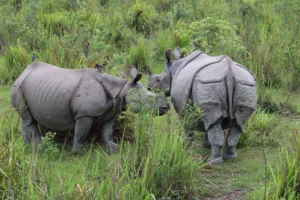
If you want to see megafauna beyond big cats, Kaziranga provides exceptional value for money. Covering about 430 sq km, the park was designated a UNESCO World Heritage Site in 1985 and is globally famous for its population of the one-horned rhinoceros.
- Why it fits the budget: Kaziranga offers unique wildlife at a moderate cost, making it an excellent non-tiger alternative. The availability of shared safari options, including elephant and jeep routes, helps distribute costs.
- Wildlife profile: Beyond rhinos, it is highly reliable for spotting Asian elephants, wild water buffalo, swamp deer, and a massive variety of migratory birds. Even though it was declared a tiger reserve in 2006, the primary draw remains its herbivore population.
- Photography Tip: Because the terrain consists largely of tall elephant grass and open wetlands, you rarely have to peer through dense forest canopies. This makes it much easier to photograph wildlife from a distance without needing expensive, high-end telephoto lenses.
Jim Corbett: Elephants and Forest Diversity
While Jim Corbett is famous for tigers, it is equally rewarding for travelers who want to see wild elephants and diverse birdlife without exceeding a Rs 50,000 cap.
- Why it fits the budget: Corbett features a massive tourism ecosystem with a wide range of stays across different safari zones. Because it is a manageable road trip or train ride from Delhi, northern travelers save substantially on transport.
- Logistical warning: Logistics and costs vary significantly by zone. Some zones require long drives from the main town of Ramnagar, which increases local transit costs. Booking accommodations close to your designated entry gate is critical to keeping daily expenses low.
Sundarbans: The Mangrove Boat Safari
The Sundarbans offers a completely distinct experience from a standard central Indian jungle safari. Inscribed as a UNESCO World Heritage Site in 1987, it is the world’s largest mangrove forest.
- Why it fits the budget: Instead of booking expensive private jeeps, safaris here are entirely boat-based. Hiring a boat—often shared among larger groups—is highly cost-effective and provides a completely different perspective on wildlife viewing.
- What to expect: You are looking for saltwater crocodiles, river dolphins, mangrove fauna, and migratory birds. While tigers live here, spotting them in the dense mangroves is extremely rare. Manage your expectations and treat it as a scenic nature and birding trip rather than a guaranteed big-cat tracking expedition.
Periyar: Budget-Friendly Nature and Birding
Located in the southern state of Kerala, Periyar is highly recommended for travelers who prefer relaxed nature travel over intense safari schedules.
- Why it fits the budget: Periyar is often cheaper than big-cat reserves because the primary activity is large, shared boat safaris on the lake rather than private jeep rentals.
- Responsible Tourism Tip: Walking safaris and guided nature treks are also available at very low costs here. These low-impact activities are strictly regulated by the forest department and offer a quiet, highly immersive way to spot elephants and endemic bird species on a tight budget.
How to Plan the Trip
A successful budget safari requires discipline during the planning phase. If you leave logistics to the last minute, you will likely be forced into expensive private packages or miss out on park entry altogether.
Booking Timeline and Permit Rules
Do not plan your transport before securing your safari permits. Safari permits for popular parks are released online weeks or months in advance, and premium core zones sell out within minutes of opening.
- Core vs. Buffer: Core zones represent the undisturbed habitat where wildlife activity is often highest, while buffer zones lie on the park’s periphery. Core zone permits are always the first to sell out.
- Permit Linking: Your safari permit is linked to your ID (usually a passport or Aadhaar card). You must carry the exact original document you used for booking when you arrive at the park gate.
Route and Zone Selection
In most Indian tiger reserves, you do not get to roam freely.
- Route Enforcement: The National Tiger Conservation Authority (NTCA) enforces strict route designations. Once a route is allocated to your vehicle, route stability rules prevent you from changing it to chase sightings in other parts of the reserve.
- Gate Distances: Always map the distance between your chosen accommodation and your designated entry gate. Booking a cheap hotel is a false economy if you have to pay a local taxi a steep premium to drive you 40 kilometers to your safari gate at 5:00 AM.
Practical Checklist: What to Pack for an Indian Safari
Keep your luggage light and practical. Wildlife lodges have limited laundry facilities, and you will be spending hours in dusty, open vehicles.
- Clothing: Pack muted, earth-toned clothing (greens, browns, and khakis) to avoid alarming animals.
- Layers: Morning safaris are freezing in the winter months (especially in northern parks like Corbett and Ranthambore), but temperatures rise sharply by midday. Dress in layers.
- Protection: Bring a wide-brimmed hat, polarized sunglasses, and a buff or scarf to protect your face from heavy dust.
- Gear: A decent pair of binoculars (8×42 or 10×42) is far more important than a massive camera lens.
Common Mistakes That Blow the Budget
- Flying directly to the nearest airport: Flights often consume the bulk of a Rs 50,000 budget. Prioritize overnight trains or road trips if you live within a 12-hour radius of the park.
- Assuming you can buy a ticket at the gate: Showing up without a pre-booked permit means you will either be denied entry or forced to pay inflated rates for third-party cancellations, which are strictly regulated anyway.
- Ignoring the monsoon closures: Most central and northern Indian parks shut down their core zones from July to September due to monsoon rains. Do not book non-refundable flights for July assuming the park will be open.
- Overlooking hidden local transit costs: Transferring from a railway station (like Sawai Madhopur or Ramnagar) to your lodge costs money. Factor this local transit into your initial budget calculation.
Frequently Asked Questions (FAQs)
Which safari destinations in India are best under Rs 50,000? Tadoba, Pench, Ranthambore, Jim Corbett, and Bandhavgarh are highly viable for tigers. For non-tiger wildlife, Kaziranga, Sundarbans, and Periyar offer excellent value for money.
Is Ranthambore possible under Rs 50,000? Yes. Ranthambore is highly accessible by train and offers canter (shared vehicle) safaris, which dramatically reduce permit and entry costs.
Are shared safaris (canters) cheaper than private jeeps? Yes. Canters are large, open-air vehicles that allow you to split the cost of the guide and entry fees with other passengers. They are the most effective way to protect a tight budget.
Which park has the best chance of tiger sightings for the price? Tadoba-Andhari Tiger Reserve currently offers one of the best balances of sighting probability and budget-friendly accommodation.
How early should safari permits be booked? You should monitor the specific state forest department website and book the moment the permit window opens, which is typically 45 to 120 days in advance depending on the state.
Are night safaris allowed in India? No. Recent Supreme Court directives and public reporting from 2025–2026 indicate a strict ban on night tourism in tiger reserves to prevent core-habitat disturbance.
Final Recommendation by Traveler Type
Planning a safari under Rs 50,000 comes down to choosing the park that matches your travel style and origin city.
- Best Overall Safari (Value & Sightings): Tadoba. It offers an excellent tiger population, dry terrain that makes spotting easier, and a strong network of budget lodges.
- Best for High Tiger-Sighting Aspiration: Bandhavgarh. If you are willing to manage your spending tightly on food and stay, Bandhavgarh’s core zones offer highly reliable big-cat encounters.
- Best for Families: Pench. With straightforward logistics, short travel times from central Indian hubs, and comfortable, affordable resorts, Pench is low-stress and highly rewarding.
- Best Alternative to Tiger Safaris: Kaziranga. For travelers who want rich biodiversity without the intense competition for tiger permits, Kaziranga delivers rhinos, elephants, and vast wetlands at a very reasonable price.
Conclusion
Planning a memorable wildlife safari in India under Rs 50,000 is entirely achievable with the right preparation. By shifting your focus from luxury accommodations to the wilderness itself, you can maximize your time inside the gates of India’s top reserves.
The secret to success lies in two simple steps: booking your forest department permits early to secure preferred zones, and choosing destinations easily accessible via train or road to preserve your budget for the actual safaris. Whether you choose the big-cat strongholds of central India, the unique rhino habitats of Assam, or the tranquil boat-based networks of the Sundarbans, India’s wilderness remains highly accessible to budget-conscious travelers. Grab your binoculars, plan your dates carefully, and experience the incredible natural heritage of the subcontinent without breaking the bank.
Author Note & Update Log: Written by Anjali Arora, WildlifeSafaris.in Editorial Team. Last Updated: August 2026.
Top Wildlife Destinations : Topics Cluster
- Top 10 Tiger Reserves Ranked by Tiger Sightings
- Top 25 National Parks in India
- Indian Wildlife Bucket List : Top 25 Experiences
- India Wildlife : Top 20 Destinations
- Why India is a world class safari destination?
- Corbett vs Ranthambore
- Kanha vs Bandhavgarh
- Tadoba vs Pench Parks Comparison
- Best Family-friendly Wildlife Destinations
- Best Wildlife Destinations for Couples