
Deciding between an India or Kenya safari? Compare wildlife, real travel costs, sighting chances, and park logistics to choose your perfect trip.
Introduction & Overview
Choosing between a safari in India and one in Kenya comes down to a simple priority: decide whether your primary goal is to track a single, elusive big cat in dense forests or to view large volumes of diverse species across open plains.
India is the clear choice if your main travel objective is to see the Bengal tiger in the wild, alongside unique Asian species like the one-horned rhinoceros. Kenya is the correct option if you want to experience the classic African plains, see the complete Big Five, or witness millions of herbivores moving during a mass migration.
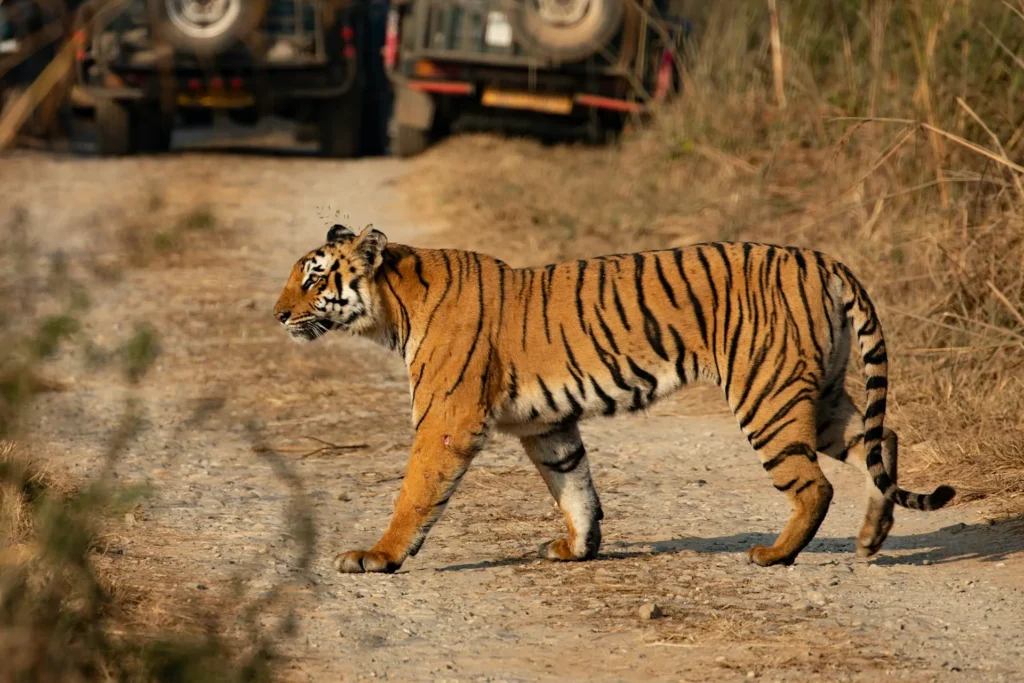
Both countries offer highly organized wildlife systems, but they deliver entirely different tracking styles, landscapes, and travel paces. Understanding these operational and ecological differences is the most reliable way to ensure you select the right destination for your budget and travel preferences.
India vs Kenya Safari at a Glance
The Core Differences Explained
The operational style of a safari shifts dramatically between these two nations. In India, safaris are highly regulated, vehicle-restricted trackings conducted within strictly defined zones of governmental tiger reserves. You are searching for an animal that uses dense undergrowth and forest terrain for camouflage, making the experience feel like an active, patient tracking puzzle.
In contrast, a Kenyan safari utilizes vast, open savannah environments where wildlife is frequently visible across long distances. The movement of vehicles within national parks is governed by park authorities, while private conservancies allow for off-road driving and night drives, offering open, flexible exploration.
Which Destination Suits Which Traveler?
To make the right choice, look closely at how each destination aligns with your specific travel style, budget comfort, and wildlife priorities.
| Feature | India Safari | Kenya Safari |
| Primary Wildlife Focus | Bengal tiger, one-horned rhino, Asiatic lion, sloth bear | African lion, leopard, elephant, Cape buffalo, rhino, cheetah |
| Top Parks & Reserves | Ranthambore, Kaziranga, Bandhavgarh, Kanha, Corbett, Gir | Masai Mara, Amboseli, Samburu, Tsavo, Lake Nakuru |
| Peak Wildlife Months | October to May (Parks close entirely during summer monsoons) | July to October (Migration window); January to March (Dry period) |
| Core Terrain Type | Deciduous forests, dry scrub, tall grasslands, and wetland systems | Open savannahs, acacia woodlands, arid scrub, and highland lakes |
| Safari Structure | Strictly zoned, timed routes; pre-booked government permits required | Broad park systems and private community-run conservancies |
| Typical Travel Pace | Structured morning and afternoon tracking drives | All-day game drives with flexible, open-ended operational hours |
Field Note: First-time travelers often expect all safaris to resemble the wide-open spaces seen on television. If you choose India, understand that you will be exploring closed forest canopies and dense sal trees. Sighting an animal here requires listening for langur or deer alarm calls and tracking footprints in the dust, which offers a distinctly different style of field gratification than navigating the open plains of the Masai Mara.
Wildlife Expectations: Flagship Species and Habitats
To choose the right destination, you must first decide whether you want to focus your time on tracking a single, hidden apex predator or observing vast herds of diverse animals across open spaces. The terrain of each country dictates exactly how you will travel, look for wildlife, and experience the natural environment.
India’s Wildlife Focus and Top Reserves
India’s safari system is designed around tracking specific flagship species within dense, enclosed habitats. The primary target for most travelers is the Bengal tiger, an animal that relies on stealth and heavy cover. Because tigers are solitary and territorial, finding them requires patience and an understanding of forest tracking signs, such as alarm calls from deer and monkeys.
Beyond tigers, India’s top reserves protect several highly specialized Asian mammals. Kaziranga National Park is the global stronghold for the great Indian one-horned rhinoceros, alongside large herds of wild water buffalo and Asian elephants. In the dry forests of Gir National Park in Gujarat, travelers can observe the world’s last remaining population of wild Asiatic lions. Other key species across central and northern reserves include the sloth bear, the Indian leopard, and various deer species like the spotted chital and the swamp-dwelling barasingha.
The landscapes consist primarily of dry deciduous forests, dense sal tree canopies, tall elephant grasslands, and low scrub. In parks like Ranthambore, this natural cover is interspersed with ancient stone fortresses and ruins, creating a unique historical backdrop for wildlife viewing.
Safaris are conducted in open-top 4×4 vehicles, such as small jeeps or larger open trucks, which are restricted to designated, pre-booked paths within the core zones of the reserves. The popularity of these locations is evident in recent data: Kaziranga National Park and Tiger Reserve recorded 443,636 visitors during the 2024–25 season and climbed to a record 468,147 visitors in the 2025–26 season. This infrastructure protects highly concentrated wildlife populations; Kaziranga holds India’s third highest tiger density, housing 148 tigers at a metric of 18.65 tigers per 100 square kilometers.
Kenya’s Ecosystem Diversity and the Big Five
Kenya’s wildlife experience is defined by scale, high visibility, and the presence of the complete African Big Five: lion, leopard, elephant, Cape buffalo, and rhinoceros. Unlike the dense cover of India, the Kenyan landscape features wide savannah plains, rolling grasslands, acacia woodlands, and arid scrublands. This open geography allows you to see animals across massive distances, making it easier to spot diverse species interacting simultaneously.
The Masai Mara National Reserve is the focal point of Kenyan wildlife viewing, home to large prides of lions, abundant cheetah populations, and leopards that utilize the riverine forests. Other regions offer distinct environmental variations. Amboseli National Park is famous for its large elephant herds framed against Mount Kilimanjaro, Lake Nakuru protects white and black rhinos alongside large bird populations, and northern reserves like Samburu feature specialized species like the reticulated giraffe and Grevy’s zebra.
The defining ecological event in Kenya is the Great Migration, which occurs between July and October. During this window, millions of wildebeests, zebras, and gazelles travel from the Serengeti into the Masai Mara, attracting high concentrations of predators and creating dramatic river crossings.
Safaris are typically conducted in 4×4 land cruisers equipped with pop-up roofs or open sides, providing clear sightlines for photography. While state-managed national parks require vehicles to remain on designated roads, Kenya’s network of private community-run conservancies allows for off-road driving to follow predators closely, guided walking safaris, and night drives to view nocturnal species.
Timing Your Trip: Seasonality Compared
To get the most out of your trip, you must time your travel to match the seasonal behaviors of the animals, as weather patterns dictate park access and how easily wildlife can be spotted. India operates on a strict, rigid seasonal calendar, while Kenya offers distinct wildlife viewing periods throughout most of the year.
India Safari Seasons and Monsoon Constraints
Safaris in India are highly dependent on the annual monsoon cycle, which shapes park operations and animal visibility.
- The Closure Period (July to September): Heavy summer monsoons force the complete closure of core safari zones across almost all Indian tiger reserves. Heavy rains wash out forest tracks, making driving impossible, and the closure provides an undisturbed breeding period for the wildlife.
- The Post-Monsoon and Winter Period (October to February): Parks reopen in October. During these months, the forest is lush and green, water sources are abundant, and temperatures are cool. While the scenery is beautiful, the thick vegetation makes spotting tigers more challenging, and morning safaris often contend with heavy fog that limits visibility.
- The Peak Sighting Period (March to May): As the weather turns hot, the forest changes rapidly. The intense heat dries up minor streams and thins out the undergrowth, significantly reducing natural camouflage. Tigers and other large mammals are forced to visit the remaining permanent water holes regularly to drink and cool down, making the dry pre-monsoon summer months the most reliable time for successful predator tracking.
Kenya Safari Seasons and Migration Windows
Kenya is situated on the equator, providing a more stable climate that allows for year-round travel, though the movement of wildlife changes significantly between the wet and dry seasons.
- The Peak Migration Period (July to October): This is the busiest and most popular time to visit Kenya. The weather is dry and cool, and the arrival of the Great Migration fills the Masai Mara plains with millions of herbivores, offering non-stop wildlife activity and predator encounters.
- The Resident Wildlife Dry Period (January to March): This secondary dry season is an excellent time for general wildlife viewing. The grass is short, which improves visibility for spotting resident big cats, elephants, and rhinos. It also coincides with the calving season for many herbivores, leading to increased predator activity.
- The Green or Rainy Seasons (April to May and November to December): The “long rains” fall from April to May, and the “short rains” occur from November to December. During these months, some dirt tracks become muddy and difficult to pass. However, this period offers fewer crowds, lower lodging prices, lush green backdrops, and excellent seasonal birdwatching as migratory species arrive.
Photography Logistics and Sighting Probabilities
Managing your expectations regarding wildlife encounters is critical to planning a successful safari. Wildlife tracking is inherently probabilistic; no sighting can be completely guaranteed. However, the probability changes dramatically based on the target species, the park infrastructure, and the specific season you choose for your trip.
H3: Sighting Probabilities by Destination
In India, wildlife viewing requires targeted tracking because the dense forest cover allows animals to hide easily. Sighting a solitary predator like the Bengal tiger depends closely on seasonal conditions, zone allocations, and the skill of your guide. In Kenya, the open savannah landscape offers high visibility, making it much easier to spot a high volume and wide variety of species on a single drive.
To help you plan, the matrix below outlines expected sighting probability ranges based on historical field observations and seasonal park reports.
| Park & Destination | Target Species | Peak Season Sighting Probability (Per 3-Day Safari) | Low Season Sighting Probability (Per 3-Day Safari) | Key Operational Factors |
| Ranthambore (India) | Bengal Tiger | 70% – 85% (March to May) | 25% – 40% (November to January) | Sighting chances increase as waterholes dry up and undergrowth thins out. |
| Kaziranga (India) | One-Horned Rhino | 95%+ (February to April) | 80% – 90% (November to January) | High population density in open alluvial grasslands provides excellent visibility. |
| Masai Mara (Kenya) | African Lion | 95%+ (July to October) | 85% – 90% (January to March) | Large, stable resident prides inhabit open plains year-round. |
| Masai Mara (Kenya) | African Leopard | 60% – 75% (July to October) | 45% – 60% (April to May) | Leopards prefer thick riverine woodlands, requiring patient tracking along watercourses. |
Vehicles, Pacing, and Field Conditions
The physical conditions of your daily game drives affect both your personal comfort and your photography opportunities.
In Indian tiger reserves, safaris are conducted in open-top, 4×4 vehicles (typically small Gypsys seating 4 to 6 passengers) or larger open trucks called Canters. Because these vehicles have no roofs or window pillars, they offer clear, unobstructed 360-degree views and low-angle shooting perspectives that are ideal for bird and big cat photography.
However, Indian reserves enforce strict operating constraints. Vehicles must stick strictly to pre-allocated routes within designated zones, off-road driving is completely prohibited, and all entries and exits are bound by fixed morning and afternoon time windows.
In Kenya, the standard safari vehicle is a heavy-duty 4×4 Land Cruiser or a customized safari van equipped with a pop-up roof or large slide-open windows. These vehicles protect passengers from the sun and dust during long drives across the open plains, though the higher sides mean your shooting angle will be elevated.
Pacing in Kenya is much more flexible. Drivers can pick you up for all-day game drives with packed picnic lunches, allowing you to stay out in the field during the midday hours to follow moving wildlife. Furthermore, if you stay within Kenya’s private community conservancies rather than the national reserves, guides are permitted to drive off-road to follow predators closely, conduct night drives, and manage vehicle crowding by limiting the number of jeeps allowed at a single sighting.
Photography Tip: If you are traveling to India, bring a fast telephoto lens (such as a 100-400mm or a fixed 500mm) with a wide aperture. Forest safaris frequently take place in deep shade or during low-light dawn and dusk hours, requiring you to push your camera’s ISO settings. For a Kenyan safari, a versatile zoom lens is preferable because animal encounters can change rapidly—shifting from a wide-angle landscape featuring thousands of migrating wildebeests to a close-up encounter with a lion right beside your vehicle window.
Costs, Visas, and Logistics
The total cost and logistical complexity of your safari depend heavily on your starting point, your preferred style of accommodation, and the administrative requirements of each country’s park system. Safaris in India and Kenya require vastly different approaches to booking and travel pacing.
Flights and Travel Times
If you are traveling from major Indian cities like Delhi, the travel logistics present a significant dividing line between the two destinations.
Reaching India’s premier tiger reserves usually involves domestic travel via train, short regional flights, or private car transfers. For example, traveling from Delhi to Ranthambore National Park in Rajasthan takes approximately five to six hours by train or private vehicle, meaning you can easily arrive at your lodge and begin a safari on the same afternoon.
In contrast, reaching the Masai Mara from India requires an international flight to Nairobi (Jomo Kenyatta International Airport), which takes roughly six to eight hours. Upon arrival in Nairobi, you must then factor in a transfer to the Masai Mara. This can be done via a scenic but long overland drive (approximately five to six hours) or a quick, 45-minute domestic bush flight on a light aircraft, which significantly increases the total trip cost but maximizes your time in the field.
Park Fees, Permits, and Accommodations
The administrative processes for securing park entry vary significantly between the two nations.
India (Permits & Regulations): Access to India’s tiger reserves is strictly controlled by the government forest departments. Permits are released in limited numbers and are tied to specific park zones to prevent overcrowding. Because zones vary in tiger sighting probabilities, high-demand zones sell out months in advance. You must book your jeep (Gypsy) or open truck (Canter) permits well before your trip; spontaneous entry is highly restricted. Accommodations range from budget guesthouses to ultra-luxury heritage resorts, but they are typically located in the buffer areas or just outside the park gates, meaning you must drive to the entrance for every shift.
Kenya (Visas & Flexibility): For Indian passport holders, entering Kenya requires an eVisa, which must be applied for and approved online before departure. Once in the country, the safari operational model is much more flexible. Park fees are generally paid daily, and accommodations are often situated directly inside the national reserves or on private community conservancies. These range from mobile tented camps that follow the migration to permanent luxury lodges. Because camps are located within the wildlife habitats, you are completely immersed in the environment, often hearing lions roar or hippos grunt from your bed at night.
Estimated 7-Day Budget Matrix
To help frame your decision, the table below provides a realistic cost comparison for a 7-day trip originating from Delhi, categorized by travel style.
Note: These figures are rough estimates for 2026 based on standard tour operator packages and current park fee structures. They include transport (train/car for India; flights for Kenya), accommodation, meals, park fees, and standard game drives.
| Travel Tier | India (Delhi to Ranthambore) | Kenya (Delhi to Nairobi + Masai Mara) | Key Inclusions & Cost Drivers |
| Budget / Group | ₹15,000 – ₹25,000 | ₹225,000 – ₹260,000 | India: Train travel, shared Canter (20-seater) safaris, basic guesthouse. Kenya: Economy international flights, overland transfers, basic tented camps, shared minivan game drives. |
| Mid-Range | ₹35,000 – ₹50,000 | ₹300,000 – ₹400,000 | India: Private car/AC train, shared Jeep (6-seater) safaris, comfortable 3-4 star lodge. Kenya: Economy flights, overland transfers, mid-tier lodge or permanent tented camp, 4×4 Land Cruiser drives. |
| Luxury | ₹80,000 – ₹150,000+ | ₹500,000 – ₹800,000+ | India: Premium 5-star heritage resort, exclusive private Jeep safaris, premium zones. Kenya: Premium flights, internal bush flights (Nairobi to Mara), ultra-luxury conservancy camp, private guiding. |
H2: Conservation Models and Ethical Tourism
When booking a safari, it is important to understand how your tourism money supports wildlife protection. India and Kenya use vastly different frameworks to balance conservation, local communities, and visitor access.
H3: India’s Tiger Reserve Model vs. Kenya’s Conservancies
India manages its wildlife through a highly regulated protected area system overseen by the National Tiger Conservation Authority (NTCA). The official NTCA framework divides the 58 tiger reserves into “core” and “buffer” zones. The core area is strictly protected for wildlife breeding and habitat preservation, with tourism restricted to only 20% of the space, while buffer zones allow for co-existence with local communities and ecotourism activities.
In contrast, while the Kenya Wildlife Service manages the state-owned national parks for biodiversity protection and community engagement, much of the country’s wildlife exists on private lands. This has led to the rise of community-run conservancies, particularly around the Masai Mara. In this model, local Maasai landowners lease their land to safari operators, creating protected wildlife corridors adjacent to the national reserves.
Revenue Distribution and Community Impact
The Kenyan conservancy model directly links tourism revenue to community welfare. Bed-night fees paid by tourists are distributed to local landowners, providing a financial incentive to protect wildlife rather than use the land for agriculture, which helps mitigate human-wildlife conflict and fund anti-poaching units.
In India, park entry fees go directly to state forest departments to fund anti-poaching patrols, habitat management, and relocation programs for villages moving out of core zones. Ecotourism in the buffer areas also provides direct employment for local guides, drivers, and hospitality staff.
Tailored Itineraries by Traveler Type
Choosing the right length and focus for your trip depends entirely on your travel persona and experience level.
Micro-Itinerary Templates
- The First-Time Couple (4-Day India Wildlife Trip): Focus on a high-density tiger reserve. Arrive in Delhi, take the train to Ranthambore, and spend three nights at a mid-range buffer-zone lodge. Complete four guided jeep safaris focusing on tigers and historic ruins, then return to Delhi.
- The Family Vacation (6 to 7-Day Kenya Safari): Ideal for varied pacing. Fly into Nairobi, transfer to Lake Nakuru for one night to see rhinos and birdlife, then drive to the Masai Mara for four nights at a permanent tented camp. The open landscape and diverse Big Five wildlife keep children engaged without requiring hours of silent tracking.
- The Wildlife Photographer (10-Day Premium Trip): For deep exploration, split time between Kenyan ecosystems. Fly to Nairobi and take a bush flight directly to a private Mara conservancy for off-road access and low vehicle limits. Spend five days photographing big cats, then fly to Amboseli to capture elephant herds against Mount Kilimanjaro.
Practical Planning Checklist and Common Mistakes
Preparation prevents on-the-ground complications. Ensure you review these administrative details well in advance.
Health, Vaccines, and Safety Basics
- Visas & Permits: Indian citizens require an eVisa (or eTA) applied for prior to arrival in Kenya. For India, you must pre-book domestic park permits months in advance through state forest department portals.
- Health Precautions: Malaria is a concern in Kenya; consult your doctor for preventative tablets. Check current health mandates, as yellow fever vaccination is frequently required for Indian travelers returning from Kenya.
- Packing: For both destinations, pack neutral-colored clothing, a wide-brimmed hat, and strong sun protection. For India’s winter mornings (November to February), thick layers and gloves are mandatory, as open jeeps get extremely cold.
Common Mistakes to Avoid
- Expecting guaranteed sightings: A common misconception is that a trip to Ranthambore guarantees a tiger sighting. Wildlife is wild, and sightings remain probabilistic.
- Thinking Kenya is only open plains: While famous for the savannah, Kenya features varied habitats, including wetlands, highland forests, and arid scrub, offering diverse viewing.
- Assuming India is always cheaper: Domestic safaris can be lower in cost, but once you factor in luxury lodges and premium zone permits, high-end Indian safaris can rival the cost of an African trip.
- Equating the Big Five with “better” wildlife: Kenya has the Big Five, but India offers highly specialized, equally valuable sightings like the one-horned rhino and Asiatic lion that you cannot see in Africa.
Frequently Asked Questions
- Which safari is better for first-time travelers, India or Kenya? Kenya is generally easier for first-timers due to the sheer volume of visible wildlife, year-round access, and flexible game drives. India requires more patience but offers highly rewarding, specific tracking experiences.
- Is Masai Mara better than Ranthambore? Neither is objectively better; they serve different purposes. Ranthambore is premier for Bengal tigers amidst historical ruins, while Masai Mara is the top choice for the Great Migration and vast predator populations.
- Do Indian tiger reserves require advance booking? Yes. Indian safari permits for prime core zones sell out rapidly and must be booked online well in advance of your travel dates.
- Which country has better chances of seeing big cats? Kenya offers a higher daily probability of seeing lions and cheetahs due to the open landscape. India is the only place to see wild Bengal tigers, but the dense forest requires more luck and tracking time.
- Which destination is better for families? Kenya is often better for families with younger children. The continuous visibility of animals keeps kids entertained, and lodges are often enclosed within the wildlife environment.
Conclusion
The choice between an India and Kenya safari does not hinge on which is superior, but rather on what kind of wildlife encounter you find most fulfilling. If you want to track a Bengal tiger through dense foliage and appreciate the nuanced signs of the forest, book an Indian safari. If you prefer sweeping landscapes, large herds, and the ease of spotting the Big Five from your vehicle, Kenya is the correct destination. Review your budget, consider the season you plan to travel, and align your choice with the wildlife that matters most to you.