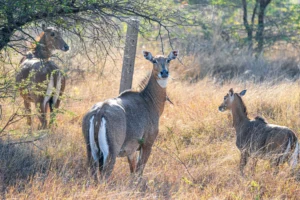
Explore endangered wildlife and plants in India, IUCN status, Wildlife Protection Act schedules, biodiversity hotspots, and current conservation data.
Definitions, Legal Frameworks & National Biodiversity Baseline
Understanding Endangered Species in the Indian Context
To evaluate wildlife conservation in India, one must first distinguish between biological vulnerability and statutory protection. A species is biologically endangered when its wild population faces a high risk of extinction due to rapid population declines, drastic geographic range reductions, or localized habitat loss. In practical field management, assessing these risks requires standardized biological criteria alongside clear domestic legal classifications.
Biological Threat Assessment (IUCN) <—> Enforceable Domestic Law (WPA 1972)
[Evaluates Global Extinction Risk] [Mandates Penalties & State Protection]
What Qualifies a Species as Endangered?
The international standard for assessing extinction risk is established by the International Union for Conservation of Nature (IUCN) Red List. The system places species into structured threat categories based on quantitative criteria:
- Critically Endangered (CR): Faces an extremely high risk of extinction in the wild, often characterized by severe population crashes (over 80% over three generations or ten years), geographic distributions below 100 square kilometers, or fewer than 250 mature individuals.
- Endangered (EN): Faces a very high risk of extinction in the wild, marked by substantial range contractions (extent of occurrence under 5,000 square kilometers) or populations under 2,500 mature individuals.
- Vulnerable (VU): Considered to face a high risk of extinction in the wild due to ongoing habitat degradation or declining numbers, though not yet meeting the threshold for Endangered.
- Near Threatened (NT): Does not currently qualify for a threatened category but is close to qualifying or likely to qualify in the near future.
Field Note: A species labeled “rare” is not automatically “endangered.” A species may have a naturally low population density or restricted range without experiencing active decline. Conversely, a previously widespread species can become endangered rapidly if an external factor disrupts its habitat or survival rate.
IUCN Threat Categories vs. Wildlife (Protection) Act Schedules
A common point of confusion is equating an IUCN Red List assessment with Indian statutory protection. The IUCN provides an international scientific assessment of conservation risk; it does not carry statutory authority within Indian courts.
Domestic legal protection is governed by the Wildlife (Protection) Act, 1972 (WPA). Under the WPA, species are assigned to schedules that determine the level of hunting prohibition, trade regulation, and punitive measures for offenses. Species listed under Schedule I receive the highest degree of legal protection, with the strictest penalties for poaching, trade, or habitat destruction. India’s wildlife laws also integrate international trade controls governed by the Convention on International Trade in Endangered Species of Wild Fauna and Flora (CITES).
Table 1: Conservation Assessment vs. Legal Protection Frameworks
| Assessment / Statutory System | Authority / Administering Body | Primary Function | Legal Impact in India |
| IUCN Red List | International Union for Conservation of Nature | Scientific categorization of global extinction risk (CR, EN, VU, NT) | Non-statutory scientific advisory reference |
| Wildlife (Protection) Act, 1972 | Ministry of Environment, Forest and Climate Change (MoEFCC) / State Forest Depts. | Domestic statutory protection via Schedules | Legally binding; mandates criminal penalties for violations |
| CITES | CITES Secretariat / National Management Authorities | Regulation of international commercial trade in wild fauna and flora | Legally binding through domestic legislative integration |
India’s Biodiversity Status: Official Baseline and Metrics
India is recognized by the United Nations as one of the world’s megadiverse countries, containing approximately 8% of the world’s recorded biodiversity across varied landforms. This ecological wealth is distributed across high alpine habitats, temperate forests, tropical rainforests, alluvial grasslands, semi-arid scrublands, and coastal mangrove systems.
INDIA’S CONSERVATION INFRASTRUCTURE
┌────────────────────────────────────────────────────────────────────────┐
│ 1,022 Protected Areas │ 80 Ramsar Sites │ 45 Biodiversity Sites │
│ (1,78,640.69 sq. km.) │ (Wetlands) │ (Heritage Status) │
└────────────────────────────────────────────────────────────────────────┘
Faunal and Floral Diversity Across Official Surveys
Official data released by the Ministry of Environment, Forest and Climate Change and affiliated research surveys establish the scale of India’s conservation responsibilities:
- Mammalian Baseline: The Zoological Survey of India (ZSI) mammal checklist documents 455 mammal species within the country. Of these, 8 species are Critically Endangered, 43 species are Endangered, and 53 mammal species are endemic strictly to India.
- Total Faunal Assessment: Official government releases note that 7,076 faunal species from India are evaluated under various IUCN Red List categories, with 3,739 species receiving direct protection under the schedules of the Wildlife (Protection) Act.
- Botanical Baseline: In data reported by the Press Information Bureau (PIB), 2,970 plant species found in India have been evaluated within the IUCN framework. This includes 155 Critically Endangered, 274 Endangered, 213 Vulnerable, and 80 Near Threatened plant species.
- Protected Area Coverage: India maintains a conservation network of 1,022 Protected Areas spanning 1,78,640.69 square kilometers, complemented by 80 Ramsar wetland sites and 45 declared Biodiversity Heritage Sites.
ZSI MAMMAL CHECKLIST (455 SPECIES)
┌──────────────────────┬────────┬───────────┐
│ Critically Endangered│ 8 │ │
│ Endangered │ 43 │ │
│ Endemic to India │ 53 │ │
└──────────────────────┴────────┴───────────┘
The Role of the Fauna of India Checklist Portal
A major step forward in standardizing taxonomic data occurred with the launch of the Fauna of India Checklist Portal by the Zoological Survey of India. Covering 1,04,561 species, it serves as the first comprehensive digital national taxonomic ledger. For researchers, forest officials, and conservation planners, this portal removes taxonomic ambiguities, tracks species distributions across states, and provides an authoritative baseline against which population changes and threat statuses can be measured.
Expert Tip: When reviewing wildlife data, always check the publication year and institutional source. Species counts change as taxonomists describe new cryptic species, reclassify subspecies, or publish updated field assessments.
Endangered Fauna: Mammals, Birds, Reptiles, Amphibians & Aquatic Life
Threatened Mammals of India
India’s mammalian diversity is vast, with high concentrations of endemic species found in states like Meghalaya, West Bengal, Arunachal Pradesh, Tamil Nadu, Assam, Sikkim, and Kerala. While conservation media often focuses heavily on large cats and pachyderms, the 2024 Zoological Survey of India (ZSI) mammal checklist highlights that out of 455 mammal species, 8 are Critically Endangered and 43 are Endangered. Understanding this threat landscape requires looking at both highly monitored flagship species and localized, lesser-known endemics.
Flagship Species Under Monitoring
Flagship species often serve as ecological umbrellas; protecting their extensive habitats inadvertently secures the survival of thousands of smaller, less visible species sharing the same ecosystem.
- Bengal Tiger & Asian Elephant: These are the primary focus of national conservation interventions like Project Tiger and Project Elephant. Both species require vast, contiguous forest tracts and are highly vulnerable to habitat fragmentation, linear infrastructure development, and human-wildlife conflict.
- Snow Leopard: Occupying the high-altitude cold deserts of Ladakh and the upper Himalayas, the snow leopard is a key indicator of alpine ecosystem health.
- Red Panda: Restricted to the high-elevation broadleaf and conifer forests of the eastern Himalayas and Northeast India, this species is severely impacted by localized habitat loss.
Field Note: A common misconception is that India’s endangered species problem is solely about tigers. While tiger conservation secures vital forest blocks, it does not address the threats facing species in entirely different biomes, such as coastal wetlands, arid grasslands, or the high Himalayas.
Critically Endangered and Range-Restricted Endemics
Many of India’s most threatened mammals are endemic—meaning they are found nowhere else on Earth. Their restricted ranges make them exceptionally vulnerable to even minor environmental changes or localized poaching.
- Hangul (Kashmir Stag): A critically threatened deer species whose range is now heavily restricted.
- Lion-tailed Macaque & Nilgiri Tahr: Both are flagship endemics of the Western Ghats. The macaque relies on fragmented rainforest canopies, while the tahr inhabits specialized high-altitude grasslands.
- Pygmy Hog & Hispid Hare: These species depend entirely on the tall, wet grasslands of the Terai region in Northeast India.
- Malabar Civet & Indian Pangolin: The Malabar civet is one of the rarest mammals in the Western Ghats. The Indian pangolin, meanwhile, faces extreme pressure from illegal wildlife trade.
- Small Mammals: The ZSI checklist identifies 53 endemic mammal species, many of which are lesser-known small mammals like the Andaman shrew and various high-altitude rodents that receive very little public attention.
Table 2: Flagship & Critically Endangered Fauna Overview
| Species (Common Name) | Taxonomic Group | Primary Habitat / Region | Key Threat Factors |
| Bengal Tiger | Mammal | Forests of Central India, Terai, Sundarbans, Western Ghats | Habitat fragmentation, poaching, conflict |
| Great Indian Bustard | Bird | Arid grasslands of Western and Central India | Habitat loss, linear infrastructure |
| Gharial | Reptile | Freshwater river systems | Pollution, bycatch, habitat degradation |
| Lion-tailed Macaque | Mammal | Rainforest canopies of the Western Ghats | Forest fragmentation |
| White-rumped Vulture | Bird | Across multiple Indian landscapes | Diclofenac poisoning, food scarcity |
| Ganges River Dolphin | Aquatic Mammal | Ganges-Brahmaputra river basins | Water pollution, bycatch |
Endangered Birds, Reptiles, Amphibians, and Aquatic Life
While mammals dominate the conservation narrative, birds, reptiles, aquatic species, and amphibians are equally threatened and often serve as the first indicators of an ecosystem’s decline.
Grassland and Forest Avifauna
India’s varied landscapes support a high diversity of threatened bird species, many of which are losing their specific nesting and foraging grounds.
- The Great Indian Bustard & Bengal Florican: These species are closely tied to India’s disappearing grasslands. The Great Indian bustard faces severe threats from habitat loss and collisions with power lines.
- Vulture Species: The White-rumped vulture, Long-billed vulture, and Slender-billed vulture experienced catastrophic population crashes. This decline is widely attributed to the diclofenac era, where the veterinary drug poisoned the carcasses the birds fed upon.
- Forest Specialists: The Jerdon’s courser is extremely rare, and various species of the Great hornbill face pressures from the loss of large, mature fruiting trees necessary for nesting and feeding.
Reptiles and Marine Species
Freshwater and marine habitats are heavily impacted by human activity, placing immense pressure on the species that inhabit them.
- Freshwater Species: The Gharial, a specialized fish-eating crocodilian, is highly threatened by river pollution, sand mining, and bycatch in fishing nets. The Mugger crocodile also faces localized habitat pressures, while the Ganges river dolphin is heavily impacted by degraded water quality and aquatic infrastructure.
- Marine Life: The Dugong (sea cow) is found in seagrass beds in areas like the Gulf of Mannar, Palk Bay, and the Andaman & Nicobar Islands, where it faces threats from habitat loss and coastal development. Marine turtles, such as the Olive ridley, require protected coastal nesting beaches and face significant risks from fishing bycatch.
Responsible Tourism Tip: When visiting coastal areas or marine sanctuaries, ensure you book with operators who follow strict guidelines for dolphin watching or turtle nesting viewing to avoid disturbing these sensitive species.
Endemic Amphibians
Amphibians are highly sensitive to micro-climate changes, water pollution, and habitat fragmentation. India harbors a significant number of threatened amphibians that are entirely restricted to specific mountain ranges.
- Western Ghats and Northeast India: These two biodiversity hotspots are the primary refuges for India’s threatened amphibians. The Western Ghats alone host numerous critically endangered frogs, including various high-altitude shrub frogs. Because these species often live entirely within a single valley or plateau, local land-use changes can trigger rapid population collapses.
Threatened Flora, Habitats & Drivers of Decline
Endangered Plants of India: The Botanical Baseline
A common misconception is that conservation efforts in India only focus on animals. In reality, thousands of plant species are under severe pressure from over-harvesting, habitat conversion, and climate stress. The health of an entire ecosystem depends on its botanical foundation. If critical plant species vanish, the herbivores and predators that rely on them will inevitably follow.
According to government data reported by the Press Information Bureau (PIB), 2,970 plant species found in India have been assessed under the IUCN framework. Of these, 155 are classified as Critically Endangered, 274 as Endangered, 213 as Vulnerable, and 80 as Near Threatened.
Threatened Orchids, Medicinal Plants, and Western Ghats Plateau Flora
India’s threatened flora spans an enormous variety of biomes. In the Northeast and the Himalayas, specialized orchids and high-altitude medicinal plants face intense pressure from illegal harvesting and localized habitat destruction.
In the Western Ghats, unique endemic shrubs and highly specialized plateau flora are disappearing. Many of these plants are restricted to specific micro-climates, such as laterite plateaus or localized mountain saddles. When a single hilltop is cleared for agriculture or infrastructure, an entire plant species can be wiped out.
Ex-Situ Conservation and Botanical Survey of India (BSI) Initiatives
While in-situ conservation (protecting plants in their natural habitat) is the ultimate goal, it is not always immediately possible. To prevent imminent extinction, institutions like the Botanical Survey of India (BSI) and various forestry departments employ ex-situ conservation strategies. This involves cultivating critically endangered plants in specialized botanical gardens, seed banks, and controlled research facilities to ensure their genetic material survives.
Responsible Tourism Tip: When exploring wildlife reserves or hiking in biodiversity hotspots, never pick wildflowers, orchids, or collect seeds. What looks like a common weed to an untrained eye could be an endemic plant species fighting for survival on a highly localized plateau.
India’s Four Biodiversity Hotspots and Critical Habitats
A biodiversity hotspot is a biogeographic region with exceptionally high levels of plant endemism that has already lost a significant portion of its original habitat. India is megadiverse and contains four of these global hotspots, which overlap heavily with the country’s highest concentrations of threatened species.
The Western Ghats and The Himalayas
The Western Ghats run parallel to India’s western coastline and represent one of the country’s most critical conservation landscapes. This mountain range is a primary refuge for endangered amphibians, endemic rodents, shrews, and flagship mammals like the lion-tailed macaque.
The Himalayas encompass varied habitats, ranging from dense temperate forests at lower elevations to the harsh cold deserts of Ladakh. This hotspot supports specialized high-altitude species, including the snow leopard and the red panda, which are sensitive to changing climatic conditions and habitat fragmentation.
Indo-Burma and Sundaland (Nicobar Islands)
The Indo-Burma hotspot extends across Northeast India, supporting deep tropical forests, riverine grasslands, and exceptional avian and botanical endemism. It is a stronghold for rare amphibians, highly specialized orchids, and species like the pygmy hog.
The Sundaland hotspot is represented in India primarily by the Andaman & Nicobar Islands. These remote islands feature isolated tropical rainforests, mangroves, and marine ecosystems that host highly specialized endemic flora and fauna not found on the Indian mainland.
Table 3: India’s 4 Biodiversity Hotspots Overview
| Biodiversity Hotspot | Primary Indian Geography | Key Habitat Types | Representative Threatened Taxa |
| Western Ghats | Peninsular west coast | Rainforests, high-altitude grasslands (Sholas), laterite plateaus | Lion-tailed macaque, Nilgiri tahr, endemic shrub frogs |
| The Himalaya | Northern and North-western mountain ranges | Cold deserts, alpine meadows, broadleaf conifer forests | Snow leopard, Hangul, high-altitude medicinal plants |
| Indo-Burma | Northeast India | Tropical evergreen forests, wet Terai grasslands | Pygmy hog, Red panda, localized orchids |
| Sundaland | Andaman & Nicobar Islands | Island rainforests, coral reefs, mangroves | Dugong, Andaman shrew, endemic island flora |
Primary Drivers of Species Decline Across Indian Habitats
To protect India’s wildlife, we must first understand the specific forces driving extinction. The threats vary wildly between the arid scrublands of Rajasthan and the deep rainforests of the Western Ghats.
Habitat Fragmentation, Land-Use Conversion, and Linear Infrastructure
The single greatest threat to Indian biodiversity is habitat loss. When vast, contiguous forests are broken up by land-use changes—such as agricultural expansion or urbanization—species lose access to crucial foraging and breeding grounds.
Linear infrastructure, such as highways, railway lines, and canals cutting through protected areas, exacerbates this fragmentation[cite: 2]. These developments divide wildlife populations, reducing genetic diversity and directly increasing mortality through vehicle and train collisions[cite: 2]. As habitats shrink, animals are pushed into human-dominated landscapes, causing a sharp rise in human-wildlife conflict[cite: 2].
Poaching, Bycatch, Invasive Species, and Climate Pressures
While large cats are often the target of organized poaching, lesser-known species like the Indian pangolin and various freshwater turtles are also heavily trafficked in the illegal wildlife trade.
In aquatic and marine environments, bycatch (accidental entanglement in fishing gear) is a severe threat for marine turtles, the dugong, and river dolphins. Pollution from agricultural runoff and industrial waste further degrades these fragile riverine systems.
Simultaneously, invasive alien species outcompete native plants and animals, while climate change alters the micro-climates that specialized endemic species, particularly amphibians and plateau plants, rely on for survival.
Field Note: If you want to understand the true impact of habitat fragmentation, look at species with narrow home ranges, like tree-dwelling macaques or plateau-breeding frogs. Unlike large carnivores that can sometimes cross agricultural land at night, these smaller species simply cannot cross a newly built highway.
Conservation Governance, Field Realities, Misconceptions & FAQs
Conservation Governance and Species Recovery Programs
India’s conservation strategy combines statutory legal protection, a designated protected area network, and species-specific recovery interventions. While habitat loss and environmental pressures present persistent challenges, coordinated interventions demonstrate that targeted protection can prevent imminent extinctions and stabilize vulnerable populations.
CONSERVATION GOVERNANCE PILLARS
┌──────────────────────┬────────────────────────┬────────────────────────┐
│ Statutory Protection │ Protected Area Network │ Dedicated Programs │
│ Wildlife Protection │ 1,022 Protected Areas │ Project Tiger, Elephant│
│ Act, 1972 Schedules │ Ramsar & Heritage Sites│ Species Recovery Plans │
└──────────────────────┴────────────────────────┴────────────────────────┘
Protected Area Infrastructure: National Parks, Ramsar Sites, and Heritage Sites
The foundation of in-situ conservation in India is its network of designated reserves. Official figures confirm a national network of 1,022 Protected Areas spanning 1,78,640.69 square kilometers. This spatial protection is reinforced by international and local habitat designations:
- Ramsar Wetland Sites: India hosts 80 Ramsar sites, designating globally significant wetlands that support migratory birds, aquatic reptiles, and specialized amphibians.
- Biodiversity Heritage Sites: The country has declared 45 Biodiversity Heritage Sites to protect unique, ecologically fragile areas located outside traditional national parks and wildlife sanctuaries.
These protected zones safeguard vital core breeding habitats, allowing wildlife to maintain natural foraging, breeding, and migratory cycles.
Targeted Interventions: Project Tiger, Project Elephant, and Species Recovery
Beyond general habitat preservation, India deploys targeted recovery initiatives for taxa facing immediate survival threats:
- Landscape Programs: Initiatives like Project Tiger and Project Elephant focus on large-scale landscape management, anti-poaching security, and maintaining wildlife corridors between fragmented habitats.
- Vulture Conservation Breeding: Following the catastrophic decline of Gyps vulture species from veterinary diclofenac, conservation breeding centers and dedicated vulture safety zones were created across the country.
- Grassland and Desert Initiatives: Specialized recovery projects have been implemented for critically endangered grassland birds, such as the Great Indian Bustard, focusing on predator-proof breeding facilities and securing grassland patches.
- Targeted Reintroductions: Captive breeding and reintroduction initiatives have stabilized wild populations for the pygmy hog in Assam’s Terai grasslands and the gharial across north Indian river basins.
Table 4: Key Species Conservation Programmes in India
| Program / Initiative | Target Species / Taxa | Primary Conservation Actions | Current Trend & Notes |
| Project Tiger | Bengal Tiger (Panthera tigris) | Anti-poaching patrols, core-buffer corridor protection, prey monitoring | Core populations stabilized in well-managed tiger reserves |
| Project Elephant | Asian Elephant (Elephas maximus) | Corridor securement, mitigation of human-elephant conflict, railway mitigation | High pressure remains along linear infrastructure routes |
| Gharial Recovery | Gharial (Gavialis gangeticus) | Ex-situ hatching, river rearing release, nest protection | Breeding populations persisting in Chambal and select rivers |
| Vulture Recovery | Gyps Vulture Species | Diclofenac bans, conservation breeding centers, release monitoring | Gradual stabilization from historical catastrophic crashes |
| Pygmy Hog Program | Pygmy Hog (Porcula salvania) | Captive breeding, grassland habitat management, wild releases | Stable reintroduced populations in select Assam habitats |
Common Misconceptions in Indian Wildlife Conservation
- “Endangered status means a species is inevitably doomed to extinction.”
An endangered classification highlights severe risk, but it does not mean extinction is unavoidable. Many species stabilize and recover when effective habitat protection, law enforcement, and breeding initiatives are sustained.
- “Conservation in India is exclusively about tigers and large mammals.”
While large carnivores receive substantial public attention, India’s conservation landscape includes thousands of threatened birds, reptiles, amphibians, and over 2,900 assessed plant species that are critical to overall ecosystem function.
- “A species is completely safe if it lives inside a national park.”
National parks offer essential legal boundaries, but wildlife inside protected areas can still be threatened by invasive plants, upstream water pollution, poaching, and genetic isolation caused by surrounding development.
- “IUCN Red List status is identical to Indian legal protection.”
The IUCN Red List is an international scientific assessment of extinction risk, whereas the Wildlife (Protection) Act, 1972 is the domestic statute that establishes legal penalties and enforcement within India.
- “Official threatened species counts remain fixed over time.”
Species totals and conservation statuses change continuously as scientific surveys identify new taxa, reclassify existing populations, and assess updated field data.
Responsible Wildlife Tourism and Field Guidelines
Visiting natural habitats supports local conservation economies, but visitors must travel responsibly to avoid placing additional stress on threatened species:
- Keep to Designated Safari Tracks: Never pressure guides or drivers to leave authorized roads in national parks, as off-road driving damages ground nests and destroys fragile plateau flora.
- Prioritize Bird and Amphibian Diversity: Broaden safari itineraries beyond single-species tracking to observe less visible endemic birds, reptiles, and flora that define regional ecosystems.
- Observe Distance at Nesting Sites: Maintain generous viewing distances from bird nesting trees, riverbanks with nesting turtles, and active waterholes during dry seasons.
- Support Local Conservation Tourism: Choose eco-lodges and tour operators that employ local community naturalists and follow documented zero-waste protocols.
Frequently Asked Questions
1. What qualifies a species as endangered in India?
A species qualifies as endangered when scientific evaluations show a very high risk of extinction in the wild due to rapid population declines, drastic range contraction, or severe habitat loss.
2. What is the difference between Endangered and Critically Endangered?
Critically Endangered denotes an extreme and immediate risk of extinction, typically marked by population drops of over 80% or critically small remaining numbers, whereas Endangered denotes a very high, but slightly less immediate, risk of extinction.
3. How many endangered species are recorded in India?
Government data reports that 7,076 faunal species from India are assessed across various IUCN threat categories, with 3,739 species directly protected under schedules of the Wildlife (Protection) Act.
4. How many mammal species in India are threatened?
According to the Zoological Survey of India (ZSI) checklist of 455 mammal species, 8 are Critically Endangered and 43 are Endangered.
5. Which Indian animals are currently listed as Critically Endangered?
Critically Endangered animals include the Hangul (Kashmir stag), Pygmy hog, Malabar civet, Great Indian bustard, Bengal florican, and Gharial.
6. Which bird species in India face the highest risk of extinction?
The Great Indian bustard, Bengal florican, Jerdon’s courser, White-rumped vulture, Long-billed vulture, and Slender-billed vulture are among India’s most critically threatened birds.
7. What is the conservation status of the Bengal tiger and Asian elephant?
Both the Bengal tiger and the Asian elephant are classified as threatened species requiring intensive in-situ protection, regular population monitoring, and corridor management under Schedule I of the Wildlife (Protection) Act.
8. Are plants also classified as endangered in India?
Yes. Official reports note that out of 2,970 Indian plant species assessed under IUCN criteria, 155 are Critically Endangered, 274 are Endangered, and 213 are Vulnerable.
9. What are India’s four global biodiversity hotspots?
India contains portions of four global biodiversity hotspots: the Western Ghats, the Himalaya, Indo-Burma, and Sundaland (covering the Andaman & Nicobar Islands).
10. Which Indian region has the highest concentration of endemic species?
The Western Ghats and the Northeast hill tracts host the highest levels of endemism in India, particularly for amphibians, specialized reptiles, small mammals, and plateau plants.
11. How does the Wildlife (Protection) Act of 1972 protect threatened species?
The Act provides domestic legal protection by prohibiting hunting, regulating trade, mandating protected areas, and establishing severe penal consequences for offenses involving scheduled species.
12. What is the difference between IUCN status and Schedule I protection?
IUCN status is a global scientific threat classification, while Schedule I is an Indian statutory designation that mandates the highest level of legal protection under national law.
13. What is the Zoological Survey of India (ZSI) Fauna Checklist Portal?
It is a national digital database cataloging 1,04,561 species, providing an authoritative scientific baseline for tracking faunal taxonomy and geographic distributions across India.
14. What role do Ramsar sites and Biodiversity Heritage Sites play in conservation?
India’s 80 Ramsar sites protect wetland and coastal ecosystems, while its 45 Biodiversity Heritage Sites safeguard fragile ecological zones located outside traditional national parks.
15. Why did Indian vulture populations decline so rapidly?
Vulture populations suffered severe crashes primarily because they ingested carcasses containing diclofenac, a veterinary anti-inflammatory drug that causes kidney failure in scavenging birds.
16. Which marine and aquatic species are endangered in Indian waters?
Key threatened aquatic species include the Ganges river dolphin, Dugong (sea cow), Gharial, and marine turtles such as the Olive ridley.
17. What are the main threats driving species decline in India?
The primary drivers of decline are habitat fragmentation, land-use conversion, linear infrastructure, poaching, bycatch in fisheries, invasive alien species, and climate-induced habitat stress.
18. Can endangered species recover once listed as Critically Endangered?
Yes. With targeted habitat security, captive breeding, strict legal enforcement, and community cooperation, species such as the pygmy hog and gharial have demonstrated stable local recoveries.
19. Which national parks offer the best opportunities to see endangered species responsibly?
Parks such as Kaziranga, Manas, Gir, Jim Corbett, Nagarhole, and Hemis protect crucial populations of threatened wildlife and offer managed safari access that supports local conservation.
20. What practical steps can individuals take to support wildlife conservation in India?
Individuals can practice responsible travel, avoid purchasing products made from wild flora and fauna, support habitat restoration programs, and engage with verified citizen science monitoring projects.
Conservation Outlook and Methodology Note
Protecting India’s biological heritage requires balancing field research, statutory enforcement, and local community partnerships. While habitat fragmentation and infrastructure growth continue to exert pressure on natural habitats, sustained institutional monitoring and dedicated recovery frameworks provide an effective path forward for safeguarding endangered wildlife.
Methodology and Reference Sources
The statistics and conservation assessments presented in this guide are derived from authoritative publications and official releases:
- Ministry of Environment, Forest and Climate Change (MoEFCC) & Press Information Bureau (PIB) conservation updates.
- Zoological Survey of India (ZSI): Fauna of India Checklist (Mammalia) and the digital Fauna of India Checklist Portal.
- Botanical Survey of India (BSI): Threatened plant assessments and ex-situ conservation reports.
- International Union for Conservation of Nature (IUCN): Global Red List of Threatened Species.
- Wildlife (Protection) Act, 1972: Statutory schedules and national legislative provisions.
(Note: Species counts and conservation categories reflect official data published through the latest national survey releases. Counts may be adjusted over time as taxonomic assessments and regional field surveys are updated.)