Plan your visit to Radhanagari Wildlife Sanctuary with this complete guide covering wildlife, safari, best time to visit, how to reach, conservation, and travel tips.
Complete Guide to Radhanagari Wildlife Sanctuary (Dajipur)
Introduction
Radhanagari Wildlife Sanctuary is one of Maharashtra’s oldest and most ecologically important protected forests. Located in Kolhapur district along the southern Western Ghats, it is best known for its healthy population of Indian gaur (also called Indian bison), evergreen forests, diverse birdlife, and its growing importance as a wildlife corridor for tigers moving through the Sahyadri landscape.
Established in 1958, it holds the distinction of being Maharashtra’s first declared wildlife sanctuary. Today, the sanctuary protects 351.16 square kilometres of forests, rivers, reservoirs, and grasslands that support hundreds of plant and animal species.
Many visitors also know the area as Dajipur Wildlife Sanctuary. While the two names are often used interchangeably in travel guides, Dajipur generally refers to the main tourism and entry area associated with the sanctuary.
Unlike parks where visitors focus only on spotting a tiger, Radhanagari rewards those who appreciate the wider forest ecosystem. A drive through its roads may reveal gaur grazing in open meadows, giant squirrels moving through the canopy, hornbills flying overhead, or fresh signs of wildlife near forest streams. Tiger presence has been documented in recent years, but sightings remain unpredictable and should never be considered guaranteed.
Whether you are planning a weekend trip from Kolhapur, a birdwatching excursion, or a broader Western Ghats wildlife itinerary, this guide explains what to expect, when to visit, and how to plan a responsible and rewarding journey.
Radhanagari Wildlife Sanctuary at a Glance
| Feature | Details |
| Location | Kolhapur district, Maharashtra |
| Established | 1958 |
| Protected Area | Wildlife Sanctuary |
| Area | 351.16 sq km |
| Western Ghats | Yes |
| Famous For | Indian gaur, evergreen forests, birdlife, Western Ghats biodiversity |
| Tourism Base | Dajipur |
| Best Season | October to May (subject to annual forest department notifications) |
| Monsoon | Tourist access is generally suspended during the rainy season, with reopening dates varying each year. |
Why Visit Radhanagari Wildlife Sanctuary?
For many travellers, Radhanagari offers a quieter alternative to some of India’s busier tiger reserves. Instead of concentrating on one flagship species, the sanctuary provides an opportunity to experience the varied landscapes of the Western Ghats while observing a wide range of wildlife.
Reasons to visit include:
- One of the best places in Maharashtra to see Indian gaur.
- Dense evergreen and semi-evergreen forests characteristic of the Western Ghats.
- More than 260 recorded bird species, making it attractive for birdwatchers.
- Scenic rivers, reservoirs, and forest roads that add to the overall experience.
- An important wildlife corridor connecting forests across Maharashtra, Goa, and Karnataka.
- Easy access from Kolhapur for weekend visitors.
Field Note
Many first-time visitors arrive hoping only for a tiger sighting. While recent reports confirm tiger presence in the wider landscape, the sanctuary is better appreciated for its complete forest ecosystem. Large gaur herds, hornbills, giant squirrels, and the changing seasonal scenery often become the highlights of a visit.
Is Radhanagari the Same as Dajipur?
This is one of the most common questions travellers ask.
In practice, the names are closely linked but are not exactly identical.
- Radhanagari Wildlife Sanctuary is the official protected area.
- Dajipur is the tourism gateway and entry area through which many visitors access the sanctuary.
Because of this long association, many travel websites, maps, and local guides still refer to the destination as Dajipur Wildlife Sanctuary, even though the official protected area is Radhanagari Wildlife Sanctuary.
Knowing this distinction helps avoid confusion while searching for accommodation, directions, or safari information.
Where Is Radhanagari Wildlife Sanctuary Located?
The sanctuary lies in Kolhapur district in southern Maharashtra, along the biologically rich Western Ghats. Its forests form part of a larger network of protected landscapes that extend towards Goa and Karnataka, allowing wildlife to move across state boundaries.
Several rivers, including the Bhogavati, Dudhganga, Tulshi, Kallamma, and Dirba, flow through the sanctuary. Along with reservoirs such as the Radhanagari Dam, these water systems support evergreen forests and create habitats for mammals, birds, reptiles, and amphibians throughout the year.
Its proximity to Kolhapur makes it suitable for both weekend travellers and visitors exploring the wider Sahyadri region.
History and Protected Area Status
Radhanagari Wildlife Sanctuary was established in 1958, making it the first wildlife sanctuary declared in Maharashtra.
The protected area was created primarily to conserve the region’s forests and wildlife, particularly the Indian gaur, whose population had declined because of hunting and habitat pressure in earlier decades. Over time, the sanctuary has gained broader conservation significance as part of the Western Ghats, a globally recognised biodiversity hotspot.
Today, conservation efforts extend beyond protecting individual species. Maintaining continuous forest cover and ecological connectivity has become equally important, especially as the sanctuary contributes to wildlife movement across the wider Sahyadri landscape.
Expert Tip: When planning your visit, think of Radhanagari as more than a safari destination. Its value lies in the combination of forests, rivers, birdlife, large herbivores, and its role in conserving one of India’s most important mountain ecosystems.
Landscape, Habitats and Wildlife of Radhanagari Wildlife Sanctuary
Landscape and Habitats
Radhanagari Wildlife Sanctuary protects a varied landscape where forests, rivers, reservoirs and open grasslands come together to support a wide range of wildlife. Located in the southern Western Ghats, the sanctuary experiences heavy monsoon rainfall, which shapes its vegetation and sustains water sources throughout much of the year.
Rather than being a single type of forest, the sanctuary contains several habitat types. This diversity allows different species to occupy different ecological niches, increasing the overall biodiversity of the area.
Rivers and Reservoirs
Water is one of the defining features of the sanctuary. Several important rivers flow through its forests, including:
- Bhogavati River
- Dudhganga River
- Tulshi River
- Kallamma River
- Dirba River
These rivers, along with reservoirs such as the Radhanagari Dam, create wetlands, riparian forests and year-round water sources that benefit both resident and migratory wildlife.
During the dry months, these water bodies become important gathering places for mammals and birds, improving opportunities for wildlife observation while also supporting the sanctuary’s ecological health.
Forest Types
The sanctuary includes a mix of:
- Tropical evergreen forests
- Semi-evergreen forests
- Moist deciduous forests
- Open grasslands and meadows
- Shrub-covered plateaus (locally known as sadas)
- Riverine vegetation
Evergreen forests dominate the wetter valleys and slopes, while moist deciduous forests become more common in comparatively drier areas. This variation creates habitats for species with different ecological requirements.
Why the Landscape Matters
The value of Radhanagari extends beyond its boundaries.
Its forests form part of a larger network of protected landscapes in the Western Ghats. Continuous forest cover allows animals to move between habitats, maintain healthy populations and adapt to seasonal changes. This ecological connectivity has become increasingly important for wide-ranging species such as tigers and leopards.
Field Note: Visitors often focus on searching for animals, but the landscape itself tells an equally interesting story. Watching how rivers, dense forests and open meadows change from one valley to another provides insight into why the sanctuary supports such varied wildlife.
Wildlife of Radhanagari Wildlife Sanctuary
Although Indian gaur are the sanctuary’s best-known residents, Radhanagari supports a much broader range of wildlife. Mammals, birds, reptiles, amphibians and countless smaller organisms all contribute to the ecological richness of the Western Ghats.
Wildlife sightings vary with season, weather and luck. Visitors should view every sighting as a bonus rather than an expectation.
Mammals
Indian Gaur (Indian Bison)
The Indian gaur is the sanctuary’s signature species and one of the main reasons wildlife enthusiasts visit Radhanagari.
The world’s largest wild bovine, gaur are powerful yet generally shy animals that prefer forest edges, grassy clearings and areas close to water. Early mornings and late afternoons often provide the best chances of seeing them grazing.
For many visitors, observing a herd of gaur quietly feeding in an open meadow becomes the highlight of the trip.
Leopard
Leopards occur throughout the sanctuary but remain elusive. Their adaptability allows them to use dense forests, rocky slopes and river valleys, although they are rarely seen during daytime visits.
Most evidence of their presence comes from camera traps and indirect signs rather than direct encounters.
Sloth Bear
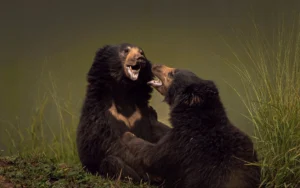
Sloth bears inhabit the sanctuary’s forests, where they feed on termites, ants, fruits and other natural food sources.
Because they are generally active during cooler hours and avoid human activity, sightings remain uncommon.
Dhole (Indian Wild Dog)
The endangered dhole is another important predator recorded in the sanctuary.
These highly social hunters live in packs and play a valuable role in maintaining ecological balance by regulating herbivore populations.
Although they are occasionally seen crossing forest roads, encounters are relatively infrequent.
Other Mammals
Visitors may also encounter:
- Sambar deer
- Barking deer
- Wild boar
- Giant squirrel
- Mouse deer
- Indian porcupine
- Hanuman langur
Many smaller mammals remain hidden in dense vegetation, making careful observation and patience essential.
Birdlife
Birdwatchers often consider Radhanagari one of the rewarding forest birding destinations in southern Maharashtra.
Official tourism information records more than 260 bird species, reflecting the variety of habitats found within the sanctuary.
Depending on habitat and season, visitors may encounter:
- Hornbills
- Woodpeckers
- Kingfishers
- Junglefowl
- Bee-eaters
- Flycatchers
- Owls
- Nightjars
- Warblers
- Various waterbirds around reservoirs
Bird activity is generally highest during the cooler morning hours when many species are actively feeding and calling.
Photography Tip
Carry binoculars even if photography is your primary interest. Many forest birds remain high in the canopy or move quickly through dense vegetation, making binoculars invaluable for identification.
Reptiles and Amphibians
The sanctuary also supports a diverse reptile community, with official tourism sources mentioning nearly 60 reptile species.
Species associated with the Western Ghats include:
- Malabar pit viper
- Various geckos
- Forest snakes
- Lizards adapted to moist evergreen habitats
Heavy rainfall and permanent water bodies also create favourable conditions for amphibians, many of which become especially active during the monsoon.
As with birds, reptiles are often overlooked because visitors focus mainly on large mammals.
Flora
The sanctuary’s forests are home to numerous native tree species typical of the Western Ghats.
Commonly recorded species include:
- Anjani
- Jambul
- Hirda
- Amla (Awala)
- Ain
- Kinjal
- Mango (Amba)
- Kumbha
- Karvi and associated shrubs
These plant communities provide food, nesting sites and shelter for wildlife throughout the year while helping regulate local water cycles.
What Wildlife Can You Realistically Expect to See?
Wildlife viewing depends on season, weather, time of day and patience. Rather than expecting a checklist of guaranteed sightings, it is more realistic to understand which groups of animals visitors are most likely to encounter.
| Wildlife Group | Likelihood of Seeing |
| Indian gaur | High in suitable habitat and season |
| Deer and wild boar | Fairly common |
| Giant squirrel | Possible with careful observation |
| Birds | Common throughout the sanctuary |
| Reptiles | Seasonal and habitat-dependent |
| Leopard | Rare |
| Tiger | Possible but highly unpredictable |
It is important to remember that recent reports confirm tiger presence within the wider landscape, but this should not be interpreted as an expectation of tiger sightings during a visit.
Expert Tip
Plan your visit around the sanctuary as a complete ecosystem rather than a single species. Visitors who appreciate birdlife, forest landscapes, rivers and smaller wildlife usually enjoy a richer and more rewarding experience than those focused solely on spotting a tiger.
Best Time to Visit, Safari Guide and Visitor Information
Best Time to Visit Radhanagari Wildlife Sanctuary
The best time to visit depends on what you hope to experience. Some visitors come primarily for wildlife sightings, while others are interested in birdwatching, photography or simply enjoying the forests after the monsoon.
In general, the main tourist season begins after the sanctuary reopens following the monsoon and continues until the onset of the next rainy season. Exact opening and closing dates are announced by the Forest Department and may vary slightly each year.
Best Time by Season
| Season | What to Expect | Recommended For |
| Post-monsoon (October-November) | Lush forests, flowing streams, pleasant weather, excellent scenery | Nature lovers, photographers, first-time visitors |
| Winter (December-February) | Comfortable temperatures, active birdlife, enjoyable forest drives | Birdwatchers, families, general wildlife tourism |
| Summer (March-May) | Dry conditions, wildlife gathers near water sources, better chances of spotting larger mammals | Wildlife enthusiasts and photographers |
| Monsoon (June-September) | Sanctuary generally remains closed to visitors due to heavy rainfall and road conditions | Not suitable for tourism |
Which Season is Best?
There is no single “perfect” season.
- For comfortable weather: Winter is usually the most pleasant.
- For forest photography: Soon after the monsoon offers vibrant green landscapes.
- For observing mammals: Late winter and summer often improve visibility as vegetation becomes less dense and animals visit water sources more frequently.
- For birdwatching: Winter generally provides rewarding opportunities, although resident birds can be observed throughout much of the tourist season.
Photography Tip
Morning light is usually softer and wildlife is more active during the first few hours after sunrise. Carry a telephoto lens if possible, but also keep a wider lens handy to photograph the forest landscape, rivers and reservoirs.
Monsoon Closures
Radhanagari Wildlife Sanctuary is generally closed to tourists during the monsoon.
Heavy rainfall can make forest roads slippery and unsafe, while temporary closure also reduces disturbance during an important period for breeding, nesting and habitat regeneration.
Since reopening dates can change depending on weather and management decisions, visitors should confirm the latest information with the Forest Department before finalising travel plans.
Responsible Tourism Tip: Avoid attempting to enter the sanctuary during official closure periods. Seasonal closures are an important conservation measure rather than simply an administrative restriction.
Safari Guide
Unlike some of India’s large tiger reserves, Radhanagari offers a relatively low-key wildlife tourism experience. The emphasis is on exploring the forest rather than pursuing a single flagship species.
Depending on current management practices and seasonal operations, visitors may access designated tourism routes and guided forest experiences through the Dajipur tourism area.
As tourism arrangements can change over time, it is advisable to verify the latest visitor procedures before your trip.
What Can You Expect During a Visit?
A typical visit may include:
- Driving through designated forest roads.
- Observing wildlife from approved viewpoints.
- Watching gaur feeding in meadows.
- Birdwatching around forest edges and water bodies.
- Enjoying panoramic views of the Western Ghats landscape.
- Learning about local forests and conservation through guides where available.
Unlike highly commercialised safari destinations, patience is an important part of the experience.
Are Tiger Sightings Common?
No.
Recent reports confirm that tigers use the sanctuary and the surrounding landscape, highlighting its importance as part of a wider wildlife corridor. However, visitors should not plan a trip expecting guaranteed tiger sightings.
The sanctuary is better appreciated for its complete ecological diversity, where every wildlife encounter—from gaur and giant squirrels to hornbills and butterflies—contributes to the overall experience.
Visitor Rules
Following simple rules helps protect both wildlife and visitors.
Do
- Follow instructions given by forest staff.
- Stay on authorised tourism routes.
- Keep noise to a minimum.
- Carry drinking water and basic essentials.
- Wear comfortable clothing in natural colours.
- Maintain a safe distance from wildlife.
- Dispose of waste responsibly after leaving the forest.
Don’t
- Feed wild animals.
- Play music inside the sanctuary.
- Litter or leave plastic behind.
- Attempt to approach or photograph animals too closely.
- Get out of your vehicle except where permitted.
- Disturb nesting birds or smaller wildlife.
- Pressure guides to chase wildlife for photographs.
Responsible Wildlife Viewing
Wildlife behaves naturally only when visitors behave responsibly.
Remember that the sanctuary exists primarily to conserve biodiversity rather than to provide guaranteed sightings. Respecting animal behaviour and maintaining a quiet presence often results in better wildlife observations than actively searching for close encounters.
Field Note
Some of the most memorable moments in Radhanagari may have nothing to do with large mammals. Watching hornbills fly across the canopy, listening to the sounds of the forest after sunrise or observing gaur grazing peacefully can be just as rewarding as spotting a rare predator.
Decision Guide: Is Radhanagari Right for You?
| Traveller Type | Is It a Good Choice? | Why |
| First-time wildlife travellers | ✓ Yes | Easy access from Kolhapur and varied wildlife. |
| Families | ✓ Yes | Scenic, educational and suitable for nature-focused trips. |
| Birdwatchers | ✓ Excellent | More than 260 recorded bird species and diverse habitats. |
| Wildlife photographers | ✓ Very Good | Forest landscapes, gaur and seasonal wildlife opportunities. |
| Dedicated tiger seekers | △ Moderate | Tiger presence is documented, but sightings are uncommon and unpredictable. |
| Weekend travellers | ✓ Excellent | Can be comfortably combined with a Kolhapur visit. |
Expert Tip
Visit Radhanagari with realistic expectations. If your goal is simply to tick a tiger off your list, other reserves may be more suitable. If you want to experience an intact Western Ghats forest, observe gaur in their natural habitat, enjoy excellent birdlife and understand why wildlife corridors matter, Radhanagari offers a rewarding and educational visit.
How to Reach, Where to Stay, Nearby Attractions and Conservation Importance
How to Reach Radhanagari Wildlife Sanctuary
Radhanagari Wildlife Sanctuary is easily accessible from Kolhapur, making it suitable for weekend trips as well as longer wildlife itineraries across southern Maharashtra and the Western Ghats.
Most visitors use Kolhapur as their base, where accommodation, transport and other travel services are readily available.
By Road
Travelling by road is the most convenient way to reach the sanctuary.
Kolhapur is well connected to major cities in Maharashtra and neighbouring Karnataka through national and state highways. From Kolhapur, visitors can drive or hire a taxi to reach the Dajipur tourism area, which serves as the main gateway to the sanctuary.
Self-drive trips are popular because they allow flexibility to explore nearby attractions before or after visiting the forest.
By Rail
The nearest major railway station is Kolhapur (Chhatrapati Shahu Maharaj Terminus).
Regular trains connect Kolhapur with cities including:
- Pune
- Mumbai
- Bengaluru
- Miraj
- Belagavi (via connecting routes)
From the railway station, taxis and local transport can be arranged for onward travel.
By Air
The nearest airport is Kolhapur Airport, which offers limited scheduled flights depending on the season and airline operations.
Visitors travelling from other parts of India may also choose airports with better connectivity before completing the journey by road.
As flight schedules change periodically, checking current services before booking is advisable.
Comparing Your Travel Options
| Mode | Best For | Things to Know |
| Road | Most visitors | Flexible and convenient for exploring nearby attractions. |
| Rail | Budget-conscious travellers | Good connectivity to Kolhapur, followed by a road journey. |
| Air | Long-distance travellers | Limited direct flights; road transfer required afterwards. |
Where to Stay
The sanctuary itself offers a nature-focused experience rather than a large tourism infrastructure. Accommodation options therefore vary from basic forest stays to comfortable hotels in nearby towns.
Availability may change over time, especially during weekends and holidays, so advance planning is recommended.
Forest Accommodation
Depending on current Forest Department policies and availability, visitors may find accommodation near the sanctuary or in the Dajipur tourism area.
These stays generally appeal to travellers who wish to spend more time inside the surrounding landscape and begin wildlife activities early in the morning.
Since the number of rooms is usually limited, reservations should be made well in advance whenever possible.
Staying in Kolhapur
Many visitors prefer to stay in Kolhapur because it offers:
- A wider choice of hotels.
- Restaurants and cafés.
- Better transport options.
- Easier access to other attractions.
- Comfortable facilities for families.
This option is particularly suitable for weekend travellers who plan to combine wildlife with sightseeing.
Which Option Should You Choose?
| Stay Option | Best For |
| Near the sanctuary | Wildlife enthusiasts, photographers and early morning visitors |
| Kolhapur | Families, first-time visitors and travellers seeking more accommodation choices |
Expert Tip: If wildlife is your main priority, staying close to the sanctuary allows you to reach the forest early, when animal activity is generally at its highest.
Nearby Attractions
A visit to Radhanagari Wildlife Sanctuary can easily be combined with several attractions in and around Kolhapur.
Radhanagari Dam
Located close to the sanctuary, Radhanagari Dam is one of the region’s notable landmarks.
The reservoir contributes to the area’s ecological richness by supporting wetlands and surrounding forests that benefit birds and other wildlife.
During and after the monsoon, the landscape around the dam becomes especially scenic.
Kolhapur
Kolhapur serves as the main urban gateway to the sanctuary.
Visitors often combine their wildlife trip with time exploring the city’s historical sites, local cuisine and cultural attractions, creating a well-rounded weekend itinerary.
Exploring the Western Ghats
Radhanagari also fits well into broader wildlife journeys across the Western Ghats.
Travellers interested in protected forests, biodiversity and birdwatching may include the sanctuary as part of a longer itinerary covering other nature destinations in Maharashtra and neighbouring states.
Conservation Importance
Radhanagari Wildlife Sanctuary is important not only because of the animals that live within its boundaries but also because of the role it plays in maintaining ecological connectivity across the southern Western Ghats.
Large mammals require extensive landscapes rather than isolated forests. Protected areas connected through natural corridors allow wildlife to disperse, find mates and maintain healthy populations over time.
A Key Western Ghats Landscape
The sanctuary forms part of one of India’s most significant biodiversity regions.
Its evergreen and semi-evergreen forests support numerous plant and animal species, many of which are associated with the Western Ghats. Rivers flowing through the sanctuary further enhance habitat diversity by creating wetlands, riparian forests and year-round water sources.
This combination of habitats explains why the sanctuary supports mammals, birds, reptiles and amphibians in such variety.
Importance as a Tiger Corridor
Although Radhanagari has long been known for its gaur population, recent conservation attention has increasingly focused on its role as a tiger corridor.
Recent reports indicate that tiger records within the sanctuary and the wider Sahyadri Tiger Reserve landscape have increased, reinforcing the area’s importance for tiger movement across forests in Maharashtra, Goa and Karnataka.
For visitors, this means the sanctuary should be viewed as an important link in a much larger conservation landscape rather than as an isolated tiger tourism destination.
Why Corridors Matter
Wildlife corridors help:
- Maintain genetic diversity between animal populations.
- Reduce habitat fragmentation.
- Allow seasonal movement of wide-ranging species.
- Improve long-term conservation prospects.
- Strengthen resilience of protected landscapes.
Protecting these connected forests benefits not only tigers but also leopards, dholes, gaur, birds and countless smaller species that depend on healthy ecosystems.
Responsible Tourism Tip
Every visitor contributes to conservation through responsible behaviour.
Simple actions such as staying on designated routes, avoiding disturbance to wildlife, carrying reusable water bottles and respecting seasonal closures help reduce human impact on fragile habitats.
Choosing responsible wildlife tourism ensures that future generations can continue to enjoy forests like Radhanagari while supporting their long-term conservation.
Sample Two-Day Itinerary
Day 1
- Arrive in Kolhapur.
- Travel to Radhanagari.
- Visit the sanctuary.
- Spend time birdwatching and exploring designated tourism areas.
- Stay near the sanctuary or return to Kolhapur.
Day 2
- Early morning forest visit if available.
- Visit Radhanagari Dam.
- Explore Kolhapur before returning home.
This relaxed itinerary allows sufficient time to appreciate both the wildlife and the broader Western Ghats landscape without rushing through the experience.
End of Part 4.
Part 5: Practical Planning Checklist, Common Mistakes, FAQs and Conclusion
Practical Planning Checklist
A little preparation can make your visit smoother and help you enjoy the sanctuary responsibly.
Before You Travel
- ✓ Check the latest opening dates and visitor information with the Forest Department.
- ✓ Confirm accommodation bookings, especially during weekends and holidays.
- ✓ Carry a valid photo ID if required.
- ✓ Start your journey early to maximise time inside the sanctuary.
- ✓ Keep some cash available, as digital payment facilities may not always be available in remote areas.
What to Pack
- Neutral-coloured clothing (greens, browns or khakis)
- Comfortable walking shoes
- Binoculars
- Camera with extra batteries and memory cards
- Drinking water
- Hat and sunscreen
- Light rain protection during the post-monsoon season
- Basic medicines and insect repellent
For Birdwatchers
- Binoculars are often more useful than a long camera lens for identifying birds in dense forest.
- Carry a field guide or bird identification app.
- Move slowly and avoid unnecessary conversation while on forest trails or viewpoints.
Common Mistakes Visitors Make
Avoiding these common mistakes can significantly improve your experience while reducing disturbance to wildlife.
1. Expecting Guaranteed Tiger Sightings
Although tiger presence has been documented in recent years, Radhanagari should not be viewed as a destination where tiger sightings are expected.
Instead, appreciate the sanctuary for its gaur, birds, forests and overall biodiversity.
2. Visiting During the Monsoon Without Checking Access
The sanctuary is generally closed during the monsoon.
Always verify current visitor information before travelling.
3. Ignoring Smaller Wildlife
Many visitors focus only on large mammals.
However, Radhanagari is equally rewarding for:
- Birds
- Butterflies
- Giant squirrels
- Reptiles
- Forest landscapes
- River ecosystems
4. Wearing Bright Clothing
Bright colours can make wildlife more alert.
Earth-toned clothing blends better with the surroundings and generally causes less disturbance.
5. Making Noise
Talking loudly, playing music or shouting reduces the chances of seeing wildlife and disturbs other visitors.
Quiet observation almost always leads to a better forest experience.
6. Leaving Litter Behind
Plastic waste and food packaging can harm wildlife and spoil the natural environment.
Carry all waste back with you for proper disposal.
Frequently Asked Questions
What is Radhanagari Wildlife Sanctuary famous for?
The sanctuary is best known for its population of Indian gaur (Indian bison), evergreen forests, rich birdlife and its importance within the Western Ghats conservation landscape.
Is Radhanagari the same as Dajipur Wildlife Sanctuary?
Radhanagari Wildlife Sanctuary is the official protected area. Dajipur refers to the main tourism and access area, so both names are commonly used by travellers.
Where is Radhanagari Wildlife Sanctuary located?
It is located in Kolhapur district in southern Maharashtra, within the Western Ghats.
When was the sanctuary established?
Radhanagari Wildlife Sanctuary was established in 1958, becoming Maharashtra’s first declared wildlife sanctuary.
What animals can be seen here?
Visitors may encounter:
- Indian gaur
- Leopard
- Sloth bear
- Sambar
- Barking deer
- Wild boar
- Dhole
- Giant squirrel
- Numerous bird species
- Reptiles and amphibians
Tiger presence has also been documented, although sightings remain uncommon.
What is the best time to visit?
For most visitors, the best period is from October to May, after the sanctuary reopens following the monsoon.
Winter offers pleasant weather, while late winter and summer often provide better opportunities to observe larger mammals.
Is the sanctuary open throughout the year?
No.
The sanctuary is generally closed during the monsoon, with reopening dates depending on weather conditions and Forest Department decisions.
Is Radhanagari suitable for families?
Yes.
Families interested in nature, wildlife and outdoor experiences will find the sanctuary an enjoyable destination, provided they follow visitor guidelines and supervise children responsibly.
Is Radhanagari a good destination for birdwatching?
Yes.
With more than 260 recorded bird species and varied habitats, the sanctuary is one of the rewarding birdwatching destinations in southern Maharashtra.
Can I see a tiger?
It is possible but should never be expected.
Recent reports confirm tiger presence in the wider landscape, but sightings remain unpredictable.
How much time should I plan for a visit?
A full day is sufficient for many visitors.
However, wildlife photographers, birdwatchers and travellers exploring nearby attractions may benefit from spending two days in the area.
Why is Radhanagari important for conservation?
Beyond protecting wildlife within its boundaries, the sanctuary helps maintain ecological connectivity across the Western Ghats by functioning as an important wildlife corridor for species including tigers, leopards and dholes.
Conclusion
Radhanagari Wildlife Sanctuary is more than a destination for spotting wildlife. It is one of Maharashtra’s oldest protected forests and an important part of the Western Ghats, where rivers, evergreen forests and diverse habitats support a remarkable variety of species.
Its reputation has long been built around the Indian gaur, but the sanctuary’s significance extends much further. Rich birdlife, healthy forest ecosystems and its growing role as a tiger corridor make it an important conservation landscape as well as a rewarding place to visit.
Travellers who arrive with realistic expectations are likely to enjoy the experience the most. Rather than measuring a visit by whether a tiger is seen, appreciate the quieter moments—a herd of gaur feeding in a meadow, the call of a hornbill echoing through the canopy or the sight of a giant squirrel moving through the treetops. These encounters reflect the true character of Radhanagari.
Whether you are planning a weekend escape from Kolhapur, a birdwatching trip or a broader journey through the Western Ghats, Radhanagari Wildlife Sanctuary offers an opportunity to experience one of Maharashtra’s most important natural landscapes while supporting responsible wildlife tourism.
Safari Planning : Topics Cluster
- How to book a wildlife safari in India?
- Park by Park Online Safari Booking Guide
- Tiger Safari India Planning Workbook
- Park by Park Safari Permits Guide
- National Parks Permit Guide – Park by Park Guide
- Tatkal Safari Booking Guide – Last Minute Safari Permits Booking
- Tiger Safari in India Cost
- Indian Wildlife Safari Budget Planner
- Jeep vs Canter Safari
- Best time for Tiger Sightings in India
- How far advanced should you book safari permits?
- Can foreigners book Indian Wildlife Safari online?
- Special Permits Guide for Foreigners and Domestic Visitors
- How to book a Safari Permit online in India? 2026 step by step guide
- Senior Citizens Friendly Safari Planning
- Multi Generation Family Safari Planning
- 50 things to know before your first safari in India