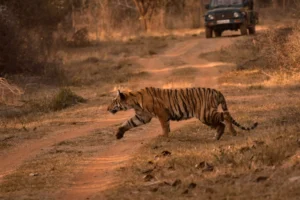
Discover the best budget wildlife safaris in India with updated 2026 costs, affordable national parks, booking tips, budget stays, and expert money-saving advice.
Budget Wildlife Safaris in India: Affordable National Parks, Safari Costs and Smart Ways to Save Money
Seeing a tiger, rhino or wild elephant in its natural habitat does not have to be expensive. Across India, many national parks offer shared safari vehicles, government accommodation and reasonably priced entry options that make wildlife travel accessible even on a modest budget. With careful planning, many travellers can enjoy a rewarding safari without paying for luxury resorts or private vehicles.
India is home to more than 70% of the world’s wild tigers, making it one of the best destinations for wildlife enthusiasts. While premium safari holidays can cost tens of thousands of rupees, several parks offer affordable alternatives through canter safaris, shared jeeps, government Forest Rest Houses and budget homestays. The key is knowing where to go, when to travel and how to book directly through official channels.
This guide brings together verified cost information, practical planning advice and recent safari regulations to help you choose the right destination without overspending. Whether you’re travelling alone, with friends or as a family, you’ll find realistic budget estimates, comparisons between parks and practical tips that help stretch your travel budget while still giving yourself a good chance of memorable wildlife sightings.
What Makes a Wildlife Safari Budget-Friendly in India?
A budget safari is not simply the cheapest possible trip. Instead, it focuses on spending wisely on the parts of the experience that matter most while avoiding unnecessary expenses.
For most travellers, a budget wildlife safari combines three elements:
- Shared safari vehicles instead of hiring an entire jeep.
- Budget accommodation outside or near the park.
- Visiting during periods when accommodation prices are lower but wildlife viewing remains rewarding.
Typical Budget Range
Although costs vary between parks, most budget travellers can expect:
| Travel Style | Typical Cost |
| Shared safari | ₹1,000–3,000 per person |
| Budget 3-day safari (excluding travel to the destination) | ₹4,000–8,000 |
| Shared jeep safari | Around ₹2,000–3,000 per person |
| Boat safaris (where available) | ₹300–2,000 depending on the park |
These figures generally include the safari itself but not long-distance transport to the destination. Accommodation, meals and local transport can significantly affect your total budget.
Budget Does Not Mean Fewer Wildlife Sightings
One of the biggest misconceptions is that spending more automatically leads to better wildlife viewing.
In many parks, the chance of seeing wildlife depends far more on factors such as:
- the safari zone,
- season,
- guide and naturalist experience,
- animal movement,
- and simple luck.
For example, a shared canter safari in Ranthambore follows the same designated routes as other authorised vehicles. Choosing a shared vehicle mainly reduces your transportation cost rather than your opportunity to observe wildlife.
Field Note: Wildlife sightings can never be guaranteed. Even India’s best tiger reserves have days when visitors return without seeing a tiger. Treat every safari as an opportunity to observe the wider forest ecosystem rather than focusing on a single species.
Where You Should Save—and Where You Shouldn’t
There are sensible ways to reduce costs without reducing the quality of your trip.
Good places to save include:
- travelling during shoulder season,
- sharing safari vehicles,
- staying in nearby towns,
- using trains instead of flights,
- booking through official forest department portals.
However, it is usually not worth cutting costs by:
- choosing unauthorised operators,
- skipping required permits,
- ignoring official booking procedures,
- or selecting accommodation solely because it is the cheapest without considering travel time to the safari gate.
A little planning often saves more money than simply choosing the lowest advertised price.
Expert Tip: Before comparing safari prices, calculate the total trip cost—including accommodation, local transport and meals. A slightly more expensive safari at a park with lower hotel prices may work out cheaper overall than the lowest-priced safari in a destination with costly accommodation.
Top Budget Wildlife Safaris in India (2026)
Choosing the right park depends on more than just the lowest safari price. Wildlife diversity, ease of access, accommodation costs, transport options and the type of safari available all influence overall value.
Some parks are ideal for first-time visitors hoping to see tigers without spending much, while others are better suited for rhino safaris, birdwatching or unique boat-based experiences.
Comparison: Best Budget Wildlife Safaris in India
| National Park | State | Best Budget Safari | Approx. Budget Cost | Best Known For | Best Time |
| Ranthambore | Rajasthan | Canter Safari | ₹1,000–1,500/person | Tigers, leopards | Oct–Jun |
| Jim Corbett | Uttarakhand | Canter Safari | ₹1,600–2,000/person | Tigers, elephants | Nov–Jun |
| Kanha | Madhya Pradesh | Shared Jeep | ₹2,000–3,000/person | Tigers, barasingha | Nov–Jun |
| Bandhavgarh | Madhya Pradesh | Shared Jeep Seat | ₹2,000–2,300/person | High tiger density | Oct–Mar |
| Kaziranga | Assam | Elephant Safari | ₹900–1,950/person | One-horned rhinoceros | Nov–Apr |
Ranthambore National Park, Rajasthan
For many travellers, Ranthambore offers the best balance of affordability, wildlife viewing and visitor infrastructure. It is particularly attractive to first-time safari-goers because it combines relatively low safari costs with good opportunities to see tigers in open landscapes.
The park’s canter safari is among the least expensive ways to experience a tiger reserve in India, making Ranthambore especially popular with solo travellers and small groups.
Budget Safari Cost
- Shared canter: ₹1,000–1,500 per person
- Private jeep: around ₹5,000 per vehicle
A private jeep becomes economical only if all six seats are occupied. Otherwise, shared canters usually provide better value for individual travellers.
Best Time to Visit
The park remains open from October to June.
March to May is generally considered one of the better periods for tiger sightings as animals visit water sources more frequently, although temperatures can become very high.
Wildlife Highlights
Besides Bengal tigers, visitors may encounter:
- Leopards
- Sloth bears
- Sambar deer
- Nilgai
- Marsh crocodiles
- More than 250 bird species
The historic Ranthambore Fort and scattered lakes also make this one of India’s most scenic tiger reserves.
Budget Travel Tip
Accommodation in Sawai Madhopur, outside the park gates, is usually much cheaper than luxury jungle lodges. Budget guesthouses often provide comfortable rooms while remaining close enough for early morning safaris.
A sample three-day budget trip (excluding travel to Sawai Madhopur) can remain within approximately ₹4,000–5,000, making Ranthambore one of India’s best-value wildlife destinations.
Photography Tip: Ranthambore’s relatively open terrain often offers clearer views than heavily forested parks. A 200–400 mm lens is suitable for most wildlife photography, while a wider lens can capture the fort and lakeside landscapes.
Jim Corbett National Park, Uttarakhand
Jim Corbett is India’s oldest national park and remains one of the country’s most popular wildlife destinations. While tiger sightings attract most visitors, the park also supports elephants, leopards, crocodiles and an impressive variety of birds.
Its extensive tourism infrastructure makes it particularly convenient for travellers arriving from Delhi or northern India.
Budget Safari Cost
- Shared canter: ₹1,600–2,000 per person
- Private jeep: ₹5,500–6,800 per vehicle
A full group of six can reduce the effective jeep cost to around ₹917–1,133 per person, sometimes making a private jeep cheaper than purchasing individual canter seats.
Best Time to Visit
Most tourism zones operate between November and June.
Wildlife viewing is generally strongest during the hotter months, although winter offers pleasant weather and excellent birdwatching.
Wildlife Highlights
Corbett protects diverse habitats including riverine forests, grasslands and sal forests, supporting:
- Bengal tiger
- Asian elephant
- Leopard
- Gharial
- Mugger crocodile
- Over 300 bird species
Budget Travel Tip
Government Forest Rest Houses (FRHs) can provide economical accommodation for travellers who secure bookings early. Budget hotels outside the park also offer affordable alternatives without requiring luxury prices.
Field Note: Corbett is spread across multiple tourism zones. Wildlife sightings often depend more on the allocated zone than on the type of safari vehicle.
Kanha National Park, Madhya Pradesh
Kanha is widely recognised for its successful conservation of the hard-ground barasingha and for the quality of its forest management. Although it is sometimes associated with premium wildlife tourism, budget travellers can still experience the park through shared safari vehicles.
Budget Safari Cost
- Shared jeep: ₹2,000–3,000 per person
- Private jeep: ₹7,500–10,500
Sharing a jeep significantly reduces costs while providing the same authorised safari experience.
Best Time to Visit
The park usually remains open from November through June.
Late summer often improves wildlife visibility around remaining water sources, while winter provides cooler temperatures.
Wildlife Highlights
Kanha supports:
- Bengal tiger
- Barasingha (hard-ground swamp deer)
- Leopard
- Wild dog (dhole)
- Gaur
- Sloth bear
- Numerous bird species
The recovery of the barasingha is regarded as one of India’s notable wildlife conservation successes.
Budget Travel Tip
Rather than staying inside expensive lodges, many visitors choose budget accommodation in nearby villages and share safari vehicles booked through official channels.
Responsible Tourism Tip: Kanha’s success in restoring the barasingha population demonstrates how tourism revenue can contribute to long-term conservation when parks are responsibly managed.
Bandhavgarh National Park, Madhya Pradesh
Bandhavgarh is often chosen by wildlife enthusiasts who want to maximise their chances of seeing a tiger. Although safari costs are slightly higher than Ranthambore’s, shared seats make the park accessible for budget-conscious visitors.
Budget Safari Cost
- Shared safari seat: ₹2,000–2,300 per person
- Private jeep: ₹7,500–8,500
- Canter (where available): approximately ₹1,200–1,500 per person
Best Time to Visit
October to March offers comfortable weather, while the hotter months generally improve tiger visibility around water sources.
Wildlife Highlights
Visitors may encounter:
- Bengal tiger
- Leopard
- Sambar
- Chital
- Wild boar
- Rich birdlife
Bandhavgarh’s compact tourism zones contribute to its reputation for rewarding wildlife viewing, although sightings are never guaranteed.
Budget Travel Tip
Weekday safaris often cost less than weekends. Booking shared seats through official state portals can significantly reduce the cost compared with hiring an entire jeep.
Expert Tip: If your priority is tiger photography and you are travelling alone, Bandhavgarh’s shared safari options often offer better value than paying for a private vehicle.
Kaziranga National Park, Assam
Kaziranga provides one of India’s most distinctive wildlife experiences. Instead of focusing primarily on tigers, the park is renowned for its population of one-horned rhinoceroses, along with elephants, wild buffalo and abundant birdlife.
Its elephant safari is also among the country’s most affordable large-mammal wildlife experiences.
Budget Safari Cost
- Elephant safari: ₹900–1,950 per Indian visitor
- Jeep safari: ₹1,500–5,000 per jeep
Elephant safaris generally provide close views of rhinos across grasslands, while jeep safaris cover larger areas of the park.
Best Time to Visit
The best period is November to April.
The park usually closes during much of the monsoon because seasonal flooding is an essential part of Kaziranga’s ecosystem.
Wildlife Highlights
Kaziranga is famous for:
- One-horned rhinoceros
- Asian elephant
- Wild water buffalo
- Swamp deer
- Bengal tiger
- More than 450 bird species
It is also recognised as a UNESCO World Heritage Site.
Budget Travel Tip
Travellers can reduce costs by using shared transport from Guwahati, staying in village homestays near the park and booking government-operated elephant safaris early.
Family Travel Tip: Kaziranga is an excellent choice for families because sightings of rhinos, elephants and other large herbivores are often rewarding even if a tiger is not seen.
Periyar Tiger Reserve, Kerala
Periyar is one of the best options for travellers who want an affordable wildlife experience without focusing solely on tiger sightings. Instead of jeep safaris, the reserve is known for its government-operated boat safaris on Periyar Lake, offering a different perspective of the forest and its wildlife.
Budget Safari Cost
- Government boat safari: ₹300–500 per person
- Private boat options: approximately ₹1,000–2,000
The government boat remains one of the least expensive wildlife safaris in India.
Best Time to Visit
September to April generally offers pleasant weather and good opportunities to observe wildlife along the lake.
Wildlife Highlights
Periyar is known for:
- Asian elephants
- Smooth-coated otters
- Gaur
- Sambar deer
- Wild boar
- More than 250 bird species
Although Periyar is also a tiger reserve, tiger sightings are relatively uncommon compared with parks such as Bandhavgarh or Ranthambore.
Budget Travel Tip
Choose the government-operated boat safari instead of private alternatives. Budget accommodation is available in Thekkady and nearby towns, where staying outside premium resorts can significantly reduce overall trip costs.
Photography Tip: Bring binoculars or a telephoto lens. Wildlife is often observed from across the lake rather than at close range.
Sundarbans National Park, West Bengal
The Sundarbans offers one of India’s most distinctive wildlife experiences. Instead of driving through forests, visitors explore the world’s largest mangrove ecosystem by boat while searching for the elusive Royal Bengal Tiger and a wide variety of birds and reptiles.
Budget Safari Cost
- Shared full-day boat safari: ₹1,000–2,000 per person
- Private boat hire: around ₹11,000–12,000 per group
Joining a shared boat is usually the most economical option for budget travellers.
Best Time to Visit
September to March is generally considered the most comfortable period for visiting.
Wildlife Highlights
Visitors may encounter:
- Royal Bengal Tiger
- Estuarine crocodile
- Spotted deer
- Fishing cats
- Numerous migratory and resident birds
Because of the dense mangrove habitat, tiger sightings are naturally much less frequent than in central India’s tiger reserves.
Budget Travel Tip
Many economical tours depart from Godkhali. Budget guesthouses in nearby villages help keep accommodation costs low while allowing early departures for boat safaris.
Field Note: A Sundarbans safari is about experiencing the mangrove ecosystem as a whole rather than expecting guaranteed tiger sightings.
Pench National Park, Madhya Pradesh & Maharashtra
Pench appeals to travellers looking for good wildlife viewing combined with comparatively moderate safari prices. The reserve also has literary significance as the landscape that inspired Rudyard Kipling’s The Jungle Book.
Budget Safari Cost
- Shared safari: around ₹2,000 per person
- Private jeep (Madhya Pradesh): ₹7,000–9,000
- Private jeep (Maharashtra): approximately ₹3,800–6,475, depending on zone and timing
The Maharashtra side can sometimes offer lower safari costs than the Madhya Pradesh side.
Best Time to Visit
October through June.
The hottest months generally increase wildlife visibility near water sources.
Wildlife Highlights
Pench protects:
- Bengal tiger
- Leopard
- Wild dog (dhole)
- Sloth bear
- Gaur
- Chital
- Rich birdlife
Budget Travel Tip
Compare safari prices on both the Madhya Pradesh and Maharashtra sides before booking, especially if your itinerary is flexible.
Dudhwa National Park, Uttar Pradesh
Dudhwa receives fewer visitors than many of India’s better-known tiger reserves, making it attractive for travellers seeking a quieter wildlife experience.
Although safari costs are higher than some other parks, accommodation and lower visitor numbers may appeal to wildlife enthusiasts looking beyond the most popular destinations.
Budget Safari Cost
- Jeep safari: ₹5,800–6,500 per vehicle
Sharing the vehicle with other visitors can substantially reduce the cost per person.
Best Time to Visit
November to June.
Wildlife Highlights
Dudhwa supports:
- Bengal tiger
- Indian rhinoceros
- Asian elephant
- Swamp deer
- Hog deer
- Hundreds of bird species
Budget Travel Tip
Travelling with friends or joining shared safari departures offers much better value than hiring an entire jeep.
Rajaji National Park, Uttarakhand
Rajaji is one of the most affordable protected areas in northern India. While it is less famous for tiger sightings, it offers excellent opportunities for elephant watching and bird photography.
Budget Safari Cost
- Entry fee: approximately ₹150–200
- Vehicle charges vary according to safari arrangements.
Best Time to Visit
November through June.
Wildlife Highlights
Rajaji is known for:
- Asian elephants
- Leopards
- Deer
- More than 300 bird species
Budget Travel Tip
Rajaji works particularly well as an affordable wildlife trip from Delhi or Dehradun, especially for birdwatchers and families.
Family Travel Tip: Rajaji’s accessibility and comparatively low entry cost make it a practical introduction to wildlife tourism for children and first-time visitors.
How Much Does a Budget Wildlife Safari Cost?
The total cost of a wildlife trip depends on much more than the safari itself. Accommodation, food, local transport and the number of safaris all contribute to the final budget.
For most Indian travellers, a well-planned three-day safari can cost between ₹4,000 and ₹8,000, excluding travel to the destination.
Typical Budget Breakdown
| Expense | Approximate Cost |
| Shared safari | ₹1,000–3,000 |
| Budget accommodation | ₹800–4,000 per night |
| Meals | ₹300–800 per day |
| Local transport | ₹200–1,000 |
| Forest entry and permits | Park dependent |
The largest variable is accommodation. Choosing homestays, Forest Rest Houses or budget hotels instead of luxury resorts can dramatically reduce total expenses.
Sample 3-Day Budget Safari (Ranthambore Example)
| Expense | Estimated Cost |
| Budget guesthouse (2 nights) | ₹1,600 |
| Shared canter safari | ₹1,200 |
| Meals | ₹900 |
| Local transport | ₹300 |
| Miscellaneous | ₹500 |
| Approximate Total | ₹4,500 |
This estimate excludes travel to and from Sawai Madhopur but demonstrates that a rewarding wildlife trip does not necessarily require a large budget.
Canter Safari vs. Jeep Safari: Which Is Better for Budget Travellers?
Both safari types operate under the same park regulations, and wildlife sightings depend primarily on the allocated tourism zone, timing and animal movement—not the vehicle itself.
Comparison
| Feature | Canter Safari | Jeep Safari |
| Capacity | 16–20 passengers | 6 adults (plus children where permitted) |
| Cost | ₹1,000–2,000 per person | ₹5,500–10,500 per vehicle |
| Best For | Solo travellers, couples | Families, groups |
| Privacy | Low | High |
| Flexibility | Fixed seating | Private group |
Choose a Canter Safari If You:
- Are travelling alone.
- Have a limited budget.
- Don’t mind sharing with other visitors.
- Want one of the most affordable tiger safari options.
Choose a Jeep Safari If You:
- Are travelling as a group of four to six people.
- Prefer a quieter safari.
- Want flexibility within the authorised route.
- Can divide the vehicle cost among several travellers.
For example, a ₹6,000 jeep shared by six people works out to roughly ₹1,000 per person—sometimes less than buying individual canter seats.
Does a Jeep Improve Tiger Sighting Chances?
Not necessarily.
The research consistently indicates that wildlife sightings depend much more on:
- the tourism zone,
- time of year,
- guide and naturalist experience,
- and natural animal behaviour.
A private jeep offers greater comfort and flexibility within permitted rules, but it does not guarantee better sightings than a shared canter.
Decision Guide: If you’re travelling solo or as a couple, a canter usually provides the best value. If you’re travelling with five or six people, a private jeep often becomes the more economical option on a per-person basis while offering additional comfort and privacy.
Best Time to Visit, Booking Through Official Portals & Budget Accommodation
Best Time to Visit Budget Wildlife Parks
The timing of your trip can influence both your expenses and your wildlife viewing opportunities. Travelling during the busiest holiday periods usually means higher accommodation prices and greater demand for safari permits. On the other hand, choosing the shoulder season often provides a good balance between cost, weather and wildlife activity.
Seasonal Comparison
| Season | Months | Budget | Wildlife Viewing | Weather |
| Peak Season | December–February | Highest | Good | Cool and comfortable |
| Shoulder Season | October–November, March–April | Best Value | Good to Very Good | Pleasant |
| Summer | May–June | Moderate | Often excellent around water sources | Hot |
| Monsoon | July–September | Lowest (where parks remain open) | Most tiger reserves closed | Rainy |
The ideal season depends on your priorities. If your goal is to minimise costs while still enjoying productive safaris, the shoulder season generally offers the best value.
Why Shoulder Season Is Often the Smart Choice
Many experienced wildlife travellers deliberately visit during October–November or March–April because these months can offer several advantages:
- Lower hotel prices than peak winter.
- Fewer visitors.
- Easier safari availability.
- Pleasant temperatures in many parks.
- Good wildlife viewing conditions.
While accommodation prices vary by destination, travelling during these periods often helps reduce overall trip costs compared with peak holiday weeks.
Best Months for Popular Parks
| National Park | Recommended Months |
| Ranthambore | March–May for tiger activity; October–February for comfortable weather |
| Jim Corbett | November–February for weather; March–May for wildlife |
| Kanha | November–June; late summer often improves sightings |
| Bandhavgarh | October–March for pleasant conditions |
| Kaziranga | November–April |
| Periyar | September–April |
| Sundarbans | September–March |
| Pench | October–June |
| Dudhwa | November–June |
| Rajaji | November–June |
Remember that wildlife behaviour changes with weather, water availability and habitat conditions. No month guarantees sightings.
Expert Tip: If you are planning multiple safaris, consider booking one morning and one afternoon drive rather than two drives on the same day. This often increases your chances of seeing different wildlife behaviours.
When to Avoid Visiting
Budget travellers should also be aware of periods that may not offer good value.
These include:
- School holidays and long weekends.
- Major festival periods.
- Peak Christmas and New Year weeks.
- The monsoon season, when many tiger reserves remain closed.
Checking official park calendars before making travel plans can help avoid unnecessary disappointment.
How to Book Budget Safari Through Official Government Portals
Booking directly through official forest department websites is usually the simplest way to avoid unnecessary service charges and ensure that you receive genuine permits. The research brief consistently recommends official portals rather than relying solely on third-party booking websites.
Why Book Directly?
Official booking portals generally offer:
- Transparent pricing.
- Genuine safari permits.
- Official availability information.
- Secure payment systems.
- Fewer intermediary charges.
They also provide the latest information on entry requirements and safari regulations.
Official Booking Portals by State
| State | Parks | Official Booking System |
| Madhya Pradesh | Kanha, Bandhavgarh, Pench | MP Forest / MPOnline |
| Uttarakhand | Jim Corbett, Rajaji | Uttarakhand Forest Department |
| Rajasthan | Ranthambore | Rajasthan Forest Department |
| Assam | Kaziranga | Assam Forest Department |
| Kerala | Periyar | Kerala Forest Department |
Always verify that you are using the official government website before making payment.
Booking Checklist
Before completing your booking, keep the following ready:
- Valid government-issued photo ID.
- Names exactly matching the ID.
- Preferred safari date.
- Preferred safari shift.
- Park and tourism zone.
- Number of travellers.
Recent regulations require the booking details and identification documents to match during entry verification.
Practical Booking Tips
Book Early
Popular parks such as Ranthambore, Corbett and Bandhavgarh can fill quickly, especially during weekends and holidays.
Compare Zones
Many parks offer both core and buffer tourism zones.
Generally:
- Core zones often attract visitors hoping for higher tiger activity.
- Buffer zones may be less expensive and less crowded while still offering rewarding wildlife viewing.
Selecting a buffer zone can sometimes reduce costs without significantly affecting the overall safari experience.
Avoid Unnecessary Add-ons
Some commercial packages include extras such as luxury accommodation or private transfers that budget travellers may not need.
Booking accommodation, transport and safari permits separately often provides greater flexibility.
Decision Guide: If your primary goal is wildlife viewing, spend your budget on an additional safari rather than upgrading to a luxury hotel.
Budget Accommodation Near National Parks
Accommodation is usually the second-largest expense after safari permits. Fortunately, most popular parks offer options suitable for a wide range of budgets.
Comparison of Budget Accommodation
| Accommodation Type | Typical Price | Best For | Things to Know |
| Forest Rest House | ₹800–1,500 | Nature enthusiasts | Basic facilities, limited availability |
| Homestay | ₹1,500–4,000 | Families, cultural experiences | Home-cooked meals, local hospitality |
| Budget Hotel | ₹2,000–5,000 | General travellers | Comfortable amenities |
| Hostel | ₹800–2,000 | Solo travellers | Shared facilities |
| Budget Eco-lodge | ₹3,000–7,000 | Longer wildlife trips | More nature-focused experience |
Forest Rest Houses (FRHs)
Forest Rest Houses remain one of the most economical choices near several national parks.
Advantages include:
- Government-managed accommodation.
- Convenient locations.
- Quiet surroundings.
- Good value.
Facilities are usually basic, so travellers should not expect luxury services.
Homestays
Homestays have become increasingly popular around wildlife reserves.
They often provide:
- Local food.
- Regional knowledge.
- Personal hospitality.
- Lower prices than premium resorts.
Many also help arrange local transport to safari gates.
Budget Hotels
Most gateway towns such as Sawai Madhopur, Ramnagar, Thekkady and villages around Kanha offer numerous budget hotels.
These properties typically provide:
- Air-conditioned rooms.
- Restaurants.
- Wi-Fi.
- Parking.
- Easy access to safari departure points.
Should You Stay Inside or Outside the Park?
Many first-time visitors assume accommodation inside the park always offers better value.
In reality, staying just outside the park often provides:
- Lower room rates.
- More dining choices.
- Greater hotel availability.
- Easy access to safari gates.
The research brief notes that accommodation outside protected areas can often cost significantly less while providing similar access for scheduled safari departures.
Responsible Tourism Tip: Choose accommodation that follows responsible waste management, supports local employment and respects wildlife movement corridors. Small locally owned lodges and homestays often contribute directly to nearby communities.
Practical Checklist Before Booking Accommodation
✔ Confirm the distance to your safari gate.
✔ Check whether breakfast is available before morning safaris.
✔ Verify cancellation policies.
✔ Read recent guest reviews.
✔ Ensure secure parking if travelling by car.
✔ Ask whether the property can arrange local transport to the safari entrance.
✔ Carry your booking confirmation and government ID.
New Safari Rules (2025–2026), Money-Saving Tips, Common Mistakes, FAQs & Conclusion
New Safari Rules (2025–2026): What Budget Travellers Should Know
Wildlife tourism regulations continue to evolve to improve visitor management and reduce disturbance to wildlife. Before planning your trip, always verify the latest rules on the relevant state forest department’s official website, as procedures and fees may change. The research brief highlights several recent developments that can affect both planning and budgeting.
Mobile Phone Restrictions in Core Zones
Recent regulations have introduced stricter controls on mobile phone use in certain core tiger reserve areas.
Depending on the park and current guidelines:
- Mobile phones may need to remain switched off or out of use.
- Some parks may require visitors to surrender phones before entering specific tourism zones.
- The objective is to minimise disturbance to wildlife and improve visitor discipline.
Always follow instructions provided by forest officials and your naturalist.
Mandatory Online Booking
Many parks now require safari permits to be booked online rather than purchased at the gate.
This means you should:
- Book well in advance during busy seasons.
- Carry your booking confirmation.
- Keep your identification ready.
- Arrive before the reporting time.
Waiting until the day of your visit may result in disappointment, especially at popular reserves.
Trained Naturalists Are Required
Many safari vehicles are now required to include a trained guide or naturalist.
Although this may slightly increase the total safari cost, it also improves:
- visitor safety,
- wildlife interpretation,
- responsible behaviour,
- and the overall educational value of the safari.
For budget travellers, sharing a vehicle helps distribute this additional expense among multiple passengers.
Plastic-Free Enforcement
Several protected areas have strengthened rules regarding plastic waste.
Visitors should:
- Carry reusable water bottles where permitted.
- Avoid disposable plastic packaging.
- Never litter inside protected areas.
- Follow all instructions issued by park authorities.
Responsible tourism helps protect the habitats that visitors come to experience.
ID Verification
Safari bookings generally require:
- Government-issued identification.
- Exact name matching between booking and ID.
If the information does not match, entry may be refused.
Double-check passenger details before confirming your booking.
Night Safari Restrictions
Recent policy changes have also affected night tourism in several tiger reserves.
Travellers should plan around authorised morning and afternoon safari sessions rather than expecting night drives to be available. Regulations can vary by protected area, so always check official guidance before travelling.
Expert Tip: Review the latest park rules a few days before departure. Regulations regarding photography, reporting times and permitted items may change between seasons.
6 Proven Ways to Save Money Without Reducing Your Wildlife Experience
A limited budget doesn’t have to limit your safari experience. Careful planning often saves far more money than simply choosing the cheapest option.
1. Travel During Shoulder Season
October–November and March–April often provide a good balance between:
- reasonable accommodation prices,
- pleasant weather,
- and rewarding wildlife viewing.
2. Book Directly Through Official Portals
Booking through official forest department websites can help you avoid unnecessary intermediary fees while ensuring genuine permits.
3. Use Shared Safari Vehicles
If you’re travelling alone or as a couple, shared canter or shared jeep safaris usually offer the best value.
Private jeeps become economical mainly when all seats are occupied.
4. Stay Outside the Park
Hotels, guesthouses and homestays in nearby towns frequently cost much less than luxury lodges located close to or inside tourism zones.
The savings can often pay for an additional safari.
5. Use Public Transport
Many wildlife destinations are well connected by:
- trains,
- state buses,
- shared taxis,
- and local transport.
Avoiding private transfers can significantly reduce travel expenses.
6. Pack the Essentials
Buying forgotten items near national parks often costs more.
Before leaving home, pack:
- binoculars,
- hat,
- sunscreen,
- reusable water bottle,
- power bank,
- rain protection (season permitting),
- camera batteries and memory cards,
- personal medicines.
Practical Checklist: Budget wisely, but don’t skip an extra safari if it fits your budget. A second drive often offers a completely different wildlife experience.
Common Mistakes Budget Travellers Make
Avoid these common planning errors:
Booking Too Late
Popular parks can sell out well in advance, especially during weekends and holidays.
Assuming Expensive Means Better
Luxury accommodation does not improve your wildlife sightings.
Spend your budget where it matters—on safaris rather than unnecessary hotel upgrades.
Ignoring Buffer Zones
Many visitors book only core zones.
Buffer zones can still provide rewarding wildlife viewing while sometimes offering lower costs and fewer vehicles.
Forgetting ID Requirements
Always carry the same government-issued identification used during booking.
Expecting Guaranteed Tiger Sightings
Even India’s best tiger reserves cannot guarantee sightings.
Enjoy the complete forest ecosystem, including birds, mammals, reptiles and landscapes.
Not Comparing Total Trip Costs
The cheapest safari is not always the cheapest holiday.
Always compare:
- safari charges,
- accommodation,
- transport,
- food,
- and local travel.
Sometimes a park with slightly higher safari fees results in a lower overall trip budget.
Frequently Asked Questions
Which is the cheapest wildlife safari in India?
Based on the research brief, Ranthambore’s shared canter safari, typically costing around ₹1,000–1,500 per person, is among the most affordable tiger safari options in India.
How much should I budget for a wildlife safari?
A shared safari generally costs between ₹1,000 and ₹3,000 per person. A simple three-day wildlife trip excluding travel to the destination may cost approximately ₹4,000–8,000.
Is a canter safari better than a jeep?
It depends on your group size.
For solo travellers and couples, a canter usually offers better value.
For groups of four to six people, sharing a private jeep can sometimes reduce the cost per person while providing more privacy.
Which park offers the best value for tiger sightings?
Ranthambore, Jim Corbett, Kanha and Bandhavgarh all provide strong value, but each differs in safari costs, accessibility and habitat. The best choice depends on your travel budget and preferred experience.
Are Forest Rest Houses safe?
Yes. Forest Rest Houses are government-managed properties that provide simple but reliable accommodation for many wildlife travellers.
Is staying outside the park a good idea?
Yes. Budget hotels and homestays outside park boundaries often cost significantly less while still providing convenient access to safari gates.
Can I book a safari after arriving?
Some parks may offer limited last-minute availability, but advance online booking is generally recommended, particularly during busy seasons.
Are tiger sightings guaranteed?
No.
Wild animals move freely, and sightings depend on many natural factors including season, weather, animal behaviour and chance.
Which safari is best for families?
Private jeeps can be more comfortable for families, while parks such as Kaziranga, Corbett and Periyar offer diverse wildlife that appeals to visitors of all ages.
What should I carry on safari?
Carry:
- Government-issued ID
- Booking confirmation
- Comfortable clothing in neutral colours
- Binoculars
- Camera
- Hat
- Sunscreen
- Drinking water (where permitted)
Conclusion
A memorable wildlife safari in India does not require an extravagant budget. By choosing shared safari vehicles, travelling during the shoulder season, booking directly through official forest department portals and staying in budget accommodation, you can experience some of the country’s finest national parks at a fraction of the cost of luxury safaris.
Whether your goal is watching tigers in Ranthambore, photographing barasingha in Kanha, observing one-horned rhinos in Kaziranga or enjoying a peaceful boat safari in Periyar, careful planning allows you to maximise both your budget and your time in the field.
Finally, remember that the success of any safari should not be measured only by seeing a tiger. Every national park protects a complex ecosystem of mammals, birds, reptiles and forests that deserve equal appreciation. Travelling responsibly, following park regulations and supporting conservation through legitimate tourism helps ensure that these landscapes continue to thrive for future generations.
Budget Safari : Topics Cluster
- Top 10 Budget Tiger Safaris in India
- Best Budget National Parks
- Affordable Safari Stays
- Budget Wildlife Lodges in India: Parks, Prices & Booking Tips
- Budget Wildlife Trip under ₹20,000
- Cheapest National Parks in India
- How to book Forest Department Guest Houses
- Complete Wildlife Safari Budget Planner
- Hidden Costs of a Wildlife Safari in India
- Group Wildlife Tours
Safari Planning : Topics Cluster
- How to book a wildlife safari in India?
- Park by Park Online Safari Booking Guide
- Tiger Safari India Planning Workbook
- Park by Park Safari Permits Guide
- National Parks Permit Guide – Park by Park Guide
- Tatkal Safari Booking Guide – Last Minute Safari Permits Booking
- Tiger Safari in India Cost
- Indian Wildlife Safari Budget Planner
- Jeep vs Canter Safari
- Best time for Tiger Sightings in India
- How far advanced should you book safari permits?
- Can foreigners book Indian Wildlife Safari online?
- Special Permits Guide for Foreigners and Domestic Visitors
- How to book a Safari Permit online in India? 2026 step by step guide
- Senior Citizens Friendly Safari Planning
- Multi Generation Family Safari Planning
- 50 things to know before your first safari in India
Top Wildlife Destinations : Topics Cluster
- Top 10 Tiger Reserves Ranked by Tiger Sightings
- Top 25 National Parks in India
- Indian Wildlife Bucket List : Top 25 Experiences
- India Wildlife : Top 20 Destinations
- Why India is a world class safari destination?
- Corbett vs Ranthambore
- Kanha vs Bandhavgarh
- Tadoba vs Pench Parks Comparison
- Best Family-friendly Wildlife Destinations
- Best Wildlife Destinations for Couples