
Plan your trip to Bharatpur Bird Sanctuary (Keoladeo National Park). Discover the best birding seasons, entry rules, cycle-rickshaw tips, and wildlife trails.
Introduction, Identity & Trip Planning Foundations
Introduction: Why Bharatpur Remains India’s Premier Wetland
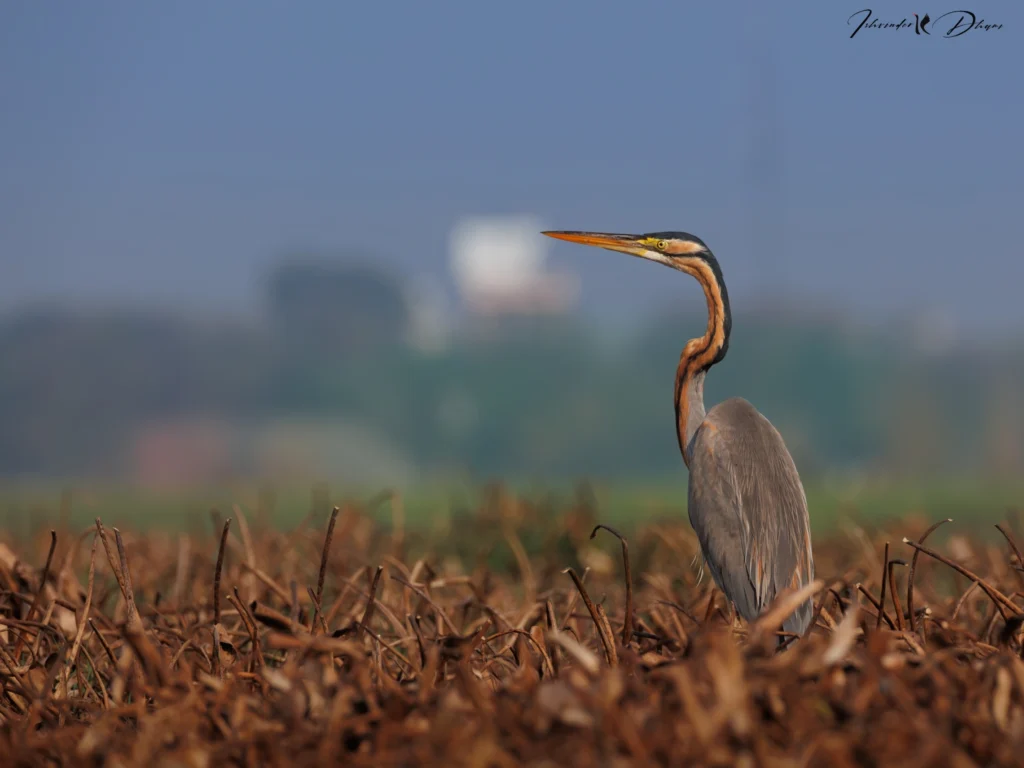
Planning a birdwatching trip to North India almost always leads to a single destination: the shallow marshes and woodland paths of Bharatpur. Known globally among ornithologists and casual travelers alike, this human-engineered wetland supports over 370 recorded bird species across its compact 29-square-kilometer area.
Whether you are an experienced birder seeking passage migrants or a traveler taking a day trip from Delhi, Jaipur, or Agra, the park offers an intimate wildlife experience rarely found in vehicle-dominated tiger reserves. You do not ride in open diesel jeeps here; you explore silently on foot, by rented bicycle, or in a cycle-rickshaw steered by a local driver trained in bird identification.
Success at Bharatpur depends heavily on timing, seasonal water levels, and understanding how the park functions. This guide details everything required to plan an efficient, rewarding visit in 2026.
What Is Bharatpur Bird Sanctuary Called Today?
Bharatpur Bird Sanctuary vs. Keoladeo National Park
The reserve is officially named Keoladeo National Park. The name originates from an ancient temple dedicated to Lord Shiva (Keoladeo) located at the center of the forest. Locally, it is also referred to as Ghana, a Hindi word meaning dense, referencing the thick vegetation that historically covered the flood basin.
While travelers still search for and refer to it as the “Bharatpur Bird Sanctuary,” using the official name—Keoladeo National Park—is essential when booking rail tickets to Bharatpur Junction, arranging local transfers, or navigating official government portals.
Official Identity Snapshot:
• Official Name: Keoladeo National Park (formerly Bharatpur Bird Sanctuary)
• Location: Bharatpur District, Rajasthan, India
• Total Protected Area: ~29 sq km
• Status: National Park (1982), UNESCO World Heritage Site (1985), Ramsar Site
• Primary Habitat: Freshwater wetland, marshes, semi-arid scrub, and tropical dry deciduous forest
From Royal Hunting Grounds to UNESCO World Heritage Site
Keoladeo’s origins are unusual for a premier conservation wetland: it is an artificial, man-managed habitat. In the mid-1850s, the Maharaja of Bharatpur created earthen dykes (the Ajan Bund) to divert floodwaters from the confluence of the Gambhir and Banganga rivers. The resulting depression turned into a productive waterfowl shooting preserve.
For decades, the wetland hosted massive duck shoots organized for British viceroys and royal guests. Thousands of ducks and geese were harvested in single-day events.
The transition to conservation took place through key milestones:
- 1976: Duck shooting was permanently outlawed.
- 1982: The reserve was upgraded to a National Park.
- 1985: UNESCO designated Keoladeo a World Heritage Site, recognizing it as a critical wintering ground for migratory waterfowl and a major breeding heronry for native birds.
Today, the park’s water levels continue to be actively managed through sluice gates and canal systems to maintain suitable habitat for fish, mollusks, and the birds that feed on them.
Best Time to Visit Keoladeo National Park
The ideal time to visit depends entirely on whether you want to observe migratory waterbirds arriving from northern latitudes or resident species gathering at nesting colonies.
Seasonal Summary:
• Winter Migratory Season: October to March (Peak months: December to February)
• Monsoon Breeding Season: July to September (Peak nesting: August to October)
• Shoulder/Dry Season: April to June (Best for mammals and resident dry-scrub species)
October to March: The Winter Migratory Window
For most travelers, winter is the prime season. Starting in late October, thousands of migratory waterfowl, waders, and raptors arrive via the Central Asian Flyway to escape harsh northern winters.
During these months, shallow water bodies fill with northern shovelers, northern pintails, common teal, gadwalls, bar-headed geese, and greylag geese. Open water margins host waders such as green sandpipers, ruffs, and black-tailed godwits, while raptors like the greater spotted eagle and marsh harrier patrol the tree lines.
Field Note: Early mornings in December and January frequently bring dense fog across the wetlands. While atmospheric, heavy mist can obscure visibility until 9:00 AM or 10:00 AM. Plan full-day visits during midwinter so you have clear midday light for photography and observation.
July to September: The Monsoon Breeding Season
Travelers often overlook the monsoon months, but for resident waterbirds, this is the most active time of year.
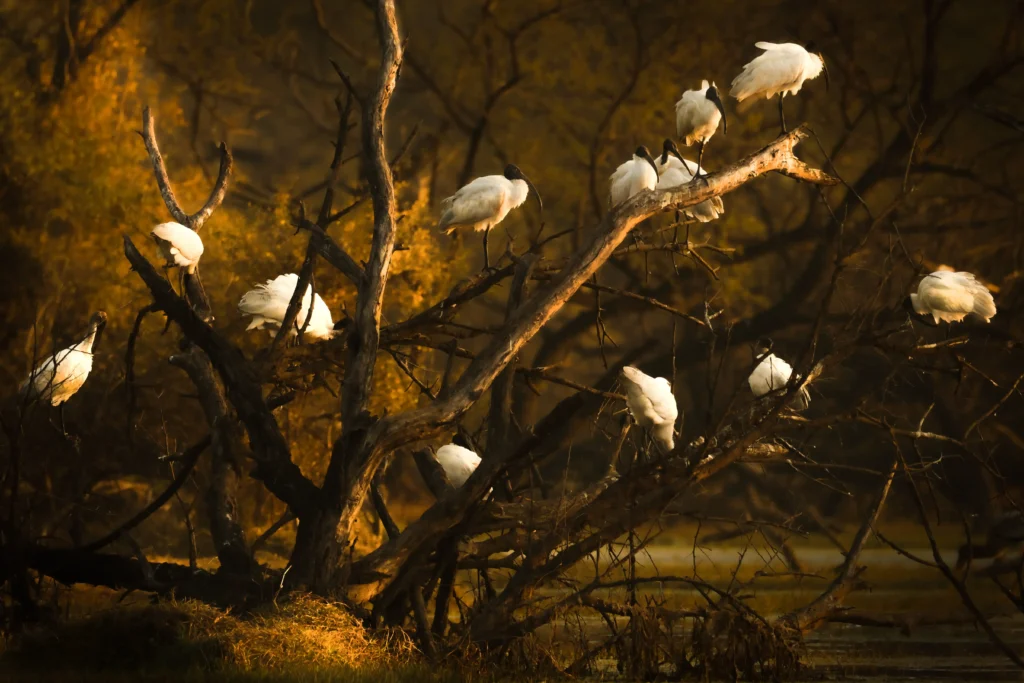
When the monsoon rains fill the low-lying marshes, thousands of resident storks, herons, egrets, and cormorants begin their breeding cycle. The Acacia trees emerging from the water become crowded nesting colonies (heronries).
- Painted storks build nests in large communal groups.
- Asian openbill storks, Eurasian spoonbills, black-headed ibis, and little cormorants display courtship behavior, gather nesting material, and feed hatchlings.
Visiting between August and October offers non-stop nesting action and sound, though temperatures and humidity are considerably higher than in winter.
Month-by-Month Birding & Weather Guide
| Month | Wildlife Activity | Weather Conditions | Recommended Visitor Type |
| January | Peak winter migrants, ducks, geese, and raptors in full numbers. | Cold mornings (7°C–12°C), occasional thick fog; pleasant sunny afternoons. | Serious birders, photographers, general tourists. |
| February | High bird activity; fog clears; excellent golden afternoon light. | Mild and pleasant (12°C–24°C). | All travelers, walking and cycling enthusiasts. |
| March | Winter migrants begin departing; resident birds active; flowers bloom. | Warm to moderately hot (18°C–32°C). | Budget travelers, birders looking for passage species. |
| April–June | Water levels drop; wetland birds congregate at remaining pools; nilgai, deer, and jackals easily seen. | Hot to severe heat (30°C–42°C+); dry conditions. | Dedicated naturalists, dry-zone birders. |
| July–August | Monsoon arrives; marshes replenish; painted storks and egrets start nesting. | Warm, humid, intermittent rainfall (25°C–34°C). | Wildlife enthusiasts interested in nesting behavior. |
| September | Full nesting colonies; young chicks visible in nests; resident raptors active. | Humid with clearing skies (24°C–33°C). | Photographers focusing on bird behavior and nesting. |
| October | Early winter migrants arrive; breeding season wraps up; best overlap of species. | Clear skies, pleasant post-monsoon weather (20°C–31°C). | First-time visitors, families, general tourists. |
| November | Winter migrants arrive in large flocks; marshes full. | Crisp, clear, and cool (14°C–28°C). | Birders, nature photographers. |
| December | Peak wetland population; heavy waterfowl concentration. | Cold mornings, foggy intervals (8°C–20°C). | All wildlife enthusiasts. |
Expert Tip — Assessing Water Levels Before Travel: Because Keoladeo is dependent on water releases from local barrages and monsoon runoff, seasonal bird counts fluctuate based on water availability. If planning a trip in early winter (October–November), check recent travel forums or local naturalist updates regarding water levels to confirm which sections of the sanctuary are most active.

Travel Logistics, Park Access & Transport Inside
How to Reach Keoladeo National Park
Keoladeo National Park is located in Bharatpur, Rajasthan, making it highly accessible from major tourist and transit hubs in North India. Because of its strategic location, it is a popular weekend nature escape for travelers from the Delhi-NCR region and a logical addition to the Golden Triangle route.
Transit Routes: Delhi, Agra, and Jaipur
Depending on your starting point, Bharatpur functions well as either a dedicated overnight trip or a strategic stopover.
Route & Travel Comparison
| Starting City | Trip Suitability | Travel Context |
| Agra | Day trip or half-day visit | Agra offers the quickest access to Bharatpur. It is highly practical for travelers adding a wildlife component to a Taj Mahal visit. |
| Delhi / NCR | Overnight or weekend trip | Bharatpur is a primary weekend birding destination for Delhi-NCR residents. Early morning departures allow travelers to reach the park by midday. |
| Jaipur | Overnight stopover | Travelers moving between Jaipur and Agra often use Bharatpur as a natural breaking point to experience Rajasthan’s wetland ecology. |
Family Travel Tip: If traveling with children from Delhi or Jaipur, plan to arrive in Bharatpur the evening before your park visit. This allows your family to enter the park at sunrise when birds are most active and temperatures are cool, avoiding a tiring same-day commute.
Entry Rules, Permits, and Current Timings
Unlike many Indian tiger reserves that require booking safari permits months in advance, Keoladeo National Park is largely accessible for spontaneous visitors. However, administrative rules require attention.
Navigating Fees and Park Timings in 2026
Many public and third-party websites display conflicting information regarding current entry fees, camera charges, and seasonal operating hours. Because these details fluctuate based on local administration updates, it is essential to check the official ticketing notices upon arrival at the park gate.
- Timings: Park gates generally open at sunrise and close at sunset. These exact hours shift seasonally with the available daylight.
- Permits: You do not need to book entry tickets months in advance. Tickets are purchased directly at the main entrance gate.
- Uncertainty Caveat: Always verify visitor charges and current timing notices locally before your travel date, rather than relying entirely on older travel blogs.
Getting Around Inside the Park
A common misconception among first-time visitors is that they need to book a motorized vehicle safari. Keoladeo National Park is fundamentally different; it is designed for quiet, slow-paced exploration. Motorized tourist vehicles are not permitted on the interior wetland trails.
Visitors access the park strictly on foot, by bicycle, or by cycle-rickshaw.
The Value of the Cycle-Rickshaw Guide
Hiring a cycle-rickshaw is the most effective way for most visitors to experience Bharatpur. The rickshaw pullers inside the park are officially trained as bird-watching guides by the park management.
They know the daily movements of the wildlife, understand seasonal nesting locations, and can identify both common and rare species. Utilizing their services provides essential on-ground expertise while supporting the local conservation economy.
In-Park Transport Comparison
| Transport Mode | Best Suited For | Advantages | Limitations |
| Walking | Photographers, serious birders | Complete silence; allows you to wait in hides for long periods. | Covering the park’s 29-square-kilometer area on foot is physically demanding. |
| Bicycle | Budget travelers, independent naturalists | Excellent mobility; allows you to cover large distances quickly. | Requires dividing attention between navigating the path and spotting wildlife. |
| Cycle-Rickshaw | Families, first-timers, general tourists | Includes a trained local guide; comfortable; ideal for spotting elevated nests. | Requires staying on the primary paved and designated dirt tracks. |
Expert Tip — Combine Your Methods: For the best experience, hire a cycle-rickshaw to take you deep into the park to the main wetland intersections. From there, dismount and explore the narrower side trails and photography hides on foot.
Trip Duration: Day Trip vs. Multi-Day Itinerary
Deciding how much time to allocate to Keoladeo depends entirely on your wildlife interests.
The Half-Day Visit
A half-day visit (roughly 3 to 4 hours) is sufficient for general tourists and families. Using a rickshaw guide, you can travel the main arterial road, observe the primary heronries, see large flocks of wintering waterfowl, and experience the core wetland environment without experiencing fatigue.
The Dedicated Birding Itinerary (1 to 2 Days)
For birdwatchers and photographers, a single day is the minimum requirement.
- Day 1: Focus on the main water bodies for migratory ducks, geese, and waders.
- Day 2: Spend time on the drier scrubland trails searching for resident warblers, larks, and raptors.
Staying overnight in Bharatpur town allows you to utilize the golden hour lighting—the first two hours after sunrise and the final two hours before sunset—which offers the most productive bird activity and the best conditions for photography.
Wildlife, Birding Trails & Photography
Wildlife and Bird Species
Keoladeo National Park is an internationally recognized wetland ecosystem, supporting over 370 recorded bird species. Understanding which birds are present during your visit requires distinguishing between the park’s winter migrants and its resident breeding populations.
Migratory Birds (Winter Visitors)
As winter approaches, the sanctuary transforms into a critical feeding ground along the migratory flyways. From October to March, the wetland pools fill with migratory waterfowl, waders, and cranes.
Birdwatchers can expect to see species such as the ruddy shelduck, green sandpiper, and the demoiselle crane. The park is historically famous for the Siberian crane, and while sighting probabilities for specific rare species fluctuate, the sheer volume of wintering ducks, geese, and raptors remains a primary draw.
Resident Birds and Breeding Colonies
The park is equally important for its resident birds, which utilize the habitat year-round. During the monsoon breeding season, the acacia trees become crowded with nesting colonies.
The most prominent breeding species include the painted stork, Asian openbill stork, black-necked stork, Eurasian spoonbill, white ibis, and purple heron. The little cormorant is also heavily present in the water bodies, while terrestrial residents like the jungle babbler occupy the scrubland areas.
Key Species by Season: Resident Breeders vs. Winter Migrants
| Bird Category | Notable Species | Primary Season & Behavior |
| Migratory Waterfowl & Waders | Ruddy shelduck, green sandpiper, demoiselle crane. | Winter (Oct–Mar): Feed in the shallow marshes and open water margins. |
| Resident Storks & Herons | Painted stork, Asian openbill stork, black-necked stork, purple heron. | Monsoon (Jul–Oct): Active nesting, courting, and rearing chicks in large colonies. |
| Resident Waterbirds | White ibis, Eurasian spoonbill, little cormorant. | Year-Round: Visible feeding in wetlands; breed during the monsoon. |
| Terrestrial & Scrub Birds | Jungle babbler, various warblers and larks. | Year-Round: Found along the dry trails and woodland edges. |
Mammals and Reptiles
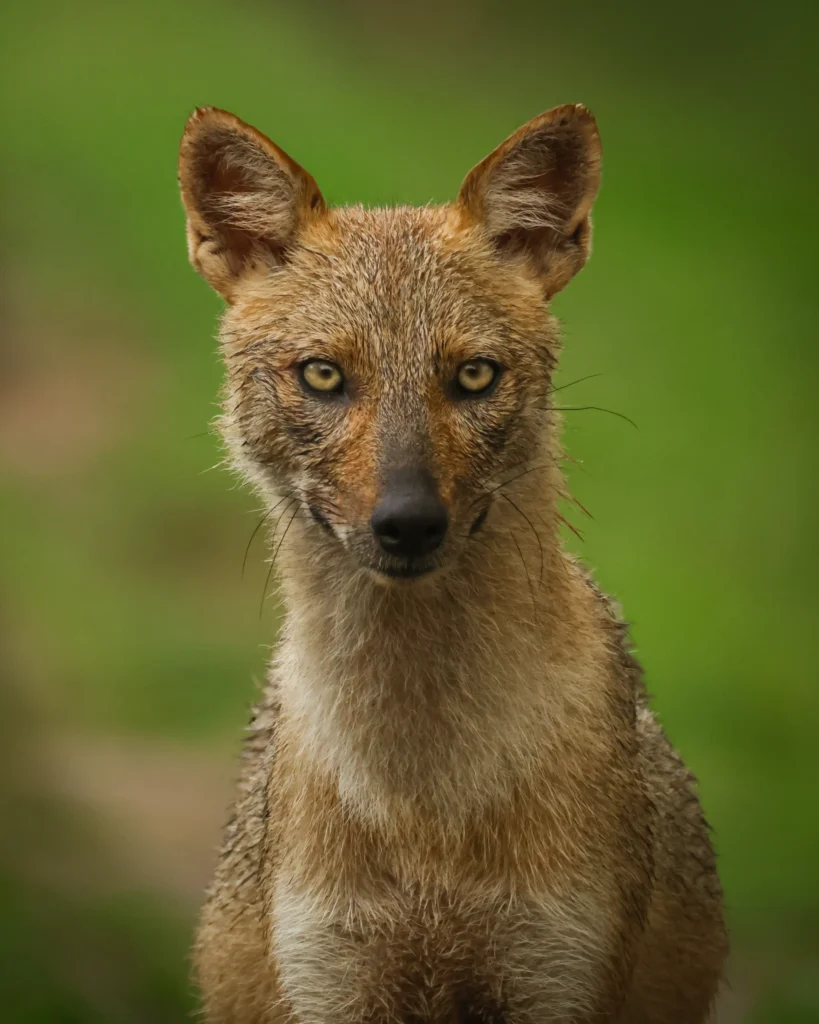
While birds are the primary focus, Keoladeo is a complete ecosystem. Visitors can expect to see various mammals and reptiles, which add significant biodiversity value to a day in the park. Paying attention to the woodland edges and dry grassy patches often yields sightings that complement the wetland birding experience.
Photography and Birdwatching Tips
Successfully observing and photographing wildlife at Bharatpur requires specific field strategies. Because you are not confined to a noisy vehicle, you have a unique opportunity to blend into the environment.
Field Strategies for Birdwatchers
- Golden Hour Strategy: The most productive bird activity occurs during the golden hours—shortly after sunrise and just before sunset. Plan to be deep inside the park during these windows.
- Utilize Hides and Water Edges: The park is equipped with designated photography hides. Sitting quietly in a hide or near the water’s edge is often more productive than constantly walking the trails.
- Silence, Distance, and Patience: Ethical birding dictates that you should never force a bird to move. Maintain silence, keep a respectful distance, and wait for the wildlife to come to you.
Photography Tip — Leverage Your Guide: Cycle-rickshaw pullers are trained bird-watching guides. Tell your guide immediately if your primary goal is photography rather than just spotting. They know the specific trails that offer the best morning or evening light and can position the rickshaw for clear, unobstructed angles.
Field Note: Do not ignore the scrubland. Many photographers focus entirely on the main wetland pools, but the dry trails and interpretation areas often hold raptors, warblers, and terrestrial species that complete a birding checklist.
Expert Tips, Common Mistakes, FAQs & Conclusion
Planning Tips and Field Checklist
A successful visit to Keoladeo National Park requires minimal but specific preparation. Because you will be outdoors and exposed to the elements for several hours, dressing practically and carrying the right gear will significantly improve your experience.
Practical Field Checklist
What to Pack for Your Visit
| Item | Importance | Practical Application |
| Binoculars | Essential | Crucial for identifying distant waders and spotting birds deep in the foliage. |
| Water | Essential | Hydration is necessary, especially during the humid monsoon or dry shoulder seasons. |
| Cap / Sun Hat | Highly Recommended | Provides protection during midday hours when walking open wetland trails. |
| Camera | Recommended | Telephoto lenses (400mm+) are best for bird photography from the trails or hides. |
| Insect Repellent | Highly Recommended | Important during the monsoon and early winter when mosquitoes are active near the water. |
| Light Shoes | Essential | Required for comfortable walking and getting in and out of cycle-rickshaws. |
Common Mistakes First-Time Visitors Make
Even experienced travelers often arrive at Keoladeo with incorrect assumptions. Avoiding these common misconceptions will help you plan a more realistic and rewarding itinerary.
- Expecting a Jeep Safari: Many visitors assume they need to book a motorized vehicle safari. Motorized vehicles are not permitted on the interior trails; the park is explored on foot, by cycle, or via cycle-rickshaw.
- Assuming Winter is the Only Season: While winter brings migratory birds, the monsoon months (July to September) are vital for observing resident breeding colonies and active nesting behaviors.
- Focusing Only on a Bird List: Treating the park strictly as a checklist destination understates its value as a complex, UNESCO-recognized wetland ecosystem. Observing the habitat, mammals, and reptiles is equally important.
- Arriving Late in the Day: Arriving mid-morning means missing the golden hour lighting and peak bird activity that occurs shortly after sunrise.
Responsible Birding Etiquette
When inside the sanctuary, maintaining a low profile is critical. Do not make excessive noise, always keep a respectful distance from the wildlife, and never attempt to force a bird to fly for a photograph. Rely on the expertise of your rickshaw guide to position you correctly without disturbing the environment.
Frequently Asked Questions
1. What is the official name of Bharatpur Bird Sanctuary? The sanctuary is officially named Keoladeo National Park, a title it received when upgraded to national park status in 1982.
2. Is Keoladeo National Park open year-round? Yes, the park remains open throughout the year, but the wildlife experience changes dramatically depending on whether you visit during the winter migratory season or the monsoon breeding season.
3. What is the single best month for birdwatching in Bharatpur? For the highest volume of migratory waterfowl, December and January are peak months. For resident nesting birds, August and September are ideal.
4. Can I explore the sanctuary without hiring a vehicle? Yes. In fact, motorized tourist vehicles are not allowed. You can explore entirely by walking, renting a bicycle, or hiring a cycle-rickshaw.
5. Are rickshaw pullers certified guides? Yes, the rickshaw pullers operating inside Keoladeo are trained by park management as bird-watching guides and possess extensive local knowledge.
6. Do I need to book entry tickets months in advance? No, tickets are purchased directly at the main entrance gate upon arrival. However, always verify current visitor charges and timing notices locally, as they are subject to change.
7. What are the best hours of the day to see birds? Early mornings just after sunrise and the late afternoons before sunset offer the highest bird activity and the best lighting for photography.
8. How many bird species are recorded in the park? Over 370 bird species have been recorded within the park’s boundaries.
9. What mammals can be spotted besides birds? Visitors frequently spot nilgai (blue bull), various deer species, and jackals, particularly during the drier months when wildlife congregates near remaining water pools.
10. Is Bharatpur suitable for senior citizens and young children? Yes. Hiring a cycle-rickshaw makes the park highly accessible and physically undemanding for families and elderly visitors.
11. Is a one-day trip from Delhi or Agra feasible? A day trip or half-day visit from Agra is very easy. A day trip from Delhi is possible but makes for a long day; an overnight weekend trip from Delhi-NCR is recommended.
12. Where do the migratory birds come from? Most winter migrants travel via the Central Asian Flyway to escape freezing northern latitudes, utilizing the wetlands as a critical feeding ground[cite: 1].
13. What is the UNESCO significance of the park? Keoladeo was designated a UNESCO World Heritage Site in 1985 because of its critical conservation value as a wintering ground for migratory waterfowl and a major breeding heronry for native species[cite: 1].
14. Are guides necessary? While not strictly mandatory for entry, hiring a trained rickshaw-puller guide is highly recommended to easily locate wildlife and navigate the extensive trail system[cite: 1].
15. What are the key rules for bird photography hides? Maintain strict silence, do not use flash, move slowly when entering or exiting, and do not monopolize the viewing slots if other visitors are waiting[cite: 1].
Conclusion
Keoladeo National Park remains one of India’s most accessible and rewarding wildlife destinations. By shifting away from the noisy, motorized safaris typical of tiger reserves, Bharatpur offers a quiet, slow-paced environment where visitors can closely observe the rhythms of a complex wetland ecosystem[cite: 1]. Whether you are planning a dedicated birding expedition to photograph winter migrants or a simple weekend getaway from Delhi, understanding the seasonal shifts and utilizing the expertise of local rickshaw guides will ensure a successful visit[cite: 1].